REVIEW · AUDIO TOURS
Colosseum, Palatine Hills & Roman Forum Ticket with Audio Guide
Book on Viator →Operated by Golden Ticket · Bookable on Viator
That’s a lot of Rome, handled smart.
This self-guided Colosseum + Forum + Palatine ticket focuses on letting you move at your own pace, with an audio guide app (plus an e-book) that explains what you’re seeing as you go. I especially like that the ticket includes entry to the first two tiers of the Colosseum (with the panoramic terraces) instead of stopping at the ground level. One thing to keep in mind: you only get a “Colosseum time window” based on your reservation, so late slots can feel a bit tight, and the arena/underground/attic aren’t part of this ticket.
I found the “digital help” is the real selling point here. The app includes interactive navigation and real-time location tracking across the Parco Archeologico, which is handy when the Forum turns into a maze of arches, basilicas, and half-remembered facts. The other note I’d flag is the ticket is nominative, meaning you’ll need the ID used for your booking to enter smoothly—no last-minute guessing.
In This Review
- Key things I think you’ll care about most
- Why this self-paced Colosseum ticket feels easier than a big-group tour
- Entering the Colosseum: what you get (and what you don’t)
- A smart way to avoid gate confusion
- Your Roman Forum walk: temples, law, arches, and daily life
- How to time your Forum section so it doesn’t blur
- Palatine Hill: myth, emperors, and the best “wait, wow” views
- A practical tip for photos and pacing
- The audio guide app (and e-book) you’ll actually use
- Don’t forget headphones
- If the app acts up, you’re not totally on your own
- Timing and flow: how 2–4 hours can feel different day to day
- What I recommend for your schedule
- Price and value: what $34.75 is really paying for
- The “hidden” value: fewer wrong turns
- Who this tour suits best (and who should skip it)
- Should you book this Colosseum–Forum–Palatine experience?
- FAQ
- What does the ticket include at the Colosseum?
- Are the arena, underground, or attic areas included?
- Do I need to bring headphones for the audio guide?
- Is this experience fully self-guided or do I meet a guide?
- Is the ticket nominative?
- How long should I plan for?
- What devices is the audio guide app available on?
Key things I think you’ll care about most

- First two Colosseum tiers + museum access: you see more than the basic ring of stone.
- Panoramic terraces included: you get the wide-angle views people usually have to hunt for.
- Roman Forum + multiple named sites: arches and temples are part of what’s covered.
- Audio app with location tracking: you can follow along without joining a live group schedule.
- No meeting point with a guide: you go in on your own using the e-ticket and instructions.
- Late time slots can squeeze your Colosseum time: pick earlier if you like breathing room.
Why this self-paced Colosseum ticket feels easier than a big-group tour
Rome’s top ruins have one problem: time goes fast, even when you’re trying not to rush. This experience is built for independent pace, but it doesn’t just throw you in with a PDF and hope for the best. You get an audio guide app (Android and iOS) plus a detailed e-book guide, so you’re not stuck standing there thinking, I swear I’ve seen this somewhere.
A big practical advantage is that the itinerary covers three major areas—Colosseum, the Roman Forum, and Palatine Hill—without forcing you into constant regrouping. The plan is still structured, but you’re deciding when to pause, when to read, and when to move.
Also, the group size cap is 15 travelers, which matters even when you’re self-guided. It usually means less chaos around the time windows and fewer “everyone stand up now” moments.
You can also read our reviews of more tours and experiences in Rome



Entering the Colosseum: what you get (and what you don’t)
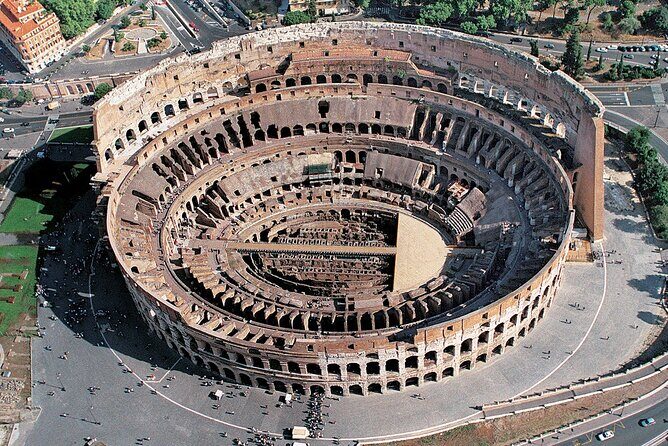
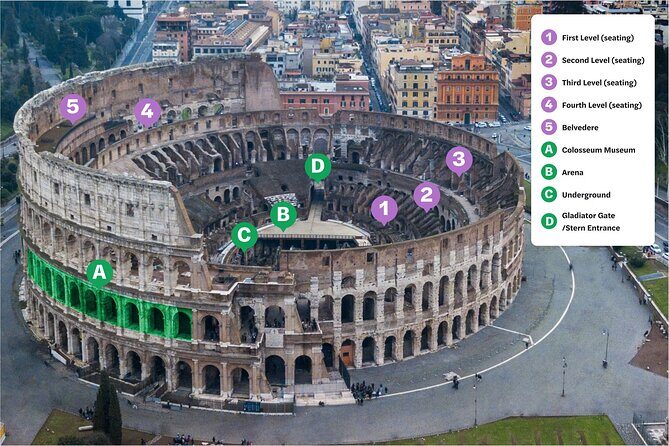
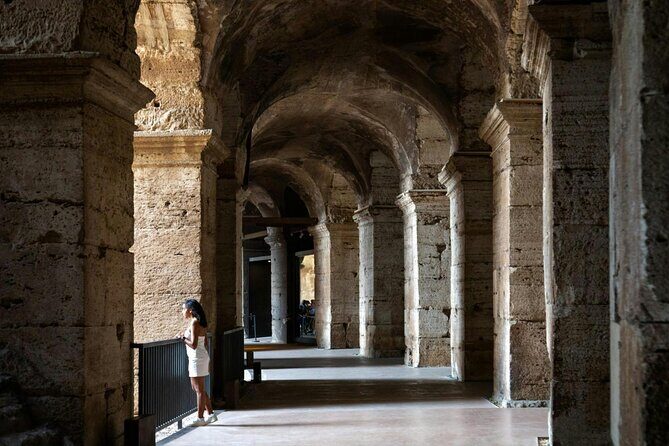
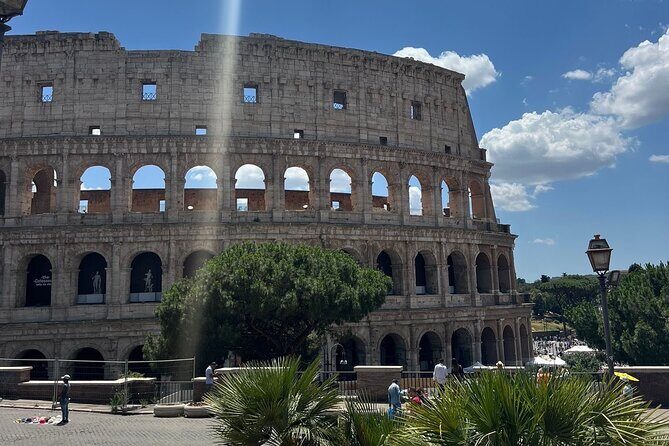
The Colosseum is one of those places that can feel unreal the moment you step inside, because it’s not just ruins—it’s a working-scale monument built for spectacle. This ticket takes you into the first level and the second level, plus the Colosseum Museum and the panoramic terraces.
That’s a good combination for value. First tiers help you read the structure—how the seating, corridors, and architecture all line up. The upper access and terrace views help you understand the Colosseum in context: you start seeing it as an arena complex, not just a big wall of stone.
Just know what’s excluded: arena/underground/attic areas aren’t included. If your dream version of the Colosseum includes those specific parts, you’ll need a different ticket.
One more reality check: “priority” here doesn’t mean zero waiting. The clarification I’d plan around is that priority usually helps you skip the ticket-office line, but you still must pass security checks.
A smart way to avoid gate confusion
This is where you can save yourself stress. The ticketing process is handled through e-tickets and official entrance instructions, and there are multiple gates and entry routes. I’d treat the day-of directions as the boss.
A lesson I picked up the hard way (and it shows up in other people’s experiences too) is that it’s easy to end up at the wrong place if you trust a generic map. I recommend you:
- arrive a little early so you can calmly re-check your instructions
- use the entrance details provided for your visit
- keep your phone charged so you can pull up your ticket and the app
Your Roman Forum walk: temples, law, arches, and daily life
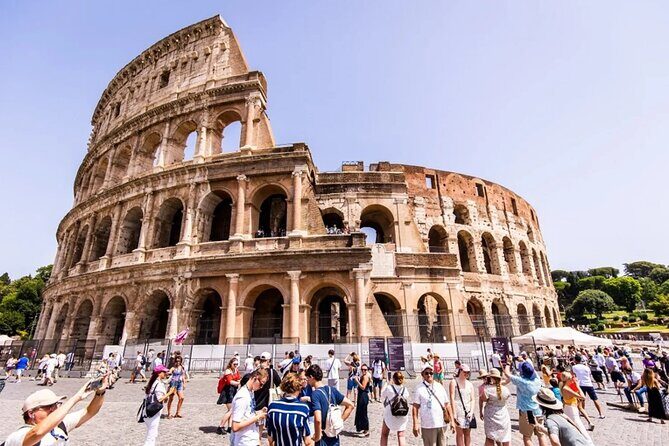
If the Colosseum is the drama, the Roman Forum is the paperwork. This area was the political, religious, and social center—so you’ll feel like you’re walking through a layered decision-making center of ancient Rome.
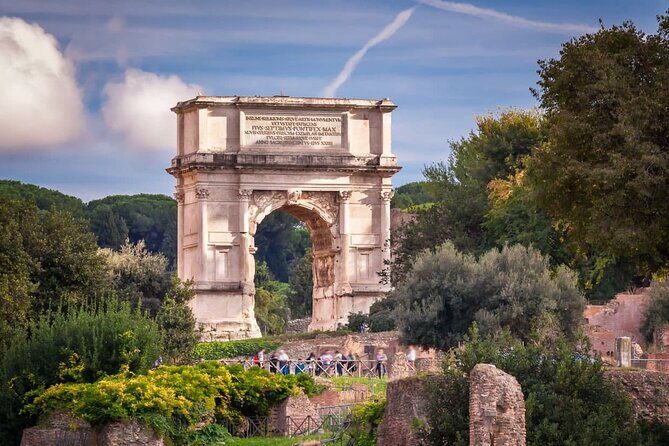
You’re not just seeing one ruin. Your coverage includes the Roman Forums, plus the Imperial fora as part of what’s included. The experience also covers major landmarks such as the Arch of Titus and the Arch of Constantine, along with specific points like the Rostrum and temples including Venus and Rome and the Temple of the Dioscuri.
What makes the Forum especially rewarding with an audio guide is that it’s easy to get lost in visuals. The stones are all “important,” and without context you end up speed-walking the highlights. With a guided narrative in your pocket, you can slow down at the spots that connect to how Romans lived: announcements, ceremonies, public speaking, religious power, and the political theater of arches.
How to time your Forum section so it doesn’t blur
The Forum area is wide, and it’s easy to turn it into one long blur of columns and fragments. I like treating it like a set of short chapters:
- pick one arch and understand who celebrated what
- then move toward the temple area and focus on religious power
- finish with the rostrum zone so you see how persuasion worked in public
This ticket is set up so you’re not forced to stare at your watch every minute—so you can actually stop when something clicks.
You can also read our reviews of more guided tours in Rome




Palatine Hill: myth, emperors, and the best “wait, wow” views
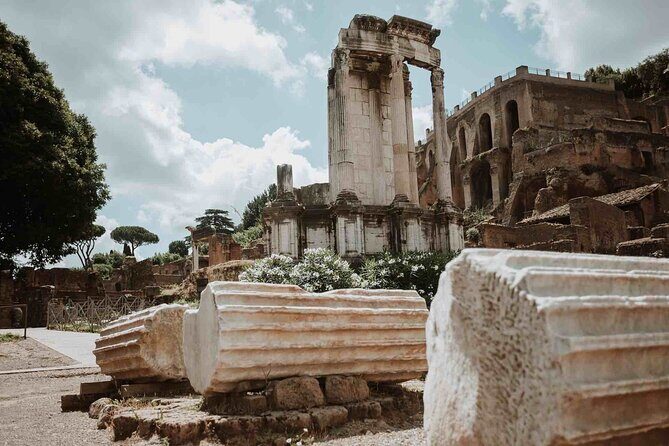
Palatine Hill is where Rome starts feeling personal. You’re in one of the oldest parts of the city, and the mythology is part of the atmosphere: legend links the hill to the founding of Rome by Romulus in 753 BC. Over time, it became the home turf of emperors and aristocrats, with major palaces and gardens looking out toward the Forum and the Circus Maximus area.
This ticket covers key Palatine stops like the Farnesian Gardens, Flavian Palace, and the base of the Statue of Nero. You also have the Roman Forum and ruins stretching in your field of view, which turns the walk into more than just reading labels. You start to understand why rulers wanted this spot.
If you like places where you can stand still for a minute and feel the geography, Palatine Hill is your payoff zone. It’s also a great place to reset after the Colosseum intensity. You’ve seen the spectacle; now you get the “this is where power lived” version.
A practical tip for photos and pacing
I’d budget a bit of time here for pauses. Even if you’re not a super-enthusiast photographer, the views are a natural stopping point. And since this experience is designed for your pace, you can spend extra time at viewpoints without needing to wait for a group.
The audio guide app (and e-book) you’ll actually use
Here’s why I’m a fan of audio done right: it makes ruins feel like a story instead of a sightseeing checklist. You get a high-quality audio guide delivered through an app (Android/iOS), and it includes interactive navigation with real-time location tracking across the entire Parco Archeologico.
You also get an e-book guide with historical insights. That’s useful because it doesn’t depend on your signal or battery in the same way as streaming does, and you can revisit it later as a souvenir.
Don’t forget headphones
Headphones are not included. You’ll want to have your own wired or wireless earbuds so you can listen comfortably.
If the app acts up, you’re not totally on your own
This operator provides 24/7 assistance via a virtual assistant. People have had day-of confusion around tickets and directions—usually because the e-tickets weren’t obvious on arrival or they ended up at the wrong entrance. When that happens, having a real support channel helps.
I’d also suggest you prepare before you go:
- check that your e-ticket email shows the right names
- save it so you can find it fast at security
- keep an active phone number with your country code (so help can reach you)
One helpful small detail from a real-world note: I saw someone mention help connected to Monica for the purchase. It’s a reminder that the service team can step in when the tech or ticket details aren’t behaving.
Timing and flow: how 2–4 hours can feel different day to day
On paper, this is about 2 to 4 hours. In practice, your reservation time and the flow of security can change how stretched out those hours feel.
Your visit covers:
- Colosseum first, about 1 hour 15 minutes
- Roman Forum about 1 hour
- Palatine Hill about 1 hour
But if you book the later time window, you can feel pressure. I’d plan for that. When the last available slot is close to closing time, the Colosseum section can shrink, and you’ll wish you’d arrived with more slack.
What I recommend for your schedule
- If you like lingering, choose an earlier Colosseum entry.
- If you’re okay moving briskly and you’ve already seen a lot of Roman sites, a later slot can work.
- Build in buffer time for security. Rome can be crowded, and this area is crowded for a reason.
Also, monument restorations can be part of the picture during Jubilee 2025, so you might see some areas under change.
Price and value: what $34.75 is really paying for
At $34.75 per person, this isn’t the cheapest way to see these ruins. But it’s not just selling you entry either.
Here’s the value math you can feel: the Colosseum official ticket value is listed as €18, and the Colosseum reservation fee is €2. That means the remaining portion of what you pay is covering services—specifically:
- the audio guide app
- the e-book guide
- the interactive navigation/location features
- the reservation handling and support
So if you already know you’ll want guided interpretation (and not just a guidebook), you’re paying for time saved and confusion avoided.
On the other hand, if you have your own strong self-guided system—like a separate reliable audio app, offline maps you trust, and a deep plan—you may feel like some of the extras overlap your setup. That doesn’t make the product bad; it just changes who it’s best for.
The “hidden” value: fewer wrong turns
A surprising amount of sightseeing pain in Rome comes from logistics, not monuments. E-tickets, correct names on tickets, gate directions, and finding the right entry route can eat your morning. This experience is designed to reduce that pain.
Who this tour suits best (and who should skip it)
This is a strong fit if you:
- want three big sites without committing to a live guide for the whole time
- like self-paced travel where you can slow down when something matters
- enjoy audio explanation while you walk
- want more than the basic Colosseum circuit (first two tiers and the terraces)
You might want a different option if you:
- specifically want the arena/underground/attic areas (not included here)
- don’t want to manage a phone + app during your visit
- prefer to ask questions in real time (this experience is audio-based)
One more note for families: children 0–17 enter for free, but they must have a free pass. If you don’t include them in the reservation, access can be denied on the day.
Should you book this Colosseum–Forum–Palatine experience?
I’d book it if you want a smooth, guided-feeling visit without the pressure of a live group schedule. The combination of first two Colosseum tiers, panoramic terraces, and coverage that includes major Forum landmarks (arches, temples, and the rostrum area) is a lot for the time window you have.
I’d hesitate only if you know you’re sensitive to ticket-day stress. This experience depends on e-tickets, correct IDs, and following the provided entrance instructions. If you’re the type who hates tech and hates checking emails right before travel, you might find the setup slightly annoying.
But if you’re willing to do a quick prep—charge your phone, save your e-ticket, bring headphones—this is one of the more practical ways to get the “I saw Rome’s big icons” payoff without feeling rushed.
FAQ
What does the ticket include at the Colosseum?
It includes admission to the first level of the Colosseum, the second level with panoramic terraces, and the Colosseum Museum.
Are the arena, underground, or attic areas included?
No. The ticket does not include arena/underground/attic access.
Do I need to bring headphones for the audio guide?
Yes. Headphones are not included.
Is this experience fully self-guided or do I meet a guide?
It’s self-guided with an audio guide app. There is no meeting point for a guide; you’ll use your e-tickets and follow the entrance instructions provided.
Is the ticket nominative?
Yes. Tickets are nominative, so you must present a valid ID matching the booking.
How long should I plan for?
Plan for about 2 to 4 hours total, covering the Colosseum, Roman Forum, and Palatine Hill.
What devices is the audio guide app available on?
The audio guide app is available for Android and iOS.