REVIEW · COLOSSEUM TOURS
Colosseum and Roman Forum Private Tour with an Archaeologist
Book on Viator →Operated by Askos Tours · Bookable on Viator
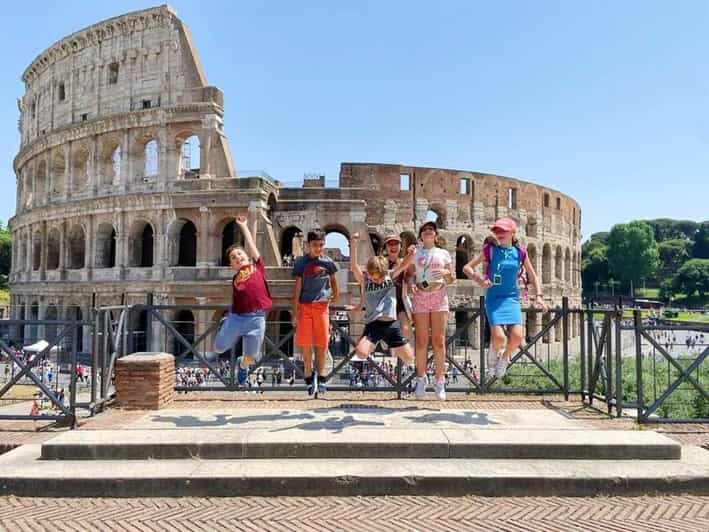
The Colosseum hits different with an expert. This private, archaeologist-led tour gives you reserved entry and a guided walk through the Colosseum and the Roman Forum at a pace that fits your questions and your group.
I really like the undivided attention you get on a private tour, and I love the focus on real locations instead of vague storytelling. When the guide points to a wall, a temple site, or a specific arch, the details actually stick.
One thing to consider: you’ll do a fair amount of standing and walking on uneven ancient surfaces, so comfortable shoes are non-negotiable. Also, you must bring an ID that matches the names used at booking, or entry can be denied.
In This Review
- Key takeaways before you go
- Meet at Piazza del Colosseo and get your visit organized
- Colosseum entry with a reserved ticket and a smart first perspective
- The Colosseum reality check
- Arch of Titus: the quick, sharp lesson before the Forum
- Roman Forum: how the main monuments fit together
- A nice pacing advantage
- Temple of Saturn, Arch of Septimius Severus, and the layers of power
- Arch of Constantine and the Velian Hill views on the way
- Temple of Castor and Pollux: the Forum’s smaller, elegant clue
- What you’re really paying for at $207.01 per person
- Who this tour suits best (and who should pick something else)
- A guide can make the ruins feel personal
- Should you book this private archaeologist tour?
- FAQ
- FAQ
- Is this a private tour?
- How long is the tour?
- What does the tour include for tickets?
- Where do we meet, and where does it end?
- What language is the tour offered in?
- What should I bring for the visit?
- Do I need ID to enter?
- When is the Colosseum closed?
Key takeaways before you go
- Private, archaeologist-guided: you get expert explanations tailored to your questions.
- Reserved Colosseum entry included: your admission ticket and reservation fee are part of the price.
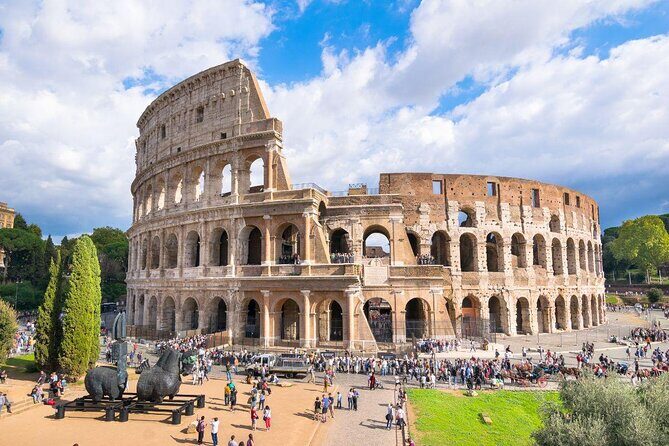
- Second-tier viewpoint inside the Colosseum: you’ll see the interior from a higher perspective with wide views over the square below.
- Roman Forum “main hits,” organized: you cover major monuments in a logical flow instead of piecing together separate tickets.
- Guides who slow down for photos and understanding: some guides build in time to wander and get picture-perfect angles.
- English tour with flexibility: the best moments are the ones you can pause for—your guide can adapt to your interests.
Meet at Piazza del Colosseo and get your visit organized
You start at Piazza del Colosseo, 21 (right by the Colosseum area). It’s a smart setup because you avoid the stress of hunting for the group on a busy street, and you can arrive when you’re ready rather than rushing from far away. The tour is also offered in English, and it’s clearly positioned as a private experience—only your group participates.
The day stays simple: no transportation is included, so you’ll handle getting yourself to the meeting point. The upside is that you keep control of timing. If you want to grab a coffee or quickly re-check your shoes and water, you can.
Also, plan to travel with the right documents. For entry, you’re required to carry an identification document, and it must match the full names used at booking. The Colosseum and Roman Forum ticket office can deny access if the voucher doesn’t match. Before you leave your hotel, I’d double-check those names against your passports or IDs. It’s the unglamorous detail that saves the most headaches.
You can also read our reviews of more private tours in Rome


Colosseum entry with a reserved ticket and a smart first perspective
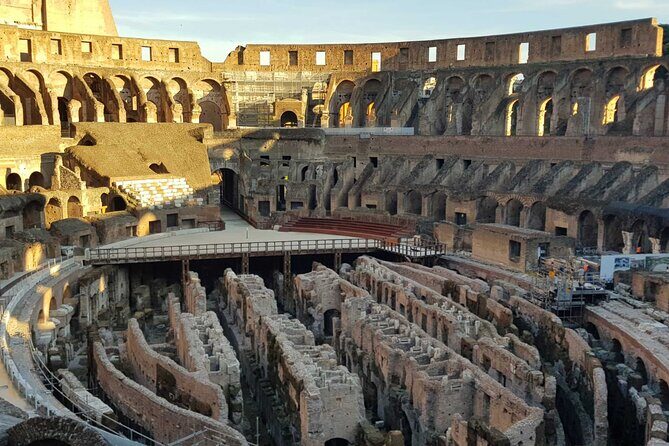
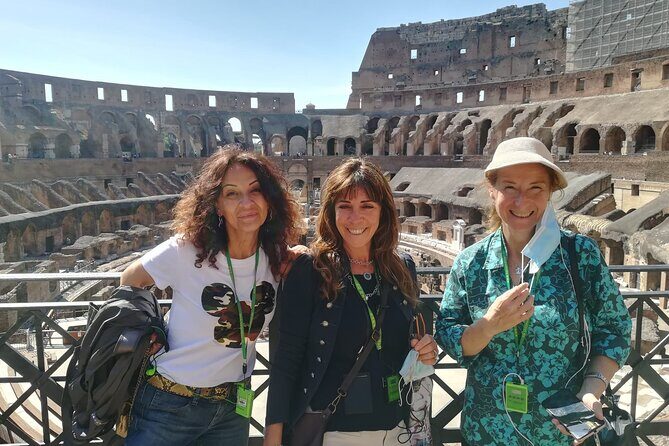
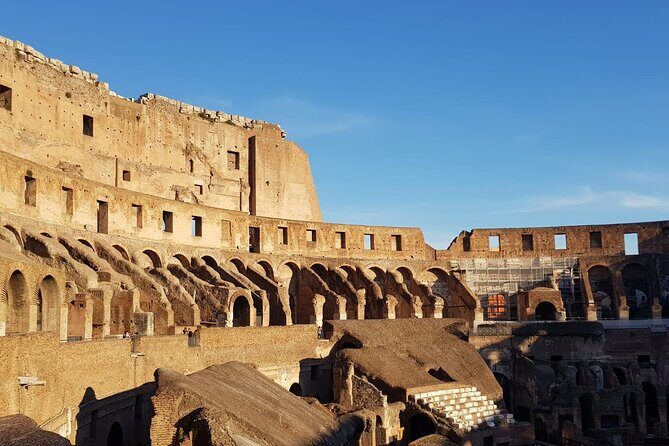
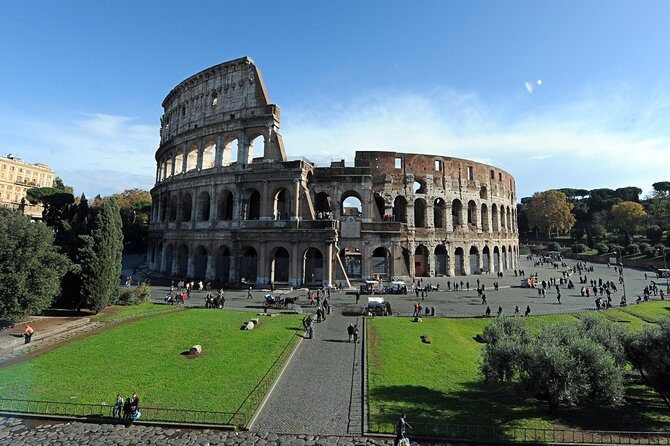
Once you’re in, the tour quickly gets out of “photo mode” and into “context mode.” You head to the second tier inside the Colosseum, which is a huge part of why this works. From up there, you get a panoramic view of the interior and the square below. You’re not just looking at an old building—you’re seeing the structure in layers.
That higher viewpoint helps you understand the Colosseum as a place built for spectacle. From that angle, you can appreciate the expansive foundation and the remains of surrounding architecture, and you also get a clearer sense of how the interior spaces connect.
You’ll also look toward notable features tied to Roman religious and civic identity, including the temple dedicated to Venus and Rome (you’ll see the walls connected with that idea from your position). This is where an archaeologist-style guide earns their fee. Instead of tossing out generic facts, the guide helps you connect what you’re seeing to how Romans organized power, worship, and public entertainment.
And if you’re the type who likes to ask questions, this is a good moment to do it. The private format matters here: you aren’t waiting for a group rhythm or trying to catch up between other visitors.
The Colosseum reality check
The Colosseum is a big monument and security checks can take time. This tour includes your Colosseum admission and reservation fee, which helps you avoid the ticket juggling. Still, you’ll want to arrive in time and move patiently through checkpoints. If you’ve got limited energy after travel, that peace of mind is one of the hidden values.
Arch of Titus: the quick, sharp lesson before the Forum
After the Colosseum, you head toward the Roman Forum area. Along the way, you’ll stop at the Arch of Titus, a 1st-century triumphal arch tied to Emperor Titus’s victory in Jerusalem.
This stop is short but useful. It’s the kind of monument that’s easy to walk past if you don’t know what you’re looking for. Here, you get the meaning of the reliefs and the whole “imperial message” idea behind triumphal arches. The arch sits at the Forum entrance area, so it acts like a verbal handshake: it sets the tone for what you’re about to explore.
Roman Forum: how the main monuments fit together
The Roman Forum is where Rome becomes readable. You’ll move through the ancient center of public life and see key landmarks that explain daily governance and public culture, not just emperors and legends.
Some of the highlights you’ll encounter include:
- Basilica of Maxentius: a major civic space that helps you visualize how business and law worked.
- House of the Vestals: a reminder that religion, politics, and social order were braided together.
- Temple of Antoninus and Faustina: a surviving marker of imperial-era devotion.
- Altar of Caesar: a focal point that shows how rulers used sacred symbolism to reinforce power.
What makes a guided approach worth it here is the way it connects these sites. The Forum can feel like scattered ruins if you go alone. With a guide, you start to see the pattern: public life happened in zones, the buildings had specific roles, and the whole place was designed for visibility and messaging.






A nice pacing advantage
This tour is built for an easy-to-moderate walk, and the activity level is listed as minimal. That doesn’t mean “sit all the time,” but it does mean the plan doesn’t feel like a forced sprint. You’re likely to pause more often than on a super-fast group circuit.
That matters because the Forum is visually busy. When you can stop, look, and ask, you get more out of each landmark without constantly rushing to the next photo spot.
Temple of Saturn, Arch of Septimius Severus, and the layers of power
As you continue through the Forum area, you’ll hit a trio of standout monuments that reveal Rome’s range—from religion to wealth to military glory.
First up is the Temple of Saturn, famous for its eight surviving columns. The guide will also point out how it originally functioned as the treasury of the Roman Empire. That detail changes how you read the site. It’s not only a temple; it’s an infrastructure of power and money.
Next, you’ll see the Arch of Septimius Severus, erected in 203 AD. Triumphal arches like this are essentially government press releases in stone. Here, you’ll focus on the arch’s grand scale and intricate reliefs that celebrate victories tied to Emperor Septimius Severus and his sons. When someone explains what those carvings represent, the arch becomes more than an ornate wall—you understand what kind of story Rome wanted to tell.
Finally, you’ll visit the Basilica Julia, a Roman civil basilica used for business and legal affairs, started by Julius Caesar. It’s a key stop because it turns the Forum from a sightseeing loop into a working city concept. You can picture negotiations, disputes, and official activity happening under those vast rooflines.
Arch of Constantine and the Velian Hill views on the way
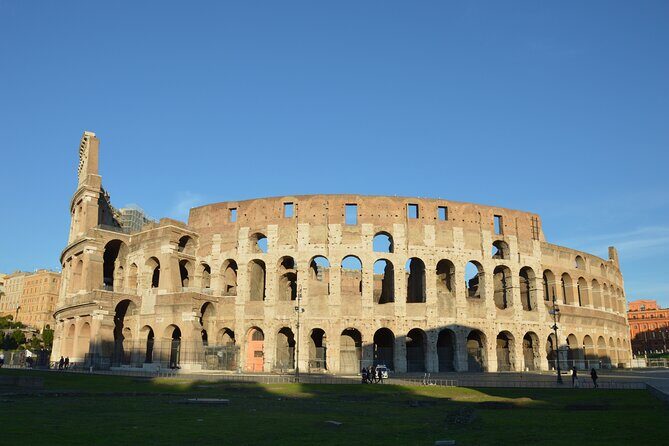
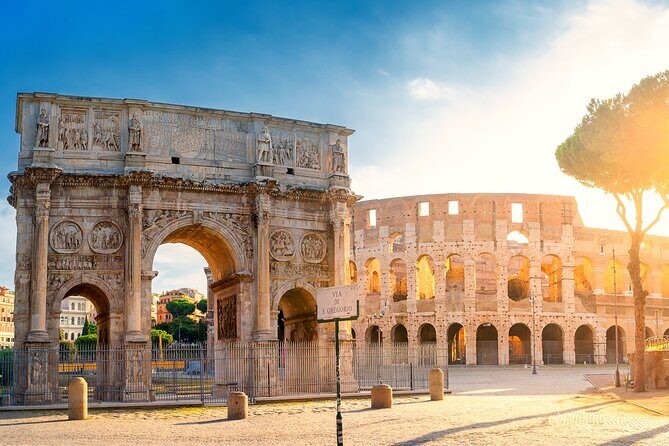
There’s also a smooth transition in the walk toward the Arch of Constantine. As you head that direction, you’ll appreciate the architecture and historical importance of the area up close, including the connection toward the Velian Hill.
This is a helpful section for getting your bearings. The Arch of Constantine is another example of imperial messaging—large scale, carved symbolism, and a statement meant to be seen by thousands.
If you’re a “stop and look” person, you’ll likely enjoy how the private format lets you slow down. Some guides also build in time for wandering and photos, which can make this feel less like a checklist and more like a guided evening stroll through the bones of the city.
Temple of Castor and Pollux: the Forum’s smaller, elegant clue
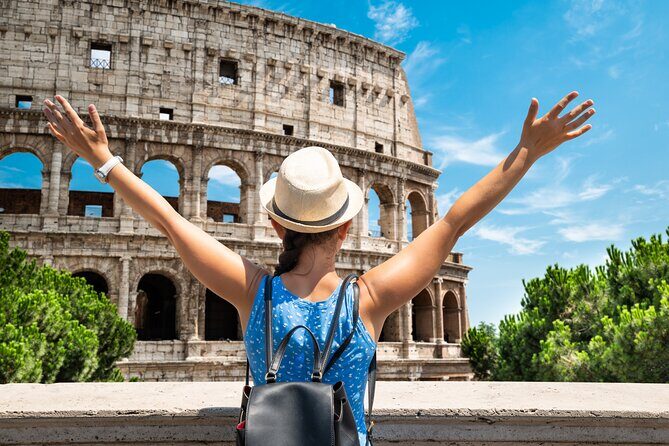
Not every highlight is the biggest. The Temple of Castor and Pollux (also known as the Temple of the Dioscuri) is a great example. You’ll notice the three standing Corinthian columns, which give the structure a very distinctive, focused shape compared to the broader ruins around it.
This stop is also good for understanding Roman mythology in everyday space. The temple is dedicated to the twin brothers and demigods Castor and Pollux. When you hear the mythology and see the remaining columns, it clicks: these weren’t just grand buildings for ceremonies. They were part of how Romans carried stories into public view.
What you’re really paying for at $207.01 per person
The price is $207.01 per person for about 3 hours in English. The Colosseum ticket component is clearly itemized: the Colosseum admission ticket and reservation fee are included (noted at €18 plus €2 per person). That means the rest of what you pay goes toward the guide’s time and expertise—plus the service of managing your entry and making the monument meaningful.
Value-wise, I think this works especially well if you:
- want one cohesive visit instead of separate bookings for multiple sites,
- care about interpretation more than only selfies,
- have questions and don’t want to feel rushed,
- prefer private guidance over shared group pacing.
If you’re comfortable using an audio guide and you only want broad-brush facts, you might not need a private archaeologist. But if you want the “why” behind what you’re seeing—the way architecture, religion, and politics all connect—this format is easier on your brain and your schedule.
Who this tour suits best (and who should pick something else)
This private Colosseum and Roman Forum tour is ideal for history lovers who like structure and explanation. It’s also a strong choice if you’ve got limited time in Rome and want to hit major sites without doing ticket math or mapping on your phone.
It’s less ideal if you:
- want to spend most of the day at the Colosseum itself beyond a tight window,
- dislike guided walking and prefer self-paced exploration,
- expect full museum-style depth on every single monument.
The good news: the tour’s minimal activity level and tight focus help you avoid the “stand in line, rush away, forget everything” cycle that can happen when you plan too much.
A guide can make the ruins feel personal
This is where the human factor shows up. In past tours with this operator, guides like Laura, Paolo, Marilu, and Gabriella have been praised for staying patient, answering questions directly, and bringing a real archaeologist or academic mindset to the material. That shows up in details like giving you time to wonder the Colosseum after the main viewpoint, or making sure you don’t get stuck during security checkpoints because you have the right access and someone is guiding you through the flow.
If you’re the type who likes to understand Roman daily life—not just big emperors—this tour structure supports that. The Forum is full of places that look similar until someone labels what they were used for. Once you know, you stop seeing “random stones” and start seeing civic machinery.
Should you book this private archaeologist tour?
If you’re choosing between a generic Colosseum visit and a guided Forum-focused experience, I’d lean toward booking this one. It’s built for efficient learning: reserved entry, a strong first viewpoint from the second tier, and a guided walk through the Forum’s most important landmarks.
Book it if you want:
- private attention and time for questions,
- a clear route that covers multiple monuments without extra planning,
- expert context that turns ruins into understandable spaces.
Skip it if you want a super-solo adventure with no guidance or if you’re traveling with low tolerance for walking on ancient terrain.
FAQ
FAQ
Is this a private tour?
Yes. It’s a private tour, and only your group participates.
How long is the tour?
The duration is approximately 3 hours.
What does the tour include for tickets?
The Colosseum admission ticket and the Colosseum reservation fee are included. Admission is also listed as included for the Colosseum.
Where do we meet, and where does it end?
You meet at Piazza del Colosseo, 21, 00184 Roma RM, Italy. The tour ends outside the Roman Forum.
What language is the tour offered in?
The tour is offered in English.
What should I bring for the visit?
Wear comfortable shoes and light clothing in summer, and bring water, sunglasses, and a hat for comfort and protection.
Do I need ID to enter?
Yes. You must carry an identification document to access the Colosseum and Roman Forum, and the document name must match the name provided at booking.
When is the Colosseum closed?
The Colosseum is closed on December 25th and January 1st.