REVIEW · PRIVATE
Christianity in the Ancient Rome Private Tour
Book on Viator →Operated by Rome Private Excursions · Bookable on Viator
Early Christians leave footprints in Rome.
This private route is interesting because it connects major figures, places, and stories across the city in one morning-to-afternoon loop. I especially love the private guide approach, with real customization that guides like Max and Luca use to match what you care about. I also like the smart mix of well-known stops and quieter sites you would probably miss on your own. One possible drawback: some stops are brief, like 15 minutes at Santa Sabina and Domine Quo Vadis, so you’ll want to go in knowing you’re seeing the highlight moments, not lingering all day.
You’ll start at 8:30am with pickup from your Rome accommodation (or the airport on arrival), then ride in a private vehicle with live commentary as you move between locations. The day is built for a steady pace: short tours inside big sites, plus a longer, more physical visit underground at the catacombs. If you’re picky about entering places of worship or museums, review the dress code rules ahead of time because you can be refused entry for uncovered knees or shoulders.
In This Review
- Key things to know before you go
- The 7-hour route: how this tour feels in real time
- Abbazia di San Paolo Fuori Le Mura: St. Paul’s story begins
- Saint Callixtus Catacombs: the best reason to book this tour
- Basilica of Santa Sabina: a short stop with real visual payoffs
- Domine Quo Vadis: a story you can feel at your feet
- Carcer Tullianum (Mamertine Prison): the link that hits hard
- Price and value: what you’re paying for at $469.14 per person
- What you’ll learn: history context without turning it into a lecture
- Practical tips so you don’t lose time at the door
- Should you book this tour?
- FAQ
- What time does the tour start, and how long is it?
- Is pickup and drop-off included?
- Are entrance fees included?
- What dress code do I need for churches and worship sites?
- Is the tour physically demanding?
- Can I cancel for a full refund?
Key things to know before you go
- A focused early-Christian path across Rome with St. Paul outside the walls, Saint Callixtus, Santa Sabina, Domine Quo Vadis, and Carcer Tullianum.
- Tickets you pay on site for the catacombs and the prison, with your guide helping you handle admission.
- Short, efficient stops (often 15–30 minutes) so you can see many key sites without wasting time.
- Peter and Paul are linked across multiple locations, not just mentioned once.
- A dress code that matters in practice: cover knees and shoulders for both men and women.
- Private day with a real driver and live commentary, which is ideal if you’re time-limited in Rome.
The 7-hour route: how this tour feels in real time
This is a full-morning style tour that runs about 7 hours, starting at 8:30am and ending with drop-off back at your accommodation or the airport. You’re not hopping between sites on foot for long stretches; the structure is more like “ride, stop, see, move,” with time built in for entry procedures and guided context.
The value of a private setup shows up quickly. You get live commentary while you’re in transit, which helps you understand what you’re seeing before you arrive at each church or ruin. In several guide-led days, people praised the way their guide handled interests and timing, including one account of a guide tailoring the day around exact Peter-and-Paul connections.
There’s also a practical balance here. You get brief views in places like Santa Sabina (about 15 minutes) but you get time to go underground at the catacombs (about 45 minutes). If you’re the type who gets restless waiting in lines all day, this format is easier on your patience.
One more note: at a few stops, you may get the core briefing from your guide before you enter, then follow local rules inside. That’s common in Rome, and it usually still works well if you pay attention to the setup your guide gives you at each location.
You can also read our reviews of more private tours in Rome


Abbazia di San Paolo Fuori Le Mura: St. Paul’s story begins
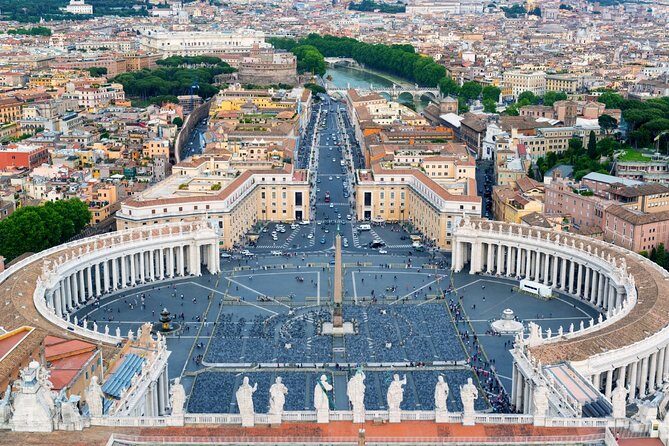
Your first major stop is the Abbey of St. Paul Outside the Walls (Abbazia di San Paolo Fuori Le Mura). It’s tied to Emperor Constantine I, with the abbey founded in the 4th century AD, and the visit is focused on the basilica dedicated to St. Paul. You’ll have about 30 minutes here, and the admission is free for this stop.
What I like about starting here is the way it sets the tone. You’re not just looking at a church as a building; you’re meeting an idea: early Christianity becoming institutional, visible, and durable inside a capital city that was still deciding how to deal with new faiths.
A 30-minute visit is enough for a first pass through the interiors, which is what this tour targets. If you’re a detail person, you’ll likely find yourself wanting more time for the artwork and architectural cues, but the schedule is designed to keep momentum so you can stack multiple “early Christianity” moments in one day.
Dress code matters from the start. This is a church experience, so plan on wearing something that covers knees and shoulders. If you show up in summer clothes that don’t meet the rule, you risk losing entry at the very first stop, and that domino-effect can ruin the rhythm of the day.
Saint Callixtus Catacombs: the best reason to book this tour
Next comes the Catacombs of Saint Callixtus, one of the most dramatic stops on the route. Expect an underground visit and a guided tour of crypt spaces and burial areas, including former burial sites of popes. You’ll spend about 45 minutes here.
Admission is not included. Plan on paying on site (the price is given as about €8 per person, and other tour info places it around €10, with reduced rates available). Your guide helps you purchase the admission tickets, so you’re not stuck figuring it out with time pressure.
Why this stop is such a centerpiece: it turns the history into something you can stand inside. Instead of hearing about early persecution at a distance, you’re in the underground system where Christians were buried. The catacombs also act like a “time machine” for how communities built continuity when public life was dangerous.
Practical reality check: underground spaces can feel cool and dim compared to the street. Wear closed-toe shoes that handle uneven surfaces, and don’t plan on sprinting through this portion. The tour notes moderate physical fitness, and that’s exactly what you’ll want here—steady legs, not heavy strain.
If you love story context, pay attention to what your guide says before you go in. One review account highlighted how their guide separated historical facts from later, unprovable legends during the broader day. Even if your guide differs from that example, the best catacombs visits are the ones where you understand what you’re looking at while you’re looking at it.
Basilica of Santa Sabina: a short stop with real visual payoffs
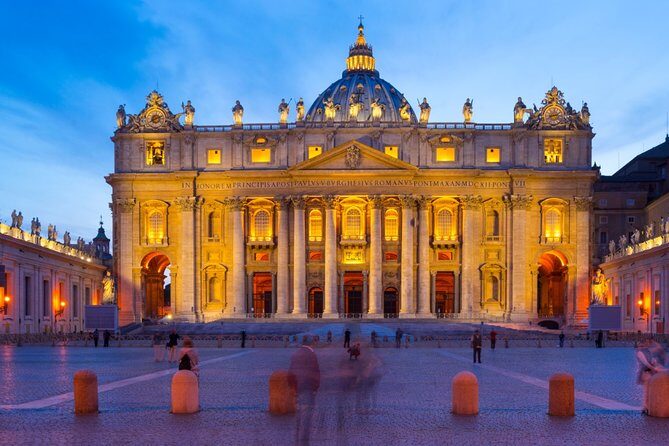
On Aventine Hill, you’ll stop at the Basilica of Santa Sabina. This is one of the earlier churches in Rome, and you’ll have about 15 minutes here. Admission for this stop is free.
In a short window, the tour wisely targets the most iconic visual element: the wooden doors carved with Biblical scenes, plus a look at the interior. Even if you can’t absorb everything in 15 minutes, you’ll still leave with a clearer sense of how early churches used art and imagery to teach.
The drawback is obvious: 15 minutes can feel like a quick glance if you want to read every inscription or study every panel. But for many people, this is the exact trade-off that makes the tour work overall. You don’t lose half a day on one site, and you still get the most recognizable features.
Also, Aventine Hill is part of the reason this works. It helps “spread out” the story of early Christianity across different Roman neighborhoods rather than keeping you stuck in the same cluster of tourist-heavy streets.
Domine Quo Vadis: a story you can feel at your feet
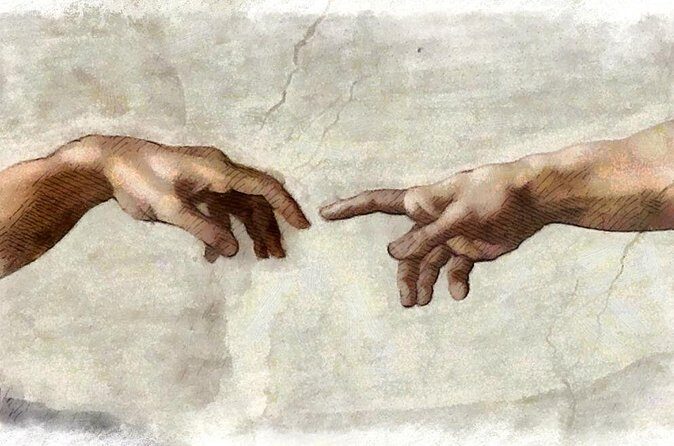
Your fourth stop is the Church of Domine Quo Vadis, with about 15 minutes on site. Admission is free for this stop.
This church centers on a tradition connected to St. Peter and his flight from persecution along the Appian Way. The site is associated with a footprint of Jesus where he met St. Peter on his way out of Rome, according to tradition. One especially detailed account included the famous exchange: Quo vadis? with the reply in Latin, Romam vado iterum crucifigi (I am going to Rome to be crucified again). It’s a story that can feel very personal when you’re standing at the place that claims the moment.
This is the kind of stop that rewards the mindset of the tour: it’s not only about buildings, it’s about how Christians interpreted events, shaped devotion, and kept their identity alive under pressure.
If you don’t care about religious tradition and want only material history, you might find this one more emotionally charged than you expected. Still, even from a history perspective, it’s worth seeing how the story survives in stone, symbol, and sacred memory.
Dress code again. This is a place of worship, and the rule about covering knees and shoulders applies here too.






Carcer Tullianum (Mamertine Prison): the link that hits hard
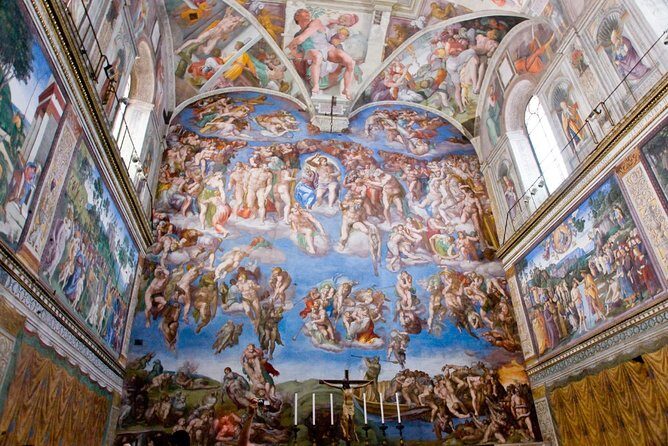
The day ends with the Carcer Tullianum, also known as the Mamertine Prison. This is the site tied to the imprisonment of Peter and Paul. You’ll have about 30 minutes here.
Admission is not included. The tour information gives a few pricing notes depending on entry options, with figures like €12 per person listed in one place and lower options like €6 per person mentioned elsewhere. Practically, you should plan on paying on site, and your guide will help you handle the admission decision.
This stop is powerful because it brings the story to a physical site associated with confinement. Whether you view it through faith, history class, or both, the prison theme is the kind of setting that makes the earlier catacomb visit make more sense. You move from burial systems to detention spaces and start seeing the wider pattern of risk.
A timing note: 30 minutes is enough to understand the location and absorb the key points without rushing you out immediately. If you want to linger, you may be constrained by the tour flow, but it’s still a better length than many “photo stop” experiences.
Price and value: what you’re paying for at $469.14 per person
At $469.14 per person, this is not a budget add-on. So the question isn’t whether it’s expensive. It’s whether it replaces several other things you’d otherwise pay for.
Here’s the value logic. You’re paying for a private day: pickup and drop-off, a driver, a private vehicle, and live commentary. You also avoid the stress of piecing together timing for multiple sites spread across Rome. For many people, that alone is worth real money, especially if you’re short on time or you dislike standing in multiple ticket lines back-to-back.
You’ll still pay separate entrance fees for the catacombs and the prison, and you’ll need to handle lunch yourself. So the total day cost will be more than the headline price once you add those admissions. But the trade-off is that the tour handles the flow and includes time where it matters most, like the catacombs’ guided tour length and the historical framing at each stop.
Booking demand is also a clue. The tour is commonly booked about 74 days in advance on average, which suggests you should plan ahead if you’re traveling at peak times.
If you’re a solo traveler or a couple, the private format can feel pricey. If you’re traveling as a small family or group and want your own guide voice to match your interests—especially if you care about early Christianity rather than only Renaissance or baroque Rome—this can be a strong fit.
What you’ll learn: history context without turning it into a lecture
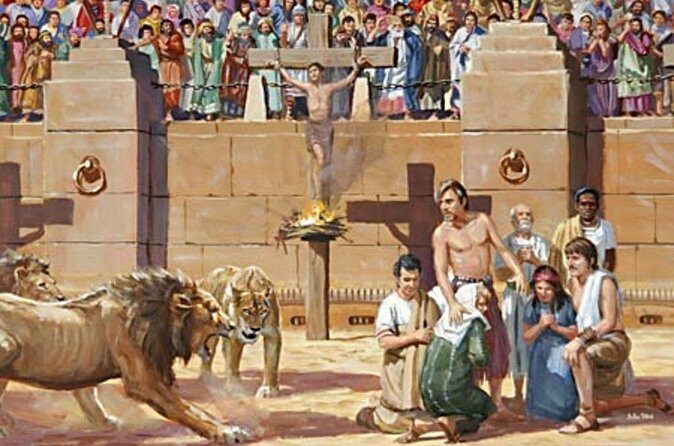
This tour is Christian centric, but it’s not only about repeating church doctrine. The strongest guide days lean into context: why these communities formed, what was risky, and how the story of Peter and Paul connects across different kinds of sites—churches, a prison, and the underground world of burial.
Some reviews praised guides for handling the balance between historical facts and later traditions. One account described Luca separating historical facts from unprovable church legends, which is a great sign if you want a clear-headed approach rather than everything treated as equal certainty.
You’ll also get something practical: a framework that helps you make sense of what you see at each location. For example, the day starts with St. Paul’s basilica, then shifts underground to the catacombs, then back up into early church spaces and story sites like Domine Quo Vadis. That sequencing makes the theme feel logical.
And if you enjoy small details, there are moments like one guide who pointed out local plants such as capers and bay leaf bushes. It’s a reminder that Rome’s story isn’t only in monuments; it’s also in everyday landscapes that existed alongside these sacred spaces.
If you’re the type who likes to compare “then and now,” one guest recommended the Rome Reconstructed flip book, saying it helped the ruins feel real. If you’re the visual learner, that’s an optional add-on worth considering before your day starts.
Practical tips so you don’t lose time at the door
A few practical things make a big difference on this kind of day:
- Dress for entry: knees and shoulders must be covered for men and women. No shorts or sleeveless tops. If you ignore this, you risk refused entry, which can wreck the schedule.
- Wear sturdy shoes: especially for the catacombs where surfaces can be uneven.
- Expect entrance fees on site: catacombs and the prison require separate payment, and prices vary by the listed options and ticket types.
- Plan for brief stops: 15 minutes is the norm at some churches, so keep your questions ready and listen for the guide’s top points.
- Moderate fitness helps: the tour is manageable for many people, but the catacombs visit is the part where you’ll feel the physical side of “underground history.”
If you want to get the most out of the day, arrive with at least a basic mental map of Peter and Paul in Rome. The sites are connected by theme, not by one straight road. When you understand the story arc before you start walking into the spaces, your time gets better.
Should you book this tour?
Book it if you want a private, early-Christian-focused day that hits major Peter-and-Paul sites plus the catacombs, with guided context while you ride between locations. It’s a great fit for religious history buffs, Bible study travelers, and anyone who wants to understand how Christianity took shape inside ancient Rome’s world—without trying to stitch the puzzle together alone.
Skip it or adjust your expectations if you need long, unhurried time inside each church, or if you dislike any tour that includes tradition-focused sites like Domine Quo Vadis. This is a highlight route with efficient timing, and the day moves.
If you’re deciding right now, here’s my simple checklist: can you follow the dress code, are you okay paying separate entrances for the catacombs and prison, and do you want a private guide telling the story in order? If yes, this is the kind of day that can stick with you long after you leave Rome.
FAQ
What time does the tour start, and how long is it?
The tour starts at 8:30am and runs for about 7 hours.
Is pickup and drop-off included?
Yes. You can get pickup and drop-off directly from your accommodation in Rome, or from the airport on arrival.
Are entrance fees included?
Not all of them. Entrance fees are not included for the Catacombs of Saint Callixtus and Carcer Tullianum, which you pay on site. Lunch is also not included.
What dress code do I need for churches and worship sites?
You must cover knees and shoulders. No shorts or sleeveless tops are allowed for men and women. You may be refused entry if you don’t meet the dress requirements.
Is the tour physically demanding?
It calls for a moderate physical fitness level.
Can I cancel for a full refund?
Yes. Free cancellation is allowed up to 24 hours before the experience’s start time for a full refund.