REVIEW · CATACOMBS TOURS
Christian Rome Private Tour: Papal Basilica/Catacombs/Appian way
Book on Viator →Operated by Eternal City Private and Guided Tours · Bookable on Viator
Underground Rome and the road to power.
This private Christian Rome route strings together early Christian burial sites and major pilgrimage spots, while staying grounded in the geography people actually walked—especially along the Appian Way. I especially love the chance to see the Catacombs of San Callisto and end at Basilica of Saint Paul Outside the Walls. One thing to consider: the Pyramid of Cestius admission is not included, so you may need to pay an extra fee on the day.
You get hotel pickup and drop-off plus private transportation, and the tour runs about 4 hours in English. It’s a smart use of limited time because you’re not wasting it hopping around Rome in pieces—you’re moving through a single Christian-and-ancient corridor with short, focused stops. Plan for a bit of walking between sights, and also note that food and drinks are not part of the price.
In This Review
- Key highlights to look for
- The Appian Way route makes Christian Rome feel real
- Porta San Sebastiano: starting at the Porta Appia
- Catacombe di San Callisto: early Christian burial underground
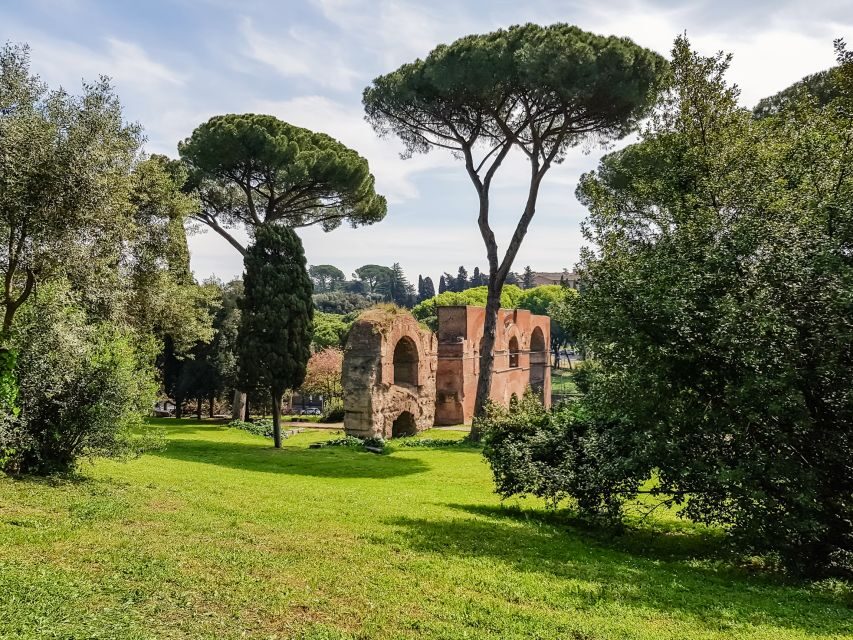
- Via Appia Antica: the queen of roads, not just a photo line
- Santa Maria in Palmis (Domine Quo Vadis): the Peter story on a specific site
- Villa di Massenzio: imperial power in three linked structures
- Pyramid of Caius Cestius: a great shape, with a ticket catch
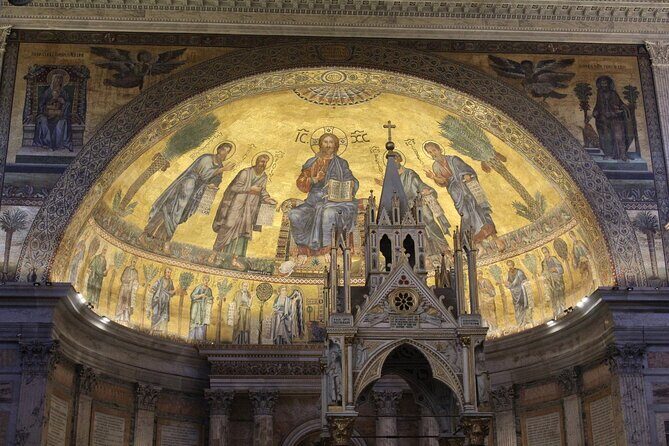
- Basilica Papale di San Paolo Fuori le Mura: a major pilgrimage church
- Giardino degli Aranci and the Aventine: views that change your perspective
- Circo Massimo: ancient entertainment, still shaping the skyline
- Price and value: why this one can make sense
- Who this tour fits best
- Should you book this Christian Rome private tour?
- FAQ
- How long is the Christian Rome private tour?
- What is the price per person?
- Is this tour in English?
- Is hotel pickup and drop-off included?
- Is the Catacombs of San Callisto guided?
- Are entrance tickets included for all stops?
- Do I need to buy tickets for the Pyramid of Caius Cestius?
- Is food and drink included?
- Is this really private for my group?
- What if I need to cancel?
Key highlights to look for
- Catacombs of San Callisto guided access (ticket included)
- Via Appia Antica exploration with context on why this road mattered
- Domine Quo Vadis church tied to the Peter-Christ tradition
- Villa of Maxentius and the feel of Roman imperial scale
- Aventine views from the Orange Trees Garden (Giardino degli Aranci)
- St Paul Outside the Walls as one of Rome’s major papal basilicas
The Appian Way route makes Christian Rome feel real
Christian Rome can turn into a checklist: basilica here, museum there, photo spot everywhere. This tour keeps it human. You’re tracing a spine of Rome’s ancient world—the Appian Way—so the story isn’t just inside buildings. It’s in the ground, the gates, and the way these sites relate to one another.
You’ll get a mix of early Christian memory and Roman imperial remains. That combination is useful for you if you want more than pretty architecture. It helps you understand why certain places gained lasting spiritual weight.
And since this is a private tour for just your group, the guide can keep the pace sensible and your questions in the loop—without the usual crowd-speed pressure.
You can also read our reviews of more private tours in Rome

Porta San Sebastiano: starting at the Porta Appia

The tour begins at Porta San Sebastiano, which was originally known as the Porta Appia. This gate sat on the Appian Way (the regina viarum, the queen of roads), the long-distance road that connected Rome to the south. Even if you only have a short stop, you’ll quickly get the point: you’re beginning in the exact kind of place that made Rome feel connected to the wider world.
Why I like this start: it sets your mental map fast. You’re not dropping into Rome’s Christian sites randomly—you’re stepping onto the same historic corridor.
A practical consideration: the stop is about 15 minutes. That’s enough for orientation and context, not enough to linger. If you want more time here, you could plan a return later on your own.
Catacombe di San Callisto: early Christian burial underground
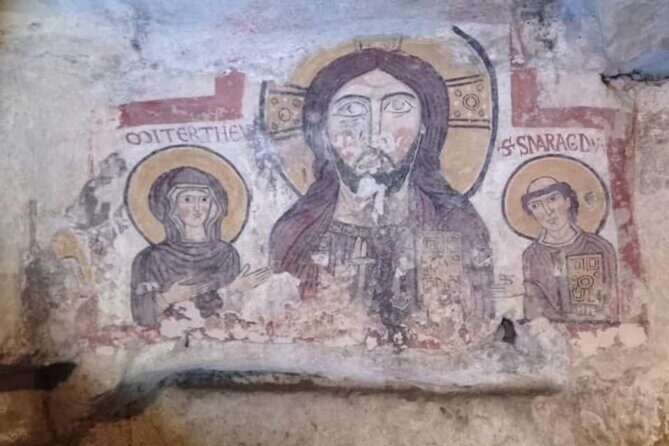
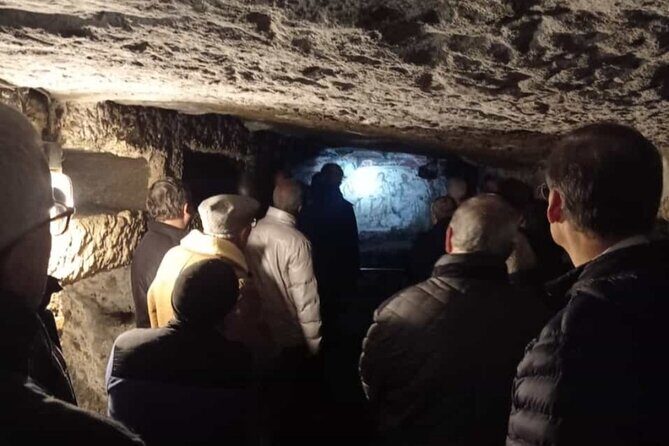
Next comes Catacombe di San Callisto (Catacombs of Rome in general are ancient underground burial places, with many discovered only in recent decades). This stop runs about 45 minutes, and the catacombs ticket plus guided group tour are included.
What you should expect underground: a quieter, earth-level experience where the artifacts and burial spaces help explain how early Christians marked faith and memory. The fact that there are at least forty catacomb complexes around Rome also matters. You’re seeing one major example in a city where this underground tradition shaped religious life.
Why this is valuable for you: a guided visit changes catacombs from a set of tunnels into a story. You’ll get help placing what you’re seeing in the broader picture of early Christian community life.
One drawback to plan around: catacombs are not a slow stroll. The time is set, and you’ll follow the group flow underground. If you’re sensitive to enclosed spaces, consider that before booking.
Via Appia Antica: the queen of roads, not just a photo line
After the catacombs, you step onto Appian Way (Via Appia Antica), described as one of the earliest and strategically important Roman roads of the republic. This road connected Rome to Brindisi in southeast Italy, and it’s closely tied to the Roman censor Appius Claudius Caecus, who began the first section in 312 BC.
Even with a short 15-minute exploration time, the Appian Way hits differently because it’s an actual route, not a single monument. You’ll connect the dots between the gate, the imperial-era scale, and the later religious meaning that people built along these same lines.
Practical tip: because your stop is brief, wear shoes you can trust. You’ll want comfortable footing for walking on uneven historic surfaces.
Santa Maria in Palmis (Domine Quo Vadis): the Peter story on a specific site
You then visit Chiesa del Domine Quo Vadis, also known as Santa Maria in Palmis. It’s about 800 meters from Porta San Sebastiano, near where the Via Ardeatina branches off the Appian Way.
This church matters for Christian travelers because of the tradition tied to the apocryphal Acts of Peter: Saint Peter meets the risen Christ while fleeing persecution in Rome. In that tradition, Peter asks, Domine, quo vadis?—Lord, where are you going? The answer is that Christ is going to Rome to be crucified again.
What I like here is the connection between place and meaning. Instead of hearing a story in the abstract, you experience it at a physical stop linked to the tradition.
A consideration: like several other stops here, it’s around 15 minutes. So think of it as a moment of context and orientation, not a long sit-down.






Villa di Massenzio: imperial power in three linked structures
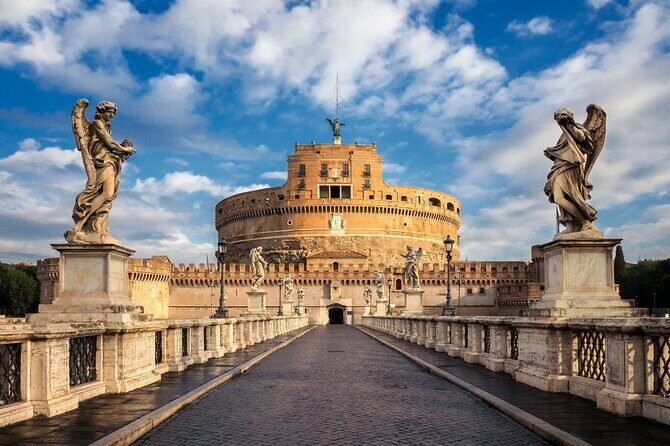
Next is Villa di Massenzio, the Villa of Maxentius on the Appian Way between the second and third miles. The complex is known for three main buildings: the palace, the circus of Maxentius, and the dynastic mausoleum—designed as an inseparable architectural unit to honor Maxentius.
This stop helps balance the tone of the itinerary. Catacombs and a Peter story are intimate and spiritual. Maxentius is the opposite: Roman rule expressed through scale and planning.
Why it’s worth your time even if you’re not a hardcore architecture fan: it shows how the ancient world layered itself. The same road corridor that held early Christian memory later carried imperial ambition.
Pyramid of Caius Cestius: a great shape, with a ticket catch
The Pyramid of Caius Cestius is a Roman-era pyramid used as a tomb for Gaius Cestius, a member of the Epulones religious corporation. It’s near Porta San Paolo and the Protestant Cemetery, and it’s one of the best-preserved ancient buildings today because it was incorporated into city fortifications.
This is a quick 15-minute stop, and here’s the practical note: admission isn’t included. You might pay an extra fee on the day depending on what’s open and what your guide plans.
If you’re trying to keep costs controlled, treat this as the one possible “surprise line item.” If the pyramid visit works for your interests, it’s a strong addition. If you’d rather spend your money elsewhere, you can still enjoy seeing it from the outside as a striking example of Roman funerary design.
Basilica Papale di San Paolo Fuori le Mura: a major pilgrimage church
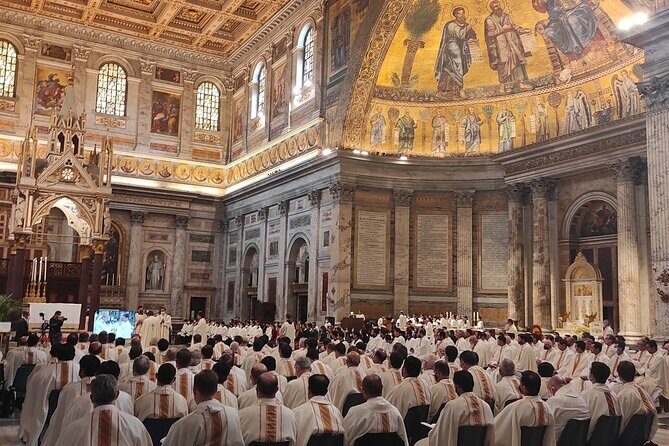
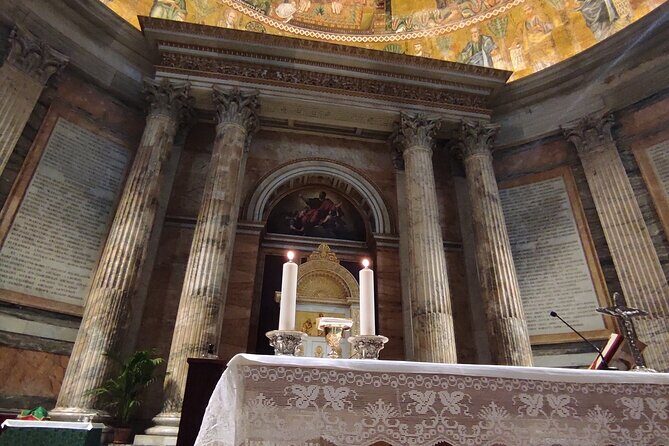
Now you reach Basilica Papale Di San Paolo Fuori le Mura (Saint Paul Outside the Walls). It’s one of Rome’s four major papal basilicas, alongside the basilicas of Saint John in Lateran, Saint Peter’s, and Saint Mary Major. It’s also listed among the Seven Pilgrim Churches of Rome.
This is one of the itinerary’s strongest payoffs because the basilica functions as both a church and a landmark of Christian pilgrimage. For you, that usually means you’ll want time to slow down a bit once you’re inside—even if your stop is about 25 minutes.
Why the earlier Appian Way stops matter: they give context before you enter. By the time you reach Saint Paul Outside the Walls, you’re not just walking into a famous building. You’ve been traveling through the ancient corridor where Rome’s layers—Roman, imperial, and Christian—overlap.
Giardino degli Aranci and the Aventine: views that change your perspective
After the basilica, the tour heads to Giardino degli Aranci (Orange Trees Garden) in the Parco Savello on the Aventine Hill. This garden covers about 7,800 square meters, and it’s known for an excellent view over the city. The garden as it exists today was designed in 1932 by Raffaele De Vico.
Then you get an Aventine stop. The Aventine Hill is the southernmost of Rome’s seven hills, so it helps you feel Rome’s topography rather than just its signage.
This portion is short, but for me it’s important. After underground catacombs and stone ruins, a view stop lets your brain reset. It also helps you connect what you’ve seen at street level to the city spread around it.
Circo Massimo: ancient entertainment, still shaping the skyline
The final stop is Circo Massimo, the ancient Roman chariot-racing stadium and mass entertainment venue. It sits in the valley between the Aventine and Palatine hills. It was the first and largest stadium in ancient Rome and later the Empire.
This is your closing scene, about 10 minutes. It’s quick, but it rounds out the Roman picture. Not every stop is purely spiritual. You also see the Roman appetite for public spectacle, which explains a lot about why Rome looked the way it did.
If you’re a photo person, time here is often well spent. The structure of the valley and the scale cues are obvious even in a brief stop.
Price and value: why this one can make sense
At $220.13 per person for roughly 4 hours, this tour isn’t the cheapest way to do Rome. But it’s also not trying to be. The value comes from combining several things you’d otherwise piece together yourself:
- Private transportation
- Hotel pickup and drop-off
- Catacombs guided group tour with entrance included
- Multiple major Christian and ancient sites where some entries are free on the itinerary
For many travelers, the biggest savings is time and coordination. Instead of organizing pickup, then finding your way to each stop, you’re guided between them in a tight loop focused on Christian Rome and the Appian Way corridor.
One watch-out for value: the Pyramid of Caius Cestius admission isn’t included. If you want that inside visit, factor in a little extra budget.
Who this tour fits best
This tour fits you if you want Christian Rome to feel grounded in place. It’s also a good match if you like stories anchored in real locations—like the tradition at Domine Quo Vadis—and you want a guided experience at the one part that often needs it most: the catacombs.
It may be less ideal if you prefer long museum-style pacing or you hate walking. Many stops here are short by design, so it’s about moving efficiently through meaningful points.
Best match: couples, friends, and small groups who want a guided storyline without spending the whole day in transit.
Should you book this Christian Rome private tour?
Yes, I think you should book it if you want a focused, Christian-leaning Rome day that actually uses the Appian Way corridor instead of treating Rome like separate islands.
I’d especially recommend it when you care about the catacombs experience with a guide and you want Saint Paul Outside the Walls without stressing over logistics. If you’re cost-sensitive, keep an eye on the Pyramid of Caius Cestius since admission isn’t included.
If your priority is maximum time at one site, then you might prefer a slower plan with fewer stops. But if you want a meaningful loop that hits early Christian memory, imperial Rome, and panoramic views, this is a strong use of a half-day.
FAQ
How long is the Christian Rome private tour?
It runs about 4 hours.
What is the price per person?
The price is $220.13 per person.
Is this tour in English?
Yes, it’s offered in English.
Is hotel pickup and drop-off included?
Yes, hotel pickup and drop-off are included, and pickup is offered.
Is the Catacombs of San Callisto guided?
Yes. The tour includes a guided group tour of the Catacombs of San Callisto, and the entrance ticket is included.
Are entrance tickets included for all stops?
Not all. Entrance tickets are included for the catacombs, and Saint Paul Outside the Walls is listed as free. The Pyramid of Caius Cestius does not include admission.
Do I need to buy tickets for the Pyramid of Caius Cestius?
Admission for the Pyramid of Caius Cestius is not included, so you may need to purchase it separately.
Is food and drink included?
No. Food and drinks are not included.
Is this really private for my group?
Yes. It’s described as a private tour/activity, with only your group participating.
What if I need to cancel?
You can cancel for free up to 24 hours in advance for a full refund. If you cancel less than 24 hours before the start time, the amount paid is not refunded.