REVIEW · ROME
Castel Sant’Angelo | The Tomb of Hadrian Private Guided Tour
Book on GetYourGuide →Operated by Tour in the City - Travel Agency Rome - · Bookable on GetYourGuide
Castel Sant’Angelo hits you fast. One moment you’re staring at the marble sculptures on Ponte Sant’Angelo, and the next you’re stepping into a building that has reinvented itself for centuries: tomb, palace, fortress, prison, and museum. I love the skip-the-line access, which keeps the focus on the stories. I also love the feel of a private guide walking you through the art and the darker turns of Roman history at a pace that actually makes sense.
One heads-up: there’s a moderate amount of walking, and it’s not wheelchair accessible. Also, inside the castle you’ll be able to visit a little chapel, but you’ll need shoulders and knees covered.
In This Review
- Key things you should know before you go
- Castel Sant’Angelo feels like Rome in layers (and your guide makes it click)
- Ponte Sant’Angelo statues: your quick lesson in why this bridge matters
- Straight into the fortress: what skip-the-line really buys you
- Hadrian’s origin: the tomb that became a stage for power
- Papal rooms and Raphael’s-school frescoes: where decoration meets politics
- Michelangelo’s courtyard: a famous style note you’ll actually place
- The prison story: trapdoors, hidden cells, and the mood shifts
- From museum to viewpoint: the rooftop terrace and bridge photos
- Art, literature, and why Dan Brown keeps showing up
- Price and value: is $225.44 per person worth it?
- Practical stuff that affects your experience more than you’d think
- Who should book this private Castel Sant’Angelo tour
- Should you book this tour?
- FAQ
- Where do I meet my guide?
- How long is the tour?
- Is this a private tour?
- What languages are available?
- Does the price include entrance fees and skip-the-line access?
- What should I bring and wear?
- Is the tour wheelchair accessible?
- Can I cancel and get a full refund?
Key things you should know before you go
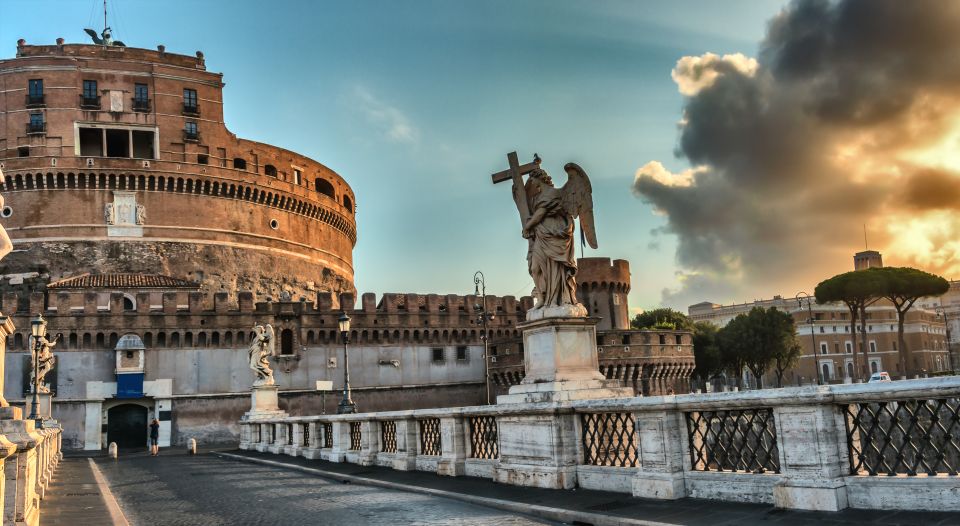
- Ponte Sant’Angelo statues first, then straight into Castel Sant’Angelo for efficient sightseeing
- Private guide + headsets so you don’t miss the details (and you can ask questions)
- Hadrian to popes to prisons: you’ll follow the building’s changing roles, not just the rooms
- Michelangelo’s courtyard and decorated papal spaces, including fresco details tied to Pope Clement VII
- Rooftop terrace views over Rome, plus photo-friendly angles from the area near the bridge
Castel Sant’Angelo feels like Rome in layers (and your guide makes it click)
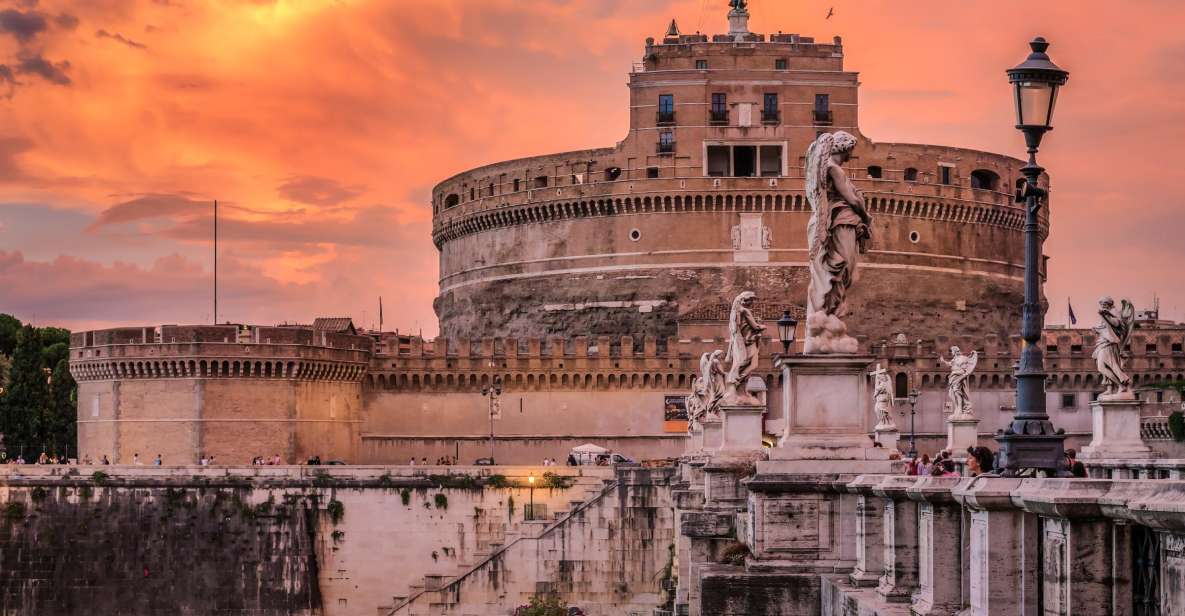
If you like your travel with a storyline, Castel Sant’Angelo is a great match. This site has lived multiple lives, so the experience works best when someone helps you keep track of who used it and why. With a private guide and headsets, you can listen closely without craning your neck through crowds.
I like that the tour starts in a place that sets the tone right away. You meet at the main entrance area near Lungotevere Castello n° 50, and you’re positioned by the river and the bridge approach. That means the first big “wow” isn’t the castle door—it’s the walkable lead-in, where the Tiber and Ponte Sant’Angelo set the stage for the fortress beyond.
The tone also shifts from grand art to grim reality. You’ll hear about dramatic escapes and grim punishment as the building’s function changed over time. That mix is the real payoff: it’s not a museum that only tells one mood.
You can also read our reviews of more tours and experiences in Rome.



Ponte Sant’Angelo statues: your quick lesson in why this bridge matters
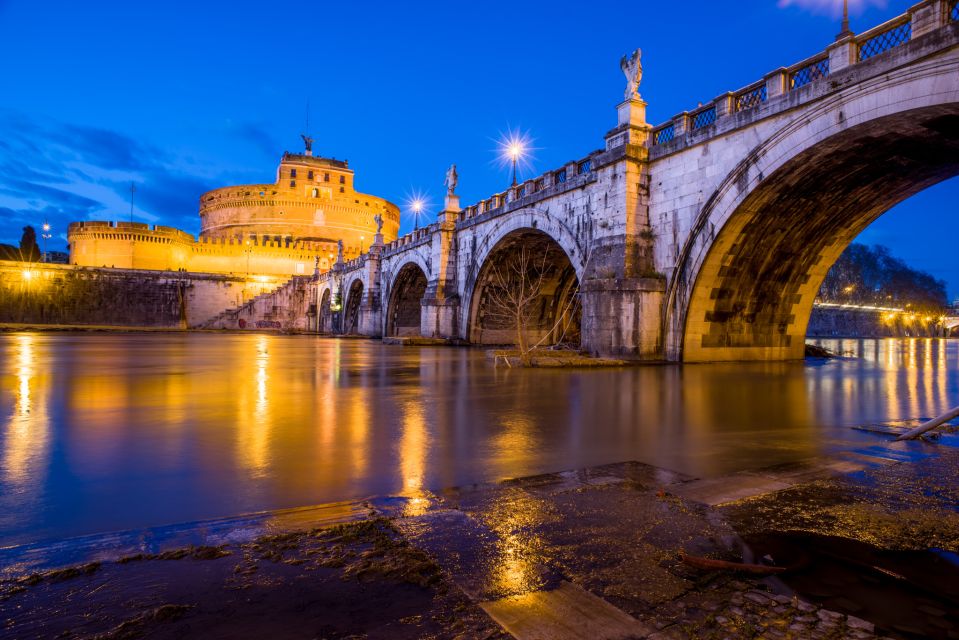
You’ll begin with Ponte Sant’Angelo—an iconic bridge crossing the Tiber that acts like Rome’s connecting tissue. The tour focuses on the sculptures on the bridge, and that matters more than you might think. These statues aren’t just decoration. They help you read the entire area as part of the city’s “story space,” where religion, power, and art overlap.
On a standard visit, people tend to hurry across, snap a couple of photos, and move on. Here, you’ll slow down just enough to notice the statues and understand what they’re doing in the bigger picture. It’s a short segment, but it gives you context before you step into the fortress itself.
If you’re the type who loves connections—how one place influences another—this is where your guide sets you up. You’ll leave the bridge with a better sense of direction and meaning, so Castel Sant’Angelo feels less random when you enter.
Straight into the fortress: what skip-the-line really buys you
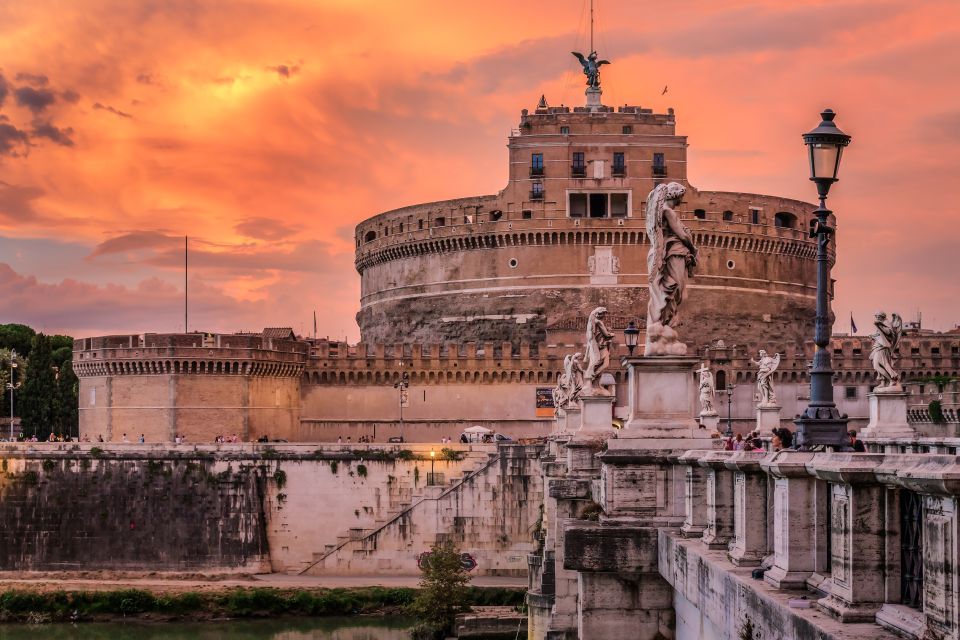
The best part of a private tour here is how little time you waste. The tour includes skip-the-line access, which is a practical win at Castel Sant’Angelo. It’s a popular stop, and waiting in line is the fastest way to drain your energy.
Once inside, the pace is guided and purposeful. You won’t be wandering room to room trying to guess what you’re looking at. Instead, your guide walks you through how the site evolved—starting with Hadrian’s Mausoleum, then shifting into papal residence, and later becoming a fortress and prison.
One thing I appreciate: the guide isn’t only describing what you can see. They’re explaining why the same spaces changed roles. That’s what turns a set of rooms into a coherent story.
Hadrian’s origin: the tomb that became a stage for power
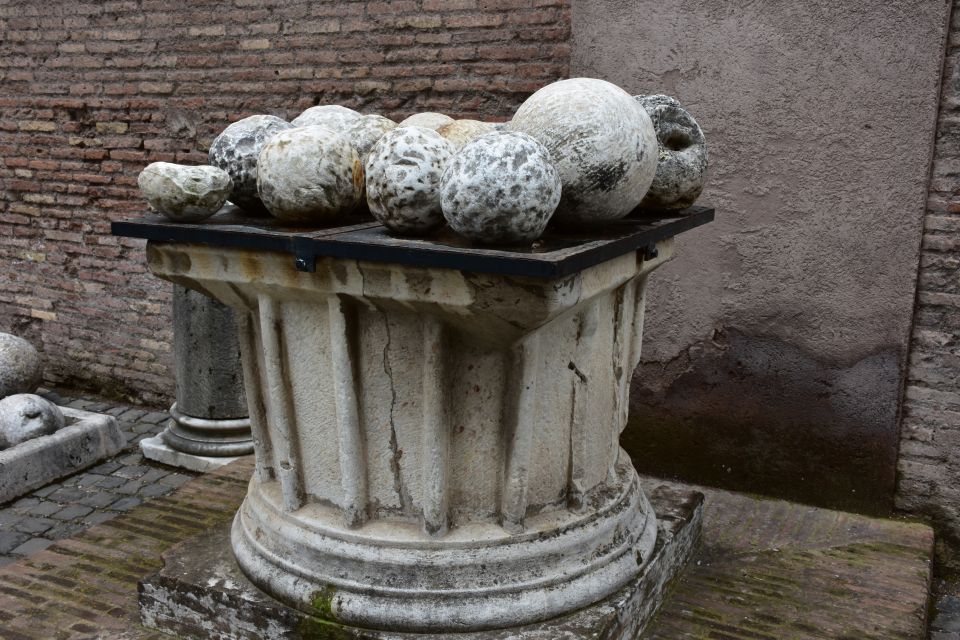
You’ll start with Hadrian—the emperor whose mausoleum this began as. You don’t need a degree in Roman politics to get it, because the guide translates the “why” into plain language: this was an imperial statement in stone, positioned at the edge of a major river route.
What you gain from a guided visit is perspective. The structure looks solid and imposing, but it becomes even more compelling when you understand it as a symbol that later leaders adapted. You’re not just touring a building. You’re following the building’s job description changing over time.
This part is most rewarding if you like history that shows cause and effect. You’ll connect the site’s placement and design to the later uses—especially once the story shifts to the popes and then the fortress era.
Papal rooms and Raphael’s-school frescoes: where decoration meets politics
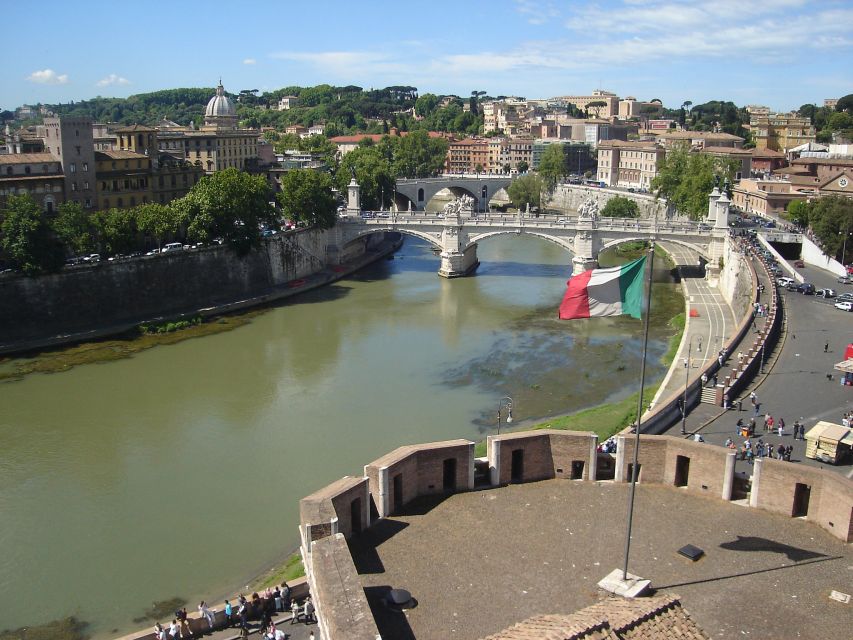
One of the tour highlights is the chance to see opulent rooms once used by popes. A standout example is Pope Clement VII’s bathroom, including frescoes associated with Raphael’s school. Even if you’re not chasing art terms, you’ll feel the difference between these spaces and the colder prison areas.
This is also where a good guide makes the experience richer. Instead of treating the decoration as a “pretty stop,” you’ll learn what these rooms were for and how papal power used art and luxury to communicate authority.
You’ll also get the feel of the castle’s materials—gilded stuccos and gleaming marble floors are mentioned as part of the visual experience. The contrast is part of the drama: beautiful surfaces sitting above or beside darker uses.
If you’re a fan of architecture and visual symbolism, this segment is one of the best reasons to book a private guide.



Michelangelo’s courtyard: a famous style note you’ll actually place
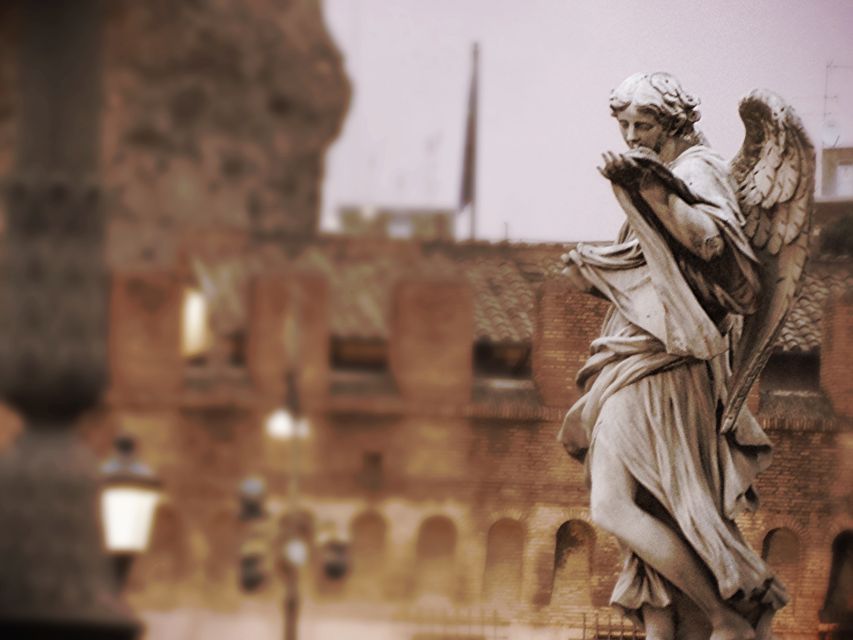
The tour also includes time to admire Michelangelo’s courtyard. That may sound like a quick checkbox on paper, but it helps in the moment. A courtyard is where you naturally slow down. It’s also a place where architectural choices stand out because you can see the space as a whole.
Your guide helps you “read” it as part of the building’s ongoing transformation. So you’re not just looking at stone—you’re noticing how designers shaped movement, light, and mood.
It’s one of those stops that works especially well if you enjoy photography. Even in a short time, you’ll get angles you can’t replicate from inside hallways.
The prison story: trapdoors, hidden cells, and the mood shifts
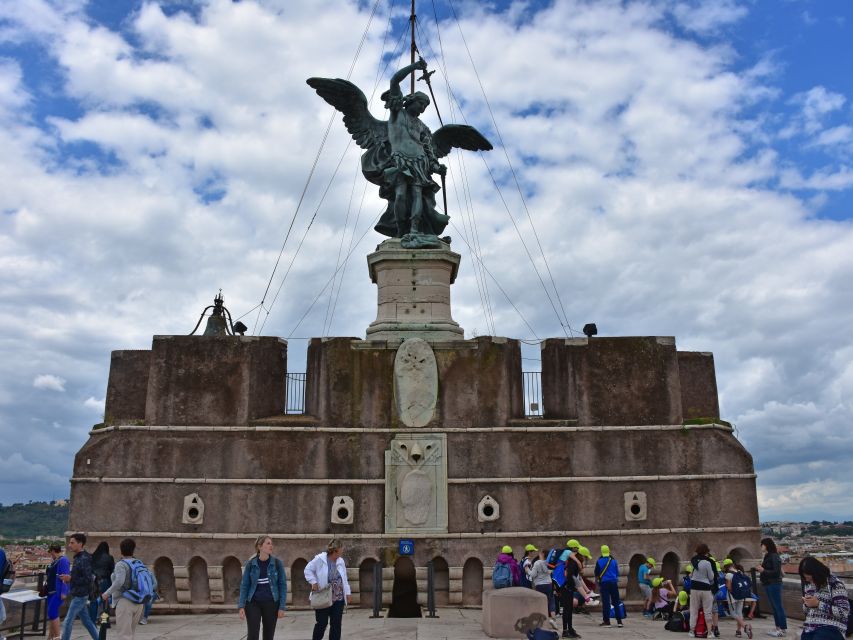
This is the portion that changes your breathing. The castle isn’t only a palace. It’s also a prison, and the tour doesn’t shy away from the grim details.
You’ll hear about the most dreaded cell—a confined space above Hadrian’s Mausoleum’s spiraling ramp, reachable only through a trapdoor. You’ll also learn about another hidden cell in the floor used for the disposal of bodies. Those details are intense, but they’re exactly what gives Castel Sant’Angelo its reputation.
I like that the guide frames these moments so they don’t become random shock facts. Instead, they connect the prison areas to the broader evolution of the site. When you understand how and why power trapped people here, the architecture stops being abstract.
If you prefer light and cheerful attractions, this might be a heavier tour than you expect. But for many people, that realism is the reason this place feels unforgettable.
From museum to viewpoint: the rooftop terrace and bridge photos
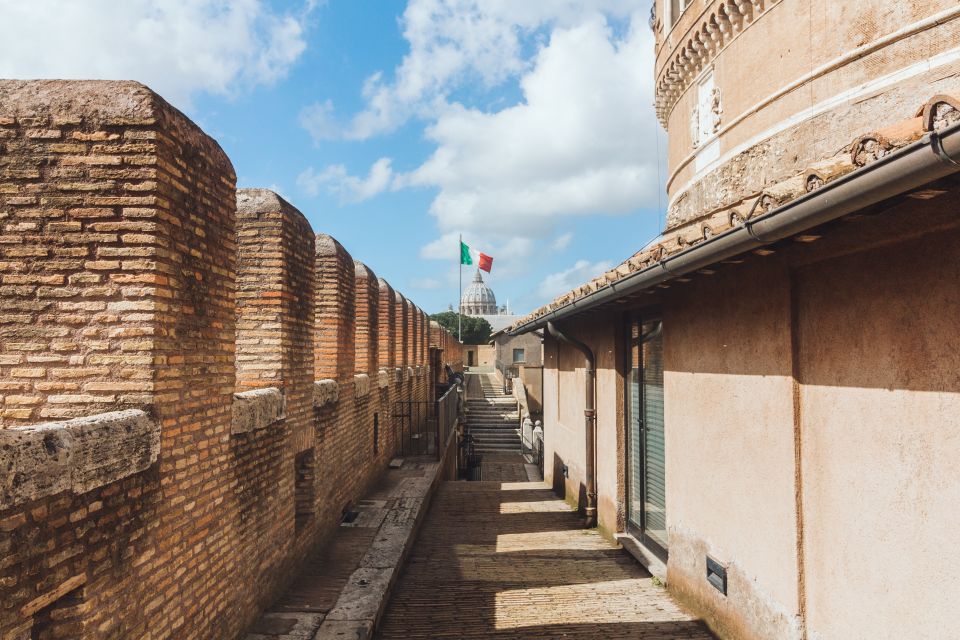
After the indoor segments, you’ll ascend to the rooftop terrace. This is where you get the reward—wide views of Rome that help you reset after the heavy prison story.
The rooftop angle also ties back to earlier moments. The terrace and the Castel Sant’Angelo Bridge area make it easier to understand why this site matters geographically. You can see the city in the way your mind expects it to look when you’re listening to a guide explain the river route.
This is also the best time to take photos without feeling rushed. With a private setup, you’re less likely to be herded along. You can pause, adjust, and get the shot you actually want.
Art, literature, and why Dan Brown keeps showing up
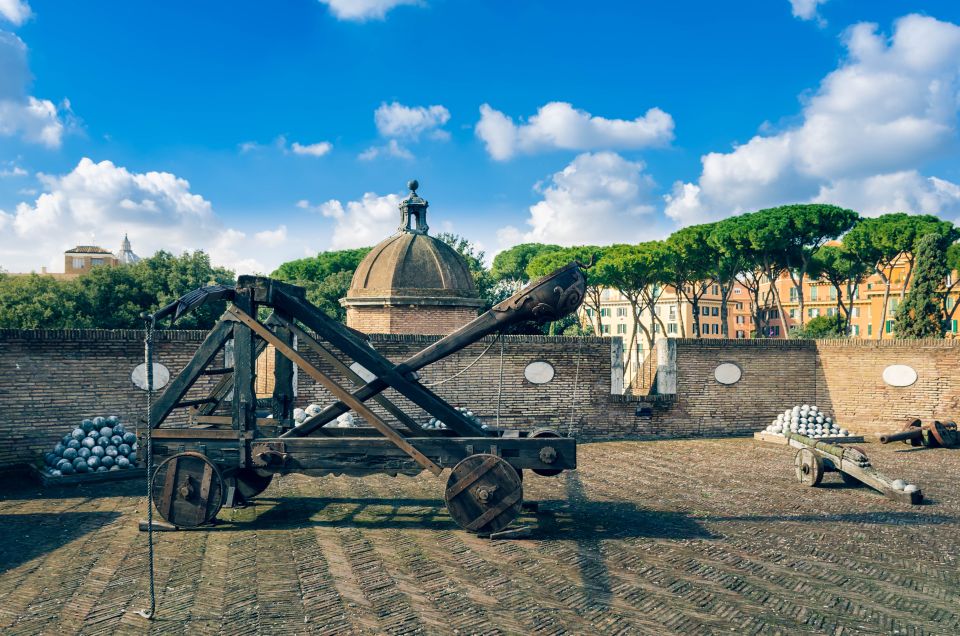
Castel Sant’Angelo has a reputation in popular culture, and the tour references how dramatic parts of its history show up in creative works like Dan Brown’s Angels and Demons. Even if you’re not chasing book facts, this angle helps you see why the site clicks with modern audiences.
In a guided format, that reference becomes more than a trivia moment. It’s a shortcut to understanding the building’s dramatic energy—why writers keep returning to these spaces when they need tension and intrigue.
One more bonus from the way guides teach here: the tour style can connect subjects beyond strict museum walls. Some guides are especially strong at linking the Roman Empire side with the church side, and even touching art and music history in the explanation. That makes the visit feel less like a checklist and more like a real understanding of how ideas traveled through time.
Price and value: is $225.44 per person worth it?
At $225.44 per person for a 2-hour private guided visit, you’re paying for four things you can’t easily replicate on your own:
1) Skip-the-line access, so you start seeing things faster
2) A professional art/history guide, not a quick audio tour
3) Headsets, which matter in crowded historic sites
4) Entrance fees included, so you’re not adding surprise costs at the door
The time also matters. Two hours is long enough for a real guided experience at Castel Sant’Angelo, but short enough that you can still enjoy the rest of your day in Rome.
Private tours get better value when you’re not traveling solo. This one works with a minimum of 2 and a maximum of 10, so couples and small groups can split the cost in a way that feels more reasonable than solo pricing on similar tours. If you’re the kind of traveler who learns best by asking questions, the guide’s time becomes the value.
If you’re only interested in quick exterior photos and the fastest possible route, you might prefer a cheaper self-guided plan. But if you want the full story—tombs, popes, fortress walls, and the prison details—this price can make sense.
Practical stuff that affects your experience more than you’d think
Comfort matters here. You’ll want comfortable shoes because there’s moderate walking. The tour also has a smart casual dress code.
Inside the castle, there’s a little chapel you can visit, but shoulders and knees must be covered to enter. That’s a common rule in Roman religious spaces, and it’s worth planning for so you don’t get stuck outside.
Also note what’s not allowed: pets, oversize luggage, smoking, and walking frames. It’s not a place where big items help.
Finally, it’s not wheelchair accessible. If mobility is an issue, plan for a different format or ask ahead about what parts of the site can be done comfortably.
Who should book this private Castel Sant’Angelo tour
This tour is a strong fit for:
- History and art lovers who want a guide to explain what you’re seeing
- People who like a mix of beauty and darkness, not just pretty rooms
- Travelers who want Rome viewpoints without fighting crowds
- Small groups who’d rather ask questions than speed through
It’s also a good choice if you already know Rome has layers, but you want someone to connect them clearly. The story of Hadrian becoming papal residence, then later fortress and prison, is much easier to follow with a live guide.
And if you’re the “teach me something” type, this format tends to shine. Guides have been described as enthusiastic and able to answer questions with real connections—so you leave with more than photos.
Should you book this tour?
Book it if you want a guided, efficient way to understand Castel Sant’Angelo as a multi-role site: mausoleum, papal palace, fortress, prison, museum, and viewpoint. Skip-the-line access plus a private guide is the value mix that helps this place really land.
Skip it if you only want a quick look and you don’t care about the prison story or the art details. In that case, self-guided might feel better for your time and budget.
If you’re somewhere in the middle—curious, but not sure how much you’ll enjoy history—this is still a smart bet because the guide keeps the pacing readable and the stops purposeful.
FAQ
Where do I meet my guide?
You meet outside Castel Sant’Angelo’s main entrance with a Tour in the City sign. The address is Lungotevere Castello n° 50.
How long is the tour?
The tour is 2 hours.
Is this a private tour?
Yes. It’s a private group tour with a minimum of 2 and a maximum of 10 persons.
What languages are available?
The live guide is available in English, Spanish, French, and Italian.
Does the price include entrance fees and skip-the-line access?
Yes. Entrance fees are included, and the tour includes skip-the-line access.
What should I bring and wear?
Bring a passport or ID card and wear comfortable shoes. Dress code is smart casual, and shoulders and knees must be covered for the little chapel.
Is the tour wheelchair accessible?
No. It is not wheelchair accessible.
Can I cancel and get a full refund?
Yes. Free cancellation is available up to 24 hours in advance for a full refund.