REVIEW · ROME
Ancient Rome Tour in a Golf Cart
Book on Viator →Operated by Luxurbe · Bookable on Viator
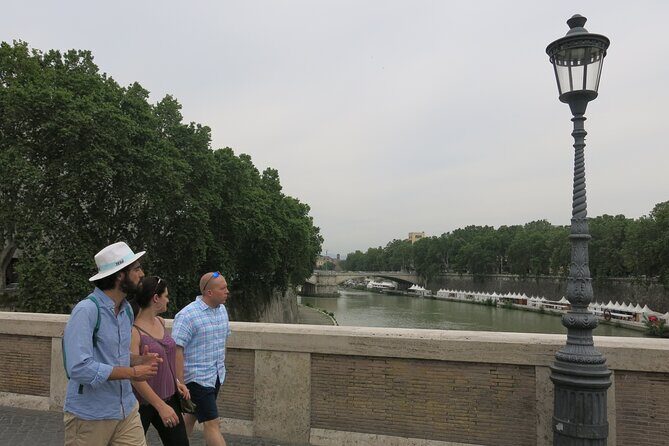
A golf cart is a smart way to start Rome. This 3-hour loop strings together some of the city’s most important ancient landmarks, with clear explanations and time to take photos, all while you cover serious ground without the usual toe-torture. Via dei Condotti sets the tone early, then you roll straight into the places that shaped Roman politics and spectacle.
What I like most is the pace: you get to see major sights without racing between them. You also get a licensed guide who drives, plus interactive reading material and headsets if you need them, so you’re not just looking at stone—you’re getting context as you go. The one drawback to consider is that the ride can feel a bit bumpy on uneven Roman streets, so if you’re sensitive to that, plan accordingly.
In This Review
- Key highlights at a glance
- Why this golf cart tour is a great way to start Rome
- Meeting at Via dei Condotti 61: what to expect
- Via dei Condotti: fashion street views and a smooth warm-up
- Largo di Torre Argentina: temples, Pompey’s Curia, and Rome’s famous cats
- Piazza Venezia and the Altare della Patria: the perfect orientation hub
- Theatre of Marcellus and Forum Piscarium: where crowds met commerce
- Temple of Venus and Rome: size, power, and Hadrian’s finishing touches
- Domus Aurea: Nero’s palace in the ground beneath you
- Colosseum and the Imperial Forums: the spectacle and the governance
- Circus Maximus: the shape of crowd entertainment
- Using the headsets and reading material (so the time feels worth it)
- Price and value: what $84.46 buys you in real terms
- Who this tour is best for (and who should think twice)
- Should you book this Ancient Rome golf cart tour?
- FAQ
- How long is the Ancient Rome tour in a golf cart?
- What sites does the tour cover?
- Is this tour inside the monuments?
- What language is the tour in?
- How big is the group?
- Does the guide provide headsets?
- Is pickup available?
- Where exactly is the meeting point?
- What should I bring?
- Can I cancel for a refund?
Key highlights at a glance

- Small group feel (max 15), with plenty of time for pictures and explanations
- Via dei Condotti at the start and finish, a movie-famous fashion street
- Ancient Rome in one loop, including the Colosseum, Forum-area ruins, and Circus Maximus
- Cat sanctuary at Largo di Torre Argentina, mixed right into ancient ruins
- Outside-view stops only, so you’ll plan your deeper exploring for later
- English guided tour, with reading material and headsets available
Why this golf cart tour is a great way to start Rome
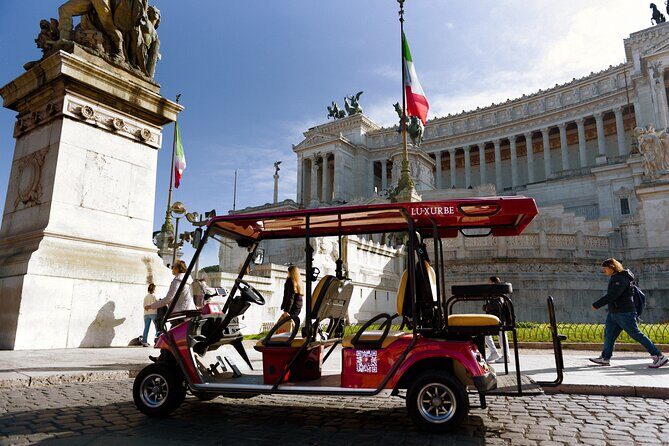
Rome can be intense on day one. The streets are narrow, the pavement is uneven, and the sites don’t feel connected until someone explains the geography and the timeline. This tour’s job is to connect the dots fast—so you can walk later with a lot more confidence about what you’re seeing.
The golf cart format also gives you a practical advantage. Cars and buses can’t comfortably stop where you want, and walking from place to place eats time and energy. Here, you’re in a small group, moving efficiently between landmarks, with stops built in for photos and interpretation.
You can also read our reviews of more tours and experiences in Rome.



Meeting at Via dei Condotti 61: what to expect
You meet at Via dei Condotti 61, right in the luxury shopping stretch between big-name storefronts. The instructions are straightforward: wait in front of the building entrance, and your golf cart driver should come pick you up. There’s no clear shop sign to find, so don’t wander far—stay put at the address.
Pick-up time can shift a little because of Rome traffic, so I’d treat the start time as a window rather than a strict minute. If you booked a custom pick-up, your driver will contact you shortly before arrival. Also, the tour ends back at the same meeting point, so you don’t have to mentally map a finish location.
Via dei Condotti: fashion street views and a smooth warm-up
Your first stop is Via dei Condotti, one of Rome’s most prestigious streets, known for high-end boutiques and elegant architecture. It runs from Piazza di Spagna to Via del Corso, and it’s famous in movies too—so it’s a fun way to start the day with a “current Rome” lens before you jump into antiquity.
You’ll spend about 10 minutes here. That’s just enough time to orient yourself, get a couple of photos, and let the guide set the theme: how this part of the city layers fashion, power, and everyday life on top of older Rome.
Largo di Torre Argentina: temples, Pompey’s Curia, and Rome’s famous cats
Next up is Largo di Torre Argentina, where the ground is basically history. This square includes four Republican-era temples and the Curia of Pompey, all tied to the late Republic period. And then—cats. A cat sanctuary operates among the ruins, and it’s one of those uniquely Rome details that makes the stop feel human, not just monumental.
You get about 20 minutes here. That time matters because the ruins are surrounded by a lively atmosphere, and it’s easy to miss what you’re looking at if you don’t have someone explaining it. The guide’s job is to point out the major pieces and help you connect the location to Roman political events.
Piazza Venezia and the Altare della Patria: the perfect orientation hub
From there, you head to Piazza Venezia, a central crossroads dominated by the Altare della Patria, the monument built in honor of Victor Emmanuel II. This is one of those squares that feels like a hub, because it points you toward multiple directions of ancient Rome—especially the Forum area and Capitoline Hill.
You’ll have around 20 minutes. Expect striking views over the surrounding historic buildings and a clear sense of how the city’s modern streets align with older routes. Even if you don’t plan to go inside the big modern monuments here, the orientation value is real. It helps you understand where later stops fit in the larger Roman story.



Theatre of Marcellus and Forum Piscarium: where crowds met commerce
The Theatre of Marcellus is another big one: an open-air theatre built in the late 1st century BC, commissioned by Julius Caesar and completed under Augustus. It could originally hold around 20,000 spectators, and it’s considered a precursor to the Colosseum.
You’ll spend about 20 minutes at the theatre. This is a great stop if you like “how it evolved” thinking: you see what Roman architects and leaders were building before the Colosseum became the big headline act.
Then the tour adds a different angle with the Forum Piscarium, an ancient fish market near the Roman Forum and Theatre of Marcellus. It started in the early Republic and served as a central market for seafood. You’ll get roughly 10 minutes here, which is short—but it’s long enough for the guide to show what’s left and explain what kind of daily life this area supported.
Temple of Venus and Rome: size, power, and Hadrian’s finishing touches
Next is the Temple of Venus and Rome, a major statement temple dedicated to Venus Felix and Roma Aeterna. Designed by Emperor Hadrian and completed in 135 AD, it was the largest temple in Ancient Rome—so even when you’re looking at ruins, you’re seeing a project built to project authority.
You’ll have about 20 minutes. This stop works well because the scale is hard to “feel” just by walking past it, but the guide can help you understand why it mattered and how the location fits into the wider religious and political landscape.
Domus Aurea: Nero’s palace in the ground beneath you
After that, you’ll see the Domus Aurea, also called Nero’s vast palace complex. Built after the Great Fire of 64 AD, it was famous for its opulence—lavish frescoes, gold-plated walls, and intricate mosaics. The key detail: much of it lies underground, which is part of why it’s so striking once you understand what you’re looking at.
You get about 20 minutes here. The guide’s explanations help you “translate” the remains into what the palace was meant to be: a display of imperial ambition. If you like architecture and power symbolism, this is one of the stops that can really stick.
Colosseum and the Imperial Forums: the spectacle and the governance
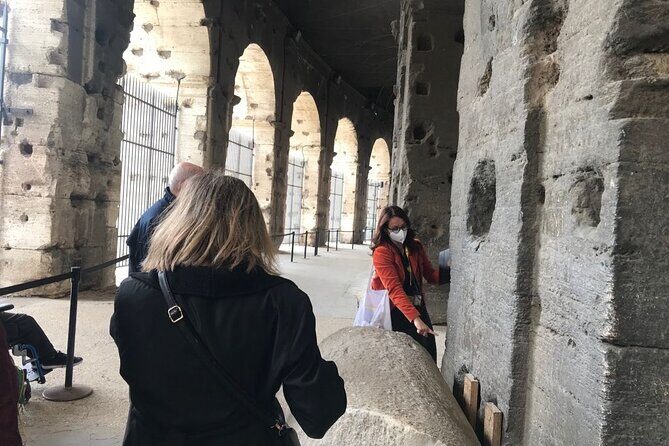
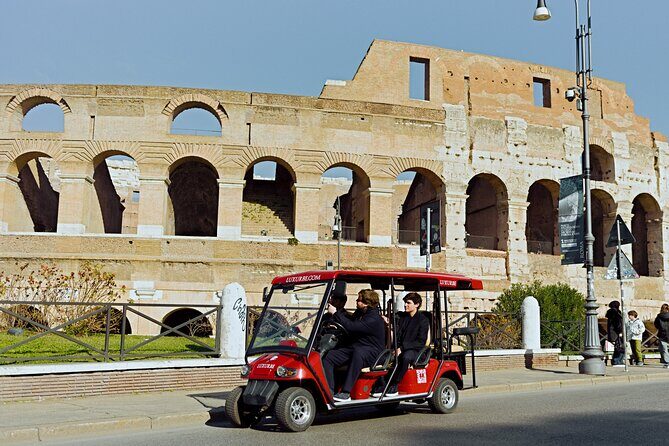
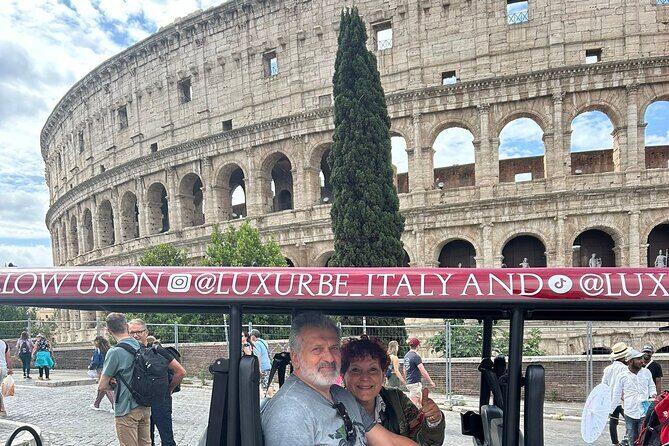
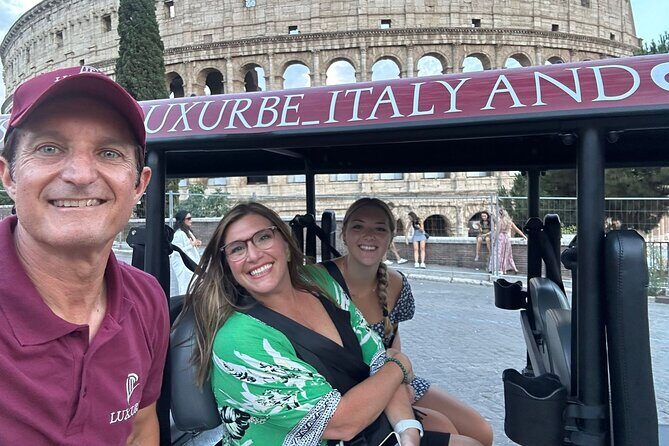
Then comes the headline: the Colosseum. Built in 80 AD under Vespasian, it hosted gladiatorial contests and public spectacles, with seating up to roughly 50,000 people. You’ll spend about 20 minutes viewing it from the outside with time for explanations and photos.
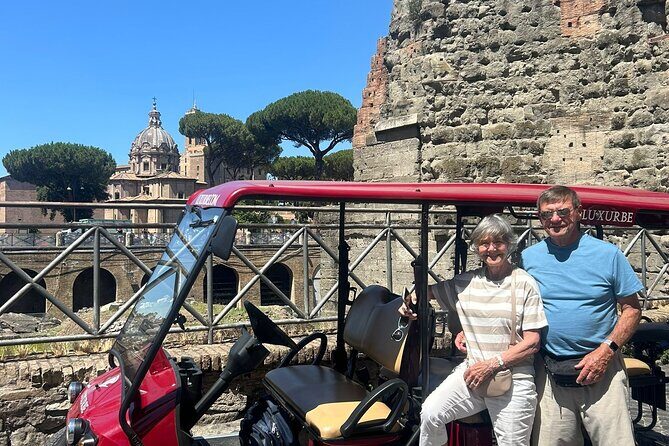
Immediately after, you’ll move to the Imperial Forums, a series of monumental public squares built between 46 BC and 113 AD. Different emperors commissioned sections of the complex, including major builders like Caesar and Trajan. The forums were where politics, commerce, and religion overlapped—so this stop gives you the “how Rome ran” counterpoint to the Colosseum’s entertainment.
You’ll have around 20 minutes here too. You’re not going inside on this tour, so think of this as a guided overview that helps you later decide what to prioritize if you book tickets for in-depth museum or interior time.
Circus Maximus: the shape of crowd entertainment
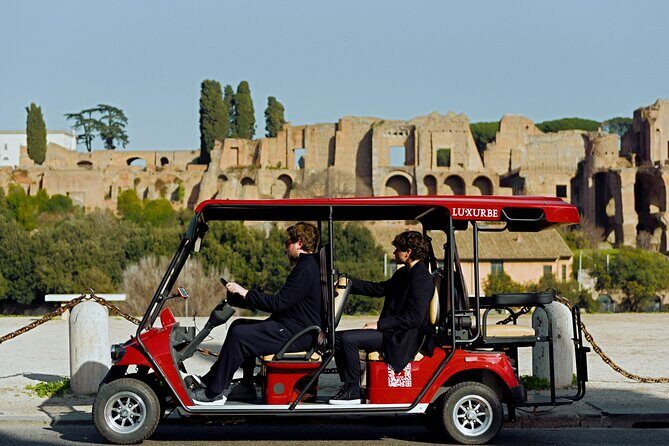
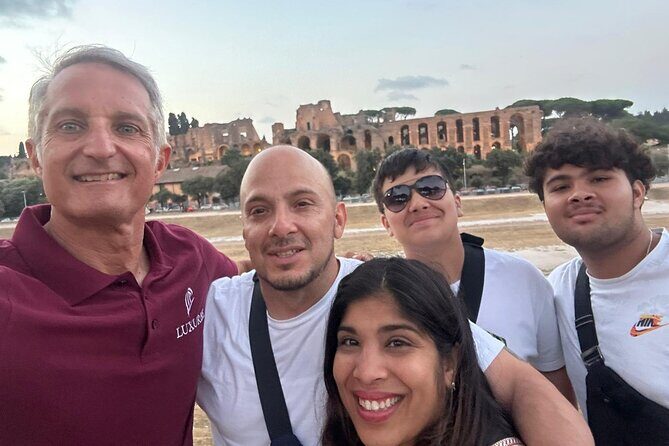
The final major ancient stop is Circus Maximus, the huge Roman chariot racing stadium and mass entertainment venue. It dates to the 6th century BC and could hold over 150,000 spectators. Even today, the elongated shape gives you a strong sense of the scale of Roman public spectacle.
You’ll spend around 20 minutes here. This is another place where a quick explanation makes a big difference, because the ruins and landscape read differently if you don’t know what activities happened there.
Using the headsets and reading material (so the time feels worth it)
A tour like this lives and dies by how well the story comes across. Here, you get interactive reading material and headsets if required. That combo is ideal if you want to follow along while you’re moving and taking pictures, rather than trying to keep up using only memory.
Here’s how I’d use it: look at the guide’s spoken points, then glance at the reading material after the stop for reinforcement. If you’re photo-heavy, don’t worry—there are built-in moments for photos at each location, and the guide usually structures the stop so you’re not just standing there wondering what you’re looking at.
Price and value: what $84.46 buys you in real terms
At about $84.46 per person for roughly 3 hours, you’re paying for speed, comfort, and interpretation, not just transportation. The best value part is the mix: a licensed guide (who also drives) plus a route that hits major Roman names in one pass, with time for pictures and explanation.
You’re also paying for the “efficiency without exhaustion” element. The golf cart helps you cover distance and reduce walking fatigue, which is especially useful if you’re arriving from a long flight, traveling with adults who don’t want to grind uphill all day, or you just want to get your bearings quickly.
The trade-off is that everything is viewed from outside. If your dream is to be fully inside monuments, you’ll want to pair this with separate ticketed visits later.
Who this tour is best for (and who should think twice)
This tour fits a lot of styles of traveler. If you’re a first-timer, it gives you a clear overview you can build on. If you want a history guide but don’t want the day to become an endurance test, the cart plus short stop times is a practical compromise.
I’d pay extra attention to ride comfort if you’re sensitive to bumpy streets. One review note flags that the ride can feel a bit shaky on rough roads, and you’re basically on a vehicle that moves with the street. If you need smoother transit, you might prefer a standard vehicle tour or plan to take extra breaks during the day.
Should you book this Ancient Rome golf cart tour?
If you want a fast, guided “greatest hits” route through ancient Rome, this is a strong booking choice. The small group format, the English narration, and the stop-by-stop time for photos make it especially useful for orientation on your first day.
I’d book it if:
- you want to see Colosseum / Forum-area landmarks / Circus Maximus without long walking stretches
- you value a guide explaining what you’re looking at, not just driving by
- you like photo stops that don’t feel rushed
I’d think twice if:
- you need inside access to monuments (this tour keeps you outside)
- you’re extremely sensitive to a bumpy ride on uneven streets
FAQ
How long is the Ancient Rome tour in a golf cart?
It runs for about 3 hours.
What sites does the tour cover?
You’ll pass and stop at major landmarks including Via dei Condotti, Largo di Torre Argentina, Piazza Venezia, the Theatre of Marcellus, the Forum Piscarium, the Temple of Venus and Rome, the Domus Aurea area, the Colosseum, the Imperial Forums, and Circus Maximus.
Is this tour inside the monuments?
No. All participants see the monuments from outside, with stops for explanations and pictures.
What language is the tour in?
The tour is offered in English.
How big is the group?
The experience has a maximum of 15 travelers.
Does the guide provide headsets?
Headsets are provided if required, and there’s also interactive reading material.
Is pickup available?
Yes, pickup is offered. You’ll meet at Via dei Condotti 61 if you don’t choose custom pickup.
Where exactly is the meeting point?
The meeting point is Via dei Condotti, 61, 00187 Roma RM, Italy, waiting in front of the building entrance.
What should I bring?
The tour does not include bottled water, so it’s smart to bring your own.
Can I cancel for a refund?
Yes. You can cancel up to 24 hours in advance for a full refund.