A vintage Fiat 500 makes Rome feel personal. You get a short, well-paced route through places most first-timers miss, all while you ride in a classic car that turns every turn into a photo moment. I especially like the chauffeured feel and the fact that the driver-guide also handles photo shooting with your phone or camera. You’ll get a compact tour that still covers a lot of variety, from massive Roman baths to viewpoints built for quick postcard-perfect stops.
My favorite part is how the timing works for a first visit: every stop is long enough to see the point, grab photos, and then move on before you’re bored or stuck in long lines. One thing to consider: this is a 3-hour shared convoy tour with brief visits (about 20 minutes each), so it’s not for people who want slow, deep time at just one major landmark.
In This Review
- Key points before you go
- Why a vintage Fiat 500 changes how you see Rome
- Meeting at Via Labicana and what the 3-hour rhythm feels like
- Caracalla: Roman baths the size of an entire neighborhood
- Piazza dei Cavalieri di Malta: the keyhole view that lines up three countries
- Parco Savello: Garden of Oranges, romance, and an optical trick
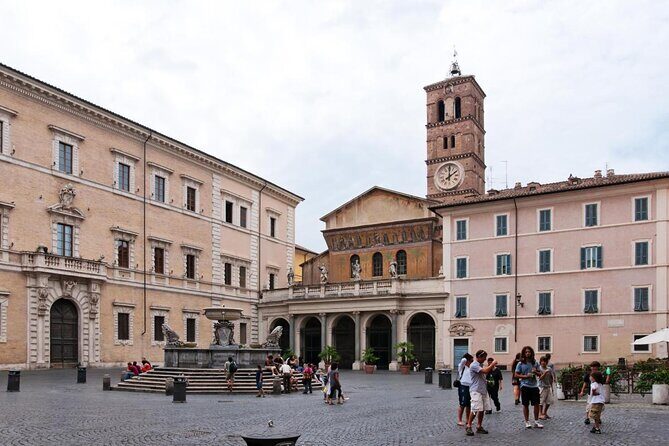
- Trastevere by Fiat: narrow lanes, quick stops, big personality
- Piazzale Giuseppe Garibaldi: the best panoramic catch in 20 minutes
- Circus Maximus: where chariots and crowds once thundered
- Porta San Paolo and the Egyptian pyramid in Rome
- Colosseum: quick orientation, not a full deep visit
- Via Galvani: the hill of broken vases that became a landmark
- Safety and comfort in a tiny car on Rome roads
- Price value: what you get for $205.67 in 3 hours
- Who should book this Fiat 500 route (and who should skip it)
- Should you book this Fiat 500 tour?
- FAQ
- How long is the Fiat 500 tour?
- What’s included in the tour price?
- Is the tour offered in English?
- How many people are on the tour?
- Where does the tour start and end?
- What is the cancellation window for a full refund?
Key points before you go
- 3 hours in a classic Fiat 500 convoy with a cap of 20 travelers
- Driver doubles as photographer, plus light refreshments
- Two departure options (morning or afternoon) for better timing with your day
- Short stop format (about 20 minutes per location) keeps it moving
- All stops are listed as admission free in the itinerary notes
- Guides in the feedback often bring humor and strong local storytelling, including names like Francesco, Alex/Alexis, Emmanuelle, Giorgio, Marco, Max, Mike, Stephanie, and Michael
Why a vintage Fiat 500 changes how you see Rome
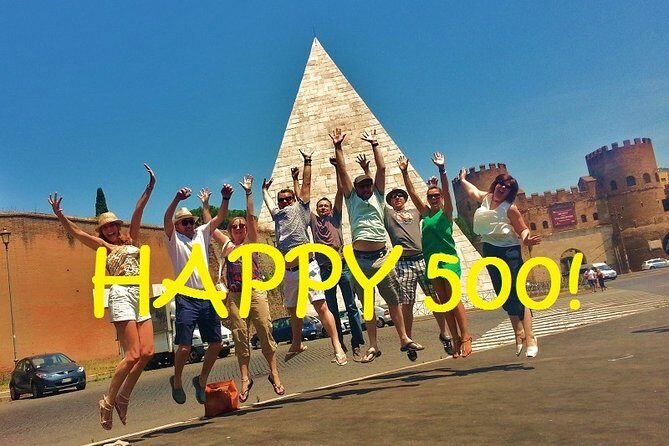
Rome can feel like one long line—line for tickets, line for photos, line for shade. This tour uses a different trick: it swaps “museum pacing” for movement. You’re in a small, recognizable classic car that can slip through streets that larger vehicles just don’t make pleasant. The result is that you notice the city’s textures: walls worn by time, small piazzas that appear out of nowhere, and viewpoints that don’t require a full bus stop experience.
I also like that the “tour” isn’t just a slideshow. The driver-guide narrates as you go, and you pause enough to actually orient yourself. In the feedback, people repeatedly praised guides for making facts stick—especially the ones who added humor and answered questions. If you’re lucky enough to be guided by someone like Francesco or Alexis, the tone tends to feel lively rather than lecture-y.
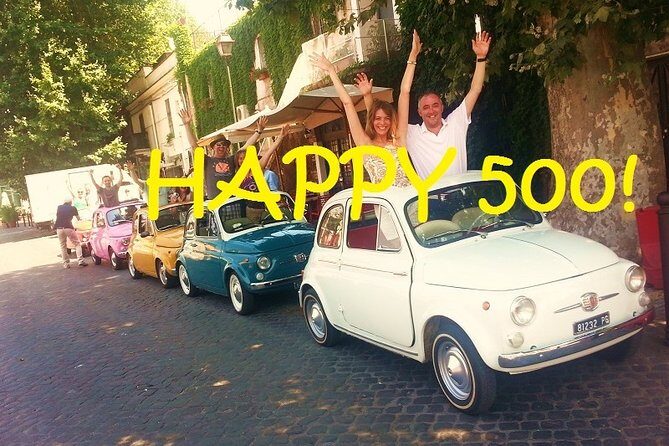
The car factor matters more than you’d think. When you’re riding low and close to the street, you feel the city’s scale. You don’t just see Trastevere; you feel the narrow lanes. You don’t just admire domes from far away; you pass by viewpoints that frame them like a set.
You can also read our reviews of more tours and experiences in Rome.



Meeting at Via Labicana and what the 3-hour rhythm feels like
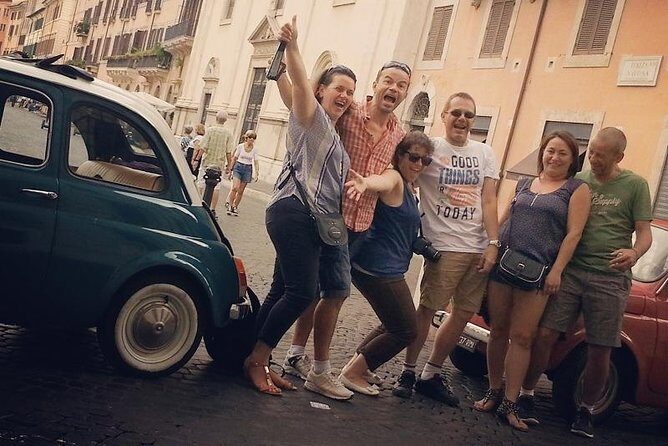
The tour meets at Via Labicana, 125 (00184 Roma) and ends back at the same place. Plan to arrive a bit early so you can check in calmly. This matters because the day moves fast: you’re essentially doing nine short stops, plus driving between them.
With a listed duration of about 3 hours, you’ll feel the structure right away. Each stop is roughly 20 minutes, which is enough for orientation, a few photos, and a quick walk to the viewpoint or ruin area the guide wants you to see. It’s not enough time for a full, slow wander at a major site—think of it as a guided hit list that helps you decide what deserves your next visit on your own.
You also need to know the tour is capped at 20 travelers. That usually keeps the group from turning into a stampede, and it also helps the driver-guide manage the convoy rhythm through Rome’s busier stretches.
Caracalla: Roman baths the size of an entire neighborhood
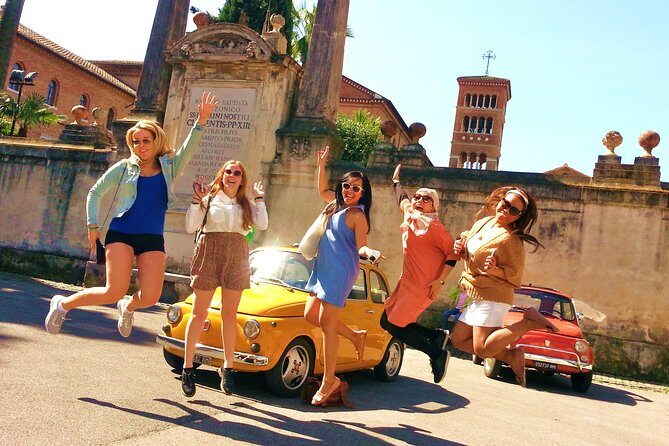
Your first big historical stop is Caracalla, one of Rome’s largest bath complexes. The itinerary frames it as enormous—about the size of 15 football pitches—and that comparison is useful. You can’t grasp the scale from a quick photo. What you can do in a short visit is understand the “health center” idea: this wasn’t only steam and soaking. Roman life here blended bathing with spaces that felt like libraries and gyms, plus places for gatherings such as theatre and seminar rooms, along with gardens and fountains.
In practical terms, expect to walk a bit and look for the layout cues the guide points out. Even if you don’t have time to fully map the site, you’ll leave with a clearer sense of what made Caracalla feel like a city inside a city. This is also a stop that works well early in the tour, because you’ll still have energy for the walking-and-looking pace.
One consideration: because the visit is brief, you may not get the full “wow” of Caracalla unless you’re the type who enjoys absorbing atmosphere rather than reading every panel. If you’re a museum-perfectionist, save extra time for Caracalla another day.
Piazza dei Cavalieri di Malta: the keyhole view that lines up three countries
Next comes a photo moment with a gimmick that’s actually clever: the keyhole view at Piazza dei Cavalieri di Malta. The well-known idea is that St. Peter’s is framed through a keyhole. What makes this stop different is the detail—through that viewpoint you’re meant to see three countries in line. That’s the kind of fact that makes your brain lean in: suddenly you’re not just aiming a camera, you’re lining up geography.
This is also one of the stops where 20 minutes is a perfect fit. You’ll position yourself, test your angle, take a few photos (selfies included), and then move on before it gets frustrating. The guide can help you with the “where to stand” part, which saves time and reduces crowd jostling.
Tip: come ready with a charged phone and a plan for both wide shots and close-ups. A keyhole view often looks best with slight zoom or a careful crop. And if you’re handing your camera off for shots, do it quickly so you’re not waiting while the group is ready to roll.
Parco Savello: Garden of Oranges, romance, and an optical trick
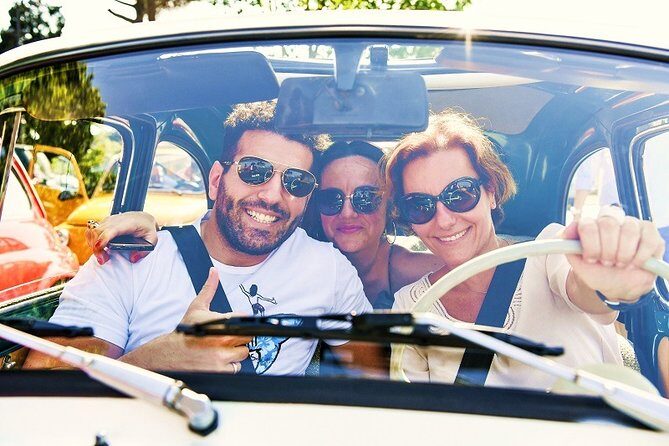
Parco Savello is where the tour leans into scenic Rome. It’s also nicknamed the Garden of the Lovers, which tells you what you’re walking into: an atmosphere-friendly viewpoint, not a “rushing ruins” kind of stop.
The highlight here is an optical illusion involving St. Peter’s dome. In a short visit, you won’t have time to test every angle like a photographer with hours to burn, but the guide’s pointers make a quick difference. You’ll understand why the viewpoint is famous and be able to reproduce the effect enough to make your photos look like you planned the geometry.
Practical note: this is a garden setting, so your shoes matter. You’ll likely be stepping around paths and uneven ground. If you’re sensitive to uneven walking, take slow steps and keep an eye on where the group is moving.



Trastevere by Fiat: narrow lanes, quick stops, big personality
Then you’re back in motion with a signature Fiat experience: whizzing through Trastevere. This is not a “tour bus stops here for an hour” kind of visit. It’s a drive-and-look moment where you get the feel of the tiny streets and the way Rome looks when you’re not stuck behind a crowd.
This is also one of those parts of the tour that can feel silly until you see it in action. People watching you as you pass in a classic car is real—this is a rolling attention magnet. If you like street-level city watching, this segment is fun. If you want a guided walk with lots of time on the ground, you might wish it lasted longer.
The upside is that you’re seeing Trastevere without using your limited Rome hours to fight traffic and crowds on foot. You’ll get enough to decide whether you want to return for a longer wander later.
Piazzale Giuseppe Garibaldi: the best panoramic catch in 20 minutes
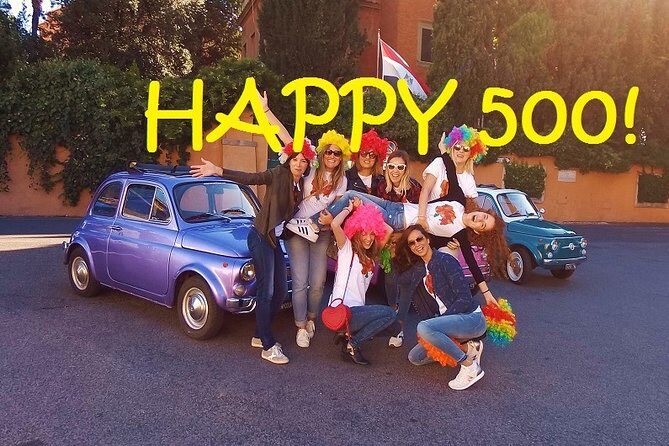
Piazzale Giuseppe Garibaldi is a terrace stop built for panoramic sightseeing, and it’s one of the most useful “view catch” moments on the route. The itinerary notes that from here you can see the Colosseum, Pantheon, Altare della Patria, and a spread of about 100 church domes. That’s a lot of Rome in one frame, which makes this a strategic stop even if your photos don’t look exactly like the postcard.
This is also a place where the “short stop” format is perfect. Views don’t improve when you drag the visit out. You’ll take your photos, look for key landmarks the guide highlights, and move on.
Practical tip: hold your camera steady and don’t fight the sun. If light is harsh, take one quick “proof shot,” then switch to a different angle or wait for the group to rotate positions. From a terrace, small moves change the view a lot.
Circus Maximus: where chariots and crowds once thundered
At Circus Maximus, you’re stepping into a space that’s easy to underestimate if you’ve only seen the Colosseum. But the scale and the story here are massive. The itinerary frames it as the site that held the biggest chariot race energy of the ancient world, built about 400 years before the Colosseum. It also gives you an idea of crowd size—250,000 excited Romans—which helps you picture the roar.
The modern connection is a fun detail: the space is sometimes used for rock concerts, and names are mentioned such as the Rolling Stones, Roger Waters, and Bruce Springsteen. Even if you don’t care about concerts, it’s a reminder that some Roman spaces stayed in the public imagination long after gladiators faded.
In 20 minutes, you won’t “tour” the entire place like a full archaeological excursion. Instead, you’ll get the mental map: why it mattered, how it worked, and where the energy would have been. If you like big-picture history, this is one of the more satisfying stops.
Porta San Paolo and the Egyptian pyramid in Rome
Next is Porta San Paolo, and the highlight is a surprise: an ancient Egyptian pyramid right in Rome. The itinerary calls it the 4th biggest Egyptian pyramid in Rome, built around 18 BCE, associated with Gaius Cestius, and described as a wealthy and eccentric Roman.
This stop is valuable because it breaks the “standard Rome pattern.” You’re not just repeating what you’ve already seen on every major poster. You’re encountering a different kind of Rome: one that mixes cultures, references, and odd stories into the city’s bones.
Because the visit is short, you’ll want to focus on the explanation and the placement rather than trying to “read” every architectural detail. If you pay attention to where the structure sits in the street-level context, you’ll get more out of the brief time here.
Colosseum: quick orientation, not a full deep visit
Then comes the famous one: the Colosseum. The itinerary describes it as built around 80 CE and used for gladiator fighting, executions, and even naval-style combat in ancient times. It also gives a stark figure about casualties—about 250,000 people over the arena’s active period—meant to convey how intense the spectacles were.
Here’s the key planning reality: with a short stop window, you’ll likely get a guided circuit or exterior-style orientation rather than the kind of in-depth visit where you read, climb, and linger. One of the criticisms in the feedback was that the timing near the Colosseum didn’t match expectations for a longer stay. So set your mindset correctly: this part is about getting oriented and taking a few strong photos, then moving on.
If you want the Colosseum as a main event, consider using this tour as the warm-up. Then come back later with more time to explore at your pace.
Via Galvani: the hill of broken vases that became a landmark
The last named stop is Via Galvani, tied to what the itinerary calls the hill of broken vases. This is one of those Rome stories that feels almost too specific—until you realize it explains why certain neighborhoods look the way they do.
The idea is that Romans created an artificial hill using terracotta pieces from vessels used to transport olive oil, fish sauce, and wine. Over centuries, a dump of fragments became a structure described as about 40 meters high and around 700 meters in circumference, built from terracottas from an estimated 50 million vases.
For me, this stop is a perfect example of why a short guided ride can be more valuable than wandering aimlessly. You’ll understand what you’re seeing in the city fabric, even if you don’t have hours for research. It turns a normal-looking area into a story you can remember.
Safety and comfort in a tiny car on Rome roads
This tour is in a car that’s charming, but it’s still a vehicle—on cobblestones and narrow streets. The itinerary notes there are no safety belts installed in the back seats and there are no air bags in the car. It also notes that the tour is not suitable for passengers weighting more than 100 Kg.
If you’re thinking about this tour, take that seriously. Also consider that you’ll be spending time sitting in a smaller classic car environment, so choose the seat position that feels most comfortable for you. If you need more standard safety hardware, you might feel uneasy with this format.
On the positive side, feedback mentions drivers focused on getting people safely around. Still, the safety setup is part of the experience—know it before you book.
Price value: what you get for $205.67 in 3 hours
At $205.67 per person for about 3 hours, this isn’t a budget walking tour. But it can feel like good value for the right traveler because the price bundles a few things most cheaper tours don’t: a driver-guide, a convoy-style ride through Rome, light refreshments, and a free photo shoot using your phone or camera.
The biggest “value” factor is time and effort. You’re seeing multiple distinct Rome settings—baths, viewpoints, neighborhood streets, arenas, and a pyramid-related stop—without spending your energy on transit planning or long lines. If you only have a couple days and you want your bearings fast, this format can be a strong use of money.
The negative side is also straightforward: with short visits, you don’t get deep time at each site. If you’re the type who loves long museum-style stops, the cost may feel high for the amount of lingering you want. In that case, treat this as a first-pass orientation and plan your follow-up visits separately.
Who should book this Fiat 500 route (and who should skip it)
Book this if you want:
- A fun way to cover a lot of Rome in a short window
- A guide who brings stories and humor (names that popped up include Francesco, Alex/Alexis, Emmanuelle, Giorgio, Marco, Max, Mike, Stephanie, and Michael)
- Photo support, since the driver-guide helps with shots on your device
Consider skipping if you:
- Need long time at major attractions like the Colosseum
- Want a slower walking itinerary with lots of independent exploration built in
- Have mobility or body-size concerns due to the 100 Kg limit and the car’s safety setup
Should you book this Fiat 500 tour?
I’d recommend booking if your goal is to get your Rome bearings quickly while enjoying an experience that feels different from the usual bus-and-bottle-water routine. The payoff is the mix: big Roman history at Caracalla and Circus Maximus, plus viewpoint stops built for quick wins, plus a neighborhood drive that keeps your day from feeling like a checklist.
If you’re the kind of traveler who measures success by how long you can linger at one site, this tour may feel too brief. But if you want a fun, photo-friendly, multi-stop overview that helps you decide what to revisit, it’s a strong choice—especially given the small group size and the fact that the driver-guide actively makes your camera time happen, not just your sightseeing time.
FAQ
How long is the Fiat 500 tour?
It runs for about 3 hours.
What’s included in the tour price?
Included items are the driver/guide, convoy tour, light refreshments, and free photo shooting with your cellphone or camera.
Is the tour offered in English?
Yes, it’s listed as offered in English. A multi-lingual guide may operate the experience.
How many people are on the tour?
The tour has a maximum of 20 travelers.
Where does the tour start and end?
It starts at Via Labicana, 125, 00184 Roma RM, Italy and ends back at the same meeting point.
What is the cancellation window for a full refund?
You can cancel for a full refund up to 24 hours in advance of the experience’s start time.