REVIEW · COLOSSEUM TOURS
Ancient Rome Guided Tour: Colosseum, Forum and Palatine
Book on Viator →Operated by Gray Line I Love Rome by Carrani Tours · Bookable on Viator
Rome hits different here.
This guided route is a smart way to see the big three—Palatine Hill, the Colosseum, and the Roman Forum—without getting lost in the maze. I like the practical touches, especially wireless headsets, so you can actually hear every detail, even in loud crowds. The meeting point inside Parco di Colle Oppio also helps you get going fast. One drawback to plan for: expect steep steps and a lot of walking, so comfortable shoes matter.
What I find most interesting is how the tour connects the legends and daily life of ancient Rome to the stone you’re standing on. You’ll start up on Palatine for views over the Forum and Circus Maximus, hear the seven hills story, and visit hilltop ruins tied to imperial power. Then you move into the Colosseum (AD 72) for the amphitheater experience, stop at the Arch of Constantine (AD 315), and finish in the Forum with guided highlights along the Via Sacra and key temple and basilica sites. This is also capped at 20 people, which usually makes the pace feel more manageable.
In This Review
- Key highlights worth your attention
- Headsets and meeting-point ease: start stress-free
- Palatine Hill viewpoints: seven hills lore and imperial rooms
- Inside the Colosseum: your guided hour for the stories that matter
- After the Colosseum: Arch of Constantine and the Forum’s power maze
- Timing, tickets, and group size: the real value check
- What to wear, bring, and plan so you don’t lose the day
- Which guide style you’re likely to get
- Who should book this tour
- Should you book the Ancient Rome Guided Tour: Colosseum, Forum and Palatine?
Key highlights worth your attention
- Headsets included so the guide’s explanations land, even when crowds get noisy.
- A compact half-day arc that threads Palatine → Colosseum → Forum instead of scattering your time.
- View-first Palatine start with Roman skyline perspectives over the Forum and Circus Maximus.
- Skip-the-line style entry with Colosseum admission handled as part of the tour.
- Small-group feel (max 20), which makes photo stops and pacing easier to manage.
Headsets and meeting-point ease: start stress-free
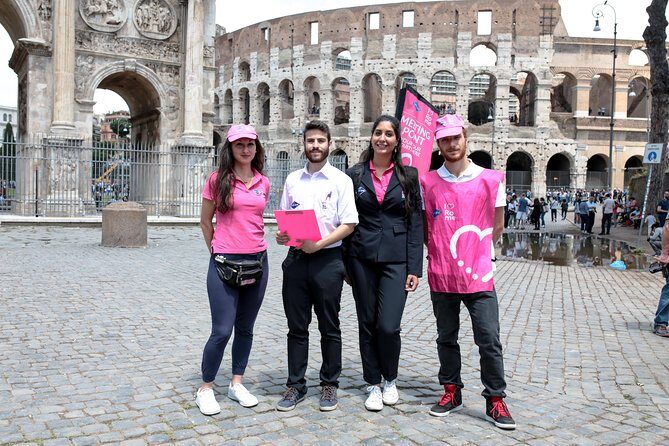
Rome’s top sites can be loud, crowded, and chaotic. This tour solves one of the biggest annoyances: hearing. You get wireless audio headsets, so you’re not stuck playing guess-the-translation or leaning in like a tourist. It’s especially helpful at the Colosseum and Forum, where groups bunch up and footsteps and chatter carry.
The start is also designed to be simple. You meet at Colle Oppio Park at the corner of Via Nicola Salvi (Via delle Terme di Tito 75, inside the park). The staff carries an I Love Rome logo, and they ask you to arrive about 15 minutes early. That early window matters. One theme you’ll want to respect in Rome is that tours can’t slow down for late arrivals—so set your own plan to be early, not hopeful.
You also get choice in timing: morning or afternoon tours are offered. That matters because you’re dealing with heat, tour crowds, and your energy level for hills and steps. If you’re the type who hates rushing, pick the time that matches your natural rhythm.
You can also read our reviews of more guided tours in Rome



Palatine Hill viewpoints: seven hills lore and imperial rooms
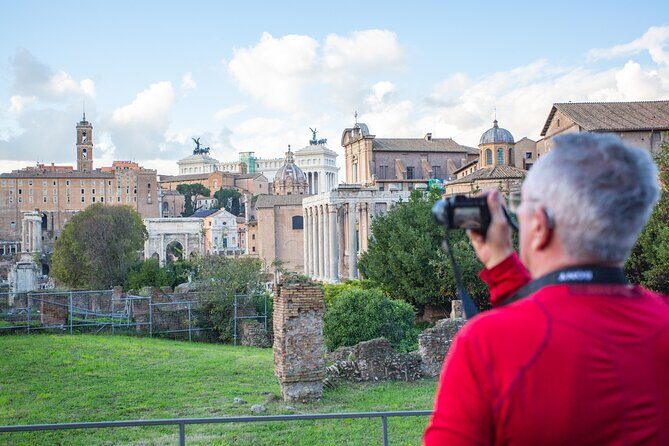
Palatine Hill is where Rome starts to feel personal. It’s not just “ruins on a hill.” It’s one of the oldest parts of the city, and the tour gives you a reason to care before you even walk into the next site. You go up first to the hilltop area for views over the Roman Forum below and the Circus Maximus in the distance.
The guide uses that vantage point for storytelling, including the legend of the seven hills of Rome. That’s more than trivia. It gives you a mental map for the rest of what you’ll see. When you later look at political and religious spaces in the Forum, you’ll understand the bigger idea: Rome wasn’t built in one day, and power kept shifting locations while still claiming the same sacred “center.”
On Palatine itself, expect guided exploration of high-interest ruins, including the House of Augustus and the Hippodrome of Domitian. These aren’t random buildings. They connect imperial presence to daily life—where rulers displayed authority, entertained, and reshaped the city’s meaning.
Practical consideration: Palatine Hill involves hills and uneven surfaces. Even if you’re “moderate fitness,” you’ll still want to wear supportive walking shoes. If stairs make you nervous, plan extra buffer time and don’t treat “3 hours” as “easy stroll.”
Inside the Colosseum: your guided hour for the stories that matter
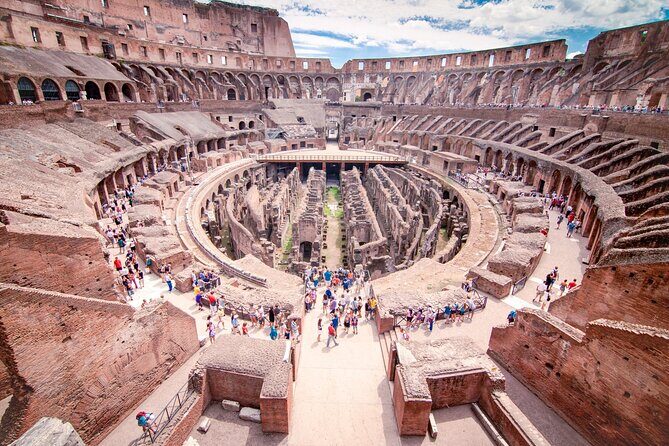
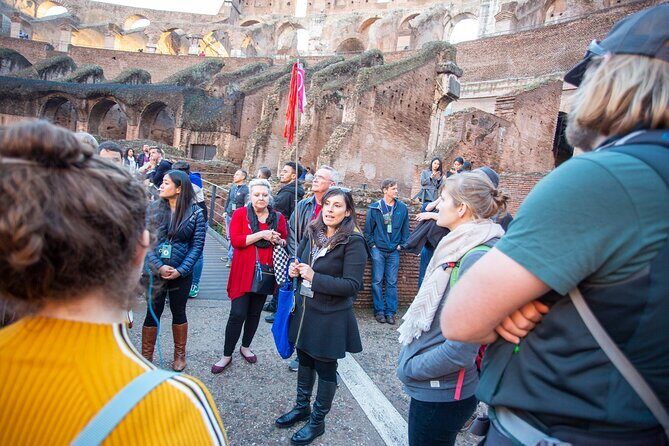
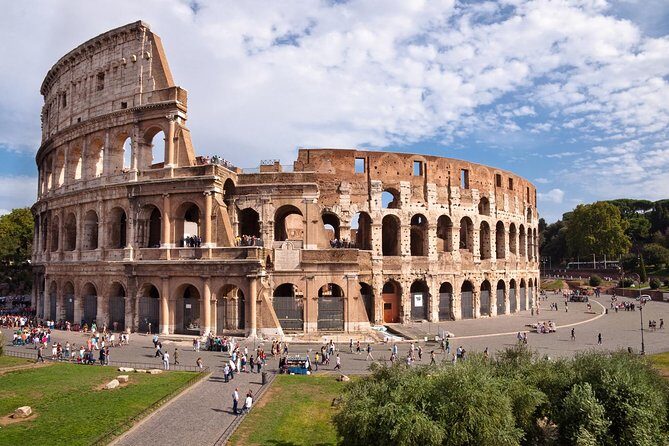
Then comes the Colosseum, the loudest monument on earth and still one of the most moving. Your visit includes Colosseum entrance, and the tour uses the time well: not just a look-around, but a guided walk that explains what you’re seeing and why it was built.
The Colosseum here is described as dating to AD 72, originally known as the Amphitheatrum Flavium. The guide connects the architecture and layout to the famous gladiator games held inside. That connection is the whole point. When you only “view” the Colosseum, you get impressive scale. When you’re guided through it, you start noticing how the building shaped crowd flow, spectacle, and social meaning.
One smart detail: you also get headsets during this portion, which helps because the Colosseum has plenty of noise and distracting movement. You’ll be surrounded by people, and the audio gear makes the guide’s pacing feel controlled instead of chaotic.
Also, be ready for lines and security at the monument level. Even with entrance included, there’s still the reality of checkpoints. That’s another reason the tour format helps—your time is structured, and the guide keeps the group moving.
After the Colosseum: Arch of Constantine and the Forum’s power maze
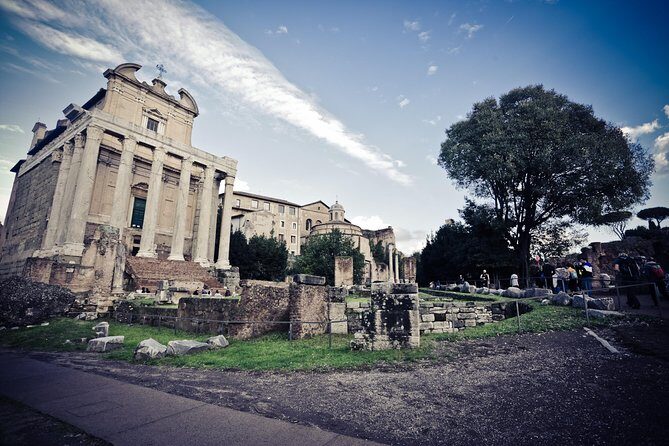
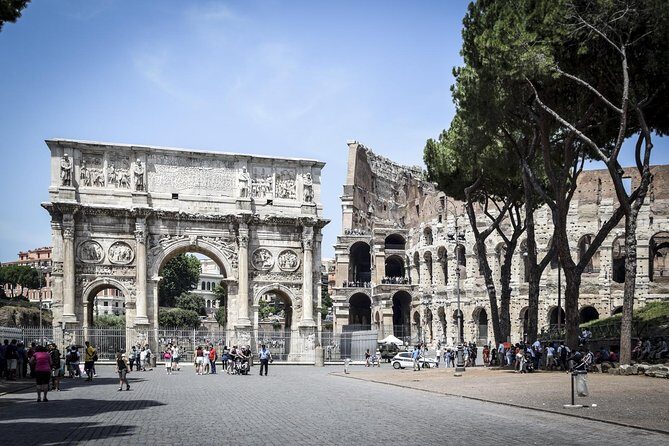
Right after the Colosseum visit, there’s a stop to admire the Arch of Constantine (dated to AD 315). This is a great breather moment—short, meaningful, and visually satisfying. Arches in Rome don’t exist just for decoration; they’re political signals made of stone.
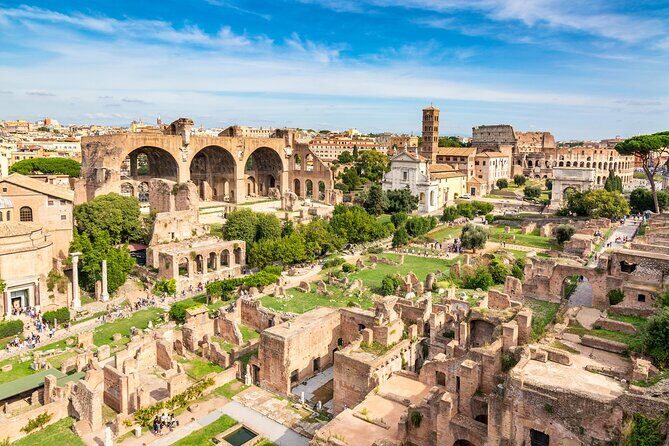
Then you move into the Roman Forum, where the tour shifts from spectacle to “how Rome ran.” The Forum is presented as the ancient center for political, juridical, religious, and economic life. That framing matters because the space contains layers. You’re not seeing one building from one era; you’re seeing remnants stacked across time.
Your guided Forum time focuses on key highlights along the Via Sacra and major religious and civic sites, including:
- the Temples of Vesta
- the Temples of Antoninus and Faustina
- the ancient Basilica Julia
The practical benefit of a guided Forum visit is that it turns scattered ruins into a story you can follow. Without help, you can end up walking in circles, taking photos that look impressive but don’t connect. With a guide, you build a sense of the Forum’s “routes” and “functions” as you go.
One consideration: the Forum portion is often where you feel the day’s walking add up. The terrain is uneven, and you’ll likely spend time looking up, down, and across open plazas. If you’re prone to fatigue, consider carrying water and planning slower photo stops.
Timing, tickets, and group size: the real value check
This tour runs about 3 hours and is offered as a half-day experience. For Rome’s major sites, that’s a decent use of time—especially if you want to hit the Colosseum without losing a full day to logistics.
Let’s talk money in plain terms. The listed price is $71.65 per person, and the tour includes:
- Colosseum, Roman Forum, and Palatine Hill admission
- Colosseum reservation fee and entrance handling
- professional guiding
- wireless audio headsets
- a mobile ticket
The description also spells out that the Colosseum ticket component is €18 per person plus a €2 reservation fee. So even before you value the guide and headset setup, you’re getting the most expensive part of your day (ticket access and reservation handling) taken care of.
What the remaining cost covers is service: timing, group management, guide interpretation, and getting you into key sites through the right channels. That’s worth it if you hate standing around with a guidebook and trying to piece together what matters.
Group size is capped at 20 travelers, which can make a difference. Big mass tours feel like marching. This format aims to keep the experience human-sized—more questions, fewer bottlenecks, better pacing.
One more “value” detail: these sites are close enough that a guided flow makes sense, and the tour ends in central Rome near the Colosseum area (Via dei Fori Imperiali). That means you can continue on your own afterward if you still have energy.



What to wear, bring, and plan so you don’t lose the day
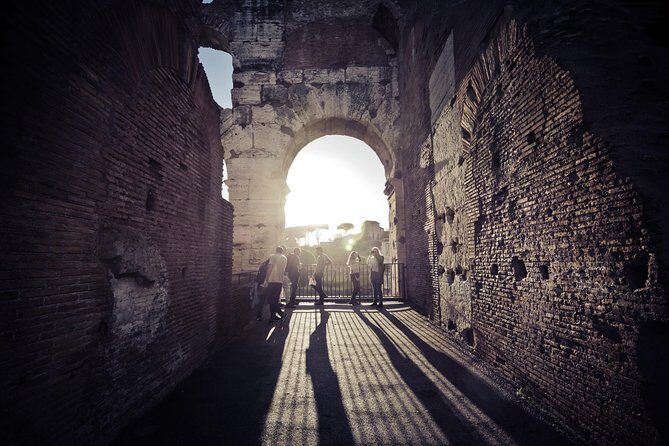
You’ll want to treat this as an active sightseeing block, not a sit-and-watch museum morning. The guidance calls for moderate physical fitness, and the areas you visit are known for steps and hillside walking.
Practical checklist:
- Wear comfortable, grippy shoes (steep steps are part of the Colosseum experience).
- Bring a valid passport or ID card. It’s mandatory for entry.
- If you use a pacemaker, plan to show the required certificate for screening.
- Have your full name details ready when booking, since they’re required.
- Keep your mobile ticket accessible on your phone.
If you’re the “bathroom first” type, do it before you start. This part of Rome is busy, and queues can be long in popular areas. The tour structure can’t always guarantee you’ll be able to step out the moment you need to—so front-load your comfort.
Which guide style you’re likely to get
Guides on this route tend to focus on making the architecture and legends understandable. You’ll get story-led explanations—seven hills lore at Palatine, the meaning of the Colosseum’s layout and gladiator games, and Forum context that helps you see the space as a functioning city.
If you’re curious about who you might hear from, examples of guide names associated with this tour include Fabio, Laura, Dimitri, Roxy, Alexandra, Emmanuel, Rosalba, Maria, Mirico, Valentina, and Zarah. You won’t always know in advance, but the pattern is consistent: someone is there to translate stone into story.
Who should book this tour
This is a strong fit if:
- You want three top ancient sites in one half-day.
- You like explanations that connect legend and daily life to what you see.
- You’d rather manage tickets and pacing with a group than figure it out solo.
- You’re comfortable with walking and the occasional steep step.
You might want to skip it (or choose a gentler plan) if:
- You have mobility limits that make stairs and hills hard. The tour isn’t recommended for impaired mobility.
- You expect a low-effort tour. This is active. Wear shoes that can handle it.
- You’re prone to late starts. The meeting point is important, and tours may not wait.
Should you book the Ancient Rome Guided Tour: Colosseum, Forum and Palatine?
I’d book it if your priority is getting the big picture fast: Palatine for origins and imperial power, the Colosseum for spectacle and structure, and the Forum for the machinery of Rome’s political and religious life. The value is strongest when you consider that Colosseum access is included, and you’re also getting headsets plus a guided flow that keeps the sites from feeling like disconnected photo stops.
I’d think twice if you’re worried about crowds, walking hills, or steep steps. In that case, you may enjoy the area more with a slower plan—or at least adjust your expectations and pacing.
If you do book, one last practical tip: arrive early at the meeting point, keep your ID ready, and give yourself room for tired feet. Rome rewards you when you’re prepared.