REVIEW · NAPLES
3-Days Audio Guide for Pompeii, Herculaneum, Vesuvius and Naples
Book on Viator →Operated by ITGUIDES app per smartphone · Bookable on Viator
Your phone can tell Pompeii’s story. This 3-day package is built for independent exploring, with a mobile ticket and audio content you can use offline. It’s designed to balance straight historical info with the kind of curiosity you want when you’re staring at ancient stones and big volcanic views.
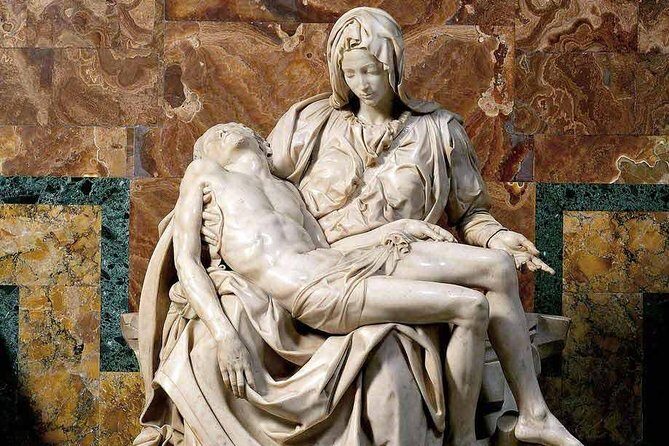
Two things I really like: it aims for clarity while still feeling “real,” and it gives special attention to the Sansevero Chapel and the Veiled Christ in Naples. The content is produced and supervised by Rosella Gallo, professor of Art History at the Academy of Fine Arts in Rome, and that shows in how focused the Naples day feels.
One catch to plan for: admission tickets are not included for most stops. Only Chiesa del Gesu Nuovo lists admission as included, while places like Pompeii and Ercolano are not.
In This Review
- Key highlights worth planning around
- How the ITGUIDES audio pass works across Naples, Pompeii, Ercolano, and Vesuvius
- Naples Day 1: four stops, one strong “art and atmosphere” route
- Chiesa del Gesu Nuovo (15 minutes, admission included)
- Complesso Monumentale Sant’ Anna dei Lombardi (20 minutes, admission not included)
- Museo Cappella Sansevero: the Veiled Christ (20 minutes, admission not included)
- Complesso Monumentale di Santa Chiara (1 hour, admission not included)
- Pompeii Archaeological Park: listening while the stones do the talking
- Parco Acheologico di Ercolano (Herculaneum): a Roman city you can picture
- Vesuvius National Park: timing your volcano views with an audio companion
- Price and value: why this package can cost less than buying separately
- Mobile ticket, offline downloads, and the GPS warning that actually matters
- What you’ll miss (and who should choose a live guide instead)
- Should you book this 3-day Naples–Pompeii–Ercolano–Vesuvius audio guide?
- FAQ
- What does the 3-day audio guide include?
- How long is the experience?
- Is this a mobile ticket?
- Can I use the audio guide offline?
- Are admission tickets included for every stop?
- Where does the experience start?
- What are the opening hours?
- Is there free cancellation?
- Who supervises the audio content?
Key highlights worth planning around

- Offline-ready audio you can download before you go
- Sansevero Chapel focus for the Veiled Christ and other famous 18th-century sculptures
- Self-paced Naples day with a fast church stop, then longer time in Santa Chiara’s cloister
- Time blocks that match the sights (Pompeii about 2 hours, Ercolano about 2 hours)
- Vesuvius with Gulf of Naples views built into the visit plan
- GPS reality check: phone GPS may be off in archaeological areas, so use provided maps
How the ITGUIDES audio pass works across Naples, Pompeii, Ercolano, and Vesuvius
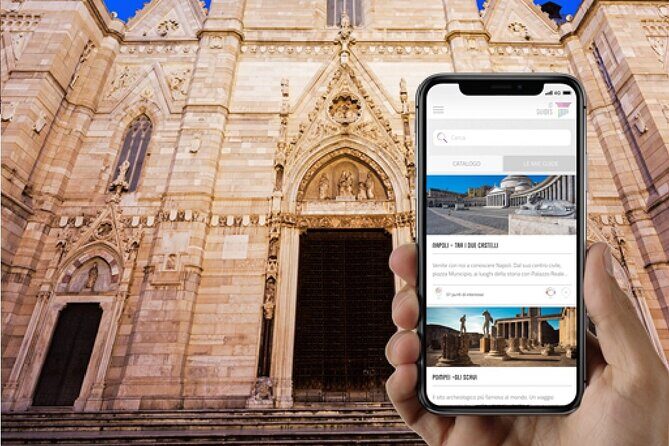
This experience is a smartphone audio guide covering four major targets: Naples, Pompeii, Ercolano (Herculaneum), and Vesuvius. You’re not joining a live group tour for the narration. Instead, you use the audio on your own schedule, and that matters because these places get crowded, long, and loud—having control beats waiting for a guide to catch up.
You get a mobile ticket, and the app is produced for offline use. That’s a big deal around Pompeii and Vesuvius, where you can run into spotty signal at exactly the moment you want the next stop to load smoothly.
Content quality is also part of the pitch: the audio materials are produced and supervised by Rosella Gallo, Art History professor in Rome. In practical terms, that should translate into descriptions that don’t feel like they were thrown together for quick tourist selling.
Duration is listed as approximately 3 days. The schedule is laid out as Day 1 in central Naples, Day 2 at Pompeii, and Day 3 combining Ercolano with Vesuvius.
You can also read our reviews of more guided tours in Naples


Naples Day 1: four stops, one strong “art and atmosphere” route
Day 1 is designed like a warm-up and a spotlight at the same time. You get a quick taste of Baroque Naples, Renaissance sights, a major art-museum stop tied to the chapel’s famous sculpture, and then a longer visit to a cloistered complex.
Chiesa del Gesu Nuovo (15 minutes, admission included)
This is the Baroque church in Naples that people usually point to first. With only about 15 minutes suggested, you’re not meant to “study” it for hours. You’re meant to get the wow factor fast—think dramatic Baroque style and a strong sense of place right in the city center.
The practical win here is that admission is listed as included for this stop. So, when you compare overall cost later, this first site helps offset the places where you’ll need separate entry tickets.
Complesso Monumentale Sant’ Anna dei Lombardi (20 minutes, admission not included)
This one is described as a Renaissance jewel in the heart of Naples. With about 20 minutes, you’ll likely focus on the exterior and key features rather than trying to absorb every detail like you’d do on a museum day.
The drawback is also clear: admission is not included. If you’re trying to keep your budget tight, factor in ticket costs for the non-included sites early.
Museo Cappella Sansevero: the Veiled Christ (20 minutes, admission not included)
This is a headline stop, and the audio guide is built around it. The Naples audio contains a large section dedicated to Museo Cappella Sansevero and the famous Veiled Christ, plus other well-known 18th-century sculptures.
What this means for you: if Sansevero Chapel is the one thing you’re most excited about, you’re not stuck with a vague “here’s what you’re looking at” audio snippet. The guide is meant to give the stop the attention it deserves, which helps you understand what makes the sculpture famous beyond its appearance.
You’re also given a 20-minute window. That’s enough time to take it in without turning it into a marathon—especially if you’ve had a long day already.
You can also read our reviews of more tours and experiences in Naples




Complesso Monumentale di Santa Chiara (1 hour, admission not included)
Santa Chiara’s complex is built around a cloister, and the plan gives it about 1 hour. This is where the pace slows down. You’re not just ticking off a site; you’re getting a quiet courtyard feeling that’s very different from the archaeological parks later.
This stop being admission-not-included is the same theme as the rest of Naples beyond Gesù Nuovo: you’ll want to have entry tickets ready in your plans.
Pompeii Archaeological Park: listening while the stones do the talking
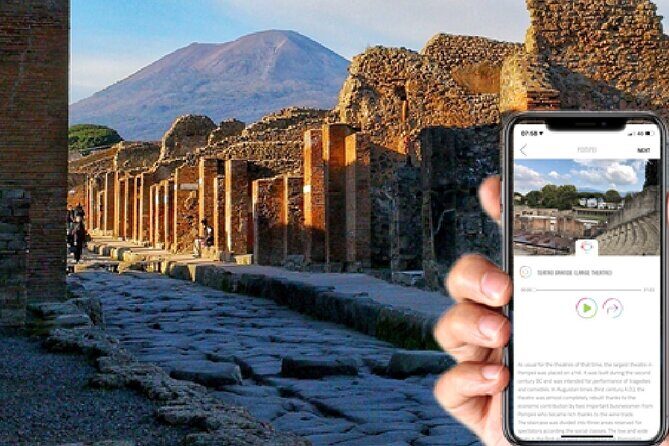
Day 2 is Pompeii Archaeological Park, with about 2 hours suggested. This is where an audio guide really earns its keep. Pompeii is huge, and the story is layered. Standing in one spot can feel confusing if you’re not sure what you’re looking at—an audio narration solves that by giving you a framework you can follow at your own speed.
The practical value is simplicity. You can do it without joining a group, and you can pause or repeat sections when you want more detail. If the site feels overwhelming, that’s normal—Pompeii is massive. The audio approach helps you get your bearings fast.
One consideration: Pompeii is also an environment where phone GPS may not be accurate. The experience notes this clearly and tells you to use maps from the ticket office as well. So don’t treat your phone location dot like gospel in archaeological areas.
A smart way to use the two-hour block is to think in terms of “choose the route, then listen.” Follow the plan you’re given, but don’t force yourself to cover everything if your feet are telling you it’s too much.
Parco Acheologico di Ercolano (Herculaneum): a Roman city you can picture
Day 3 begins at Parco Acheologico di Ercolano, with about 2 hours suggested. Ercolano is often appreciated because it can help you understand daily life in a Roman city—not just big dramatic ruins. The plan specifically describes it as giving a complete view of what life was like in a 2,000-year-old Roman city.
This is exactly why the audio guide format fits here. When you can hear explanations tied to what’s around you, the place starts to feel less like scattered remains and more like a lived-in world. It’s easier to imagine rooms, streets, and routines when the narration keeps giving you context.
You’ll also run into the same GPS reality check as at Pompeii. Use the maps you receive at the ticket office, and treat your phone as a help tool, not a perfect compass.
Vesuvius National Park: timing your volcano views with an audio companion
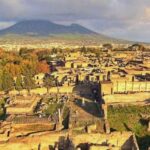
After Ercolano, you move on to Vesuvius National Park, listed at about 1 hour 30 minutes. This part is the emotional payoff for the whole trip: the volcano and the famous Gulf of Naples views.
Even though the time is limited, the audio idea is that you won’t just be staring at a peak and hoping you understand it. You’ll have narration to frame what you’re looking at while you’re standing there.
A useful mindset here: treat this as your reset. Two archaeological days can make everything feel heavy. Vesuvius shifts you into a wide-angle view, and the audio keeps it connected to what you saw below.
Price and value: why this package can cost less than buying separately
The price is listed as $11.45 per person, and the description promises you save 50% compared to audio guides available at the ticket office. The value angle gets even better when you compare the “per site” cost you’d normally face when you walk up to individual attractions and buy things one-by-one.
In real terms, this is why people like audio bundles: they stop you from paying a separate fee each time you want context. If you’re going to Naples plus the two major archaeological parks and the volcano, buying one guided experience that covers all of it is often the cheaper route.
One thing I’d watch: admission tickets are separate for most stops. So the audio price can be a bargain, while entry tickets still add up. That’s not a flaw in the audio guide. It’s just how these sites work. Plan your budget with that in mind.
Booking is also relatively time-sensitive in practice. The data says it’s commonly booked about 46 days in advance. If you’re traveling in peak season, I’d treat that as a sign to lock it in sooner rather than later.
Mobile ticket, offline downloads, and the GPS warning that actually matters
This guide is built to work on your smartphone, with offline capability. Offline use is listed as possible by downloading the contents in advance. That’s helpful because some archaeological areas can be moody with connectivity.
The experience also gives a straight warning: in archaeological sites, phone GPS may not be accurate. It recommends using the maps you receive at the ticket office too. That’s the kind of practical detail that saves frustration, because it prevents you from chasing a wrong location dot when you’re trying to find the next area to listen to.
Also note: the tour is described as a private activity where only your group participates. For an audio guide, that usually means you’re not sharing access with strangers in the same “guided tour group” way. You’re using your own phone, but it still helps to know the booking is geared to your group.
The meeting point is Piazza Monteoliveto, 1, 80134 Napoli NA, Italy. The stated opening hours are 10:00 AM to 5:00 PM, Monday through Sunday, for the overall period listed. Since this is a multi-day plan tied to specific places, you’ll want to match your site visits to what’s open on the days you plan to go.
What you’ll miss (and who should choose a live guide instead)
An audio guide is powerful, but it has limits. You won’t get instant back-and-forth with a person. If you want to ask why a decoration is the way it is, or what a particular object means in a debate, you’d need a live guide for that.
Also, the itinerary is structured around specific time blocks. That’s a good thing for planning, but it can feel like “too much” if you’re the type who wants to linger in one chapel or one street longer than the estimate.
Where the self-guided format really shines:
- If you like moving at your pace
- If you prefer reading/learning while you walk, not sitting through lectures
- If you’re trying to keep the trip feeling personal instead of group-timed
Who it suits best based on the structure:
- First-timers who want a clear route without committing to a traditional group tour
- Couples and solo travelers who don’t want to line up
- People who are drawn to specific Naples art stops like the Veiled Christ
Should you book this 3-day Naples–Pompeii–Ercolano–Vesuvius audio guide?
Book it if you want value and control. With a $11.45 price point and the promise of saving versus buying audio at ticket counters, it’s one of the easier ways to cover multiple major sights without paying audio fees four times over. The Naples plan is also built around Sansevero Chapel in a way that matches why people go there.
Skip it or consider adding something else if you’re craving a live expert voice or you know you’ll want to ask lots of questions. In that case, you might pair a live tour for one big site and use this audio guide as your independent backup for the rest.
If you do book, do one thing that makes a noticeable difference: download the content for offline use before you start moving around. Then use the maps at archaeological sites, because GPS can wander. You’ll get a smoother day, and the narration will feel less like an accessory and more like your companion.
FAQ
What does the 3-day audio guide include?
It covers Naples, Pompeii Archaeological Park, Parco Acheologico di Ercolano (Herculaneum), and Vesuvius National Park.
How long is the experience?
The duration is approximately 3 days, with time blocks listed for each stop.
Is this a mobile ticket?
Yes. The experience uses a mobile ticket.
Can I use the audio guide offline?
Yes. The contents can be downloaded on your smartphone so you can use them offline.
Are admission tickets included for every stop?
No. Chiesa del Gesu Nuovo lists admission as included, while the other stops shown do not include admission.
Where does the experience start?
The meeting point is Piazza Monteoliveto, 1, 80134 Napoli NA, Italy.
What are the opening hours?
The listed opening hours are Monday through Sunday, 10:00 AM to 5:00 PM (for the stated date range).
Is there free cancellation?
Yes. You can cancel for a full refund up to 24 hours in advance. Confirmation is received at the time of booking.
Who supervises the audio content?
The contents are produced and supervised by Rosella Gallo, professor of Art History at the Academy of Fine Arts in Rome.