REVIEW · TREVI FOUNTAIN TOURS
Trevi Fountain Underground Aqueduct and Spanish Steps Tour
Book on Viator →Operated by Live Virtual Guide · Bookable on Viator
Rome’s best water story runs underground.
This 2-hour tour connects the Spanish Steps area to the Vicus Caprarius water tank, showing how modern Rome sits on ancient infrastructure. I love the small-group feel (max 12), because it keeps the pace relaxed and makes it easier to follow the story as you move through the main sights.
I also like that you get both the postcard Rome and the plumbing behind it. You’ll spot parts of the Acquedotto Vergine overground, then go underground to see where Trevi’s water came from, including the water tank built in 19 BC. One potential drawback: the route packs several stops into a short window, so if you prefer lots of free time to wander on your own, the “listen, look, move” rhythm might feel a little slow.
In This Review
- Key things to know before you go
- A two-hour walkthrough of Rome’s Spanish Steps to Trevi waterworks
- Piazza di Spagna: the misnamed Spanish Steps and la Barcaccia’s aqueduct link
- Colonna Dell’Immacolata: a quick cultural stop tied to Christmas traditions
- Acquedotto Vergine: visible aqueduct remains and the nearby door mystery
- Rinascente Roma Tritone: when shopping space sits on aqueduct ruins
- Trevi Fountain: legends above ground, explanation of what’s powering it
- Vicus Caprarius: underground at the aqueduct tank built in 19 BC
- How the small-group format changes the experience
- What you pay for: value of $62.75 for Rome’s aqueduct access
- Timing and walking: what to expect on your feet
- Who should book this Trevi Underground Aqueduct and Spanish Steps tour
- Should you book this tour?
- FAQ
- FAQ
- How long is the Trevi Fountain Underground Aqueduct and Spanish Steps Tour?
- What does the tour cost?
- Is this a small-group tour?
- Is the tour offered in English?
- Do I get a mobile ticket?
- Where does the tour start?
- Where does the tour end?
- Are admissions included?
- What cancellation options do I have?
- Is the tour okay for people who don’t want a long, difficult walk?
Key things to know before you go
- A water-system storyline that links Piazza di Spagna, la Barcaccia, and Trevi Fountain
- Vicus Caprarius underground access to the aqueduct tank built in 19 BC
- Acquedotto Vergine overground glimpses plus a mysterious door near the aqueduct remains
- An ancient aqueduct in a modern mall at Rinascente Roma Tritone
- Max 12 travelers in English for a calmer pace and better interaction
A two-hour walkthrough of Rome’s Spanish Steps to Trevi waterworks
If you’ve already seen the big highlights in Rome, this tour gives you something different: a theme you can keep in your head while you’re walking. The thread is water. Not just fountains for photos, but the aqueducts and tanks that powered the city for centuries.
You start near Piazza di Spagna, where the setting is famous and the history is layered. From there, the tour moves along a path that helps you understand how “glamour” and infrastructure grew up together in Rome. It’s a smart fit for a packed itinerary because it’s short enough to slot in on a sightseeing day without turning into a full-day project.
You can also read our reviews of more tours and experiences in Rome.



Piazza di Spagna: the misnamed Spanish Steps and la Barcaccia’s aqueduct link
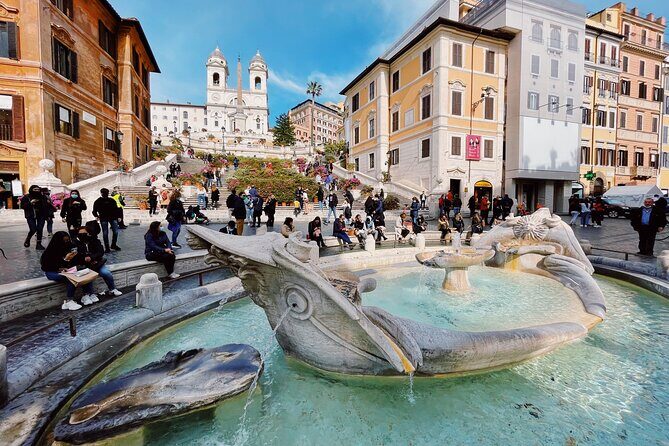
The tour meeting point is at the Spanish Steps, and the opening focus is on what the area is for Romans today and how it became what you see now. One of the fun takeaways is that the Spanish Steps are not Spanish in the way many people assume. The tour explains why the name stuck, and it uses that puzzle as a gateway into how Rome’s identity has shifted over time.
Right after, you connect that “surface Rome” with an essential piece of the water story: la Barcaccia fountain. This fountain is still fed by an ancient Roman aqueduct that has been working for over 2,000 years. That matters because it reframes fountains from decorative objects into living outcomes of Roman engineering. Instead of only admiring the look, you understand the source.
This first stop runs about 30 minutes, and it’s one of the best parts to use your eyes actively. You’re not just waiting for the next photo moment. You’re building context for what you’ll see next, and it helps the rest of the walk make sense.
Colonna Dell’Immacolata: a quick cultural stop tied to Christmas traditions
Next comes Colonna Dell’Immacolata, paired with local traditions around Christmas time. It’s not as famous internationally as the Trevi area, but that’s part of the value. Rome is full of monuments that people use as daily anchors for seasonal rituals, not just as “things to see.”
This segment is brief at about 15 minutes, so it won’t eat your time. The payoff is that you get a reminder that Rome’s history is not frozen. It keeps getting re-used, reinterpreted, and celebrated through the years.
Acquedotto Vergine: visible aqueduct remains and the nearby door mystery
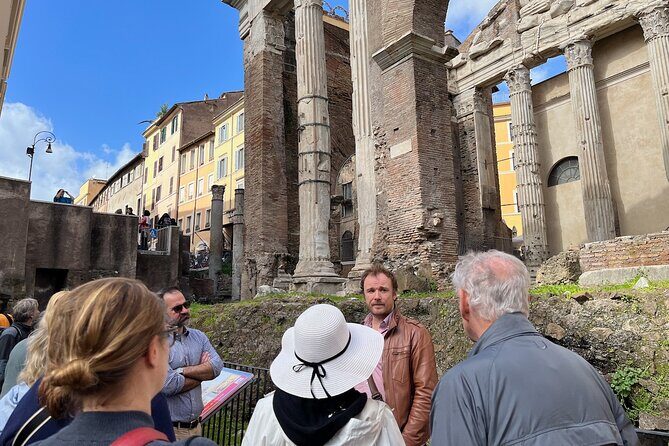
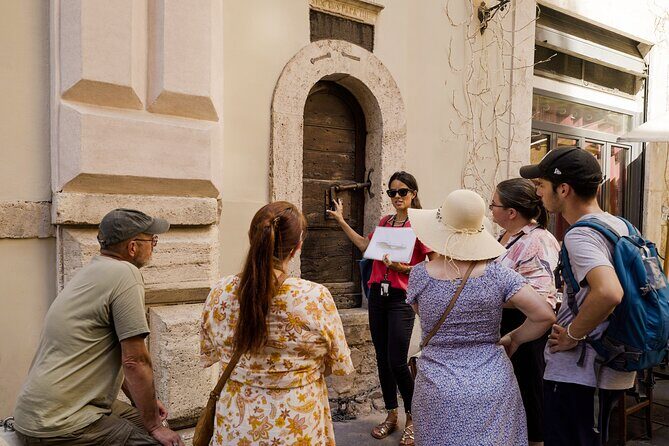
The tour then heads to Acquedotto Vergine, where you start seeing the aqueduct in a more literal way. Overground sections give you a clearer sense of scale and construction than you might get from looking at fountains alone.
There’s also a “what is that?” moment built into this stop: a mysterious door right next to the aqueduct remains. The story around it helps you understand that Roman water infrastructure wasn’t hidden underground only for drainage or storage. It was part of the city’s logic, tucked into real spaces people lived with.
This stop is also around 15 minutes. For me, it’s a good length because you can absorb what you’re looking at without rushing into the underground parts too fast. If you’re the kind of traveler who enjoys technical details, you’ll likely appreciate this segment most.
Rinascente Roma Tritone: when shopping space sits on aqueduct ruins
Now for one of the most surprising settings on the whole route: Rinascente Roma Tritone. Yes, it’s a department store. No, you’re not there to shop.
The key idea here is that Rome’s modern layers sit directly above ancient ones. The tour uses this location to show that the city you walk today is literally built over older structures, including aqueduct remnants. Inside this mall’s underground areas, you get to see the ruins of the only ancient Roman aqueduct still functioning today. That’s not a small claim, and it changes how you view the space around you. You’re not just passing through a mall; you’re standing above (and near) living engineering history.
This stop is about 15 minutes, so again, it’s quick. But it’s a powerful “wait, what?” moment because it connects two worlds: everyday consumer life and ancient utility systems.
If you enjoy spotting how cities evolve, this is also where you’ll start to notice the tour’s core theme working in real time: water routes, maintenance, and reuse.



Trevi Fountain: legends above ground, explanation of what’s powering it
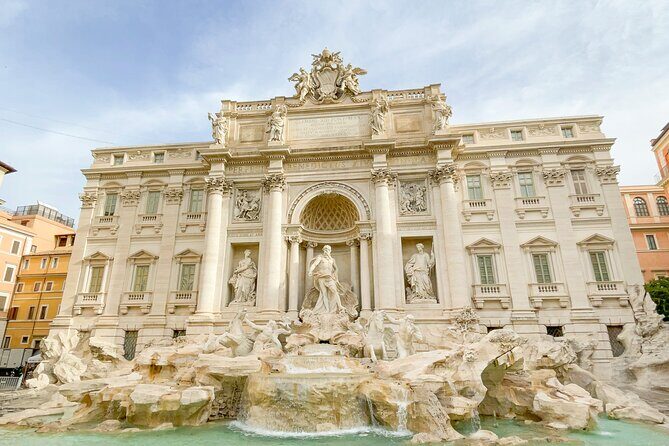
After the aqueduct stops, you reach Trevi Fountain, the iconic, most-photographed classic. You’ll spend about 15 minutes here, which is a useful time window: long enough for a look, a few photos, and a better understanding of what you’re seeing, but not so long that the tour loses its focus.
This stop pays attention to meaning, not just aesthetics. You learn the legends and stories that have grown around Trevi from ancient Roman times through today. Then the tour ties that storytelling back to the water system you just saw. It’s a tidy trick: the fountain becomes the visible “ending,” while the aqueduct and tank stops are the “how.”
So instead of the fountain being only a famous backdrop, it becomes a visible result of a long network. That’s exactly the kind of connection that makes short tours feel worth it.
Vicus Caprarius: underground at the aqueduct tank built in 19 BC
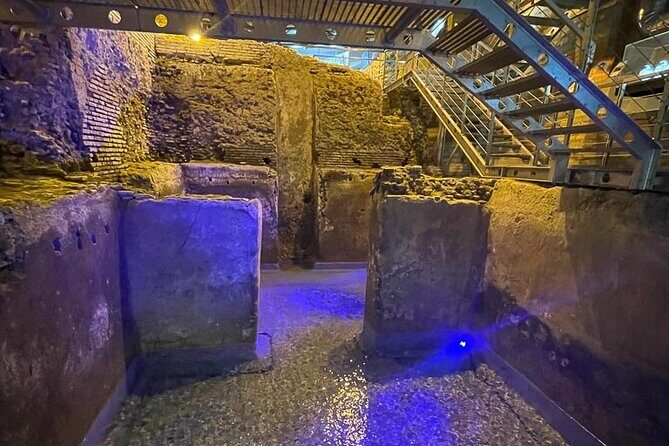
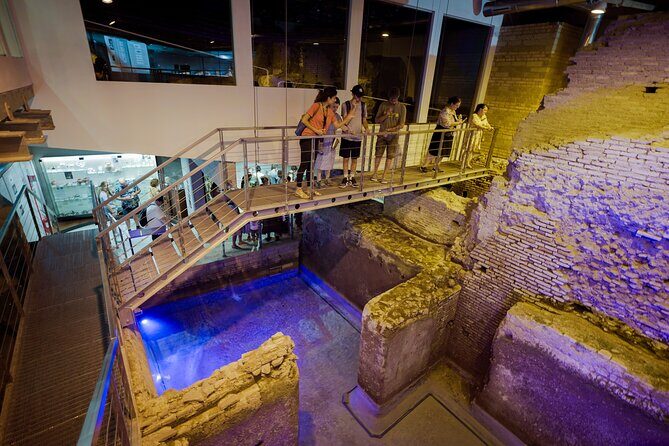
The final major highlight is Vicus Caprarius – the City of Water. This is the moment where the tour name starts to feel literal. You walk underground to explore the ancient water tank of the aqueduct system, built in 19 BC.
What I love about this stop is that it explains Rome as stacked layers, not a single timeline. The site is described like a “lasagna” of history, with layers of buildings and homes of people who lived there across centuries. This is where the tour helps you stop thinking of ruins as museum pieces and start seeing them as real places where life happened under different rulers and different eras.
This segment runs about 30 minutes and includes admission. Since it’s longer than most stops, it gives you time to take it in at a normal pace, including time to listen to the explanation without feeling like you’re rushing down a corridor.
One note to plan for: underground areas naturally limit how far you can roam on your own. The point here is understanding the water tank and the idea of how Rome stored and distributed water, so go into it expecting guided interpretation more than free exploration.
How the small-group format changes the experience
With a maximum of 12 travelers, this tour feels more like a guided walk than a cattle-line history lecture. That small size matters for two reasons.
First, it supports a relaxed pace. The tour stays “moving,” but it isn’t frantic. Second, it helps you keep up with the theme. Water systems, aqueduct names, and why places are misnamed can get confusing fast if you’re hearing the explanation while constantly being jostled.
The English language support also helps. In the past, guides such as Sabrina, Federica, and Riccardo have been praised for being engaging and fluent, with clear passion for Roman history. That said, one traveler did flag that an accent could make parts harder to catch. If you’re sensitive to audio clarity, it’s worth positioning yourself where you can hear well, not behind taller people.
What you pay for: value of $62.75 for Rome’s aqueduct access
At $62.75 per person for about 2 hours, the price is not “cheap,” but it doesn’t feel inflated for what you actually get.
Here’s the value logic:
- You’re paying for expert guiding and a coherent theme (water and how Rome grew around it).
- Most stops list admission-free access, while the key underground portion (Vicus Caprarius) has admission included.
- The route includes multiple sites in a tight time frame, including places that many self-guided walks would miss because you need someone to connect the dots.
If your goal is only to see Trevi from the sidewalk and grab a photo, you might find better value with a self-guided route. But if you want to understand why the fountain exists, where its water comes from, and how the city’s layers formed, this price starts to make sense.
Also, this is a popular tour with an average booking lead time around 89 days. If you’re traveling in peak season, I’d book early so you have more choices.
Timing and walking: what to expect on your feet
The tour is about 2 hours, with short segments that keep things moving: roughly 15 minutes at several stops, 30 minutes at the start (Spanish Steps) and a final 30 minutes underground.
The walking is framed as manageable for most people, including easy walking and a few steps. You’ll do a mix of outside sights and indoor/underground exploring, which helps if weather is changeable. Bring comfortable shoes, because you’re switching between surfaces and levels often enough that sneakers or supportive sandals are the practical choice.
You’ll also have focused time at Trevi and the nearby features, but you shouldn’t plan on long lingering. This isn’t a “camp out and enjoy the crowd” experience. It’s a guided route that uses your time to build understanding.
Who should book this Trevi Underground Aqueduct and Spanish Steps tour
This is a strong match if:
- You like history that connects places to systems, not just facts about monuments
- You’re curious about aqueducts, how water was stored, and how Rome functioned day to day
- You want a short tour that still covers enough ground to feel satisfying
- You enjoy being inside real city layers, like seeing Roman remains under modern settings
You might skip it if:
- You only care about Trevi as a photo stop and don’t want structured explanation
- You prefer long unstructured time at a single site rather than moving through multiple stops
- You struggle with audio clarity in English (accent can be a factor for some people, depending on the guide)
Should you book this tour?
I’d book it if you’re looking for a themed Rome experience that turns the obvious sights into meaningful ones. The combination of Spanish Steps, la Barcaccia, multiple aqueduct-related stops, and then the underground Vicus Caprarius tank gives you a complete “water story” in about two hours.
If your trip is short and you want to understand more than the postcard surface, this tour is a smart use of time.
FAQ
FAQ
How long is the Trevi Fountain Underground Aqueduct and Spanish Steps Tour?
It runs for about 2 hours.
What does the tour cost?
The price is $62.75 per person.
Is this a small-group tour?
Yes. The maximum group size is 12 travelers.
Is the tour offered in English?
Yes. English is the offered language.
Do I get a mobile ticket?
Yes. The tour uses a mobile ticket.
Where does the tour start?
It starts at the Spanish Steps area (Piazza di Spagna).
Where does the tour end?
The tour finishes after the Vicus Caprarius underground aqueduct water-tank stop.
Are admissions included?
Admissions are listed as free for most stops, and the Vicus Caprarius stop includes admission.
What cancellation options do I have?
Free cancellation is available, as long as you cancel at least 24 hours before the experience start time.
Is the tour okay for people who don’t want a long, difficult walk?
Most travelers can participate, and the walk is described as easy with a few steps. It’s also short enough to fit into a busy day.