REVIEW · ROME
Tour of Rome in Golf Cart: Rome in a Day
Book on Viator →Operated by Luxurbe · Bookable on Viator
Rome in a day without the endless walking.
That is the appeal here. You zip between Rome’s top landmarks in an electric golf cart, with an English-speaking driver-guide calling out details you’d miss on your own. I like that it stays private for your group of up to 7, and the cart makes the whole day feel doable instead of like a foot race. One thing to consider: this is mostly an outside-and-photo format, so you will not go inside monuments as part of the tour.
The route is a smart sweep through “Rome greatest hits,” plus a couple of calmer stops that add texture. You’ll get photo pauses at places like the Pantheon area, the Trevi Fountain, and the Jewish Ghetto, then you’ll move on before you run out of energy. If you want lots of indoor time, this isn’t the tour style for that, and you’ll need separate planning for entries.
In This Review
- Key highlights (what makes this tour click)
- Why a private golf cart day works so well in Rome
- Price and value: what $1,345.70 per group really means
- The meeting point and start time: getting rolling at Piazza del Popolo
- Via dei Condotti: designer Rome, slow-glance pacing
- Piazza Navona and Piazza del Popolo: Baroque squares and photo-ready angles
- Pantheon, Campo de’ Fiori, and Sant’Ignazio di Loyola: religion, markets, and the art of noticing
- Spanish Steps and Trevi Fountain: iconic views with minimal leg punishment
- The Roman Ghetto: narrow streets, big history, quiet contrast
- Piazza Venezia, Ancient City views, and Via dei Fori Imperiali
- Palatine Hill and the Colosseum: where the day lands
- What the guide actually changes: pacing, photos, and small fixes
- Quick tips to make your day feel effortless
- Should you book Rome in a Day (Golf Cart): my honest take
- FAQ
- Is this a private tour?
- How many people can be in a group?
- How long is the tour?
- What language is the tour guide?
- Where does the tour start and end?
- Is hotel pickup available?
- Are entrance tickets included?
- Do we enter monuments during the tour?
- What if weather is bad?
Key highlights (what makes this tour click)
- Private group of up to 7: easier pacing, fewer waits, better photo odds
- Electric golf cart transport: less stair stress, more time looking up
- English-speaking driver-guide: explanations and spot-on guidance while you ride
- Photo stops at big landmarks: get the sights without sprinting between them
- No monument interior visits as part of the tour: helps the day stay smooth
- Optional hotel pickup/drop-off (if selected): saves you from figuring out where to meet
Why a private golf cart day works so well in Rome
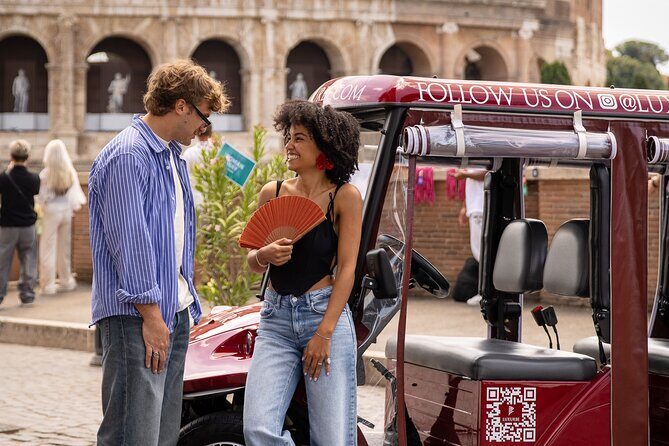
Rome can be gorgeous and exhausting in the same hour. Sidewalks are uneven. Squares are crowded. Your legs start bargaining with you around mid-afternoon.
This tour solves a simple problem: getting from place to place without spending your whole day walking. The electric golf cart keeps you close to the action, and the driver-guide manages the flow so you’re not stuck in traffic or playing guesswork with pickup points.
I also like the group size. Up to 7 people is small enough that your guide can respond to what your group wants—extra photo time, a slower pace, or a short pause to regroup. In other words, you’re not swallowed by a mega-bus schedule.
The main trade-off is that the day is designed around outside viewing and photo moments, not long indoor visits. That’s not a flaw if your goal is to see a lot of Rome in one go. It’s a problem if your goal is museum time.
You can also read our reviews of more tours and experiences in Rome.



Price and value: what $1,345.70 per group really means
The price is $1,345.70 per group (up to 7) for about 8 hours. That can sound steep until you do the math.
- If you fill the group (7 people), it’s roughly $192 per person. That’s very reasonable for a private, guided day with vehicle transport.
- If you only have 2–3 people, the per-person cost jumps fast. In that case, it’s still a nice upgrade if you value time saved and comfort, but you should compare it to a smaller-group option.
Also keep in mind what’s included and what’s not:
- Included: guided sightseeing by golf cart, English-speaking driver/guide, photo stops, and optional audio guides if available, plus hotel pickup/drop-off if you selected it.
- Not included: entrance tickets and food/drinks.
So the value comes from reducing logistics pain and maximizing sight coverage in a single day. If you want to buy your own monument entries, you can, but the pricing already assumes you’re not paying admissions as part of the tour.
The meeting point and start time: getting rolling at Piazza del Popolo
The tour starts at 9:30 am at Piazza del Popolo (11, 00187 Roma). It ends back at the same meeting point.
If you select pickup, you wait outside your hotel or accommodation at street level. The driver arrives at the scheduled time or within a 10-minute waiting window, and they’ll be easy to recognize. That matters because Rome pickup errors can waste time—this setup is designed to keep the day on track.
Practical tip: be ready a few minutes early. Not because you’re late, but because Rome sidewalks and curb zones can be confusing, even when you’re not doing anything wrong.
Via dei Condotti: designer Rome, slow-glance pacing
You kick off near Via dei Condotti, one of Rome’s most famous shopping streets. Think cobblestones, grand facades, and that “people-watching is the activity” feel. It’s also a useful warm-up stop because it’s easy to orient yourself visually: you can spot major landmarks and get your bearings before the bigger jumps.
This stop is short and outdoor. So you’re not losing hours on transit or waiting. And because you’re in a cart, you can actually enjoy the street scene instead of rushing to “tick the box.”
What to watch for: the mix of historic architecture styles and the classic Rome street rhythm—lampposts, flowering planters, and the way the street funnels you toward Spanish Steps.
Piazza Navona and Piazza del Popolo: Baroque squares and photo-ready angles
Next up is Piazza Navona, known for Baroque artwork and its lively street energy. The centerpiece is Fontana dei Quattro Fiumi, and it’s surrounded by cafes and street performers. You’ll get about 45 minutes here, which is enough time to stroll, snap a few solid photos, and pick a viewpoint without rushing.
Then you move to Piazza del Popolo for about 30 minutes. This square is all about scale and sightlines: a big open space with prominent churches, fountains, and an Egyptian obelisk as the visual anchor. It’s also a great “pause and breathe” stop. Wide squares help you reset your legs and your eyes after narrower streets.
One consideration: these squares can be busy, especially later in the day. The cart helps you arrive and depart with less fuss, but you still want to show up with patience for crowd flow.



Pantheon, Campo de’ Fiori, and Sant’Ignazio di Loyola: religion, markets, and the art of noticing
The tour then hits a trio that gives Rome layers.
First is the area around the Pantheon. You get about 30 minutes, and the highlight is the exterior and interior view you can appreciate from your time there—this tour format is not about long indoor sightseeing. The dome and oculus are the star features, and even from outside, they carry serious wow power. The Pantheon is one of those places where your camera will start working before you even decide to take a photo.
From there you head to Campo de’ Fiori for about 30 minutes. This is a market square in the day and a social hangout area as the mood shifts. It’s centered on the statue of Giordano Bruno, which is a handy “story hook” for understanding what this part of Rome has been doing for centuries: selling, gathering, arguing, and eating.
Finally, you visit Chiesa di Sant’Ignazio di Loyola, a Baroque powerhouse with an impressive trompe-l’oeil dome. Even when you’re not going deep into an indoor itinerary, this kind of church stop is a win because Baroque details reward slow looking.
Possible drawback here: these stops are visual-heavy, not time-heavy. If you want to read every inscription and linger for long, you may feel a little steered along. The upside is you’ll still catch the big moments.
Spanish Steps and Trevi Fountain: iconic views with minimal leg punishment
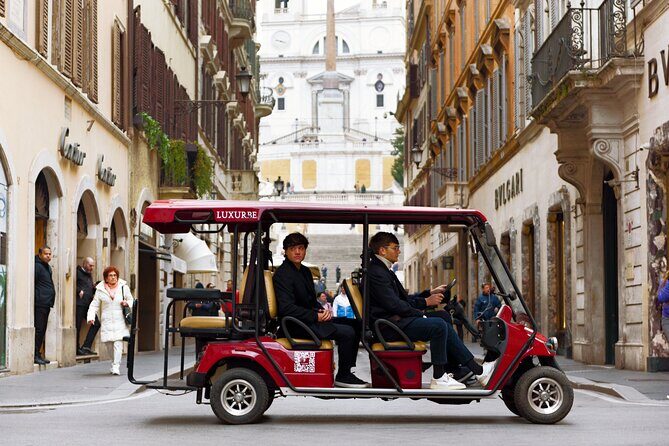
Then you land at Piazza di Spagna (Spanish Steps) for about 30 minutes. This is the classic photo magnet: the Spanish Steps, the Barcaccia Fountain, and those boutique-filled streets. The church at the top, Trinità dei Monti, adds a clean finish to the skyline. It’s a perfect stop for sitting for a minute and letting Rome feel like Rome.
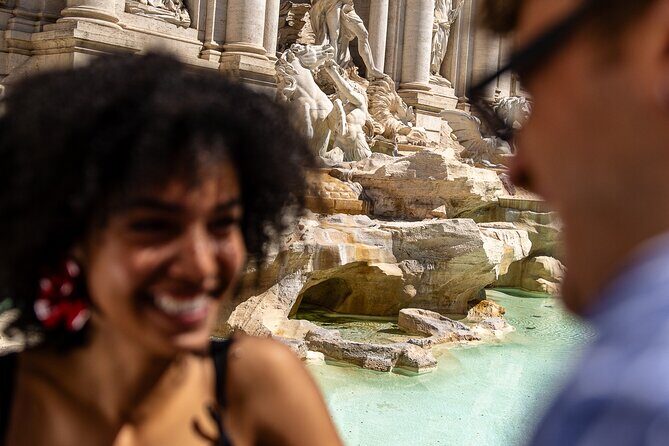
After that comes Trevi Fountain for about 45 minutes. Trevi is famous for a reason: the sculptural drama, the flowing water sound, and the myth-friendly vibe where everyone tries to make their wish work. You’ll have time for photos and for standing at a comfortable spot instead of just walking past.
Here’s the practical angle: Trevi is one of the most crowded places in the city. The golf cart won’t eliminate the crowd, but it does make your day smarter by preventing a long walk detour. You’ll also spend less time transferring and more time focusing on your photos and impressions.
A tip: if you’re serious about photos, arrive in your best “stillness mode.” Don’t fight the crowd—position, wait for gaps, and take your shots fast.
The Roman Ghetto: narrow streets, big history, quiet contrast

Next is the Jewish Ghetto near the Tiber, for about 45 minutes. This area has deep meaning. It was established in 1555, and for centuries it confined Jewish residents. Today, you’ll find narrow cobblestone streets, old synagogues, and Jewish eateries and shops.
Two key stops to be aware of within this area:
- Great Synagogue
- Jewish Museum
Even if you don’t go inside, the neighborhood itself carries the sense of time passing. It’s a contrast to the “postcard Rome” squares earlier in the day. It feels more lived-in, and it adds perspective to the big monuments you’ll see later.
What to watch for: comfortable shoes and a calm pace. This is the part of the day where walking happens more naturally, because the streets are narrower and you’ll likely move on foot for a better look.
Piazza Venezia, Ancient City views, and Via dei Fori Imperiali
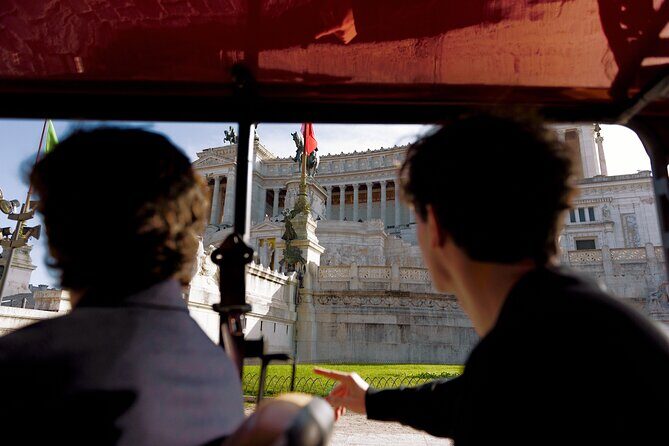
Then the tour swings back to the center of Rome at Piazza Venezia, around 15 minutes. The star here is Altare della Patria (the Vittoriano). It’s a huge modern-feeling monument that anchors you to the bigger timeline of the city. Even in a quick stop, it helps you understand where you are on the map.
After that, you head to Via dei Fori Imperiali for about 45 minutes. This is the showcase corridor for the ancient world, with views that connect you directly to the Imperial Fora along the edge of the Roman Forum.
You’ll see references to major forums like:
- Forum of Trajan
- Augustus
- Nerva
- Julius Caesar
The value of this segment is the way it orders the past. Rome can feel like scattered ruins until someone gives you a route through it. This area does that naturally because the monuments line up along a clear path.
A consideration: ruins are open-air. If the sun is harsh, you’ll feel it. Plan for water and shade breaks.
Palatine Hill and the Colosseum: where the day lands
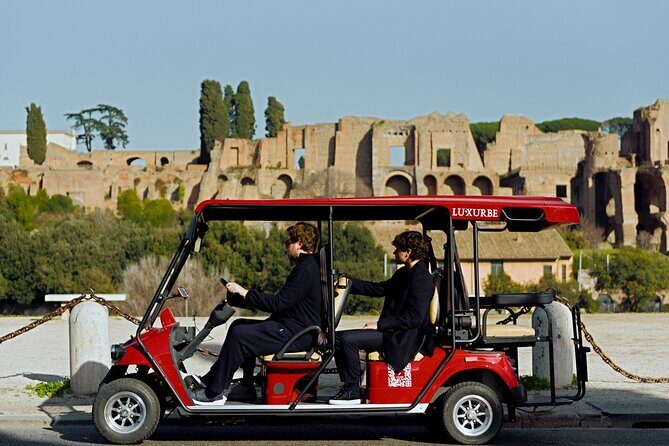
You finish the arc with Palatine Hill (about 45 minutes) and then the Colosseum (about 45 minutes).
Palatine Hill gives you imperial scale plus panoramic views. It’s associated with ancient palace life, and it’s linked to Rome’s legendary beginnings. The tour’s value here is that you get the sense of height and importance—Palatine is not just ruins, it’s a viewpoint on how power was displayed.
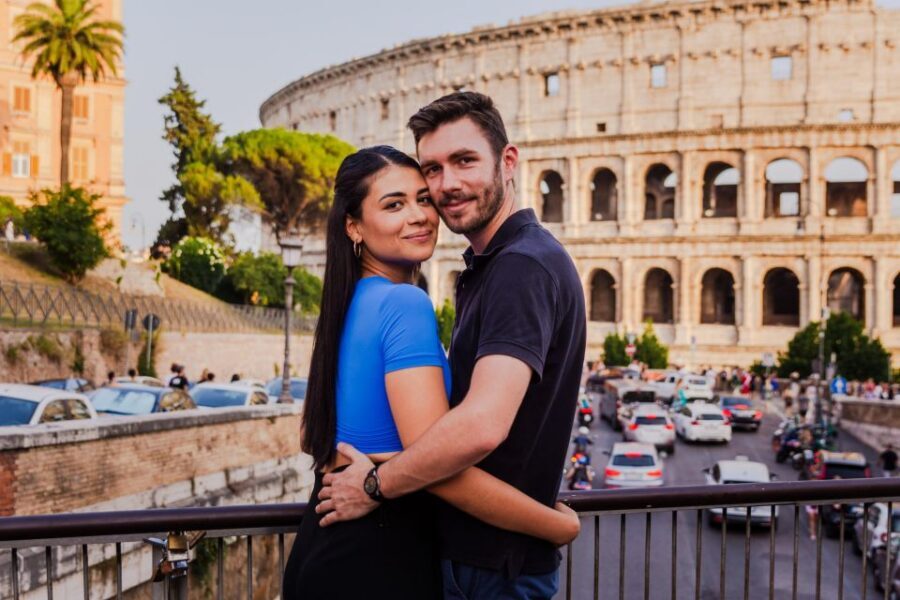
Then comes the Colosseum, the symbol you came for. You’re seeing it as an iconic exterior moment, with enough time to look, photograph, and absorb what it represents. It hosted gladiatorial contests and public spectacles, and the structure’s travertine and sandstone work still reads as impressive even at a distance.
One practical note: if you strongly want interior access, plan separate tickets, because the tour format is not for entering monuments as part of the experience. You can still use this day to get oriented and save time, then match it with planned entries on another day.
What the guide actually changes: pacing, photos, and small fixes
A big reason this tour scores high is the guide style. In feedback, guides like Daniele, Luca, Tony, and Lucas De Monti were praised for being friendly, professional, and for stopping wherever photos mattered. That’s not a minor detail. In Rome, photo time is often where days go off the rails. With a cart and a driver-guide paying attention, you spend less time chasing the perfect angle and more time getting it.
You also get the benefit of an English-speaking guide explaining history and details you might skip. Even when you only catch a few lines, it changes how you see what’s in front of you. Suddenly Piazza Navona is not just a square with a fountain. Trevi is not just a famous pile of stone. You start connecting the city’s layers as you move.
And yes, this day can be tailored. One strong theme in feedback is that the guide adjusts to what your group wants rather than pushing everyone through a rigid script.
Quick tips to make your day feel effortless
- Wear shoes you can walk in for the narrow-street segments, especially around the Ghetto. The cart helps, but it won’t erase all walking.
- Bring a light layer. Even in good weather, church interiors and open squares can feel cooler or hotter than you expect.
- Think of tickets as separate. Entrance tickets are not included, so decide in advance if you want any indoor time and budget accordingly.
- For photos at Trevi and Spanish Steps, plan for crowd flow. The best shots often come from waiting two minutes longer.
- If you want hotel pickup, confirm you’re ready at street level. Rome pickup zones are real life, not a map.
Should you book Rome in a Day (Golf Cart): my honest take
Book this if you want a private, efficient Rome highlights day and you’d rather spend your energy looking at monuments than walking between them. It’s a strong fit for mixed-age groups, families, and anyone who has only one day and wants the biggest sights in a single loop.
Skip it or treat it as an overview only if you want major indoor time—museums, long guided interior visits, or deep monument exploration. This tour is designed for outside viewing and photos, so you’ll need separate planning for anything that requires entrances.
If you do book, go in with a clear goal: see the icons, learn enough to connect them, then decide later which places deserve a second, slower visit.
FAQ
Is this a private tour?
Yes. It’s a private tour/activity, and only your group participates.
How many people can be in a group?
The price is per group up to 7 people.
How long is the tour?
It lasts about 8 hours.
What language is the tour guide?
The tour is offered in English, with an English-speaking driver/guide.
Where does the tour start and end?
It starts at Piazza del Popolo, 11, 00187 Roma RM, Italy and ends back at the meeting point.
Is hotel pickup available?
Pickup is offered if selected. Guests wait outside the main entrance of their hotel or accommodation at street level.
Are entrance tickets included?
No. Entrance tickets to monuments and attractions are not included.
Do we enter monuments during the tour?
No. Travelers will not enter inside the monuments.
What if weather is bad?
This experience requires good weather. If it’s canceled due to poor weather, you’ll be offered a different date or a full refund.