REVIEW · NAPLES
Tour Of Padre Pio: From Pietrelcina To San Giovanni Rotondo
Book on Viator →Operated by Shore Excursion in Naples · Bookable on Viator
Padre Pio is easy to romanticize. This trip keeps it grounded, moving from his birthplace in Pietrelcina to the modern shrine and convent church in San Giovanni Rotondo. I love the way the tour pairs two very different kinds of sacred space—a small home room and a massive pilgrimage sanctuary—and I love how the pacing gives time to actually look at details, not just rush to photos. One thing to consider: it’s a long drive from Naples, and stop 1 has three external steps to enter his birth house.
The best part for practical travelers is the private-group setup. You get hotel/port pickup, bottled water, and an air-conditioned ride, so the day feels calmer even when the itinerary is big. The ride also includes a mobile ticket, which is handy when you’re juggling crowds and lines.
In This Review
- Key Highlights
- The Holy Road Trip: Naples to Pietrelcina and San Giovanni Rotondo
- Price and Logistics: What $810.16 Per Group Actually Buys
- Casa Natale di Padre Pio: The Birth House That Explains His Early Life
- San Giovanni Rotondo Shrine: Modern Stained Glass and Mosaics
- Santa Maria delle Grazie and the Sarcophagus Transfer
- Guides Matter: Mauro’s Style and Why It Changes the Day
- What the Whole Day Feels Like (And How to Prepare)
- Who This Tour Suits Best
- Should You Book This Tour?
- FAQ
- How much does this Padre Pio tour cost?
- Is pickup included, and where do you pick up from?
- What’s included in the price?
- Are admission tickets included?
- How long is the tour?
- Is this a private tour?
- Can I cancel for a full refund?
Key Highlights
- Casa Natale di Padre Pio in Pietrelcina: a humble one-room interior with period details, plus a trap door leading to a lower space
- A shrine that’s both modern and art-heavy: mosaics, stained-glass windows, and polished pilgrim spaces
- Santa Maria delle Grazie complex: a conventual church tied directly to Padre Pio’s life in San Giovanni Rotondo
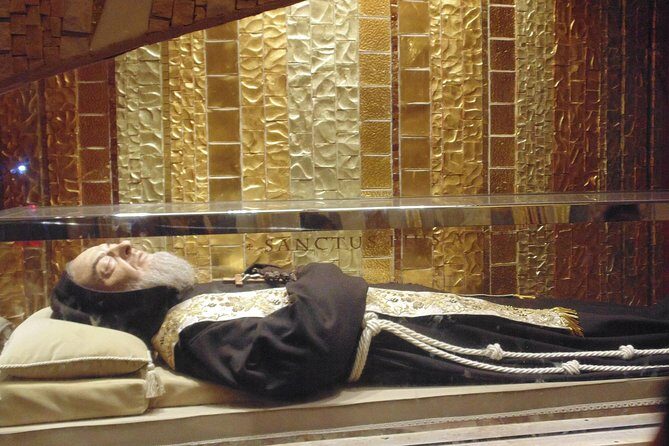
- The sarcophagus story: the tomb stayed with his remains until a transfer to a crystal case in 2008
- A guide who can shape the day: Mauro is noted for clear explanations, strong Italian-culture context, and adding a requested extra like St. Michael’s cave
- Value that depends on how many you are: priced per group up to 3, with key entrances handled up front
The Holy Road Trip: Naples to Pietrelcina and San Giovanni Rotondo
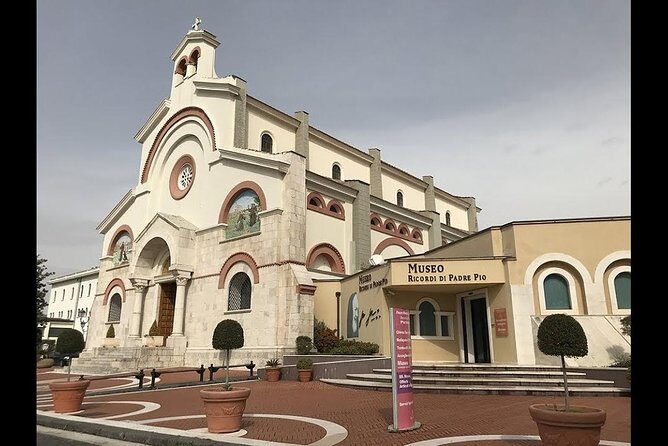
This tour is built for people who want more than a single church visit. You’re not just checking off famous names—you’re traveling along the path that connects Padre Pio’s life in a small hill town to the pilgrimage center that grew up around his legacy.
Yes, there’s driving. The upside is that you get a real sense of regional change as you head from Campania into Puglia, and you’ll notice the countryside shift along the way—olive trees are a big visual clue that you’re in the right region for this story.
For some people, the main question is whether the long ride makes sense. Here’s the practical answer: the tour gives you three separate stops that each teach you something different, so the time doesn’t feel wasted on repeated geography.
You can also read our reviews of more tours and experiences in Naples.

Price and Logistics: What $810.16 Per Group Actually Buys
The price is $810.16 per group (up to 3 people). That matters because this is not a big shared-bus situation. If you’re traveling as a duo or trio, the cost spreads out better than it would on a standard per-person group tour.
What’s included is also very “useful travel math”:
- Air-conditioned vehicle
- parking, fuel, and tolls
- bottled water
- pickup from hotels/B&Bs/ports (Molo Beverello, Pozzuoli, Molo Luise)
- mobile ticket
Entrance fees are partially handled too: Casa Natale di Padre Pio includes admission, while the main shrine and convent church entries are free according to the tour plan. Tips and meals are not included, so if you want lunch, it’s on you to budget time and money.
One more practical note: the experience is listed as private, meaning it’s only your group. That usually makes the day feel more flexible—especially if you ask your guide for small adjustments like extra time for photos or a requested add-on (more on that soon).
Casa Natale di Padre Pio: The Birth House That Explains His Early Life
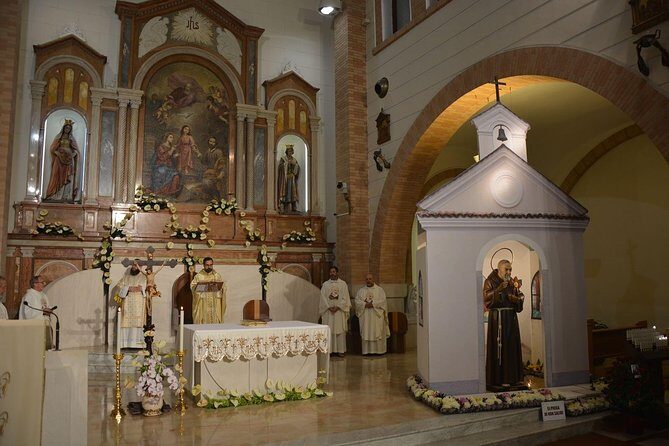
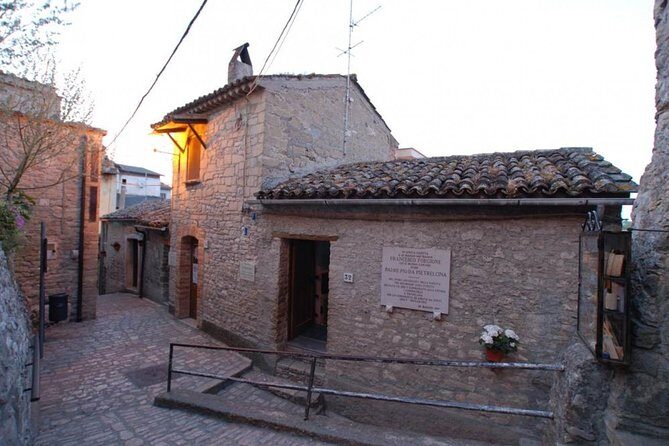
Stop 1 is Casa Natale di Padre Pio in Pietrelcina. This is the kind of place that can feel small at first—until you slow down and realize how much meaning is packed into a modest room.
The house is entered through three external steps and contains a single room. Inside, you’ll see period furnishings: a wrought iron double bed, a night table, and a washbasin by the window. There’s also a square table with books that Padre Pio used when he went to school, plus a photograph of him sent to his mother from San Giovanni Rotondo.
What I like about this stop is that it doesn’t try to “big-ify” the story. It gives you concrete details—chairs, chests, religious imagery like lithographs of Madonnas and crucifixes—that make the early life feel real instead of legendary.
You’ll also learn about the family context around his faith. The account shared here includes details about his devotion from a young age, including how he reportedly refused to play with friends because he felt others were blaspheming. That’s a strong contrast to how we think of children today, and it helps you understand why he later became such a powerful symbol of spiritual intensity.
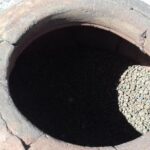
A final detail that makes this stop more interesting than a typical “view the room” stop: the floor includes a trap door leading to a lower space used as a store area and donkey barn, with an external access door as well. It’s a small physical clue that the house wasn’t just for show—it was a working home.
Plan for about 1 hour 30 minutes here so you don’t feel rushed.
San Giovanni Rotondo Shrine: Modern Stained Glass and Mosaics
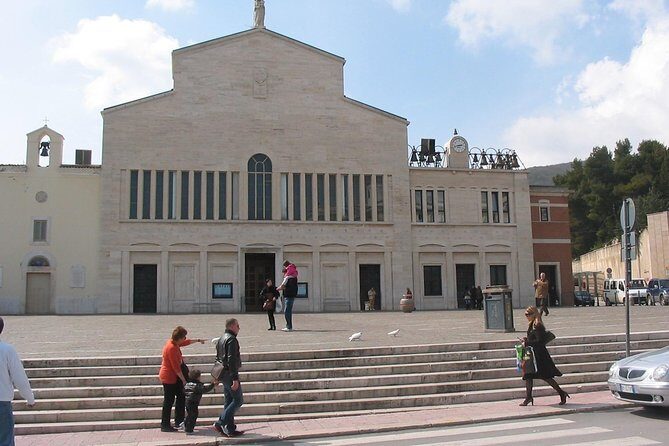
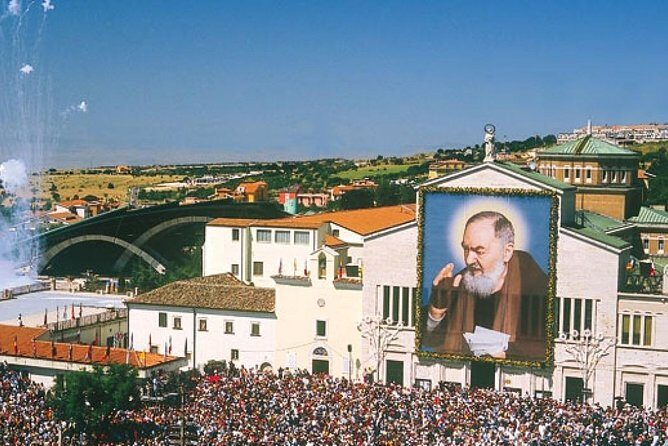
Stop 2 is San Giovanni Rotondo at the main shrine area, where millions of faithful visit each year. This is the opposite of a small birthplace. Instead of intimate rooms, you get a sanctuary built for crowds, movement, and long-term pilgrimage.
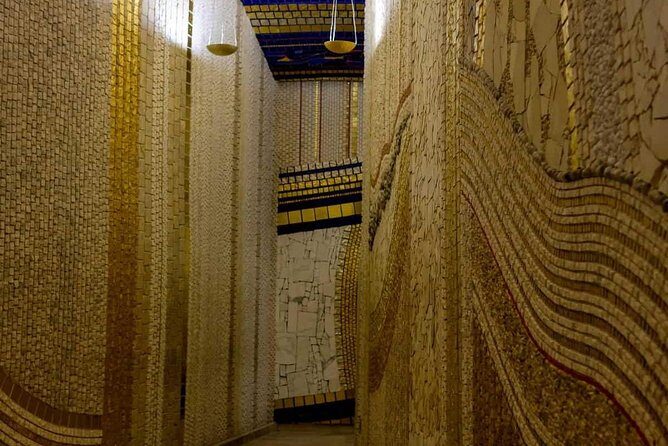
Expect a shrine that mixes strong visual design with religious symbolism. The plan highlights brilliant mosaics with iridescent color, polychrome stained glass with bold designs, and sanctuary spaces that feel different from older centuries of church architecture. The goal is that you feel pulled forward visually, while still experiencing faith as something “clear,” not confusing.
What you might notice as you walk: it’s easy to get lost in any huge religious complex, but this one feels designed to guide you. You’ll likely find yourself stepping carefully between decorative elements, like mosaics and stained glass, because there’s enough visual material that you can either rush through it or take your time.
The tour time here is about 1 hour, and that’s a good length for this stop. It’s enough to walk the main routes and notice the art without exhausting yourself before the next church segment.
Santa Maria delle Grazie and the Sarcophagus Transfer
Stop 3 brings you to a more life-based perspective: the Santa Maria delle Grazie complex, including the conventual church and a newer church built to accommodate the growing flow of pilgrims.
These churches sit near each other, both dedicated to Santa Maria delle Grazie. The tour focuses on why the newer church exists: Padre Pio asked for it so the increasing number of visitors would have space.
The key highlight here is the burial story. On the lower floor, you’ll see the sarcophagus that guarded his remains from his death in 1968 until 2008, when the body was transferred to a crystal case in the new sanctuary. That timeline matters because it turns the visit into more than a sightseeing stop. It shows how the pilgrimage site evolved as the world’s attention increased.
This segment is about 2 hours, which is exactly the right tempo. You’ll have time to understand the difference between the complex’s parts—conventual space versus newer sanctuary—and why both are tied to the same person and same devotion.
Guides Matter: Mauro’s Style and Why It Changes the Day
If you get a guide like Mauro, you’ll likely feel the tour click into place. One reason is the way he explains the sites: strong passion for learning, clear language, and a habit of making sure your group’s needs are handled during the ride.
More importantly, he connects the dots between places. Padre Pio’s birthplace isn’t just a house; it’s an origin story. The shrine isn’t just ornate; it’s a modern expression of devotion. The convent church isn’t just historic; it tracks what his presence meant for pilgrims over decades.
There’s also a practical bonus reported: when requested, Mauro added St. Michael’s cave to the plan. That’s a good example of the value of a private tour. If you have a specific interest beyond the core stops, this format can sometimes make room for it.
What the Whole Day Feels Like (And How to Prepare)
This trip isn’t “just walk and click photos.” It’s a sequence that asks you to switch modes—small room reflection, shrine art focus, then convent/tomb context. That means your comfort matters more than usual.
Here’s how I’d prepare if you’re the type who wants to enjoy the details:
- Bring a light layer. Churches and shrines can feel cooler than the road outside.
- Wear shoes you can stand in for a while. Even when the official stop times are set, you’ll likely want to move slowly.
- Have your camera ready, but don’t treat every moment like a photo assignment. The stained glass and mosaics are worth attention, especially at a slower pace.
Also, this is a faith-centered itinerary. Even if you’re not deeply religious, it’s still a compelling human story. You’ll likely leave with a stronger sense of why these specific places became major pilgrimage destinations.
Who This Tour Suits Best
This is a strong fit if:
- you want Padre Pio’s story in three physical locations, not one rushed stop
- you prefer a private group feel with hotel pickup and included ride comfort
- you like details—objects in the birthplace room, art in the shrine, and the timeline around the sarcophagus
It’s also a good choice for people who might be travel-stressed by logistics. With bottled water, parking/tolls handled, and a mobile ticket, the day runs without you having to manage as many moving parts.
One consideration: if mobility is limited, stop 1 includes three external steps to reach the birth house. And as with any long day, you’ll still spend time on the road from Naples.
Should You Book This Tour?
Yes, you should consider booking if you want a structured, faith-focused day that actually connects Padre Pio’s origin to the pilgrimage sites that grew around him. The value comes from the private transport, included water, and the way admissions are handled for the first stop while the other major sites are free in the plan.
I’d book particularly if you’re traveling with one or two companions. The up to 3-person group pricing helps you get a more “personal” feel without paying per person as if it were a premium luxury service.
Skip it only if you’re trying to squeeze in too many goals in one day. This is a drive-plus-worship itinerary with three distinct stops and steady walking/standing. If you want a laid-back tour with minimal time on your feet, you might prefer a shorter-area plan instead.
FAQ
How much does this Padre Pio tour cost?
It costs $810.16 per group, for up to 3 people.
Is pickup included, and where do you pick up from?
Yes. Pickup is included, and the tour takes travelers from Hotels, B&Bs, and Ports including Molo Beverello, Pozzuoli, and Molo Luise.
What’s included in the price?
Included items are an air-conditioned vehicle, parking, fuel, and tolls, bottled water, and a mobile ticket.
Are admission tickets included?
Admission for Casa Natale di Padre Pio is included (about 1 hour 30 minutes). Entrance for the shrine and the Santa Maria delle Grazie complex is listed as free in the tour plan.
How long is the tour?
The experience duration is listed as 1 to 10 hours (approx.), and the core visits are planned for about 1.5 hours at the birth house, 1 hour at the shrine area, and 2 hours at Santa Maria delle Grazie.
Is this a private tour?
Yes. It’s a private tour/activity, and only your group participates.
Can I cancel for a full refund?
Yes. You can cancel up to 24 hours in advance for a full refund. If you cancel less than 24 hours before the start time, the amount paid is not refunded.