REVIEW · ROME
Top Electric MTB Adventure on Appian Way & Aqueducts, (26km)
Book on GetYourGuide →Operated by ESBIKE TOURS & EXPERIENCES · Bookable on GetYourGuide
One road. Ancient monuments. Zero legs-to-burnout.
This Appian Way and aqueducts e-bike tour is a smart way to see Rome’s outside-the-center side, where history runs right along the track. I like that the ride is set up for comfort on cobblestones and still leaves time for real guide stories, like the kinds of tombs and mausoleums you’d normally walk past without thinking.
Two big things I love: the electric mountain bike makes the route feel manageable, and the small group keeps the experience personal instead of chaotic. One consideration: the guest must have good bike skills, so it’s not the best choice if you rarely ride or feel wobbly on uneven ground.
You’ll start on the historic Appian Way and gradually move into the quieter, greener stretches where aqueduct remains loom and the city noise fades. The route timing (about 4 hours) is long enough for a real feeling of getting out of Rome, but short enough that you’re not trapped for half your day in a slower-moving crowd. One drawback to note: it’s not built for people who can’t ride a bike, and it’s also not suitable for children under 12 or for pregnant guests.
In This Review
- Key Highlights You’ll Actually Care About
- Why the Appian Way Works So Well on an E-MTB
- The 4-Hour Flow: What the Day Feels Like
- Entering the Appian Way: Cobblestones, Power, and Confidence
- Roman Tombs and Ruins You Can Actually Read While Riding
- Aqueducts Beyond the City Noise: Water Engineering in Real Scale
- The Countryside Shift and the Heat Reality
- Who This Tour Fits Best (And Who Should Skip It)
- Guides, Language, and Small-Group Pace
- Price and Value: What $73.64 Buys You
- Practical Tips So Your Ride Feels Great
- Should You Book This Appian Way and Aqueducts E-Bike Tour?
- FAQ
- How long is the e-bike tour?
- What is the price per person?
- How many people are in the group?
- What languages are the live guides?
- What’s included in the tour?
- Where do I meet the guide?
- What do I need to bring or wear?
- Is the tour suitable for everyone?
Key Highlights You’ll Actually Care About
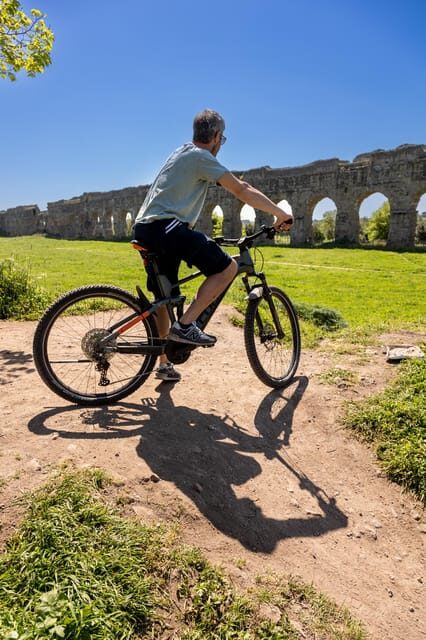
- Electric help for cobblestones: You get powered support to keep the ride smooth rather than punishing.
- Appian Way first, aqueducts after: You follow a classic route through Roman relics, then water-engineering structures.
- Small group of up to 10: Less waiting, more guide interaction, and a calmer pace.
- Helmet, water, and coffee break included: Less hassle on your end, more energy for the bike.
- English, Spanish, and French guides: You can pick a language that fits you well.
- Rated easy on effort, not on skill: The ride may feel not strenuous, but you still need solid biking confidence.
Why the Appian Way Works So Well on an E-MTB
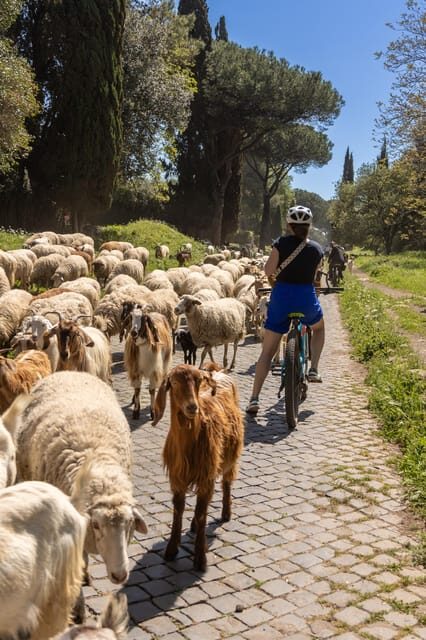
Rome has a habit of stacking its most famous sites right next to crowds. This tour flips the angle. Instead of fighting the big-attraction lines, you get a guided ride along one of the oldest Roman roads, the Appian Way, where the environment itself is part of the story.
On a regular bike, cobblestones can turn a sightseeing outing into a leg workout you did not schedule. On an electric mountain bike, the job shifts. You still pedal and steer, but the power assistance helps you keep momentum over rough patches and uneven surfaces. That matters because the Appian Way experience is not just about seeing ruins in photos. It’s about moving through the corridor where Roman builders set down stone for processions, commerce, and movement.
And then there’s the pacing. You’re out there for about four hours, with a guide leading the way. That means less time figuring out routes and more time paying attention—when the aqueducts come into view, when a tomb area changes character, and when the countryside starts to feel like its own setting rather than a distant postcard.
You can also read our reviews of more tours and experiences in Rome.



The 4-Hour Flow: What the Day Feels Like
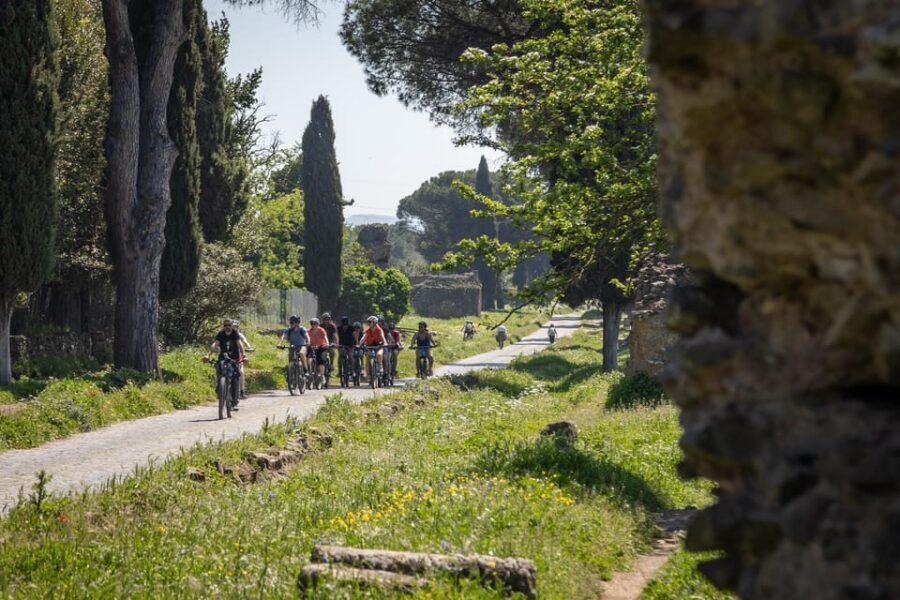
The tour runs for about 4 hours, and starting times vary by availability. You meet your guide at the meeting point, which is described as the guide being in front of or inside the shop. The rule is simple: show up 15 minutes early. The group leaves no more than 5 minutes after the scheduled departure time.
Once you roll out, the day follows a natural rhythm:
- First stretch: you ride along the historic Appian Way, the anchor of the route.
- Middle portion: you keep encountering Roman ruins and monuments linked to the road.
- Next phase: you move toward the aqueduct area, where the scale of Roman engineering becomes obvious even without technical lectures.
- Wrap-up: you finish back at the meeting point, so you’re not planning your own ride back through roads you didn’t pre-check.
Even with that straightforward flow, the key is that you’re always doing something. You’re not stuck in a long line. You’re not standing still while the sun does its thing. You’re moving, stopping when it matters, and letting the guide point out what you’d miss if you were just following signage.
Entering the Appian Way: Cobblestones, Power, and Confidence
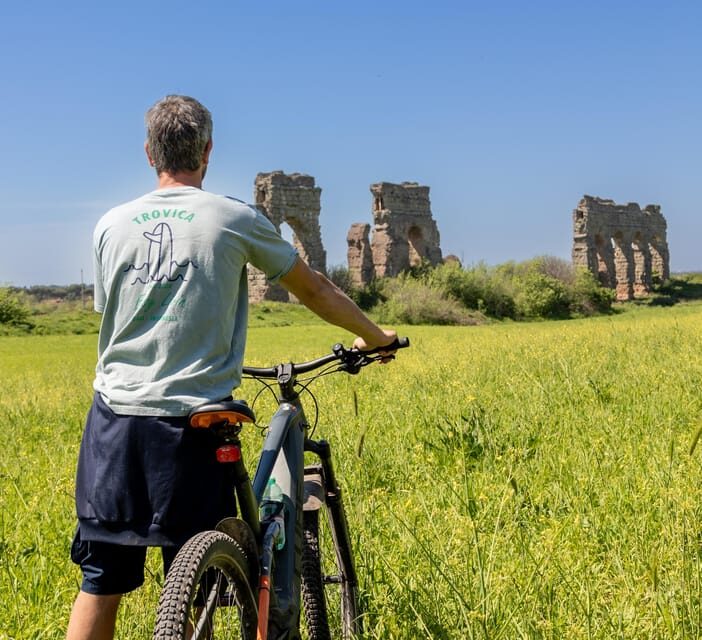
The Appian Way is famous for being old, and old also means uneven. This is where the e-MTB top level setup matters. Electric mountain bikes are designed for traction and stability, and that makes a difference when the ground is not smooth.
A few practical expectations:
- You’ll ride over cobblestones and rougher surfaces, but electric assistance helps you avoid fighting the bike every second.
- You still need to handle the bike confidently, especially on uneven ground. The tour is explicitly not for people who can’t ride a bike.
- You’ll cover more ground than a walking tour without turning the day into a sweaty endurance test.
If you’re comfortable riding in traffic-like conditions or on uneven paths, you’ll likely enjoy the flow. If your biking skills are rusty, you may spend the day focused on balance instead of soaking in what you came for. The tour provider flags that the guest must have good bike skills, and I agree with that warning.
Roman Tombs and Ruins You Can Actually Read While Riding
What I like about the Appian Way on a bike is that you experience the monuments as a sequence, not a single stop. You don’t just arrive at one “ruin moment.” You pass by structures and areas along the road, with the guide tying them together so they make sense.
During the ride, you’ll encounter Roman ruins and monuments lining the Appian Way. The tour description focuses on the kinds of features you’ll see: mausoleums, tombs, and ancient structures. That’s important because the Appian Way is essentially a corridor of Roman commemoration. With the guide’s storytelling, the shapes and locations become more meaningful. A tomb isn’t just a pile of stone. It’s part of a system: how Romans organized memory, movement, and status along a major road.
Also, the e-bike changes the way you look at things. When you’re not drenched in sweat or constantly stopping, you can pay attention to detail. You might start noticing how the road layout affects sightlines, or how the scale of certain ruins shifts as you ride closer. This is one of those moments where the “easy” ride is not about skipping effort. It’s about having enough energy to actually see.
Aqueducts Beyond the City Noise: Water Engineering in Real Scale
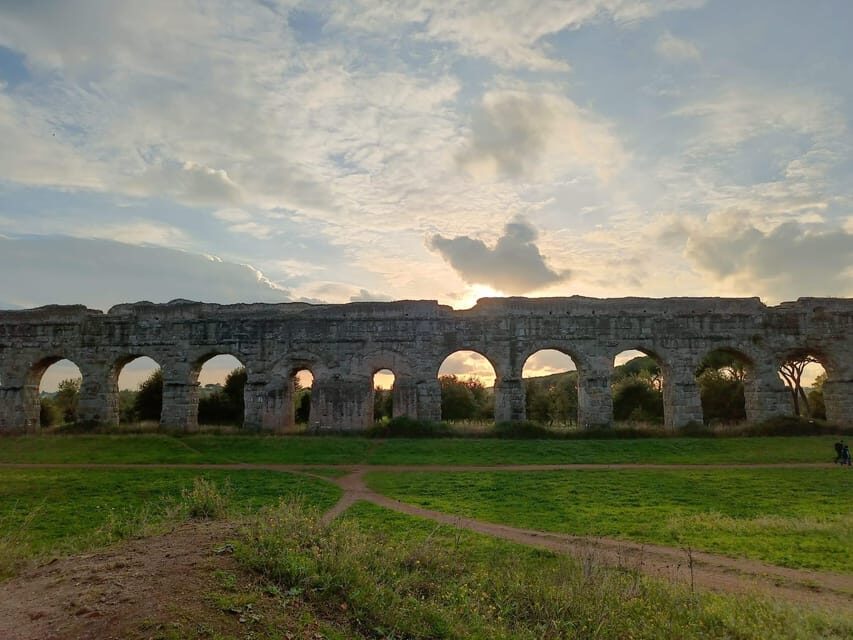
Aqueducts are one of Rome’s greatest “how did they do that” subjects. What makes this tour worthwhile is that you reach them through movement, not just through a single big viewpoint.
The tour’s second half is built around discovering the Roman aqueducts. Even without a technical handout, you’ll feel the scale when you see these structures rising in the open area. Aqueduct remains also highlight a different side of Roman life than temples and forums. This was infrastructure. It kept cities alive, day after day.
And because you’re riding through scenic countryside alongside the way, the aqueduct experience lands differently than it would inside the tight center. The contrast helps you understand why aqueducts were placed where they were. Gravity, distance, and terrain mattered. The countryside setting makes those basics easier to picture.
If you enjoy architecture, engineering, or simply the story of how civilizations solved practical problems, this portion is usually the payoff. You get a sense of Roman planning rather than just Roman decoration.



The Countryside Shift and the Heat Reality
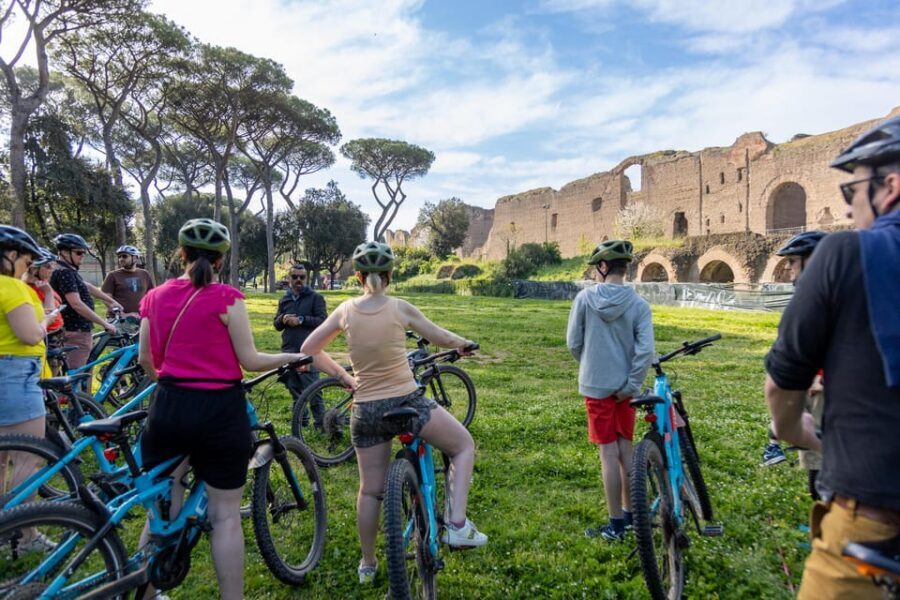
One of the best surprises from real tour experiences is how much the ride helps with heat. During very hot weather—think upper 30s Celsius—moving on a bike can feel cooler than being stuck in crowds. The wind and motion reduce that heavy, stationary-sun feeling.
This matters because the route includes scenic countryside views beyond the immediate city bustle. So while you’re still in the Lazio region, you’re not stuck inside Rome’s busiest pockets. You get rolling views and more open air as the tour progresses.
You also get included basics that make the middle hours easier: water and a coffee break. That doesn’t replace hydration advice, but it does mean you’re less likely to scramble mid-tour. You can focus on riding and listening instead of managing logistics.
And yes, you’ll likely sweat a little. But you’re not doing it in a line outside a major site. You’re working at a steady pace with electric help.
Who This Tour Fits Best (And Who Should Skip It)
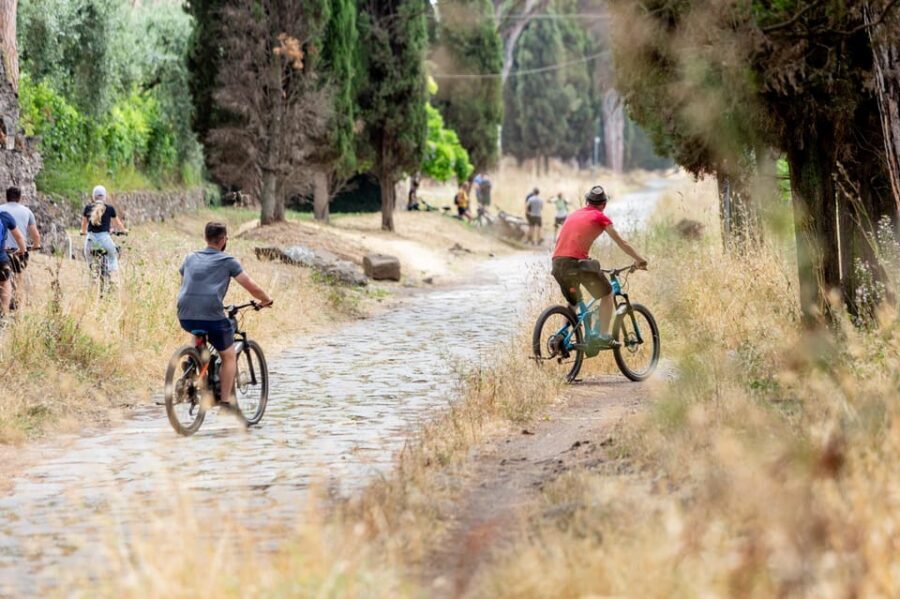
This is a “bike-first” tour. If you meet the bike comfort requirements, you’ll have a great time. If you don’t, the day turns stressful.
You should consider this tour if:
- You have good skills for riding a bike (this is non-negotiable).
- You want Roman sites with less time in big-queue crowds.
- You enjoy combining history with active sightseeing and countryside scenery.
- You like the idea of a live guide in English, Spanish, or French.
It is not suitable for:
- Children under 12.
- Pregnant women.
- People who can’t ride a bike.
- People over 264 lbs (120 kg).
- People under 4 ft 9 in (150 cm).
If you’re between categories—say you can ride but you’re uncomfortable on uneven ground—be honest with yourself. This route uses cobblestones and rough surfaces, and you’ll need stability.
Guides, Language, and Small-Group Pace
The tour runs with a live tour guide and is limited to a small group of 10 participants. That small size matters more than you’d think. With fewer people, you spend less time waiting for stragglers and more time hearing the story at each stop.
English, Spanish, and French are available, so you can choose the language you’ll understand quickly. I also like that guides keep the focus on what you’re seeing rather than drowning you in lecture. When your eyes are on tombs and aqueducts, you want explanations that connect the dots to the actual scene.
One guide name that stands out from tour experiences is Sylvia, who’s praised for making the route feel like a real morning escape from Rome’s heaviest areas while still delivering strong historical context. Even if your guide is someone else, the point is consistent: you’re paying for guidance that turns landmarks into understanding.
Price and Value: What $73.64 Buys You
At $73.64 per person for roughly 4 hours, the value isn’t only about “a tour price.” It’s about what’s included and how hard you have to work.
You get:
- An E-MTB top level
- Helmet
- Water
- Coffee break
- A live guide
- A small-group setting
That package matters because you’re not just sightseeing. You’re using equipment for a specialized route. A walking tour might be cheaper, but it would also be slower over cobblestones, and you’d likely cover less distance in the same time. Here, the electric assistance helps you manage effort so you can spend more attention on the sites you came to see.
Also, the tour is priced as a “real activity.” If you’re already planning to spend money on tickets and taxis between far-flung sights, this can simplify your day. You don’t have to piece together your own logistics to get out to the aqueducts area and beyond.
Practical Tips So Your Ride Feels Great
Bring comfortable clothes. That sounds obvious, but for e-bike days, it means clothing that moves and doesn’t bind when you pedal or shift your position. You’re riding over rough ground, so you want something practical rather than delicate.
A few extra things you’ll thank yourself for:
- Wear gear that lets you handle a warm day. The route can involve real heat.
- Arrive early. The “leave within 5 minutes” rule means tardiness equals missing the start.
- Don’t overthink the coffee break. It’s there so you can reset without dropping your momentum.
- Keep expectations aligned with the tour’s skill requirement. You’re riding through history, not just being chauffeured from viewpoint to viewpoint.
Should You Book This Appian Way and Aqueducts E-Bike Tour?
Book it if you want a morning or early-day escape from Rome’s biggest crowd zones and you like the idea of learning Roman history while actually moving through the corridor where it happened. The combination of Appian Way ruins, aqueduct discoveries, and electric bike support is a strong match for people who want value without turning sightseeing into a back-and-knees grind.
Skip it if bike skills are shaky for you. This isn’t a “try cycling for the first time” experience. It also isn’t for anyone who doesn’t fit the tour’s basic constraints (age, pregnancy, height/weight limits, or unable-to-ride situations). If you’re unsure, choose a tour format that doesn’t require confident riding.
If you fit the bike requirement, this is one of those rare Rome experiences where you get both: a real story and a real sense of getting out into the surrounding region, powered by a machine that keeps your day fun.
FAQ
How long is the e-bike tour?
The duration is 4 hours.
What is the price per person?
The price is $73.64 per person.
How many people are in the group?
The tour is limited to a small group of 10 participants.
What languages are the live guides?
Live guides are available in English, Spanish, and French.
What’s included in the tour?
It includes the e-MTB top level, helmet, water, and a coffee break.
Where do I meet the guide?
The guide will be in front of or inside the shop. You should arrive 15 minutes before departure.
What do I need to bring or wear?
Wear comfortable clothes.
Is the tour suitable for everyone?
It is not suitable for children under 12, pregnant women, people who can’t ride a bike, people over 264 lbs (120 kg), or people under 4 ft 9 in (150 cm).