Roman ruins, but with a plan.
This timed-entry walk through the Colosseum, Roman Forum, and Palatine Hill keeps you moving when the crowds get thick, and it’s built for real understanding, not just photos. I especially like the headsets, which make the guide’s explanations easy to catch even in noisy, busy areas. Optional arena floor access is a nice upgrade if you want to stand where the action once was.
One thing to know up front: it’s a 3-hour loop with lots of walking, standing, and stairs on varied ground. If you’re heat-sensitive or you want a slow, leisurely pace, you’ll feel that effort.
In This Review
- Key highlights worth caring about
- Timed-entry value: what you’re really paying for
- Where you start and why the route works
- Headsets and guides: the difference between hearing and guessing
- Stop 1: Arch of Constantine, the first big “Rome flex”
- Stop 2: Enter the Colosseum (plus the optional arena floor)
- If you chose arena floor access
- How to get the most from your 30 minutes
- Stops 3–4: Roman Forum and Piazza del Colosseo as Rome’s power center
- Stop 5–7: Via Sacra, Via dei Fori Imperiali, and the Rostra speaking platform
- Stops 8–10: Venus and Roma, Arco di Tito, and a temple-turned-church
- Stop 11–12: Palatine Hill views and the Circus Maximus look-from-above
- Pacing, heat, and crowd reality (what I’d plan for)
- Price vs. doing it on your own
- Audio option tip: don’t let the app eat your day
- Quick checklist before you go
- Should you book this Colosseum Forum Palatine tour?
- FAQ
- What’s the duration of the tour?
- What’s included with the ticket price?
- Is arena floor access available?
- What happens if the Colosseum closes due to weather?
- Can I bring luggage or large bags?
- Is this tour offered in English?
Key highlights worth caring about
- Timed entry helps you spend more time inside the big sites and less time stuck at entrances
- Headsets keep the story clear, even when you’re surrounded by tour groups
- Small group size (max 25) plus a choice of group size for a more personal feel
- Optional arena floor turns the Colosseum from view-only into a more literal experience
- A full sweep of the “story of Rome” from triumphal arches to the Forum’s political heart
- Guides build in comfort stops, including shaded moments when the weather is hot
Timed-entry value: what you’re really paying for
At $59.28 per person, this tour is mostly about buying time and confidence. The ticket portion for timed entry to the Colosseum + Forum & Palatine is listed as about €18 per person, and it rises when you add arena access (listed as €24 per person with arena access). The rest of what you pay goes toward the guide service, coordination, and the reservation fee.
Why that matters in Rome: the Colosseum area attracts nonstop lines, and the Forum/Palatine entrance process can be chaotic. A timed slot keeps the day from turning into a waiting game. In the reviews I read, people repeatedly highlighted that they got in and got going without getting trapped in slow-moving queues.
It also helps that the experience is designed for about 3 hours. You see a lot for one morning or one afternoon, but you’re not locked into a full day of stone-walking.
You can also read our reviews of more tours and experiences in Rome.



Where you start and why the route works
You’ll meet near the Arch of Constantine at Piazza del Colosseo, 00184 Roma RM and finish on Palatine Hill (Via di S. Gregorio, 30, 00186 Roma RM). Ending on Palatine Hill is smart because it lines you up for the best “step back and look at the city” moments, including the view toward Circo Massimo.
The walking route is not all flat. The tour notes warn you about extended walking and standing on varied terrain, including stairs. That’s normal for this part of Rome, but it’s not the place for flimsy shoes or a day when your legs are already tired.
If you’re booking based on energy level, I’d treat this as a “do it early” type of activity—either early morning or a time when the heat won’t bully you. One reviewer specifically praised an early time slot (a 9 AM entry) for keeping the flow better inside the Colosseum, even though it still gets busy.
Headsets and guides: the difference between hearing and guessing
This is one of those tours where the delivery matters. You’ll use headsets so you can hear your guide clearly as the group moves. That’s huge at the Colosseum and Forum, where wind, foot traffic, and constant noise can make self-wandering feel like you’re missing half the point.
I also like that there are multiple named guides who come up often in the feedback you provided: Laura, Patrizia, Viola, Alberto, Donatella, Ahmet (Ahmed), Sylvia, Aiko, Catalina, Ricardo, Riccardo, Eddy, and Alessandra. The common thread in their descriptions is a mix of storytelling and practical pacing—built-in breaks, shade when possible, and a willingness to answer questions.
Still, one caution from the mixed feedback: the pace can vary by guide and group dynamics. If your ideal is short stops and lots of moving around, plan to stay flexible and lean into the moments that feel slow. Ask questions as you go, and you’ll usually get more out of any stop length.
Stop 1: Arch of Constantine, the first big “Rome flex”
You start at the Arch of Constantine (around 10 minutes). It’s described as the largest Roman triumphal arch, built to celebrate Constantine’s victory at the Battle of the Milvian Bridge. This is a great opener because it sits between the Colosseum and Palatine Hill—so you’re immediately looking at the scale of the Roman machine.
What I like here: it gives you a vocabulary for the rest of the day. Triumph arches weren’t just decoration; they were political statements. Seeing one right at the start helps you understand why the next monuments are arranged where they are.
Stop 2: Enter the Colosseum (plus the optional arena floor)
The Colosseum stop is listed at about 30 minutes, and it’s the “icon you can’t unsee.” The big value of a guided format is that you’re not just standing in front of the building—you’re standing on the kinds of spaces Romans would have recognized. You’ll learn what you’re looking at as you move.



If you chose arena floor access
The tour offers arena floor access only if you select that option during booking. That upgrade matters because it changes how the Colosseum feels. Looking at the building from the outside is impressive; standing closer to the arena level helps you understand the layout and height differences that make the whole spectacle work.
How to get the most from your 30 minutes
Your time inside is short, so focus on flow:
- Follow the guide’s route instead of veering off too early
- Take photos quickly, then return your attention to what you’re learning
- If you’re heat-sensitive, listen for shade cues and move when the group moves
Even with timed entry, the Colosseum area can be crowded. One reviewer said lines were long but moved fairly quickly, and the key was going early and using the time well inside.
Stops 3–4: Roman Forum and Piazza del Colosseo as Rome’s power center
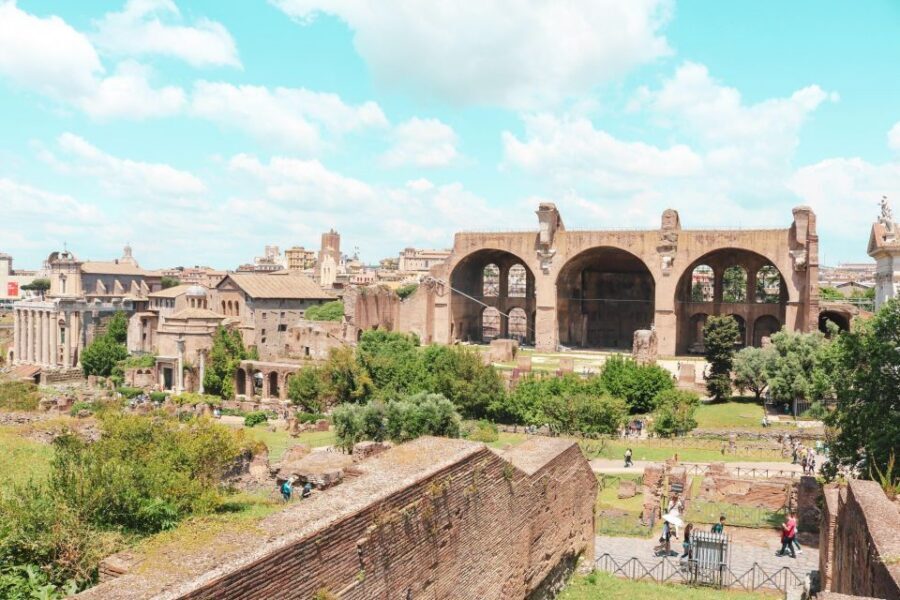
Next up is the Roman Forum for about 20 minutes. The Forum is described as the heart of ancient Rome—surrounded by ruins of government buildings that were central to public life. This is where Rome stops being “big buildings” and becomes “how the city actually ran.”
A nice detail: after the Forum, you go through Piazza del Colosseo (around 10 minutes). The square is named after the Colosseum, and the area includes the Meta Sudans and a Colossal statue of Nero. You get a sense of how the modern city frames the ancient monuments—often literally with big landmarks placed where you’d least expect them.
What I appreciate about combining Forum + surrounding spaces: it helps you picture how people moved and gathered. The Forum isn’t one room; it’s a whole political landscape, and this format tries to give you that bigger picture fast.
Stop 5–7: Via Sacra, Via dei Fori Imperiali, and the Rostra speaking platform
You’ll walk along Via Sacra (about 10 minutes). This was the main ceremonial street, leading from the Capitoline Hill through the Forum to the Colosseum, and it was the route of the Roman Triumph. That word—triumph—sounds dramatic because it was. This street helped turn military victories into public theater.
Then you head to Via dei Fori Imperiali (about 10 minutes). This boulevard connects Piazza Venezia with the Colosseum and showcases monumental ruins tied to Caesar, Augustus, Nerva, and Trajan. It’s a good change of pace after the tight ruin density elsewhere because it gives you long sightlines.
Finally, there’s the Rostra (about 10 minutes). It’s the remains of a platform used for public speeches—magistrates, politicians, advocates—people addressing the assembled Roman crowd. It’s a powerful stop because it reminds you Rome was talk-driven, not just arena-driven.
Stops 8–10: Venus and Roma, Arco di Tito, and a temple-turned-church
You then reach Tempio di Venere di Roma (about 10 minutes). The tour describes it as the largest temple in Ancient Rome, dedicated to Venus Felix and Roma Aeterna. Even without going inside, it’s useful as a reminder that Rome’s religious life was also political branding.
Next is Arco di Tito (about 10 minutes), a single-arch triumphal structure on the northern slopes of the Palatine Hill. It commemorates Emperor Titus’s victories, including the Siege of Jerusalem. Arches like this are like carved headlines.
Then you see Tempio di Antonino e Faustina, which was originally dedicated to Antoninus Pius’s deceased wife, Faustina, and later converted into the church of San Lorenzo in Miranda. This is one of the most practical “Roman to modern” transitions on the route: it shows how later generations reuse sacred structures instead of starting over.
Stop 11–12: Palatine Hill views and the Circus Maximus look-from-above
The Palatine Hill time is about 20 minutes. This is where the tour frames Rome’s origin story and later imperial life. The viewpoint is the reason many people come here: you get sweeping, high-angle perspective over the ruins and the city beyond.
From there, there’s a quick look at Circo Massimo (about 2 minutes) from the Palatine Hill. Even a short view is described as spectacular because it lets you imagine how the chariot-racing world used to spread out below.
If you’re the kind of traveler who likes photos, this is where you’ll want to slow your pace. Let your eyes adjust. The Palatine area is where the day starts to feel less like landmarks and more like a city you can mentally walk around.
Pacing, heat, and crowd reality (what I’d plan for)
The tour is short but not light-duty. The official notes call out extended walking, stairs, uneven terrain, and standing. Add Rome summer-style temperatures and your comfort plan matters.
A few practical moves:
- Wear shoes with grip for uneven stone
- Bring water and plan on using shade when your guide offers it
- If you’re traveling with someone who tires quickly, decide in advance what you’ll do if pace feels too fast
The positive feedback you shared repeatedly mentioned guides who kept groups in shaded areas and made room for breaks and bathroom time. That’s a real service, not a small detail. Still, pace can differ from guide to guide, and one negative comment described long time spent standing in a less useful spot. The best antidote is to ask questions while you’re stopped and make photo breaks purposeful.
Price vs. doing it on your own
If you already have Colosseum + Forum + Palatine tickets lined up, you might wonder if this is just paying for a guided voice. Here’s how I’d think about it:
You’ll get the most value if:
- You want the history tied to what you’re looking at, not just names and dates
- You prefer a guide to manage timing through busy entry areas
- You like hearing explanations clearly with headsets
- You care about optional arena floor access and want it handled as part of your plan
You might skip the guided format if:
- You’re comfortable exploring the sites on your own and reading on-site signage
- You already know the story well enough to not need interpretation
- You’re the type who hates fixed group schedules
One mixed experience you provided was about choosing a format that sounded like a guided tour when it turned into an app-led audio experience. If you want a live guide’s voice, double-check you’re booking the guided option, not just an audioguide.
Audio option tip: don’t let the app eat your day
If you book the audioguide app option, the tour data says you’ll receive a link the day before. You can download for offline use, but it requires a smartphone and your own earphones.
A downside from one of the feedback examples was an hour-long download delay that pushed the audio beyond useful moments. My advice: download it the night before on Wi-Fi so you don’t waste your museum time troubleshooting a phone at the meeting point.
If you’re in a group guided by a live professional, you’ll get headsets for the guide. That’s a different experience than app-only audio.
Quick checklist before you go
This tour is well set up for most visitors, but it still pays to show up ready:
- No luggage or large bags inside the venues
- Use comfortable walking shoes; expect stairs and uneven ground
- Plan for weather. The tour notes say the Colosseum may close unexpectedly in inclement weather, and you’ll get a change of date or full refund
- Keep an eye on messages about potential restoration due to the Jubilee, since some monuments may shift
Should you book this Colosseum Forum Palatine tour?
Book it if you want a structured, time-saving route through the Colosseum, Roman Forum, and Palatine Hill, with headsets so you actually hear what’s going on. It’s a good pick for first-timers and anyone who wants to understand the “why” behind arches, ceremonial streets like Via Sacra, and the Rostra’s public speaking role. Optional arena floor access is a solid reason to upgrade if you want the Colosseum to feel more physical.
Skip or choose carefully if you’re looking for a super slow stroll with minimal standing. This is outside walking with stairs, and it can feel like a workout. Also, be sure you select the right format—guided with a live pro versus an app-led audio version—so you get the experience you expect.
If you time it well and come prepared for the walking, this is one of those Rome tours that turns a huge collection of ruins into a single clear story you can carry with you all day.
FAQ
What’s the duration of the tour?
The tour is listed at about 3 hours.
What’s included with the ticket price?
Timed entry to the Colosseum + Forum & Palatine is included, and headsets are provided for guided tour options. The reservation fee is included as well. Arena floor access is only included if you select that option at booking.
Is arena floor access available?
Yes, but it’s only included when you choose the arena floor option during booking.
What happens if the Colosseum closes due to weather?
If the Colosseum decides to close unexpectedly in inclement weather, you’ll be offered a change of date or a full refund.
Can I bring luggage or large bags?
No. It is not possible to enter the venues with luggage or large bags.
Is this tour offered in English?
Yes, it’s offered in English.