REVIEW · NAPLES
The Greatest Walking Tour of Naples: 4h with an Expert Guide
Book on Viator →Operated by Grand Tour Experience · Bookable on Viator
Naples clicks faster when you walk it. This 4-hour route is built for first-timers: you trade the map shuffle for an expert art historian, then you move through the city layer by layer, from royal waterfront energy to the older streets of Neapolis. I like how you can steer the route toward what you care about, and I like that the pace is set so you cover a lot without feeling like you’re sprinting.
The tour is also a smart way to ask questions on the go. Guides such as Simone and Francesca are described as giving solid answers, and that matters in Naples, where there’s always a story attached to a doorway, a chapel, or a square. One practical note: the stops are short, about 15 minutes each, so you’ll get snapshots, not hours in one museum.
One thing to consider is the weather and the walking load. Even with a comfortable pace, Naples can feel long when the air is hot, and one reviewer flagged that the route felt impractical in bad conditions. Bring good shoes, plan your water, and you’ll set yourself up for the best experience.
In This Review
- Key Highlights Worth Your Time
- Walking Naples From Piazza Del Plebiscito Toward the Old Center
- Piazza del Plebiscito and the Seaside Royal Loop
- Galleria Umberto I, Teatro di San Carlo, Castel Nuovo: Naples in Monument Mode
- Via Toledo and Mercato della Pignasecca: Shopping Street Meets Local Reality
- Piazza Dante, Port’Alba, and the Start of Neapolis on Foot
- Via dei Tribunali and Spaccanapoli: Reading Roman Lines and Pizza Street Energy
- Basilica Stops That Explain Naples’ Faith and Art
- Duomo di Napoli and Santa Chiara: Big Stories, Real Atmosphere
- Artisan Naples: Via San Gregorio Armeno and the Nativity Scene Quarter
- The Maradona Hair Stop and the Wedding-Photo Church Finish
- Price and Logistics: What You’re Paying For
- Practical Tips for a Comfortable 4-Hour Walk
- Should You Book This Naples Walking Tour?
- FAQ
- How long is the walking tour?
- What is the group size for this private tour?
- Is the tour offered in English?
- Are tickets or admissions included?
- Where does the tour start and end?
- What is the cancellation policy?
Key Highlights Worth Your Time

- Art-historian guidance that ties buildings to context, not just locations
- A flexible itinerary where you can nudge the route toward your interests
- Royal, arcade, and opera stops that show Naples in different centuries
- Street-life anchors like the market and artisan quarters, where Naples feels real
- Historic-center routing through the old Roman and Greek layouts you can actually walk
- Short, efficient stop times that help you see more in 4 hours
Walking Naples From Piazza Del Plebiscito Toward the Old Center
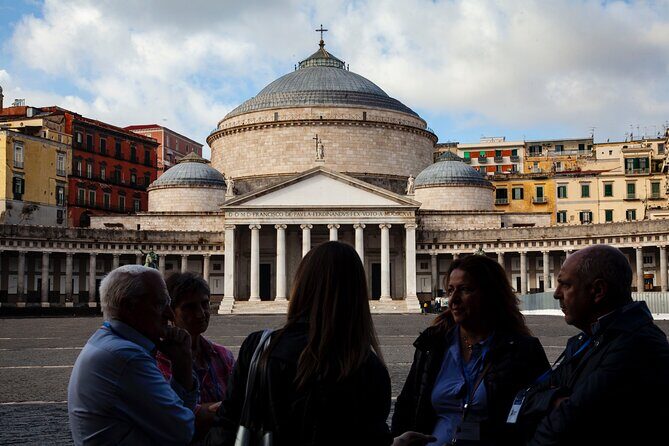
This tour is designed like a guided walking playlist. You start in the big, open showpiece of Naples, then you gradually tighten into the older fabric of the city—squares, churches, lanes, and the street patterns that reveal the Roman and Greek eras. If your first day in Naples feels chaotic, this kind of route helps you get your bearings fast.
I like that the format is private (just your group, up to 10) and conducted in English. That usually means fewer pauses, less waiting, and more time for questions. It’s also a mobile-ticket setup, which can save hassle the day-of.
For value, the big idea is that you’re paying for time with a professional guide who can explain what you’re seeing while you’re seeing it. Naples is not a city where a photo alone tells the whole story. A guide turns what could be random “pretty buildings” into a map in your head.
You can also read our reviews of more walking tours in Naples



Piazza del Plebiscito and the Seaside Royal Loop
You meet in Piazza del Plebiscito, a wide, dramatic square that sets the tone: Naples as power and ceremony. The early part is a walk through this space, then onward toward the seaside area, where you start seeing the city’s relationship to the coast.
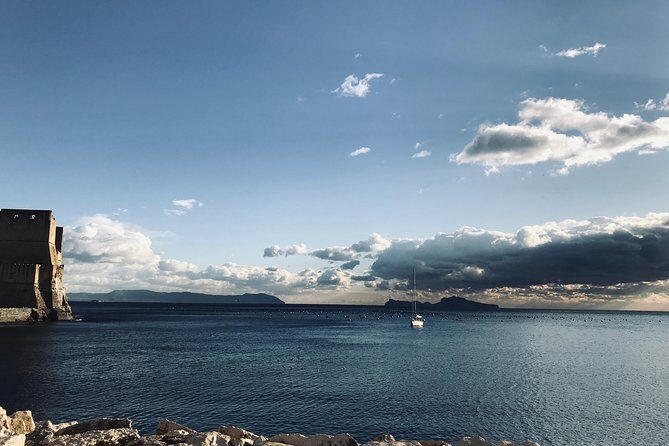
From there, Castel dell’Ovo and the Royal palace of Naples enter the picture. You’re not just looking at landmarks; you’re being shown why they sit where they do and how they fit into Naples’ long story of rulers and defenses. The 15-minute stop timing keeps things moving, so you’ll want to ask quick questions here if one detail sparks your interest.
Why this start works: it’s easier to understand the “center of gravity” of Naples once you’ve seen the grand waterfront and royal edge first. If you jump straight into tiny alleys, the city can feel like one big maze.
Galleria Umberto I, Teatro di San Carlo, Castel Nuovo: Naples in Monument Mode

The tour then shifts from seaside grandeur into Naples’ showier, more architectural side.
At Galleria Umberto I, the focus is the 19th-century arcade: the kind of place where shops and human activity move under a roof of design. This is the moment where Naples stops being only about streets and becomes about built elegance. Even if you’re not shopping, it’s a great place to slow down for a few minutes and watch how people use these corridors.
Next is Teatro di San Carlo, described as the oldest opera house of Europe. Whether you’re an opera fan or not, it’s one of those Naples landmarks that tells you the city values performance and public spectacle. If you’re going to ask one question early, make it this stop: ask what made this theater important and who it served.
Then you land at Castel Nuovo (Maschio Angioino). Think photo stop energy, plus a bit of explanation on what the fortress meant for the city. The quick timing means you’ll get the big silhouette moment, and then move on before it turns into a long slog.
Small drawback to note: if you’re the type who needs time to read every plaque or linger for perfect angles, the monument stops may feel brief. The tradeoff is that you get far more variety in 4 hours.
Via Toledo and Mercato della Pignasecca: Shopping Street Meets Local Reality

At Via Toledo, you’re on one of Naples’ main shopping streets. It’s long, it’s practical, and it’s where you feel how locals use the city day-to-day. This is the point where your guide can be extra helpful if you ask about what to buy and where. One reviewer specifically mentioned getting good shopping advice, and that kind of guidance matters more than you’d think in Naples, where there are plenty of tempting options.
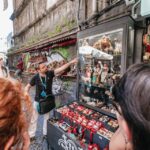
From there, Mercato della Pignasecca brings you into the local market world: food, products, and everyday items. Markets are where Naples’ personality comes through fastest. You’ll see how the city eats, how people bargain, and how neighbors shop without turning everything into a tourist theater.
One consideration: markets can be crowded, and the day’s heat affects comfort. If you’re sensitive to long walking in warm weather, treat this as the time to pause often and take short breaks.
Piazza Dante, Port’Alba, and the Start of Neapolis on Foot
Now the tour transitions into the historic-center rhythm, with squares and streets that help you understand how the city is organized.
At Piazza Dante, you get a major city square feel—useful as a reference point, and a natural place to reset your mental map before moving into narrower areas.
Then Port’Alba comes in with its bookstores and vintage-shop vibe. It’s a nice contrast: still central, but more browsing-focused than market-focused. This is one of those stops where you can slow down a touch even within the time limit, because the atmosphere gives you something to look at besides monuments.
Next is Piazza Bellini, flagged as a spot where the historical center begins. Here, you can see something important: Greek city walls of ancient Neapolis are preserved. That detail changes the experience. You’re not just walking through modern Naples; you’re literally walking along traces of much older layers.
You can also read our reviews of more guided tours in Naples




Via dei Tribunali and Spaccanapoli: Reading Roman Lines and Pizza Street Energy

At Via dei Tribunali, you’re on a main decumano of Roman times. That’s the kind of fact that’s easy to gloss over on a sign, but it lands differently when your guide connects the street layout to the city’s older grid. This is also famously linked to pizza street culture, so you get both the archaeology-on-a-street and the modern food reputation in one.
Then Spaccanapoli takes you along the city’s main road—again, a “structure” street. If you’ve ever felt lost in Naples, these are the streets that give the city its logic. Even if you never return here later, you’ll remember the route because it feels like a backbone.
The best way to use these stops: ask your guide how to navigate from here to whatever you’re doing next (duomo, museums, or dinner). The street patterns are the secret sauce.
Basilica Stops That Explain Naples’ Faith and Art
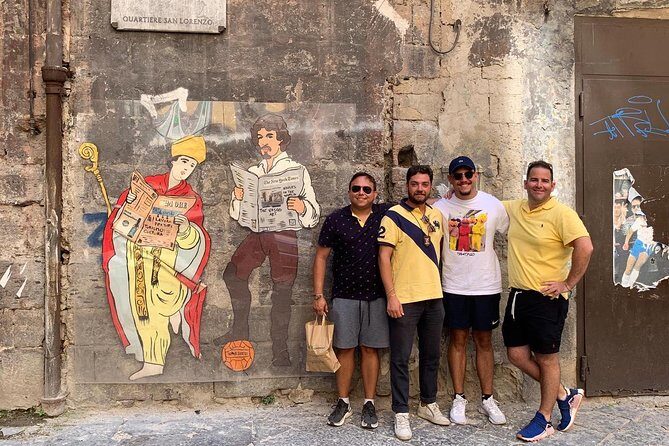
The tour’s middle section leans into sacred Naples: churches and complexes that show what people cared about, and what art and architecture were used to communicate.
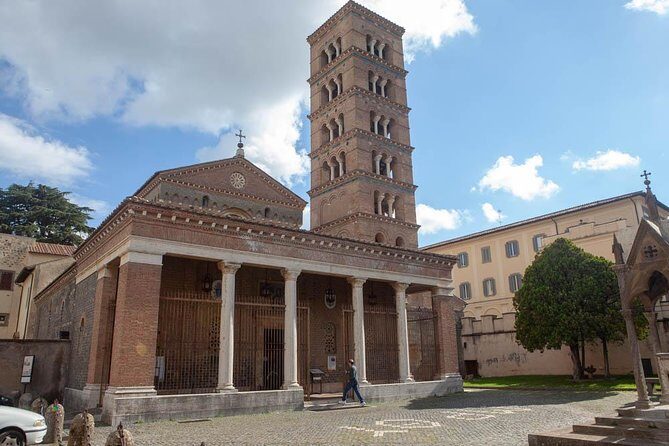
First is Basilica di Santa Maria Maggiore alla Pietrasanta, noted for having the oldest tower of Naples. A tower is a simple thing until you learn why it matters. Expect a quick, pointed explanation of how the building signals time, influence, and religious identity.
Then comes Santa Maria delle Anime del Purgatorio ad Arco, described as a highlight of the tour: the cult of the dead. This stop can feel emotional, especially for visitors who think Naples is only about noise and food. The guide frames it in a way that helps you understand why this kind of devotion exists and what it meant to everyday people.
Next is Basilica di San Lorenzo Maggiore, described as the best example of Gothic (medieval) church architecture in Naples. If you’re into medieval European styles, this is where you’ll see the visual language: proportions, facades, and how the building communicates authority.
After that, Quadreria dei Girolamini gets special mention for street art: it’s the only Banksy street art of Italy. If you’re even casually into contemporary art, this stop is a fun pivot, because it proves Naples is not stuck in the past.
Short visits help here. Churches and art spaces can swallow time fast. With tight stop windows, you leave each place with an understanding rather than a foggy memory.
Duomo di Napoli and Santa Chiara: Big Stories, Real Atmosphere
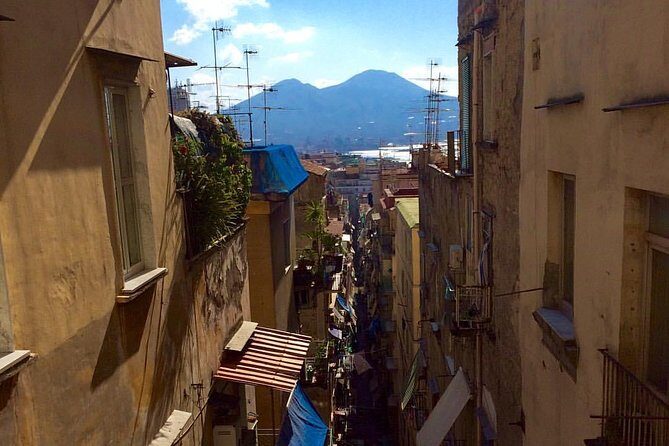
Duomo di Napoli is the city’s main church stop on this route. It’s presented as storing the holy blood of Naples’ patron saint, S. Gennaro, tied to miracle stories. That detail changes how you look at a cathedral: you’re not only seeing architecture; you’re also seeing why it draws belief and attention.
Next is Complesso Monumentale Santa Chiara, described as a dream destination for people who want a wedding in Naples. That tells you what the architecture is like—romantic, photogenic, and memorable. Even if weddings are not your plan, it’s a powerful reset after the heavier cathedral message.
Then you finish at Piazza del Gesu Nuovo, with secrets of the square, shops, and the colors of Naples. This last stop feels like a closing scene: you’re back in street-level Naples, with energy and color as the final note.
The tour ends near the Duomo area as well, so you can naturally roll into your next activity without crossing town.
Artisan Naples: Via San Gregorio Armeno and the Nativity Scene Quarter
One of the most distinctive cultural stops is Via San Gregorio Armeno, the artisan quarter famous for nativity scenes. Even if you don’t shop, it’s a reminder that Naples is a craft city, not just a sightseeing city.
This is the kind of place where a guide’s timing matters. The 15-minute slot helps you take it in without turning it into a stressful shopping hunt. If you want souvenirs, this is often where you’ll find them with the most personality.
The Maradona Hair Stop and the Wedding-Photo Church Finish
There are two stops near the end that feel very Naples—part belief, part pop culture, part normal daily life.
Chiesa di Sant’Angelo a Nilo is paired with the chance to have a coffee in a famous bar connected with the holy hair of Maradona. That’s not something you’ll get from a standard “churches and museums” itinerary. It’s how Naples mixes sacred tradition and modern legend in the same street world.
Then Piazza San Domenico Maggiore, listed as a main square of the old town, gives you a final anchor in the historic center. Squares like this are where the city breathes between interiors.
The tour ends with Complesso Monumentale Santa Chiara and Piazza del Gesu Nuovo, which together are a strong pairing: photo-friendly beauty, then street-level color.
Price and Logistics: What You’re Paying For
The price is $481.91 per group (up to 10) for about 4 hours. On the surface, that can sound steep if you’re thinking like you’re booking an individual ticket.
But the math changes with a small group. A private walking tour is priced as a guide’s time, not as a per-person museum fee. If you have more than two or three people in your party, you’re much more likely to feel the value. And because the route is packed with major Naples neighborhoods and landmark types, you’re essentially buying a curated route plus interpretation, all in one morning or afternoon block.
Also, because many stops are listed as admission ticket free, you’re not paying constant entry fees just to move forward. You’re paying for context and guidance.
One practical downside to keep in mind: the stop-by-stop structure means you’re not guaranteed long entry time inside major attractions. If you want deep museum time, you can still do that on another day, and let this tour handle orientation and city-reading.
Practical Tips for a Comfortable 4-Hour Walk
Here’s how I’d set yourself up so the walking part doesn’t become the story instead of the guide.
- Wear shoes you trust. The route strings together major streets and smaller historic lanes, and you’ll be on foot the whole time.
- Bring a water plan. Food and drinks are not included, so plan a break before you feel thirsty.
- Ask your guide early what can be customized. If you have a must-see, say it at the start so the route can bend around your priorities.
- Expect short stop windows. Great guides can still make 15 minutes land, but you should treat the tour like a guided highlight reel, not a full museum day.
- Language is English. If you’re picky about accent and clarity, it can help to ask questions during pauses rather than only at the end.
Finally, the tour runs best when weather cooperates. Since it’s a good-weather walking experience, you’ll get more out of it when you’re not battling rain or extreme heat.
Should You Book This Naples Walking Tour?
I’d book this tour if you want a fast, well-paced introduction to Naples with real interpretation. It’s especially good when you want a route that covers the city’s big contrasts: royal squares and seaside views, arcades and opera grandeur, then down into the older streets where the Roman and Greek layouts are part of your walking experience.
I’d think twice if you only want places with long indoor visits, or if you’re not comfortable with a heavy walking schedule in warm weather. In that case, you might prefer a shorter walking route, or add extra time on a separate day to the one stop you care about most.
If you do book, I’d show up with two priorities: one cultural landmark (like Duomo di Napoli or Teatro di San Carlo) and one “life on the street” stop (like Mercato della Pignasecca or Via San Gregorio Armeno). That combination is exactly how this tour is designed to work.
FAQ
How long is the walking tour?
The tour runs for about 4 hours.
What is the group size for this private tour?
It is a private tour for only your group, up to 10 people.
Is the tour offered in English?
Yes, it is offered in English.
Are tickets or admissions included?
The listed stops show admission ticket free, and food and drinks are not included.
Where does the tour start and end?
It starts at Piazza del Plebiscito, 80132 Napoli NA, Italy, and ends at Duomo di Santa Maria Assunta, Via Duomo, 147, 80138 Napoli NA.
What is the cancellation policy?
You can cancel for a full refund if you cancel at least 24 hours before the experience’s start time. Free cancellation is available, and changes within 24 hours aren’t accepted.