REVIEW · CASTEL SANTANGELO TOURS
Skip-the-lines Castel Sant’Angelo and Pope Paul III Apartments Tour
Book on Viator →Operated by Raphael Tours & Events · Bookable on Viator
Rome clicks into place in two hours. With skip-the-line entry and a private guide, you step into Castel Sant’Angelo fast and start making sense of what you’re seeing. I love the way the tour connects the dots from Emperor Hadrian’s mausoleum to the later life of the fortress as a popes’ stronghold, treasury, prison, and even a site of public punishment. The terrace views are another big win, because your guide helps you read the panorama instead of just pointing. One caution: at $359.22 per person, it is a serious splurge, so it works best if you want context and a smooth, timed visit, not just wandering.
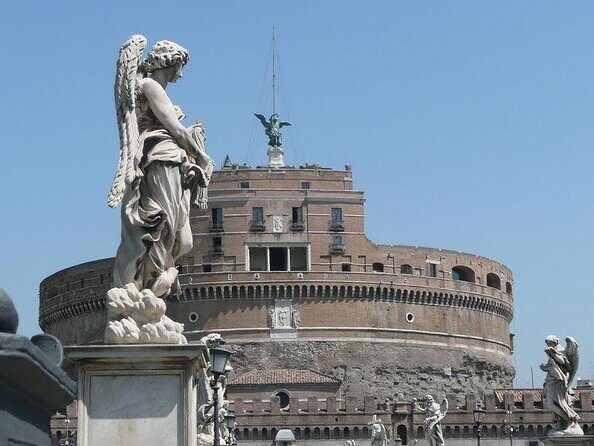
You’ll meet at St. Angelo Bridge (Ponte Sant’Angelo) and head straight into the Museo Nazionale di Castel Sant’Angelo for an experience that stays in your hands. In the past, guides like Claudia, Marco, and Virginia have brought the stories to life with humor, strong pacing, and smart use of visuals (one guide even used an iPad to show how the castle changed over time).
In This Review
- Key highlights before you go
- Where the tour starts: Ponte Sant’Angelo to the fortress gate
- Stepping inside fast: the skip-the-line advantage that matters
- Stop at Museo Nazionale di Castel Sant’Angelo: Hadrian’s tomb turned fortress
- Papal Apartments and the pope-linked side of power
- Courtyards of punishment and the prison side of the fortress
- Art stop: Bernini-era sculptures and works by Raggi and Morelli
- Treasury rooms and the fortress as a system
- The terrace view: where the story ends with Rome in front of you
- Pace and group size: private tour, but not rushed
- Price and value check: is $359.22 per person worth it?
- Who this tour suits best (and who should think twice)
- Should you book Raphael Tours & Events for Castel Sant’Angelo?
- FAQ
- How long is the Castel Sant’Angelo skip-the-line tour?
- Is admission included, and do I skip the line?
- Where do we meet for the tour?
- Is this tour private and does the guide speak English?
- Are food and drinks included?
- Can I take photos during the tour?
- Can I cancel for a full refund?
Key highlights before you go
- Skip-the-line admission included: you avoid the entrance hassle and get moving right away
- Private, small-group feel: your guide can actually answer your questions instead of speed-running your visit
- Papal Apartments plus Hadrian’s mausoleum: you see the fortress in its multiple roles, not just one era
- Courtyards and the prison side of the story: executions and confinement are part of the narrative, explained clearly
- Sculptures by Bernini, Raggi, and Morelli: art isn’t treated as background noise
- Terrace panorama time: you get a proper Rome view window and photo moment
Where the tour starts: Ponte Sant’Angelo to the fortress gate
This tour is built for efficiency from the start. You meet at Ponte Sant’Angelo (St. Angelo Bridge), so you’re already in the right neighborhood before you even think about Castel Sant’Angelo’s steps and stairs. There’s no hotel pickup, which sounds basic, but it actually makes planning easier: you just show up near public transit and walk in.
The departure timing is set for afternoon, with meeting at the gate in time for the tour to run at 3pm. That matters because Castel Sant’Angelo is more comfortable when you can control your pace. If you’re sensitive to heat (I’ve felt it in Rome afternoons), wear breathable layers and keep water nearby even though food and drinks aren’t included.
The tour language is English, and the guides are fluent. That may sound like a standard line, but you’ll feel the difference in how smoothly the story lands as you move through changing spaces—tomb, courtyard, apartments, and terrace.
You can also read our reviews of more tours and experiences in Rome.



Stepping inside fast: the skip-the-line advantage that matters
Skip-the-line access is the headline for a reason. Castel Sant’Angelo sits in a zone where lines can build, and waiting can turn a good plan into wasted time. Here, the tickets are included, and the guide brings you in so you can spend your energy on the real point: understanding the fortress.
Two things I really like about doing this with a guide instead of self-guiding:
- You start at the right tempo, so you’re not spending the first half hour figuring out layout.
- The guide turns “old walls” into a timeline you can follow.
Your tour runs about 2 hours, and that time is handled like a guided sprint with breathing room. The stop is focused (one main site), but the guide keeps moving through the castle’s roles so it doesn’t feel like you’re trapped in a single exhibit hall.
Stop at Museo Nazionale di Castel Sant’Angelo: Hadrian’s tomb turned fortress
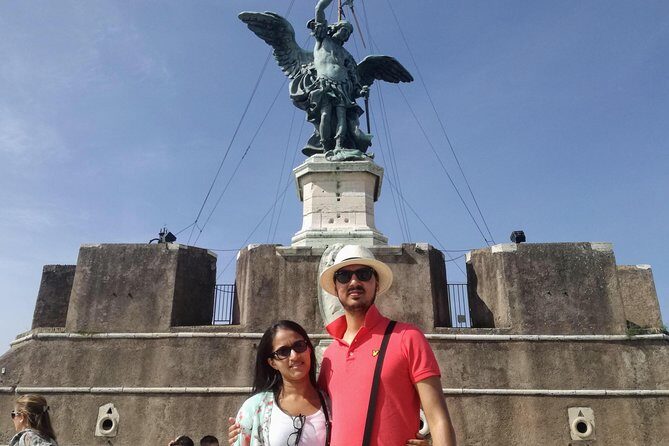
The core of the experience is Castel Sant’Angelo, built in 139 AD as the tomb of Emperor Hadrian. From there, the story widens fast. Many successors were also buried there, and later—when the site evolved into a castle—it became part fortress, part safe house, part political tool.
What makes this place click is the contrast. You’re inside a structure that shifted from burial monument to a fortress system, and the guide helps you feel why that mattered to rulers and popes. You also see how different layers of use overlap in the same walls, so the castle doesn’t feel like disconnected rooms. It feels like one evolving machine.
Papal Apartments and the pope-linked side of power
One of the main draws here is the Papal Apartments section—specifically tied in the tour name to Pope Paul III. Even if you don’t arrive with a stack of Renaissance knowledge, the guide frames these spaces as part of how popes lived and ruled from the fortress.
You’ll walk through the story of Castel Sant’Angelo not just as a monument, but as a political refuge. That comes through in the kinds of details your guide points out: routes, hidden connections, and the practical logic behind fortification. One example I loved from past tours is the intrigue around a pope escape passage connected with Vatican-to-castle movement. It’s exactly the kind of story that makes a fortress feel human, not just military.
The best part of seeing the apartments on a guided tour is how it changes your mindset. Without help, you may view apartments as pretty rooms. With help, they become part of a survival plan—where power, safety, and control intersect.
Courtyards of punishment and the prison side of the fortress
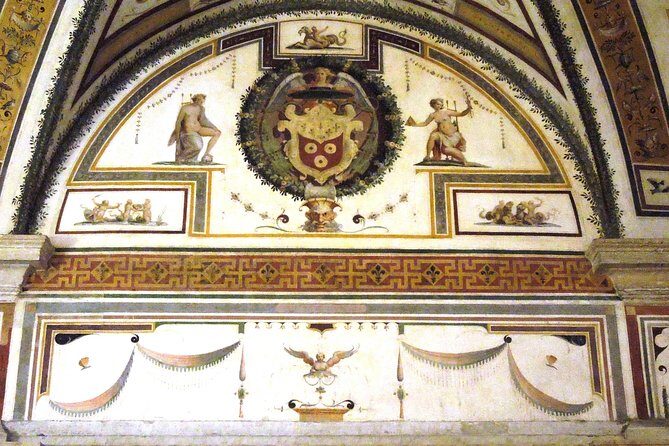
Casel Sant’Angelo is famous for its views, but it also has a harsher reputation, and this tour doesn’t tiptoe around it. You’ll learn that the castle was used as a prison and as a site of public executions. That means you’ll spend time in areas tied to that grim history, including a courtyard connected with executions.
This is where a good guide matters most. You don’t just hear the fact. You learn the how and why: how the space supported punishment, how authority used fear as messaging, and how the fortress design supported control. Past guides like Marco and Claudia have told these stories with a steady tone and real clarity, so it never feels like random shock facts.
There are also details that add texture to the prison theme—like mentions of secret trap-door elements and daring escape stories—whenever your guide chooses to highlight them in the route. Even if you only half-believe the drama, the way it’s explained makes the architecture feel purposeful.



Art stop: Bernini-era sculptures and works by Raggi and Morelli
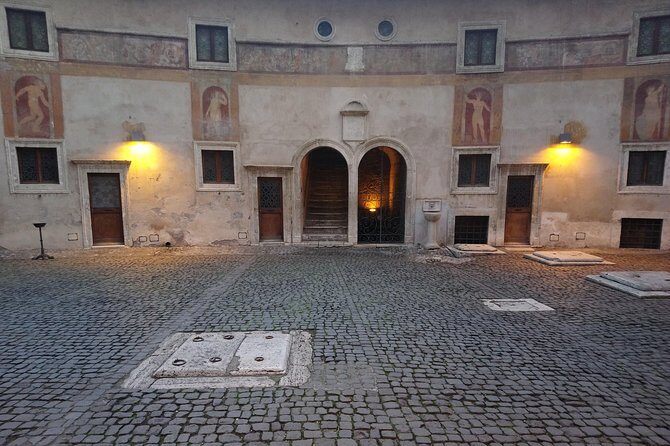
Castel Sant’Angelo isn’t only about defense. The fortress also contains art that you might miss if you’re just moving for photos. This tour highlights sculptures by Bernini, plus artists Raggi and Morelli. That’s a big deal because it shifts you from thinking of the castle as stone and function to seeing it as taste and status too.
The guide also helps you look with intention. Instead of you wandering and wondering what you’re seeing, you get a quick interpretive framework: who these works belong to in the building’s story, and why they’re there.
On top of that, guides can point out special displays that pop up inside the museum spaces. For instance, one tour included a Bulgari jewelry display that added a modern layer to the day’s walk through old power structures. Even when exhibits change, the principle stays the same: with a guide, you’re more likely to notice the interesting detours that a self-guided visit can skip.
Treasury rooms and the fortress as a system
A fortress that survives doesn’t just rely on walls. It relies on systems. As part of your guided route, you’ll see areas tied to the papal treasury function—often described as the place used as a state treasury when popes controlled the site.
This matters for your understanding of the whole castle. When you see the treasury side of the fortress, you stop thinking of Castel Sant’Angelo as a single job (like defense) and start seeing it as infrastructure. It becomes a place for money, storage, control, and operations.
It also helps you appreciate why the castle kept getting new layers. The building’s history isn’t only a timeline of rulers; it’s a timeline of new needs.
The terrace view: where the story ends with Rome in front of you
Yes, the views are famous. But the value here is how you reach them and what you do once you’re up there.
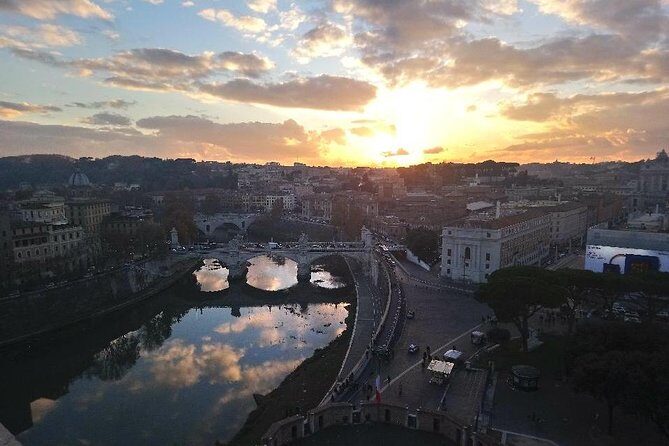
Your tour includes time on the panoramic terrace, where you can take great photos and see the Tiber and major landmarks around Rome. The terrace moment is more than a reward. It’s also a finishing tool for your brain. After walking through tomb, apartments, prisons, and treasury spaces, you finally get to place the castle in its geography—why it makes sense as a fortress and why it offers control over the surrounding city.
I also like that your guide gives you practical pointers on what direction you’re looking and what you’re seeing. You’re not just capturing an image; you’re building a mental map.
Photography is allowed, and if you’re the type who loves panoramic shots, this is where you’ll spend your best camera time.
Pace and group size: private tour, but not rushed
This is a private tour/activity, meaning only your group participates. That instantly upgrades how the two hours feel. You’re not stuck behind strangers who don’t care about details, and your guide can slow down when you ask questions.
In practice, many groups have ended up small—often just a handful of people—which makes the tour feel like a conversation with a professional storyteller. Guides like Virginia and Claudia have been praised for keeping the timing tight between stops without dumping endless information. That balance is key in a place like Castel Sant’Angelo: if you get too much at once, you’ll forget it. If you get too little, you’ll feel like you paid for an entrance ticket.
The other pacing tip: wear comfortable shoes. Castel Sant’Angelo involves walking on uneven surfaces and climbing stairs in spots. The terrain is manageable, but good shoes keep it enjoyable instead of annoying.
Price and value check: is $359.22 per person worth it?
Let’s be honest: $359.22 per person is not cheap. For many people, it will feel like a “treat yourself” line item.
So here’s how I’d judge value for this specific tour:
You’ll likely feel it’s worth it if you want:
- Skip-the-line entry that saves time you can spend enjoying Rome
- A private English guide who adapts explanations to your questions
- A focused 2-hour plan that covers the castle’s big story beats: tomb, papal apartments (Paul III focus), prisons/executions, treasury, art, and the terrace
- A smoother visit where someone else handles pacing and route choices
You might hesitate if you’re:
- On a tight budget and want Rome to be mostly free or self-guided
- Only after a quick exterior look or a short interior browse
- Someone who prefers to read plaques at your own tempo without spending for interpretation
One review-style theme that I agree with: the castle doesn’t always feel like a huge museum inside, so the guide’s role becomes the difference-maker. Paying for context is the point. If you go in expecting a palace-like interior every step of the way, you may want to temper expectations. But if you enjoy how a site changes roles across centuries, this fortress is exactly your kind of place.
Who this tour suits best (and who should think twice)
This tour is built for people who like history that has teeth. If you’re interested in how rulers used architecture for safety and control, you’ll love the combination of tomb origins, papal apartment life, and the prison/execution narrative.
It’s also a great fit for:
- Couples and small groups who want a calm, guided pace
- First-time visitors who want a practical introduction to Castel Sant’Angelo’s multiple identities
- Travelers who care about views but also want a story attached to those views
- Families with older kids (children must be accompanied by an adult)
If you’re more of a casual shopper type who just wants a few highlights for photos, you might do fine on your own. But you’ll probably miss the connections that make the building feel like one coherent timeline.
Should you book Raphael Tours & Events for Castel Sant’Angelo?
If you want Castel Sant’Angelo to feel alive—tomb to fortress to pope power—you should book this. The combination of skip-the-line tickets, a private English guide, and a route that hits the terrace plus the heavier prison and execution themes makes it a high-yield way to spend two hours.
I’d especially recommend it if:
- You hate waiting in lines and want to start fast
- You enjoy a guide who tells stories with humor and keeps things moving (people have praised guides like Marco and Claudia for exactly that)
- You want more than scenery and a few random photos
Skip it if:
- You’re trying to keep costs low
- You’re happy to read on your own and you don’t care about guided interpretation
- You’re expecting the inside to be sprawling in a museum sense—this is more about layered meaning in a fortress shell
FAQ
How long is the Castel Sant’Angelo skip-the-line tour?
It lasts about 2 hours.
Is admission included, and do I skip the line?
Yes. Skip-the-line admission tickets are included.
Where do we meet for the tour?
You meet at St. Angelo Bridge (Ponte Sant’Angelo), 00186 Roma RM, Italy.
Is this tour private and does the guide speak English?
Yes. It’s a private tour for your group, and the guide speaks fluent English.
Are food and drinks included?
No. Food and drinks are not included.
Can I take photos during the tour?
Yes. Photography is allowed, and the terrace offers great panoramic photo opportunities.
Can I cancel for a full refund?
Yes. You can cancel up to 24 hours in advance for a full refund.