REVIEW · ROME
Secrets of Rome: Historical True Crime Small Group Tour
Book on GetYourGuide →Operated by City Stories Tours · Bookable on GetYourGuide
Rome has a second face.
This Secrets of Rome historical true crime tour turns familiar streets into a crime scene of ideas, scandals, and punishments, told in plain, theatrical English by guides such as Ben and Ivana (and Ariel on some departures). I love the tight 2-hour format—enough time to cover real neighborhoods without turning into a slog—and I love the way the stories are anchored to specific places like Campo de’ Fiori, Piazza Farnese, and the walk toward Castel Sant’Angelo. One thing to consider: this is not a ghost story or recent-crime tour. It’s built around historical figures and grim court-and-street intrigue, so if you want modern true crime, you may feel the focus is too far back in time.
You’ll get a small-group vibe (max 15 people) and a guide who can hold attention. Starting in Campo de’ Fiori, you’ll hear about major names tied to the city’s darker chapters, including Giordano Bruno’s fiery end in that square, the shadowy reputation of Cagliostro, and the fearsome 17th-century poisoner Giulia Tofana. Then the route keeps pushing toward the Tiber side of town, with stops like Ponte Sisto and Via Giulia, before finishing at Castel Sant’Angelo. The likely drawback is simple: it’s all outdoors, rain or shine, so you’ll want a plan for weather.
In This Review
- Key things I’d watch for before booking
- Where Rome’s “dark side” starts: Campo de’ Fiori
- Piazza Farnese: power, polish, and the politics under the marble
- Ponte Sisto and the walk along the Tiber mindset
- Via Giulia: the street where intrigue feels closer
- The short bar stop: a 10-minute breather that keeps the tour fun
- An off-the-radar stop where the guide can show off
- Castel Sant’Angelo: a fitting finish for a “crime-adjacent” Rome
- How long is it, and why 2 hours is the sweet spot
- What to expect in the stories (without turning it into a gore-fest)
- Price and value: why $29 can feel surprisingly fair
- Practical details that help you enjoy it more
- Who should book this Secrets of Rome tour
- Should you book it
- FAQ
- Where does the tour start?
- How long is the Secrets of Rome tour?
- How big is the group?
- What language is the tour in?
- Is it indoors or outdoors?
- What is included in the price?
Key things I’d watch for before booking
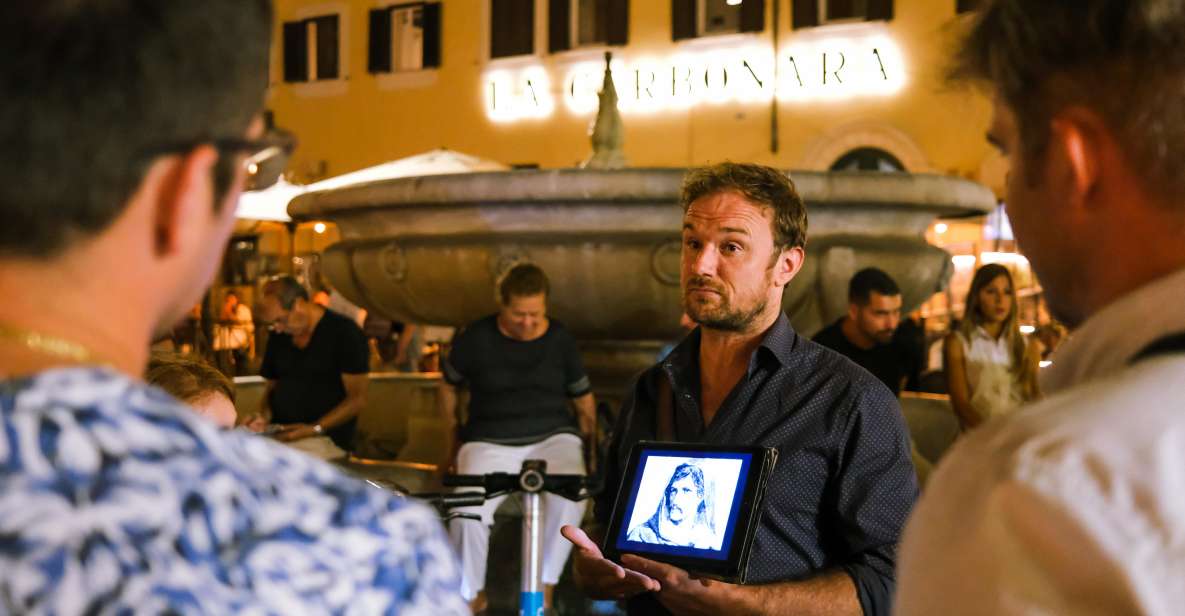
- Small group cap (15 max) means you’re not lost in a crowd with a headset guide
- Expert storytelling guides like Ben, Ivana, and Ariel keep the pace moving and the facts readable
- True-crime focus on historical figures (Bruno, Cagliostro, Maidalchini, Tofana, Borgias, Beatrice Cenci)
- Route from Campo de’ Fiori to Castel Sant’Angelo gives you a satisfying arc across central Rome
- Short bar stop for a restroom and quick reset without derailing the tour
Where Rome’s “dark side” starts: Campo de’ Fiori
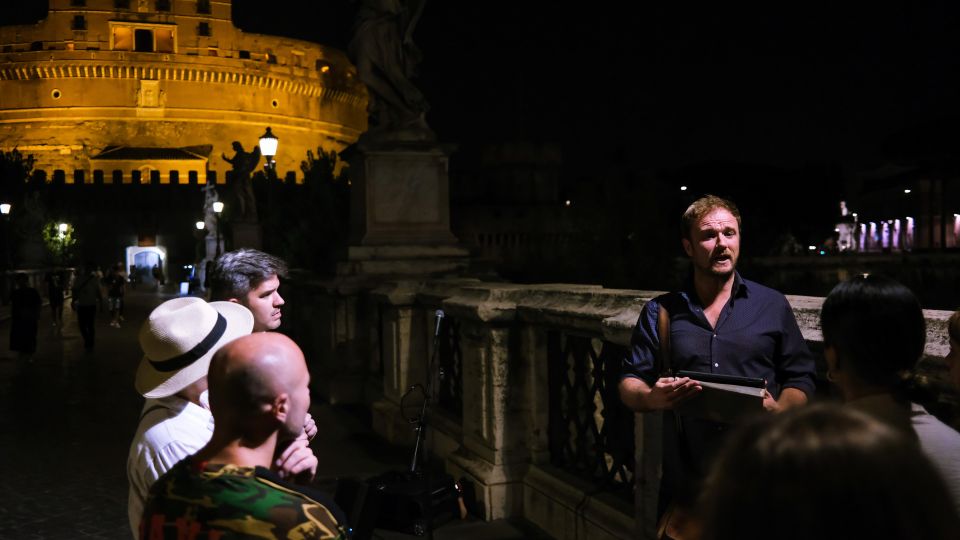
Campo de’ Fiori is one of Rome’s easiest places to find—and that matters because this tour is very story-led. Your guide meets you in the middle of the square in front of the statue, holding a sign that reads Rome’s Dark Side. That’s a nice touch on a first evening in the city: you’re not hunting for a meeting point while also trying to orient yourself.
What makes this starting spot work is the contrast. Campo de’ Fiori is lively and public, but your guide frames it as a stage for punishment and public spectacle. The tour specifically links the square to Giordano Bruno, whose execution in 1600 is remembered there. The point isn’t to turn the square into a lecture hall—it’s to show how Rome’s most famous public spaces also held political teeth. You learn to read the area differently, not just memorize it.
I also like how the opening energy sets expectations fast. Since the tour is 2 hours and built around strong narrative, the first moments tell you what kind of “true crime” you’re signing up for: historic scandals, betrayals, and people whose names still carry menace.
You can also read our reviews of more tours and experiences in Rome.



Piazza Farnese: power, polish, and the politics under the marble
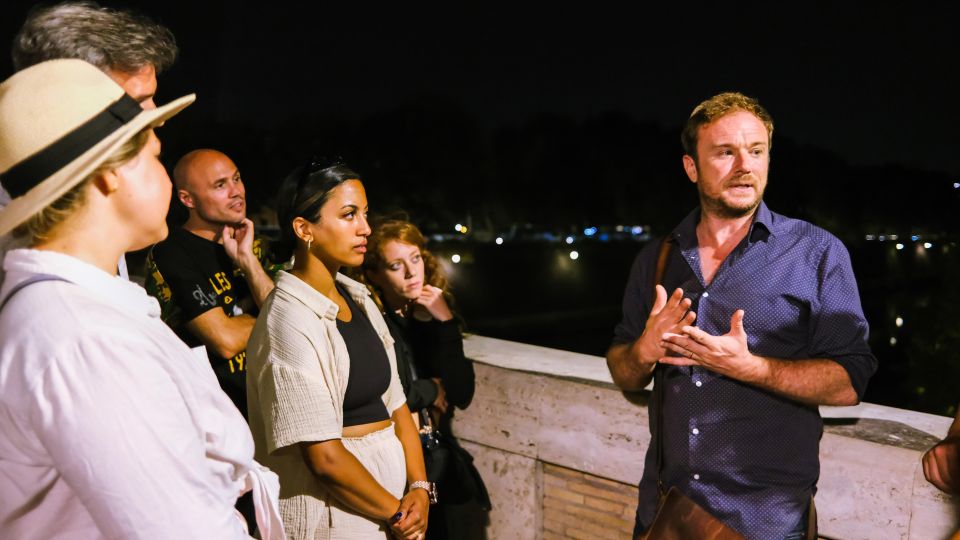
From Campo de’ Fiori, you move toward Piazza Farnese. This stop is less about one single murder scene and more about the kind of Rome that makes crimes possible—money, influence, and status. Piazza Farnese is visually impressive, but the tour uses the setting as a way to talk about how decisions got made. In a city where elite families shaped careers and consequences, scandal wasn’t just gossip. It was leverage.
This is where the storytelling style shows its value. You’re not forced to follow a dense timeline of dates and documents. Instead, you hear the human motives that connect the places: ambition, betrayal, and the way courts and networks operated.
If you like your history connected to real people (even when the people are awful), this is one of the stops you’ll probably remember most. You can look at the architecture and then immediately understand why the narrative fits there.
Ponte Sisto and the walk along the Tiber mindset
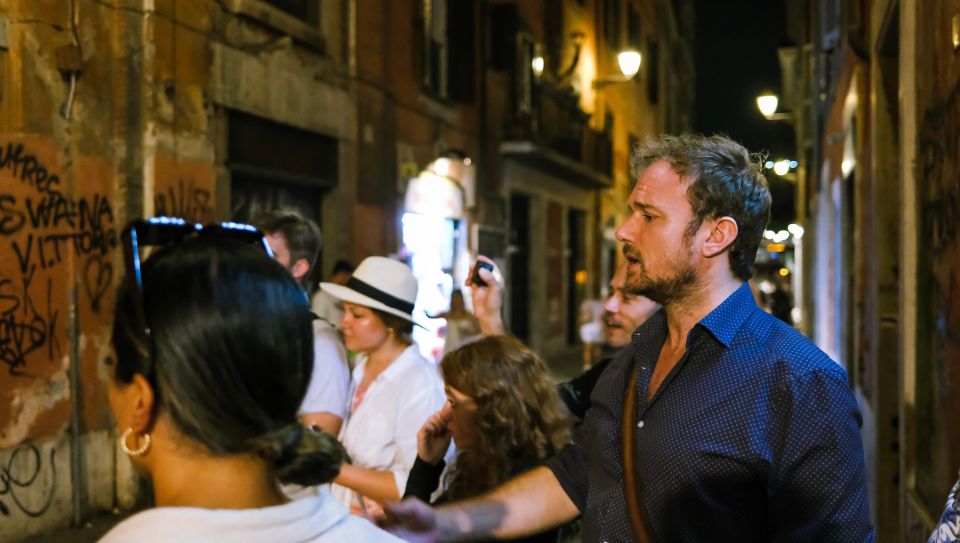
Next comes Ponte Sisto. Bridges are great for tours because they force you to slow down and look. They also give the guide a natural place to talk about movement—how people could travel, hide, meet, and disappear across the city.
In this case, the bridge works as a transition. You’re moving from central squares into lanes and river-adjacent streets that feel more like the Rome of rumors than the Rome of postcards. The tour doesn’t just pass through; it explains why that shift in scenery matters. The “dark side” doesn’t live only in famous squares. It lives in the connections between them.
This part of the walk is also where you get a sense of why the tour ends at Castel Sant’Angelo. When you eventually see it at the finish, the river route and the bridge stop will help you understand the geometry of the story.
Via Giulia: the street where intrigue feels closer
Via Giulia is one of those Roman streets that helps you believe the narrative. It’s long enough to feel like a proper setting, and it’s specific enough that you’re not just walking through generic downtown Rome.
Here the tour leans hard into scandal and shock. You’ll hear about Donna Olimpia Maidalchini, described as a major power player in 17th-century Rome. Whether you know her name already or not, the takeaway is the same: influence could operate behind curtains, with consequences spilling outward.
Then the guide brings up Giulia Tofana, the notorious poisoner. This is the moment where “historical true crime” becomes more than a label. Poisoning turns motives into something immediate and terrifying. The guide frames it in the context of fear and rumors that spread through neighborhoods and social circles.
If you’re squeamish, don’t plan for gore. This is not a horror movie walk. It’s more about how people used systems—who had access, who could hide evidence, and how power shaped what was believed.
The short bar stop: a 10-minute breather that keeps the tour fun
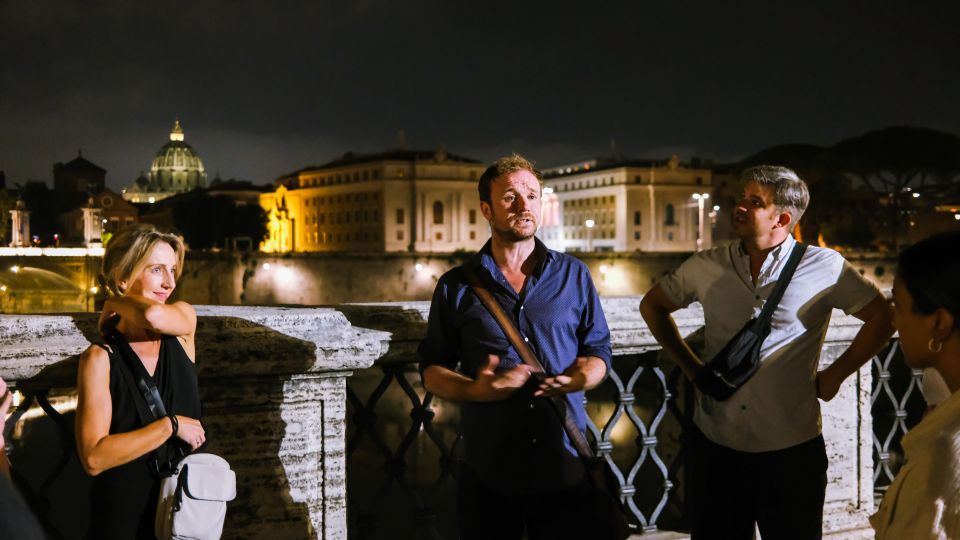
About halfway through, you’ll hit a local bar for a break. It’s brief: 10 minutes for restroom and drinks if you want them. Since food and drinks are not included, you’re making your own call here. I like that the stop is short, because it keeps the momentum. You’re not paying for a tour that suddenly turns into a long café hangout.
Use this stop strategically. If it’s your first time in Rome, take a second to re-check where you are on your mental map. Also, if you’re sensitive to heat or cold, this is a quick chance to recalibrate so the second half of the walk feels easy instead of tiring.



An off-the-radar stop where the guide can show off
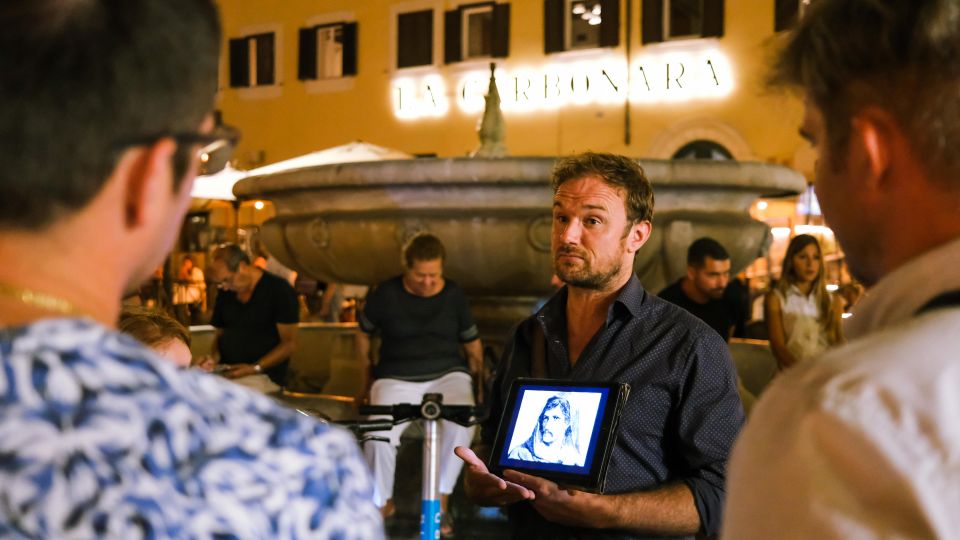
After Via Giulia, the route includes a stop labeled as a hidden gem. Since the tour doesn’t frame it as another major monument, it works as a breather from the biggest names on the map. You might think of it as the guide’s chance to point out a quieter corner that supports the mood.
The reason this kind of pause matters is pacing. A story tour is only as good as its rhythm. Big landmarks can become repetitive if everything is dramatic. A smaller stop lets the guide shift tone: from spectacle to secret, from big events to personal stories.
If you like tours where the guide feels like a local with a point of view, this is the sort of stop that usually earns that feeling. You walk less like a sightseeing checklist and more like someone who actually knows the street turns.
Castel Sant’Angelo: a fitting finish for a “crime-adjacent” Rome
The tour finishes at Castel Sant’Angelo. That ending location makes sense because it’s a strong landmark with atmosphere. It’s also tied to Rome’s idea of control—fortress, river access, and the feeling that this city can watch you from above.
Even if you’ve seen Castel Sant’Angelo before, the true crime framing changes what you notice. You start looking for how geography helps stories travel: where people could move, where they could be seen, and how authority gathered power in stone-and-river territory.
Finishing at a well-known site is practical too. When a tour ends somewhere distinct, you can pivot easily. You’re not stuck at a random alley with no clue where to go next.
How long is it, and why 2 hours is the sweet spot
This is a 2-hour walking tour, and that duration matters. Rome walking tours often stretch long enough that even a good guide can’t keep everyone fully engaged. Here, the story format works because the whole experience is tight: you’re never far from the next clue, the next street, or the next character.
It also helps that the group is small: maximum 15 people. That size supports a real conversation feel. You’re not talking over a loud crowd, and it’s easier for the guide to manage attention and keep the pacing.
I’d treat this as an ideal first-night plan. It gives you a different introduction to Rome compared with the standard monument route, and it helps you understand the city’s personality fast.
What to expect in the stories (without turning it into a gore-fest)
The tour is built around a set of historical figures, and the guide uses those names like chapter headings. You’ll hear about:
- Giordano Bruno and his execution in Campo de’ Fiori
- Cagliostro, described as an enigmatic figure tied to secretive activity
- Donna Olimpia Maidalchini, framed as an influential power player in 17th-century Rome
- Giulia Tofana, the infamous poisoner whose reputation shocks even modern ears
- The Borgias, associated with treachery and cunning
- Beatrice Cenci, with a story focused on betrayal and tragedy
You should expect more “why this happened here” than “here is a modern crime file.” This is history filtered through true-crime storytelling tools: motive, opportunity, public consequences, and rumor that spreads like smoke.
If your idea of true crime includes ghosts and modern investigations, you may want something else after this. But if you enjoy crime narratives from earlier eras—where politics and social survival can be deadly—this is a strong match.
Price and value: why $29 can feel surprisingly fair
At $29 per person for 2 hours in a small group (up to 15) with live English storytelling, the value is solid. You’re not just paying for movement between landmarks. You’re paying for a guide who can deliver a plot, keep the facts clear, and connect each stop to a named figure.
Also, the pricing makes the tour easy to try without risking your whole budget. It’s a good bet for your first couple of evenings, when you’re still figuring out which types of tours fit your travel style.
The only cost you should plan for is personal: drinks at the bar are not included, and you may buy water if you’re walking in heat. But compared with many “special interest” tours, $29 is a reasonable entry fee for a story-led route.
Practical details that help you enjoy it more
This is an all outdoors walking tour and it runs rain or shine. Bring an umbrella or rain coat. Rome weather can shift quickly, and story tours lose energy if people are soaked and miserable. Having light protection lets you stay focused on the guide and not on the weather.
Restroom timing is built in via the bar stop. There’s no long sit-down meal, so if you need more frequent breaks, plan accordingly before you start.
The tour is listed as wheelchair accessible, which is a big plus for people who need a more manageable walking pace.
Language is English and the guide is live—so you can usually get a better answer to your questions than you would with audio-only tours.
Who should book this Secrets of Rome tour
I think this tour is best for you if you:
- Like your Rome stories with edge and human drama, not just dates
- Enjoy small group experiences where the guide can keep eyes on them
- Want a route that connects Campo de’ Fiori to Castel Sant’Angelo without doing it alone
- Are okay with historical crimes and dark scandals rather than modern true crime
It may not be the best fit if you:
- Want a purely academic history lecture with lots of deep sourcing
- Expect mostly ghost stories, recent cases, or supernatural scares
- Prefer long monument time with plenty of free roaming
Should you book it
Yes, I’d book it if you want a different kind of Rome evening. The combination of 2 hours, small group size, and guide performance (Ben and Ivana come up again and again, with Ariel also leading some departures) makes it a high-likelihood win. You get a full story arc from Campo de’ Fiori to Castel Sant’Angelo, and each major stop ties to a named chapter of Rome’s darker reputation.
If you’re on the fence, treat it like an orientation tour. Even when you don’t know the historical figures, the route and storytelling style help you see central Rome through a sharper, more human lens.
FAQ
Where does the tour start?
The meeting point is in Campo de’ Fiori, in front of the statue in the middle of the square. Your guide is holding a sign that says Rome’s Dark Side.
How long is the Secrets of Rome tour?
It lasts 2 hours.
How big is the group?
The tour is a small group with a maximum of 15 people.
What language is the tour in?
The live tour guide speaks English.
Is it indoors or outdoors?
It is all outdoors and runs rain or shine. You should bring an umbrella or rain coat.
What is included in the price?
The tour includes an expert storytelling guide. Food and drinks are not included, though there is a short stop at a local bar during the tour.