REVIEW · VATICAN CITY
Rome Walking Tour
Book on Viator →Operated by Rometourguide · Bookable on Viator
Three hours can change your whole Rome.
This walk is a smart way to see major highlights fast, with a guide giving context as you move across the city. I like the small-group size (max 10), which keeps it relaxed and question-friendly. I also like that it’s a morning tour, so you’re done in time to explore, shop, and wander on your own afterward.
The main trade-off is tight timing: each stop is short, so you’ll be doing “see and absorb” more than “stare forever.” Also, do a little ticket planning, because some places are free while others (like Castel Sant’Angelo) are not included.
In This Review
- Key Points Worth Knowing Before You Go
- Why This 9:30am Vatican-to-Spanish-Steps Route Works
- Price and Value: What $192.04 Buys You in 3 Hours
- St. Peter’s Square: Getting Your Bearings Fast
- Castel Sant’Angelo and the Bridge by Bernini: A Short Stop with Big Visuals
- Piazza Navona: Four Rivers by Bernini (and Admission Included)
- Pantheon: The Dome Moment in About 30 Minutes
- Trevi Fountain: A 30-Minute Reality Check and Photo Strategy
- Sant’Ignazio di Loyola: Andrea del Pozzo’s Ceiling in 15 Minutes
- Piazza di Spagna: The Staircase Finale (and What to Do After)
- How the Guide Style Shows Up in Real Life
- Small Group (Up to 10): Why Your Experience Feels Easier
- Who This Tour Fits Best (and Who Should Choose a Slower Option)
- Should You Book This Rome Walking Tour?
- FAQ
- How long is the Rome Walking Tour?
- What time does the tour start, and where does it begin and end?
- Is this tour a small group?
- What language is the tour offered in?
- Is there a mobile ticket?
- Do I need to buy tickets for the attractions?
- Are service animals allowed?
- What’s the cancellation policy?
Key Points Worth Knowing Before You Go
- Max 10 people means you get more personal attention, not a rush-and-hustle line
- Vatican City to Piazza di Spagna in one direction saves time and lets you finish near the shopping zone
- Navona admission included while several other big names are free to enter
- A morning start at 9:30am helps you beat some crowds and keeps your afternoon open
- Mobile tickets in English make it easy to coordinate on the day
- Andrea del Pozzo’s ceiling at Sant’Ignazio is a quick hit if you like art and optical tricks
Why This 9:30am Vatican-to-Spanish-Steps Route Works
Starting at Piazza San Pietro (St. Peter’s Square) at 9:30am is a big deal because it locks in your day. You get the Vatican area early, then keep moving through central Rome without having to backtrack. When the tour ends at Piazza di Spagna, you land in one of the most convenient areas to continue on your own.
The other practical win is flow. This route strings together the type of sights that naturally complement each other. You go from monumental church space to dramatic fountains and domes, then finish at the famous stairway and nearby lanes. It’s the kind of route that helps you “learn the map” of Rome while you walk.
And because it’s an approximately 3-hour experience, it’s a good fit if you’re on a tight schedule. If you have only a partial day in Rome, this format is one of the most efficient ways to build your personal top-10.
You can also read our reviews of more walking tours in Vatican City

Price and Value: What $192.04 Buys You in 3 Hours
At $192.04 per person, this is not a bargain-basement group deal. But for a guided, small-group walk that touches multiple headline sites, the value is in the structure: you’re paying for the guide’s ability to connect the dots quickly.
Here’s how the money tends to make sense in real life:
- You get a guide during the whole stretch, not just at one stop.
- You save time by having a set plan and a set direction.
- Tickets are mixed, so you don’t have to buy everything from scratch.
Admission details matter here. Piazza Navona includes admission for that stop. The Pantheon, Trevi Fountain, and Sant’Ignazio di Loyola are listed as free admissions for the tour portion. St. Peter’s Square is outdoor and marked as not included (which is common for open-area sightseeing). Castel Sant’Angelo is not included for admission.
So the value equation is: you’re paying for guided prioritization and pacing across multiple famous sights, with only some admission costs on your side. If you were trying to do this route solo, you’d spend time figuring out what to see first, where to walk next, and how to make each stop count.
St. Peter’s Square: Getting Your Bearings Fast
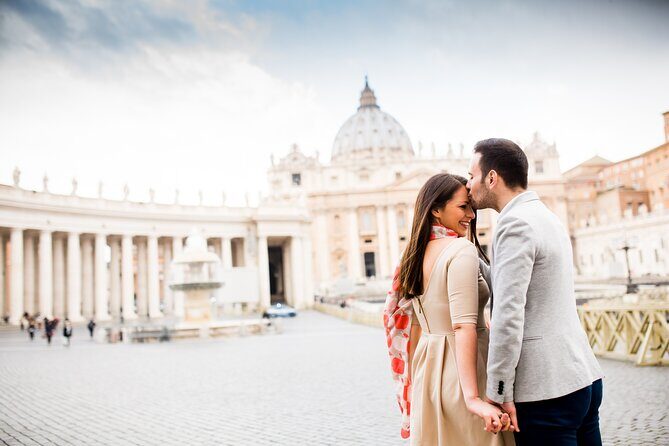
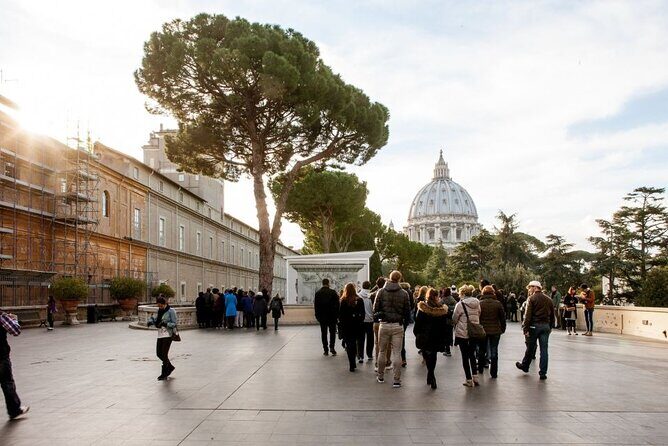
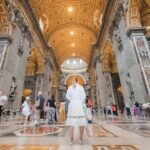
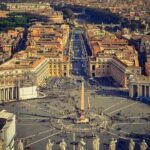
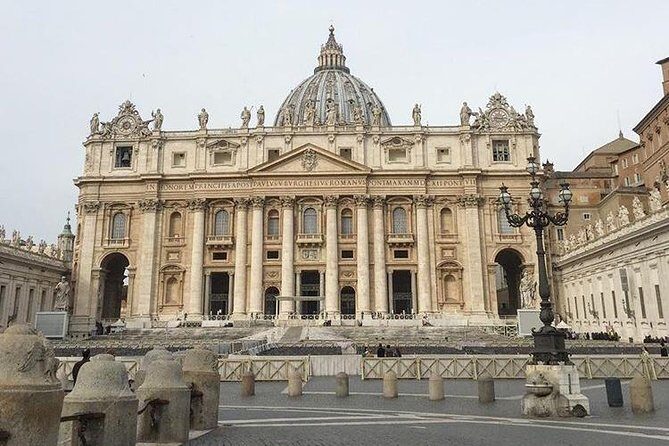
Your morning begins in St. Peter’s Square, with about 15 minutes there. Even if you’ve seen photos, the scale is what hits first. This is the kind of place where the “big view” matters, because you’re orienting yourself for everything else you’ll see later.
What I like about starting here is the payoff for the rest of the walk. The guide can point out how this space fits into the wider story of Rome’s religious and artistic power. It’s also a clean beginning because you’re not committing to long indoor time right away.
Practical note: since admission isn’t included, don’t expect this to be a guided “ticket experience” at the square. It’s more about setting context, noticing key design features, and getting your camera-ready views before you move on.
Castel Sant’Angelo and the Bridge by Bernini: A Short Stop with Big Visuals
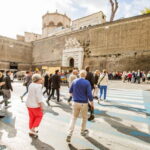
Next is Museo Nazionale di Castel Sant’Angelo, around 10 minutes, with the focus on the castle and the bridge associated with Bernini. This stop is quick, but it’s visually rewarding. Castel Sant’Angelo dominates the river area, and the bridge view helps you connect the city’s landmarks to the Tiber corridor.
Because Castel Sant’Angelo admission is not included, you’ll likely be doing exterior viewing and getting guided perspective rather than a deep museum session. That can actually be a smart choice in a 3-hour tour. You get the meaning and the sightline without eating up the clock.
If you’re the type who loves interiors and museum time, you might later choose to return for a fuller visit. But on this route, the goal is to keep momentum and keep Rome’s top hits flowing.
Piazza Navona: Four Rivers by Bernini (and Admission Included)
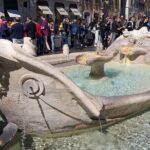
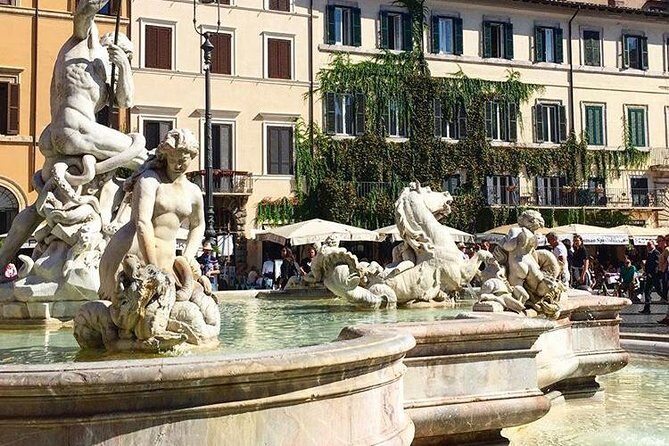
You get about 20 minutes at Piazza Navona, with the highlight being Bernini’s Fountain of the Four Rivers. This is one of those squares that works even when the crowd level climbs. The architecture, the open space, and the fountain make it feel like a stage set.
The big reason this stop deserves your attention is that admission is included for the experience portion at Navona. That detail matters because it suggests you’re not only walking past—you’re getting the chance to access what you came for without handling every ticket step on your own.
When you’re short on time, this is the kind of stop that can anchor the whole day. It’s art, it’s urban design, and it’s the “Rome people talk about” in one compact package.


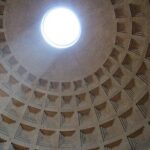
Pantheon: The Dome Moment in About 30 Minutes
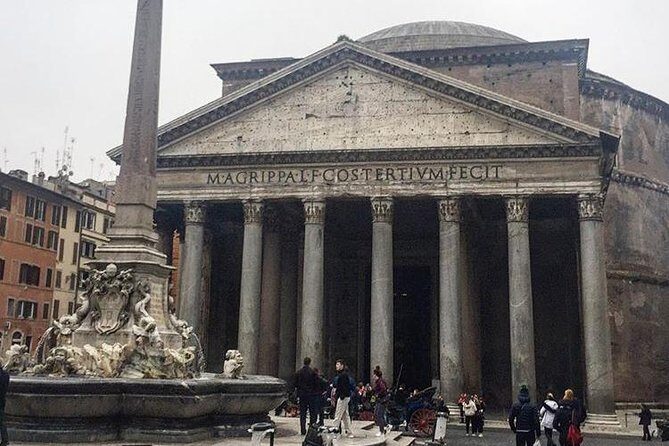
Then it’s on to the Pantheon, roughly 30 minutes, where the admission is listed as free. This stop is long enough to do two things well:
1) see the monument in a way that doesn’t feel rushed
2) take in the dome as a real engineering marvel, not just a postcard
The Pantheon works best when you let it be simple. Look up. Notice how the space feels. The guide’s job here is to help you understand why the dome and the overall design became such a reference point for later architecture.
Because admission is free, this is a strong value moment. You’re spending time, not money, and the Pantheon is one of the places where even a “quick visit” can still feel meaningful.
Trevi Fountain: A 30-Minute Reality Check and Photo Strategy
You’ll spend about 30 minutes at the Fontana di Trevi, and it’s listed as free. Trevi is one of those sites where your experience depends on timing, angles, and expectations.
In a tour format, the goal is to make your visit usable. You’re not wandering blind—you’re using guided timing to see the fountain and take your photos without losing the group to the crowd. You’ll also get helpful context on what the fountain represents and why it became such a must-see.
A small tip: decide early how you want your photos to look. If you want a wide shot, give yourself the space to step back. If you want close detail, don’t wait until you’re already pressed for time. Thirty minutes disappears fast in that square.
Sant’Ignazio di Loyola: Andrea del Pozzo’s Ceiling in 15 Minutes
Next is Chiesa di Sant’Ignazio di Loyola, with about 15 minutes. Admission is listed as free. The reason this stop is special is the ceiling by Andrea del Pozzo—an artwork that plays tricks with perspective and expectation.
Even with limited time, this is the type of stop where the guide can make your look smarter. You don’t just see it; you understand what you’re seeing. And in a walking tour where every minute counts, it’s a great use of a short window.
If you love art that rewards attention, this is a strong reason to pick this tour rather than a generic “only streets and photos” walk.
Piazza di Spagna: The Staircase Finale (and What to Do After)
Your last stop is Piazza Di Spagna, around 20 minutes. Admission is listed as free. This is a satisfying finish because it lands you at a place people naturally want to linger—especially if you like shopping lanes and coffee breaks afterward.
The stairway gives you a clear sense of vertical Rome: the city doesn’t just feel like monuments; it feels like movement. And ending here also makes it easier to pivot your afternoon plan. You’re not finishing in the middle of nowhere.
The tour end point is Piazza di Spagna, 00187 Roma, which is convenient for continuing on your own.
How the Guide Style Shows Up in Real Life
This experience is built around a guided pace, and the guide matters. In past walks connected to this company and route style, Sara comes up again and again for being friendly and professional, with Rome context that helps things click. You also might meet Matteo, mentioned as a fantastic guide when an associate helps out.
What I like about this kind of guiding is that it’s not just facts. It’s practical context that helps you understand what you’re looking at in the moment. One review style also points to how schedules can change on the fly when someone is ill, and the guide works to keep the experience on track. That kind of flexibility is reassuring.
Also: this tour is marked as offered in English, with mobile tickets. That matters because Rome can feel complicated quickly. When you don’t have to chase paperwork, you can focus on the walking.
Small Group (Up to 10): Why Your Experience Feels Easier
A maximum group size of 10 travelers is the sweet spot for this kind of route. With bigger groups, the pace becomes rigid. With a smaller group, you can actually hear the guide, ask one or two questions, and keep a smooth rhythm without constantly waiting.
The relaxed pace is a feature in the real world because it helps you absorb each landmark. You’re not sprinting between stops. You’re walking with purpose.
And since service animals are allowed and the tour is near public transportation, you’re less likely to feel stuck if plans change in the city.
Who This Tour Fits Best (and Who Should Choose a Slower Option)
This is ideal for:
- First-time visitors who want the top sights without building a route from scratch
- People with limited time who still want a guided, coherent day
- Travelers who enjoy learning as they walk, especially when each stop has a clear theme
- Anyone who wants to be done around lunchtime or early afternoon so the rest of the day is yours
You might want a slower or more specialized tour if:
- You want long interior time at major sites
- You hate crowds and would rather choose off-peak time slots
- You prefer deep museum experiences, not short landmark visits
Think of this walk as the best way to get Rome’s “main story” in one morning. Then you return later for the parts you personally love most.
Should You Book This Rome Walking Tour?
If you’re trying to make one morning count, I think this tour is a strong booking. The route makes sense, the small-group size helps the experience feel personal, and the mix of stops gives you a fast overview of Rome’s most iconic sights—from the Vatican area to the Pantheon, Trevi Fountain, and the Spanish Steps.
The main reason to pause is the pace. With short stop times, you won’t have hours in each place. And since not all admissions are included (Castel Sant’Angelo is noted as not included), you’ll want to be comfortable with a little ticket awareness.
If your goal is a well-organized, guided “greatest hits” morning, this is the kind of tour that lets you see a lot and still keep your afternoon free.
FAQ
How long is the Rome Walking Tour?
It lasts approximately 3 hours.
What time does the tour start, and where does it begin and end?
It starts at 9:30am at St. Peter’s Square (Piazza San Pietro, 00120) and ends at Piazza di Spagna (00187 Roma RM, Italy).
Is this tour a small group?
Yes. The tour has a maximum of 10 travelers.
What language is the tour offered in?
It is offered in English.
Is there a mobile ticket?
Yes. The tour includes a mobile ticket.
Do I need to buy tickets for the attractions?
Not everything requires a ticket. Piazza Navona has admission included, Pantheon is listed as free, and Trevi Fountain and Sant’Ignazio di Loyola are also listed as free. Castel Sant’Angelo is listed as admission not included.
Are service animals allowed?
Yes, service animals are allowed.
What’s the cancellation policy?
You can cancel for a full refund up to 24 hours before the experience starts. If you cancel less than 24 hours before, the amount paid won’t be refunded.