REVIEW · PANTHEON TOURS
Rome underground: Piazza Navona, the Illusion Church and Pantheon
Book on Viator →Operated by Live Virtual Guide · Bookable on Viator
Rome’s under-the-surface secrets are real.
This 2.5-hour, small-group experience is built for quiet stops and quick payoffs, starting at Piazza di Pietra and ending at Piazza Navona. I love how it mixes big-name landmarks with lesser-seen corners, and I especially like the way the guide points out surprises you’d normally miss at street level. One thing to consider: it’s a focused route in the center, so it’s not the best fit if you want a long, slow wander with lots of free time.
The timing is simple, too. It’s a manageable walk confined to Rome’s historic core, with an intimate group of up to 12 and the tour offered in English with a mobile ticket. You’ll visit churches, statues, and viewpoints that feel off the usual path, plus one stop where you literally go underground. The only drawback is that some of the magic is built around specific moments and details, so it helps if you’re comfortable standing for short stretches and staying with the group’s pace.
In This Review
- Key Highlights to Know Before You Go
- Why This Walk Feels Like a Local Secret
- Start at Piazza di Pietra: Hadrian’s Columns and the Story Behind Them
- Chiesa di Sant’Ignazio di Loyola: Rome’s Optical Illusions, and the Ones Most People Miss
- The Pantheon From the Outside: A Rare Light Effect You Can Actually Picture
- Piazza della Minerva: Where Kids Play Soccer and the Sculptures Tell a Personal Feud
- Church of St. Louis of the French: Caravaggio’s Drama in Paintings That Feel Too Real
- Piazza Navona: Famous Aboveground, Then a Different Story Underground
- Stadio di Domiziano Under Piazza Navona: Going 2,000 Years Down
- The Guides: Why Sabrina and Federica Make It Click
- Value and Price: What You’re Really Paying For
- Who This Tour Is Best For
- Should You Book This Rome Underground Experience?
- FAQ
- How long is the tour?
- Where does the tour start and end?
- What language is the tour offered in?
- Is the group size limited?
- Is the mobile ticket required?
- Is the underground stadium ticket included?
Key Highlights to Know Before You Go
- Optical illusion church moments at Chiesa di Sant’Ignazio di Loyola, including the ones most people skip
- Hadrian romance and tragedy tied to the Temple of Hadrian area at Piazza di Pietra
- Pantheon light effect details from outside, with a reference to a rare, only-a-few-days-per-year phenomenon
- A heated artists story in Piazza della Minerva, told through sculptures you’ll be looking at differently
- Caravaggio-focused art stop at the Church of St. Louis of the French, with dramatic, realistic paintings that feel like photographs
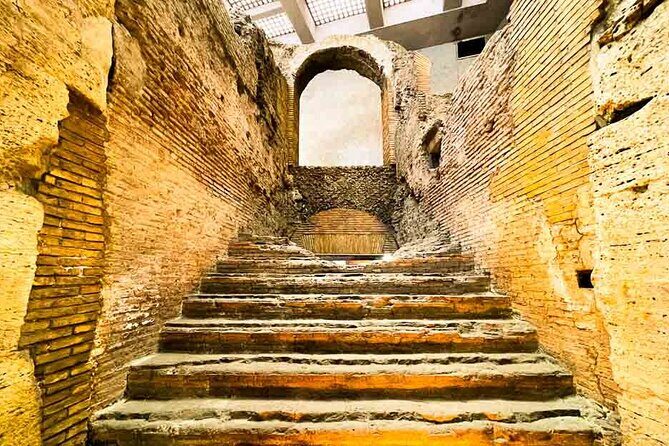
- Piazza Navona underground: the Roman stadium of Domitian and the athletics games held there about 2000 years ago
Why This Walk Feels Like a Local Secret
Rome can be loud. Even in the historic center, you can spend hours stepping around crowds and still feel like you only touched the surface. This route is designed to do the opposite: it keeps you moving through recognizable areas while steering you toward quieter angles and smaller “wait, what’s that?” moments.
The big win for me is the mix. You’re not spending the full time at the same three household names, and you’re also not stuck in places with nothing to see. You go from Piazza di Pietra’s dramatic columns to church interiors focused on visual trickery, then into areas around the Pantheon and Piazza Navona where the story changes when you know what to look for.
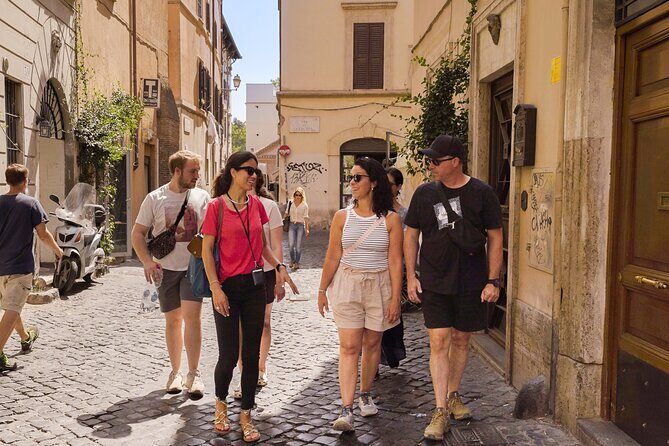
And the group size matters. With a maximum of 12, you get a better shot at asking questions and actually following the narrative instead of listening to a guide shout over shoulder-to-shoulder tourists.
You can also read our reviews of more tours and experiences in Rome.



Start at Piazza di Pietra: Hadrian’s Columns and the Story Behind Them
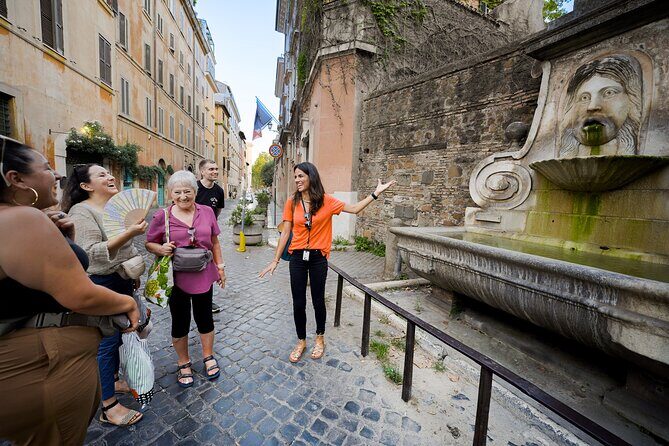
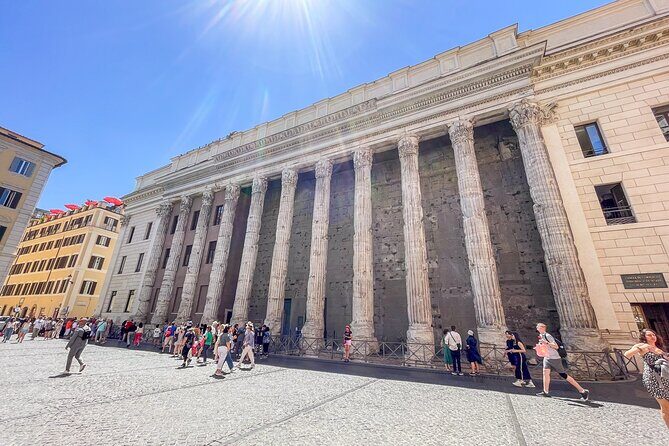
The tour begins at P.za di Pietra, right where you can take in the gigantic columns linked to the Temple of Hadrian. From a distance, it’s just size. Up close, it becomes context. This is where the guide sets the tone with a bit of ancient “gossip” that gives you a reason to care about what you’re seeing.
You’ll hear about a love triangle involving Emperor Hadrian and the tragic end tied to the person he loved. Even if you’ve read bits and pieces of Roman court history before, the way it’s anchored to the stone and scale here makes the story feel less like a textbook footnote and more like something that lived around these streets.
What I like: the stop helps you get oriented fast while giving you a narrative hook.
A possible drawback: if you’re hoping to go inside any major monument right away, this first segment is more about atmosphere and story than museum time.
The good news is that the stop is about 30 minutes. That’s enough to learn and look without turning the beginning into a long lecture.
Chiesa di Sant’Ignazio di Loyola: Rome’s Optical Illusions, and the Ones Most People Miss
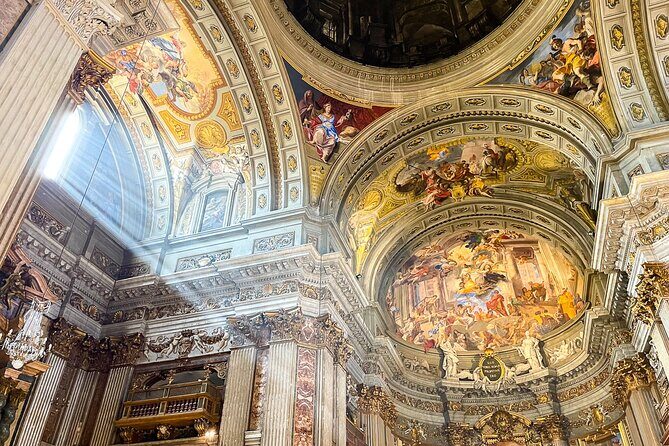
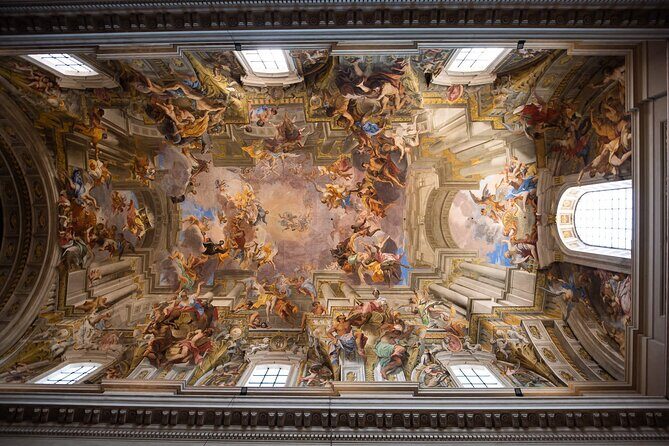
Next comes Chiesa di Sant’Ignazio di Loyola, a church where you can’t help but look up. The point here isn’t just that it has famous visual effects. It’s that the guide actively helps you notice them in a way that most quick visits don’t.
Many people focus on the first illusion they spot, and then move on. Here, you get guided attention to the other illusions in the building—so you’re not leaving with only one “wow” moment. The church becomes a puzzle: you see how angles and artwork trick your brain, and you realize why people still talk about it centuries later.
Why it’s valuable: optical illusions are one of the fastest ways to make art feel personal. You don’t need a special degree. The guide helps you read the space, and you end up experiencing the trick instead of just hearing that it exists.
Tip for you: wear comfortable shoes. Even if the pace stays manageable, you’ll likely stand and shift positions to see the different effects clearly.
Time check: this is about 20 minutes, so it stays punchy.
The Pantheon From the Outside: A Rare Light Effect You Can Actually Picture
Then you move toward the Pantheon, but the emphasis is on what you can learn from outside. That might sound limiting at first if you expected to go in, but it still pays off because the guide shares lesser-known facts that change how you look at the building itself.
One highlight is an incredible light effect that happens only a few days per year. The tour explains that this phenomenon was discovered in recent years, which gives the whole stop a modern twist: you’re looking at an ancient monument, but you’re also hearing about a relatively recent discovery tied to the light and geometry.
Even without stepping inside, that kind of detail helps you “see” the Pantheon differently. It’s not just a famous silhouette anymore. You start thinking about alignment and timing, and suddenly the façade feels like part of a bigger system.
What to expect: a short stop, about 10 minutes, with story-first framing.
Consideration: if you love interior architecture and plan to go inside separately, this tour can still work well as a pre-visit or companion visit because it sets up what to pay attention to.
Piazza della Minerva: Where Kids Play Soccer and the Sculptures Tell a Personal Feud
From the Pantheon area you shift to Piazza della Minerva, a smaller, cute square where the everyday Rome scene shows up fast—kids playing soccer after school, locals passing through, and a calmer rhythm than the big tourist magnets.
The guide uses this setting to tell the story of two artists who didn’t like each other, and how that tension shows up through sculptures. This is a clever approach because it keeps you from treating the artwork like “decor” and instead encourages you to read it like a message.
It’s a good example of what makes this tour feel different from a checklist. Even in a square that looks relaxed on the surface, you’re being guided into a sharper lens: who made what, why it matters, and what the rivalry might have meant for the final forms.
Why it’s a win: it makes you notice details you’d likely skip during a quick walk-through.
The small tradeoff: because it’s a 20-minute stop, you get the main story rather than a full art-history lecture.



Church of St. Louis of the French: Caravaggio’s Drama in Paintings That Feel Too Real
Now you hit one of the most culture-nerd-friendly stops on the route: the Church of St. Louis of the French. If you’ve heard the name Caravaggio before, you’ll recognize why people get excited when they walk into spaces tied to him.
The guide centers the conversation on Caravaggio—his fame for realistic, dramatic paintings that can almost look like photographs. That description might sound like hype, but it maps perfectly to what you’ll feel when you stand in front of dramatic religious scenes: the emotion is loud, and the realism makes it harder to treat as distant history.
What I like: this stop gives you a strong art payoff without requiring you to be an expert. The story framing helps you look longer, not faster.
Time check: about 30 minutes, which is enough for the guide to connect the art style to why Caravaggio mattered, and for you to take in the impact.
Consideration: if churches tend to overwhelm you (crowds, dim light, standing), plan to take micro-breaks mentally. This segment is still designed to be manageable, but you’ll want to give your eyes a moment to adjust.
Piazza Navona: Famous Aboveground, Then a Different Story Underground
At Piazza Navona, you do get a brief surface moment. It’s one of Rome’s best-known squares, and most people naturally gravitate to the view and the big sights. But the tour doesn’t stop there. It treats Piazza Navona like a gateway.
The important part comes next: you learn how the square sits above something far older and more specific than the current street-level scene. That leads into the underground segment, where the tour shifts from “wow, look at this square” to “wait, this used to be something else entirely.”
Even with only about 10 minutes above ground, the guide’s framing matters. It stops you from treating it like just another pretty stop and sets you up to be surprised by what’s underneath.
Stadio di Domiziano Under Piazza Navona: Going 2,000 Years Down
This is the part that makes the tour feel like real-value sightseeing. Many visitors come to Piazza Navona. Few know you can go beneath it. With this experience, you don’t just get a photo moment. You get a clear sense of what the location was used for.
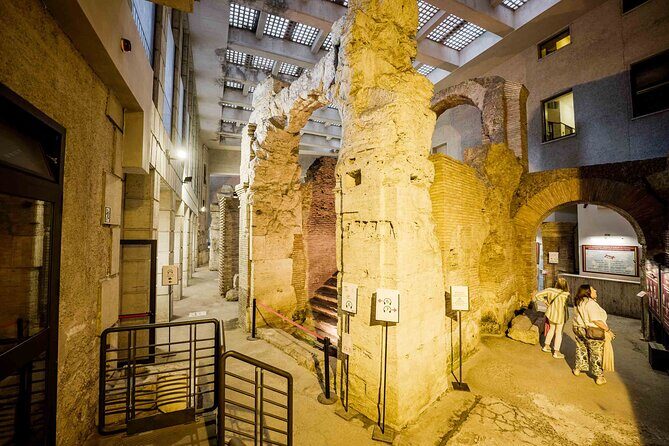
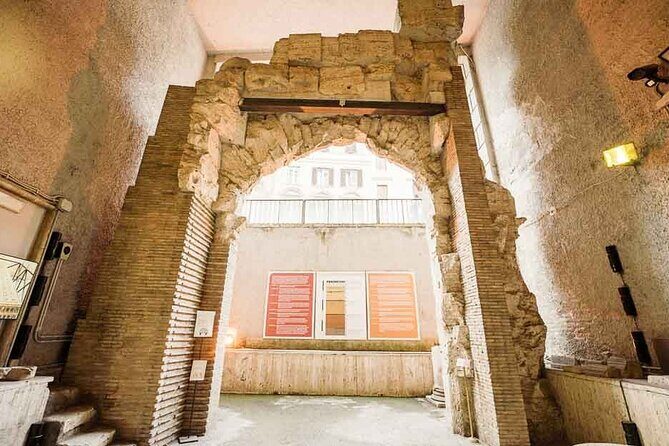
You’ll visit the Stadio di Domiziano – Navona Square Underground, where you discover the ancient Roman stadium of Domitian and the athletic games held there about 2000 years ago. The contrast is instant: the lively square above feels like today, but underground you’re looking at the bones of an event space built for sport.
Why this is worth the time: it turns your understanding of central Rome into a layered experience. You stop seeing streets as flat lines and start seeing them as built over older worlds.
Time check: about 30 minutes, and the underground ticket is included in the tour price.
If you like history that you can physically stand inside (even if only in a confined underground space), this is the anchor moment.
The Guides: Why Sabrina and Federica Make It Click
The quality of the guide is a big part of why the ratings are so high. Two names show up in the recent feedback: Sabrina and Federica. Both are described as engaging and fun, and the consistent theme is that they keep the pace relaxed while answering questions and adding details that change how you experience the sights.
One review praises Sabrina as personable and full of knowledge, and another highlights Federica’s ability to pack in multiple surprises without making the tour feel rushed. Another comment notes Federica was engaging even for guests who weren’t fully locked in, which tells me the guide knows how to bring people along.
In practical terms, this means you’re not just being handed facts. You’re getting a story you can follow stop to stop, with explanations that help you connect what you’re seeing to why it exists.
Value and Price: What You’re Really Paying For
The tour costs $78.44 per person and runs about 2 hours 30 minutes. That price is reasonable mainly because a good chunk of what you get isn’t just walking—it’s guided interpretation plus access to the underground stadium (ticket included) while most other stops have free admission.
If you’re planning to self-tour, the hardest part isn’t finding the monuments. It’s knowing where to look and what to notice once you’re there. Optical illusions, Caravaggio-focused context, and a light effect only happening a few days per year are exactly the kind of things that don’t reveal themselves in a quick stroll.
Also, the tour is offered in English with a mobile ticket, and it’s capped at 12 people, which helps maintain a smoother experience than bigger group tours.
One more thing: it’s often booked fairly far in advance, with an average booking window of 81 days. That’s a sign this route has strong demand, likely because it hits that sweet spot of “small group, big variety, real surprises.”
Who This Tour Is Best For
You’ll probably love this if:
- you want a short, structured walk in Rome’s center without getting swallowed by crowds
- you like church art and details you can’t easily spot on your own
- you enjoy Roman history when it’s connected to places you can see immediately
- you want a small-group guide who adds story and practical attention
You might skip it if:
- you want mostly time in major interiors or long museum-style stops
- you prefer totally flexible wandering with no set route
Should You Book This Rome Underground Experience?
I’d book it if your goal is to see Rome in layers, not just in highlights. The combination of optical illusions, a Caravaggio-focused stop, and the underground stadium beneath Piazza Navona makes it feel like you’re getting multiple Rome experiences in one compact chunk of time.
The route also sounds well paced for a visit that doesn’t burn your entire day: manageable walking, short stops, and a payoff at the places that matter most. If you’re the type who likes to come away saying, I didn’t realize that was there, this tour is built for you.
FAQ
How long is the tour?
It runs for about 2 hours 30 minutes.
Where does the tour start and end?
It starts at P.za di Pietra, 40, 00186 Roma RM, Italy, and ends at Piazza Navona, 00186 Roma RM, Italy.
What language is the tour offered in?
The tour is offered in English.
Is the group size limited?
Yes. The maximum group size is 12 travelers.
Is the mobile ticket required?
Yes. The tour includes a mobile ticket.
Is the underground stadium ticket included?
Yes. The Stadio di Domiziano – Navona Square Underground stop includes the ticket.