REVIEW · ROME
Rome: Trastevere and Roman Ghetto Guided Walking Tour
Book on GetYourGuide →Operated by Rome - Tour · Bookable on GetYourGuide
Two neighborhoods. One guided story.
This walk pairs the bohemian streets of Trastevere with the Roman Ghetto’s heavier chapters, so you’re not just seeing landmarks—you’re learning how Rome’s layers fit together. I especially like how the route keeps things concrete: you stop at specific squares and buildings, then connect what you’re looking at to the people who lived there.
I also like the pacing. You get time to take photos, catch street life in areas like Piazza Trilussa, and pause at major sights such as the Basilica in Trastevere. One thing to watch: it’s still a walking tour with limited breaks, and it’s not suitable for wheelchair users or people with mobility impairments, so plan accordingly.
If you like small-group energy and a guide who can explain the “why” behind the stones, this is a strong match. Just remember you’ll be on your feet for about 2 to 2.5 hours, so bring water and wear shoes you trust.
In This Review
- Key highlights at a glance
- Piazza Mastai meeting point: where the tour actually starts
- Trastevere walk-ups: Piazza di Santa Maria in Trastevere
- Piazza Trilussa: street life with a named point of focus
- Campo de’ Fiori: a market square you’ll recognize later
- Entering the Jewish Ghetto: learning how Rome changed
- Great Synagogue of Rome: what the building symbolizes
- Theatre of Marcellus: closing with Roman scale
- How the 2 to 2.5 hours actually feels on your feet
- Guides make or break it: what to expect from the explanations
- Price and value: what $41 does and doesn’t cover
- Who should book this tour?
- Should you book the Rome Trastevere and Roman Ghetto guided walk?
- FAQ
- How long is the Rome: Trastevere and Roman Ghetto guided walking tour?
- Where do I meet my guide?
- What languages are available for the live guide?
- Is the tour wheelchair accessible or suitable for people with mobility impairments?
- Are headsets included?
- What should I bring?
- Which sights will I see on this walk?
- Is food included during the tour?
Key highlights at a glance
- Trastevere + Roman Ghetto in one loop so you connect street charm with real historical context
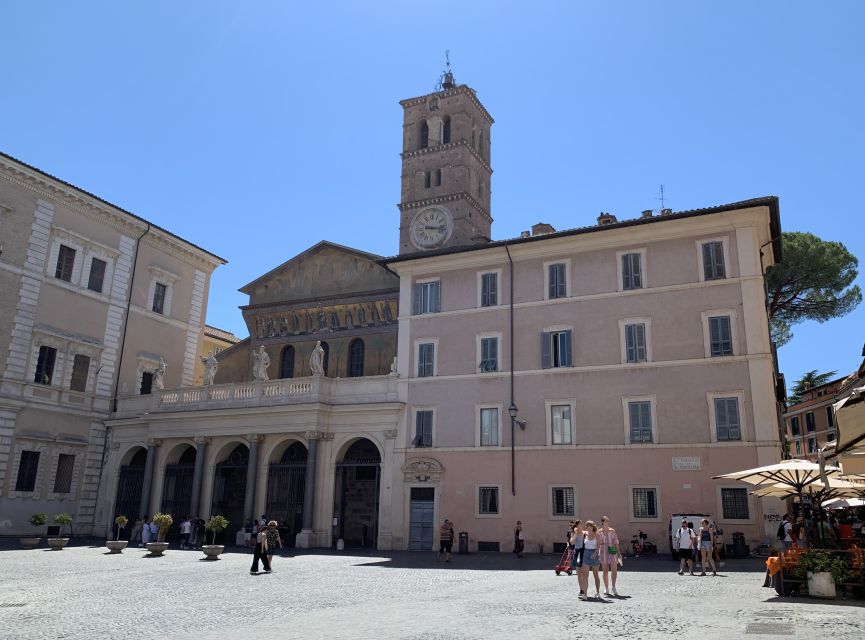
- Basilica of Santa Maria in Trastevere for 12th-century mosaics and a quiet moment mid-walk
- Campo de’ Fiori for market-square atmosphere and a short pause where food options can appear
- Great Synagogue of Rome as a powerful symbol you’ll understand more deeply with context
- Theatre of Marcellus (13 BC) to close the walk with Roman scale and atmosphere
- Headsets when groups run over 10 so the guide stays easy to follow
Piazza Mastai meeting point: where the tour actually starts
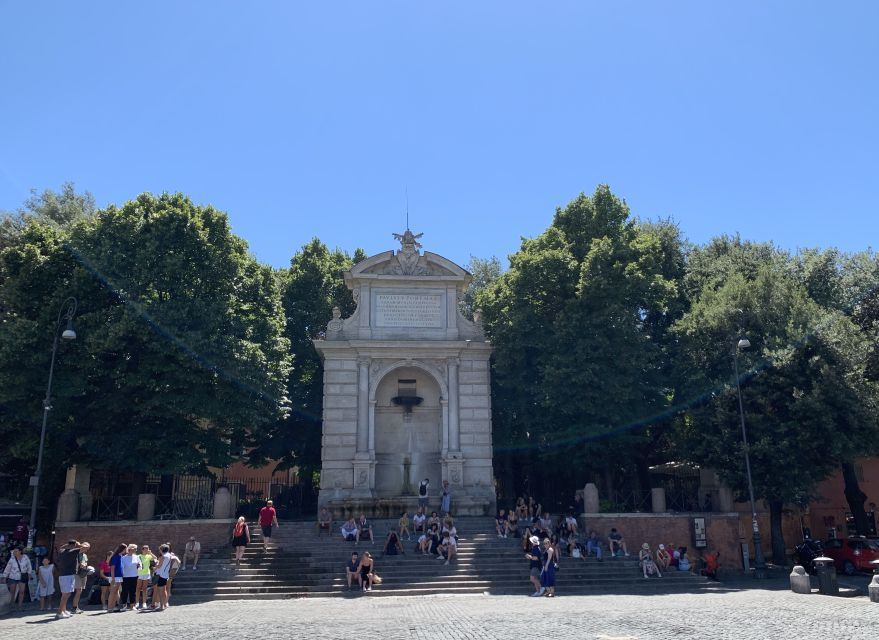
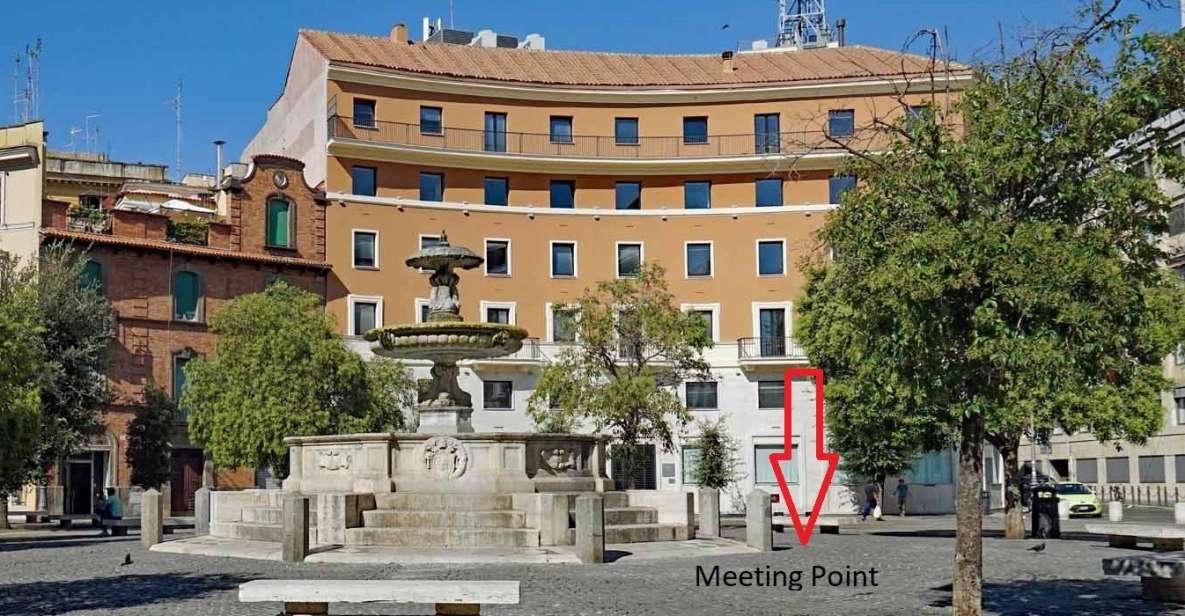
The whole experience kicks off at Piazza Mastai, where your guide waits about 15 minutes early. You’ll find them around the main fountain holding a sign with the tour name, so you can spot the group without playing guessing games.
This matters because it sets your rhythm. If you arrive a little early, you can get oriented, check the nearest exit streets for later, and then step into the walk feeling less rushed. It’s also the kind of start that works well even if you’re mixing this with other Rome plans.
You can also read our reviews of more tours and experiences in Rome.



Trastevere walk-ups: Piazza di Santa Maria in Trastevere
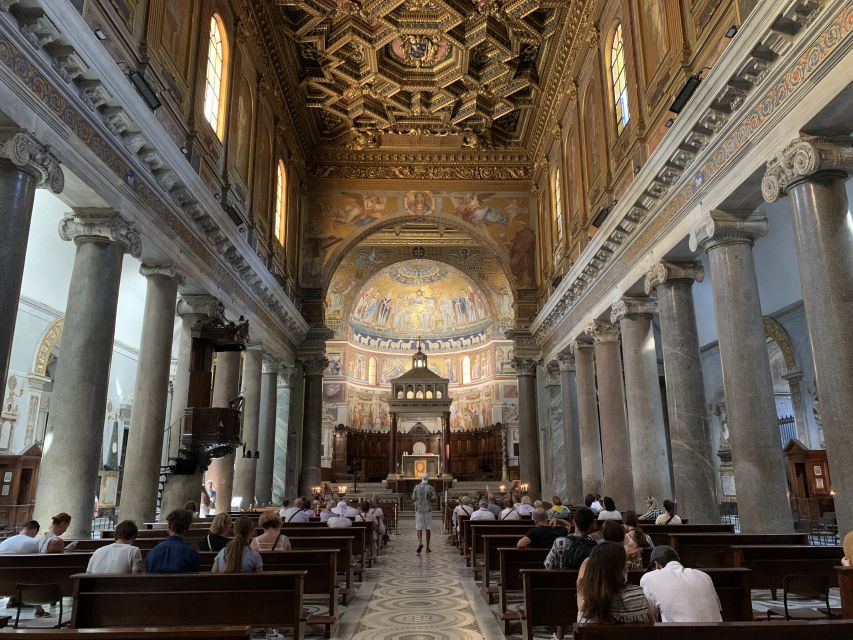
Your first major stop is Piazza di Santa Maria in Trastevere, where you’ll see the Basilica of Santa Maria, dating back to the 12th century. The standout here is the mosaics, plus a calm centerpiece fountain that gives you a brief breather before the streets get busy.
I like this stop because it’s not just a quick photo stop. You’re given enough time to look closely, notice details, and reset your brain for the rest of the walk. If you’re the type who usually rushes, slow down on this square—mosaics reward patience.
A practical note: this is one of those spots where the crowd can feel thick at certain times. If you want better photos, arrive ready to shift your position rather than trying to freeze in one spot.
Piazza Trilussa: street life with a named point of focus
Next is Piazza Trilussa, a square named for the satirical Roman poet Carlo Alberto Salustri, better known as Trilussa. This is where the tour shifts from architecture to everyday Rome.
You’ll get a feel for local street life—street performers and that lived-in energy you only get when you’re in the middle of neighborhoods, not just at the edge of them. The guide’s role is helpful here: instead of treating it like a backdrop, they connect the name and the place so you understand why it feels the way it does.
If you’re traveling with teens or picky parents who hate “standing and listening,” this is often the most watchable stretch because the square has movement. It also helps that the tour isn’t trying to cram too much into a single moment.
Campo de’ Fiori: a market square you’ll recognize later
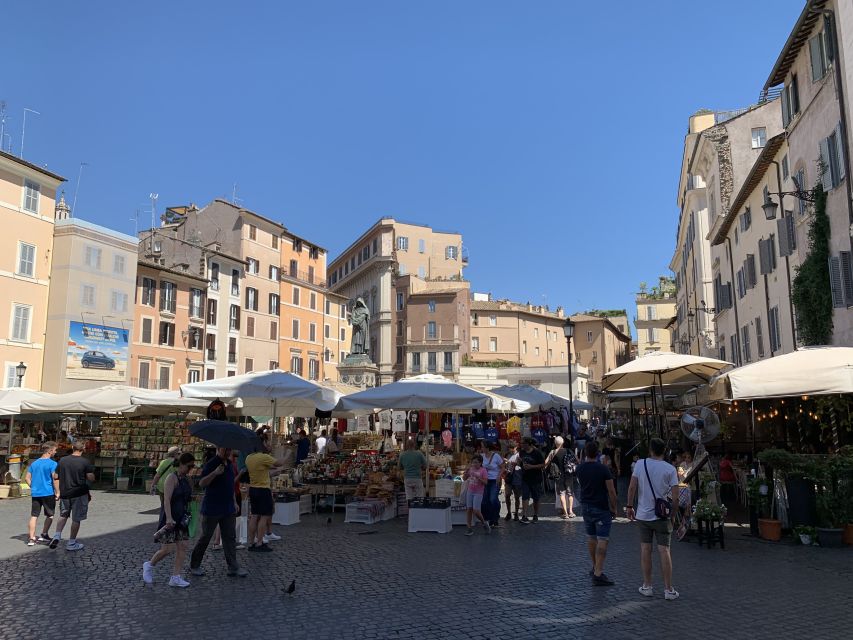
After Trastevere, you’ll reach Campo de’ Fiori, a square steeped in Roman life and market energy. It’s a good pivot point, too, because by the time you arrive here, you’ve already warmed up with neighborhood scenes and set your expectations for walking pace.
This stop can also turn into a practical break. One guide-built moment that people remember is time to grab coffee or juice in the market area. That’s not just convenience—it keeps your energy steady for the heavier historical section that follows.
Food-wise, it’s smart to treat it as optional. I’d consider it a “try a bite if it looks good” situation rather than a guaranteed meal. If something like an artichoke dish sounds tempting to you, it can be a worthwhile taste of Rome, even if your personal preferences run different.
Entering the Jewish Ghetto: learning how Rome changed
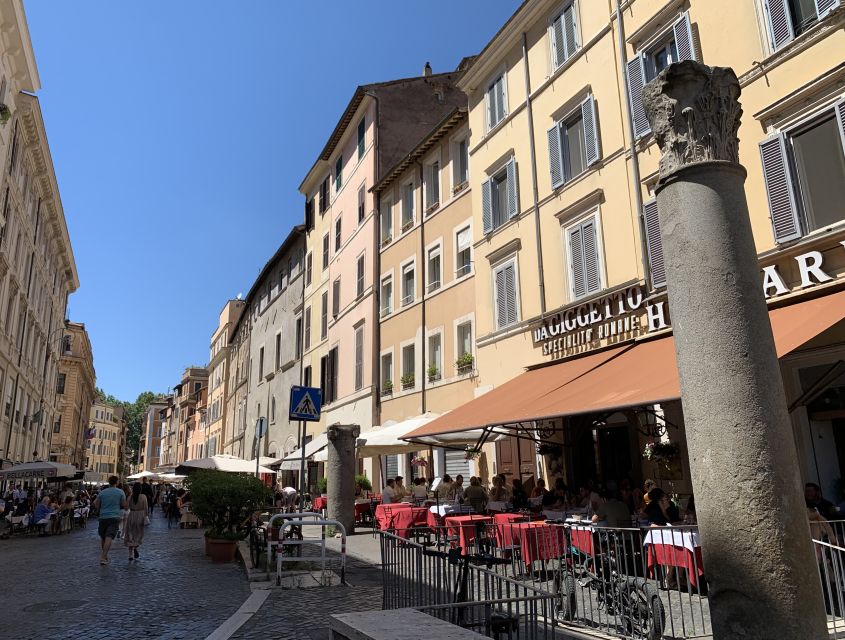
Now the tour turns serious as you enter the Jewish Ghetto area. This is where the stories matter most. You’ll hear about the long, difficult chapters the Jewish community faced here and how those experiences shaped what you see in the streets.
I like that the guide doesn’t keep it abstract. You’re in the actual area, so the lesson lands faster. You start noticing the scale of buildings, the closeness of streets, and how architecture can feel like history you can walk through.
This part is emotionally heavier, so keep your expectations realistic. The goal isn’t to make it dramatic; it’s to help you understand the depth behind the location so your next Rome stop doesn’t feel like just another stop on a checklist.



Great Synagogue of Rome: what the building symbolizes
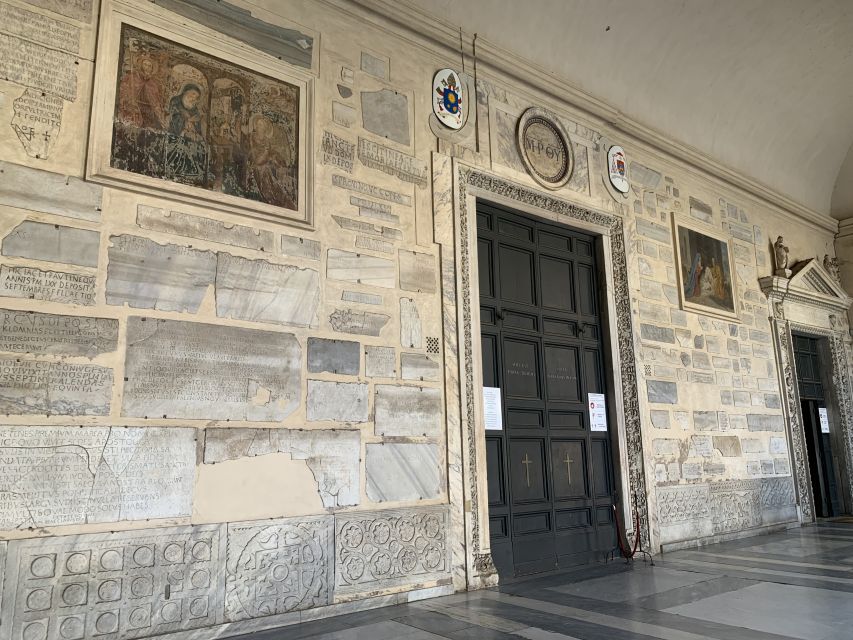
Inside the Ghetto segment, you’ll encounter the Great Synagogue of Rome, described as an architectural marvel tied to strength and resilience. Seeing it as part of the story changes how you read the façade and the surrounding space.
If you’re the type who likes cultural sites more than museums, this is a good fit. It’s not just artwork behind glass. It’s a living landmark connected to community history, and that makes it feel more immediate.
Timing helps here as well. Because the tour already covered Trastevere squares, you’re warmed up to the idea of places with names and meanings. The synagogue stop then lands like the final sentence in a longer paragraph.
Theatre of Marcellus: closing with Roman scale
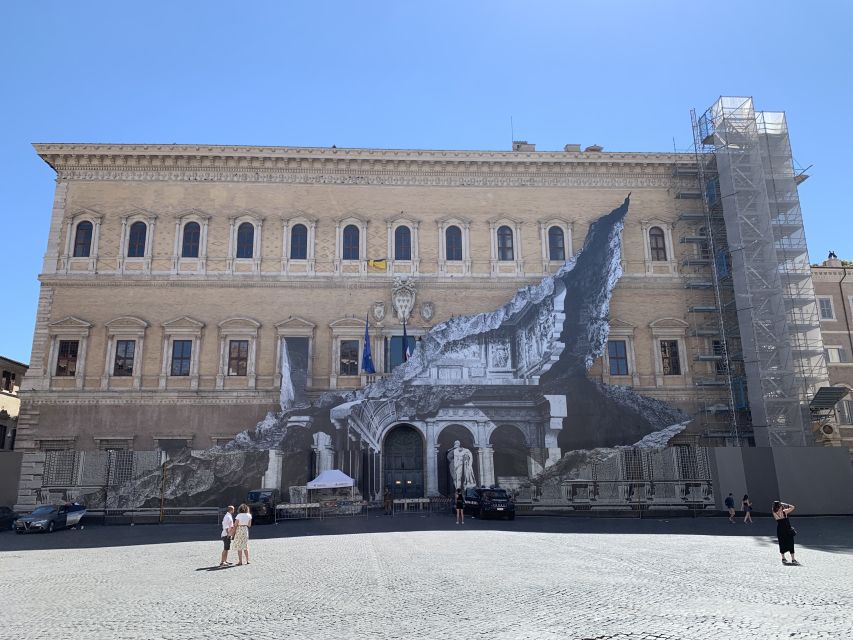
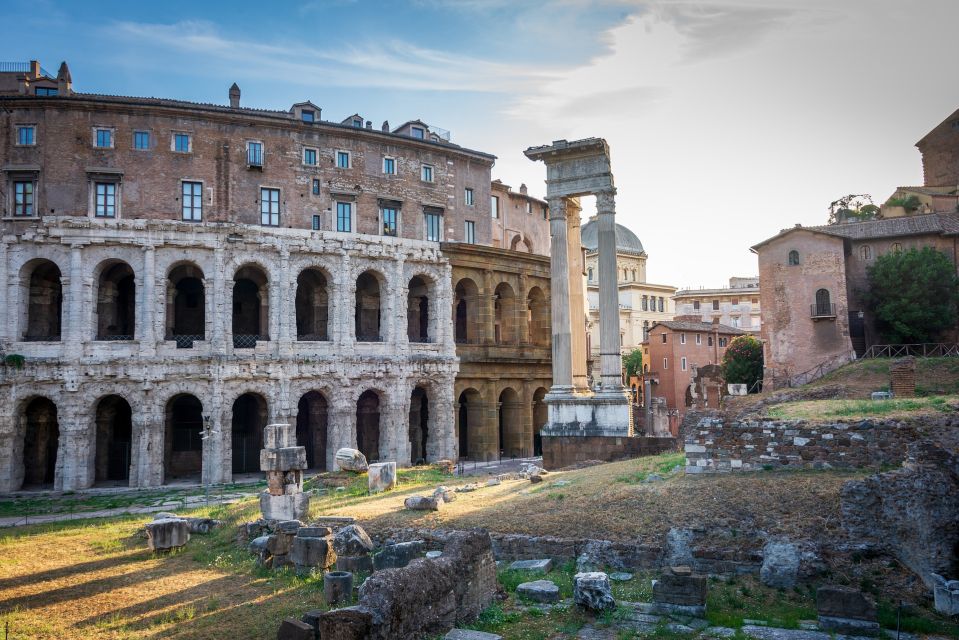
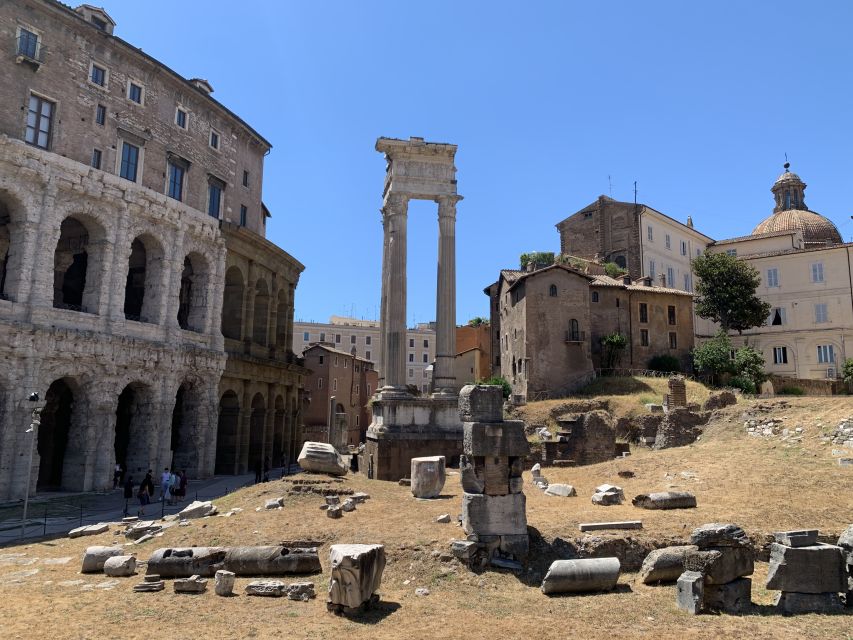
Your final destination is the Theatre of Marcellus, an ancient amphitheater dating back to 13 BC. This is a strong way to end because it gives you a visible sense of Rome’s age and ambition after the Ghetto segment brings the focus back to human stories.
I like ending here because it’s both Roman and calming in a different way. You’ve been through dense streets and a concept-heavy part of town; now you get open-air space and the feeling of scale. Even a short stop can make Rome’s timeline feel less theoretical.
If you want a quick capstone photo, aim for a spot where you can capture both the structure’s mass and the modern street setting around it. That contrast is the whole Rome experience in one frame.
How the 2 to 2.5 hours actually feels on your feet
At 2 to 2.5 hours, the walk stays in the sweet spot where you can do it without sacrificing your entire afternoon. The route uses short walking stretches between stops, including about 20 minutes at several key points, so you’re not stuck in one long march.
That said, consider your stamina. You’re moving through compact streets and squares where you’ll likely slow down for photos and explanations. Plan for it as a solid walking workout, not a gentle stroll.
If the group is larger than 10 people, you’ll get headsets, which is a smart quality-of-life inclusion in loud city spaces. Some people also note that smaller groups can make the experience feel more relaxed and conversational, so if you can choose a quieter time slot, it may help.
Guides make or break it: what to expect from the explanations
The tour is led by a live guide in Spanish, French, or English, and the difference between a good walk and a great one is usually the way the guide handles questions.
A few guide names you might see associated with this tour include Estefi, Cecelia, Celia (spelled that way in some cases), Cecilia, Estafania, Sarah, Fabiano, Giuseppe, and Giuseppe again in separate listings. The consistent theme: guides who keep things engaging, answer questions patiently, and help you connect the street scene to the backstory.
One practical touch that’s popped up in feedback is that guides may help with photos. If that matters to you, it’s worth arriving with enough battery and telling your guide what kinds of shots you want, like couple pics or family group photos.
Price and value: what $41 does and doesn’t cover
At about $41 per person for a walking tour around major landmarks, the value comes from two places: time and interpretation. You’re getting a structured route that covers Trastevere sights and the Ghetto segment plus a final ancient site, all in one guided block.
What you should expect to pay for separately: personal expenses like water you didn’t bring, any snacks you choose to buy, and any transport if you’re continuing elsewhere after. There’s no hotel pickup, so you’ll be responsible for getting to Piazza Mastai on your own.
In my view, this price makes sense if you want context. If you already know Roman Jewish history or can read your way through plaques easily, you might consider self-guiding. But if you prefer someone to connect names, dates, and architecture to what you’re seeing in real time, the guide fee is doing real work here.
Who should book this tour?
This works best for you if:
- You want two distinct Rome neighborhoods in one outing rather than piecemeal sightseeing
- You enjoy learning stories tied to real street spaces
- You like a guided pace that still leaves time to look around and take photos
It’s not the best choice if:
- You use a wheelchair or have mobility limitations that make frequent walking hard
- You need long sitting breaks or guaranteed restroom stops (the route info doesn’t promise that, and at least one comment suggests adding a WC stop would help)
Should you book the Rome Trastevere and Roman Ghetto guided walk?
If you’re excited by contrast—pretty streets in Trastevere paired with the truth of what happened in the Ghetto—book it. The route is short enough to fit your day, structured enough to keep you oriented, and guided enough to make you understand what you’re looking at instead of just passing through.
I’d book sooner if:
- You’re visiting for the first time and want a clear, guided introduction to both areas
- You’re traveling in English (or Spanish/French) and want real-time explanations at each stop
If you’re sensitive to heavy historical topics, go in prepared for a more serious segment in the Ghetto and consider whether that pacing fits your mood that day.
Bring water, wear good shoes, and arrive a few minutes early at Piazza Mastai. Then let the guide do what you can’t do alone: connect the stories to the stones.
FAQ
How long is the Rome: Trastevere and Roman Ghetto guided walking tour?
It lasts about 2 to 2.5 hours.
Where do I meet my guide?
Meet at Piazza Mastai, around the main fountain. Your guide will be holding a sign with the tour name and should be there about 15 minutes before the start.
What languages are available for the live guide?
The tour is offered in Spanish, French, and English.
Is the tour wheelchair accessible or suitable for people with mobility impairments?
No. The tour is not suitable for people with mobility impairments or wheelchair users.
Are headsets included?
Yes. Headsets are included if the group is more than 10 people.
What should I bring?
Bring water (and a reusable water bottle is suggested).
Which sights will I see on this walk?
You’ll visit Piazza Santa Maria in Trastevere (with the Basilica of Santa Maria), Piazza Trilussa, Campo de’ Fiori, the Jewish Ghetto including the Great Synagogue of Rome, and finish at the Theatre of Marcellus.
Is food included during the tour?
Food isn’t listed as included. That said, there can be a short moment to pick up coffee or juice in the market area during the walk.