REVIEW · ROME
Rome: Trajan Markets Experience with Multimedia Video
Book on GetYourGuide →Operated by TOURISTATION · Bookable on GetYourGuide
That shopping-mall idea is Roman.
This experience makes the ancient city feel tangible, starting with a short 25-minute video that reconstructs key monuments and then moving into the Trajan Markets archaeological complex. I like how the markets show Rome as a working place of commerce, not just a set of pretty ruins, and I also like the built-in museum stop with artifacts and amphorae that help you picture everyday life. One thing to consider: most of the site is outdoors and it is not suitable for wheelchair users, so wear shoes you can trust and plan for walking.
You also get extra context for free with a downloadable city app audioguide that includes 170+ points of interest, so you can keep connecting what you see to the bigger city picture as you go. It’s a smart way to do Rome at your own pace. The only real snag I’d watch for is ticket pickup timing if the counter is busy, since one guest reported slow ticket printing.
In This Review
- Key highlights you should not miss
- Getting oriented fast with the 25-minute Ancient Rome video
- Trajan Markets: the Roman shopping mall that actually made sense
- What to watch for while you walk
- The 17th-century cistern clue: one spot, many jobs
- Forums and trading points: Caesar, Augustus, Nerva, and Templum Pacis
- Fori Imperiali Museum: amphorae and artifacts that fill in the gaps
- How to spend your time inside
- Using the city app audioguide with 170+ points
- What you should do before you go
- Entrance, pacing, and the “how long will it really take” reality
- Price and value: what $37 buys you in this part of Rome
- Practical details: meeting point, what to bring, and what to avoid
- Who this experience suits best (and who should skip it)
- Should you book this Trajan Markets + Fori Imperiali Museum experience?
- FAQ
- How long is the Rome Trajan Markets experience?
- What’s included in the ticket price?
- Do I need to bring headphones?
- Where is the meeting point?
- Is food included?
- Is there a guided tour with a person?
- What should I bring besides my phone and headphones?
- Is the experience accessible for wheelchair users?
- What items are not allowed?
Key highlights you should not miss

- Trajan Markets: the Roman Empire’s commercial shopping center, laid out like a function-first complex
- Imperial-era city evolution: you’ll see how the area shifted roles over centuries, including a 17th-century cistern
- 25-minute multimedia Rome video: quick context before you step into the ruins
- 170+ point city app audioguide: listen while you walk and keep the city’s story organized
- Fori Imperiali Museum: amphorae and artifacts from different ancient cultures that add texture to daily life
Getting oriented fast with the 25-minute Ancient Rome video
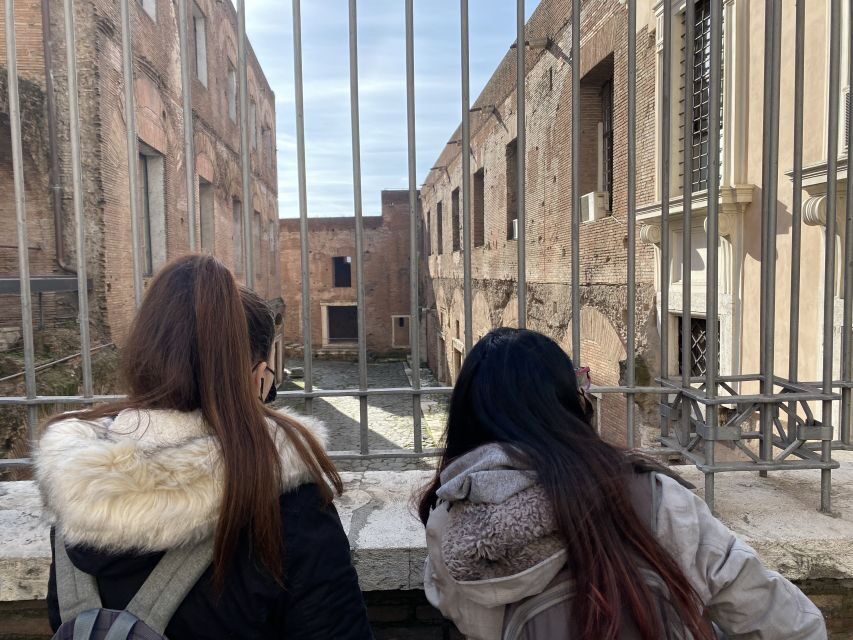
Rome can feel like a thousand fragments until someone hands you a clean timeline. That’s exactly what the 25-minute multimedia video does. Instead of asking you to mentally assemble emperors, forums, and streets while you’re already in the heat, it gives you a guided visual map of how Rome’s big monuments fit together.
The reconstruction focus matters. When you later stand in the Trajan Markets area, you’re not just looking at stone lines—you have a framework for what the space likely represented in the Imperial Age. This makes your visit feel less like a scavenger hunt and more like following an actual thread.
One practical tip: use this time to set your pace. If you tend to get distracted when you start reading signs, this video is your shortcut to staying on track. Then when you move outdoors, you’ll know what you’re trying to notice.
You can also read our reviews of more tours and experiences in Rome.



Trajan Markets: the Roman shopping mall that actually made sense
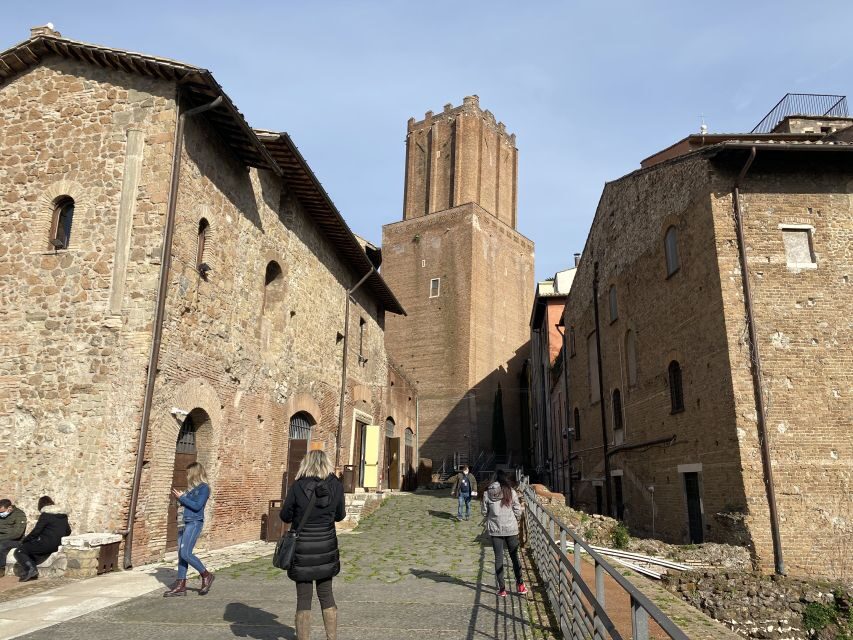
The Trajan Markets are not ruins that sit quietly in the background. They’re the commercial center concept, Roman style—built to be useful, not just impressive. You’ll explore the archaeological complex where people would have come to trade and meet, and that theme keeps showing up as you move around.
Here’s what I find most rewarding: the site helps you think about Rome as infrastructure. Markets weren’t a side activity. They were part of how an empire moved goods, money, and people. When you connect that idea to what you see—shops, public-facing spaces, and the sense of flow—it clicks.
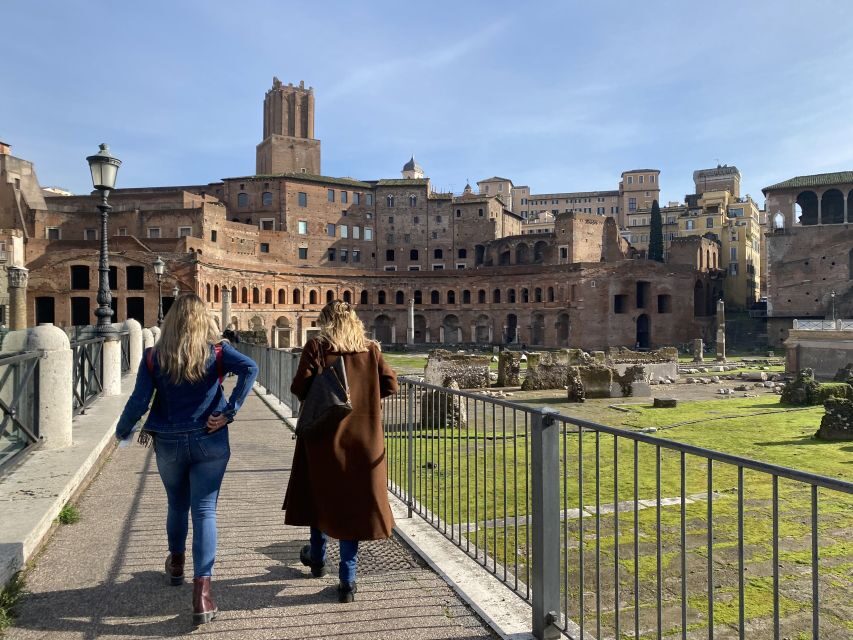
Also, the architecture gets more interesting once you notice shape and layout. A guest highlighted the semi-circle feel of the Trajan Markets design, and I’d agree it matters. Design like that isn’t random. It suggests intentional planning for movement and frontage, so you’ll get more out of the visit if you slow down just a bit and look at how spaces curve and align.
What to watch for while you walk
You’ll likely spend your time outdoors around the complex, with a mix of visible structures and interpretive elements. Your best strategy is to watch for:
- How the space relates to the forums and trading zones nearby
- The way different areas look reused or repurposed across time
- Any clear hints of practical water, storage, or circulation functions
That last point connects to the next part of the experience: the site’s long life.
The 17th-century cistern clue: one spot, many jobs
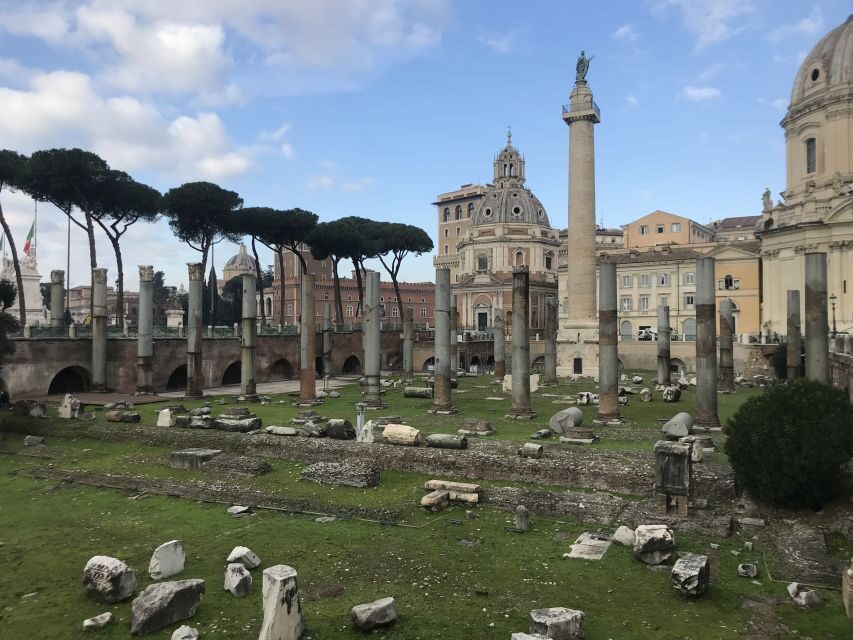
One of the more fascinating lessons here is that this area did not stay frozen in Roman glory. You’ll see remains of a 17th-century cistern, which is a reminder that sites in Rome keep getting reused and reimagined.
That single detail does a lot of work for your understanding. It tells you the ground beneath you has been valuable for centuries, not only during the Roman Empire. It also helps you interpret why some elements feel different from the others—because the purpose of the area kept changing.
If you like history that feels concrete instead of just theoretical, this is a good stop. The cistern evidence is the kind of thing that turns abstract “layers of time” into something you can actually point at.
Forums and trading points: Caesar, Augustus, Nerva, and Templum Pacis
As you explore the markets, you’ll discover nearby forum areas that served as trading and meeting points, including Caesar’s Forum, Augustus’ Forum, Nerva’s Forum, and the Templum Pacis.
Even if you’ve seen pictures of these places, this kind of visit is different because the markets act like your basecamp. You can understand how commerce and politics braided together. People didn’t just shop and then go home; they moved through the city where power and public life were visible.
Here’s how to get value out of this segment: treat it like spatial storytelling. Don’t just memorize names. Instead, look for what kind of role each forum likely played:
- Trading and gathering spaces (where deals happen and news travels)
- Monument-driven public areas (where identity and authority get displayed)
- Links between religious, civic, and commercial life
If you do that, the stops stop being a list and start being a picture.



Fori Imperiali Museum: amphorae and artifacts that fill in the gaps
After the outdoor walking, the Fori Imperiali Museum gives you something many ruin visits lack: material detail. You’ll see a collection of artifacts from ancient cultures, including amphorae, which are essential for understanding daily life. Food storage, transport, and trade all connect to amphora shapes and markings—even when you’re only seeing fragments.
This museum stop is valuable because it reduces guesswork. Outside, you’re trying to imagine commerce from architecture and placement. Inside, you can anchor that imagination to actual objects. The result is a more complete mental movie.
How to spend your time inside
Museums can tempt you to rush. I’d resist that. Instead:
- Look at the amphoraes first, since they tie directly to trade and travel.
- Then shift to the broader artifacts to understand the range of cultures represented.
- Finally, connect those objects back to the markets you just walked through.
It takes a little effort, but it’s how the whole day feels coherent.
Using the city app audioguide with 170+ points
This is one of the smartest parts of the experience. You download a city app audioguide on your phone with more than 170 points of interest. That means you can keep the context rolling while you’re walking, rather than stopping to read a stack of notes.
You don’t have to use every point. The value is that you can pick the ones that match what you’re seeing in that moment. If you’re the type who likes to learn by matching sights to explanations, this app helps you keep that rhythm.
What you should do before you go
- Bring a charged smartphone
- Bring headphones (you’ll want them)
- Keep your phone handy but protect it from the usual Rome-day chaos: dust, crowds, and slipping it into a pocket fast
If you’re traveling with friends, it’s also a good way to avoid argument-by-interpretation. You can both listen to the same nearby point and compare notes without needing a live guide.
Entrance, pacing, and the “how long will it really take” reality
The activity is listed as lasting 1 day, with the video and museum included. In practice, you should think of it as a half-day core with extra time for app stops and wandering inside the museum space.
You’ll want to plan your day with walking comfort in mind. The shoes advice is not fluff. Rome stone can be unforgiving, and the experience is not set up like a slow, seated lecture.
Also consider that a guest reported a slow ticket-printing process and a complex procedure at the station window. I can’t claim it happens every time, but you’ll be in the safest place if you arrive early enough to handle waiting without stressing.
Price and value: what $37 buys you in this part of Rome
At $37 per person, this is a pretty solid deal if you use the included media and don’t treat the app like an afterthought. You’re getting:
- A 25-minute Ancient Rome video
- Entry to Trajan Markets
- Entry to Fori Imperiali Museum
- Downloadable city app audioguide (170+ points)
- Assistance at the meeting point
The value comes from the combination. Many Rome experiences either go heavy on a single site or go heavy on a guided explanation. Here you get both: a structured start (video), a self-paced “listen while you walk” tool (app), and a museum stop that adds objects to the story.
The tradeoff is that a guided tour is not included. If you prefer a person with a microphone leading your every step, you might want to pair this with a separate guided option. If you like independent learning with support tools, this format is a good match.
And yes: food and drinks are not included. This is important because it means you should plan a snack or meal outside the experience. Don’t rely on finding something convenient right when you finish the museum.
Practical details: meeting point, what to bring, and what to avoid
You start at the Touristation Aracoeli Office at Piazza d’Aracoeli 16, near Piazza Venezia. Look for the orange Touristation flags. There’s a fountain right in front of the office entrance, which makes it easier to spot.
Bring:
- Your passport or ID card
- Comfortable shoes
- Headphones
- A charged smartphone
Not allowed:
- Pets
- Weapons or sharp objects
- Luggage or large bags
- Drones
- Alcohol and drugs
- Sprays or aerosols
- Glass objects
Not suitable for wheelchair users, so plan another route or choose a different kind of Rome visit if mobility is a concern.
Who this experience suits best (and who should skip it)
This works well if you:
- Want to understand the Roman Empire through commerce and public spaces, not just temples and statues
- Like using technology for learning in the moment (phone app + headphones)
- Prefer a structured start (video) but a flexible walk afterward
- Enjoy museum objects that help you visualize how ancient life worked
It may not be your best choice if you:
- Need full wheelchair accessibility
- Want a live guide explaining everything in real time
- Don’t like app-based learning or you’re uncomfortable relying on your phone battery
If you fall in the first group, this is one of those day plans that feels efficient without feeling rushed.
Should you book this Trajan Markets + Fori Imperiali Museum experience?
If you’re building a Rome day around the Imperial-era core and you want a mix of architecture, a focused museum, and built-in learning tools, I’d say it’s worth booking. The combination of the video context plus the 170+ point app helps you make sense of what you’re seeing, and the museum artifacts—especially amphorae—add real “this is how it worked” weight to the story.
If you hate waiting in ticket lines, show up early. If you need wheelchair-friendly access, pick another option. For everyone else who likes independent exploration with smart support, this one is a good value way to understand Rome as a place of trade, movement, and reuse across centuries.
FAQ
How long is the Rome Trajan Markets experience?
It’s scheduled for 1 day, with a 25-minute multimedia video included at the start.
What’s included in the ticket price?
You get the 25-minute Ancient Rome video presentation, Trajan Markets entrance, Fori Imperiali Museum entrance, a city app audioguide download for your smartphone, and assistance at the meeting point.
Do I need to bring headphones?
Yes. You should bring headphones and a charged smartphone for the app audioguide.
Where is the meeting point?
Meet at the Touristation Aracoeli Office at Piazza d’Aracoeli 16, near Piazza Venezia. Look for the orange Touristation flags, and there is a fountain in front of the office entrance.
Is food included?
No. Food and drinks are not included.
Is there a guided tour with a person?
No. A guided tour is not included.
What should I bring besides my phone and headphones?
Bring a passport or ID card and comfortable shoes.
Is the experience accessible for wheelchair users?
No. It is not suitable for wheelchair users.
What items are not allowed?
Pets, weapons or sharp objects, luggage or large bags, drones, alcohol and drugs, sprays or aerosols, and glass objects are not allowed.