REVIEW · GUIDED
Rome Tour with Drive Guide
Book on Viator →Operated by Carratonitours · Bookable on Viator
Rome, minus the stress.
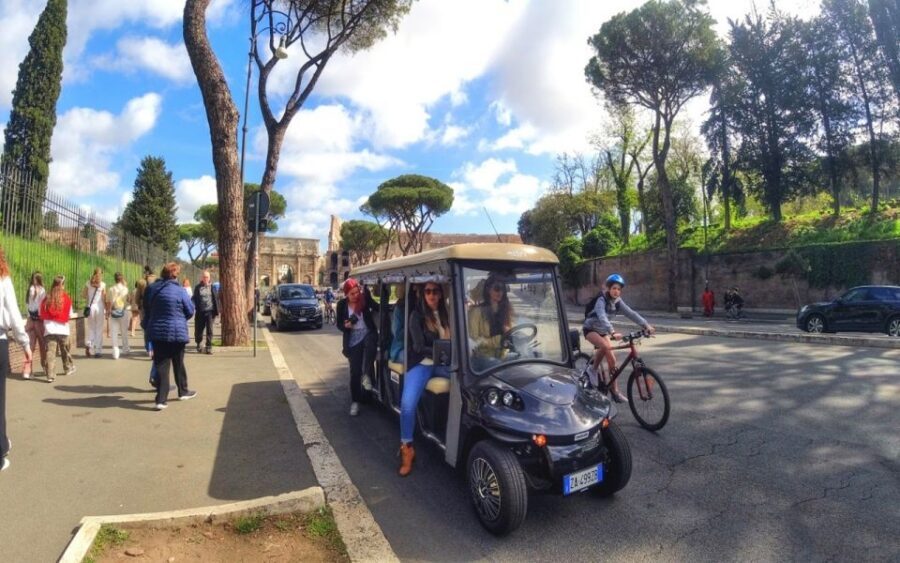
This Rome day is built for comfort and momentum: an air-conditioned minivan gets you into UNESCO-listed Rome without wrestling public transport. You’ll also have a licensed drive-guide who can share historical and cultural context and answer questions as you go. It’s the kind of setup that helps you see a lot while still feeling human about it.
I like the practical “door-to-sight” flow, especially if you’re starting from the port. The route also hits major landmarks with admission tickets marked free at every stop, so your focus stays on what you’re seeing rather than ticket logistics. One catch: the schedule is quick at each location, with many stops getting about 20–30 minutes, so you’ll need to move at a sightseeing pace. And for St. Peter’s area, plan for a dress code that covers shoulders and knees.
In This Review
- Key things to love about this Rome drive-guide day
- From Civitavecchia to Rome in comfort (and why that’s a big deal)
- How an 8-hour route keeps Rome doable
- Stop 1: Circus Maximus — chariots, crowds, and scale
- Stop 2: Vittoriano (Altare della Patria) — modern Rome’s statement
- Stop 3: Trajan’s Forum — war spoils turned into power
- Stop 4: Trevi Fountain — the famous scene, handled smart
- Stop 5: Piazza di Spagna — Spanish Steps area in one sweep
- Stop 6: Piazza Navona — from ancient stadium to public plaza
- Stop 7: The Pantheon — the best-preserved Roman building
- Stop 8: St. Peter’s Square — big church energy, real dress code
- Price and Logistics: what you’re really paying for
- Who this Rome drive-guide tour suits best
- Should you book it?
- FAQ
- Is pickup included?
- What language is the tour guide?
- How long is the experience?
- Is this a private tour?
- Are admissions included?
- What should I wear for St. Peter’s Square?
- What is the cancellation policy?
Key things to love about this Rome drive-guide day
- Air-conditioned, point-to-point transport from the port area in Civitavecchia to central Rome and back
- Licensed drivers with historical notes who can explain what you’re looking at and answer questions
- Free-entry stops throughout (according to the tour’s listed admission info) so you can spend time sightseeing
- Private group experience where only your group participates
- A fast, focused route designed to cover famous Rome in one working day
- Dress code matters for places of worship and selected museum areas, including covering knees and shoulders
From Civitavecchia to Rome in comfort (and why that’s a big deal)
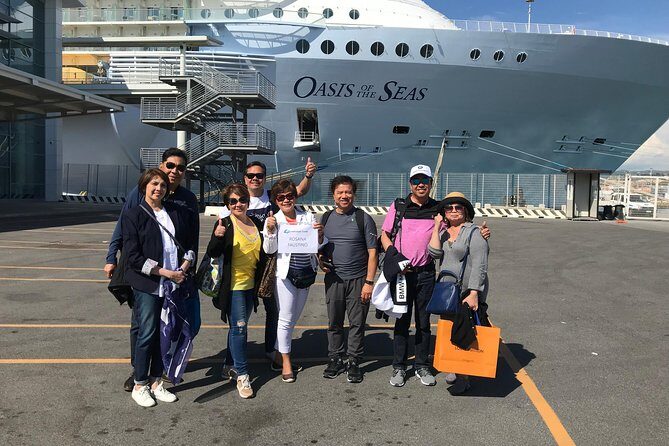
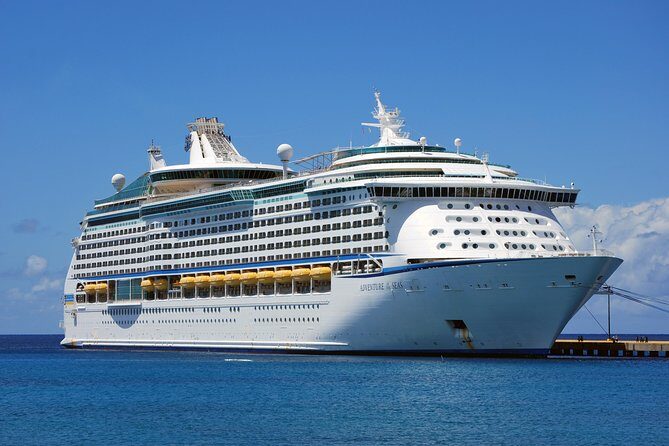
If your travel day starts with a port in Civitavecchia, logistics can eat your time fast. This tour solves that with round-trip transport and a ride in an air-conditioned minivan, so you’re not dealing with transfers, crowds, or long walks in the middle of your sightseeing window. In a city like Rome, that comfort isn’t a luxury. It’s time-saving.
I also like that the day is English-friendly, with pickup offered and a mobile ticket included. That makes it easier to keep things straightforward—especially if you’re trying to fit Rome into a port schedule.
The “private” part matters too. A private drive-guide can respond to what your group cares about. If you want more photo time at one spot, you can usually ask. If you’re tired, you’re not stuck in a rigid script meant for everyone.
You can also read our reviews of more guided tours in Rome



How an 8-hour route keeps Rome doable
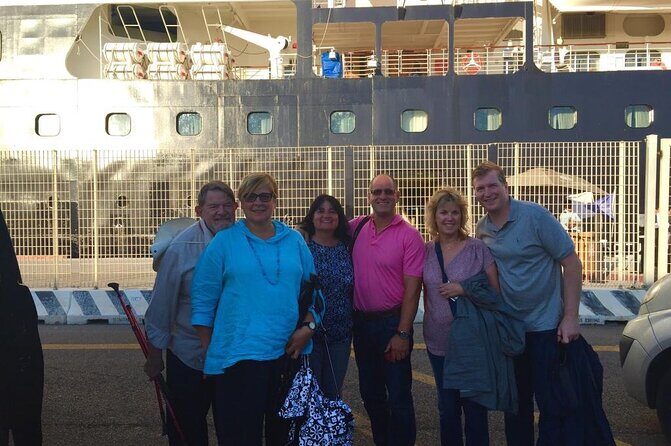
This is an all-in-one-day route. Expect many stops that are short and focused, usually 20–30 minutes each. That means you won’t get “stay for hours” depth at every site. But you will get strong orientation: where landmarks are, what they were for, and how they connect.
That’s a smart strategy when you’re in Rome for a limited window. I think of it like a guided map in motion. You see the big ones, you learn what they mean, and you can always come back later for the slower, deeper visits—especially if Rome hooks you (it tends to).
Also, because the route uses car access between sights, you should spend less time buffering in traffic or searching for the closest bus stop. Rome is not the city to “wing it” when your time is scheduled.
Stop 1: Circus Maximus — chariots, crowds, and scale
You’ll start at Circus Maximus, the ancient chariot racetrack. This site stretches the imagination because it was built first in the 6th century BCE, and it later hosted Roman Games and gladiator-type public events. The use of the circus for chariot races lasted into the 6th century CE, so you’re looking at layers of long-term spectacle.
You only have about 20 minutes here, so the goal isn’t to memorize every detail. It’s to get the scale right. When you picture Rome as a massive entertainment machine—games, crowds, public show—Circus Maximus helps.
Practical note: bring your best “short-stop mindset.” You’ll get more from asking your driver one or two focused questions than from trying to study everything yourself in a hurry.
Stop 2: Vittoriano (Altare della Patria) — modern Rome’s statement
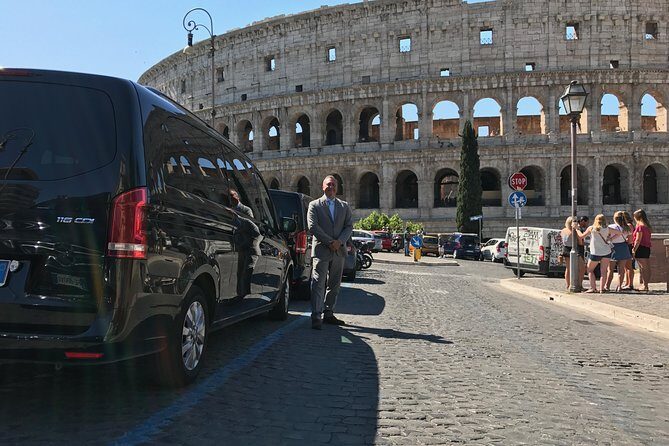
Next is the Vittoriano, formally called Monumento a Vittorio Emanuele II, also known as Altare della Patria. This monument was built between 1895 and 1927 in honor of Victor Emmanuel II, the first king of unified Italy. It sits in Piazza Venezia, so you’re in a location that also works as a viewing crossroads.
You get about 30 minutes. That’s enough to understand what you’re looking at and capture photos from the right angles. The driver can help connect the monument’s purpose to the broader story of Italy’s unification—without making you sit through a lecture.
This is also a good stop to reset your bearings. After Circus Maximus, it helps to move into a different “era feel.” Vittoriano is more modern and political compared to the ancient race track.
Stop 3: Trajan’s Forum — war spoils turned into power
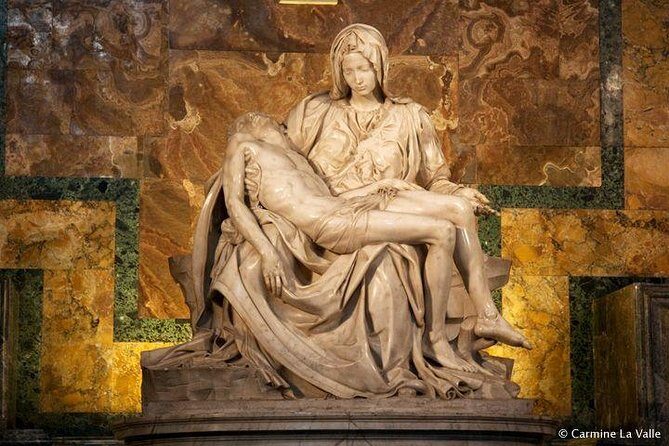
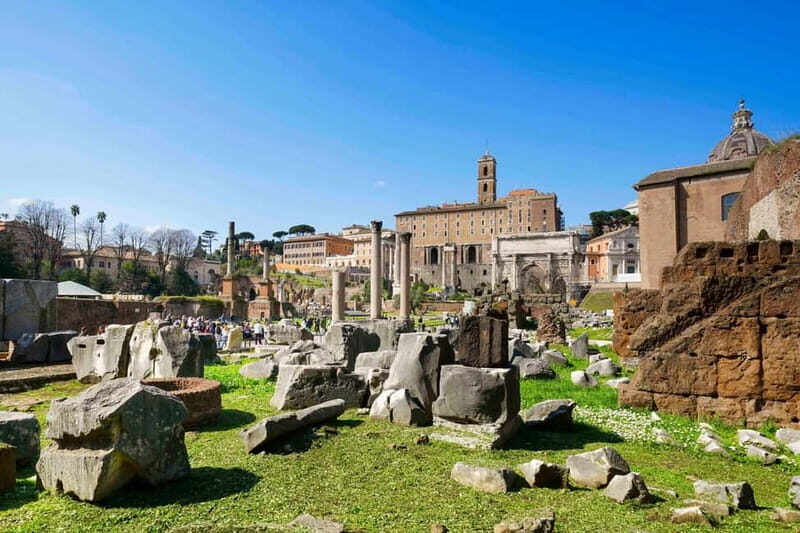
Then you head to Foro di Traiano (Trajan’s Forum). This is the kind of place where the details matter, because it was built on the emperor Trajan’s order, tied to spoils from the conquest of Dacia. Sources place key dates around 106 for the conquest connection, with inauguration of the forum around 112, and Trajan’s Column erected and inaugurated around 113.
You’re there for about 30 minutes, which is perfect for a guided “what you’re seeing” overview: how conquest becomes architecture, how Rome displayed authority, and how visitors once moved through imperial space.
If your group is into Roman engineering, symbolism, or how empires project control, you’ll likely appreciate this stop more than you expect. You don’t need long hours to understand the big idea—just time to look.



Stop 4: Trevi Fountain — the famous scene, handled smart
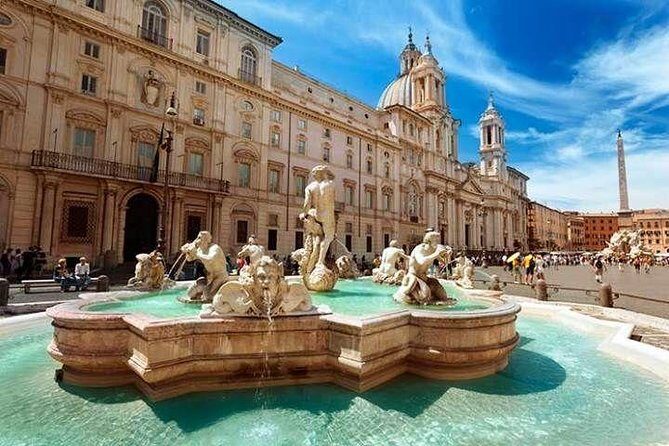
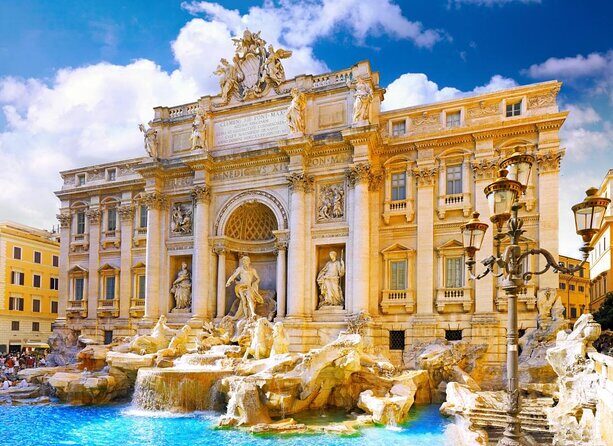
Fontana di Trevi is easily one of the most recognizable places in the world. It’s a large Baroque fountain—26.3 meters tall and 49.15 meters wide—and it was designed by Nicola Salvi and completed with help from Giuseppe Pannini and others.
Your stop is about 30 minutes, and the tour lists admission as free. That’s good because it keeps you focused on the spectacle instead of budget math.
What to watch for: the fountain’s sheer scale. It’s not just a photo backdrop. It’s an architectural statement made for public viewing. You’ll also likely notice how many angles you can shoot from depending on where your car drops you off and where you can cross safely.
If you want a smoother experience at Trevi, be ready to share space with other people and keep your group moving as a unit. Short stops can feel calmer when everyone knows the plan: look, photo, regroup, go.
Stop 5: Piazza di Spagna — Spanish Steps area in one sweep
Piazza di Spagna sits at the bottom of the Spanish Steps and is one of Rome’s most famous squares. The name comes from the Palazzo di Spagna, which was the seat of the Spanish embassy to the Holy See. Nearby is the Column of the Immaculate Conception of the Blessed Virgin Maria.
You’ll have about 25 minutes. That’s enough time to absorb why it’s famous and to get a feel for how this neighborhood frames one of Rome’s most photogenic “walk up” sights.
This is also a good “break stop.” After heavy history stops, you get open space. It’s a chance to reposition your feet, grab water if you need it (drinks aren’t included), and reset.
Stop 6: Piazza Navona — from ancient stadium to public plaza
Piazza Navona is built on the site of the Stadium of Domitian from the 1st century AD. It follows the open space shape of that stadium. The ancient Romans went there for games, called agones, and over time the name evolved—eventually to Navona.
You’ll spend about 20 minutes. That’s short, but Piazza Navona is very readable. Even in a quick visit, you can connect the idea of ancient arena-to-modern plaza. The space practically invites you to imagine crowds and performances.
Practical tip: wear shoes you can move in. Piazza Navona is full of people doing the same photo dance, so you’ll walk and weave more than you think.
Stop 7: The Pantheon — the best-preserved Roman building
The Pantheon is a temple-turned-masterpiece. It originally served as a temple to the gods of Ancient Rome, then was rebuilt about 126 AD during Hadrian’s reign. Today, it’s often described as the best preserved of all Roman buildings.
Your stop is about 20 minutes, and the tour lists admission as free. With that, you should be able to see the building without paying an extra ticket at this stop.
What makes the Pantheon so satisfying is how it’s both simple and mind-blowing. Even for people who don’t obsess over architecture, the scale and form do the convincing. In a short time, you’ll want to focus on the structure’s overall proportions and the way the space feels.
Dress code reminder: the Pantheon itself isn’t a worship-only site in the same way as St. Peter’s area, but the tour does state a dress code is required for places of worship and selected museums. For a day with both ancient sites and sacred ones, it’s safest to dress for the stricter moment.
Stop 8: St. Peter’s Square — big church energy, real dress code
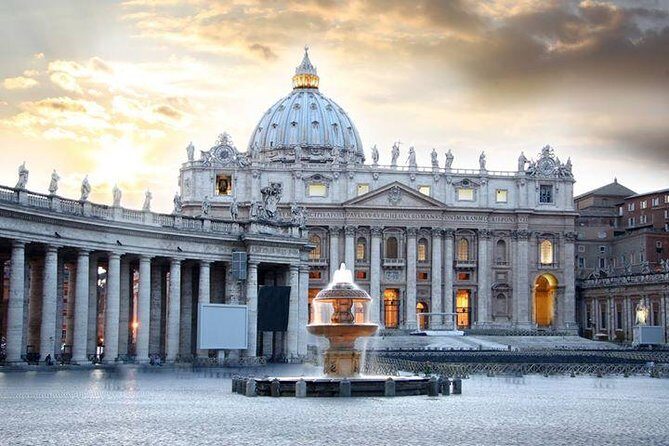
You end at St. Peter’s Square, the center of Christianity, with St. Peter’s Basilica nearby (the world’s largest church is mentioned in the tour description). The basilica was built over more than a hundred years by major Italian architects.
You’ll have about 30 minutes. This is where the tour’s dress code becomes non-negotiable. Knees and shoulders must be covered for both men and women. No shorts or sleeveless tops. If you don’t comply, you risk being refused entry.
This stop is also a great place to slow down a little and just take in scale. It’s the kind of space that makes Rome feel like Rome. You can hear the movement of crowds, feel the openness, and appreciate why so many people keep coming back here—even after seeing plenty of ruins.
Price and Logistics: what you’re really paying for
At $473.17 per person for an approx. 8-hour day, you’re not paying only for entry fees. The value here is transportation and a guide who can explain while driving between stops. The tour includes all taxes, fees, and handling charges, plus transport by an air-conditioned minivan.
Meals and drinks are not included, so budget for lunch on your own. The tour description also notes alcohol is available to purchase, but you’ll be paying out of pocket. That’s common for Rome day tours, but it matters: Rome days can run long, and finding food takes time.
Now, the private aspect affects value. If your group can share the ride cost efficiently, you often come out ahead of cobbling together public transport plus multiple guided services. The tour also lists group discounts, which suggests the per-person price can improve when more people are involved.
Two guide examples show you the kind of experience that can make this worth it: a driver named Michelangelo is described as funny, personable, attentive about dropping you close to sights, and even making music part of the day for young girls. Another guide, Mauricio, is described as picking people up right on time from the port, then driving them around Rome all day long while reserving a lunch spot and dropping them off closer than other car access would allow.
You don’t need those exact names to benefit from the concept. But they hint at what to look for: a driver who actually helps you get where you’re going and keeps the day smooth.
Who this Rome drive-guide tour suits best
This tour is a strong match if you:
- want a one-day hit list of major Roman landmarks with context
- dislike public transport complexity, especially from a port schedule
- prefer a private experience where your guide can answer questions
- want free-entry stops so your time goes to sightseeing, not ticket errands
It may be less ideal if you:
- want long, slow visits where you can linger for hours at one site
- need lots of museum-style time inside multiple buildings (the schedule is tight)
- show up without planning for shoulder and knee coverage for St. Peter’s area
Should you book it?
I’d book this Rome drive-guide day if you’re trying to make one limited window count and you want transportation that’s comfortable and stress-reducing. The mix of ancient giants (Circus Maximus, Trajan’s Forum, the Pantheon) with modern Rome’s statement (Vittoriano) plus the sacred finale (St. Peter’s Square) gives you a well-rounded snapshot.
Just go in with the right expectations: this is about momentum and orientation, not marathon pacing. If you’re okay with short stops and you plan your outfit for the dress code, this can be a very efficient and enjoyable way to see Rome in a single day.
FAQ
Is pickup included?
Yes. Pickup is offered, and the tour highlights hassle-free round-trip transport from the port in Civitavecchia.
What language is the tour guide?
The tour is offered in English.
How long is the experience?
It’s listed as approximately 8 hours.
Is this a private tour?
Yes. It’s described as a private tour/activity, and only your group will participate.
Are admissions included?
The stops listed show admission tickets as free, and the tour includes all taxes, fees, and handling charges. Food, drinks, and alcohol are not included.
What should I wear for St. Peter’s Square?
A dress code is required for places of worship and selected museums. No shorts or sleeveless tops. Knees and shoulders must be covered, or you risk being refused entry.
What is the cancellation policy?
Free cancellation is available up to 24 hours in advance for a full refund. If you cancel less than 24 hours before the start time, the amount paid won’t be refunded.