REVIEW · GUIDED
Rome: The Ancient Aqueducts of Rome Guided Tour
Book on GetYourGuide →Operated by Visit Rome · Bookable on GetYourGuide
Stone arches tell Rome’s real story. I love the chance to trace four aqueducts in Aqueduct Park, and I love the small-group pace that lets you ask questions and get clear answers from the guide, like Ricardo or Giuseppe. One catch: this is a solid 3–4 km walk, so comfortable shoes and a steady pace matter.
This 2-hour guided walk takes you off the main Rome circuits and into a quieter pocket where locals seem to do their daily wandering. You’ll follow the logic of Roman water engineering step by step—arches, channels, and stonework you can actually get close to for photos and a better sense of scale. It also ends where you started, near the Giulio Agricola metro stop.
In This Review
- Key things that make this tour worth your time
- Aqueduct Park: the Rome most people skip
- Starting at Giulio Agricola: quick, simple, and walk-first
- The aqueduct system in plain terms: why arches mattered
- Marcio Aqueduct: seeing engineering where it actually lives
- Claudio Aqueduct: the story gets sharper
- Anio Vetus Aqueduct: the arches and the scale lesson
- Aqueduct Park vibe: photos, close viewing, and a slower side of Rome
- Mariana Canal and Pope Sixtus V: the papal twist you didn’t expect
- What happens after the arches: local Roman food stop
- Price and value: what $147.27 buys you
- Who should book this aqueduct tour
- Should you book it?
- FAQ
- Where is the meeting point?
- What time does the tour start?
- How long is the tour?
- How much walking is involved?
- Is a guide provided, and what language?
- What’s included in the ticket price?
- Is food included?
- Is hotel pickup and drop-off included?
- Is the tour suitable for wheelchair users or people with mobility impairments?
- What’s the cancellation policy?
Key things that make this tour worth your time
- Four aqueducts in one session: Marcio, Claudio, and Anio Vetus plus Aqueduct Park areas
- A local-leaning setting in a park that feels less tour-bus packed
- Real water-engineering lessons: how long channels on arches brought water to the city
- Big-picture history you can picture including how the city’s water supply was targeted
- A neat papal detour via the Mariana Canal, ordered by Pope Sixtus V
- A guided photo trail so you know what you’re looking at, not just what you’re seeing
Aqueduct Park: the Rome most people skip
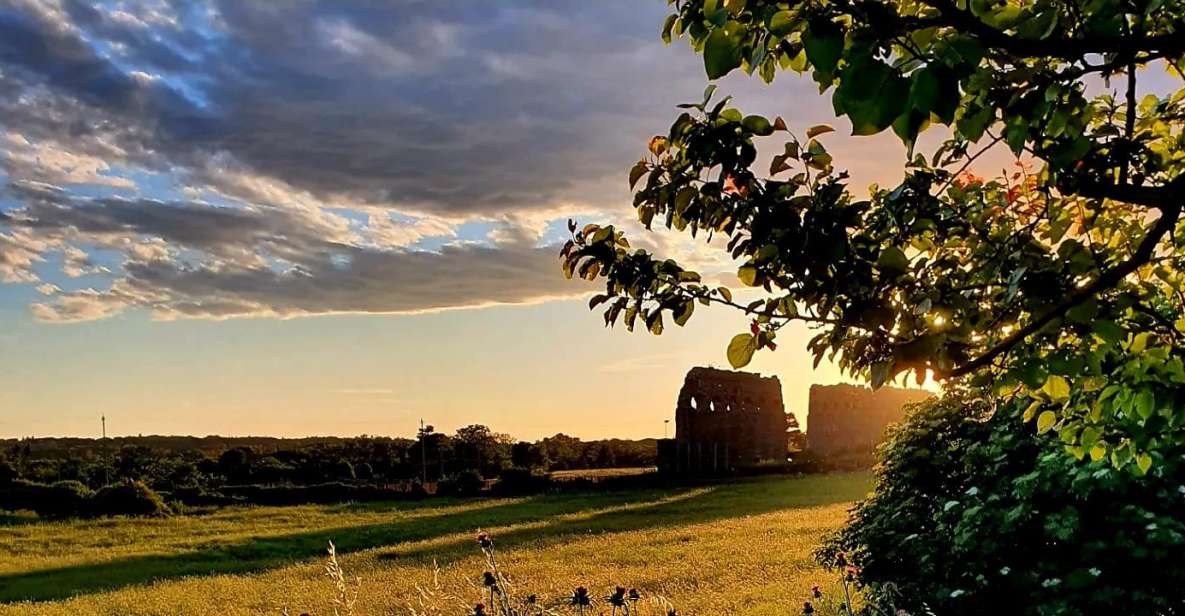
Rome’s postcard sights are loud for a reason. But the aqueducts are a different kind of impressive—quiet stonework that made the entire city function. On this tour, I like that you’re not asked to admire from far away. You move along the structures and learn what they were built to do: carry water across distance, reliably, using gravity and large-scale planning.
What makes Aqueduct Park special is how “everyday” it feels once you’re there. This is the kind of place where you can look at ancient engineering and also notice Rome-life going on around it. That mix helps the aqueducts stop being a museum label and start feeling like infrastructure—because that’s what they were.
And yes, you’ll be walking. Expect about 3–4 km during the tour, on mostly outdoor paths. Bring weather-appropriate clothes and plan for normal city walking friction—uneven surfaces and the need to stay on the path.
You can also read our reviews of more guided tours in Rome



Starting at Giulio Agricola: quick, simple, and walk-first
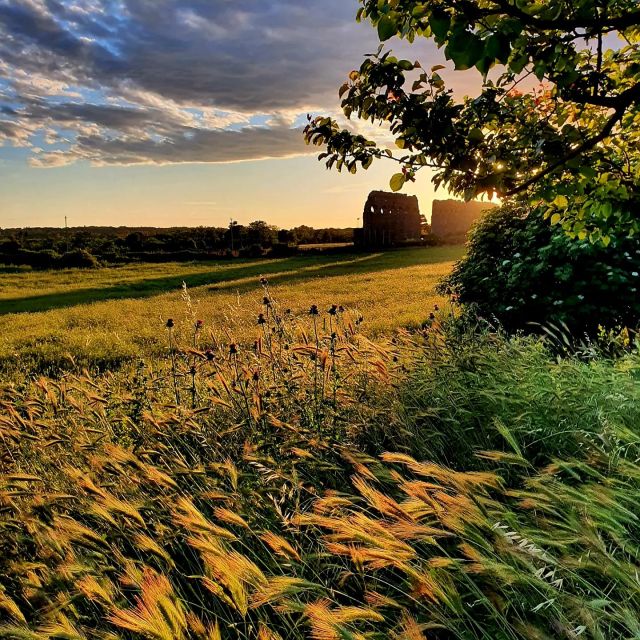
You meet at the subway Giulio Agricola exit. Specifically, it’s at the corner with via Tuscolana, in front of the ODS store. The tour runs in English with a live guide, and it’s small group by design, which usually means you’re not stuck listening over a crowd roar.
The timing is straightforward: it’s a 2-hour experience, and it returns back to the meeting point. You should treat it as an easy add-on to a day of Roman exploring, especially if you want a break from the most famous ruins that everyone queues for.
Also, the tour includes admission fees, so you won’t be juggling separate entry tickets while you’re on the ground. Skip the ticket line, too—less time waiting, more time looking.
The aqueduct system in plain terms: why arches mattered
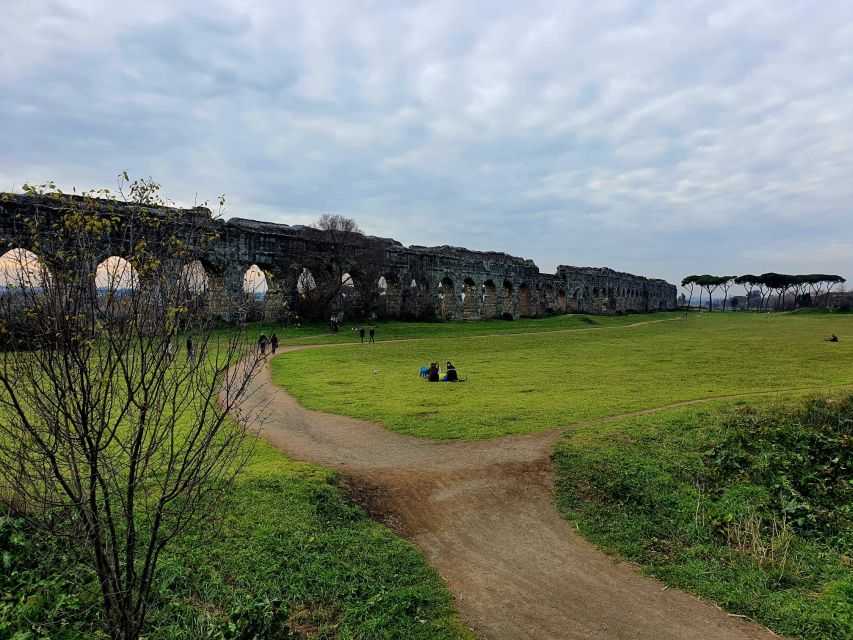
The guide will walk you through how these aqueducts worked—built for distance, supported by arches, and designed to move water in long channels. This matters because aqueducts are not just a scenic background. They were a system that let Rome scale up: water for daily use, baths, fountains, and the general city rhythm.
Here’s what I find valuable: the tour helps you read the architecture. Once you understand that the arches are doing structural work so the channel can maintain a usable slope, the stone shapes stop looking random. They become functional geometry—human intention turned into a long-distance pipeline.
You’ll also pick up special facts and curiosities along the way. The best way to understand those moments is to listen for the practical “why” behind each feature: why this portion was placed here, why the system had to be durable, and why Roman planners treated water as essential city infrastructure rather than a luxury.
Marcio Aqueduct: seeing engineering where it actually lives
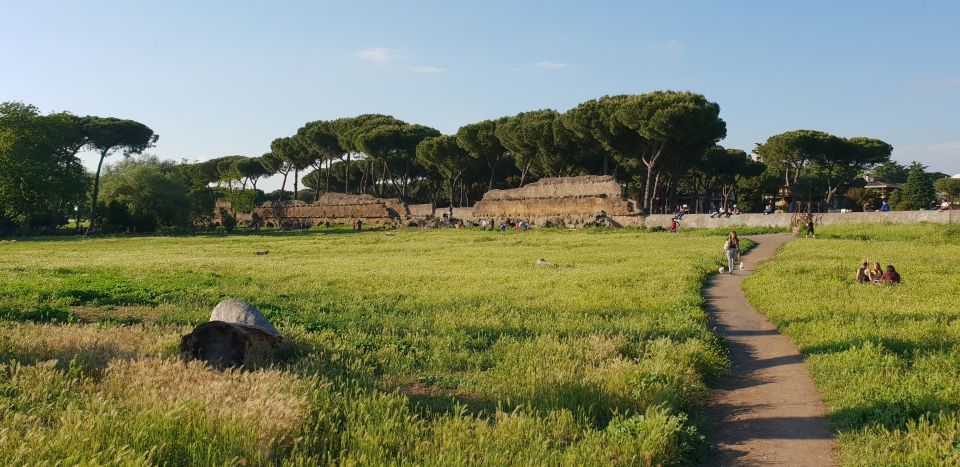
One of the four aqueducts you’ll follow is the Marcio Aqueduct. As you walk, you should pay attention to how the structure carries the water line over distance. The aqueduct system wasn’t a short run from one fountain to another; it was a network that needed consistency and careful construction.
The tour’s pacing is built for comprehension, not just motion. That’s one reason reviews highlight guides like Ricardo and Giuseppe for keeping things clear and going at a pace that lets you form a real understanding. In practice, that means you’re more likely to notice details like the relationship between stone arches and the water channel path.
Photo-wise, this is a “step and frame” kind of stop. If you take pictures, you’ll want to vary the angle: wide shots to show the rhythm of arches, plus tighter shots that let you see surfaces and construction clues. The tour is structured so you’re not guessing where to stand.
Claudio Aqueduct: the story gets sharper
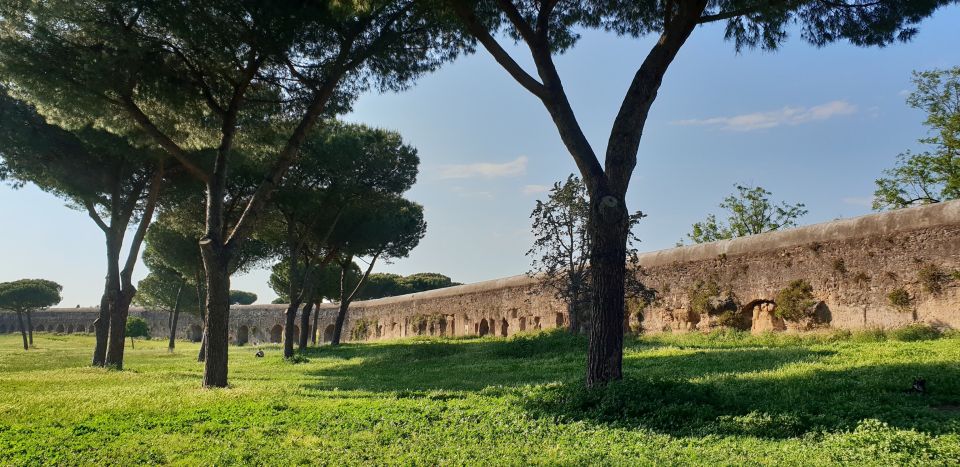
The Claudio Aqueduct is another big segment of the walking route, and this is where the explanations tend to feel more dramatic—because you start to see how much the city depended on this supply.
The tour connects the aqueducts to ancient Rome’s dependence on water. That’s not just trivia. It’s the reason this tour’s history feels relevant. Roman power wasn’t only in politics and armies. It was also in the ability to keep water flowing, day after day.
You may also hear how, during invasions, the first response wasn’t just to fight—it could be to cut the water supply. It’s a grim thought, but it’s also a memorable one: these aqueducts weren’t passive stone. They were a lifeline, so attacking or disabling them hits something fundamental.
If you like history that has practical consequences, this part delivers. You’ll walk away with a stronger sense of how infrastructure can be strategic.



Anio Vetus Aqueduct: the arches and the scale lesson
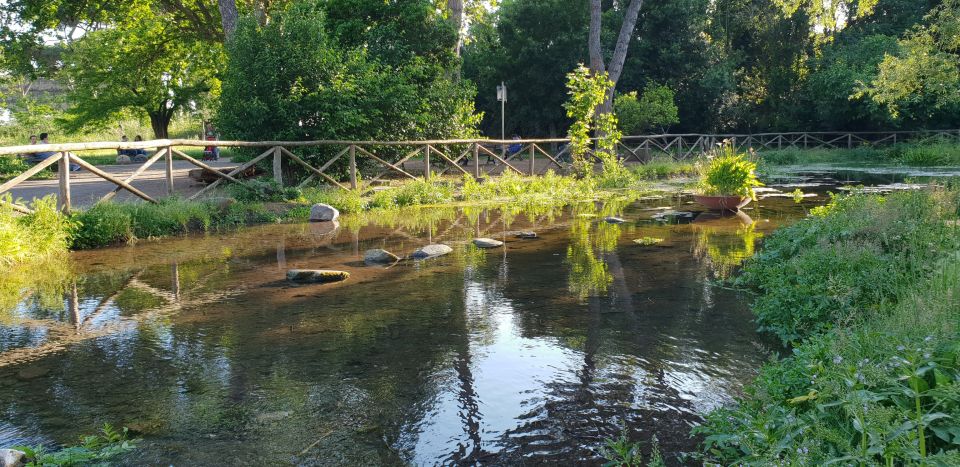
The Anio Vetus Aqueduct rounds out the set of aqueducts on the route. By the time you reach it, you should feel more confident reading what you’re seeing, because you’ve already heard the core idea: long channels supported by arches, designed for continuous flow.
At this stage, the scale lesson kicks in. These structures are impressive not only for their age, but for the sheer planning required to carry water over distance. Even without technical calculations, you can understand why the Romans invested in durable stonework.
And because the tour is a walking route, you’re moving alongside what you’re learning. That physical connection is a huge part of the value. Many tours show ruins from a distance. Here, you can look up at the arches, step along the pathway, and understand it as a system, not a single monument.
Aqueduct Park vibe: photos, close viewing, and a slower side of Rome
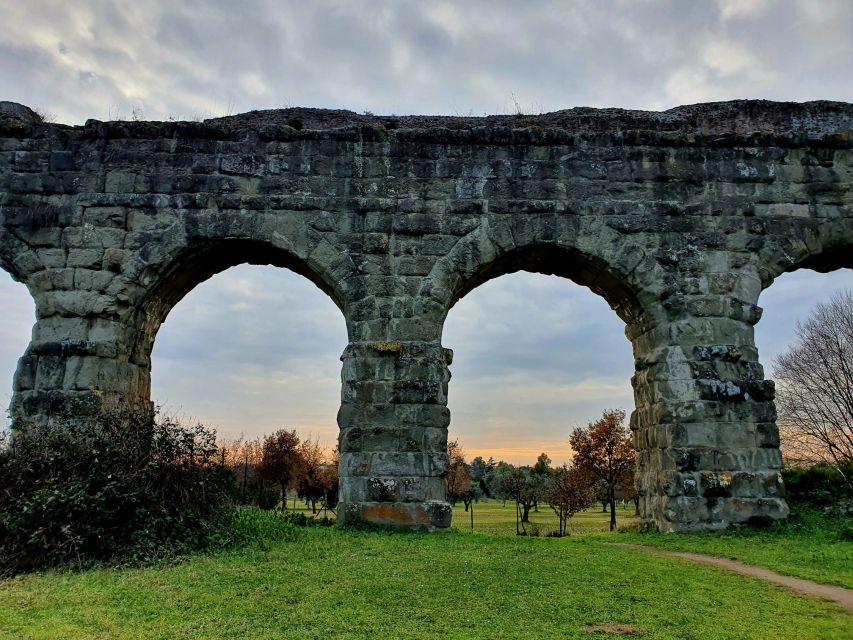
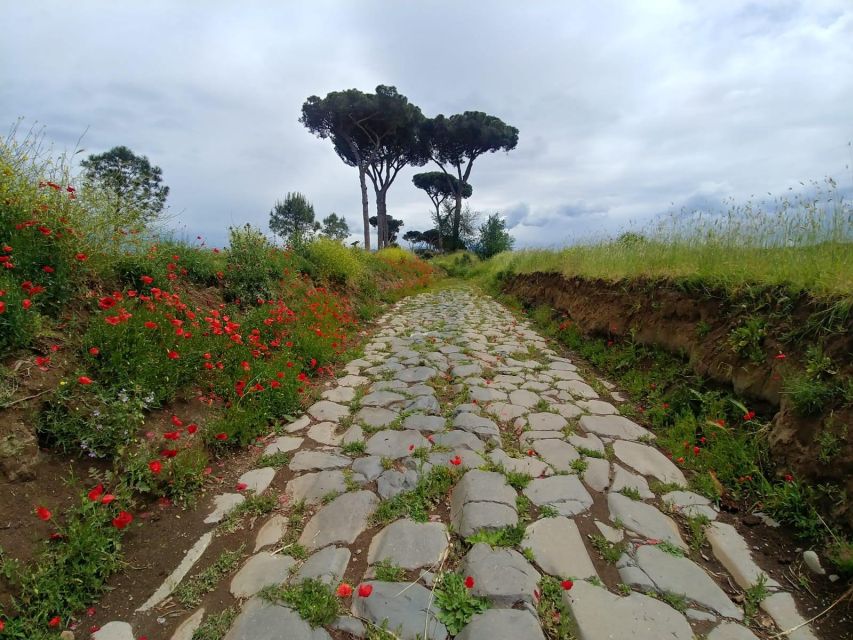
Aqueduct Park is described as a park frequented only by locals, and that idea is a big part of the experience. It’s the sort of place where the Roman stonework feels less like a stage set and more like something you could encounter in normal life—if you lived nearby.
You should also plan for a relaxed photo rhythm. The highlights explicitly call out interesting pictures and exploring the aqueduct system. In other words, it’s not one of those tours where you stop for ten seconds, take one postcard photo, and keep sprinting. You’ll get time to frame shots and look closely enough to spot features that you’d otherwise miss.
One small note: the tour includes the chance to discover hidden structures within the area and even touch preserved stonework. That’s a sensory bonus, but also a reminder to be respectful and follow the guide’s instructions on where you can go and what you can touch.
Mariana Canal and Pope Sixtus V: the papal twist you didn’t expect
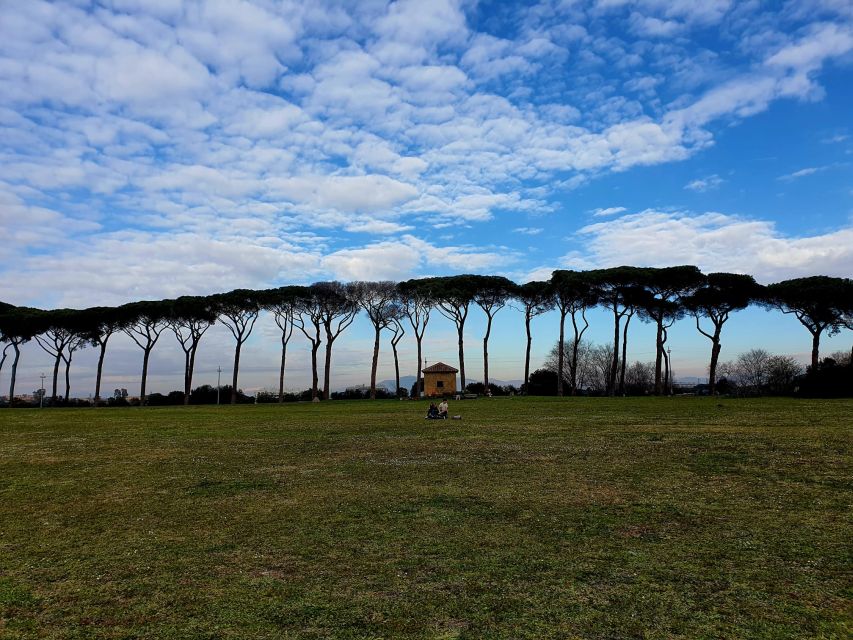
After the main aqueduct walk segments, the tour includes a stop to see the Mariana Canal, an ancient canal whose construction was ordered by Pope Sixtus V. This is the kind of moment I like on Rome tours, because it connects the ancient engineering story to later Rome layers.
Even if you think you already know Roman water history, the Mariana Canal detail adds a new angle. It shows how later leaders understood the importance of water infrastructure, and how older systems and ideas could continue to matter long after the Roman era.
It also helps you see Rome as a city of continuity and reuse, not just a sequence of unrelated time periods. Stone built for water can stay relevant for centuries, even when the city’s politics and borders change.
What happens after the arches: local Roman food stop
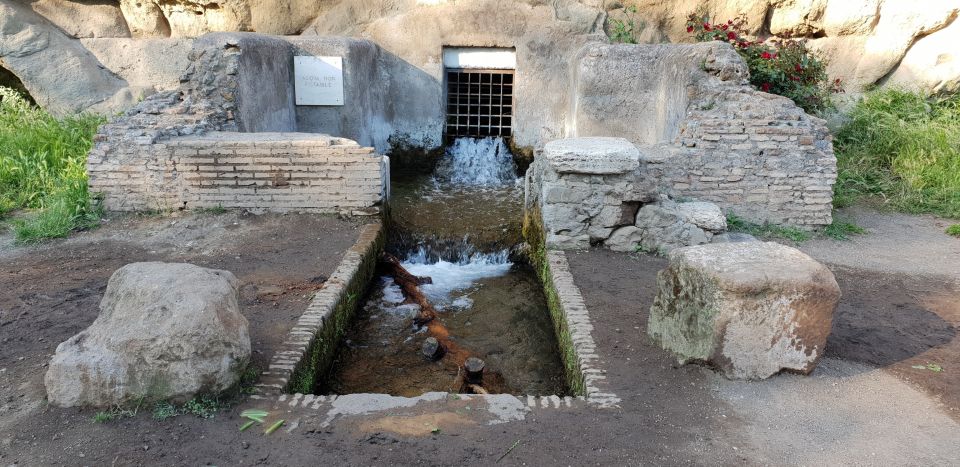
Once the walking portion ends, the experience includes a chance to try delicious local Roman food after finishing the tour. Food is not included, but that suggestion is useful. You’re done with your big history focus, and you get an easy next step: something satisfying and local rather than grabbing the first menu you see.
If you’re hungry, this timing works well. Also, since the tour ends at the same meeting point, you can roll directly into the rest of your day without getting lost in “transport after the tour” stress.
Price and value: what $147.27 buys you
At $147.27 per person for a 2-hour guided tour, you’re paying for three things: a small group, a live English guide, and admission fees included. For Rome, that combination is often the real difference between a confusing self-walk and a guided walk that gives you context.
Here’s how I think about value for this specific tour:
- You’re not only visiting one monument. You’re moving through an aqueduct system area and learning how it all connects.
- Admission fees are included, so you’re not adding extra costs mid-day.
- The small group and guided pacing are designed to help you understand what you’re seeing while you’re seeing it.
If your goal is to come away with a clearer picture of ancient Rome’s water supply—not just pretty arches—this price starts to make sense. If you prefer to wander alone with a phone map and no guide, you might feel it’s pricey. But if you want the story tied to the stonework, the guide time is the main value driver.
Who should book this aqueduct tour
This tour is a great fit if you:
- want something quieter than the usual top sights
- enjoy practical history tied to how cities worked
- like walking routes that let you see details and take photos
- want a guide who keeps a good pace and answers questions clearly (guides like Ricardo and Giuseppe are cited as standouts)
It may be less ideal if you:
- don’t handle 3–4 km of walking well
- need step-free access or mobility support (it is not suitable for people with mobility impairments, wheelchair users, or pregnant women)
Should you book it?
If you’re the type who likes Rome beyond the headline sites, I’d book this. The aqueducts are an underrated way to understand how the city functioned, and the walking route makes the engineering easier to grasp. The small-group feel and live English explanations help you connect arches and channels to real city life, not just ancient scenery.
Book it if you want fewer crowds, more meaning, and the satisfying feeling of learning something real while you’re surrounded by stone that has lasted for centuries. Pass if you want minimal walking or if you’re only interested in Rome’s most famous landmarks.
FAQ
Where is the meeting point?
You meet at the exit of the subway Giulio Agricola stop, at the corner with via Tuscolana in front on ODS store (Metro A).
What time does the tour start?
It runs with starting times available; check availability to see the schedule.
How long is the tour?
The tour lasts about 2 hours.
How much walking is involved?
You’ll walk roughly 3–4 kilometers during the tour.
Is a guide provided, and what language?
Yes. It’s a live guided tour in English.
What’s included in the ticket price?
A local guide, a small group, and admission fees are included.
Is food included?
No. The tour does not include food or drinks, though there is a chance to try local Roman food after the tour ends.
Is hotel pickup and drop-off included?
No, hotel pickup and drop-off are not included.
Is the tour suitable for wheelchair users or people with mobility impairments?
No. It’s not suitable for people with mobility impairments or wheelchair users, and it’s also not suitable for pregnant women.
What’s the cancellation policy?
Free cancellation is offered up to 24 hours in advance for a full refund.