REVIEW · VATICAN CITY
Rome: Sistine Chapel & Vatican Tour with Pre-Opening Access
Book on GetYourGuide →Operated by Italy With Family · Bookable on GetYourGuide
The Vatican feels different at first light. This pre-opening access tour gets you into the big Vatican Museums early, then funnels you toward the highlights while the crowds are still asleep. I love the chance to see Raphael’s School of Athens with breathing room, and I like having a guide walk you through what you’re looking at in the Sistine Chapel. One drawback to plan for: the tour notes that parts of the museum, including the Sistine Chapel, may be temporarily inaccessible in rare situations.
This is a private group with live English guidance, plus headsets so you can actually hear the story while you’re moving room to room. You also get tickets included and skip the ticket line, which is a real time-saver in this place.
Logistics are straightforward: you meet at Bar Leonina in Piazza della Città Leonina just outside St. Peter’s Square, and you end back there. Expect airport-style security for everyone, and dress matters here—no shorts or sleeveless shirts—and yes, it runs rain or shine.
In This Review
- Key highlights at a glance
- Pre-opening access: why the early start matters
- Meeting point at Bar Leonina and what to do before you go in
- Entering the Vatican Museums: first rooms set the tone
- Roman sculptures in the Candelabra Gallery
- Mapping centuries in the Gallery of Maps
- Raphael’s School of Athens: reading the masterpiece
- Raphael’s woven works (and how to look for meaning)
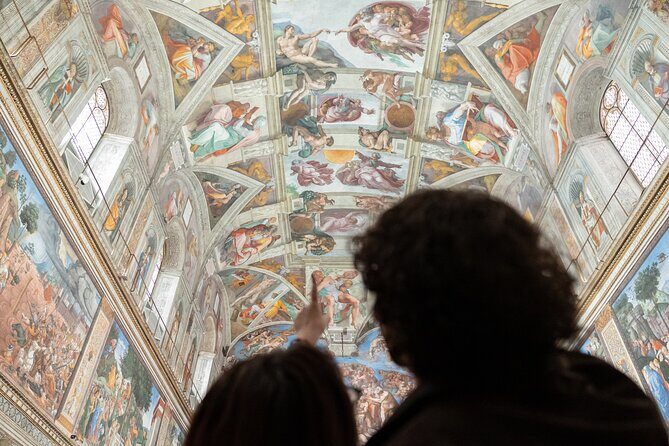
- The Sistine Chapel: seeing Michelangelo with room to breathe
- St. Peter’s Basilica: the grand finale after the Museums
- How the 3-hour format really feels
- Price and value: is $758.84 per person worth it?
- Who should book this Vatican tour?
- Should you book this pre-opening Vatican tour?
- FAQ
- How long is the Vatican tour?
- Where do we meet for the tour?
- Is a guide included, and what language is it in?
- Are tickets included, and do you skip the ticket line?
- What parts of the Vatican do we visit?
- What should I bring, and what is the dress code?
- Is the tour affected by temporary closures?
Key highlights at a glance
- Pre-opening entry keeps the Vatican Museums calmer than the usual crush
- Candelabra Gallery gives you Roman Empire sculptures and setting right away
- Gallery of Maps shows Roman topographers’ mapping style through the centuries
- Raphael’s School of Athens is easier to read when the room isn’t packed
- Sistine Chapel walkthrough comes with context, plus a map to help you orient
- St. Peter’s Basilica visit rounds out the Vatican’s art-and-faith story
Pre-opening access: why the early start matters
The Vatican is massive. If you go later, you end up doing a kind of human conveyor belt: look, move, repeat. The main value of this experience is that it’s timed for fewer people, so you can slow down just enough to notice details and actually connect the dots.
Early access also changes how the art lands. When Raphael and Michelangelo show up in a crowded flow, they can feel like icons you rush past. When you’re there before the swell, you can stand still, look up, and let your guide’s explanations give you a framework for what you’re seeing.
And because this is a private group, you’re not stuck listening to a guide while you’re shoulder-to-shoulder with strangers who have no interest in what you care about. You can get answers to the questions that pop into your head while you’re standing in front of something huge.
You can also read our reviews of more tours and experiences in Vatican City.
Meeting point at Bar Leonina and what to do before you go in
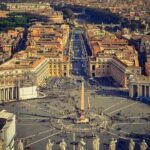
You start at Bar Leonina in Piazza della Città Leonina, just outside St. Peter’s Square, and the tour ends back at the same spot. That’s helpful: you’re not wandering at the end trying to figure out where your group disappeared to.
Before you reach any galleries, plan for security. All visitors must pass through airport-style screening, and that’s true even with tickets in hand. The smart move is to arrive a bit early, have your ID ready (passport or ID card; a copy is accepted), and wear something that fits the dress code.
Dress code is not the place to improvise. Shorts and sleeveless shirts are not allowed, so keep your outfit Vatican-friendly. If you’re visiting in warm weather, choose light layers that still cover your shoulders and knees.
Entering the Vatican Museums: first rooms set the tone
Once you’re in, you’re not stuck trying to map out a plan while your time evaporates. Your guide helps you navigate the vast complex with purpose, and you’ll use headsets so you can follow the story without craning your neck at the back of the group.
A good thing about starting with the Museums is that you get context. The Vatican isn’t just a single building with famous art. It’s a whole collection built over centuries, with different rooms showcasing different themes—classical sculpture, religious art, Renaissance masterpieces, and more.
This tour focuses on the sections that are easiest to connect with a guide’s narration, so your time goes toward the highlights rather than toward confusion.
Roman sculptures in the Candelabra Gallery
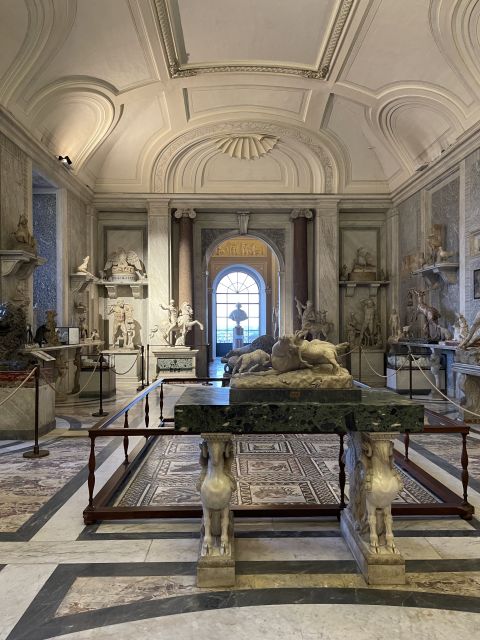
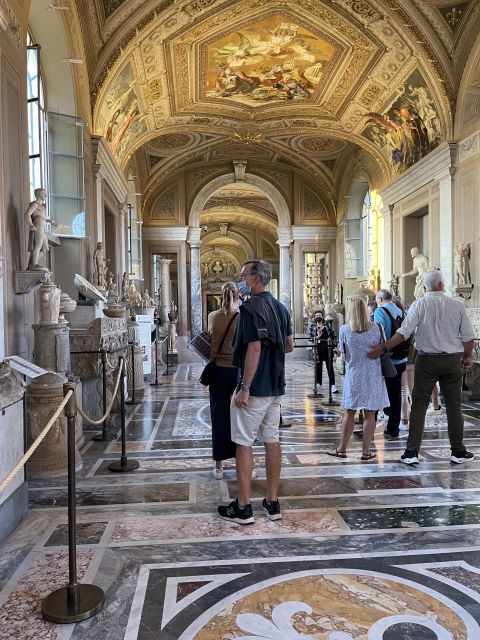
One of the first stops is the Candelabra Gallery, where you’ll see sculpture and relics tied to the Roman Empire. This is a strong early choice because it shifts your brain from the modern bustle of Rome into the Vatican’s long timeline.
If you’ve ever looked at ancient statues and wondered why people were obsessed with them, this is where the answer begins. Standing among Roman-era pieces makes later Renaissance scenes feel more intentional, as artists borrowed from older ideals of form, posture, and storytelling.
The practical win: arriving early means you can walk around your chosen viewpoints instead of being forced to stand wherever the crowd allows. You’ll get more than one glance from different angles, which matters with sculpture.
Mapping centuries in the Gallery of Maps
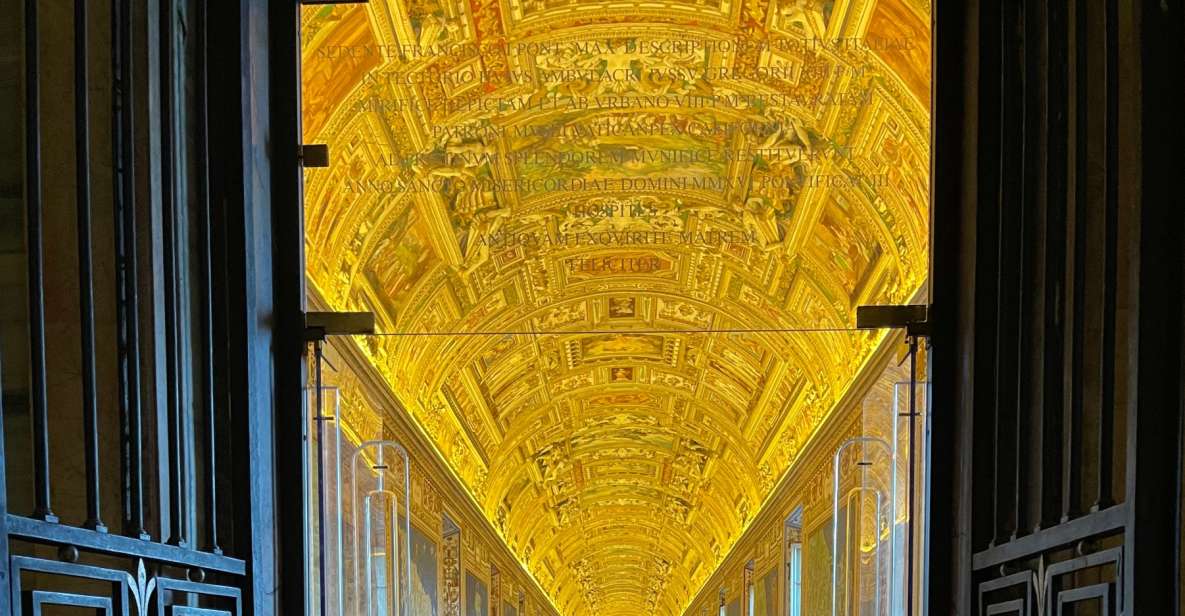
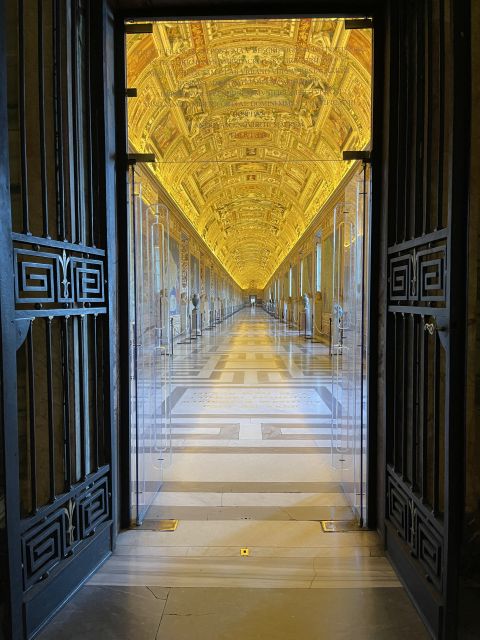
Next up is the Gallery of Maps, featuring maps created by Roman topographers centuries ago. Even if maps aren’t your favorite thing, this room can be a turning point because it shows how people understood space long before modern surveying and printing.
Here’s what I like about this stop for first-time Vatican visitors: it breaks the expectation that you only come for painting and frescoes. The Vatican’s collections aren’t just visual in the artistic sense—they’re visual in the scientific and geographic sense too.
Your guide can also help you notice what makes these maps feel distinct from later European mapping. That context is hard to pick up on your own when you’re rushing for the next must-see room.

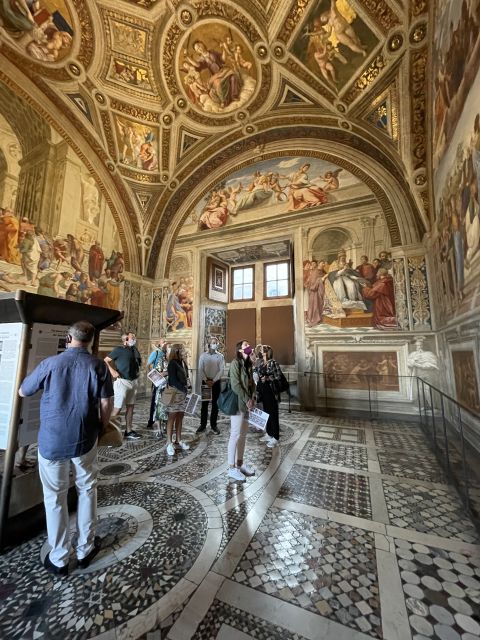
Raphael’s School of Athens: reading the masterpiece
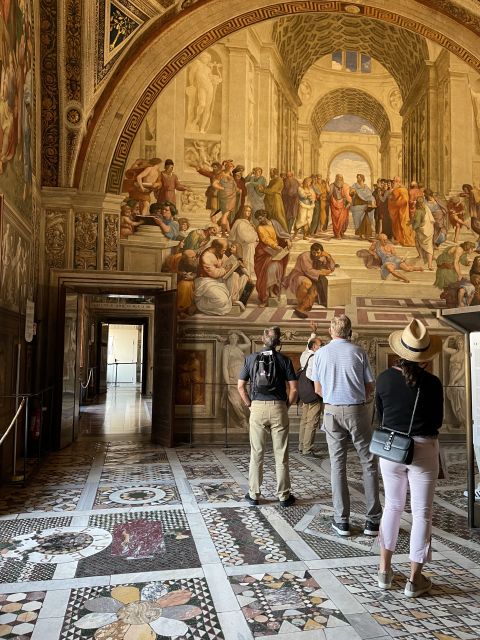
This tour puts real emphasis on Raphael’s School of Athens, and I get why. It’s one of those works that rewards slow looking. The painting is packed with figures, architectural perspective, and the sense that ideas are arranged like a stage.
When the room is calmer, you can do something valuable: choose a specific area of the painting and let your eyes move through it. With a guide, you’re not just scanning faces—you’re learning what you’re seeing and why the composition matters.
This is also one of the places where your guide’s explanations make a difference fast. Instead of thinking, I recognize names, you start thinking, this painting is organized to communicate an argument. That’s the difference between seeing art and understanding it.
Raphael’s woven works (and how to look for meaning)
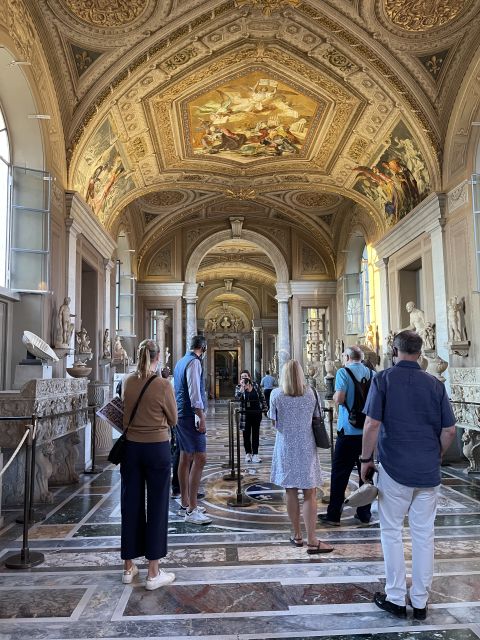
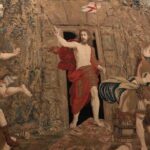
You’ll also visit the room with Raphael’s famous woven works—an offshoot of Renaissance design that’s easy to underestimate until you see the craftsmanship in person. The tour’s focus here is to show you what you’re looking at and to connect the scene choices back to broader Renaissance themes.
If you’re used to thinking of masterpieces as only painted frescoes, this part helps broaden your “what counts as art” radar. Plus, it’s another reason the pre-opening timing helps: these rooms are easier to enjoy when you’re not pressed for space.
The key tip is to look at both the whole scene and the details. With a guide in front of you, you’ll get cues about where to focus so you don’t feel like you’re searching blindly.
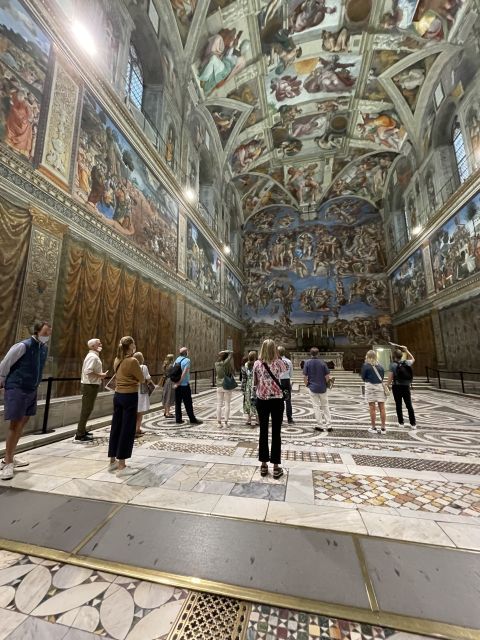
The Sistine Chapel: seeing Michelangelo with room to breathe
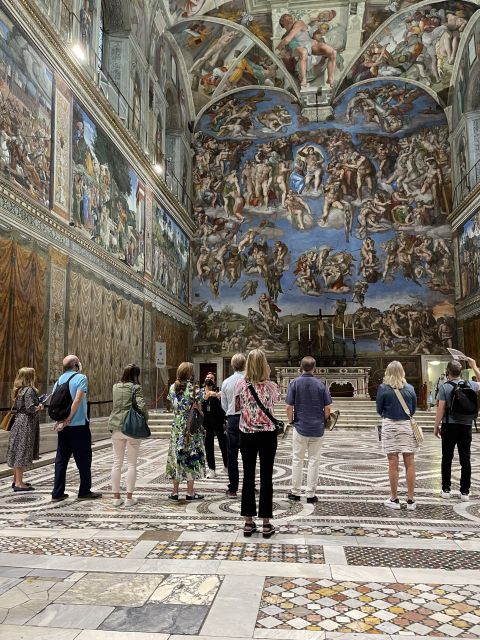
The heart of the experience is the Sistine Chapel, where you’ll gaze at Michelangelo’s masterpiece. Having a guide here is crucial because the Sistine Chapel can feel like sensory overload if you’re trying to understand it purely by yourself at speed.
I like that this tour includes a Sistine Chapel map. It’s small, but it helps you orient your attention—so you’re not only staring at the ceiling while your brain scrambles to track what you’re looking at.
One important note for your expectations: the tour says the chapel is sometimes affected by unforeseen circumstances. In those cases, certain areas—including the Sistine Chapel—may be temporarily inaccessible, and the tour will continue in other parts of the museum. So, if the Sistine Chapel is your top priority, it’s smart to go in with flexibility.
St. Peter’s Basilica: the grand finale after the Museums
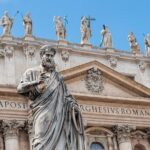
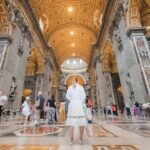
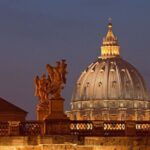
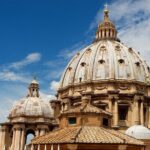
After the Museums and the chapel focus, the tour moves to St. Peter’s Basilica. This part works as a reset. You go from the curated intensity of the Museums into the vast, spiritual space of the Basilica, where art and religious meaning combine in a different way.
This is also where the Renaissance note matters. The tour includes sculptures and paintings from that period, and you’ll have a chance to experience how those artistic styles fit into a living religious site rather than a behind-glass gallery.
The practical benefit: because this is a guided stop, you’re not just wandering for iconic views. You’re learning how to read the space and what to notice as you move through.
How the 3-hour format really feels
The whole tour runs about 3 hours. That’s enough time for the big hits, especially with early access, but it’s not enough to see everything in the Vatican Museums.
So think of this as a greatest-hits, high-meaning route. If you want to spend half your day in smaller rooms you can choose by mood, a self-guided visit might fit better. If you want your time to pay off fast—with a guide telling you what matters and where to look—3 hours is a sweet spot.
Headsets also help the pacing. Without them, your attention splits between the guide and the room. With them, you stay “in it” longer, even while walking.
Price and value: is $758.84 per person worth it?
At $758.84 per person, this isn’t a budget Vatican option. You’re paying for a few high-value things at once: private group time, a live English guide, tickets included, headsets, and most importantly the early timing.
Early entry and skip-the-line can be worth a lot in practice. The Vatican isn’t just crowded—it’s crowded in ways that eat time. Saving even an hour can change how you experience key rooms like the School of Athens and the Sistine Chapel.
This price starts making sense if you’re:
- A couple or small group that values not waiting and not rushing.
- Someone who wants context while viewing the best-known masterpieces.
- A traveler who would rather spend money than energy doing route planning in a maze.
If you’re the type who happily wanders and reads signs at your own pace, you might decide this is more guidance than you personally need. But if you care about understanding what you’re looking at, this tour is structured to deliver that payoff fast.
Who should book this Vatican tour?
I’d book this if you’re visiting Rome for the first time and the Vatican is already on your must-do list. It’s also a good fit if your group includes at least one person who wants a clear route and someone narrating why the art matters.
It’s especially smart for travelers who get overwhelmed in big museums. The Vatican can feel like a test of stamina. Starting early, following a guide, and using headsets keeps it from becoming a stamina event.
It’s less ideal if:
- You’re determined to see every gallery, at your own pace.
- You strongly prefer fully self-guided experiences where you never listen to explanations.
- Your schedule can’t handle rain or shine, since the tour operates in all weather.
Should you book this pre-opening Vatican tour?
Yes, if your priority is high-impact viewing with fewer crowds and you want a guide to explain the scenes as you stand in front of them. The combination of early access, included tickets, and a focused route makes it a strong value despite the premium price.
Be sure you’re ready for two realities: airport-style security and the possibility that the Sistine Chapel access could be affected by temporary closures. If you can stay flexible and dress correctly, this is the kind of tour that makes the Vatican feel readable instead of overwhelming.
If the Sistine Chapel is the only thing on your list, ask yourself how you’ll react if that portion is limited on the day. If you’re okay with the rest of the museum still being meaningful, you’ll likely come away happy.
FAQ
How long is the Vatican tour?
The tour lasts about 3 hours.
Where do we meet for the tour?
You meet in front of Bar Leonina in Piazza della Città Leonina, just outside St. Peter’s Square. It ends back at the same meeting point.
Is a guide included, and what language is it in?
Yes. The tour includes a live English-speaking guide, and you’ll also receive headsets to hear the guide clearly.
Are tickets included, and do you skip the ticket line?
Yes. Tickets are included, and the tour includes skipping the ticket line.
What parts of the Vatican do we visit?
You’ll visit the Vatican Museums, the Sistine Chapel, and St. Peter’s Basilica.
What should I bring, and what is the dress code?
Bring your passport or ID card (a copy is accepted). Shorts and sleeveless shirts are not allowed.
Is the tour affected by temporary closures?
The tour notes that certain areas of the museum, including the Sistine Chapel, may be temporarily inaccessible due to unforeseen circumstances. The tour will proceed with access to other remarkable sections, and refunds cannot be guaranteed in those situations.