REVIEW · ROME
Rome Jubilee 2025 Tour: An Exploration of Early Christianity
Book on Viator →Operated by Through Eternity Tours · Bookable on Viator
Jubilee Rome feels different. This 3-hour small-group walk through early Christianity is built around Jubilee Holy Doors and the places pilgrims actually aim for, not just photo stops. I also like the English-speaking guide approach—so the meaning of symbols makes sense instead of feeling like a scavenger hunt. One thing to plan for: due to Jubilee activity, some monuments may be under restoration, and the route is not recommended if you have mobility limits.
You’ll start at the Arcibasilica di San Giovanni in Laterano, where bronze doors and Baroque brilliance sit on top of much older layers. You’ll then tackle the Scala Santa (the Holy Steps) and finish at Santa Maria Maggiore, with its Holy Door and a mix of art, relic tradition, and big Roman scale. If your guide is someone like Gracelyn—praised for being warm and history-minded—that really helps this kind of tour click.
In This Review
- Key highlights worth knowing before you go
- Jubilee Holy Doors and the Layers of San Giovanni in Laterano
- The Scala Santa: Pilgrimage steps, not a quick photo moment
- Lateran Baptistery and the eight-sided logic of early Christianity
- Via Merulana and Panella: Your pilgrimage needs a pastry break
- Santa Maria Maggiore: A Holy Door on the Esquiline hill
- Price, group size, and timing: Is it good value?
- What to expect on the ground: crowds, restoration, and comfort
- Who should book this early Christianity tour in Rome (and who shouldn’t)
- Should you book Rome Jubilee 2025: An Exploration of Early Christianity?
- FAQ
- How long is the Rome Jubilee 2025 Early Christianity tour?
- What language is the tour offered in?
- Is there a pastry stop, and what should I try?
- Are admission tickets included?
- What’s the group size like?
- Where do I meet and where does the tour end?
- Is the tour suitable for people with mobility issues?
Key highlights worth knowing before you go
- Holy Doors at San Giovanni in Laterano and Santa Maria Maggiore during the Jubilee year
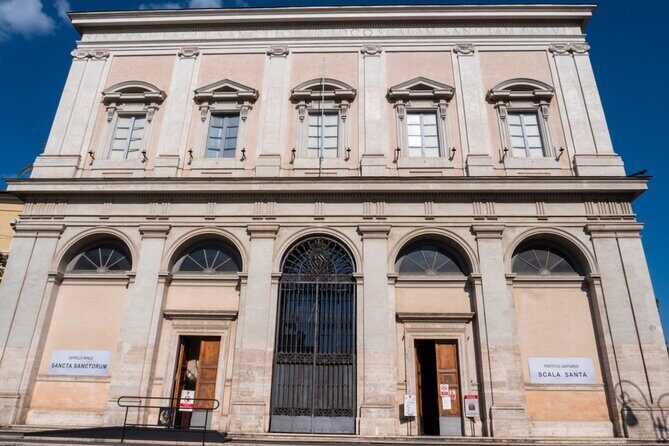
- Scala Santa’s 28 marble steps and the Sancta Santorum area
- Lateran Baptistery’s octagonal design and the story tied to Constantine
- A real Roman bakery stop at Panella, including maritozzi with whipped cream
- Small groups (max 10) plus headsets for groups of six or more
- Short, focused route: 5 stops in about 3 hours, no long detours
Jubilee Holy Doors and the Layers of San Giovanni in Laterano
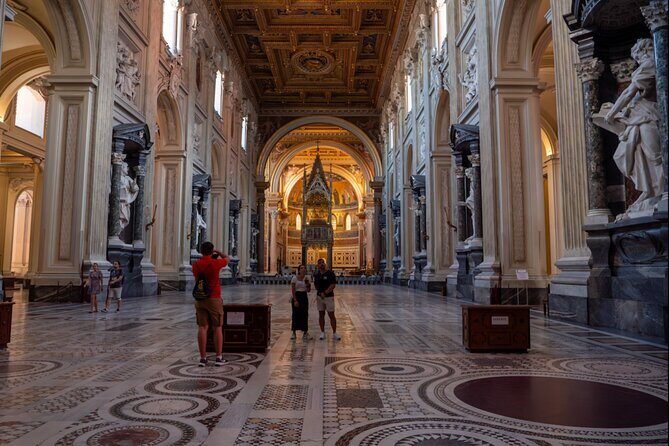
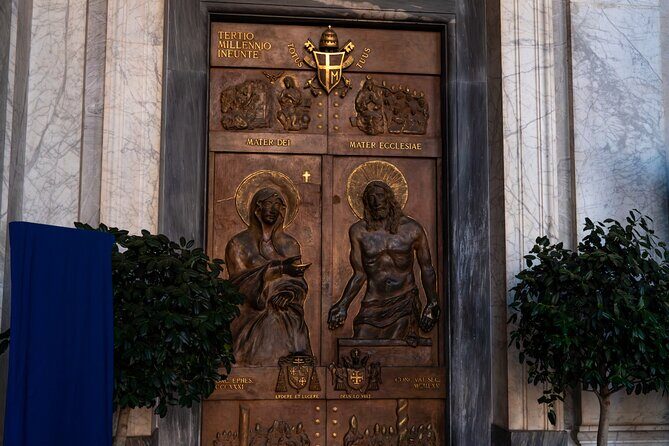
Most Rome tours treat this basilica like a single stop. This one treats it like a time machine—with Jubilee Holy Doors as the key that starts the story. You’ll enter the portico at the Arcibasilica di San Giovanni in Laterano, and the first shock is size. Big doors, big space, big atmosphere.
Here’s the kind of detail that makes the visit feel less generic. The colossal bronze doors you’ll see are linked to an older Roman identity: they once adorned the entrance of the Curia Iulia, the ancient senate house in the Roman Forum. Rome loves recycling, and Christianity inherited a lot of the physical world that came before it.
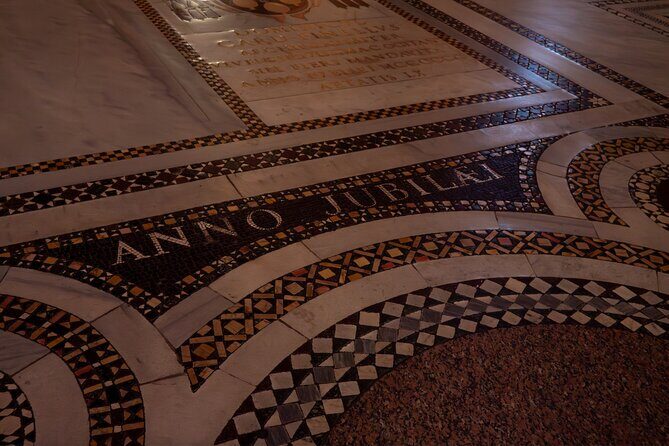
Then you’ll focus on the Holy Doors. These aren’t ordinary entrances. They’re opened in a Jubilee or Holy Year—every 25 years—and your guide explains both the theological meaning and the historical significance. It’s not just Catholic pageantry; it’s a pilgrimage rhythm designed for people who walk with intention.
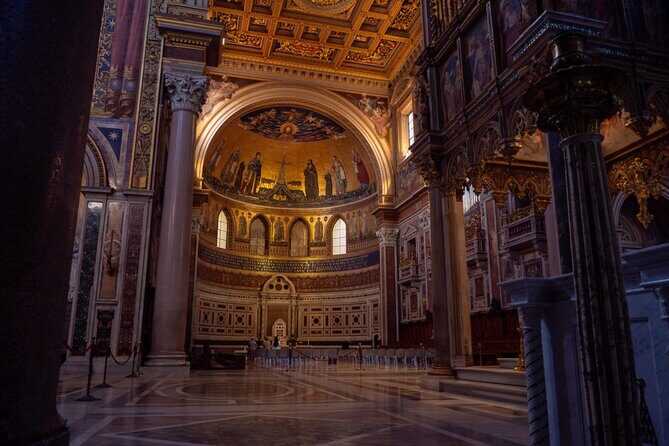
Inside, look up. The interior redesign is associated with Francesco Borromini (17th century Baroque). The ceiling and space feel like they’re pulling your attention upward. But don’t miss the fact that older traces remain. Your route includes time to notice medieval artwork—your guide points out frescoes by Giotto and helps connect the iconography in the apse mosaics to what early Christians believed and celebrated.
And yes, there’s also a strong early-Church angle. You’ll learn about how the relic tradition of Saints Peter and Paul came to rest here. Even if you’re not religious, the story matters, because it shows how Rome became a magnet for faith, authority, and pilgrimage.
Practical tip: this stop is listed at about 1 hour, and that feels right. The building is large enough that you need a guide to keep your attention from drifting.
You can also read our reviews of more tours and experiences in Rome.



The Scala Santa: Pilgrimage steps, not a quick photo moment
The middle of the tour shifts from “big basilica” to “small, intense, human-scale devotion.” You’ll head to the Pontifical Sanctuary of the Holy Stairs, where the main draw is the Scala Santa.
This is the set of 28 marble steps—traditionally brought to Rome by St. Helen, the mother of Constantine. According to tradition, these steps are the ones Christ climbed during the Passion at the palace of Pontius Pilate. Whether you take the tradition literally or approach it as history-of-faith, the point is the same: people come here for a solemn act of pilgrimage.
At the top is the Sancta Santorum—the Holy of Holies. Long before the Sistine Chapel became the star of papal art, this was the pope’s private chapel. It once held some of the most precious relics in the Christian world, and today it’s associated with a mysterious ancient image of Christ called the acheiropoieton, said to have been painted by angels.
One detail you’ll appreciate: the image is described as visitable on a private excursion. So don’t assume you’ll see every element during the standard route. The value here is understanding what you’re looking at when you’re in the space.
Time-wise, this is short—about 25 minutes. That’s a good thing. These places can turn into long lines of standing and waiting, and this tour keeps you moving without rushing the interpretation.
What you should consider: if you get restless easily in quiet spaces, plan to hold steady. This stop asks you to slow down.
Lateran Baptistery and the eight-sided logic of early Christianity
Next up is the Lateran Baptistery, tied to the legendary story of Constantine’s baptism. It’s not just another pretty room. The baptistery’s octagonal shape is a clue that early Christians were working with symbolism and practical design at the same time.
Your guide explains why octagons mattered and why early baptistries often lived in separate buildings. The tour also connects this style to later influences, including the famous baptistery in Florence.
As you listen, pay attention to the bigger idea: early Christians weren’t building from scratch in a vacuum. They were adapting Roman urban forms, rethinking public space, and shaping spaces for a rite that was life-changing. Baptism isn’t a quick ceremony; it’s a boundary between old identity and new.
Before you move on, you’ll take in a giant outside landmark—the Lateran Obelisk, described as the tallest standing obelisk in the world today. The guide connects it to a larger theme of Rome’s layers: ancient Egyptian monuments were first reused by Romans and later carried forward into the Christian era. In Rome, monuments don’t disappear. They change owners, meanings, and crowds.
This stop is about 25 minutes, so it’s just enough time to get the “why” without feeling trapped inside.
Via Merulana and Panella: Your pilgrimage needs a pastry break
After the big buildings and sacred steps, the tour does something very Roman: it gives you a pause that actually feels like part of the day.
You’ll head down via Merulana, a road laid out in the 16th century to help visitors and pilgrims reach their destinations. Think of it like an old guidance system built into city planning. Straight lines make navigation easier. And they also create anticipation—your next destination appears at the end of the avenue.
Then you stop at Panella, one of Rome’s famous bakeries. Panella has been in business since 1929, and you’ll have time for coffee and traditional pastries. The standout is the maritozzi—sweet yeasted buns filled with freshly whipped cream. It’s not a “diet choice,” but in a pilgrimage schedule, it makes perfect sense. You’ll be walking. You’ll be listening. You’ll want something that tastes like a treat and fuels you for the rest.
This is also where Rome gives you a view break: the route includes a look toward the Auditorium of Mecenate, reminding you how this area mattered even back in ancient times.
Time here is about 10 minutes, so treat it as a quick recharge, not a second meal.
Santa Maria Maggiore: A Holy Door on the Esquiline hill
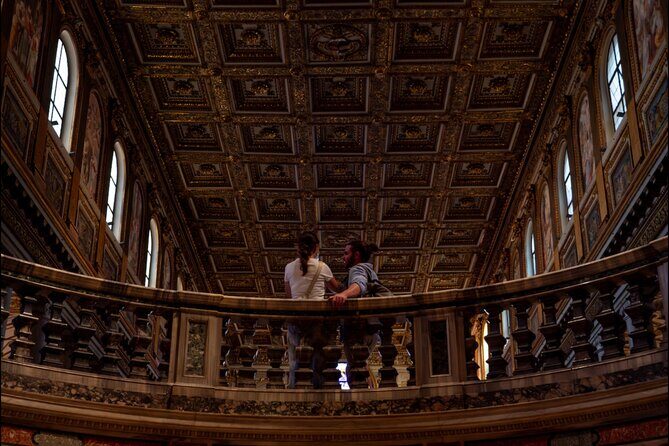
You finish at Basilica di Santa Maria Maggiore on the Esquiline, the highest of Rome’s seven hills. This is the largest church in Rome dedicated to the Virgin Mary, and the tour makes the visit feel anchored in something older than “newly impressive.”
You’ll learn how the basilica’s story sits between history and legend. But the feeling inside is what you’ll notice: compared with some other big papal basilicas, this one can feel more ancient in atmosphere.
There’s another Holy Door here, again opened for Jubilee. So the tour comes full circle: you begin with pilgrimage symbolism and close with it too.
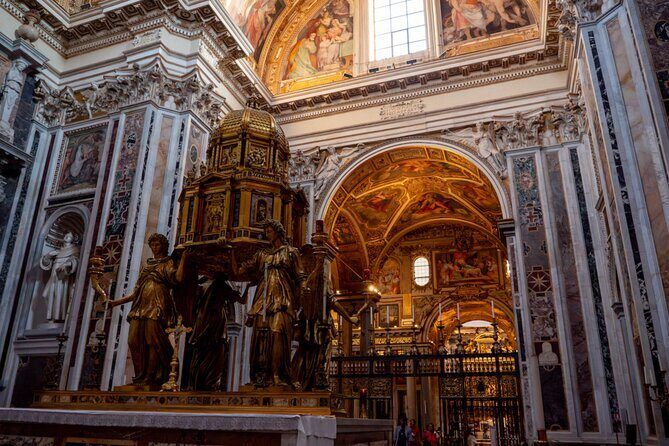
Inside, your guide points out specific details that make the art and architecture feel purposeful:
- Cosmatesque floors, linked to medieval Roman craftsmanship
- A ceiling decorated with some of the first gold from the New World
- Ancient mosaics and relic traditions, including a sacred image called Salus Populi Romani, said to have saved the people of Rome in the 6th century AD
- An area your guide refers to as another Sistine Chapel, connected to Sixtus V
- The grave of Gian Lorenzo Bernini, a big name in Roman Baroque art
- The Holy Door itself, which adds a layer of ritual context to everything you see
Then you end at the obelisk of Santa Maria Maggiore, described as steps from Rome’s main train station and near the Monti district. That matters because it makes your day easy to transition into sightseeing or dinner without a long backtrack.
This final stop lasts about 1 hour, which feels right. Santa Maria Maggiore rewards attention, and you’ll get time to absorb more than just the highlights.



Price, group size, and timing: Is it good value?
At $87.72 per person for about 3 hours, the value comes from the combination of interpretation plus access. You’re not paying for a bus ride or a big production. You’re paying for an expert English guide, headsets for groups of six or more, and time to understand each site.
Many of the stops are listed as admission free, and the Holy Stairs stop has admission included. That means your money goes mainly into the guide-led experience and the structured route.
Also, there’s a practical sweet spot here: it’s a small group with a maximum of 10 travelers. Smaller groups usually mean you hear the guide better, and you don’t feel like you’re being swept through like part of a crowd stamp. Rome is crowded enough without adding extra chaos.
Timing matters too. The start is 9:00 am, so you’re hitting major churches earlier in the day—often when it’s easier to think and take in details.
One more thing: this tour is typically booked about 39 days in advance. That suggests strong demand. If you’re traveling during Jubilee-heavy periods, I’d treat it as something to reserve sooner rather than later.
What to expect on the ground: crowds, restoration, and comfort
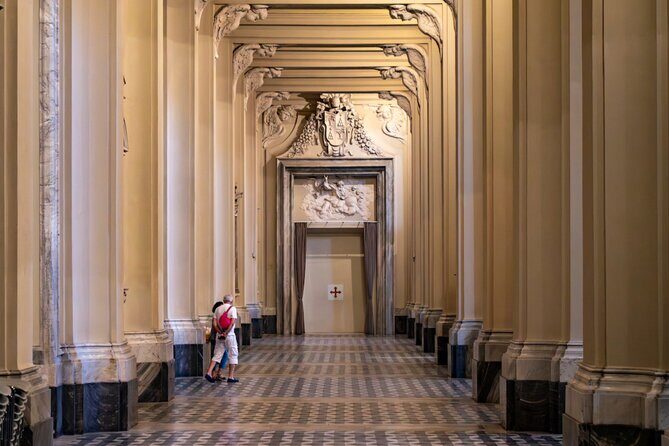
Jubilee time means extra focus—and extra movement. The tour notes that some monuments may be under restoration during the Jubilee, and you should watch for messages about potential changes. That’s not a reason to skip. It’s just Rome. Plans evolve.
Here’s what you can do to make the day smoother:
- Wear comfortable shoes. You’re moving between sacred sites and up to the Holy Steps complex.
- Dress for churches: shoulders and knees can matter for respect and entry, and you’ll thank yourself if you bring a light layer.
- Expect lines and quiet moments. Some stops are designed for reverence, not speed.
- If you have mobility issues, this is not recommended. The structure of the route and the nature of the Holy Stairs area aren’t built for it.
Good to know: the tour allows service animals, and it’s near public transportation. It also uses a mobile ticket, which keeps paperwork from becoming a stress point.
The meeting point is Piazzale Appio, 9, 00183 Rome and the tour ends at P.za di Santa Maria Maggiore, 00100 Rome (near the main train area). Knowing that helps you plan dinner afterward.
Who should book this early Christianity tour in Rome (and who shouldn’t)
Book this tour if you fit one (or more) of these profiles:
- You like early Christianity and want the story explained in plain English.
- You’re drawn to the Jubilee concept and want to see Holy Doors in action.
- You want a small-group pace with headsets so you can actually follow the guide.
- You enjoy how art, architecture, and belief connect—especially in Rome, where layers overlap.
You might skip it if:
- You need a fully mobility-friendly route.
- You want a beach-style, rest-all-day vacation. This is a “walk and listen” format.
- You’re expecting lots of free time to wander alone. This tour is structured, and you’ll be happiest if you like that structure.
One more practical note: the guide is fluent English-speaking, and one example from recent experiences is a guide named Gracelyn, described as affable and strongly focused on history. If you get a guide with that style, the tour becomes much more than a list of buildings.
Should you book Rome Jubilee 2025: An Exploration of Early Christianity?
If you’re in Rome during Jubilee year and you want the pilgrimage logic behind the main sites, this tour is a solid fit. The small group size, the English guide, and the steady mix of sacred spaces plus a real Roman snack stop make it feel efficient without feeling rushed.
I’d book it if you want: meaning, not just sights. If you’re mobility-limited or you’d rather go at your own pace with no structure, you’ll probably be happier choosing a more flexible plan.
FAQ
How long is the Rome Jubilee 2025 Early Christianity tour?
It runs for about 3 hours.
What language is the tour offered in?
The tour is offered in English.
Is there a pastry stop, and what should I try?
Yes. You’ll stop at Panella for traditional Roman pastries. A highlighted choice is maritozzi with whipped cream.
Are admission tickets included?
Admission is listed as free for several stops, and the Holy Stairs (Scala Santa) stop is listed as ticket included.
What’s the group size like?
The tour has a maximum of 10 travelers, and headsets are provided for groups of six or more.
Where do I meet and where does the tour end?
The start is at Piazzale Appio, 9, 00183 Rome. The end is at P.za di Santa Maria Maggiore, 00100 Rome.
Is the tour suitable for people with mobility issues?
It’s not recommended for travelers with mobility issues, so it may not be a good match if you use a wheelchair or need step-free routing.