REVIEW · ROME
Rome: Hop-on Hop-off Sightseeing Bus Tour with Audioguide
Book on GetYourGuide →Operated by Gray Line I Love Rome · Bookable on GetYourGuide
Rome starts making sense fast. This hop-on hop-off ride turns a huge city into a simple loop you can repeat at your pace, with live-feeling views from a double-decker bus and history explained through an audioguide. You’re not stuck in one long walking route. You can hop off for the places that grab you, then get back on when you’re ready.
I also like the practical setup: provided headphones with narration in 12 languages, plus onboard Wi‑Fi. The main thing to watch is timing. The last bus from Termini is 6:40 PM (Mar 15–Oct) or 5:40 PM (Nov 4–Mar 14), so late-afternoon plans may need a backup.
In This Review
- Key things worth knowing before you board
- The pink buses: comfort, views, and how the audio actually helps
- Start at Termini (Stop 1) and get your bearings quickly
- Stop 2 near St. Mary Major: a calmer starting culture beat
- Colosseum area (Stop 3): the best reason to ride the loop
- Circus Maximus and the Mouth of Truth area (Stop 4)
- Piazza Venezia and the Roman Forum perspective (Stop 5)
- Vatican City zone (Stop 6): Sistine Chapel and St. Angelo Bridge area views
- Spanish Steps (Stop 7): climb it when you want, not on someone else’s schedule
- Barberini and Trevi Fountain (Stop 8): end the day close to the classic postcard area
- How long 4 hours can cover a 3-day rhythm
- Value for $22: what you get, what you still pay for
- Tiny logistics that can make or break the day
- Who should book this bus tour?
- Should you book this Rome hop-on hop-off bus tour?
- FAQ
- What is the duration of the Rome hop-on hop-off bus tour?
- Where do I board the bus at the start?
- Which major attractions are covered on the route?
- Is admission to attractions included?
- What languages are available on the audioguide?
- Can I hop on and off with any ticket type?
- What time does the bus run and when is the last departure?
- What’s included with the ticket?
Key things worth knowing before you board
- 8 core stops connect Termini to the Colosseum area, Vatican zone, Spanish Steps, and the Trevi/Barberini side of town
- 12-language audio runs through included headsets, so you don’t need to buy anything separately
- Open-top, detachable-roof buses keep the views going and still offer cover when weather turns
- Frequent service (often around every 15 minutes per rider feedback) makes it easy to ride, pause, then restart
- Vatican stop location changes starting 23 Dec 2024 (Lungotevere Tor di Nona 7)
The pink buses: comfort, views, and how the audio actually helps
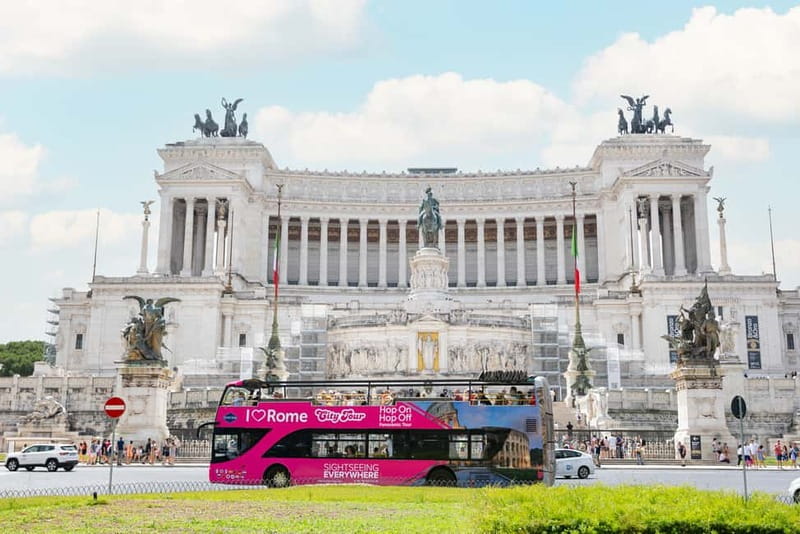
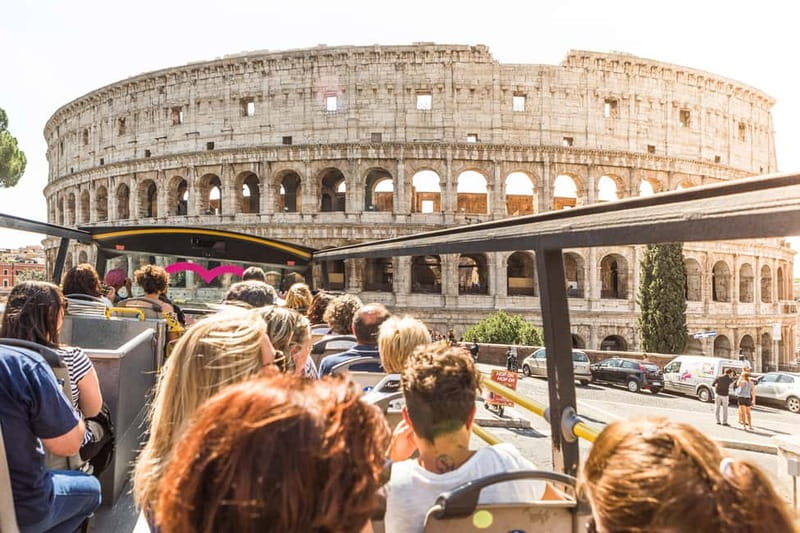
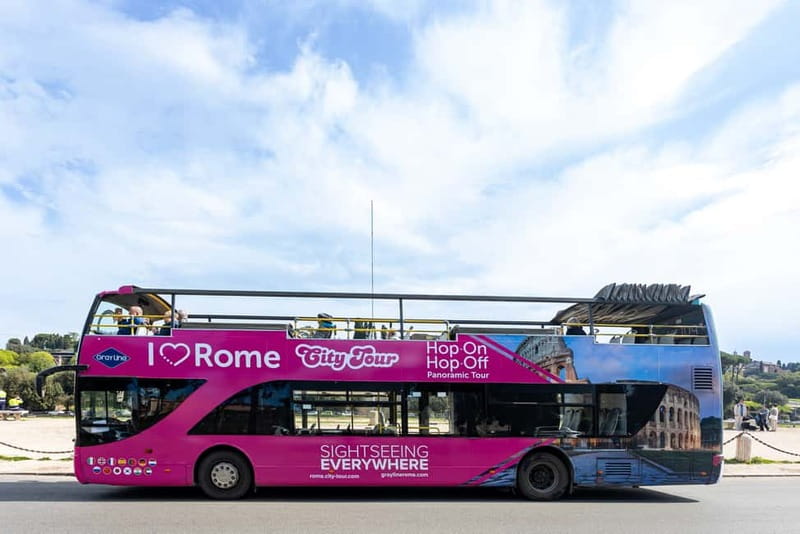
The bus is the easy part: think double-decker comfort with a pink color that makes it hard to miss. It’s open-top double-decker with a detachable roof, so you still get that classic Rome skyline view when conditions are good, but you’re not fully exposed when they aren’t.
The narration is where you get real value. You’ll get a complimentary audio headset, and the tour offers 12 languages (Arabic, Chinese, Dutch, English, French, German, Italian, Japanese, Korean, Portuguese, Russian, Spanish). The point isn’t to replace museum guides. It’s to help you understand what you’re looking at from the street, so the big stops feel less random and more meaningful.
One small reality check: audio can feel a bit fast or compressed when the bus is stopping and starting. It’s not usually a deal-breaker, but if you’re the type who likes to listen slowly, be prepared for a little speed during heavy traffic.
You can also read our reviews of more tours and experiences in Rome.



Start at Termini (Stop 1) and get your bearings quickly
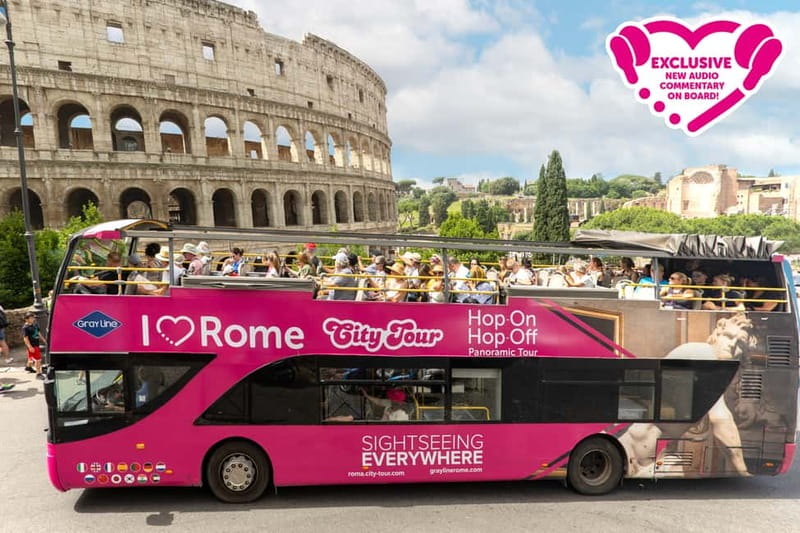
Your ride begins around Termini Railway Station, which is a smart choice. Rome’s huge, and Termini is one of the most connected areas for getting around on foot, taxis, or metro. Starting here also makes the route practical if you’re staying central but want an easy “reset” point.
Stop 1 is listed as Via Enrico de Nicola, facing Piazza dei Cinquecento (public line 910 yellow bus stop). Your meeting point is also given as Via Giovanni Giolitti 32. In real life, you’ll want to arrive a few minutes early and confirm you’re at the right side of the street before boarding.
Why this matters: once you’re on the loop, you can do a full pass to decide where you want to spend real time. That’s the secret advantage of hop-on hop-off. The first lap is for orientation. The next moments are for your priorities.
Stop 2 near St. Mary Major: a calmer starting culture beat
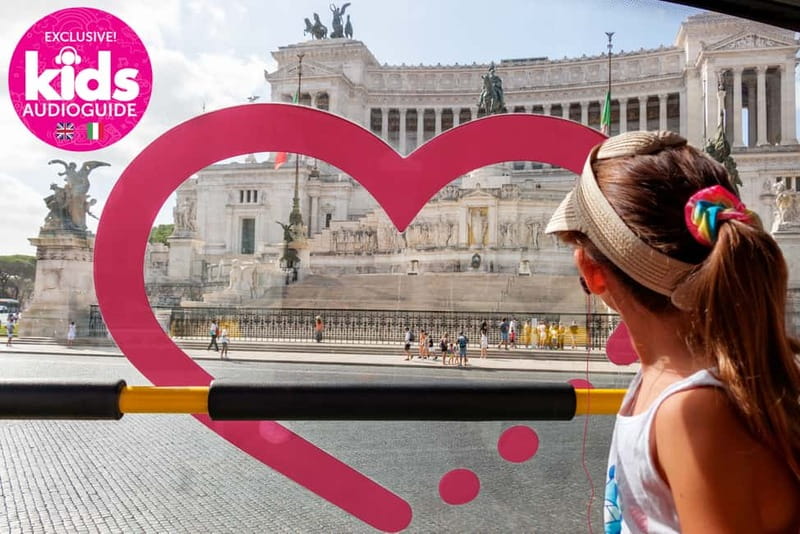
Stop 2 lines you up with Basilica Papale di Santa Maria Maggiore. The basilica itself isn’t included for admission on this ticket, so you’ll only get the outdoor area and the “what am I looking at?” context from the bus unless you add entry on your own.
Still, this stop is worth using if you want to break the day into chapters. Rome’s big monuments can feel overwhelming when you hit them all in one go. Having St. Mary Major early gives you a quieter, more grounded moment before the crowds of the ancient core.
Practical tip: if you plan to hop off here, keep expectations modest. You’re here to set context and choose whether you want to invest time inside later.
Colosseum area (Stop 3): the best reason to ride the loop
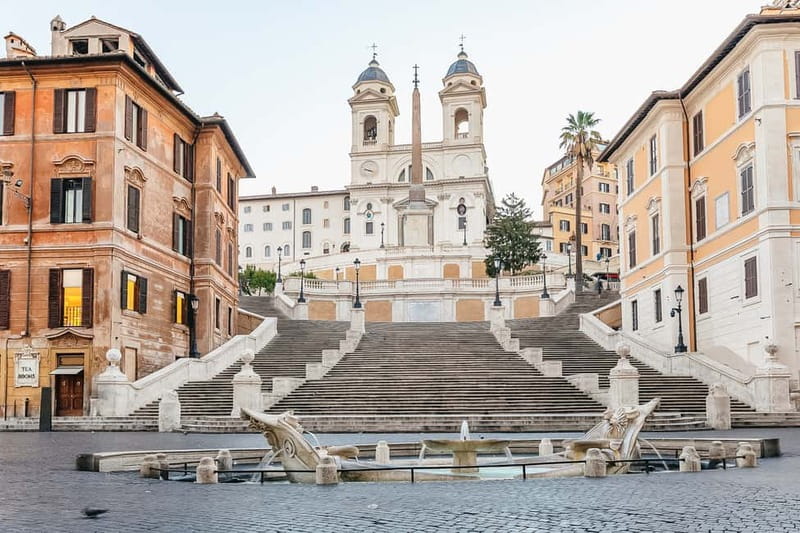
Stop 3 is the Colosseum Archaeological Area (Via di S. Gregorio, 30). Even if you don’t go in, it’s one of those Rome sights where the outside view instantly makes the audio make sense. The narration gives you the “why” behind what you see, and the bus approach helps you understand how the area sits in the city.
A drawback to plan for: the Colosseum zone is popular. That means crowds and slow foot movement. The bus solves one problem (getting there efficiently), but it doesn’t remove the on-the-ground crowds once you’re off.
If you’re trying to maximize time, use the bus like this: hop off for 30–60 minutes, take in the big views, then decide if you want to go deeper. Since admission isn’t included, having a chance to assess first is a smart way to avoid overcommitting.
Circus Maximus and the Mouth of Truth area (Stop 4)
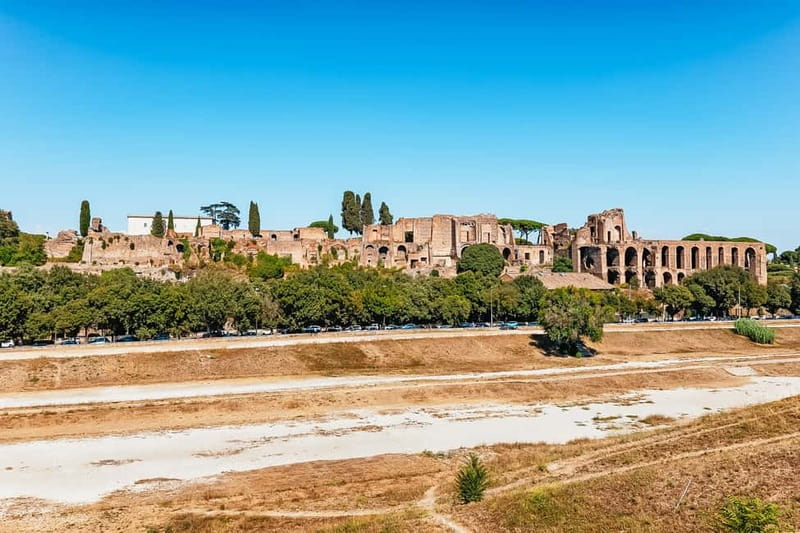
Stop 4 connects you with Circus Maximus and the Mouth of Truth area (Via del Circo Massimo, 4189, opposite Roseto Comunale). This part of Rome feels different from the Colosseum. It’s still ancient, but the vibe is more open and “streetscape Roman” rather than “one huge photo spot.”
Again, admission to attractions isn’t part of the ticket, so you’re using this stop for exterior views and for deciding whether you want to add tickets later.
Why it’s useful: it gives you a change of pace. If your day is starting to feel like a checklist, this stop is a good reset to walk a bit, look around, and let the city breathe.



Piazza Venezia and the Roman Forum perspective (Stop 5)
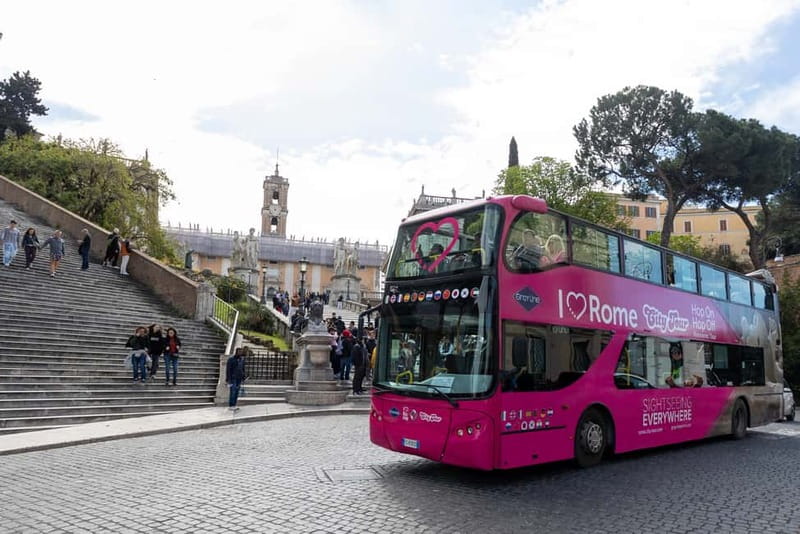
Stop 5 is Piazza Venezia – Foro Romano (Via del Teatro di Marcello, 34, behind the terminus of public buses). This is a big visual area. From here, Rome’s ancient presence feels layered and everywhere—buildings, viewpoints, and the scale of the forum zone all start to feel connected.
The practical upside of this stop is that it helps you plan your next moves. If you’re the type who wants to walk to the Forum later, you’ll get a better sense of distances and sightlines by seeing it from this higher traffic view.
One consideration: depending on where you hop off, you might face some uphill walking once you start exploring. You don’t need to do a marathon, but do wear shoes you trust.
Vatican City zone (Stop 6): Sistine Chapel and St. Angelo Bridge area views
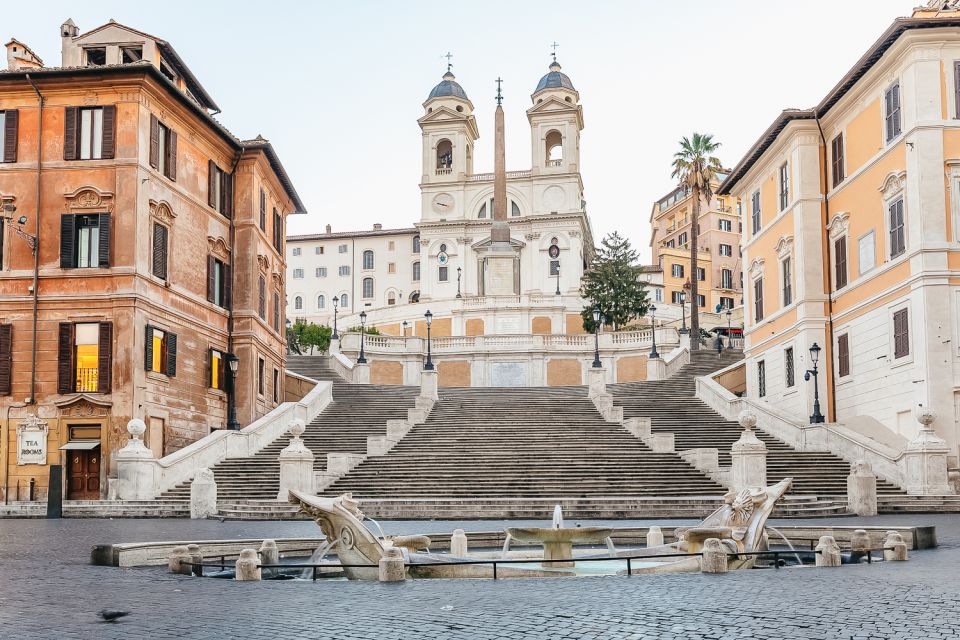
Stop 6 covers Vatican City, including the Sistine Chapel area and St. Angelo Bridge (with a major note for where the bus stops). From 23 Dec 2024, this stop is at Lungotevere Tor di Nona 7, between via Panico and Via Mastro.
This stop is a great example of what the bus does best: it gets you close enough to feel the place, without requiring you to perfectly structure your day around one fixed entrance.
Important reality: the bus ride is not a guided Vatican entry. Your ticket doesn’t include admission to museums or monuments, so treat this as a strong orientation stop. You’ll likely want to decide later whether you’re adding entry and which sites you can realistically book or prioritize.
Also, this is one of the places where views can be outstanding from the bus deck, then a bit less forgiving on foot if crowds funnel you. Use the bus if you’re short on time and want to “see the shape” of the Vatican area quickly.
Spanish Steps (Stop 7): climb it when you want, not on someone else’s schedule
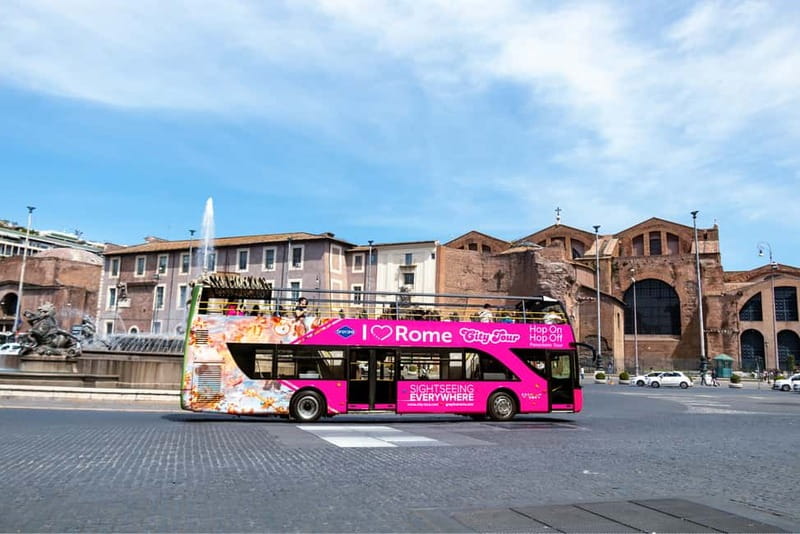
Stop 7 is the Spanish Steps / Shopping Area (Via Ludovisi, 35). This is one of those Rome zones where you’ll always see people lingering. The bus gives you flexible access, which is helpful because the best time for a photo or a slow stroll can vary a lot.
If you hop off here, you can spend time just watching the flow and taking in the stairs from different angles. Or you can climb the Spanish Steps when your legs feel good and you’re not rushing.
One practical tip: this area can be slow-moving for walking once crowds build. If you want to photograph or shop, consider hopping off a bit early in the loop, so you’re not fighting peak foot traffic.
Barberini and Trevi Fountain (Stop 8): end the day close to the classic postcard area
Stop 8 is Barberini & Trevi Fountain (Via Barberini 12). This is the payoff stop for many first-timers because it keeps you near one of Rome’s most recognizable “wow” scenes.
You might not time it for nighttime lights with this bus schedule, but you can still use the stop to plan an evening walk. Trevi is best treated like a mission: hop off, do your photos, then keep going. The bus helps you get there without draining your day with complicated navigation.
A useful thought: since your ticket includes onboard Wi‑Fi, you can quickly check opening times or map directions from where you drop off, then choose your next walk. It won’t replace planning, but it helps you adjust on the fly.
How long 4 hours can cover a 3-day rhythm
The stated duration is 4 hours – 3 days, which matters because it means your ticket option changes how you use the loop. With hop-on hop-off, a “short” ride becomes valuable when you can spread it across multiple days.
Here’s a smart way to do it in real life:
- Do one full loop early to get oriented and identify your must-do stops.
- Spend the next day or two hopping off only where you truly want time on foot.
This is exactly why many riders feel the ticket is worth it for multi-day trips. The bus becomes your transportation backbone, not just a one-time sightseeing bus.
Service frequency also helps. Even though traffic can affect schedules, rider feedback often describes regular departures and easy hopping. When buses run smoothly, the whole loop feels like a moving map.
Value for $22: what you get, what you still pay for
At around $22 per person, the value comes from three things you’re already getting: bus access on the route, multilingual audio through included headsets, and Wi‑Fi onboard. You’re not paying separately for narration or connectivity.
What’s not included is also clear: admission to attractions, monuments, and museums. So the bus is best viewed as transportation plus interpretation, not a ticket to every headline site.
That said, it’s still a strong value when you’re choosing between guided tours and self-guided exploration. The bus gives you a guided-feeling experience while letting you decide where you actually want to spend time.
Also, the route is described as authorized/approved by the Municipality of Rome, and the idea of decorum matters in practice. It’s not a chaotic ride, and the stops stay focused on major areas you’ll actually want to visit.
Tiny logistics that can make or break the day
A few details can save you stress.
Know that hop-on/off is route-based. The service is only available for specified routes, so you can’t assume every ticket type works the same way. If you’re buying a one-run style option, you may not get full hop-on/hop-off access. Confirm your specific option before you arrive at the stop.
Buses can be affected by traffic and road closures. That can mean delays or reduced frequency. So if you’re trying to time a specific entry, give yourself slack.
Rooftop and weather. The bus has an open-top design with a detachable roof, which means you’re not completely at the mercy of weather. If rain hits, you’ll often still have a protected ride.
Dogs and accessibility. Only small dogs in a crate are admitted. Wheelchairs may be accommodated on the lower floor. If you’re relying on accessibility seating, it’s worth planning to board early at your stop to improve your odds.
Finally, finding the exact stops can be a little fiddly if you hop off and try to transfer quickly. Use maps in your phone, look for clustered stop signage where the route is known, and don’t hesitate to ask for directions. Even quick help can save you time in the heat.
Who should book this bus tour?
This tour is a great fit if you:
- Want to see the big names like the Colosseum, Vatican zone, and Spanish Steps without building a perfect day around walking routes
- Prefer flexible pacing over rigid guided schedules
- Like audio explanations while you travel, especially if it’s your first time in Rome
It’s also a good choice for families and groups because the bus handles transit between distant areas, so you can keep everyone together without constant re-planning.
You might skip it only if you already know you’ll spend the whole trip in one neighborhood and don’t need transportation help across town.
Should you book this Rome hop-on hop-off bus tour?
Yes, if you want an efficient way to get your bearings and decide where to go deeper. The combination of 8 major stops, multilingual audio, and included headphones makes it easy to turn one day (or three) into a smoother plan. It’s especially worth it when you’re balancing the Colosseum, Vatican, and Spanish Steps on limited time.
I’d book it with one clear mindset: this is your Rome orientation and transit tool. Use it to scout, then return on foot (or with separate tickets) for the sites you truly want to enter.
FAQ
What is the duration of the Rome hop-on hop-off bus tour?
The duration is listed as 4 hours up to 3 days, depending on the ticket option you choose. Check available starting times for the option you book.
Where do I board the bus at the start?
Stop 1 is at Via Giovanni Giolitti 32. The listed Termini-area stop is also Via Enrico de Nicola, facing Piazza dei Cinquecento (public line 910 yellow bus stop).
Which major attractions are covered on the route?
Key areas on the route include St. Mary Major, the Colosseum Archaeological Area, Circus Maximus, Piazza Venezia / Foro Romano, the Vatican City area (Sistine Chapel / St. Angelo Bridge area), Spanish Steps, and the Barberini / Trevi Fountain area.
Is admission to attractions included?
No. The bus ticket does not include admission to monuments, attractions, or museums.
What languages are available on the audioguide?
Audio is available in Arabic, Chinese, Dutch, English, French, German, Italian, Japanese, Korean, Portuguese, Russian, and Spanish.
Can I hop on and off with any ticket type?
Hop-on hop-off service is only available for specified routes. You cannot hop on and off with the one-run ticket.
What time does the bus run and when is the last departure?
From March 15 to October, the bus operates 8:30 AM to 6:40 PM, with the last bus at 6:40 PM from Termini (Stop 1). From November 4 to March 14, it operates 8:30 AM to 5:40 PM, with the last bus at 5:40 PM from Termini.
What’s included with the ticket?
Included items are the bus ticket (according to the option selected), a multilingual audio headset for the Panoramic tour, and Wi‑Fi onboard.