REVIEW · ROME
Rome- Golden Hour Golf Cart Tour
Book on Viator →Operated by RoamRome · Bookable on Viator
Rome glows at golden hour.
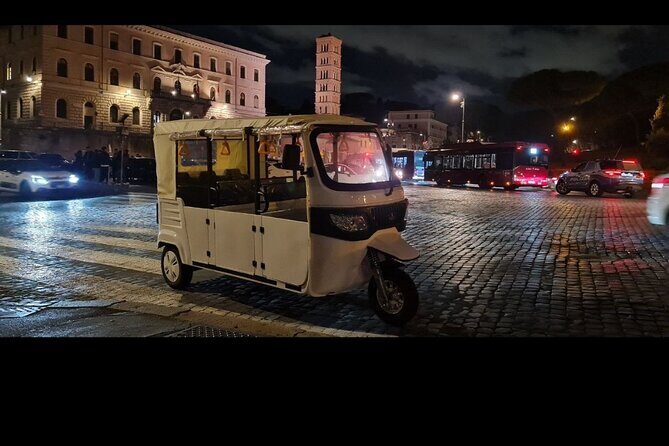
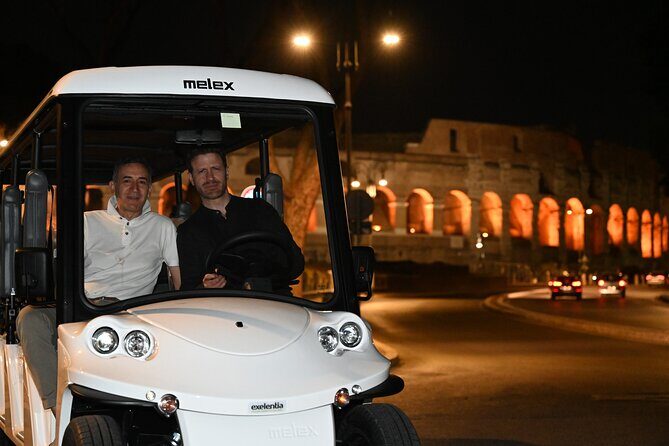
This golf cart evening tour is built for seeing big Roman sights without baking in midday heat or threading through peak crowds. You’ll cover a stack of landmarks in about 2 to 3 hours, with a guide who connects the dots between streets, buildings, and what happened there.
Two things I really like: you get tight, expert storytelling as you move between monuments, and the small-group setup (up to 14 people) keeps the vibe friendly and question-friendly. I’ve also seen guides like Domingo praised for humor and local insight, which makes the history feel less like a lecture.
One thing to consider: the tour depends on good weather, and in winter (October to February) the Parco Savello stop may be closed in the evening. So if you’re traveling in those months, plan for the possibility of a slightly different viewpoint moment.
In This Review
- Key highlights worth your time
- Why a Rome golden hour golf cart tour is such a smart idea
- The ride map: from Piazzale Flaminio to Piazza di Spagna
- Terrazza del Pincio: your first big Rome panorama
- Piazza Barberini: Triton fountain details and quick street-level history
- Colosseum at evening: more than a single iconic photo
- Trevi Fountain: famous, but it still earns your attention
- Pantheon: quick dome time and why you’ll want to plan for tickets
- Bocca della Verità and the Forum Boarium area: myth meets market streets
- Parco Savello, the Orange Garden view, and what changes in winter
- Piazza Navona and Largo Argentina: baroque drama and a shocking Roman event
- Piazza Venezia and the drive-by highlights: Michelangelo sights and presidential Rome
- Rione Monti: Suburra-era grit and a view over the Imperial Fora
- Circus Maximus and Palatine Hill: scale that still feels unreal
- What to expect from the guide: humor, fast answers, and better context
- Price and value: what $96.23 buys you in real time
- Who this tour fits best (and who might not love it)
- Final call: should you book this Rome golf cart tour?
- FAQ
- How long is the Rome Golden Hour Golf Cart Tour?
- Where does the tour start and end?
- Is pickup available?
- Is the tour in English?
- Do I need to pay admission tickets for the stops?
- How big are the groups?
- What happens if weather is bad?
Key highlights worth your time
- Golden-hour timing that helps you avoid the worst heat and crowd crush
- Up to 14 people for a more personal, easier ride-and-walk pace
- A landmark sweep in 2 to 3 hours from Piazzale Flaminio to the Spanish Steps
- Mostly free stops, with Pantheon entry not included and Parco Savello included
- Signature viewpoints at Terrazza del Pincio and (when open) Parco Savello
- Guide-led storytelling, often noted as engaging, humorous, and responsive to questions
Why a Rome golden hour golf cart tour is such a smart idea
Rome is gorgeous in the evening. The light softens the stone. Streets feel calmer. And the big bonus of an evening tour is that you’re not competing with the midday rush, when tour groups and day-trippers can make even famous places feel like a moving queue.
This one works especially well because it mixes two things you usually have to choose between:
- Efficient coverage (many stops in a short window)
- Human pace (you still get short moments to look closely, not just photo-from-a-bus)
The golf cart matters more than it sounds. It turns a “see a few things” plan into a “get your bearings fast” plan. You end up understanding where neighborhoods sit relative to each other, instead of bouncing between monuments with no sense of direction.
Also, the format is designed for conversation. The experience is offered in English, and the guide is there to answer questions—not just recite a script. One guide name you may hear on this route is Domingo, and multiple reviews highlight how guides bring the city to life with clarity and humor.
You can also read our reviews of more tours and experiences in Rome.



The ride map: from Piazzale Flaminio to Piazza di Spagna
Start point is Piazzale Flaminio (15), right in front of McDonald’s. The tour ends at the Spanish Steps, so you’ll finish in an area with lots of dinner options and an easy jump-off point for walking or getting a ride.
Pickup is available, but it’s not automatic for everyone. If you want pickup, it’s an additional €20 for accommodations in central Rome. Drop-off at your accommodation isn’t included; the tour finishes at the Spanish Steps.
Two practical tips here:
- Wear shoes you can stand in for short stops. Even with the golf cart, you’ll do quick walks and viewpoint time.
- If you plan to go straight to a late dinner after the tour, aim to eat near the Spanish Steps so you don’t have to cross town afterward.
The group size tops out at 14, which keeps the flow smoother when you stop for photos, viewpoints, and quick “look up here” moments.
Terrazza del Pincio: your first big Rome panorama
Your first stop is Terrazza del Pincio on the Pincian Hill (near Villa Borghese). The key word here is panoramic. This is your “wow, I get it now” start, because you’re seeing Rome’s geometry—hills, roofs, and the way major monuments relate to the city core.
You’ll have about 5 minutes here. That’s not enough time for museum-level wandering, but it’s perfect for setting context. I like to use stops like this to orient myself: where the center feels “up,” where streets funnel, and where the landmarks you’ll see later actually sit.
Because it’s an early part of the route, this viewpoint also helps you enjoy the rest of the tour more. When you later see the Colosseum or the fountains, you’re not just looking at a single landmark—you’re watching the city’s layout make sense.
Piazza Barberini: Triton fountain details and quick street-level history
Next is Piazza Barberini. The tour is brief here—about 1 minute—so this is a “blink-and-learn” stop rather than a long photo session. You’ll get to see the fountain of the Triton, often associated with Bernini’s masterpieces, plus the area’s ancient Roman connections.
This is where a good guide shines. Even in a short window, the difference between a generic description and a pointed explanation is huge. With the right commentary, you’ll notice how baroque fountains and older structures coexist in the same urban space.
If you care about architecture details, keep your eyes up and sideways: piazzas in Rome reward looking past the obvious.
Colosseum at evening: more than a single iconic photo
The tour’s Colosseum stop lasts about 10 minutes. That’s enough time to do two useful things:
- See the monument clearly in evening light
- Hear a guided explanation that puts it in a larger context
The Colosseum isn’t just a postcard. You’ll be oriented to why it mattered and what it represented in the ancient world—large-scale public entertainment on a level that was new and dramatic for its time.
A practical thought: evenings can feel cooler, but the square area can still be busy. In many cases, this timing helps you avoid the worst midday crowd pressure, but you should still expect people nearby. Use your 10 minutes to read what you can and look for structural details rather than only snapping one “I’m here” picture.



Trevi Fountain: famous, but it still earns your attention
Then it’s Trevi Fountain for about 10 minutes. Trevi gets attention for a reason. The scale, the sculpted drama, and the way it anchors the whole neighborhood are hard to replace.
The best way to enjoy it on a tour like this is to treat Trevi as a stop for seeing, not for milling. You’re not stuck there for an hour. You can glance at the overall design, then spend your short time noticing the fine details your brain tends to skip when you’re just walking past.
Also, because this is an evening run, the light can make the stone and water feel softer than in harsh daytime sun. It’s a classic “yes, it really is that beautiful” moment.
Pantheon: quick dome time and why you’ll want to plan for tickets
The Pantheon stop is about 5 minutes and admission is not included. That means you should be ready to pay separately if you want to go inside. If you’re the type who likes interiors, this is the one stop where you’ll have to make a decision: focus on the exterior and dome from outside, or line up for entry during your limited time.
Why it’s worth attention either way: the Pantheon is described here as the most important Roman temple, and it’s famous for having the biggest unreinforced dome in the world. Even if you never step inside, you’ll still get a clear sense of how the building “thinks” in one large sweeping form.
If you’re sensitive to time, check your preferences before you reach this stop. On a tight itinerary, deciding too late can cut into your actual viewing.
Bocca della Verità and the Forum Boarium area: myth meets market streets
The next stop is Bocca della Verità for about 5 minutes, and from there the experience shifts into the Forum Boarium area. This is one of the most interesting combinations on the route because it mixes:
- A popular legend (the Mouth of Truth)
- A reminder that this area was once a working market and meeting zone
In the Forum Boarium zone, you’ll have a guided look at older temple structures, including the Temple of Hercules Victor (described as a rare circular marble temple) and the Temple of Portunus overlooking the Tiber. You’ll also hear about the Arch of Janus, plus the story-rich area around the Theatre of Marcellus.
One detail I’d pay attention to: the Theatre of Marcellus is often compared to a mini version of the Colosseum, but it’s also unusual because there’s a Renaissance palace built on top by the Savelli family, and people still live there. That layering—ancient structure, then later power, then everyday life—is exactly what makes Rome feel like one long conversation across centuries.
Expect this segment to feel more “historical walking” than pure sightseeing. If you like place-specific stories, this is a highlight.
Parco Savello, the Orange Garden view, and what changes in winter
Parco Savello is next, about 10 minutes, and it’s described as the Orange Garden viewpoint. This stop is one of the tour’s mood-shifters because you’re moving from tightly packed monuments into an outlook where you can scan the city.
Admission for this stop is listed as included, which is a nice value moment on an otherwise stop-and-go itinerary.
Season note: in winter (October to February), Parco Savello can be closed in the evening. If your trip falls in those months, treat this stop as a bonus rather than a guarantee. Either way, you’ll still get plenty of city views later in the route.
Piazza Navona and Largo Argentina: baroque drama and a shocking Roman event
After the garden viewpoint, you’ll hit Piazza Navona for about 5 minutes. This is baroque square architecture built on the bones of an ancient Roman stadium. The shape of the square matters here; it’s not random. You’ll walk away understanding that Rome reuses space like it reuses ideas—new styles layered over old footprints.
Then it’s Area Sacra di Largo Argentina for around 3 minutes. The big story here is the assassination of Julius Caesar. The short stop can feel intense because the location carries weight. You’ll also see it connected to the cat sanctuary aspect of the site, which makes the area feel unexpectedly alive compared to how serious the historical event is.
If you’re the kind of person who wants a break between monuments, this quick stop is perfect. It doesn’t drag. It lands.
Piazza Venezia and the drive-by highlights: Michelangelo sights and presidential Rome
Next up is Piazza Venezia / Ancient City for about 10 minutes. You’ll be able to admire works of Michelangelo and the Altar of the Fatherland area.
This stop is useful because it sits close to multiple “big name” narratives in Rome. Even if you don’t go inside every building or take a deep dive on your own later, you’re getting placed correctly in the city’s story.
You’ll also do drive-by views of Piazza delle Quattro Fontane, the church of san Carlino, and the Quirinale Palace—noted here as once the residence of the pope and the king, and today the headquarters of the president of Italy. These are the kinds of streetscape moments that you’d miss if you were rushing on foot or taking a taxi without a guide.
Rione Monti: Suburra-era grit and a view over the Imperial Fora
Then you’ll briefly stop in Rione Monti for about 5 minutes. The tour describes it as once known as the Suburra, the gritty heart of ancient Rome, and today as one of the city’s most intriguing neighborhoods.
Why this stop works: it’s not just history on a plaque. The guide’s explanation helps you read the neighborhood. You start noticing how old alleyways and layered city development create a living sense of time travel—without any heavy-handed pretending.
You’ll also get a stunning view opening over the Imperial Fora. Use your short time to look outward and imagine the city in layers: ancient public spaces, medieval development, then modern streets.
Circus Maximus and Palatine Hill: scale that still feels unreal
Your final major scenic moment is Circo Massimo, with about 2 minutes of viewpoint time. The scale here is described as enormous—capable of holding up to 300,000 spectators—plus the story of chariot races and roaring crowds.
The key takeaway is how Rome built entertainment at massive public scale. Even if you’ve seen photos before, a viewpoint stop like this helps your brain connect the dots between “where it happened” and “what it looked like.”
Just beyond is the Palatine Hill, home to emperors watching from luxurious palaces. That contrast—public spectacle below, power above—is a classic Rome theme, and it lands fast here.
What to expect from the guide: humor, fast answers, and better context
This tour lives or dies by the guide. And the standout theme across feedback is story clarity plus personality. People highlight how guides can answer questions easily and talk about the city across centuries without losing the group.
Domingo is specifically praised for personality and making the night tour feel fun, with the group able to hop off for viewpoints and scenarios. Another guide example mentions a built-in moment to stop for a cafe, which can be handy if you’re riding straight through dinner plans later.
Here’s how you can make the most of it:
- Ask one or two “why is this here” questions. You’ll get explanations you can carry into the rest of your Rome days.
- When you see a monument, don’t just ask what it is—ask what changed over time around it.
For many first-time visitors, that’s the difference between seeing sights and understanding them.
Price and value: what $96.23 buys you in real time
The price is $96.23 per person for about 2 to 3 hours. That may sound steep until you factor in the format.
You’re paying for:
- A guided route with multiple stops clustered tightly
- Golf cart transport that reduces walking and saves time
- Admission coverage for some key spots (most listed as free, plus Parco Savello included)
- A small group experience (up to 14)
The one “watch this” item is Pantheon admission not included. If you want to enter, you’ll need to plan for that extra cost and time.
A quick reality check: this isn’t just about reaching famous landmarks. It’s about doing it efficiently while Rome is at its most forgiving hour—when temperatures drop and the monuments look like they belong on a postcard. If you’re trying to compress a lot into a limited schedule, this is one of the higher-leverage choices you can make.
One more timing note: the tour is commonly booked around 47 days in advance. If your travel dates are set, booking earlier can help you lock in the evening slot you want.
Who this tour fits best (and who might not love it)
This Rome Golden Hour Golf Cart Tour fits best if you:
- Want a guided overview of major landmarks without spending all day walking
- Like history explained in plain language, with personality
- Prefer a small group atmosphere
- Want a night-lit Rome experience without the hardest crowds
It might not be ideal if you:
- Have a strong focus on one monument and want long, slow, museum-style time (this tour is short at each stop)
- Are traveling in October to February and have Parco Savello as a must-see (winter closures in the evening are possible)
- Don’t want to handle extra tickets for places like the Pantheon
Final call: should you book this Rome golf cart tour?
Yes, if your priority is seeing the big Roman sights in a smart time window and leaving with context, not just photos. The combination of golden hour timing, a small-group guide, and the tight stop sequence from Piazzale Flaminio to the Spanish Steps makes it a high-value way to orient yourself fast.
Book it especially if you want an evening plan that feels fun, not rushed. If you’re flexible on viewpoints like Parco Savello (especially in winter) and you’re okay handling the Pantheon entry separately, this is the kind of tour that makes your next Rome day easier. You’ll know where you are, what you’re looking at, and why it mattered.
FAQ
How long is the Rome Golden Hour Golf Cart Tour?
It runs about 2 to 3 hours.
Where does the tour start and end?
It starts at Piazzale Flaminio, 15 (in front of McDonald’s) and ends at the Spanish Steps (Piazza di Spagna).
Is pickup available?
Pickup is available upon request for an additional €20 for accommodations in central Rome. Drop-off at your accommodation is not available.
Is the tour in English?
Yes, it’s offered in English.
Do I need to pay admission tickets for the stops?
Many stops are listed as free. Pantheon admission is not included, while Parco Savello admission is included.
How big are the groups?
The tour has a maximum of 14 travelers.
What happens if weather is bad?
This experience requires good weather. If it’s canceled due to poor weather, you’ll be offered a different date or a full refund.