REVIEW · ROME
Rome: Cycling through Eternity
Book on GetYourGuide →Operated by Romes Ultimate · Bookable on GetYourGuide
Rome by bike feels like time travel.
This 4.5-hour ride through Lazio helps you move at human speed, hopping from big-name ruins to quieter pockets of green and old stone. I love that you cycle along the ancient Via Appia area (including the catacombs ride) and that you also get the Aurelian Walls story through the Museo delle Mura stop, not just photo stops. One thing to plan for: parts of the old-road riding can be a bit bumpy, and the tour isn’t suited for mobility limits.
What makes this work is the mix of “wow” and “how did they build this?” moments. You’ll roll past the Colosseum area and Circus Maximus quickly, then slow down for major sites like the Baths of Caracalla, Parco degli Acquedotti, and Parco della Caffarella—places where you can feel Rome spread beyond the center. And with a small group (up to 10) led by English-speaking guide Dimitri, you’re not stuck guessing what you’re seeing.
In This Review
- Key highlights worth your attention
- Starting at Via dei Serpenti: the ride begins fast
- Quick Colosseum views, then straight into other giants
- Baths of Caracalla: where Rome’s comfort and power show up
- Museo delle Mura: the Aurelian Walls make more sense
- Catacombs of Saint Callixtus and the “Queen of Roman roads”
- Parco degli Acquedotti: aqueducts that still feel intact
- Parco della Caffarella: city meets nature without leaving Rome
- Parco di Torre Fiscale: a stop with purpose
- Egeria and the Eterna-city water story
- Via Cristoforo Colombo: the ride connects back to the sea route
- Bikes, pacing, and what to expect on the road
- The value question: is $100 a good deal?
- Who should book this Rome cycling tour
- Should you book Rome: Cycling through Eternity?
- FAQ
- How long is the tour?
- Where does the tour start?
- Is the tour guided, and what language is offered?
- What’s included in the price?
- Will the tour run in bad weather?
- Is it suitable for children or mobility needs?
Key highlights worth your attention
- Ancient roads you can actually pedal on the Via Appia Antica route
- Catacombs + open-air parks in one smooth half-day plan
- Aurelian Walls context at Museo delle Mura, so the city defenses make sense
- Aqueduct park views in Parco degli Acquedotti where engineering meets nature
- Small group pacing with room for questions and short stops at key moments
- A quick look from inside the ancient city grid, then a gradual escape to quieter countryside
Starting at Via dei Serpenti: the ride begins fast
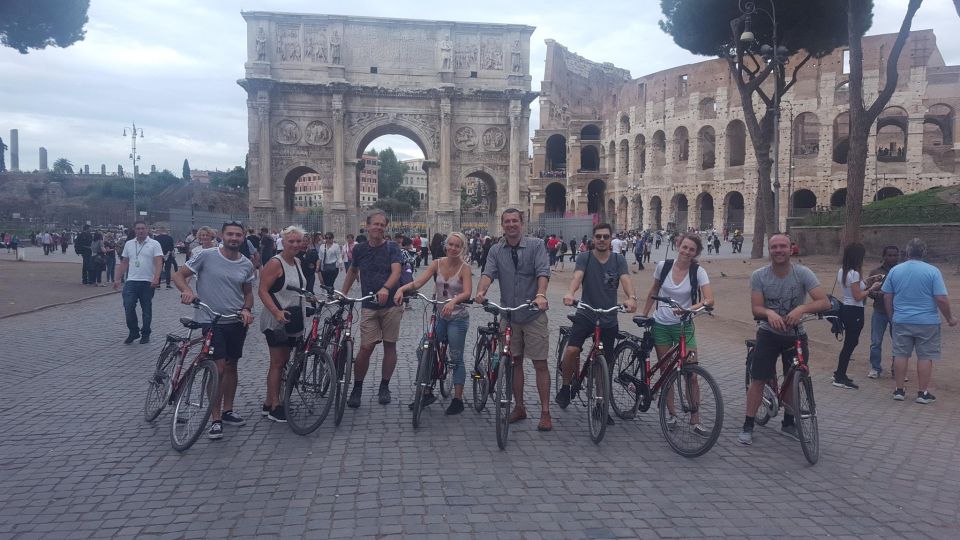
You meet at Via dei Serpenti, 89, and the tour ramps up quickly. The start matters here: you’re not just biking through traffic to reach “the good stuff.” The route is designed so you get a feel for Rome’s layers early, then you gradually trade crowds for trail.
Helmets and bike hire are included, which is a big practical win. You’re not hunting for gear or navigating rental apps before you even start enjoying the day. Bring water, comfortable shoes, and clothes you can move in without fussing. Sunscreen is not optional—this is Italy, and you’ll be outside for hours.
You can also read our reviews of more tours and experiences in Rome.



Quick Colosseum views, then straight into other giants
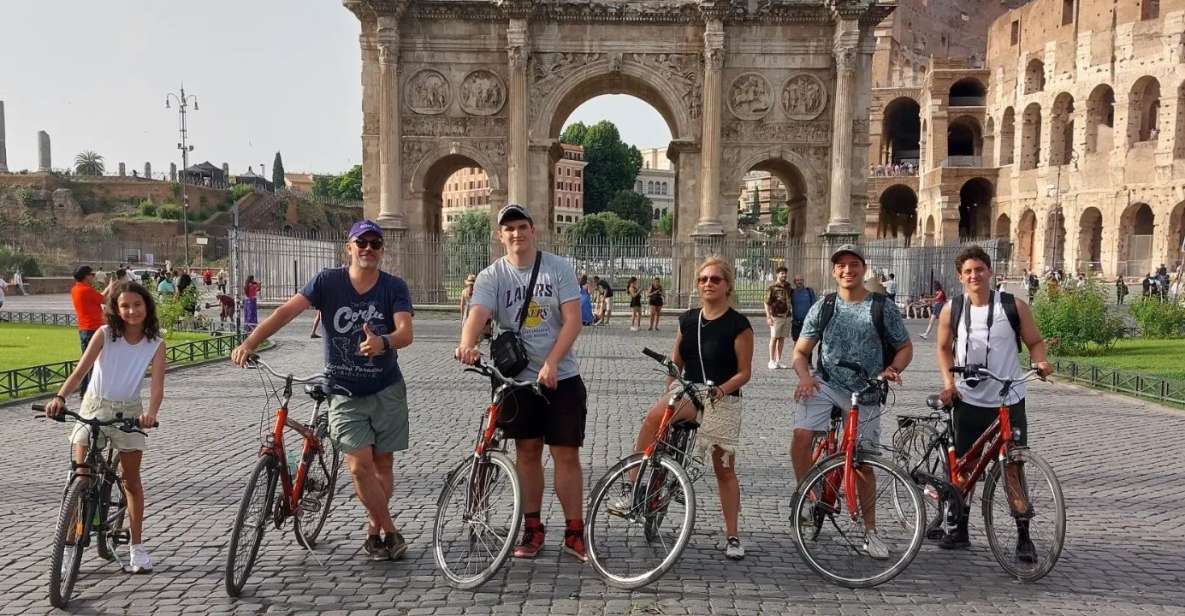
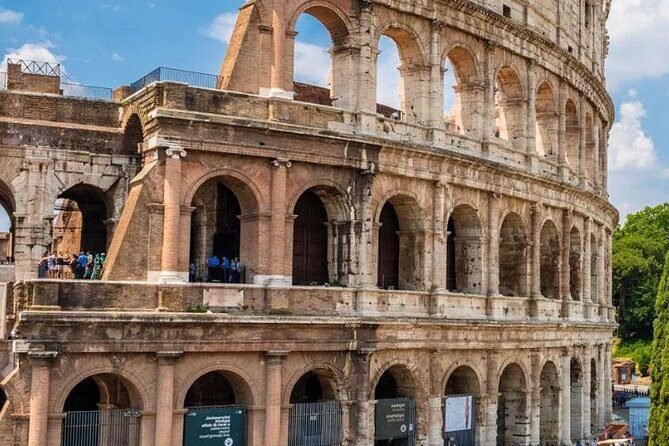
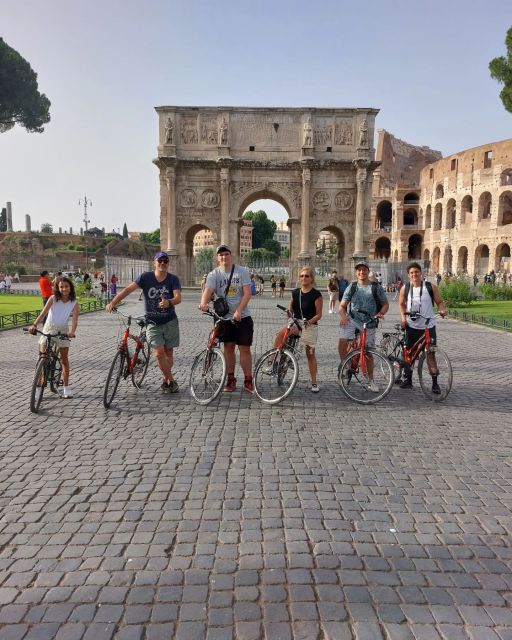
The first real stop is the Colosseum area with a short bike segment (about 20 minutes). Even with the brief time, you get a guided story about what’s around you—how the monuments sit in a larger urban picture instead of as isolated postcards.
Then the tour moves to Circus Maximus for a short, punchy ride (about 10 minutes). The scale hits you differently when you’re cycling rather than standing still. You see how a massive venue could dominate the valley and shape daily life.
These early segments are also a smart warm-up. You’re learning the route rhythm, meeting your guide’s expectations, and getting comfortable on the bike before the longer stretches into the archaeology and parks.
Baths of Caracalla: where Rome’s comfort and power show up
Next is Terme di Caracalla (about 10 minutes by bike). The Baths of Caracalla are the kind of place you can’t fully grasp just from a quick glance. On a bike, you get a useful overview—where structures sit, how space was designed, and why “public bathroom complex” still sounds weird until you see it.
You’ll also get the kind of context that makes the site feel real: not just that people bathed, but how big systems like these worked in the life of the city. If you like understanding the practical side of Roman life—water systems, engineering, social routines—this stop is one of your anchors for the day.
Museo delle Mura: the Aurelian Walls make more sense
Aurelian Walls can sound like a wall is a wall. Here, the tour gives you the missing piece at Museo delle Mura (about 20 minutes). This museum focuses on the Aurelian Walls and the modern historical center of Rome, so the walls stop being an abstract line and start acting like a boundary with a purpose.
Why this matters: walls explain a lot about Rome’s shape, what was protected, and how the city’s story changed over time. You’ll be able to look at the city later and say, oh—this is why certain areas felt “inside” and others felt “outside.”
Catacombs of Saint Callixtus and the “Queen of Roman roads”
Now you shift into the most memorable stretch of the day: Catacombs of Saint Callixtus and the ride through the Via Appia Antica area, often described as the Queen of all the Roman roads. The itinerary includes a 30-minute catacomb bike segment plus a longer ride through the archaeological park (about 45 minutes).
This is where the tour earns its “through eternity” vibe. Cycling near and around the catacombs isn’t the same as doing a rushed monument loop. You get time to understand how the Roman road system worked, why Appia mattered, and how the underworld of the catacombs connects to the visible world above.
One practical note from real riders: there can be a short bumpy section on ancient roads. It’s not a reason to avoid the tour, but it is a good reason to keep your posture relaxed and your grip steady. If you hate uneven pavement, you’ll want to pay attention to comfort and bike control right from the start.



Parco degli Acquedotti: aqueducts that still feel intact
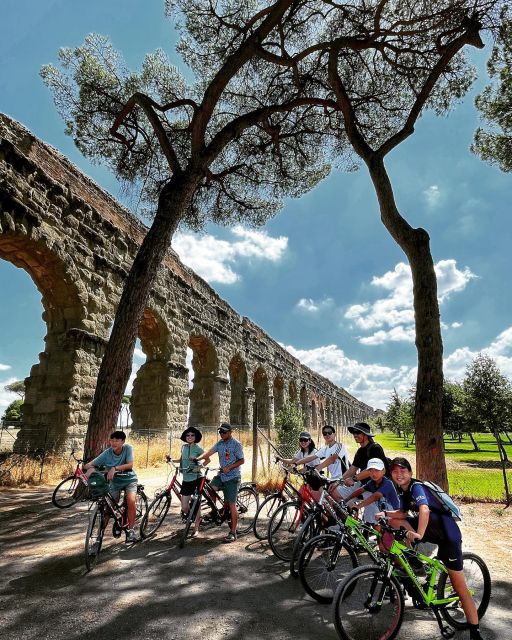
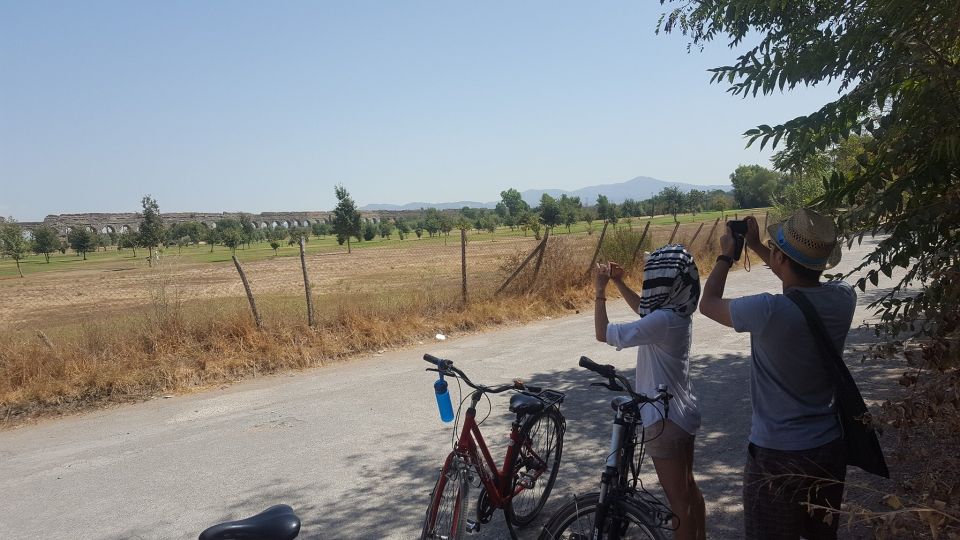
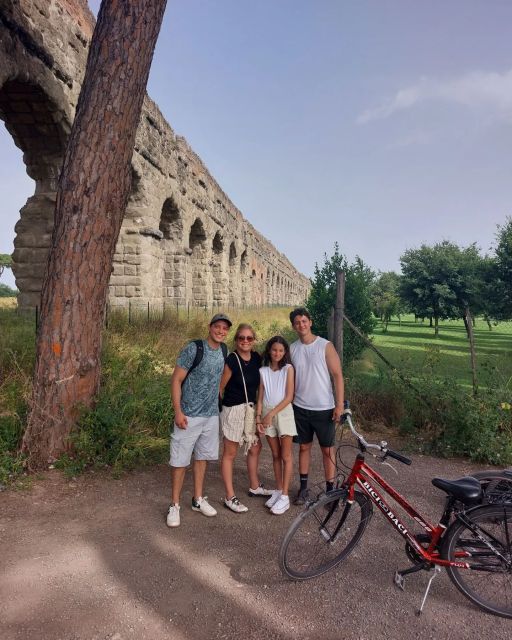
After the darker underground moments, you rise into daylight at Parco degli Acquedotti (about 30 minutes). This aqueduct park is the kind of place where Roman engineering and open air work together. You get stunning views of ancient structures, and the setting helps you see scale without needing a big museum explanation.
For many people, aqueducts are just “those stone arches.” On this ride, they become part of a system: they’re about supply, power, and how Rome fed itself. You also get a refreshing break from the tight, crowded blocks of the center.
Parco della Caffarella: city meets nature without leaving Rome
Next is Parco della Caffarella (about 45 minutes). This is the spot for your legs to reset and your mind to slow down. The name fits the experience: the city meets nature, and the ride makes it feel like you’re stepping into a quieter Roman pocket even though you’re still in the Rome orbit.
You’re not just passing through. You’ll have guided time to notice how the area works as a transition between built Rome and open green space.
Parco di Torre Fiscale: a stop with purpose
Then comes Parco di Torre Fiscale (about 15 minutes). Here, the focus is on the history of the Fiscal Tour and its purposes. Even if you’re not a Roman-systems fanatic, this type of stop is valuable because it shows how different “Roman infrastructure” pieces link together.
It’s also a nice pacing break. The tour isn’t a continuous sprint of monuments. It rotates: major ruins, systems, parks, then a return toward the city thread.
Egeria and the Eterna-city water story
You’ll also ride to Egeria – L’Acqua Santa di Roma (about 10 minutes). This stop adds a water-and-story element to the day’s engineering theme. Pair it with what you saw at the Baths and in Parco degli Acquedotti, and the day starts to feel like one long explanation of how water shaped Rome.
Short stops like this work well on a cycling tour. You get the main beat without losing the momentum of the ride.
Via Cristoforo Colombo: the ride connects back to the sea route
The final major segment is Via Cristoforo Colombo (about 20 minutes). This road links Rome’s historic center toward Ostia, which is the gateway to the Eternal City and a path toward the Tyrrhenian Sea.
It’s a smart way to close the loop: you finish with a sense of where Rome’s power and movement went beyond the ancient core. Even if you never visit Ostia on this trip, the ride helps you understand the geography of Roman reach.
Bikes, pacing, and what to expect on the road
The tour is designed for comfort, but it’s still cycling in an old city and along historic routes. You’re on a bike for about 4.5 hours, and the itinerary includes multiple short rides between sites.
Small group size (up to 10 participants) makes a difference. You’re not fighting for space, and the guide can keep everyone together. One of the best parts of the experience is how Dimitri leads: he’s described as continually checking back and keeping the group feeling confident, including near the meeting point streets where you want someone to keep things calm.
In hot weather, the tour may start slightly earlier. You’ll want to plan for that with water and sunscreen. Rain is part of Italy: the tour runs rain or shine unless there’s extreme rain, so bring clothes you don’t mind getting a little sun- or weather-tested.
If you’re considering this for your group, keep these fit notes in mind. It’s not suitable for people with mobility impairments, not for pregnant women, and not for children under 10.
The value question: is $100 a good deal?
At $100 per person, this is not a “cheap and cheerful” activity. But it’s also not priced like a private driver experience, and that’s the key: you’re paying for an organized route, bike hire, helmets, and an English live guide for a half-day.
Here’s where the value shows up:
- You cover a lot of ground without the stress of navigating on your own.
- You get context at multiple layers: big monuments early, then walls, baths, catacombs, aqueducts, and parks.
- You avoid the common Rome problem of hopping from one stop to the next and spending most of your day waiting in lines or staring at maps.
For me, the strongest value angle is this: Rome is crowded, and Rome is spread out. A cycling tour like this uses the in-between time well. It turns travel time into sightseeing time, while still giving you park and countryside moments that most quick itineraries miss.
Who should book this Rome cycling tour
This is a great fit if you:
- Want a different way to see Rome beyond standing still at monuments
- Like the “why” behind what you see, especially Roman infrastructure like roads and water
- Prefer a smaller group experience with time for questions
- Enjoy walking stories and photo stops, but also like motion and fresh air
It’s less ideal if you:
- Have mobility limitations (the route involves biking)
- Need a very smooth, even surface experience the entire time
- Want a classic museum-heavy day with lots of long indoor stays
Should you book Rome: Cycling through Eternity?
Yes, if you want a half-day that feels like you’re moving through Rome’s layers instead of ticking off a list. The combination of Via Appia catacombs, the aqueduct parks, and the Aurelian Walls museum stop is the sort of mix that’s hard to piece together on your own without effort and route confidence.
Book it if you’re comfortable biking for hours and want to trade some crowd time for calmer countryside sections. Skip it if uneven ground or cycling won’t work for you.
If you go, do the practical basics early: sunscreen, water, comfy shoes. Then let the guide’s stories stitch the sites into one connected Roman world. That’s when this tour earns its name.
FAQ
How long is the tour?
The tour runs for about 4.5 hours.
Where does the tour start?
The starting location is Via dei Serpenti, 89.
Is the tour guided, and what language is offered?
Yes. There’s a live tour guide in English.
What’s included in the price?
The tour includes helmets and bike hire.
Will the tour run in bad weather?
The tour takes place rain or shine unless there is extreme rain.
Is it suitable for children or mobility needs?
It is not suitable for children under 10, pregnant women, or people with mobility impairments.