REVIEW · COLOSSEUM TOURS
Rome: Colosseum Arena and Roman Forum | Small Group First Access
Book on Viator →Operated by Eyes of Rome · Bookable on Viator
Three hours in Rome can feel like a time machine. This small-group tour pairs Colosseum arena access with a guided walk through the Roman Forum, with an official Blue Badge guide steering the story instead of you getting lost in stone and silence. The 8:15 am start is key, too: you’re tackling the busiest area earlier in the day with a capped group size.
I especially love two things: first, the tour stays small (max 10 people), so you can actually hear the guide and ask questions. Second, the visit isn’t just a quick pass at the ticket gate; it’s built around telling the Colosseum’s purpose and the Forum’s role in daily Roman power—using visuals and clear pacing from guides like Irene, Luigi, Alessandro, Siriki, Valentine, Pamela, and Ellie (names that show up again and again in the good experiences).
The main drawback to consider is that crowds and timing can still be out of your control—security lines can run long on peak days. Add in the fact that you must bring valid photo ID with the same name on your ticket, and you’ll want solid footwear, because entry can be denied if those details aren’t right.
In This Review
- Key things to know before you go
- Why this Colosseum + Forum tour works better than self-guided
- Finding your guide at Café Roma (and how to make it easy)
- Entering the Colosseum Arena: what you’re actually paying for
- Colosseum storytelling that makes the stone make sense
- The Roman Forum stop: the power behind the pageantry
- Timing, pace, and where you end up
- Price and value: $80.11 for arena access plus a real guide
- What to watch for: ID, shoes, crowds, and one tech hiccup
- Who should book this tour (and who might skip it)
- Should you book this Colosseum Arena and Forum small-group tour?
- FAQ
- How long is the tour?
- What’s included in the ticket price?
- Where do we meet?
- Do I need to bring ID?
- What kind of ticket do I receive?
- Are closed-toe shoes required?
- Is transportation included?
- What’s the cancellation window?
Key things to know before you go
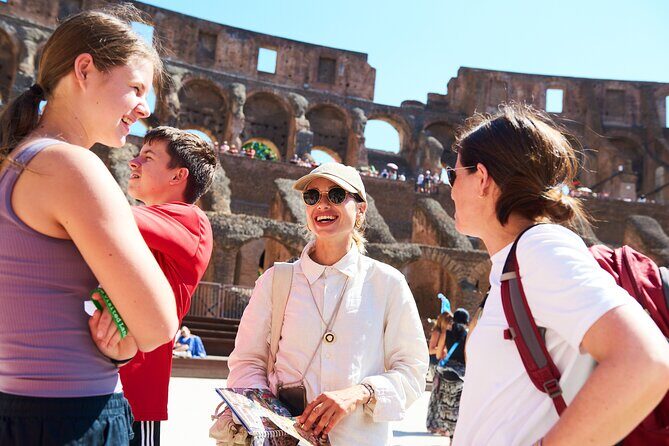
- Small group (max 10) keeps the experience calm enough to follow the story.
- Arena access included means you go beyond the typical exterior-only visit.
- Official Blue Badge guide leads the narrative through both sites.
- Early start at 8:15 helps you get into the action before the day fully heats up.
- Visual aids show the past (some guides use iPad displays and period reconstructions).
- Closed-toe, non-slip shoes + matching ID are part of the deal for entry.
Why this Colosseum + Forum tour works better than self-guided
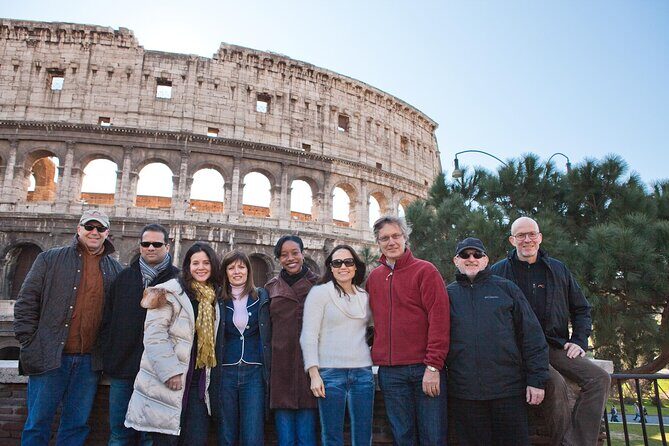
The Colosseum is famous for a reason, but self-guided visits often turn into a lot of staring and not much understanding. This tour fixes that with a human guide who connects what you’re looking at with why it mattered.
I like the format because it respects your time. You get a focused block at the Colosseum (about 1 hour 30 minutes) and then a second stop at the Roman Forum (about 1 hour). In other words, it’s not rushed sightseeing sprinkles. It’s a guided route designed to help you build a mental picture quickly—then keep it as you walk.
The small-group size matters more than you’d think. When you’re near the front of the pack, you can hear the guide’s explanations instead of playing radio-link telephone with your brain. When you’re comfortable enough to ask questions, the place starts making sense in real time.
You can also read our reviews of more tours and experiences in Rome.



Finding your guide at Café Roma (and how to make it easy)
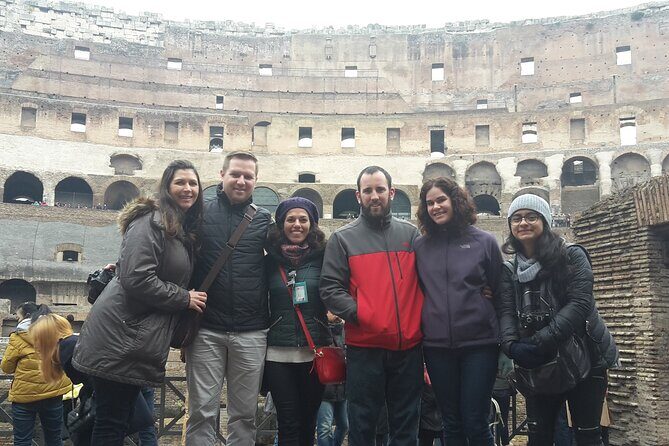
Your tour begins at Caffè Roma, on Via del Colosseo 31, near the Colosseum. The meeting spot is right where you want to be—close enough that you don’t spend the first 20 minutes doing stress aerobics around tour groups with matching T-shirts.
One practical tip that shows up in feedback: arrive early and grab a quick coffee and something buttery from the café. It’s a small thing, but it turns the start into a smooth routine instead of a scramble.
Also, keep your eyes open. Several tours meet around this area around the same time, so you can feel like you’re in a tiny maze before you spot your guide. If you’re patient for a few minutes, it usually sorts itself out quickly. When you do find your group, the rest of the morning tends to run clean.
Entering the Colosseum Arena: what you’re actually paying for
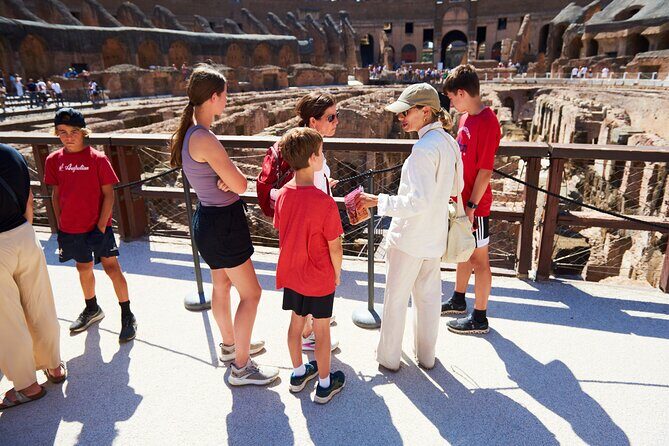
This tour includes admission with arena access at the Colosseum. That’s a big value point because many options stop at the outside view or at the main museum-style walkways. When you’re on the inside route, you start to understand scale—how the seating wrapped around the fighting space, how spectators could see the drama unfold, and how the space was engineered to direct attention.
You’ll have about 1 hour 30 minutes at the Colosseum, and the guide uses that time to help you read the building like a story. The Colosseum (also called the Flavian Amphitheatre) wasn’t some small local hangout. Built using travertine limestone, tuff, and brick-faced concrete, it was the biggest amphitheatre of its era—made to hold an estimated 50,000 to 80,000 spectators.
What you’ll notice with a guide is not just what the stone looks like. It’s how the shape works, why the arena is where it is, and how the monument ties into imperial Rome’s show-and-power system.
And yes: this is where the timed-entry setup helps. You get a reserved entry experience, and you’ll use a mobile ticket for entry. Still, you’ll go through security checks like everyone else—so build in patience if you’re visiting during busy periods.
Colosseum storytelling that makes the stone make sense
The best Colosseum tours don’t just point and name. They explain how Romans would have experienced the place, then tie it to what’s left today.
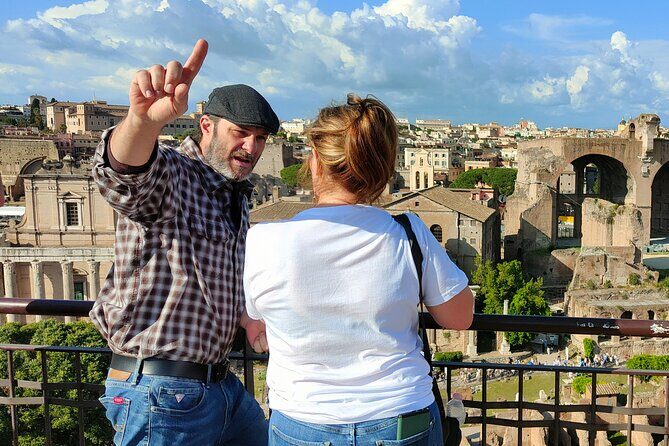
In the good experiences, the guides lean into clear, entertaining explanation—not dry facts. You might hear stage-setting context about how the arena functioned, how the crowd experience worked, and why the Forum matters right after you leave this stop.
A few specific guide features mentioned in feedback are worth calling out:
- Visual reconstruction tools: one guide used an iPad to show what the Colosseum and Forum may have looked like in earlier times. That helps you stop treating the ruins like random rocks.
- Gladiator-era understanding: Ellie, for example, brought books showing how the Colosseum looked during gladiator times. That’s useful because it turns imagination into something grounded in real reconstructions.
- Question-friendly pacing: guides like Irene and Valentine have been praised for staying patient, keeping teens engaged, and answering questions without steamrolling the group.
Even if you’re not a history buff, the payoff is practical: you start picking out features and then remembering what they do. You stop “seeing” the Colosseum as a single postcard and start seeing it as a designed machine for spectacle.
The Roman Forum stop: the power behind the pageantry
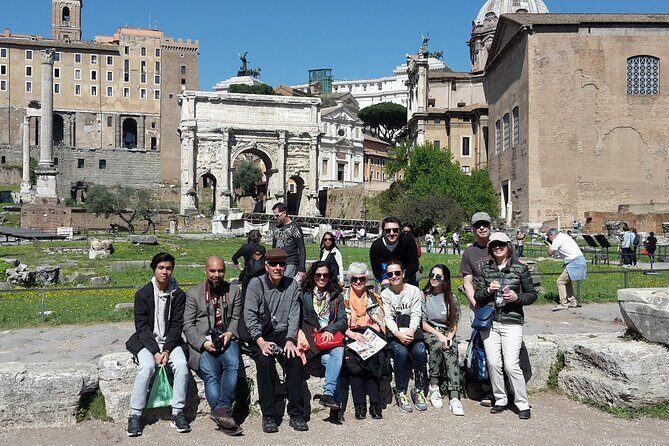
After the Colosseum, you head to Foro Romano, the Roman Forum, where the story shifts from entertainment to government.
The Roman Forum is a rectangular complex surrounded by ruins of major government buildings. In ancient times it began as a marketplace, and people called it the Forum Magnum—basically the big Forum—because it was the center of civic life. Standing there today, it’s easy to think of it as just a pile of famous names. With a guide, you get the structure: who used this space, what kind of decisions happened here, and how it sits in the middle of the city’s power grid.
You’ll spend about 1 hour at the Forum. That’s enough time for a guided overview without turning your brain into soup. The guide’s job is to help you connect what you saw at the Colosseum to what Rome was doing on a daily basis—because power and public life weren’t separate in ancient Rome.
One very real advantage of this pairing is flow. If you do the Colosseum first, the Forum afterward feels like the next page. The amphitheatre becomes one form of rule, while the Forum becomes the other: law, politics, status, and public decision-making in one place.



Timing, pace, and where you end up
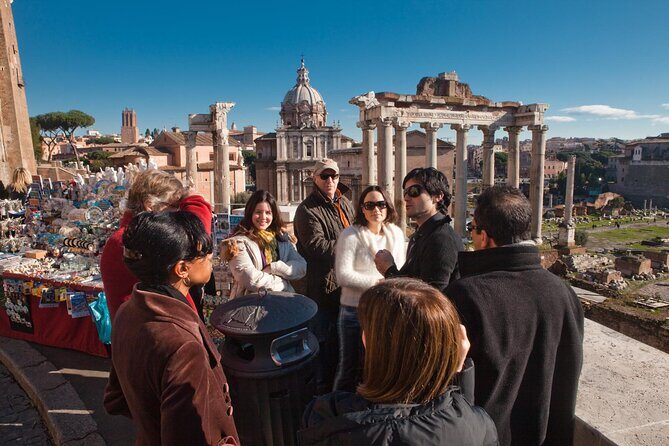
This is a 3-hour tour (approx.) with a morning start at 8:15 am. The structure is simple: a longer stop at the Colosseum, then the Roman Forum as a second anchor point.
The tour ends at the Roman Forum archaeological area near Fori Imperiali. That matters because you’re not abruptly dropped on a random street corner. You can usually keep walking right from where the tour finishes.
If you want to add extra sights, plan for proximity. Palatine Hill is nearby, but a Palatine Hill guided tour is not included here. Still, being in the right zone at the right time helps you build your day more logically instead of crisscrossing Rome.
And because it’s early morning, you’ll often have an easier time keeping your energy up—especially in hot months. A guide who looks out for the group’s comfort makes a noticeable difference here, and that showed up in feedback from people who mentioned shade-finding efforts during tough heat.
Price and value: $80.11 for arena access plus a real guide
At $80.11 per person, this tour is not a bargain-basement ticket. But the price is easier to justify when you look at what’s included.
You’re paying for:
- Colosseum + Roman Forum entrance with arena access
- A Colosseum reservation fee
- An official Blue Badge guide
- A small-group tour (max. 10 people)
- Mobile ticket delivery
The entrance component alone is listed as valued at €24 per person (plus the reservation fee listed separately). That doesn’t cover the guide or the service around how you enter and where you focus your time. In practice, what you’re buying is guided time in two top sites, with access that costs extra on your own.
You also avoid a common self-guided problem: you can buy tickets and still miss what matters. Here, your time is structured around the story, not just the location.
One reminder: transportation isn’t included. If you’re thinking about transit, plan your route to the meeting point at Café Roma. The tour itself is designed as a walk-focused half-day segment.
What to watch for: ID, shoes, crowds, and one tech hiccup
This tour has a few non-negotiables that can make or break entry.
1) Valid photo ID with matching names
Each traveler must present a valid passport or photo ID document that matches the name on the booking. Copies aren’t allowed. If your document name and booking name don’t match cleanly, you risk denied entry.
2) Closed-toe, non-slip shoes
This is safety-driven. The Colosseum and Roman Forum involve uneven ancient surfaces. If your footwear doesn’t meet the requirement, access may be denied.
3) Crowds can still be intense
Even with reserved entry, the Colosseum area can be extremely busy. One caution from feedback: Sunday crowds can be rough because security and visitor flow can cause long waits. If your schedule allows, it can be smarter to choose a quieter day.
4) Audio/radio equipment issues can happen
Once, a participant reported a broken radio system that made the guide harder to hear. That’s not the norm most of the time, but it’s worth knowing: if audio is hard to catch, speak up right away so your guide can adjust.
Finally, keep in mind the tour isn’t recommended for travelers with mobility issues. That’s not a dealbreaker for everyone, but it should steer your decision.
Who should book this tour (and who might skip it)
Book this if:
- You want Colosseum arena access, not just exterior views.
- You like small groups where you can hear the guide and ask questions.
- You’re traveling with teens or kids who do better with storytelling than with wandering.
- You appreciate visual explanations—period reconstructions and iPad-style aids can help you “see” the site as it once was.
You might think twice if:
- You’re very sensitive to crowd timing and want maximum flexibility.
- You have mobility limitations that make uneven ancient surfaces hard.
- You’re not willing to follow ID and footwear rules. This one enforces those requirements for entry.
Should you book this Colosseum Arena and Forum small-group tour?
I’d book it if your goal is simple: you want the Colosseum and Roman Forum to feel meaningful, not just impressive. The small-group limit, arena access, and official Blue Badge guide add up to real value, especially at an early 8:15 am start.
Skip it only if your priority is total freedom to roam at your own speed, or if you can’t confidently meet the ID and shoe rules. If you can handle those basics, this tour is one of the better ways to get your bearings fast and come away with a clearer picture of how Rome worked—both in its spectacle and in its power.
FAQ
How long is the tour?
It runs for about 3 hours total, with roughly 1 hour 30 minutes at the Colosseum and 1 hour at the Roman Forum.
What’s included in the ticket price?
Entrance to the Colosseum and Roman Forum is included, with arena access, plus the Colosseum reservation fee. The tour also includes an official Blue Badge guide and a small-group format (max 10).
Where do we meet?
You meet at Caffè Roma, Via del Colosseo 31, 00184 Rome. The tour starts at 8:15 am.
Do I need to bring ID?
Yes. You must present a valid passport or photo ID document that matches the name used at booking. Copies are not allowed.
What kind of ticket do I receive?
The tour uses a mobile ticket.
Are closed-toe shoes required?
Yes. You need closed-toe, non-slip shoes for safety, and access may be denied without proper footwear.
Is transportation included?
No. Transportation is not included.
What’s the cancellation window?
You can cancel for a full refund up to 24 hours before the experience starts. If you cancel less than 24 hours before, the amount paid is not refunded.