REVIEW · COLOSSEUM TOURS
Rome: Colosseum, Arena and Palatine Hill Small-Group Tour
Book on GetYourGuide →Operated by Carpe Diem Tours · Bookable on GetYourGuide
Arena floor, no detours.
This is a smart way to see the Colosseum because you don’t stop at the usual photo spots. You get arena-floor access through the Gladiator’s Gate, then you continue up to Palatine Hill and finish in the Roman Forum zone, where the real business of empire played out. I also like that the guiding is top-level: you’re with a fully licensed local expert, and you’ll often hear it from guides with serious academic chops, like Giorgio, who can field deep questions, or a PhD-in-archaeology style of storyteller.
One thing to watch: the day’s flow can shift. Depending on the ticket timing you’re able to book, you’ll either start with the Colosseum or start with the Roman Forum/Palatine Hill. That can affect where you feel rushed, especially if you’re hoping to spend extra time in the Forum.
In This Review
- Key highlights worth knowing
- Stepping onto the Colosseum’s arena floor
- A practical heads-up for this part
- From the Arch of Constantine to the amphitheatre
- Palatine Hill: emperors and elites at the top of the city
- Watch for your preference
- Roman Forum: the busy engine room of ancient Rome
- A note on pacing and satisfaction
- Guide quality: why it feels like more than a walk
- Headphones help a lot
- Price and value: is $107.62 a good deal?
- When to book and how ticket timing affects your day
- What I’d do with this information
- What to bring (and what will slow you down)
- Who this tour is best for
- Should you book Rome: Colosseum, Arena and Palatine Hill Small-Group Tour?
- FAQ
- How long is the Colosseum, Arena and Palatine Hill small-group tour?
- Where do we meet, and what should we look for?
- Where does the tour end?
- Will we visit the Colosseum arena floor?
- What about Palatine Hill and the Roman Forum?
- Is the start time the same every day?
- What do I need to bring?
Key highlights worth knowing
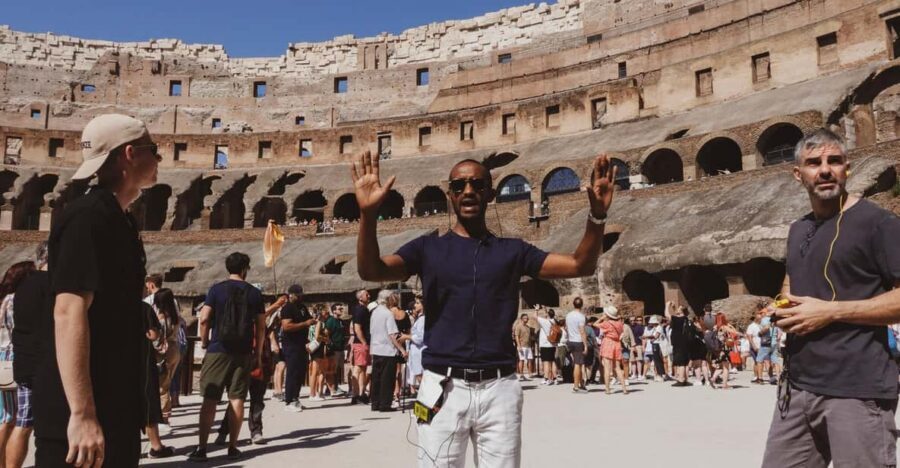
- Gladiator’s Gate route: You walk the path that gladiators used, not just the perimeter.
- Arena-floor perspective: The view makes the Colosseum feel less like a ruin and more like a stage.
- Licensed local guides: Guides like Giorgio, Lynn, Felicity, and Lia are known for clear, engaging explanations.
- Palatine Hill palaces: You’ll see where emperors and elites built their luxurious bases.
- Forum walk with context: The guide helps you connect daily life, politics, and power in one circuit.
Stepping onto the Colosseum’s arena floor
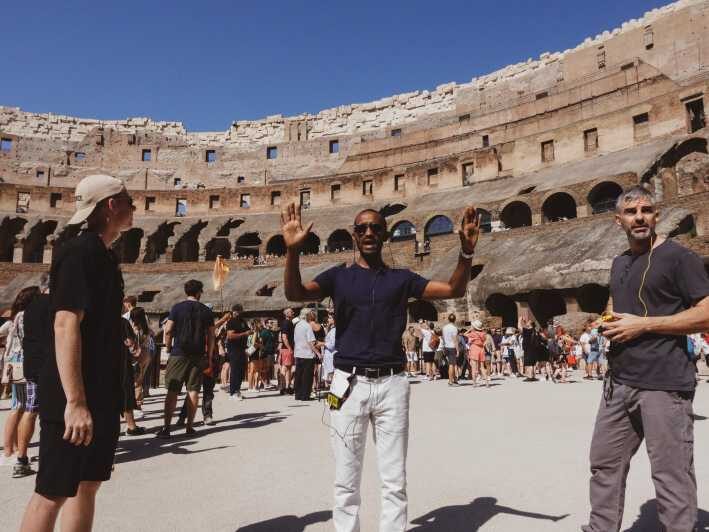
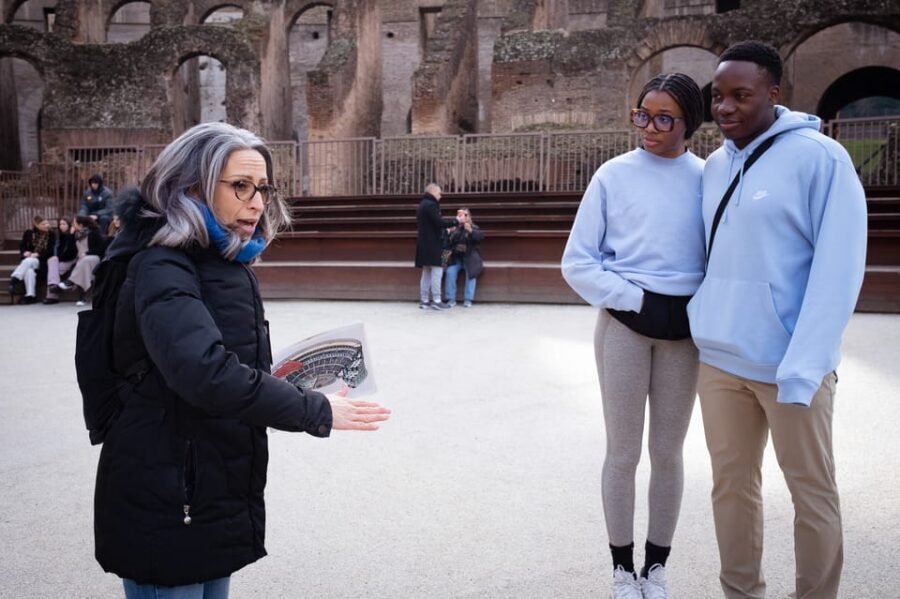
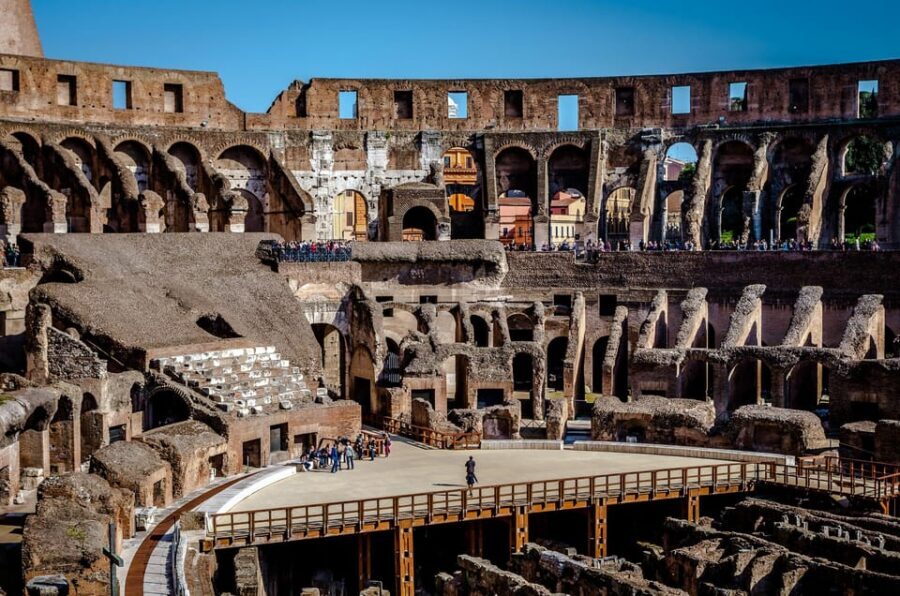
If you’re going to the Colosseum, you want more than window-shopping. The payoff here is that you actually step into the amphitheatre and reach the arena floor—right near where gladiators fought. That changes your brain’s “picture” of the site. Instead of only reading stone and arches, you start to understand the scale and how crowd noise would have worked.
The tour also takes you in through a specific entry point: Gladiator’s Gate. It’s a small detail, but it matters. It keeps the experience focused on the original drama of the place rather than turning it into a quick sprint around the outer ring. With headphones included, you’re not constantly hunting for your guide’s voice through gaps in the crowd.
What I like most is the way the guide frames the arena as part of the larger Roman show. Rome wasn’t just temples and senators. It was rulers, spectacle, and carefully engineered public attention. Even if you’re not a hardcore history person, the story lands faster when you’re standing where the action would have been imagined.
You can also read our reviews of more tours and experiences in Rome.



A practical heads-up for this part
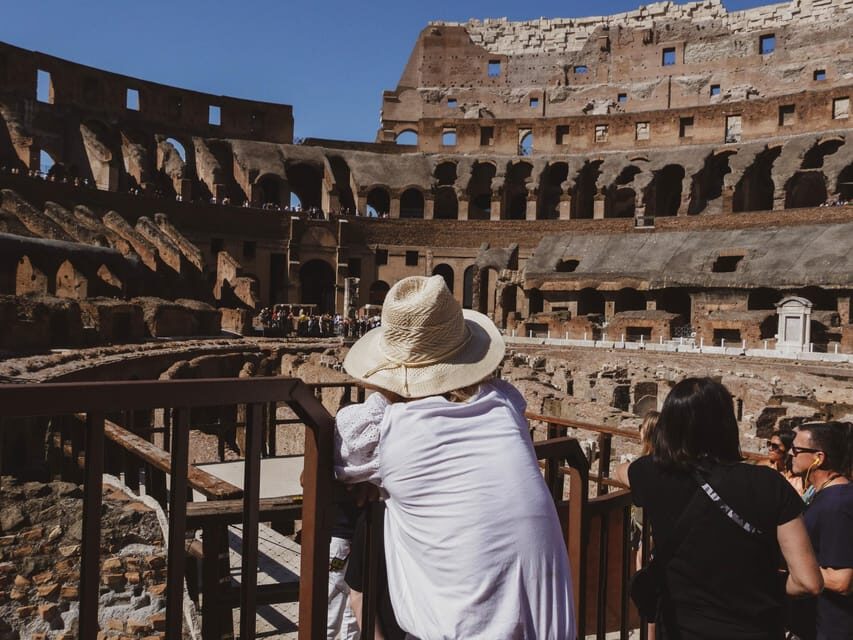
This is still the Colosseum. Expect sun, stone, and crowds at peak times. If you’re sensitive to heat, plan your day so you can take short breaks and keep water handy, since the tour doesn’t include food or drink.
From the Arch of Constantine to the amphitheatre
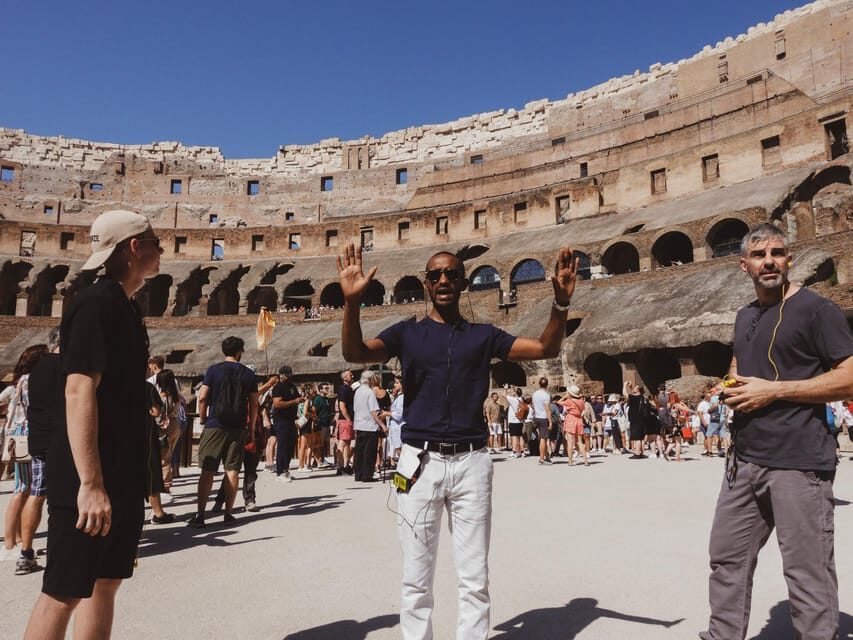
Your meeting point is at the Arch of Constantine. The guide holds a yellow flag, and you meet on the side furthest from the Colosseum. That direction detail is useful on a busy street—show up early enough that you can orient yourself without stressing.
The Colosseum stop is guided for about one hour, which is a good amount of time to get the main story without feeling like you’re stuck in a bottleneck forever. You’ll get the sense of how the Colosseum worked as a public machine, and your guide can tie it to what you see next on Palatine Hill and in the Roman Forum.
One more reason this section feels smoother: this is set up as a small-group experience. That usually means you can actually hear the guide and move with some rhythm. In one example, a group of 15 felt manageable and the headset setup made it easier to follow the commentary.
Palatine Hill: emperors and elites at the top of the city
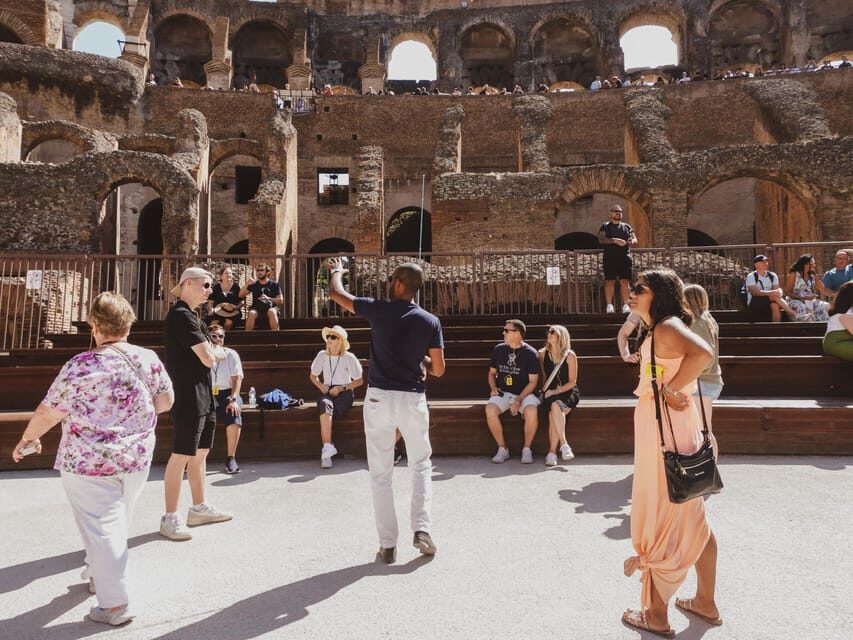
Palatine Hill is where you start thinking about Rome’s power the way Romans likely did—up high, close to influence, built for comfort and control. The tour takes you here for around 30 minutes with guided interpretation, and the emphasis is on what the hill represented: the home base of emperors and the luxury world of the elite.
If the Colosseum is Rome’s mass entertainment, Palatine Hill is Rome’s private life. You’ll see remains spread around the hill that help you picture the neighborhoods of the powerful. As the guide rebuilds the area with context, it clicks how a city could look the same to a visitor yet function wildly differently depending on your status.
This is also where you get a bit of “connect-the-dots” learning. A strong guide makes it less about memorizing names and more about understanding how power shaped everyday space—who lived where, why certain parts mattered, and how political energy influenced architecture.
Watch for your preference
This tour is designed to balance three big sites in a fixed time. That’s great if you want the full greatest-hits arc. If you specifically crave more detail on one location, you might find the time split a little tight—especially if you’d rather spend longer in the Roman Forum than in the Colosseum.



Roman Forum: the busy engine room of ancient Rome
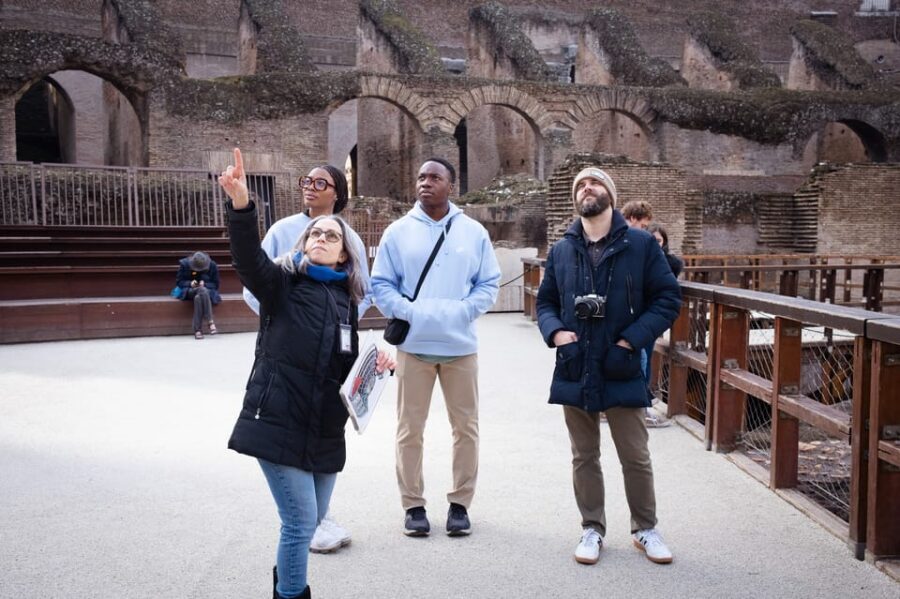
The Roman Forum is where Rome stops being a “site” and starts being a working idea. It’s the heart of the ancient city’s public life—politics, commerce, speeches, and movement. The guided finish is at the Forum, and you’ll weave through major ruins while your guide explains what likely happened there day to day.
What makes this part click is how the guide ties it to real human behavior. It’s not only emperors and senators. You can expect context that connects the mythical founders, famous political figures, and ordinary market life. Even in a short span, you learn how the Forum served as a stage for governance and a place where power was performed in public.
You’ll probably feel the Forum’s effect most if you’re the type of traveler who likes stories that explain why places matter. If you’re mostly here for big visuals, you’ll still have plenty to look at—but the real value is hearing the “why this mattered” layer.
A note on pacing and satisfaction
Some people love the Colosseum-focused start, and others want the Forum to take center stage. One fair way to think about it: this tour is built as an efficient three-site sweep. If you know you’ll want more time in the Forum specifically, you might want to keep your expectations aligned with a shorter guided stop there.
Guide quality: why it feels like more than a walk
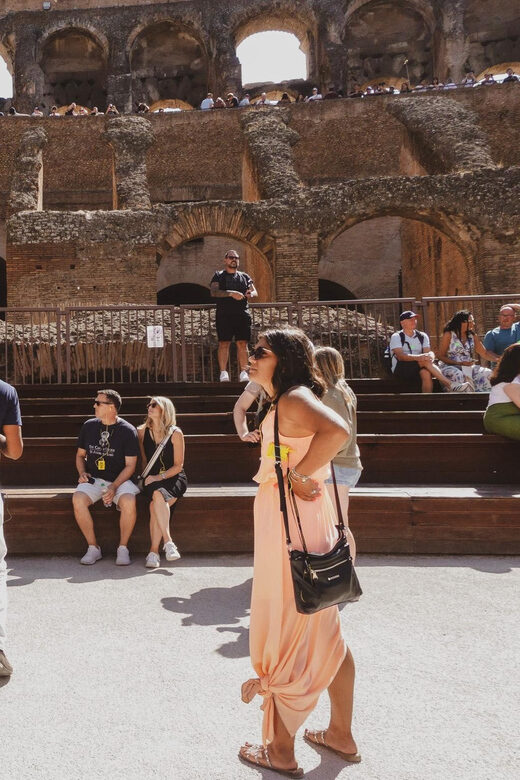
The biggest theme in the experience is the guide. You’ll hear it in how guides handle questions, how they keep the pace readable, and how they turn stone into scenes.
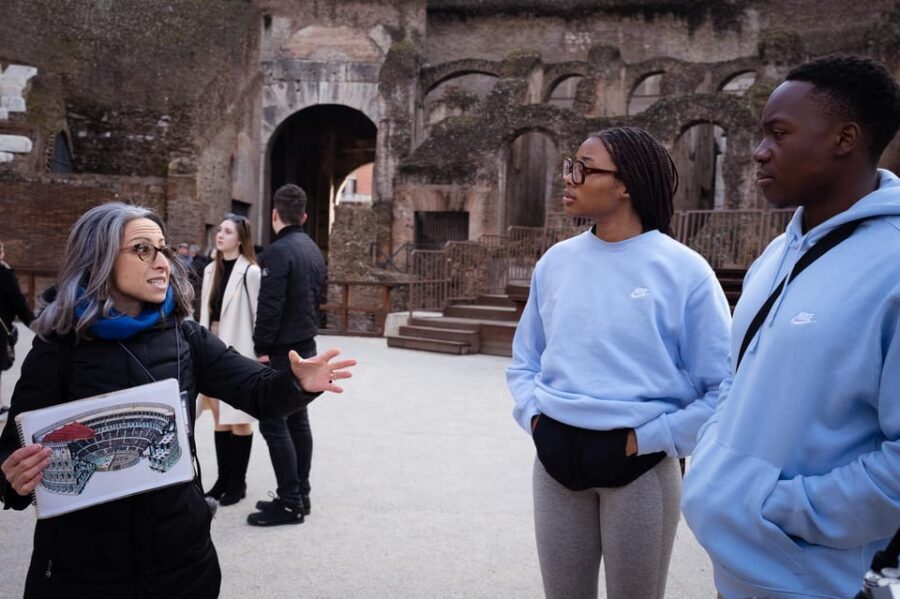
Different guides bring different styles, but the consistent pattern is engagement and clarity. Giorgio is highlighted for being a historian who can answer questions and share knowledge in a way that stays understandable. Lynn is noted for being engaging and very knowledgeable. Felicity is remembered for explanations with humor. Lia is described as passionate about Roman history and great at bringing it to life. And Barbara and Ivana get praised for enthusiasm and a lively teaching style.
If you care about learning something real—not a script read at a jog—this kind of guide-focused tour is where it pays off.
Headphones help a lot
Headphones are included, which matters more than people think. Crowds can muffle sound. With audio support, you can keep moving without constantly stopping to angle your head toward the guide.
Price and value: is $107.62 a good deal?
At about $107.62 per person for roughly 3 hours, you’re paying for three things: timed access to an arena-level experience, guided interpretation across multiple major sites, and the convenience of a small-group format with headphones.
Here’s the value math that helps you decide:
- You’re not just paying for “being in the Colosseum.” You’re paying for the access route that gets you inside the amphitheatre and onto the arena floor.
- You’re not just paying for one stop. You’re getting Palatine Hill and the Roman Forum in the same guided arc.
- You’re also paying for a licensed expert guide who can connect the dots so you don’t leave with a list of names and no story.
Could you do these sites on your own? Sure. But you’d spend extra time figuring out the flow, translating information on the fly, and missing the “how it worked” context. For many people, that time-and-energy savings is worth the ticket.
Also note this helpful exception: Colosseum admission is free on the first Sunday of the month, and tours are discounted on those days. If your dates land there, it can be one of the better times to book.
When to book and how ticket timing affects your day
Your tour duration is about 3 hours, but the order of stops can shift. You’ll either start with the Colosseum or start with the Roman Forum/Palatine Hill depending on the tickets available.
That matters because your energy changes across a morning or afternoon. If you’re the kind of traveler who wants the “wow moment” first, starting at the Colosseum may feel better. If you prefer to understand the city’s political heartbeat first, starting with the Forum/Palatine Hill can make the Colosseum story land more sharply later.
What I’d do with this information
- If you’re visiting during hot months, consider how much shade you might want early versus late. Some guides actively try to find better picture-taking spots and keep you comfortable when possible.
- If you’re visiting with kids, a clear guide and headphones can reduce frustration, but you still need realistic expectations about stone steps, crowds, and standing/walking.
What to bring (and what will slow you down)
This one is simple. Bring a passport or ID card. On busy days, any delay at entry can eat your tour time.
Because food and drink aren’t included, don’t assume you’ll have an easy snack break. Plan water and basic sun protection on your own.
Also remember: you’ll be asked for full names for all travelers in your group. That’s one of those details that seems boring until you’re at a desk correcting a typo.
Who this tour is best for
This is a strong fit if you want:
- A guided route through three top Rome sites without overplanning.
- A true arena-floor experience rather than just distant views.
- A guide who can answer questions and make the city feel alive.
It’s also a decent choice for first-timers because the story arc moves from spectacle (Colosseum) to power (Palatine Hill) to daily governance (Forum). You end with a clearer picture of how Rome functioned.
If you’re a construction-nerd who wants very technical detail on how the Colosseum itself was built, you might feel the coverage is more focused on the bigger human story than engineering. That’s not a deal-breaker, but it’s good to know what you’re signing up for.
Should you book Rome: Colosseum, Arena and Palatine Hill Small-Group Tour?
I’d book it if you want the most memorable part of the Colosseum—the arena—plus a guided walk that actually connects Colosseum, Palatine Hill, and the Roman Forum into one coherent Rome picture. The small-group format and included headphones make it easier to hear your guide and stay engaged.
Skip it only if you already plan to spend a long time in one site and don’t want a time-balanced sweep, or if you know you’ll be disappointed by not having extra minutes dedicated to one location’s specific technical details.
If your dates include the first Sunday of the month, it can be extra smart thanks to the free admission and discounted tour pricing.
FAQ
How long is the Colosseum, Arena and Palatine Hill small-group tour?
The tour is about 3 hours.
Where do we meet, and what should we look for?
You meet at the Arch of Constantine. The guide will be holding a yellow flag, on the side furthest away from the Colosseum.
Where does the tour end?
The tour ends back at the meeting point.
Will we visit the Colosseum arena floor?
Yes. This tour takes you onto the arena floor through the Gladiator’s Gate.
What about Palatine Hill and the Roman Forum?
You visit Palatine Hill with a guided segment, and the tour finishes in the Roman Forum area with guided storytelling as you walk among the ruins.
Is the start time the same every day?
The order can change. You’ll either start with the Colosseum or with the Roman Forum/Palatine Hill depending on the time of tickets that can be purchased.
What do I need to bring?
Bring a passport or ID card.