REVIEW · CATACOMBS TOURS
Rome: Appian Way & Catacombs Golf Cart Tour – Shared|Small groups
Book on Viator →Operated by EcoBike S.r.l. - Centro Servizi Appia Antica · Bookable on Viator
Rome’s ancient road has a new pace. This small-group golf cart tour turns the Appian Way (Via Appia Antica) into a smooth, story-filled outing, with big monuments spaced out like a timeline. You’ll also get a close look at the Catacombs of St. Callixtus or St. Sebastiano and the Circus of Maxentius, all without the full-day hiking grind.
I love the small group setup (shared, maximum 7 people). I also love that the catacomb portion includes a real guided experience, not just a quick walk-by at the entrance. Guides like Flavia and Federico are mentioned for a reason: they tend to connect what you’re seeing to how Rome worked day to day.
One possible snag: when you’re on the cart, seat position matters for hearing the guide. If you end up toward the back, you may catch less of the commentary than the people nearest the front.
In This Review
- Quick hits: what makes this Appian Way golf cart tour special
- Why the Appian Way feels different from the city center
- Via Appia Antica start point and the pace that keeps it fun
- Stop 1: Chiesa del Domine Quo Vadis and the famous footprints
- Catacombs on the agenda: St. Callixtus or St. Sebastiano
- Circus of Maxentius: the Roman spectacle you can actually walk into
- Cecilia Metella’s area and the hill view over the Appian landscape
- Capo di Bove and the Villa dei Quintili: big names, quick stops
- The Appian Way driving segment: seeing the road as a whole
- Appia Antica Archaeological Park ride-back: closing the loop
- Price and value: what $91.32 covers (and what it doesn’t)
- Hearing the guide on a golf cart: simple tips that help
- Who should book this Appian Way tour
- Should you book this Appian Way golf cart tour?
- FAQ
- How long is the Rome Appian Way & Catacombs golf cart tour?
- What does the tour cost?
- Where do I meet for the tour?
- What group size should I expect?
- What language is the tour offered in?
- Will I visit the Catacombs of St. Callixtus or St. Sebastiano?
- Are any major entrances included in the price?
- Is coffee included?
- Is free cancellation available?
Quick hits: what makes this Appian Way golf cart tour special
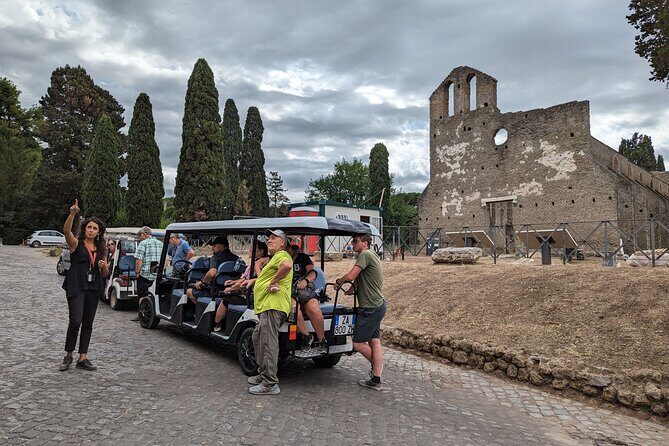
- Small group size (up to 7) keeps the day from feeling crowded or rushed
- Catacombs included with guided entry (St. Callisto or St. Sebastiano, depending on availability)
- Circus of Maxentius stop gives you a rare, well-preserved Roman spectacle site
- View break on the hill for the Caetani Castle and Cecilia Metella’s area
- Everything centers on the Appian Way so you get context, not random sightseeing hops
Why the Appian Way feels different from the city center
The Appian Way isn’t just another Roman road. It’s the edge of old Rome where burial spaces, churches, and mausoleums line up in a long, meaningful sequence. The golf cart matters because the route stretches out far enough that walking can feel like a long endurance test.
This tour is designed for a steady pace over about 3 hours. You drive between stops, then you actually spend time looking—at tombs, ruins, and churchfront moments that you’d miss at bike-speed or bus-speed.
You can also read our reviews of more tours and experiences in Rome.



Via Appia Antica start point and the pace that keeps it fun
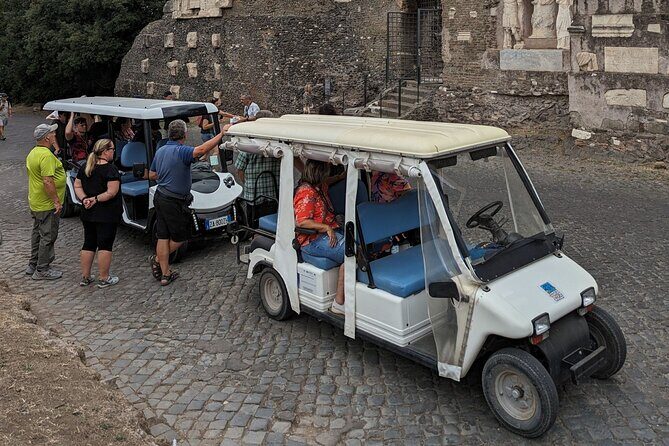
You meet at Via Appia Antica, 60 (near the park area tied to the Appia Antica Archaeological Park). The tour also ends back at the same meeting point, which makes planning simple.
It runs in English and uses a mobile ticket, so you’re not juggling paper on a bumpy ride. The day is structured as a chain of stops—short museum-like moments, then quick drives, then a couple longer viewing blocks.
And yes, this is a shared experience. But with a maximum of seven people, it feels more like a guided outing than a bus tour with a headset-only vibe.
Stop 1: Chiesa del Domine Quo Vadis and the famous footprints
The first stop is Chiesa del Domine Quo Vadis, a small church tied to an apocryphal encounter story between Saint Peter and Christ. According to the tradition, Peter asked, Lord, where are you going? and the answer was I am going to Rome to be crucified again.
Even if you’re not focused on the religious story itself, this stop is valuable because it shows how places on the Appian Way gained layers of meaning over time. Look for what’s physically preserved in the church—this is one of those locations where tradition is not just a signboard.
Time-wise, you’ll spend about 10 minutes here. It’s enough to get the story and do a quick, respectful look without turning the day into a series of quick photo sprints.
Catacombs on the agenda: St. Callixtus or St. Sebastiano
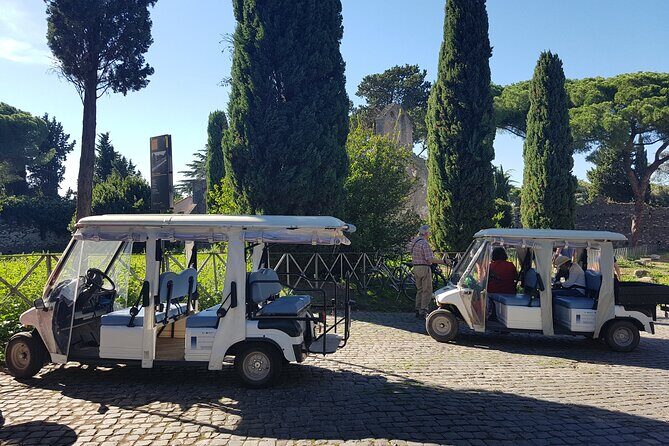
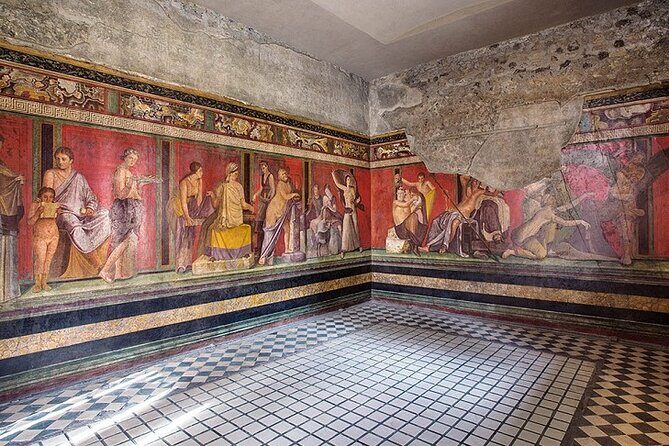
Next comes the catacombs, and this is where the tour earns its reputation. You get admission and a guided tour inside the catacombs of San Callisto or Sebastiano, depending on availability.
This matters for two reasons. First, the catacombs are huge and layered—meaning you can get lost fast without guidance. Second, the guide helps you understand what you’re seeing: burial chambers, networks of corridors, and the way different Christian communities used these underground spaces.
San Callisto is described as one of Rome’s most important catacomb sites, tied to burial activity beginning in the mid-2nd century. It formed part of a large cemetery complex with a broad underground network, and it includes burials of many martyrs and popes. So even when you’re physically in a small chamber, the context is massive.
Time on this stop is about 1 hour, which is a good length for staying engaged while still keeping the overall tour under control.
Practical note: catacombs are cool and you may want a light layer, even in warmer months. Also, bring your listening skills—this is the moment where you’ll benefit most from being seated where you can hear clearly.
Circus of Maxentius: the Roman spectacle you can actually walk into
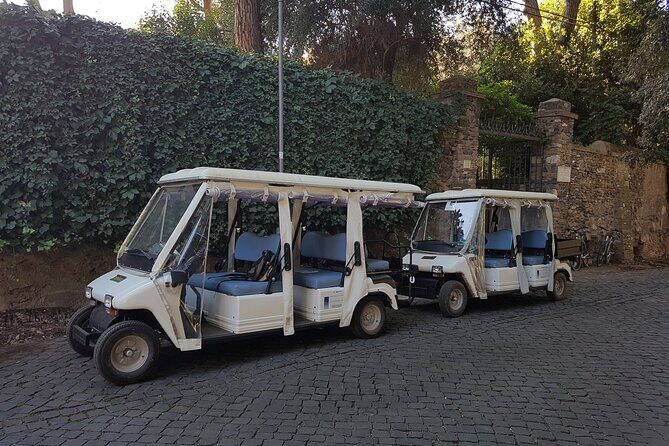
After the catacombs, you’re back on the Appian Way for a stop at the Circus of Maxentius. This is the second biggest Roman circus in the area, and it’s widely known for its surprisingly well-preserved structure.
One fun angle here is that the circus may not have been used for games the way you’d expect. It’s thought the early events were funerary in character, tied to Maxentius’ circle and especially to the death of his son Valerius Romulus. It’s a reminder that Roman “entertainment” and Roman politics were often the same thing.
You’ll enter the circus area and spend about 20 minutes. It’s a short stop, but it’s long enough to see the scale and understand why this site works so well for a guided explanation rather than just a quick viewpoint.
Admission here is free, so you can focus on the experience instead of ticket math.



Cecilia Metella’s area and the hill view over the Appian landscape
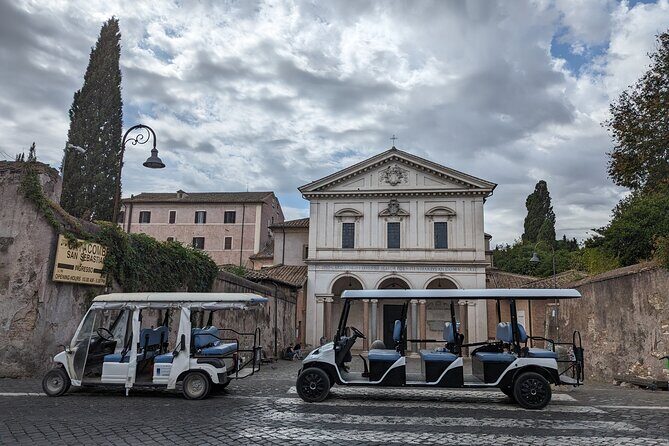
Then you reach one of the most photogenic moments of the day. You stop on a hill for explanations of the tomb area connected to Cecilia Metella and the Caetani Castle. Entrance to Cecilia Metella’s tomb isn’t included, so you’re getting the context and the view rather than a ticketed interior visit.
This kind of stop is worth it because the Appian Way isn’t just underground and ruins-on-a-map. The terrain gives you a real sense of scale: how these tombs and structures sit in relationship to the road and the countryside beyond.
You also get a close look on the opposite side of the road tied to a Cistercian Gothic-style church, S. Nicola. Time is about 15 minutes at this point.
If you hate spending time choosing tickets, this is a good match. The tour gives you the meaning without forcing extra line time. If you love interiors, note that this part is more about the exterior storytelling and views.
Capo di Bove and the Villa dei Quintili: big names, quick stops
The route continues with smaller but interesting “you can see it without a long ticket line” moments along the Appian landscape.
One stop is Complesso di Capo di Bove, described as a private villa connected to a multi-millionaire philosopher and preceptor associated with Marcus Aurelius. It’s about 15 minutes, and admission is free.
Next you visit the Villa dei Quintili and the church of Santa Maria Nova. The Villa dei Quintili is linked to the brothers connected to events involving Emperor Commodus. Entrance isn’t included, so you’re not buying tickets for an interior visit, but you are still seeing part of what made the area important as a residential zone.
This stop lasts about 10 minutes. It’s a “glance and understand” stop—good when you want the Appian Way context but don’t want every hour to depend on long gate lines.
The Appian Way driving segment: seeing the road as a whole
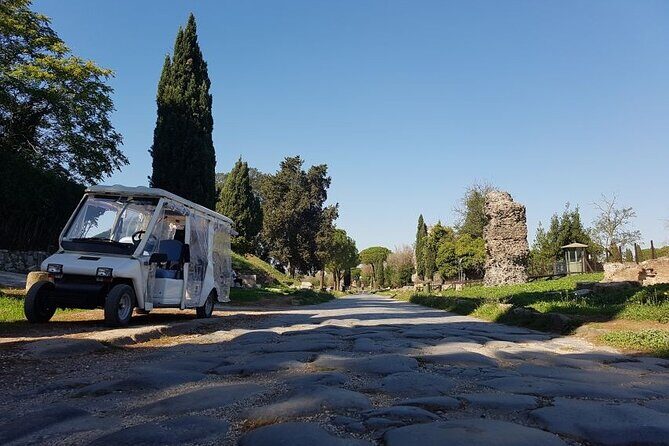
One of the most useful parts happens when you’re simply riding the road itself. You’ll get time on the cart for an explanation of why the area became packed with burial places—catacombs, churches, sepulchers, and mausoleums along the Regina Viarum.
This segment gives you what a lot of Rome tours skip: the feeling of the route as a system. Instead of isolated monuments, you see the road as a long spine of meaning.
You’ll spend about 20 minutes here. Admission is free, but the learning value is high because the guide ties together earlier stops so you understand what you’re looking at and why it’s here.
Appia Antica Archaeological Park ride-back: closing the loop
At the end, you drive back to the starting point along the Ancient Appian Way. This return segment is listed as about 30 minutes.
For me, this kind of “closing loop” matters because it turns the ride home into reflection time. You can look again at the roadside features you noticed earlier and place them in your mental map.
It also keeps the tour feeling complete. You’re not ending after a single interior stop that leaves you thinking, wait, what about the road itself?
Price and value: what $91.32 covers (and what it doesn’t)
At $91.32 per person for roughly 3 hours, the value comes from what’s included versus what’s optional.
Here’s what you get included:
- Bottled water (1/2 liter per person)
- Catacombs admission and guided tour (St. Callisto or St. Sebastiano)
- Multiple major sight stops where admission is free, including the Circus of Maxentius and the Appia Antica Archaeological Park ride elements
- Guided interpretation throughout
What’s not included:
- Coffee/tea
- Cecilia Metella’s tomb entrance
- Villa dei Quintili entrance
In plain terms, this tour saves you money on some of the big-ticket entrances while still giving you the “best hits” style viewing. And because the catacombs part is guided with included entry, you’re paying for the thing that most often costs you time and confusion on your own.
It’s also priced for a shared, max-7 group. If you prefer quieter Rome experiences away from the biggest crowds, this structure helps you spend your money on the day rather than on logistics.
Hearing the guide on a golf cart: simple tips that help
The golf cart is comfortable, but it’s not a classroom. If sound carries poorly in your row, you’ll notice it fast. One detail to plan around: keep an eye on where you sit so you can actually hear the guide’s explanations.
If you’re prone to motion discomfort, consider sitting so you can face forward and keep your head stable. The route includes short drives between stops, so you’ll want to stay comfortable enough to listen.
Also, wear walking shoes even though you’re on a cart. You’ll still step around at the church stop, catacomb entrance areas, and outdoor ruins.
If the weather turns rainy, you’ll still get the main experience—just expect ground-level Rome to be damp and slippery in places. Bring a light jacket and be ready for short, wet walks between points.
Who should book this Appian Way tour
This works especially well if you:
- Want to see the Appian Way and catacombs without spending half a day walking
- Prefer small-group guidance over a large crowd setting
- Already know the big central sights and want a calmer Roman day outside the busiest zones
- Like history explained in plain language by guides who sound genuinely passionate (people like Flavia, Federico, Alexander, and Sara are specifically praised for that)
It may be less ideal if you’re sensitive to audio quality from the back of the cart. In that case, try to choose seating early or be ready to ask for a rephrase if needed.
Should you book this Appian Way golf cart tour?
I’d book it if your goal is a smart, guided Rome day outside the city crush. The combination of Appian Way context plus a guided catacomb visit is a strong value mix, and the small group size keeps the experience from feeling mechanical.
If you already love catacombs, this tour is a straightforward pick. If you’re more into above-ground monuments, you still get enough tomb-and-road context to make the drive feel meaningful.
But if you’re the type who only enjoys tours where you can hear every word from start to finish, pay attention to seating and plan to position yourself for the best sound.
FAQ
How long is the Rome Appian Way & Catacombs golf cart tour?
It lasts approximately 3 hours.
What does the tour cost?
The price is $91.32 per person.
Where do I meet for the tour?
The meeting point is Via Appia Antica, 60, 00179 Roma RM, Italy.
What group size should I expect?
This is a shared tour with a maximum of 7 travelers.
What language is the tour offered in?
The tour is offered in English.
Will I visit the Catacombs of St. Callixtus or St. Sebastiano?
You’ll visit either Catacombe di San Callisto or the Catacombs of St. Sebastiano depending on availability.
Are any major entrances included in the price?
The catacombs entrance and guided tour are included. Cecilia Metella’s tomb entrance and Villa dei Quintili entrance are not included.
Is coffee included?
No. Coffee and/or tea are not included.
Is free cancellation available?
Yes, you can cancel for a full refund up to 24 hours in advance.