REVIEW · NAPLES
Pompeii Guided Walking Tour – Skip-the-Line Priority Access
Book on GetYourGuide →Operated by Napoli Official Tour · Bookable on GetYourGuide
Pompeii clicks faster with a guide. The best part is the skip-the-line priority setup, plus an authorized, professional guide who helps you read what you’re seeing instead of just drifting through ruins. One catch: Pompeii is huge, and a 2-hour tour mainly covers the central core, so it will not feel like you see everything.
I like how this route is built around the big public-and-private themes of Roman city life. You start at Porta Marina Inferiore, then work your way toward the Forum and key public spaces like the baths, before shifting into elite houses and the Lupanar, where you get a clearer picture of leisure and social customs. If you like to stop for long photo breaks, you may feel a bit of a pace pressure, since the tour is designed to fit many highlights.
In This Review
- Key Pompeii Moments Worth Showing Up For
- Why Skip-the-Line Priority Feels Like Value at Pompeii
- Meeting at Porta Marina Inferiore and Getting Oriented
- From Porta Marina to the Forum: The City’s Power Center
- Baths and Public Spaces: Where Pompeii Social Life Happened
- Via dell’Abbondanza: Shops, Taverns, and Real Daily Life
- Elite Residences and the House of the Faun
- The Lupanar: Leisure, Social Customs, and a Darker Reality
- Newer Finds and Why Fresh Excavations Matter
- English or Italian Guidance: What You Can Expect
- Price and Value: What $47 Gets You (and What It Doesn’t)
- Practical Tips Before You Go
- Should You Book This Pompeii Tour?
- FAQ
- Where do I meet the guide?
- How long is the Pompeii guided tour?
- Is skip-the-line access included?
- What’s included in the price?
- What is not included?
- What languages are available?
- What should I bring?
- Is entrance free on the first Sunday of each month?
- Is there free cancellation?
- Can I reserve and pay later?
Key Pompeii Moments Worth Showing Up For
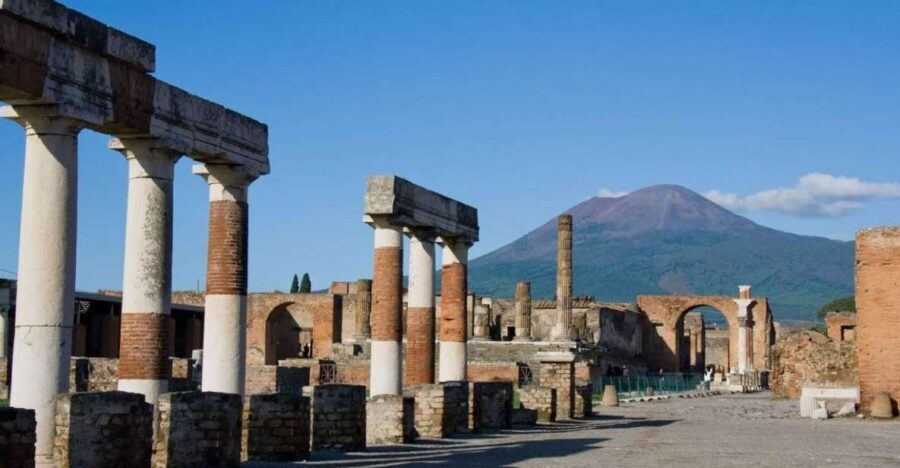
- Porta Marina Inferiore entry: the harbor gateway that sets the scene for the walk inland
- Forum-focused route: political, religious, and commercial life in one concentrated area
- Forum Baths / Stabian Baths stop: a real look at where people relaxed and socialized
- Via dell’Abbondanza street life: ancient shops, bakeries, and taverns you can almost picture
- House of the Faun: one of the grandest elite residences on the site
- Lupanar visit: Roman leisure and social customs shown directly, not just hinted at
Why Skip-the-Line Priority Feels Like Value at Pompeii
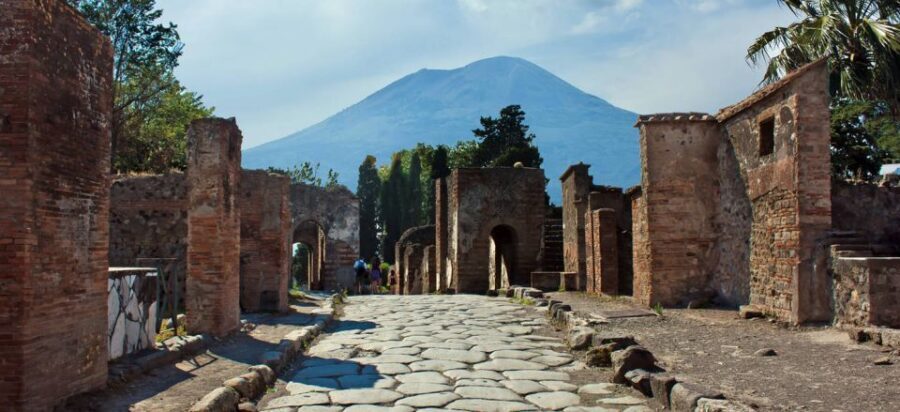
At Pompeii, time matters. Even when you arrive early, ticket lines and bottlenecks can eat the best part of your day. This tour’s priority access means you can get the entrance sorted with less friction, so you spend more time inside the excavations and less time stuck waiting.
The other value piece is the guide. An authorized guide doesn’t just point at walls and mosaics; they connect the dots between the city’s layout and what Romans did there day to day. When you’re walking through an open-air site of many centuries, that context is what turns ruins into a story you can actually follow.
If you’re trying to maximize a short visit, this format makes sense: a compact walk (2 hours) that still hits the places most people want to understand first. And because entrance is included, you’re not juggling add-ons in the moment.
You can also read our reviews of more walking tours in Naples



Meeting at Porta Marina Inferiore and Getting Oriented
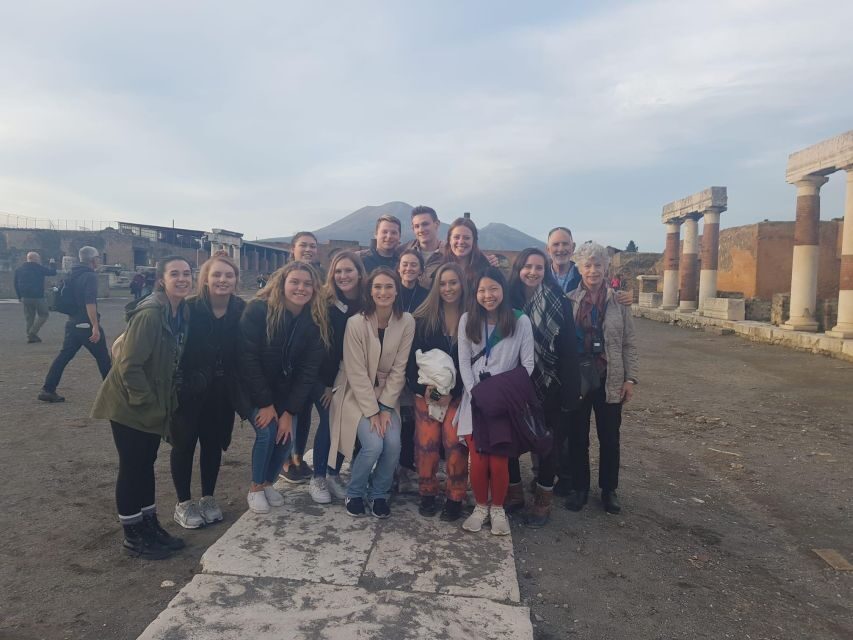
Your meeting point is Porta Marina Inferiore, in Piazza Esedra, where you’ll spot your guide holding a board with the local tour operator logo. That detail matters because Pompeii’s entrances and signage can feel confusing if you arrive without a plan.
The tour begins right at the moment you step into the ancient city through Porta Marina, once described as Pompeii’s main gateway connecting to its harbor. That start point is smart: instead of beginning randomly deep in the site, you walk in with a geographic sense of where people came from and how the city connected to trade and daily movement.
One practical note for your first Sunday-of-the-month visit: entrance is free, but tickets can’t be reserved ahead of time, so entry isn’t guaranteed. If your dates line up with that first Sunday, treat the visit as flexible, not certain.
From Porta Marina to the Forum: The City’s Power Center
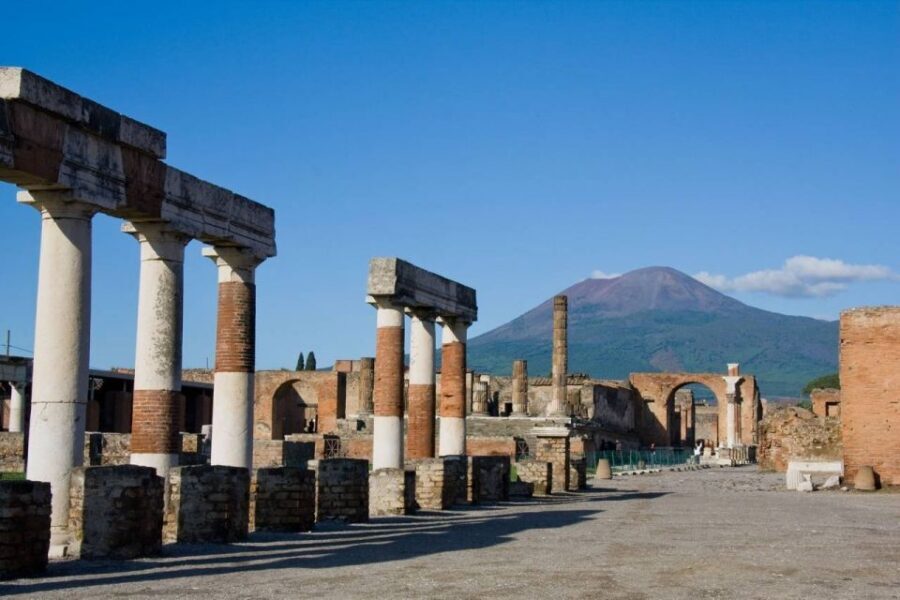
This is the heart of the tour and the part that sets your mental map. After entering through Porta Marina Inferiore, you’ll walk along original Roman streets and head toward the Forum, which served as Pompeii’s political, religious, and commercial hub.
What makes the Forum stop so useful is that it’s not just one impressive building. You’re surrounded by monumental structures that reflect different layers of civic life. The Basilica anchors the legal and administrative world, while temples like the Temple of Jupiter and the Temple of Apollo show how religion sat at the center of public identity.
As you move through this area, you start to see Pompeii as a working city, not a museum display. Streets aren’t just pathways; they’re the arteries of commerce, worship, and power. That’s why the guided flow is helpful: your guide can explain why the buildings are where they are, and what that says about how Romans organized daily life.
Baths and Public Spaces: Where Pompeii Social Life Happened
Next, the tour focuses on some of the most fascinating public spaces, including the Forum Baths and/or the Stabian Baths. These are the kind of ruins that can surprise you, because they’re not just decorative. Baths were central to routine, mixing, and relaxation, so they show you what downtime looked like for ordinary people.
Walking through bath complexes gives you a feeling for how public life worked in Roman cities. You can connect the architecture to a social rhythm: gathering, conversing, and unwinding, all within a shared space. Instead of thinking of baths as a background detail, you start to understand them as a daily meeting point.
This is also one of the tour’s strong “value” sections. It’s usually hard to self-interpret large public buildings in ruins without a guide, because so many features look similar at first glance. Here, you get the explanation that makes the layout feel logical.
Via dell’Abbondanza: Shops, Taverns, and Real Daily Life
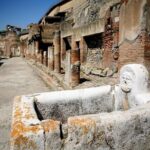
One of my favorite parts of Pompeii is when it turns from big civic buildings into street-level reality. Here, the walk includes Via dell’Abbondanza, a lively street lined with ancient shops, bakeries, and taverns.
This is where the site stops being purely about politics and temples. Instead, you begin to see the everyday economy of Pompeii: where people would have bought food, visited businesses, and grabbed drinks. The street scene helps you build a practical timeline in your head, because shops and food-related spaces immediately suggest routine—morning errands, midday stops, and evening gatherings.
The guided pace does matter in this part. If you’re the type who loves lingering at every doorway and trying to spot tiny details, you might feel a little rushed. Still, the advantage is that you’re not guessing what matters. Your guide helps you notice the right things quickly so you can keep moving without losing the meaning.
You can also read our reviews of more guided tours in Naples




Elite Residences and the House of the Faun
Pompeii’s elite homes can feel like they’re speaking directly to status and taste. During the tour, you’ll visit refined architecture and mosaics from luxury residences, including the well-known House of the Faun, one of the largest and most luxurious private homes in the city.
The reason this stop works on a short tour is that it provides contrast. You’ve just been in public spaces and street life. Now you see how wealth expressed itself in private space: how mosaics were used, how rooms were organized, and how grand a home could be in a city you might otherwise picture as uniform.
Even if you only catch a slice of the home, it changes how you interpret the rest of Pompeii. After seeing elite living spaces, you’re better at imagining the social ladder that shaped everything from employment to entertainment.
The Lupanar: Leisure, Social Customs, and a Darker Reality
The tour also includes a visit to the Lupanar, Pompeii’s brothel. It’s not a comfortable stop, but it is an important one if you want the full picture of how Roman life worked, including leisure and social customs that people didn’t discuss as openly as they might today.
This is where a good guide earns their keep. Your guide can explain context—what the Lupanar represented in the city and how Roman social patterns shaped its existence. Without that framing, the site can feel like shock entertainment. With it, the stop becomes information: a window into daily morality, commerce, and human behavior in antiquity.
If you’re sensitive to this kind of content, you should know it’s explicitly part of the tour. For many people, it’s also the most memorable reminder that Pompeii wasn’t only full of art and temples. It was a real town with real habits, including the parts that make us uneasy.
Newer Finds and Why Fresh Excavations Matter
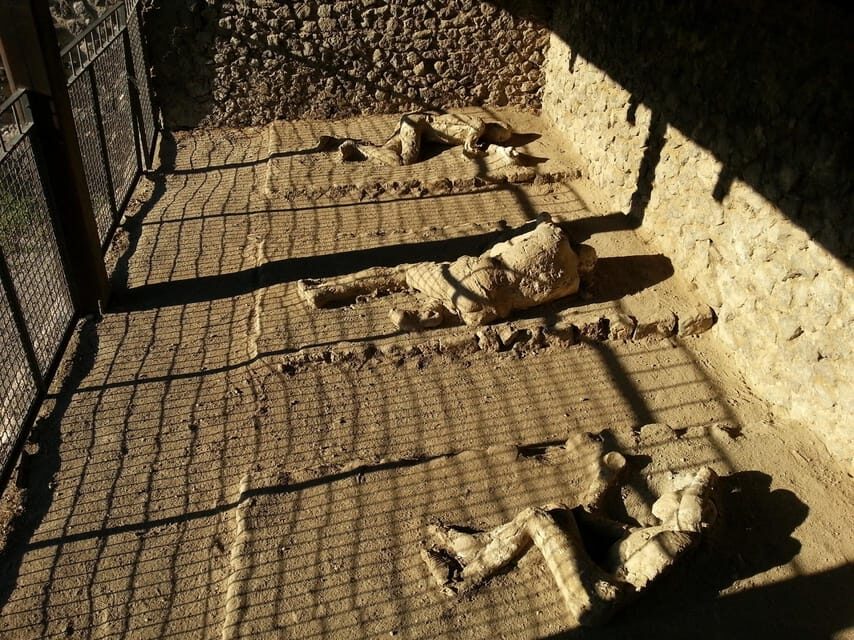
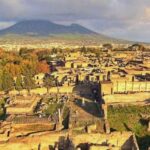
A guided walk like this also aims at interpretation, not just sightseeing. As you move through the central areas, you’ll be shown recently excavated areas and new archaeological findings that offer fresh perspectives on Pompeii’s final days before the eruption of Mount Vesuvius in 79 AD.
Even when you’ve seen photos of Pompeii, these updates can change how you read the site. New discoveries can shift what experts think about daily routines, building use, or the timeline of the city’s last period. In other words, you’re not just looking at what survived; you’re seeing what researchers are still learning.
English or Italian Guidance: What You Can Expect
The tour is offered in English and Italian with a live guide. That matters because the tour is explanation-heavy: the main benefit is that you understand what you’re seeing while you’re walking through it.
One detail to keep in mind: meeting instructions can make or break the start. Some people have run into confusion before finding their guide, so if you’re arriving close to start time, give yourself a little buffer and look for the board with the local operator logo.
Also, the tour is built as a 2-hour walk focused on the central highlights. That design can feel perfect for a first visit. It can also feel limiting if you already know Pompeii well and want a more spread-out route.
Price and Value: What $47 Gets You (and What It Doesn’t)
At $47 per person for a 2-hour authorized guided walk, the price is in the “good value” range for Pompeii—mostly because entrance is included and you get priority access to sort tickets quickly. You’re paying for time saved and for interpretation, not just access to ruins.
Here’s the honest trade-off: Pompeii is so large that no 2-hour tour will cover more than a fraction of what’s there. The upside is that you get a concentrated “first understanding” route through the Forum area and key public, elite, and leisure spaces. If your goal is to get oriented fast and then roam afterward, this tour structure usually works well.
If your goal is maximum coverage—more streets, more neighborhoods, more everything—you might feel constrained. But if your goal is clarity and a manageable plan, this format hits the sweet spot.
Practical Tips Before You Go
You’ll enjoy this tour more if you plan for comfortable movement. Bring comfortable shoes, because Pompeii’s streets and pathways are uneven and designed for walking, not for rolling slowly through with sandals.
Also, keep an eye on identity requirements for kids: the info provided says to bring a passport or ID card for children. It’s the kind of rule people forget until the last minute, so toss it in your day bag.
Finally, think about how you want to spend the rest of your day. This tour gives you a strong core route. If you want additional exploration, come prepared to wander the areas you found most interesting—because the tour’s whole point is to help you choose what to look at next.
Should You Book This Pompeii Tour?
I’d book it if you want your first Pompeii visit to feel organized and meaningful. The authorized guide, the priority access value, and the concentration on the Forum, baths, Via dell’Abbondanza, elite homes like the House of the Faun, and the Lupanar make this a solid “learn the city’s rhythm quickly” choice.
I would think twice if you know Pompeii well already or if you prefer a long, slow self-paced exploration where you never feel you’re moving to a schedule. And if you strongly dislike the topic of the Lupanar, skip it and choose a different route.
If you want a practical starting point that helps you understand Pompeii rather than just pass through it, this is a strong booking.
FAQ
Where do I meet the guide?
Meet at Porta Marina Inferiore in Piazza Esedra. The guide will have a board with the local tour operator logo.
How long is the Pompeii guided tour?
The tour lasts 2 hours.
Is skip-the-line access included?
Yes. You get priority access related to buying the entrance ticket.
What’s included in the price?
Included: a 2-hour guided tour with an authorized and professional guide, priority access to buy the entrance ticket, and the entrance fee.
What is not included?
Transport is not included.
What languages are available?
The live tour guide is available in English and Italian.
What should I bring?
Wear comfortable shoes. The tour info also advises bringing a passport or ID card for children.
Is entrance free on the first Sunday of each month?
Entrance is free on the first Sunday of each month, but entry is not guaranteed because tickets can’t be reserved ahead of time.
Is there free cancellation?
Yes. You can cancel up to 24 hours in advance for a full refund.
Can I reserve and pay later?
Yes. The booking option says you can reserve now and pay later.
If you tell me your travel dates and whether you’re going on a first Sunday, I can help you decide if this is the right day to book and how to plan your extra time at Pompeii.