REVIEW · NAPLES
Pompeii and Herculaneum: Private Tour with Transportation
Book on GetYourGuide →Operated by Askos Tours · Bookable on GetYourGuide
Pompeii and Herculaneum pack a lot into one day. The best part is the pacing: you get two guided walking blocks that turn scary-big ruins into something you can actually understand. I like how the tour doesn’t just point at stones; it connects the dots between everyday life, public buildings, and the chaos of 79 A.D.
My favorite two things are the way Herculaneum’s preservation makes Roman life feel close up, and the fact that you’re not stuck fighting ticket lines. The one drawback to plan for is that Pompeii is huge, so in a 7-hour day you’ll see the major highlights on a smart route, not every street and doorway.
In This Review
- Key things to know before you go
- Private transport plus a real guide: the smart way to do two Roman cities
- Getting picked up on the Amalfi Coast: smooth logistics, less stress
- Pompeii’s western route: forums, baths, a brothel, and the street-level details
- The Pompeii break and lunch stop: use the 30 minutes well
- Herculaneum: better preserved ruins and the feeling of life-in-progress
- Skipping the line and what’s included in your ticket price
- Languages, customization, and the private-group feel
- How intense is the walking, really?
- Who should book this Pompeii and Herculaneum private tour?
- Should you book this private tour of Pompeii and Herculaneum?
- FAQ
- What’s included in the private tour?
- Is lunch included?
- How long is the tour?
- Where can you be picked up and dropped off?
- Does the tour help with ticket lines?
- Is the tour wheelchair accessible?
Key things to know before you go
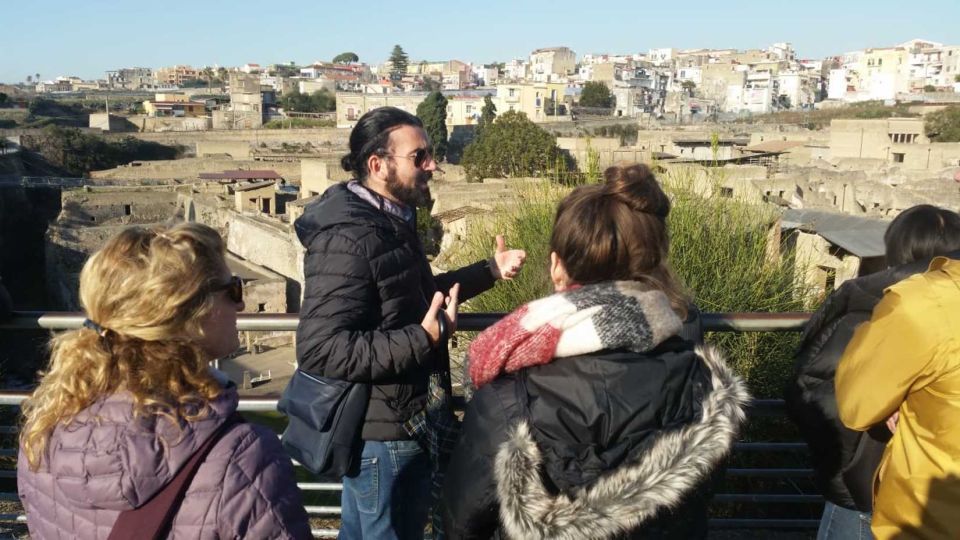
- Two private guided walks: Pompeii first, then Herculaneum for a calmer, better-preserved finish
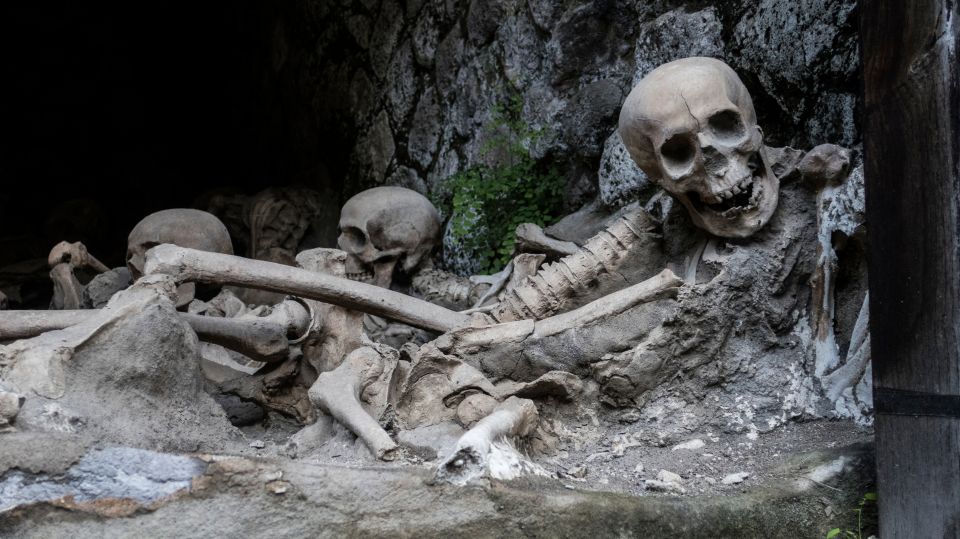
- Herculaneum’s shock factor: carbonized wooden objects, intact paintings, mosaics, and the beach tied to 300+ skeletons
- Pompeii’s “you’re still in town” feeling: forums, baths, homes, and even the Lupanar (brothel) area on a focused western route
- Tickets handled for you: a quick skip-the-line approach so you lose less time at the gate
- Transportation from Amalfi Coast towns and Naples: pickup and drop-off make this practical without a rental car
- Lunch timing is built in: you get a 30-minute break to eat at a typical restaurant, winery, or pizzeria (food not included)
Private transport plus a real guide: the smart way to do two Roman cities
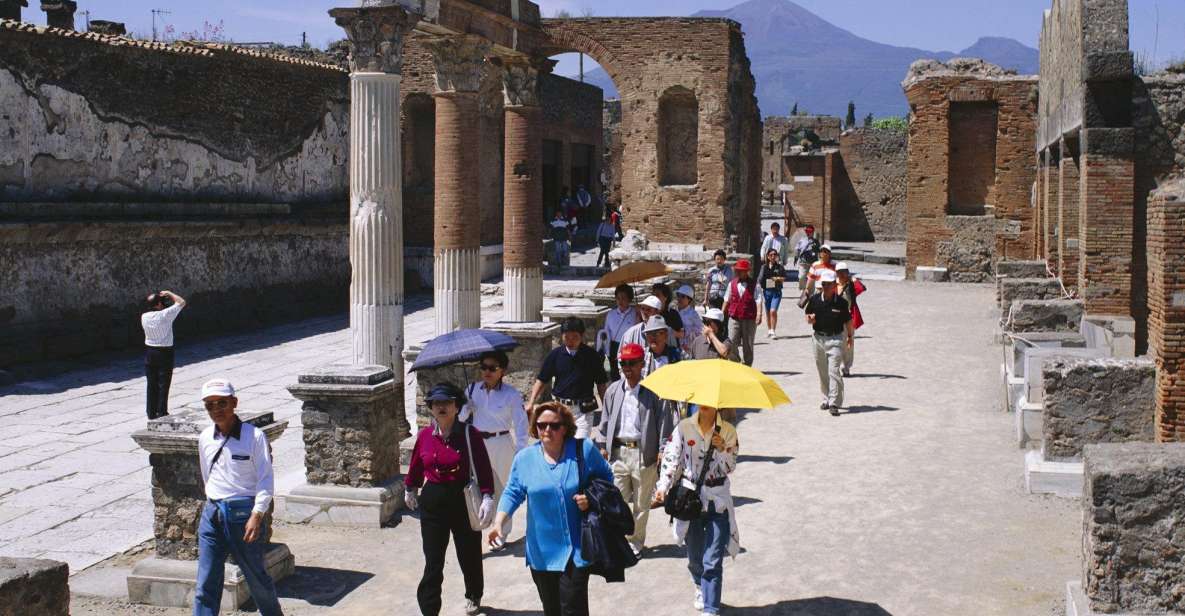
This is the kind of tour that works when you want history, but you also want your day to feel sane. You’re picked up from one of five starting points—Amalfi, Positano, Salerno, Sorrento, or Naples—and then you ride with a driver while your guide handles the “what am I looking at?” part.
That matters in Pompeii and Herculaneum. Without guidance, you can see plenty of ruins and still miss what they mean. With a private guide, you’ll get a storyline: where people shopped, how they bathed, what public spaces looked like, and what kinds of houses different Romans lived in.
You also benefit from the “two sites, one day” structure. Herculaneum is smaller, and it’s usually a nicer follow-up after Pompeii. The day ends with a sense of intactness that Pompeii can’t match, because Pompeii was buried under several meters of ash while Herculaneum was covered by mud flows.
You can also read our reviews of more tours and experiences in Naples.


Getting picked up on the Amalfi Coast: smooth logistics, less stress
I love tours that remove the hardest parts of planning. Here, transportation is private, and pickup and drop-off are included. You don’t have to figure out buses, parking, or the usual waiting game.
Pickup options are: Amalfi, Positano, Salerno, Sorrento, and Naples. Drop-offs mirror the same set, so you can stay anchored to where you’re sleeping. Between the two archaeological sites, you’ll have a short ride (about 30 minutes each way), which helps keep the day from turning into one long slog.
One practical note: you can’t bring luggage or large bags. If you’re traveling light, you’ll be fine. If you have a bigger bag, you’ll want a place to store it before you head out.
And yes, the day is walking. Even though the tour is organized, Pompeii is an intense experience on your feet. You’ll want comfortable shoes and a water plan (water isn’t included, but having it is smart).
Pompeii’s western route: forums, baths, a brothel, and the street-level details
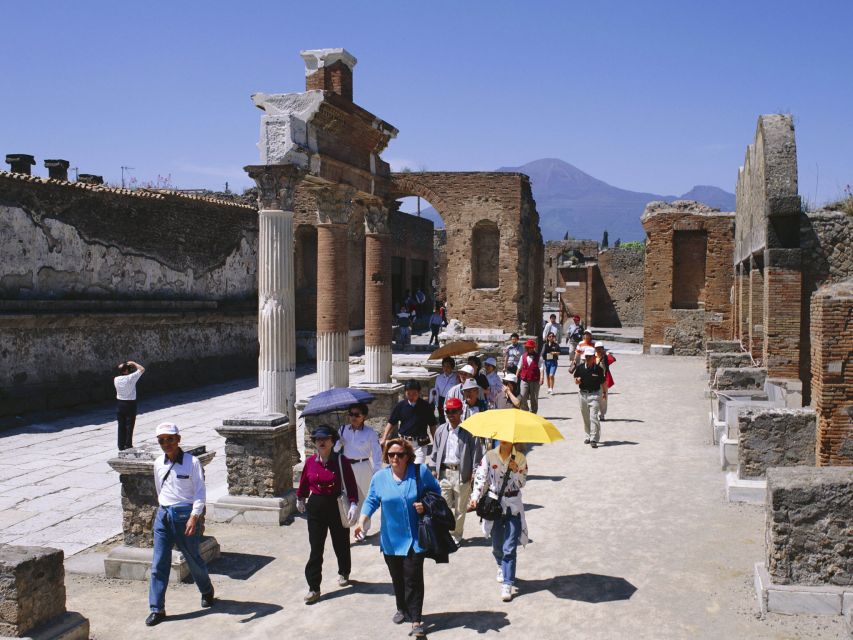
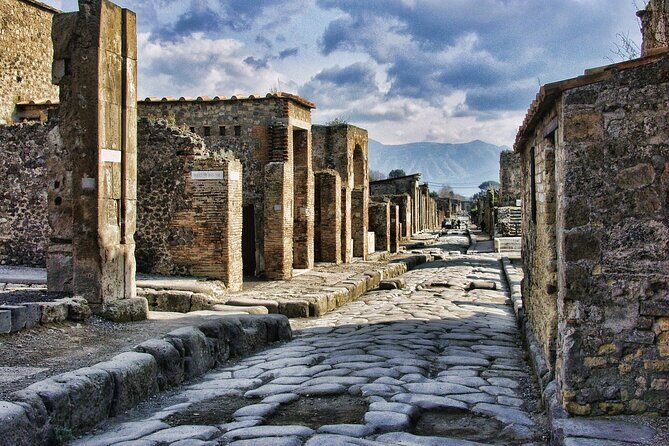
Pompeii is the big one. It’s also the one that can overwhelm you if you try to “do it all.” This tour avoids that trap by focusing on a detailed western part of the ancient city, with a guided walk that lasts about two hours.
Here’s what you can expect to see, in plain terms:
- Marina Gate: a useful starting point to understand where the city connected with the outside world
- Basilica: a key public building, the kind of place where civic life happened
- Forum and Forum baths: this is where public routines mixed with daily social life
- Lupanar (brothel): yes, it’s there, and it helps you understand the full range of Roman street life, not just the glamorous buildings
- Bakery and Termopolium Capuano: food and street service show up in ways you can almost picture, especially when your guide explains how these spaces worked
- House of Faun and other major homes: you’ll get a sense of layout, status, and how private life looked
- House of the Tragic Poet: another strong example of domestic space
- Plaster casts: a standout for making the human side of the disaster easier to visualize
I like the way Pompeii feels on an informed walk. The ruins aren’t just “cool rocks.” They read like evidence of daily routines: entrances, corridors, workspaces, gathering spots, and the small details people left behind.
Still, keep your expectations realistic. Pompeii is too large to fully cover in a single day. A guided tour like this gives you a high-value slice—enough to understand how the city functioned—without pretending you can see everything.
The Pompeii break and lunch stop: use the 30 minutes well
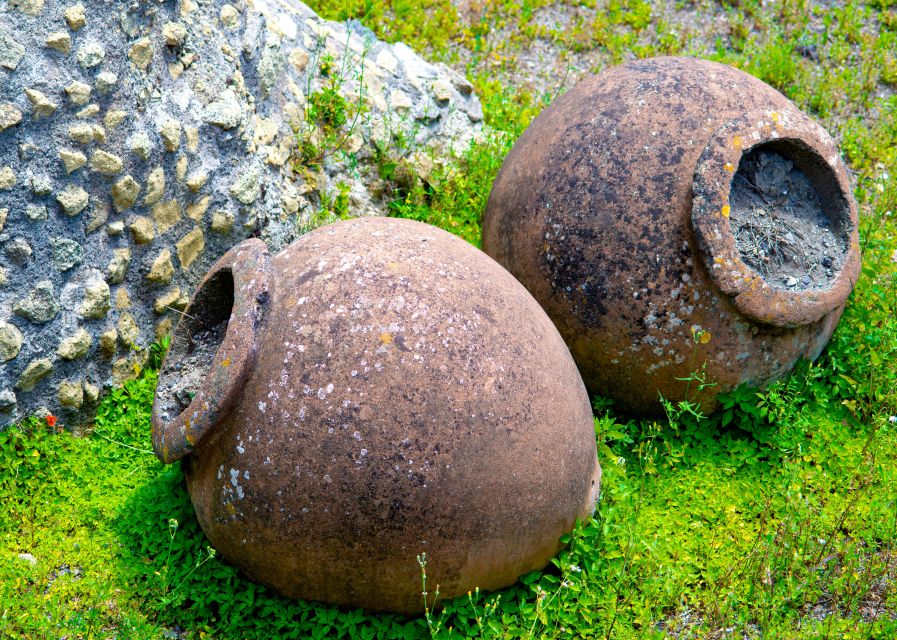
Between Pompeii and Herculaneum, you get a break. The stop is planned for about 30 minutes and includes time for lunch at a typical restaurant, winery, or pizzeria.
Food and drinks aren’t included, so this is where you’ll make your budget decision. I’d treat lunch as a practical pause: something filling, something quick, and something that doesn’t slow down your next walking block.
Your guide can also suggest where to go. That’s a small benefit, but it adds up. When you’re on a tight schedule, a good recommendation helps you avoid a long hunt for a place that’s open, priced fairly, and not a total tourist trap.
Herculaneum: better preserved ruins and the feeling of life-in-progress
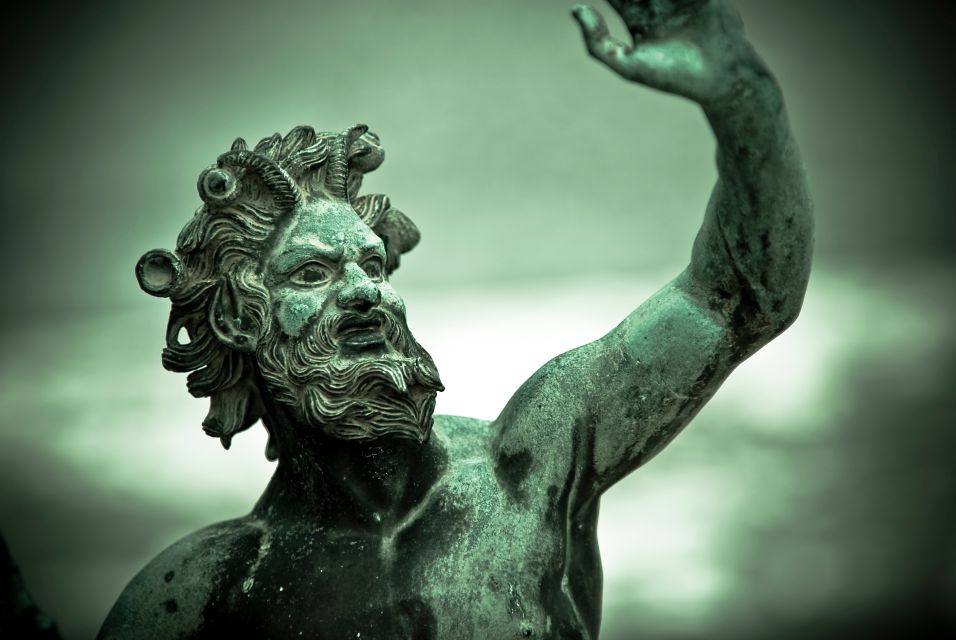
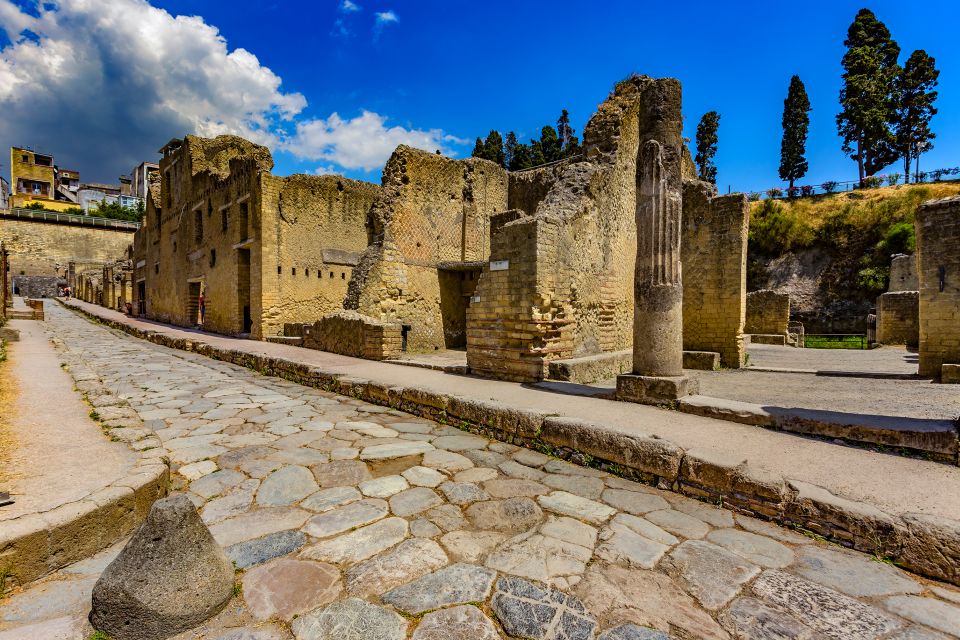
If Pompeii is the dramatic one, Herculaneum is the intimate one. You’ll spend about two hours here with your guide, and it’s often a smoother second half of the day because the site is smaller and the preservation is striking.
The difference comes down to how each place was buried. Pompeii was smothered under heavy ash, while Herculaneum was hit by mud flows that sealed it in a deeper, heavier cover. The result is that you can often see more surface detail—and sometimes objects that you’d never expect to survive.
This tour highlights the major spots, including:
- Temple of the Augustali: a religious stop that helps you place civic and spiritual life in context
- The beach where over 300 skeletons were discovered: one of the most emotionally intense areas, because it ties the disaster to real human remains
- Thermal baths: you get a tangible feel for Roman bathing culture
- Forum: a central public space that frames how people met, traded, and gathered
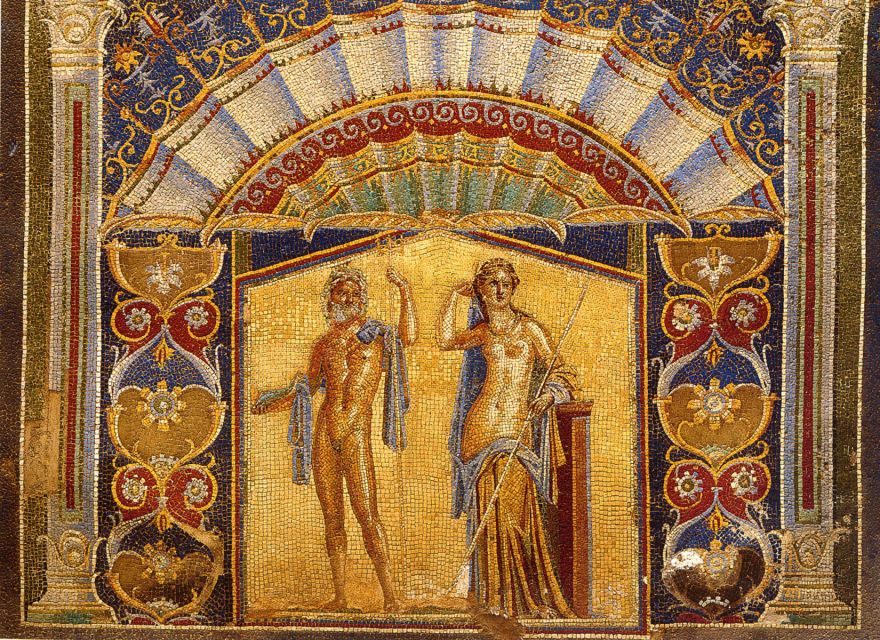
- House of Neptune and Amphitrite: a strong example of how decoration and status showed up in domestic design
- Samnite house, gymnasium, and the House of the Deers: each one supports a different angle of everyday life, from leisure to social identity
- Plus the overall impression of intactness, including the kinds of finds often described as carbonized wooden objects, intact paintings, and mosaics
I love ending a day this way. After the intensity of Pompeii, Herculaneum can feel like the ruins are simply paused rather than erased. If you care about the human texture—how rooms were decorated, what walls looked like, what art survived—this is where your brain gets hooked.


Skipping the line and what’s included in your ticket price
Let’s talk value, because this tour isn’t cheap. The price is $623.90 per person, and you should expect that to reflect more than just entry into two sites.
What you’re paying for is a package that includes:
- Private guide
- Private transportation with a driver
- Pompeii Express entry ticket
- Herculaneum entry ticket (16 euros per person)
- A skip-the-ticket-line approach, because the guide can buy tickets quickly (about 10 minutes)
When I look at tours like this, I break down what costs time and what costs effort. Ticket lines cost time. Having two separate site visits costs logistics. And a private guide costs money—but it also saves you from wandering for hours without understanding what you’re seeing.
This is where the price can feel justified, especially if you’re coming from the Amalfi Coast or Naples and you don’t want to stitch together transport yourself.
One budgeting point: food and drinks are not included. Lunch is part of the schedule, but you’ll still pay for your meal.
Languages, customization, and the private-group feel
This tour runs with a private group and a live guide available in multiple languages: Spanish, English, French, German, Italian, Chinese, Japanese, Portuguese, and Russian. That’s not a tiny detail—language affects how much you actually get from the ruins.
The tour is also described as fully customizable. You might want to linger longer around a specific house type, spend more time on art and mosaics, or adjust the pace if you’re slower on foot. With a private format, you’re not stuck with a one-size-fits-all group rhythm.
If you’re worried about what kind of tour guide you’ll get, the best clue here is reputation: in real feedback tied to this style of tour, names like Alfredo, Francesco, and Gabriella show up in connection with strong explanations, and a driver named Luca appears often alongside safe, smooth transport. That’s the kind of consistency you want when the day hinges on pacing.
How intense is the walking, really?
Pompeii is the tougher part. Even with a guide and a planned route, it’s still an outdoor archaeological site with lots of walking. Expect it to feel like a workout by the time you finish the highlights.
Herculaneum is generally more manageable because it’s smaller, and it can feel like a more concentrated walk of the key areas.
Also, this tour is not suitable for wheelchair users. If you need mobility support, you’ll want to look for a different format.
My practical advice is simple: pack for comfort, not for looks. Your shoes matter more than your outfit on this one.
Who should book this Pompeii and Herculaneum private tour?
This tour fits best if you:
- Want two sites in one day without handling transport
- Value a private guide who explains what you’re seeing (and why it matters)
- Are coming from Amalfi, Positano, Sorrento, Salerno, or Naples and want door-to-door convenience
- Prefer a focused highlights route rather than trying to “complete” Pompeii solo
It might not fit you if you:
- Want to slow-walk every neighborhood and fully explore Pompeii for multiple days
- Need wheelchair accessibility
- Plan to bring large luggage or expect to store it at the sites
Should you book this private tour of Pompeii and Herculaneum?
If your goal is to understand these cities and see the biggest highlights without turning the day into a stressful logistics puzzle, I think this is an excellent choice. The combo of private transport, private guides, and included skip-the-line entry is exactly what makes a single-day visit work.
Yes, Pompeii is intense, and no, you won’t see everything. But you will get a smart slice of the city—public spaces, homes, and the famous indoor-life details—and you’ll end with Herculaneum’s unusually preserved story.
If you’re deciding between a cheaper self-guided plan and this private guided day, ask yourself one question: do you want your time spent “at” Pompeii, or do you want your time spent understanding it? For most people, the private guide route is the value win here.
FAQ
What’s included in the private tour?
The tour includes a private guide, private transportation with a driver, a Pompeii Express entry ticket, and an Herculaneum entry ticket (16 euros per person).
Is lunch included?
Lunch is not included. The schedule includes a lunch break, and your guide can suggest places such as a typical restaurant, winery, or pizzeria.
How long is the tour?
The total duration is listed as 7 hours.
Where can you be picked up and dropped off?
Pickup is available from Amalfi, Positano, Salerno, Sorrento, or Naples. Drop-off is available in the same towns: Salerno, Sorrento, Positano, Amalfi, or Naples.
Does the tour help with ticket lines?
Yes. You can skip the ticket line because the guide can purchase tickets quickly (about 10 minutes).
Is the tour wheelchair accessible?
No. This tour is not suitable for wheelchair users.