REVIEW · PANTHEON TOURS
Pantheon, Trevi Fountain and Caravaggio tour with virtual guide
Book on Viator →Operated by Touring Fixer · Bookable on Viator
A well-timed virtual route through Rome keeps the big sights clear and the side stories practical. This Pantheon, Trevi Fountain, and Caravaggio-themed experience strings together major stops with a virtual guide narration and just enough time at each place to actually look around.
What I like most is that the money lands where it matters: Pantheon entry is included and you get the skip-the-line advantage right away. I also appreciate the pacing that feels easy on the feet, with short stops at the churches and fountains, so you can absorb details instead of sprinting from one “photo spot” to the next.
One thing to consider: audio earphones aren’t included, so bring your own if you want to hear the guide comfortably. Also, this is English-only, so it helps to be comfortable following the narration in that language.
In This Review
- Quick hits before you go
- A virtual guide route that makes Rome feel organized
- Pantheon first: the engineering moment you won’t forget
- From Santa Maria sopra Minerva to Piazza Navona: art changes gears
- Caravaggio at San Luigi dei Francesi: where drama lives in paint
- Sant’Ignazio di Loyola and Andrea Pozzo: the ceiling that plays games
- Trevi Fountain: aqueduct-powered myth meets real crowds
- Spanish Steps: a strong finish at Piazza di Spagna
- Price and practical value of $31.31 with skip-the-line
- Who should book this Pantheon, Trevi, and Caravaggio virtual experience
- Should you book it or skip it?
- FAQ
- Where does the tour start?
- Where does the tour end?
- How long is the tour?
- What’s included with the experience?
- Do the other sights require admission tickets?
- What language is the virtual guide offered in?
- How many people are allowed in the experience?
- Is it refundable if I cancel?
Quick hits before you go
- Skip-the-line Pantheon access with a ticket included
- Caravaggio’s Contarelli Chapel focus at San Luigi dei Francesi
- Andrea Pozzo ceiling effects at Chiesa di Sant’Ignazio di Loyola
- Top Rome classics in one logical flow: Pantheon → Navona → Trevi → Spanish Steps
- Small group size (max 15) for a less chaotic experience
A virtual guide route that makes Rome feel organized
Rome can be overwhelming fast. This route helps you build a simple map in your head, starting at the Pantheon and ending at the Spanish Steps, with stops that are famous but also story-driven.
The big win here is the virtual narration. Instead of just standing in front of landmarks, you get explanations that connect what you’re seeing—Roman engineering, Baroque art, and the dramatic Christian scenes—to the place itself.
Because it’s virtual, you can also work at your own speed. The experience has set time blocks per stop, but that doesn’t mean you’re trapped in a long lecture. It’s built for pausing, looking up, and moving on when you’re ready.
You can also read our reviews of more guided tours in Rome



Pantheon first: the engineering moment you won’t forget
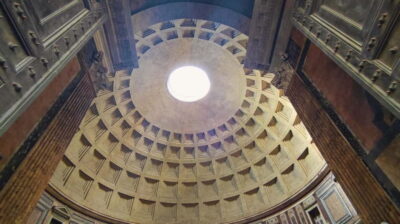
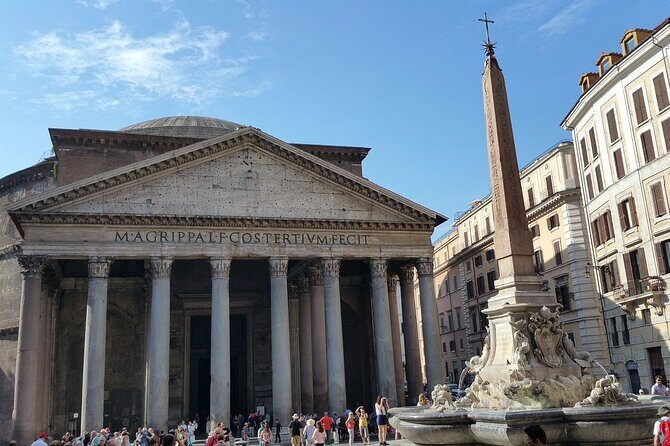
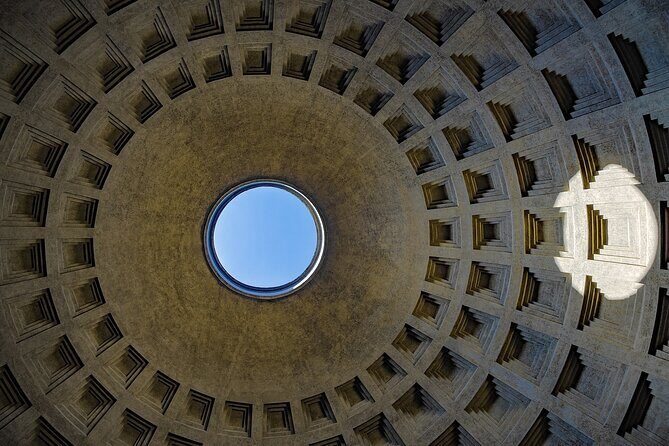
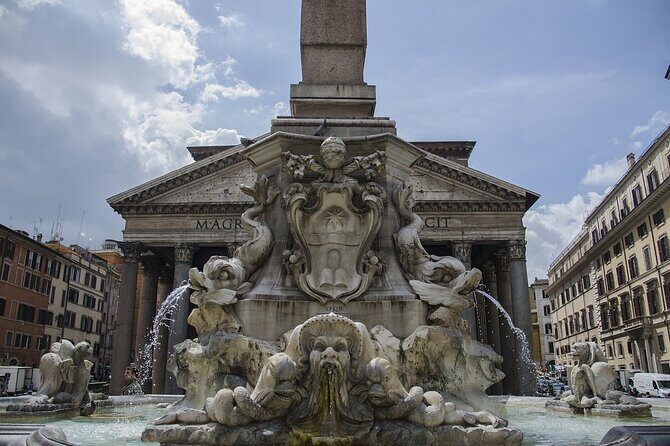
You start at the Pantheon, with about 40 minutes and admission included. This is the right opening move because it sets the tone: you’re standing in a building where form and engineering still do the work for you.
That dome and the oculus are the stars here. Even if you’ve seen photos, being under that space helps you understand why people keep coming back after a hundred visits.
There’s also a practical payoff: skip-the-line. The Pantheon is popular, and shaving off waiting time means you spend more of your trip actually inside, not stuck in the crowd flow outside.
One more small tip: plan to look around beyond the dome. The space is designed to pull your attention upward, but you’ll get more from it if you also take a slow scan at the details while you’re there.
From Santa Maria sopra Minerva to Piazza Navona: art changes gears
Next up is Chiesa di Santa Maria sopra Minerva, about 20 minutes. It’s known as the only example of a Gothic church in Rome, and that contrast is part of the fun—Roman classicism isn’t the only style you’ll see on this route.
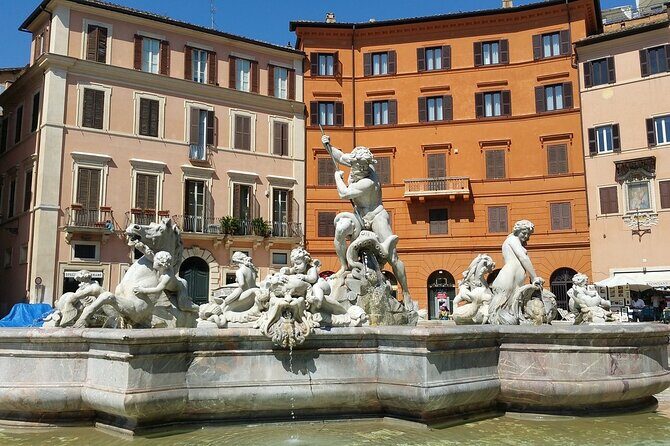
Then you head to Piazza Navona for roughly 20 minutes. This square is famous for its elliptical shape and its Baroque energy, including Bernini’s Fountain of the Four Rivers. The fountain is a great “pause point,” because it pulls you into the symbolism and the drama of the Baroque approach.
What I like about this stretch is that it gives you variety without complexity. You go from a Gothic surprise (Minerva) to a big open piazza where the city shows off its Baroque face (Navona).
A possible downside: Piazza Navona can be visually busy. If you’re the type who likes quiet, aim for a calm approach—take one look to get your bearings, then circle back for the details once you’re not overwhelmed by the motion around you.
Caravaggio at San Luigi dei Francesi: where drama lives in paint
The tour then shifts to the Church of San Luigi dei Francesi, also known as the Church of St. Louis of the French, for about 20 minutes. This stop is built around Caravaggio’s masterpieces in the Contarelli Chapel.
Caravaggio is all about intensity—light, shadow, and emotional realism. Even if you’re not an art expert, the setting helps you read the scenes, because the chapel context supports the mood of the paintings instead of competing with it.
What makes this stop valuable is that you’re not just collecting another church photo. You’re getting a focused Caravaggio moment, which is the kind of experience that tends to stick in your memory longer than a generic checklist sight.
One consideration: you’ll have limited time. So don’t try to do everything at once. Pick a couple of key visual moments in the chapel and let those be the payoff.
Sant’Ignazio di Loyola and Andrea Pozzo: the ceiling that plays games
After Caravaggio, you visit Chiesa di Sant’Ignazio di Loyola for about 20 minutes. This is the church tied to Andrea Pozzo, especially known for the ceiling fresco that creates striking optical illusion effects.
This is one of those places where your first reaction is usually surprise. The ceiling treatment can look like architecture opening up in ways that feel hard to believe—until you’re standing there and the perspective hits you.
The virtual guide narration helps here because the experience makes it easier to understand what you’re seeing. Without context, you might just think ceiling frescoes are pretty. With context, you start noticing how the illusion is built.
Tip for enjoyment: give yourself permission to look up slowly. This stop rewards patient viewing, and the short time window works best if you don’t rush your eyes.



Trevi Fountain: aqueduct-powered myth meets real crowds
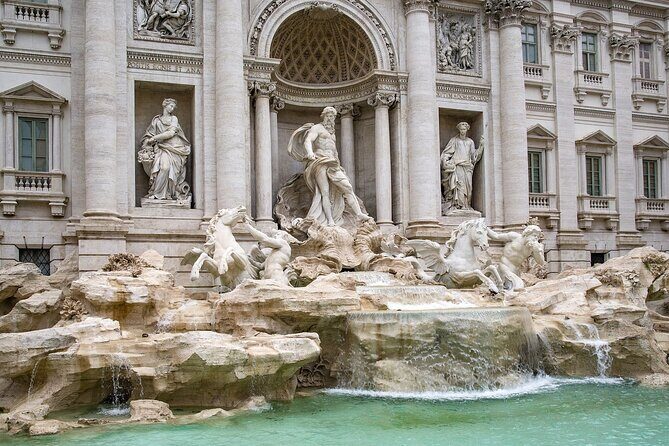
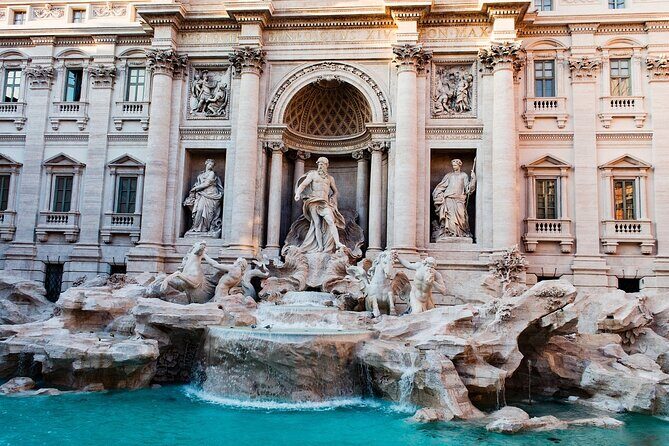
Next comes Trevi Fountain, about 30 minutes. It’s famous for a reason, but the story behind it is part of what makes the visit more satisfying: it’s powered by one of the oldest aqueducts in Rome.
The fountain’s imagery also matters. You’re looking at the sea god in a chariot pulled by sea horses and tritons, which gives Trevi a sense of motion even though you’re standing still.
This stop is also where you should manage expectations. Trevi is iconic, and you’ll see crowds. That doesn’t ruin it, but it does change how you should “do” the visit: take a moment to see the whole composition, then focus on smaller details like the figures and water flow.
If you want better photos, treat it like a two-stage visit. First, get your wide view to connect the layout. Then step back into a smaller angle once you’ve absorbed what you’re looking at.
Spanish Steps: a strong finish at Piazza di Spagna
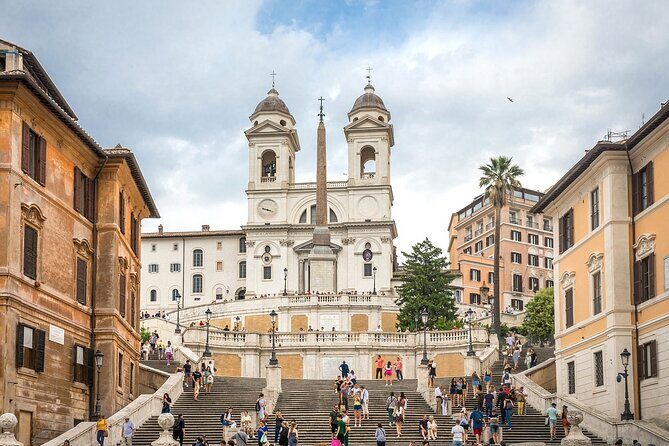
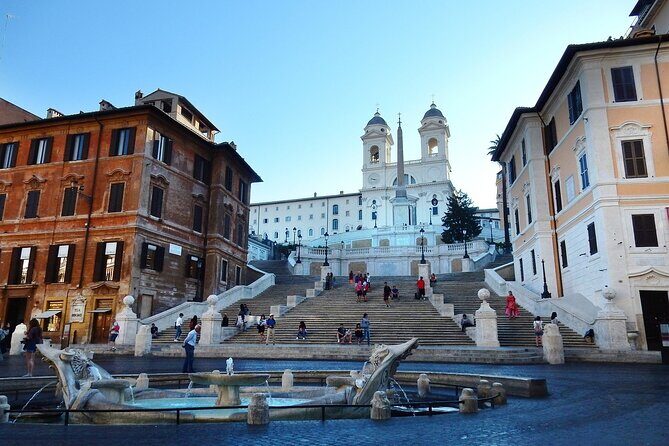
You end at the Spanish Steps area in Piazza di Spagna, with about 30 minutes. The big draw is the Trinità dei Monti staircase and the Barcaccia Fountain, which rounds out the square with another sculptural focal point.
This finish works because it changes the pace. After churches and fountains, the steps give you space to sit, watch, and process what you’ve learned while moving through the city.
It’s also a good “wrap” for the whole theme of the day. You started with Roman engineering at the Pantheon, then moved through Gothic and Baroque art, and landed with some of the most photographed late-night-supper Rome energy around the steps.
If you’re trying to keep your day tight, plan one last sweep for photos from a couple of angles, then don’t overstay. The area is popular, and the best time is usually when you’re ready to slow down rather than forced to.
Price and practical value of $31.31 with skip-the-line
At $31.31 per person, the value hinges on what’s actually included. You get the Pantheon admission ticket and skip-the-line, and most of the other listed sights are marked admission ticket free.
That means your paid portion mostly covers the one stop that tends to require a ticket and where time loss can be annoying. Everything else is more about the guided context than paying to enter, which is a smarter match for a short walking format.
Duration is listed as 1 to 3 hours. That wide range usually means you can move faster or slower depending on how long you linger at the key stops like Caravaggio and the ceiling fresco. If you’re someone who likes to stop for photos but still read the visual cues, this time window can feel right.
Also, the experience is offered in English. If you’re fluent enough to follow narration while walking, you’ll get the benefit of the storytelling at each stop. If not, it may feel like you’re watching the sites without the “why” behind them.
Who should book this Pantheon, Trevi, and Caravaggio virtual experience
This is a great fit if you want a Rome highlight walk with story context and you’d rather not deal with a heavy-group itinerary. It also works well when you want structure but don’t want to feel rushed.
I’d especially recommend it to:
- people who love art details (Caravaggio and Andrea Pozzo are the main attractions here)
- history-minded visitors who want connections between buildings, styles, and religious themes
- anyone who values convenience, especially starting at the Pantheon with skip-the-line
It may be less ideal if you prefer a fully hands-on guided experience with a live guide speaking to you face to face. Since this is virtual, you’re driving your attention, and the quality you get depends on how comfortably you use your audio setup.
Should you book it or skip it?
Book it if your priorities are the Pantheon plus two major art moments: Caravaggio in the Contarelli Chapel and Andrea Pozzo’s ceiling illusion. This route is built like a mini story arc, and the virtual guide helps you connect the dots instead of just sightseeing.
Consider skipping or comparing if you don’t want to bring or use earphones, or if English narration isn’t your comfort zone. Also, if you’re the type who wants extra time at a single site, you might find the stops feel short—but the upside is that you see a lot without wearing yourself out.
FAQ
Where does the tour start?
The tour starts at the Pantheon, Piazza della Rotonda, 00186 Roma RM, Italy.
Where does the tour end?
The tour ends at Piazza di Spagna, 00187 Roma RM, with the Spanish Steps as the final stop.
How long is the tour?
The duration is approximately 1 to 3 hours.
What’s included with the experience?
It includes a virtual guide, entrance ticket to the Pantheon, and skip the line access.
Do the other sights require admission tickets?
Santa Maria sopra Minerva, Piazza Navona, the Church of St. Louis of the French (San Luigi dei Francesi), Sant’Ignazio di Loyola, Trevi Fountain, and the Spanish Steps are listed as Admission Ticket Free.
What language is the virtual guide offered in?
The tour is offered in English.
How many people are allowed in the experience?
The tour has a maximum of 15 travelers.
Is it refundable if I cancel?
No. The experience is non-refundable and cannot be changed for any reason.