REVIEW · OSTIA ANTICA TOURS
Ostia Antica Archaeological Park with Italian Gelato
Book on Viator →Operated by Ideas for Travelers · Bookable on Viator
Rome has a quieter port ruin day.
Ostia Antica sits just outside Rome and gives you a guided walkthrough of one of the Roman world’s busiest river ports, from the Roman Republic into the Empire. What makes it special is the sense of how the city worked: tombs, streets, baths, markets, theaters, and the harbor zone are all tied together with a clear story. The tour runs as a small-group experience, so you’re not just staring at stones.
I especially love the Neptune Baths mosaics and the views from higher ground, because they help you understand the layout instead of just memorizing names. I also like the finish at the Borghetto—the medieval citadel area adds another time period and feels calmer than Rome’s center, and you get Italian gelato just outside the medieval walls.
One thing to consider: the ticket for the archaeological park is not included, and you’ll be walking a fair amount outdoors. If you’re sensitive to uneven ground or you dislike stairs, plan your energy accordingly.
In This Review
- Key highlights to know before you go
- Beyond Rome: why Ostia Antica is worth the trip
- Small-group pace and a 9:30 AM start
- Parco Archeologico di Ostia Antica: necropolis to harbor sidewalks
- Monumental tombs and a city’s edge: the necropolis
- Entering the main spine: Roman Gate, Decumanus Maximus, Victory Square
- Neptune Baths: mosaics plus a view that makes the layout click
- Theater, civic spaces, and places tied to civic identity
- Forum zone and temples: power, religion, and control
- Painted houses and street-level food life
- Mills, guilds, and the people who made the port run
- Cisiari’s Baths and the harbor-adjacent sidewalk
- Borghetto citadel: Giulio II castle and gelato outside the walls
- Price and what you truly get for $119.27
- Logistics you can plan around: trains, walking, and stairs
- Walking reality check
- Who this tour is best for (and who should skip it)
- Should you book Ostia Antica with Italian gelato?
- FAQ
- Is the archaeological park entrance fee included?
- How long is the tour?
- What’s included in the price?
- Is this tour in English?
- How big is the group?
- Where does the tour start?
- What time does the tour begin?
- Is public transportation nearby?
- Can most people participate?
- What happens if the weather is bad?
Key highlights to know before you go
- Max 6 people means more time for questions and better guide attention
- Two hours in the archaeological park focused on how Ostia functioned as a port city
- Neptune Baths plus a view helps you connect ruins to streets and everyday life
- Borghetto citadel (medieval) plus Giulio II castle adds contrast after the Roman ruins
- Italian gelato included right after walking through the medieval walls
- English-guided tour with a route that covers major sites without rushing
Beyond Rome: why Ostia Antica is worth the trip
If you only do ruins inside Rome, you miss a huge part of the ancient story. Ostia Antica was Rome’s river port city, meaning it wasn’t just a ceremonial backdrop. It was about shipping, selling, feeding people, storing goods, and keeping the city running day after day.
In my mind, that’s why this tour works so well. You don’t get lost in random stops. You get a guided walk where major places line up with the same theme: a commercial city that grew, changed, and kept functioning for centuries.
You can also read our reviews of more tours and experiences in Rome.



Small-group pace and a 9:30 AM start
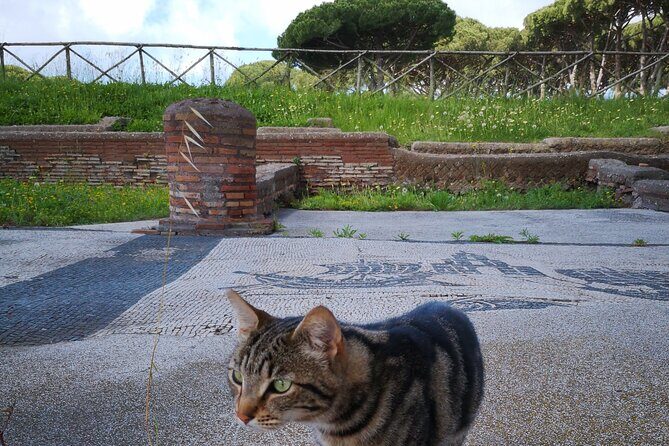
This is designed for a tighter group—up to 6 people—so the guide can slow down when you want to ask something, not just power through the script. The tour also runs at 9:30 am, which matters. Early starts tend to feel less crowded, and you’ll get more done before the hottest part of the day.
The timing is also straightforward: about two hours inside the archaeological park, then around 30 minutes in the Borghetto area with gelato. In other words, you’re not signing up for a full-day marathon.
Parco Archeologico di Ostia Antica: necropolis to harbor sidewalks
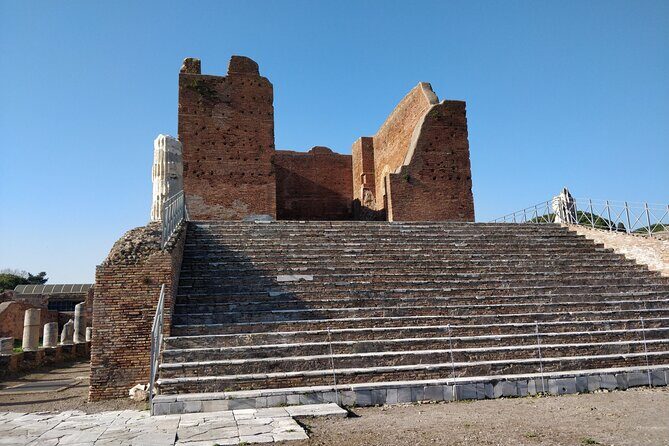
Stop 1 is where Ostia Antica really clicks. You’ll walk through the Parco Archeologico di Ostia Antica as the once-biggest river port of the Roman Republic and later the Empire. The route covers how the city looked, but also how it operated—commercial life plus the places for work, worship, food, leisure, and death.
Here’s what you’ll be seeing, in the order the story tends to make most sense.
Monumental tombs and a city’s edge: the necropolis
You start with the Necropolis of Ostia Antica, a stretch of monumental tombs and mausoleums. This is a helpful opening because it frames Ostia as a real community, not just a set of walls. It also gives you a sense of scale—people lived, worked, and died here, all within a defined urban world.
Entering the main spine: Roman Gate, Decumanus Maximus, Victory Square
Next, you move toward the core circulation routes, including the Roman gate and Victory Square along the Decumanus Maximus (the main east-west street in Roman city design). Even if you’ve seen Roman street patterns before, having the guide point out how the city’s “spine” connects sections makes the whole place easier to follow.



Neptune Baths: mosaics plus a view that makes the layout click
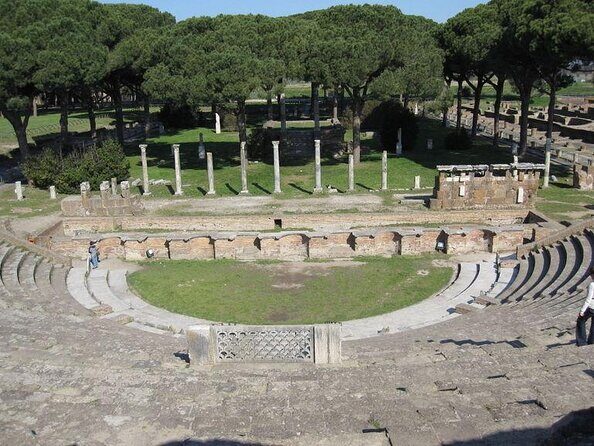
Then come the Neptune Baths, known for their mosaics and the chance to get a view from above. Baths are always a key clue in Roman life because they were about routine and social behavior as much as cleanliness. The mosaics add beauty, but the practical win is the elevation and sightlines.
If you remember only one stop from the park, make it this one. The view turns ruins into a map in your head.
Theater, civic spaces, and places tied to civic identity
As you continue, you’ll pass by the Roman Theatre and Corporation square, including the ARA of Romulus and Remus. The theater tells you leisure mattered here too, while the civic and “identity” areas remind you that Ostia wasn’t isolated from political storylines in Rome.
You’ll also get a feel for the city’s structure through how these civic spaces sit along the movement routes.
Forum zone and temples: power, religion, and control
Ostia’s main action shifts toward the forum complex areas, including the Forum baths, the Forum, and the Capitoline Triad temple. You also see the Castrum area.
This portion is valuable because it shows the blend of daily life with authority. You start with ports and streets, and you end with the spaces where the city’s leaders and religious systems made themselves visible.
Painted houses and street-level food life
Then you move into domestic and street-life zones: Painted houses, Diana’s house, and the Thermopolium. These stops are where Ostia feels most “alive” as a working town.
Painted houses are more than decoration. They hint at who lived here and how people marked their space. The Thermopolium is the sort of place that makes everyday Roman life concrete—quick meals and the kind of routine you’d recognize, even after 2,000 years.
Mills, guilds, and the people who made the port run
One of the most fascinating sections is around the industrial and service roles, including Silvano’s Mills and the Guild of Pistores (bakers). You’ll also pass by the Firemen headquarters.
This is the moment where the port-city theme becomes very real. Ostia wasn’t just big ships and warehouses; it had a whole workforce structure, with guilds tied to specific trades. Seeing the spaces linked to those jobs helps you understand how a city feeds itself and protects itself.
Cisiari’s Baths and the harbor-adjacent sidewalk
To wrap up the park walk, you’ll reach Cisiari’s Baths and the harbor’s sidewalk area. Ending near the harbor zone completes the loop: tombs at the edge, main city movement, civic centers, home and food spots, work and guild buildings, then back to the waterfront where trade likely pulled everything together.
Borghetto citadel: Giulio II castle and gelato outside the walls
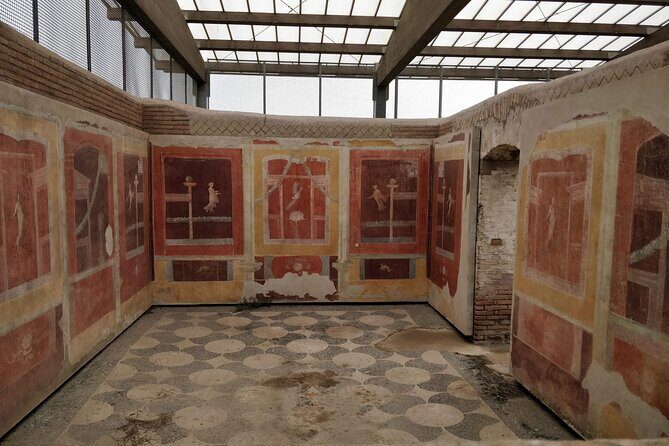
Stop 2 shifts you to a medieval layer: the Centro Storico di Ostia Antica, known as the Borghetto. This is a charming citadel area dating back to the 9th century, and it features the perfectly preserved 15th-century Giulio II castle, built on a Michelangelo design.
The castle story gives you context for why this area mattered beyond Roman times. The papal state used it to help control river trade on the Tevere and defend farmers from raids by the Saracens. That adds meaning to what could otherwise feel like just another pretty old village.
After the castle and courtyard area, you finish with Italian gelato just outside the medieval walls. It’s a simple, satisfying end point, and it also helps you decompress after the walking-heavy first stop.
Price and what you truly get for $119.27
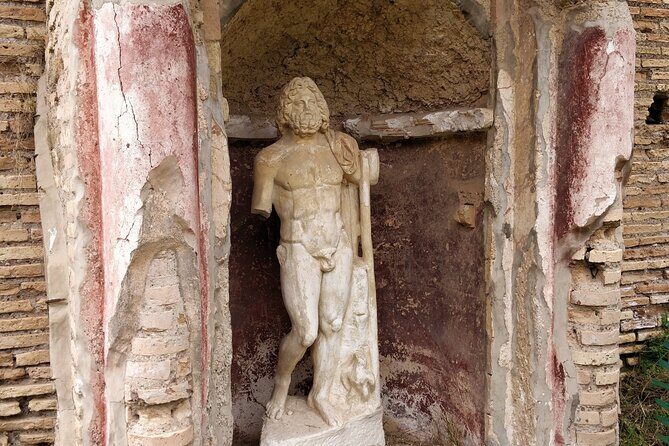
At $119.27 per person, you’re paying mainly for two things: a guided route through the most important parts of Ostia Antica and the included snack of Italian gelato.
What’s not included: the entrance fee to the archaeological park. So you’ll want to budget a little extra for that. If you’re deciding between this and a self-guided visit, the big difference is time and coherence. You’re not just visiting famous ruins—you’re getting a storyline that connects necropolis, streets, baths, civic zones, food, and port-related areas.
Also, the small group size keeps the experience focused. You’re less likely to feel like you’re tagging along behind a megaphone of a schedule.
Logistics you can plan around: trains, walking, and stairs
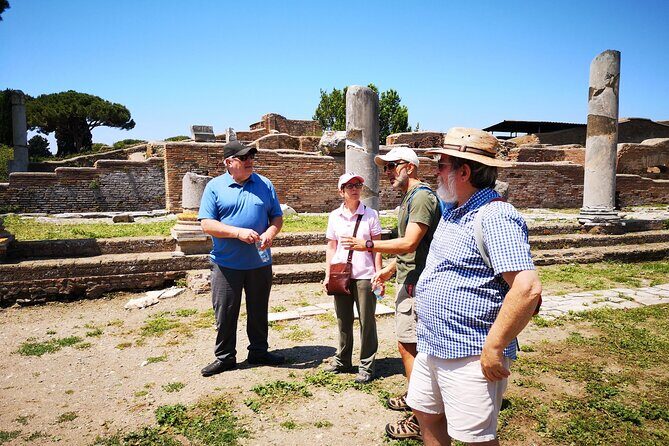
Meeting point is at Viale della Stazione di Ostia Antica, 00119 Roma RM, and the tour starts at 9:30 am. It also ends back at the meeting point.
From Rome, getting there is usually easiest by public transport. A practical route that works well is: metro to Piramide (connected to Porta San Paolo station), then switch to the Ostia-Lido commuter train. This lines you up nicely with the station area where the meeting point is.
Walking reality check
There’s about three miles of walking for the whole experience, with a couple places where you could climb short steep stairs for viewpoints. Those climbs are optional, but you should know they exist. If stairs are a deal-breaker for you, it’s still possible to participate, just go in with the mindset that some spots may be easier to skip.
Because it’s mostly outdoors, plan for weather. This experience requires good weather, and if conditions aren’t good, you’ll be offered another date or a full refund.
Who this tour is best for (and who should skip it)
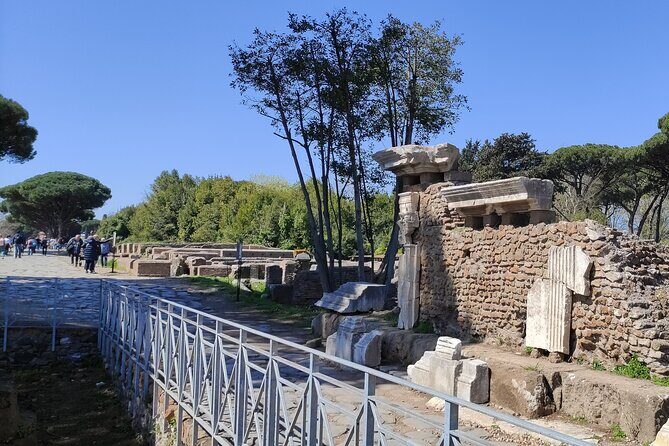
This is ideal if you want the Roman port story explained clearly while you walk. It also fits well if you’re tired of seeing only the headline sights inside Rome and you want something quieter with better-preserved structure.
It’s especially a good choice if you like asking questions and getting direct answers, since the group is capped at 6.
Skip it—or consider another option—if you want a long, free-form explore day. This tour is built to cover key highlights in a set time window, not to linger for hours on just one area.
Should you book Ostia Antica with Italian gelato?
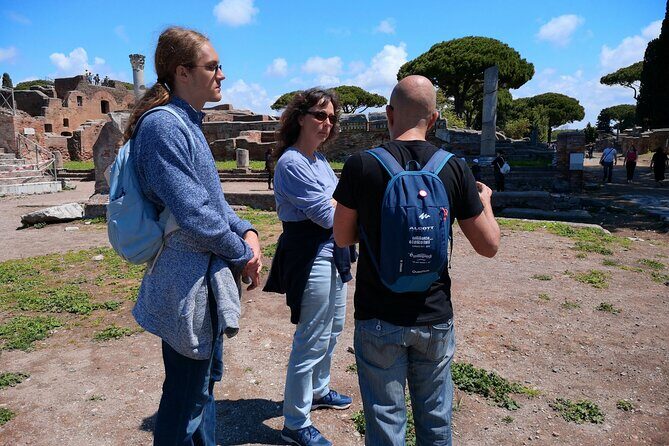
I’d book it if you want a guided, readable route through a working Roman city, not just photos and guesswork. The combination of two hours in the archaeological park and a medieval Borghetto finish with Italian gelato is a smart mix: ancient, then later history, then a relaxed payoff.
Also, with guides like Chiara and Federico showing up in English and keeping a steady pace, you’ll likely leave with a clearer picture of what you actually saw—why it mattered and how it fit together.
If you already know Roman urban design well and you prefer full independence, you might feel you could do this on your own. But for most people, the time spent with a guide is what makes Ostia Antica click fast.
FAQ
Is the archaeological park entrance fee included?
No. The tour includes the guided walking, but the entrance fee to the archaeological park is not included.
How long is the tour?
It runs about 2 hours 30 minutes (approx.), with about two hours in the archaeological park and about 30 minutes in the Borghetto area.
What’s included in the price?
Included are the walking tour as described and Italian gelato.
Is this tour in English?
Yes, it’s offered in English.
How big is the group?
The tour has a maximum of 6 travelers.
Where does the tour start?
It starts at Viale della Stazione di Ostia Antica, 00119 Roma RM, Italy. The tour ends back at the meeting point.
What time does the tour begin?
The start time is 9:30 am.
Is public transportation nearby?
Yes, it’s near public transportation.
Can most people participate?
The tour states that most travelers can participate. It involves walking and includes some optional steep stair climbs.
What happens if the weather is bad?
This experience requires good weather. If it’s canceled due to poor weather, you’ll be offered a different date or a full refund.