REVIEW · HOP-ON HOP-OFF TOURS
Official Rome Hop-on Hop-off Sightseeing Bus Tour
Book on Viator →Operated by Eternal City Explorers · Bookable on Viator
Rome clicks into place fast here. This hop-on hop-off bus is a practical way to check key sights quickly and still move at your pace, with Wi-Fi and onboard audio commentary as you ride. You get regular departures, so it feels less like waiting around and more like making progress. One thing to plan for: bus gaps can happen, especially at busy stops, so give yourself a little buffer.
To make it work smoothly, start with a smart plan at Termini and use the stops to build your walking route. The ride is built for an easy first pass, and you can keep your mobile ticket handy along with a map to decide where to hop off next.
In This Review
- Quick Hits: What Makes This Bus Tour Worth Your Time
- Hop-On Hop-Off in Rome: How This Loop Actually Helps
- Onboard Experience: Wi-Fi, Earphones, and the Assistant Who Keeps It Moving
- Price and Value: Why This Can Be Cheaper Than It Looks
- Timing Reality: Delays, Crowd Lines, and the Heat Factor
- Expect some waiting at stops
- Open-air comfort is not guaranteed
- Route Map in Your Head: Stop-by-Stop Guide
- Stop 1: Via Giovanni Giolitti 34 (Termini Station)
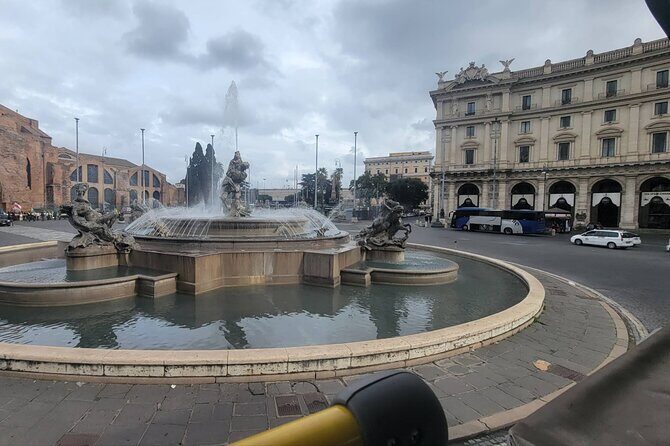
- Stop 2: Basilica di Santa Maria degli Angeli e dei Martiri
- Stop 3: Via di San Gregorio (near the Circus Maximus ruins)
- Stop 4: Via del Circo Massimo (along the Circus Maximus)
- Stop 5: Piazza Venezia and the Altare della Patria
- Stop 6: Lungotevere Tor di Nona 7 (Tiber River riverside)
- Stop 7: Via Ludovisi 48 (near Via Veneto and the Spanish Steps)
- Stop 8: Via Barberini 14 (near Trevi Fountain and Quirinal Palace)
- How to Get the Most From Hop-Off Hop-On Without Losing Time
- Do one full ride first
- Use the lines strategically
- Keep your voucher ready the right way
- Who This Tour Suits Best (and Who Should Skip It)
- Small Practical Tips That Pay Off
- Should You Book This Official Rome Hop-On Hop-Off Bus?
- FAQ
- How long is the Rome hop-on hop-off bus tour?
- Where does the tour start?
- Does the ticket include entrance fees to attractions?
- Is Wi-Fi available on the bus?
- Are audio guides included?
- What if I need help onboard?
- Is free cancellation available?
Quick Hits: What Makes This Bus Tour Worth Your Time
- Wi-Fi onboard so you can look up your next stop while you ride
- Audio commentary in English (plus a multilingual assistant onboard)
- Hop-off freedom to pair bus views with on-foot exploring
- A short ride window that helps you get oriented without burning a full day
- Multiple lines with different wait times, so choosing the right one matters
Hop-On Hop-Off in Rome: How This Loop Actually Helps

Rome is big, spread out, and often best understood in layers: ancient ruins, then grand squares, then the neighborhoods between. This bus is designed for that first layer. In about 1 hour 20 minutes (approx.), you can see a string of major areas, get the geography in your head, and then choose what to revisit on foot.
The real value here is not just the views. It’s the rhythm. You ride, then you hop off, then you rejoin when you’re ready. If you’re visiting for the first time or you’re trying to fit in a lot with limited time, this format gives you control.
And the “stay connected” part is more useful than it sounds. With Wi-Fi onboard, you can pull up directions, translate street signs, or check what time something closes. That makes your stops more than photo ops.
You can also read our reviews of more tours and experiences in Rome.



Onboard Experience: Wi-Fi, Earphones, and the Assistant Who Keeps It Moving
This isn’t a silent sightseeing bus. You’ll have:
- Audio commentary as you go, with single-use earphones
- A multilingual assistant onboard
- An electronic voucher and city map
- Wi-Fi onboard
Here’s why I like this setup for Rome: audio turns landmarks into stories without you needing to stop and read. The earphones also help you stay focused when traffic and crowds are loud. And the assistant matters because Rome is full of small rules—like which side of a street you need for the best walking path back to your next pickup.
Price and Value: Why This Can Be Cheaper Than It Looks
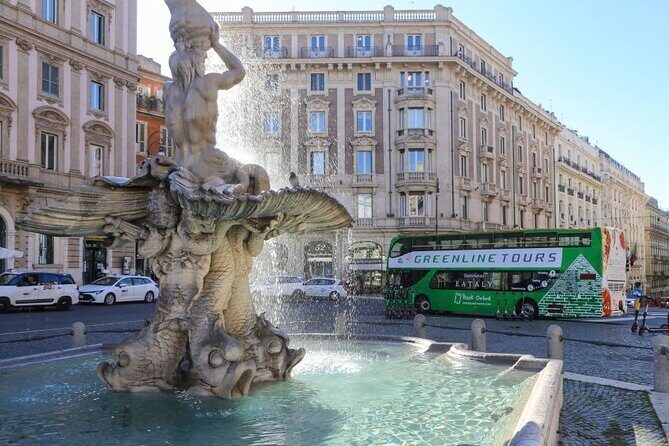
There’s no admission included for the sights you pass. That’s a key point. The bus is more about scope and orientation than full museum time. But that can still be good value.
You’re saving money on entrances if your plan is to view a lot from the street first, then pay for only the sites you truly want to enter. You’re also saving time in the early part of your trip, which often costs more than tickets do when you’re juggling jet lag and limited days.
Also, because it’s hop-on hop-off with full access to all bus routes, you’re not stuck with a single straight-line route. That flexibility tends to be where these tours pay for themselves.
Timing Reality: Delays, Crowd Lines, and the Heat Factor
Let’s talk about the two practical issues that can make or break your day: timing and comfort.
Expect some waiting at stops
The frequency can vary by line. In one of the notes provided, the green line is listed as about every 10 minutes, while the blue and orange lines are around every 30 minutes. Those two routes also take you outside the historic center, which means you’ll naturally spend more time traveling before you return to the densest sights.
Add to that the fact that bus delays can happen due to works in Rome (noted as Il Guibleo 2025), and you should plan with buffer time. If you hate uncertainty, keep your schedule loose. If you’re flexible, this tour becomes a low-stress backbone for the day.



Open-air comfort is not guaranteed
One review-related note also flags that the buses are open and air conditioning is limited. The response states there are ten open buses, with two of them with A/C. So on hot days, you may feel the heat more than you expect.
My practical advice: aim for morning or late afternoon if you can, and treat shade like a rare resource. Water isn’t included, so plan to buy it near stops.
Route Map in Your Head: Stop-by-Stop Guide
This is the heart of the experience. Here’s what you can expect at each stop, what makes each one useful, and how to use it.
Stop 1: Via Giovanni Giolitti 34 (Termini Station)
You start at Termini Station area. That matters because it’s one of the easiest places in Rome to reach by public transportation. It also means you can get your bearings fast—especially if your lodging is elsewhere in the city but you can hop into Termini easily.
If you’re new to Rome, this is a smart starting point. It’s also where pick-up confusion can happen. Have your electronic voucher ready and make sure you’re on the correct bus operator when boarding.
Stop 2: Basilica di Santa Maria degli Angeli e dei Martiri
This stop is a strong choice for art-and-architecture lovers. The basilica is tied to an older Roman world: it was originally an ancient Roman bathhouse, then transformed into a church by Michelangelo in the 16th century.
What I like about placing this on a hop-off route: it gives your day a curveball. Instead of only chasing ruins, you get a major monument that connects Rome’s layers. Even if you don’t go inside (entrances aren’t included), the location helps you understand how the city reused older structures.
Consideration: It’s a big site. If you hop off here, decide quickly if you’re doing a quick look or committing to more time inside.
Stop 3: Via di San Gregorio (near the Circus Maximus ruins)
This is a great “walk me through real Rome” stop. Via di San Gregorio sits next to the ancient Circus Maximus ruins, so you get a natural transition from bus views to street-level life.
The street is described as lined with cafes, boutiques, and trattorias. That makes it a good place to:
- Stretch your legs
- Grab a snack break
- Walk a little and then rejoin later
Stop 4: Via del Circo Massimo (along the Circus Maximus)
If you want the ancient-chariot-race energy, this is where it shows up. Via del Circo Massimo runs along the Circus Maximus site, tied to grand spectacles and chariot races.
Practical upside: this street is also set up for scenic wandering. You can use it as a walking corridor with cafes and gelaterias, and it can give you views toward the Palatine Hill and Roman Forum area.
Consideration: This is a good stop for walking, but don’t overpack it if you’re also planning Trevi/Spanish Steps later. It’s easy to lose time to “just one more block.”
Stop 5: Piazza Venezia and the Altare della Patria
This is Rome’s big-sight square energy. Piazza Venezia is dominated by the Altare della Patria, and it acts like a hub where major landmarks are easy to orient around.
One of the best uses of this stop is the view logic. Even if you don’t enter anything, the square helps you understand where the Colosseum and Roman Forum sit relative to each other and how neighborhoods connect.
Tip: If you like planning photo routes, this is a solid place to pause, take stock, and map your next walking loop.
Stop 6: Lungotevere Tor di Nona 7 (Tiber River riverside)
This stop gives you a quieter beat. Along the Tiber, Lungotevere Tor di Nona feels more like a stroll than a rush. The address is described as a riverside location away from the busiest center, but still close enough to stay connected to major attractions.
I’d use this stop when you want a reset:
- A break from constant crowds
- A calmer walking section
- A moment to watch the river rhythm
Consideration: If you’re short on time, this stop can be a “nice-to-have.” Prioritize it only if you’re enjoying slower moments.
Stop 7: Via Ludovisi 48 (near Via Veneto and the Spanish Steps)
This is the upscale-rome shift. Via Ludovisi sits in the Ludovisi neighborhood, close to Via Veneto and the Spanish Steps area. If you want a break from ancient ruins and into classy streets with shops and dining, this works well.
The surrounding area is described as having luxury boutiques, art galleries, and gourmet restaurants. It’s a good stop for browsing and walking, not necessarily for quick sightseeing checkboxes.
Consideration: If your goal is purely ancient sites, this stop may feel less urgent. Choose it if you want variety.
Stop 8: Via Barberini 14 (near Trevi Fountain and Quirinal Palace)
This is a classic central Rome placement. Via Barberini puts you near the Trevi Fountain area and the Quirinal Palace vicinity. It’s also described as lined with historic buildings and elegant boutiques.
For many people, this makes for a great finishing stop. You can hop off and walk to famous sights you want to spend more time on, without needing to cross the whole city.
Consideration: The closer you get to Trevi, the more foot traffic you’ll see. Keep your pickup timing in mind so you’re not sprinting back to the bus.
How to Get the Most From Hop-Off Hop-On Without Losing Time
Here’s my practical strategy that matches what the tour setup is good at.
Do one full ride first
If you’re using this as an orientation tool, I’d stay on for the full loop once before hopping off everywhere. That way, when you do decide to get out, you understand what you’re trading off: time walking versus time traveling to the next stop.
Use the lines strategically
Because the green line is said to run about every 10 minutes, it’s often the better choice when you want flexibility. The blue and orange lines run about every 30 minutes and go farther outside the historic center, so you’ll want a clearer plan before you switch to those.
Keep your voucher ready the right way
Some boarding issues reported were tied to the format of the ticket on certain booking platforms—like needing a QR code onboard staff can scan. I can’t promise how every smartphone display will be read, so here’s the safe play: keep your electronic voucher open on your phone before you reach the steps, and be ready to show it quickly.
Also, make sure you board the correct operator. One situation mentioned involved a customer being directed to a different company at a pickup point, which caused confusion. If you arrive with the wrong bus, you can lose time fast.
Who This Tour Suits Best (and Who Should Skip It)
This works best for:
- First-time visitors who want major sights in a short time
- People who like combining bus views with self-guided walking
- Travelers who value onboard help like audio commentary, Wi-Fi, and a multilingual assistant
I’d think twice if:
- You strongly depend on frequent departures and cannot handle waiting
- You need air conditioning and travel during peak heat
- You plan to enter lots of paid attractions, since the tour primarily passes by sights rather than including admissions
Small Practical Tips That Pay Off
- Bring a small plan for each hop-off stop: quick look, longer walk, or snack break. Otherwise you’ll wander.
- Take advantage of Wi-Fi to check your next walking route while you’re still on the bus.
- If you’re sensitive to heat, aim for cooler parts of the day since A/C is limited to a small number of buses.
- Give yourself breathing room at busy stops. Rome buses can get delayed when roads are busy.
Should You Book This Official Rome Hop-On Hop-Off Bus?
If your goal is to get your bearings fast and see Rome’s key areas in a practical way, I think this is a strong fit. The combination of audio commentary, onboard Wi-Fi, and a route that touches Termini, major squares, and the Circus Maximus corridor makes it easy to turn a short window into a satisfying day.
Book it if you want structure without feeling locked into a guide’s schedule. Skip it or reconsider if you hate waiting, expect guaranteed A/C, or only want a single paid attraction—because this tour is built around passing sights and choosing your own next moves.
FAQ
How long is the Rome hop-on hop-off bus tour?
The duration is listed as about 1 hour 20 minutes.
Where does the tour start?
It starts at Via Giovanni Giolitti 34, at Termini Station, with a start time of 9:00 am.
Does the ticket include entrance fees to attractions?
No. Entrance fees are not included. The bus is described as passing in front of the attractions.
Is Wi-Fi available on the bus?
Yes. The bus includes Wi-fi onboard.
Are audio guides included?
Yes. You’ll have audio commentary during the ride, and single-use earphones are provided.
What if I need help onboard?
There is a multilingual assistant onboard, plus a city map is included.
Is free cancellation available?
Yes. Free cancellation is available up to 24 hours in advance for a full refund.