REVIEW · NAPLES
Naples: Half-Day Pompeii Tour
Book on GetYourGuide →Operated by BLU WELCOME TRAVEL · Bookable on GetYourGuide
Pompeii in four hours sounds tight.
But this half-day tour is set up to make the time count: you get a skip-the-line entrance and a shared walking tour inside the ruins, plus round-trip transfer from Naples. I like that it’s not just a bus trip and a free-for-all—your guide points out the key places and explains what you’re looking at while you walk.
Two parts I like most are the photo-friendly pacing and the focus on major sites. You’ll get brief stops for photos while the guide covers highlights like the thermal baths, the Lupanare brothel frescoes, the Macellum, and big-name houses like the House of Faun.
One thing to consider: the time inside Pompeii is only about 1.5 hours, and the route can change with crowds and weather. In at least one recent experience, a coordinator named Teresa was described as rushed, with very limited time to grab souvenirs or food before moving back to the bus—so if you hate feeling on a clock, plan to keep expectations realistic.
Key takeaways before you go
- Skip-the-line entrance helps you start walking sooner instead of waiting at the ticket desk
- A guided walk of the main sights covers baths, frescoes, the marketplace area, and standout houses
- Photo stops are built in, so you’re not sprinting between points of interest
- Route adjusts for crowds and maintenance, including swaps if buildings are closed for restoration
- English/Italian guide is included, with audio guidance if the group is small
In This Review
- Half-Day Pompeii From Naples: The Best Use of Limited Time
- Why Skipping the Line Actually Matters Here
- The Guided Stops That Make Pompeii Make Sense
- Thermal baths: where people relaxed and socialized
- The Lupanare brothel frescoes: startling, but unforgettable
- The Macellum and its tabernae: the marketplace rhythm
- Famous workshops and everyday work
- The Basilica: a civic anchor
- The House of Faun: the big-house takeaway
- Photo Stops: Quick, Helpful, and Actually Planned
- How Crowds and Weather Change the Route
- Restoration Closures: What Happens When a Building Isn’t Accessible
- Group Size, Guide vs Audio: Know What You’re Getting
- Transfers in a Shared Tour: Convenient, but Not Private
- What to Bring (So You Don’t Have a Miserable Walk)
- Price and Value: Is $105 a Good Deal?
- Who This Tour Fits Best (And Who Might Feel Rushed)
- Should You Book This Pompeii Half-Day Tour?
- FAQ
- How long is the Pompeii part of the tour?
- What’s included in the price?
- Do I need to wait in a ticket line?
- What languages are available for the tour?
- What happens if parts of Pompeii are closed for restoration?
- Where do you pick you up in Naples?
- Does the tour run in bad weather?
Half-Day Pompeii From Naples: The Best Use of Limited Time
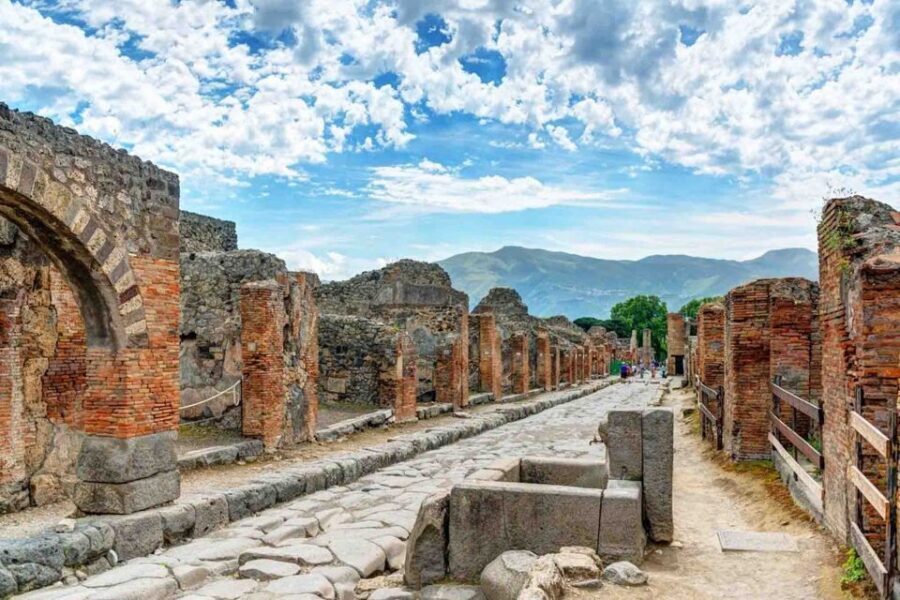
If you’ve only got a short window in Naples, Pompeii can still fit. This tour is designed for the “I want to see the essentials, not wander for half a day” traveler. You meet your driver in Naples, then transfer over to Pompeii with commentary on board—so you’re not arriving cold.
Once you’re inside, the tour shifts gears into a guided walk. That matters, because Pompeii is huge and easy to get wrong if you don’t know what you’re looking for. Instead of trying to read everything on your own, you’re led to the places that make the city feel real: public spaces, everyday-life areas, and signature homes.
The vibe is practical rather than slow and dreamy. You’ll walk, stop, listen, and take pictures—then get back on the bus and call it a day.
Why Skipping the Line Actually Matters Here
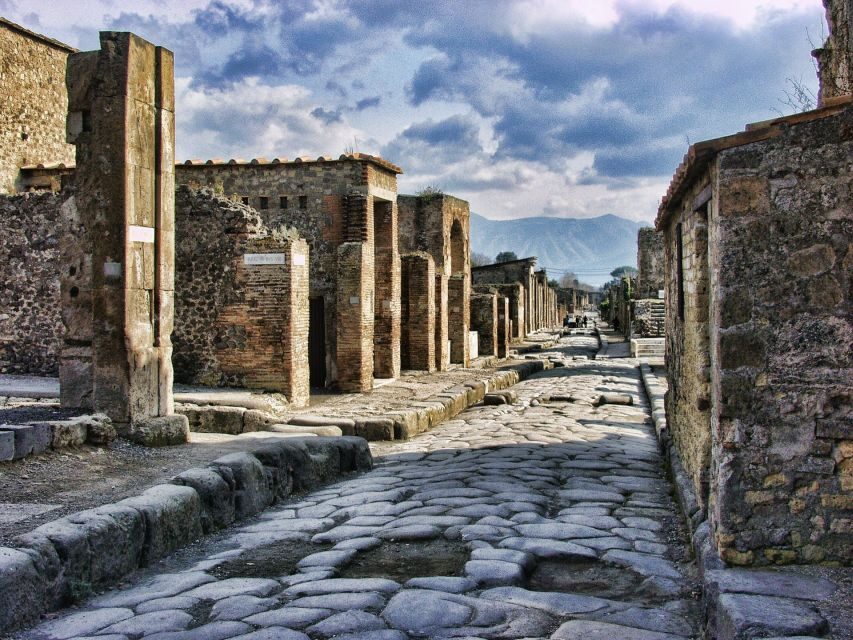
Pompeii’s busiest moments can turn the first hour into waiting. This tour builds in a skip-the-line entrance fee, which is a real advantage when your whole schedule is only about four hours.
Skipping the ticket office doesn’t just save minutes—it changes your experience. You spend less time standing around and more time absorbing the ruins while your energy is still high. It also helps the day feel organized when weather or crowd levels would otherwise create delays.
Still, keep in mind: this is a shared tour with a fixed structure. If you’re hoping to spend time lingering at one stop for a long stretch, the timing won’t always let you.
You can also read our reviews of more tours and experiences in Naples



The Guided Stops That Make Pompeii Make Sense
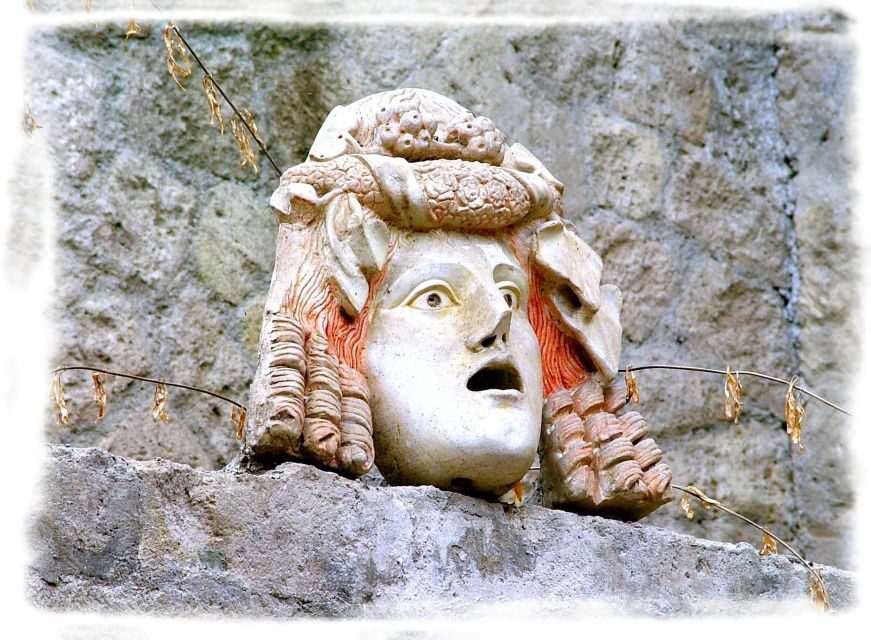
Your archaeological guide spends your time inside Pompeii showing you the big anchors of the ancient city. The exact order can shift based on crowds and weather, but the core sights are the same.
Thermal baths: where people relaxed and socialized
The tour includes the thermal baths, which are among the most evocative parts of Pompeii. Even if you don’t care about ancient plumbing, baths help you understand daily life. You get a sense of routine—how people cooled down, washed, and gathered.
A bonus with a guided format: you’re less likely to miss the important features. Your guide points out what to look for so the ruins feel like a functioning place instead of just stone fragments.
The Lupanare brothel frescoes: startling, but unforgettable
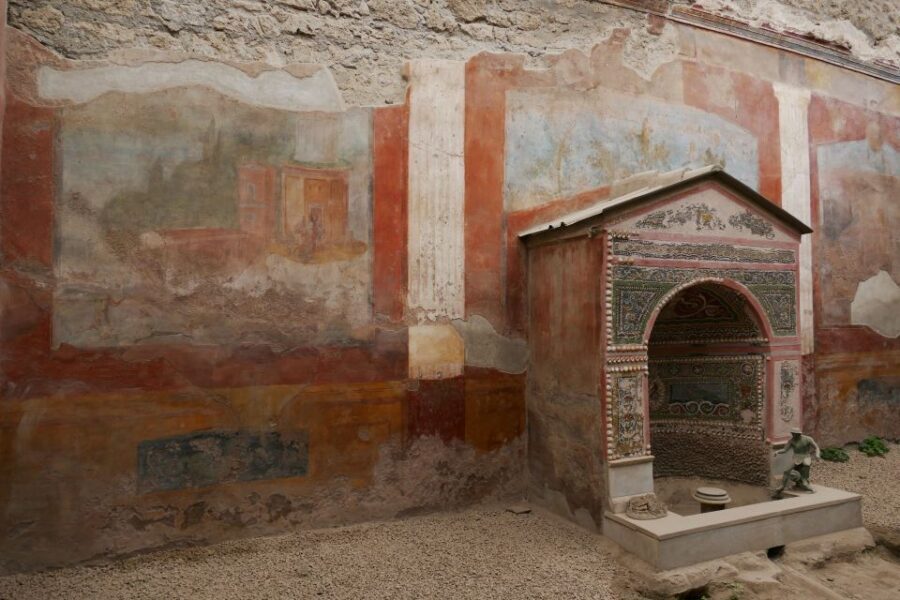
You’ll see the frescoes connected to the Lupanare brothel. It’s not exactly subtle subject matter, but it’s memorable because it shows how art and advertising worked in real life—right in the places people moved through.
This stop also tends to create great photos, mostly because frescoed surfaces are visually clear. Just remember: you’ll be in and out quickly, so be ready to snap during the brief photo breaks.
The Macellum and its tabernae: the marketplace rhythm
The tour also includes the Macellum, with its tabernae (shops/stalls). This is where Pompeii starts to feel like a city, not a museum. Market architecture, shop fronts, and the spatial layout help you picture how food, supplies, and news flowed.
If you like travel that tells you how people lived, this is a strong inclusion. It’s a smart way to see Pompeii’s everyday heartbeat without getting lost.





Famous workshops and everyday work
You’ll also pass by famous workshops, giving you a glimpse into production—how goods were made locally. Pompeii shines when you step into the “this is what a workplace would have looked like” category.
Even in a short tour, this adds variety. It’s not only temples and grand houses; you see the city’s work side too.
The Basilica: a civic anchor
The Basilica is part of the tour route. In ancient cities, basilicas weren’t just church buildings—they were civic hubs where people gathered and conducted business. Seeing it in context helps you understand Pompeii as a functioning community.
If your goal is to come away with a mental map, this kind of anchor stop is key.
The House of Faun: the big-house takeaway
The House of Faun is included, and it’s a solid choice for a half-day itinerary. Grand homes like this help you grasp the social layers of the city—who had space, status, and style.
Again, time is limited here, so don’t expect a slow, detailed walkthrough. Instead, aim to take in what makes it distinctive and let your guide explain the meaning behind the layout and features.
Photo Stops: Quick, Helpful, and Actually Planned
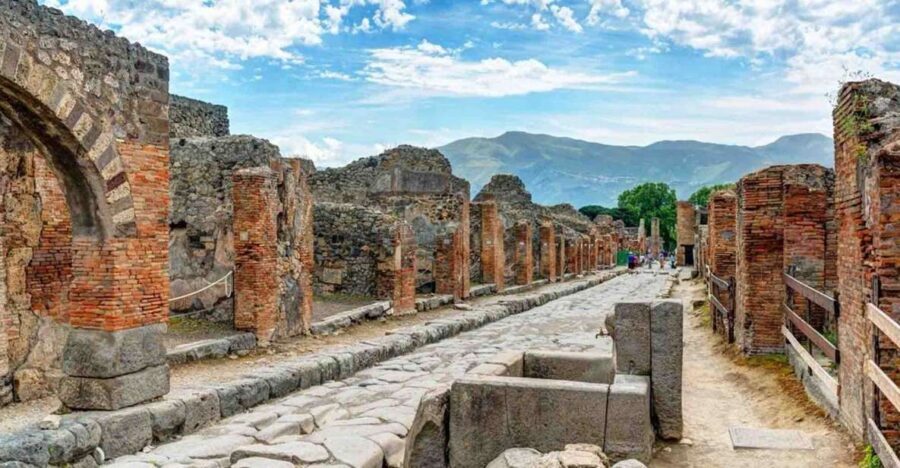
The tour includes several opportunities for photos during brief stops. That’s worth valuing. Pompeii punishes unplanned wandering: you’ll either miss the good angles or end up behind the group.
I like that the structure expects you to take pictures. You’ll want to use this time wisely:
- Get a couple wide shots when you arrive
- Then grab a close photo during the stop if the scene is visually detailed (like fresco walls)
- Don’t spend so long photographing that you fall behind
If you care about photography, bring a phone with good low-light performance too—weather changes can affect lighting fast in an outdoor site.
How Crowds and Weather Change the Route
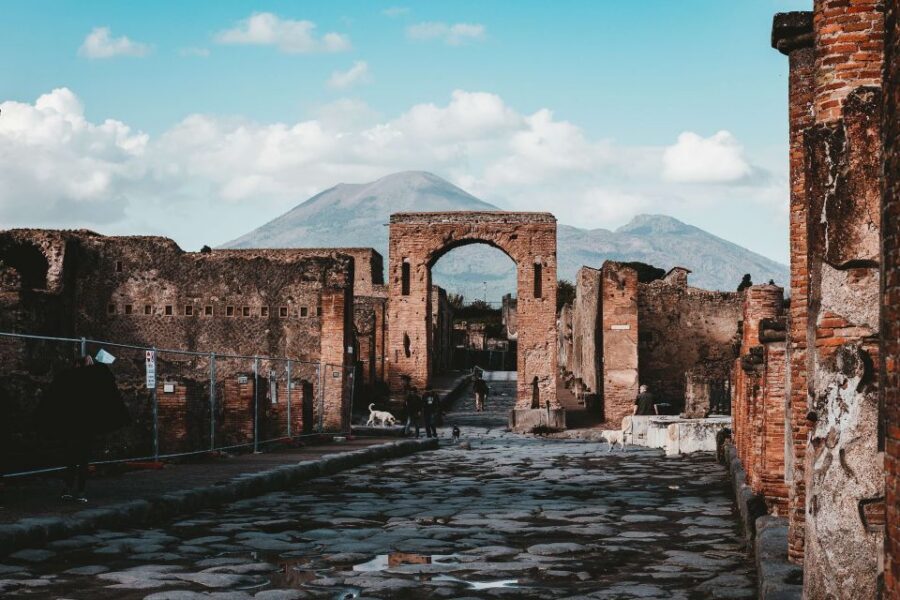
Pompeii doesn’t behave like a neat museum circuit. This tour acknowledges that directly: your exact route depends on crowds and weather conditions. On some days, you may see the planned highlights in a similar order, but don’t assume it’s always the same.
That flexibility is practical because it protects your experience from getting stuck behind slow-moving lines of people. The trade-off is that the day won’t feel rigid, which some people love and others dislike.
Restoration Closures: What Happens When a Building Isn’t Accessible
Pompeii still has ongoing work. If some villas or buildings are under maintenance or restoration, your guide will replace that visit with an alternative building.
That matters because it prevents a “we can’t go there” dead end. You still get to see comparable areas of the site, even if a specific structure isn’t available that day. It’s also why going with a live guide helps—you’re not left staring at closures with no plan.
Group Size, Guide vs Audio: Know What You’re Getting
This tour is shared, and the guide format depends on group size. If there are enough participants (minimum of 6), you’ll have a live guide. If the group is smaller (up to 5 participants), you’ll get audio-guides instead.
It’s smart to think about how you learn best. A live guide can tailor explanations on the spot—like pointing out why one room matters or what a feature means. Audio guidance can still be useful, but it’s more self-directed.
The tour languages are English and Italian, so if you have language preferences, keep that in mind when you book.
There’s also a detail worth taking seriously: one guide name that came up in feedback is Nancy, praised for making the sites click. On the flip side, another experience included a coordinator named Teresa described as rushed, which affects how calm the pacing felt. The takeaway: the site can be fantastic either way, but people experience the flow differently depending on the team on duty.
Transfers in a Shared Tour: Convenient, but Not Private

The round-trip transfer is included, and you’ll have board commentary during the drive. That’s a big part of the value because Pompeii is not right next door to Naples, and getting there without planning can eat up your day.
Your day ends with the drive back to Naples when the tour wraps up. Since the schedule is tight, treat food and shopping as secondary. In one described case, there was only around 10 minutes at the end for souvenirs or food, and then it was time to board the bus for the next group—so don’t plan on a leisurely stroll through shops.
What to Bring (So You Don’t Have a Miserable Walk)
This tour runs in all weather conditions, so dress for walking outside in Campania’s heat or rain.
Bring:
- Passport or ID card
- Comfortable walking shoes
- A hat and sunscreen in summer
- An umbrella in rain
Pompeii roads can be uneven, and you’ll be moving between stops. Good shoes turn the experience from “I can do this” into “this is actually enjoyable.”
Also, consider bringing water, even though lunch isn’t included. The tour doesn’t mention snacks, so a small bottle can help you avoid feeling drained before the return trip.
Price and Value: Is $105 a Good Deal?
At $105 per person for about 4 hours, you’re paying for a lot of practical components bundled together:
- Round-trip transfer from Naples
- Skip-the-line Pompeii entrance
- A guided walk (or audio if the group is small)
- Commentary during the transfer
You’re not paying extra for transport logistics, and you’re not standing in ticket lines. For a first-time Pompeii visit, that combination can be worth it—especially if you don’t want to spend your Naples time figuring out schedules, buses, and entry logistics.
The value drops a bit if you’re the type who loves slow discovery. Since the Pompeii portion is about 1.5 hours, you’re buying a guided overview, not a deep, unhurried exploration. If your dream version of Pompeii includes sitting in quiet corners for a long time, you might feel squeezed.
Who This Tour Fits Best (And Who Might Feel Rushed)
This half-day tour is a great match if:
- You’re short on time in Naples
- You want a guided overview of the core sights
- You like photo breaks instead of constant sprinting
- You prefer not to handle transport and entry logistics yourself
It may feel less ideal if:
- You hate being on a schedule
- You want to linger at one specific area for a long time
- You prefer smaller, slower, more customizable tours
Should You Book This Pompeii Half-Day Tour?
If you want a smart first Pompeii hit without giving up your whole day, I think it’s worth booking. The biggest strengths are the skip-the-line entry, the guided selection of major sites, and the convenience of round-trip transfer.
Just go in with the right expectations: it’s an efficient overview, not a long exploration. If that fits your style, you’ll likely come away with a clear mental map of Pompeii’s most important areas—thermal baths, Lupanare frescoes, the Macellum and tabernae, workshops, the Basilica, and the House of Faun—without spending your Naples day stuck in logistics.
If you’re sensitive to pacing, pick your booking times carefully and come prepared for the “move with the group” rhythm.
FAQ
How long is the Pompeii part of the tour?
The visit inside Pompeii lasts about 1.5 hours, with the rest of the time used for the transfer between Naples and Pompeii.
What’s included in the price?
The tour includes round-trip transfer, commentary on board, an archaeological guide (or audioguide), and skip-the-line entrance fee. Lunch is not included.
Do I need to wait in a ticket line?
No. This tour includes skip-the-line entrance, so you should spend less time waiting at the ticket office.
What languages are available for the tour?
The live guide is available in English and Italian.
What happens if parts of Pompeii are closed for restoration?
If some villas or buildings are under maintenance work, your guide will replace that visit with an alternative building.
Where do you pick you up in Naples?
Pickup is included at your Naples accommodation or a selected meeting point.
Does the tour run in bad weather?
Yes. The tour operates in all weather conditions, so dress appropriately. An umbrella can help if it’s rainy.