REVIEW · NAPLES
Herculaneum Private Guided Tour Led by a Local Top-rated Guide – All inclusive
Book on Viator →Operated by Raphael Tours & Events · Bookable on Viator
Herculaneum feels close to everyday life. This private, skip-the-line guided walk through UNESCO Herculaneum is built around the details—mosaics, baths, civic buildings, and villas that help you picture how Romans lived before Mt Vesuvius covered the city. I especially love the focus on mosaics and preserved interiors, plus how the guide brings the ruins into a story you can follow.
One catch: you’ll handle your own arrival at Ercolano Scavi, since there’s no hotel pickup, and the walking is best suited to moderate physical fitness. Comfortable shoes are a must, and you’ll want to be ready for a steady, concentrated 2-plus-hour route.
In This Review
- Key points to know before you go
- Why Herculaneum clicks faster than you expect
- Skip-the-line private entry at Parco Acheologico di Ercolano
- The walking route: Forum, Basilica, and Thermal Baths
- Mosaic houses and seaside villas: where the art hits hardest
- How the AD 79 burial shapes what you see (and what you feel)
- Timing, meeting point, and practical tips for a smooth 2-hour outing
- Price and value: is $207.11 a fair deal?
- Choosing your guide: when the details start to click
- Should you book this Herculaneum private guided tour?
- FAQ
- How long is the Herculaneum private guided tour?
- What departure times are available?
- Where do I meet the guide?
- Is admission included and do I skip lines?
- Is this tour truly private?
- What is included and what is not?
- Is the tour offered in English?
- What level of physical fitness do I need, and is it suitable for children?
- Do I need any documents or contact info?
Key points to know before you go
- Skip-the-line entry is guaranteed, so you can get inside the Parco Acheologico di Ercolano faster.
- A private 2.5-hour walking tour means your guide can slow down for questions.
- Mosaic house visits include the House of the Mosaic Atrium and the House of Neptune and Amphitrite.
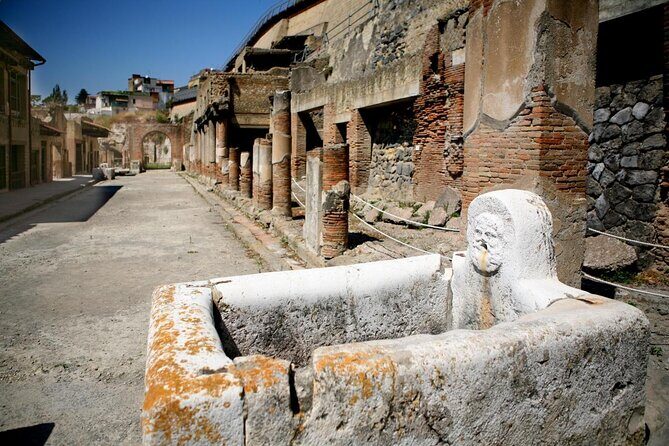
- You’ll see the civic core and daily-life spots like the Forum, Basilica, and Thermal Baths.
- AD 79 preservation shows up in real objects, including carbonized furniture and street layouts you can visualize.
Why Herculaneum clicks faster than you expect
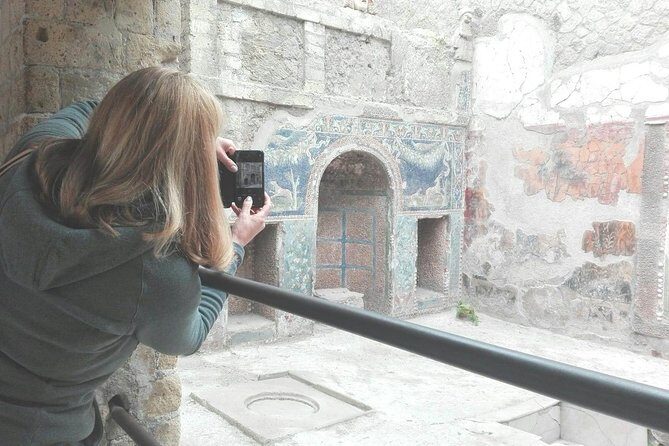
If you’re weighing Herculaneum against other famous Roman sites, Herculaneum has a special advantage: it’s unusually intact. When you’re standing in the ruins, it’s easier to imagine rooms, corridors, and public spaces as spaces you could actually walk through. That matters, because the best moments are often small—patterns in the mosaics, the placement of doorways, and how a public building connects to the street.
What I like about this tour is that it’s not just “look at these walls.” It’s a guided sequence that helps you build a mental map. You start at the archaeological area and end back at the starting point, which keeps the whole experience tight and readable. And since it’s a private tour, you’re not trying to keep pace with a group while your questions pile up.
Also, the timeline is a big part of the appeal. You’ll learn how the city’s story reaches back as early as the 7th century BC, then connects to the Roman city buried by the AD 79 eruption of Mt Vesuvius. That arc turns the site from a pile of ruins into a place with real stages of life.
You can also read our reviews of more guided tours in Naples


Skip-the-line private entry at Parco Acheologico di Ercolano
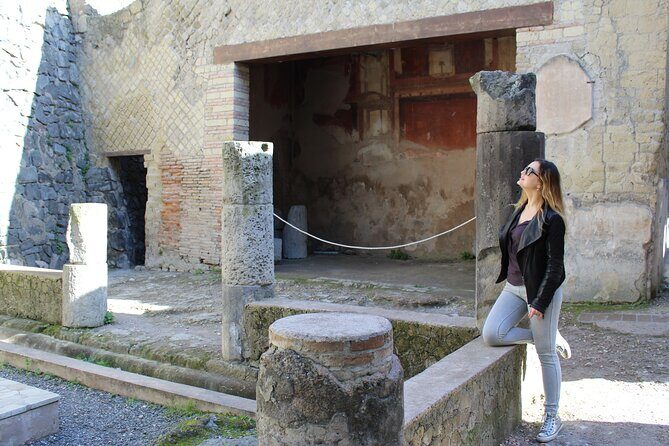
The tour meets at Ercolano Scavi (80056 Ercolano, Metropolitan City of Naples, Italy), and you’ll make your own way to the ticket office area to meet your guide in time for either 8:30am or 12:30pm departure (depending on the option you book). You then use your skip-the-line tickets to head into the archaeological area without the long wait.
That may sound like a convenience perk, but for Herculaneum it’s a big deal. The experience is short—about two and a half hours—so saving time at the entrance gives your guide more time inside for the “how” and “why” questions. A guided walk works best when you aren’t rushed before it even starts.
Another detail that helps: the tour includes a professional guide and also a professional art historian guide. On a site like this, that mix is useful. You’ll get practical explanations about Roman life and also interpretation of decorative elements like mosaics. Even in the best self-guided visits, it can be hard to know what to look for first. Here, the guide steers you to the right spots and explains what you’re seeing.
If you’re traveling with classics students or people who want more than basic facts, the private setup is also a win. A guide can tailor explanations on the spot, and you can ask follow-ups instead of waiting for a group question later.
The walking route: Forum, Basilica, and Thermal Baths
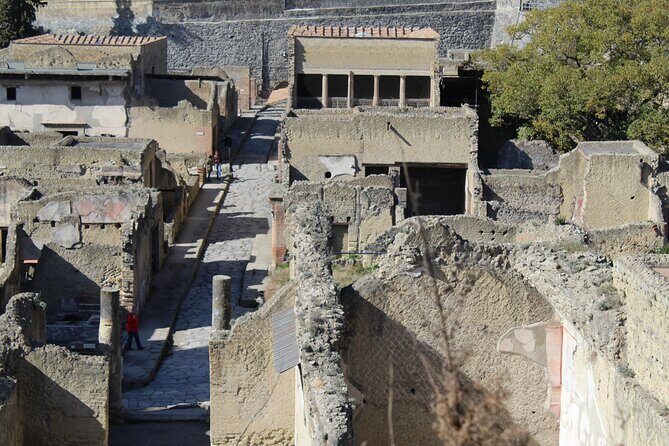
The heart of the tour is a walking route through Herculaneum’s key public and everyday spaces. You’ll see (at minimum) the Thermal Baths, the Forum, and the Basilica, along with major town features such as Decumanus and Palestra, plus the amphitheater. Even if you’ve read about these terms before, being guided helps you connect the names to the actual layout.
Here’s what those stops usually mean in plain language:
- Forum and Basilica: This is where civic life played out. The Forum is the social and administrative core, and the Basilica ties into public business and gatherings. In guided hands, these spaces stop feeling abstract. You start to understand how people moved between street, public space, and services.
- Thermal Baths and related facilities: Baths were social hubs as well as hygiene. With a guide, you’ll get context on how bathing and leisure fit together, and you’ll also see how the site helps you visualize everyday routines.
- Palestra and the amphitheater: These give you a sense of training, public performance, and structured entertainment. The amphitheater especially benefits from a guide because it’s one of those places where scale and layout are easier to grasp with someone pointing out relationships between seating, corridors, and entrances.
A possible drawback to know: the tour is focused, not sprawling. You won’t get an all-day free roam. If you prefer lingering for photos without conversation, you may find yourself wanting more time in your favorite zone. For most people, though, the tight route is exactly what keeps the experience coherent and energizing.
Mosaic houses and seaside villas: where the art hits hardest
If you want the “wow” factor, this is where it shows up. The tour includes time to explore the grand seafront villa areas and the mosaic-filled houses that make Herculaneum famous.
Key stops include:
- House of the Mosaic Atrium
- House of Neptune and Amphitrite
- House of the Deer
…and you’ll also spend time in the seafront-villa zone as the walk progresses.
The biggest value here isn’t only that mosaics exist—it’s that a guide can explain what you’re actually looking at. Mosaics are decorative, yes, but they’re also storytelling. When someone points out specific details, you start noticing motifs and symbolism you would miss on your own. In my view, that’s why visitors rave about guides who can call out small art details. One guide, Italo, is specifically praised for showing subtle points like angel symbols, which is the kind of thing that changes the whole feeling of a room.
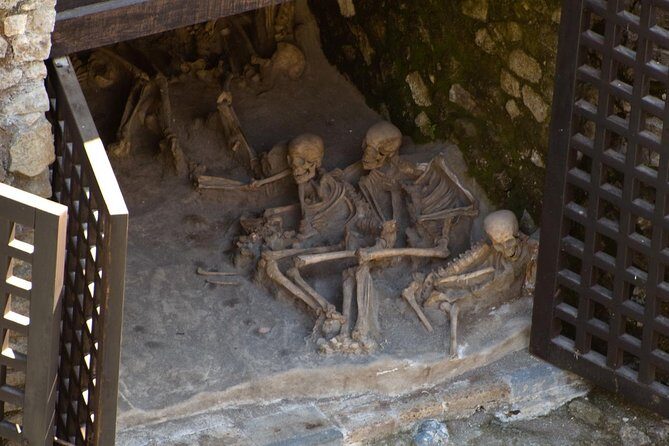
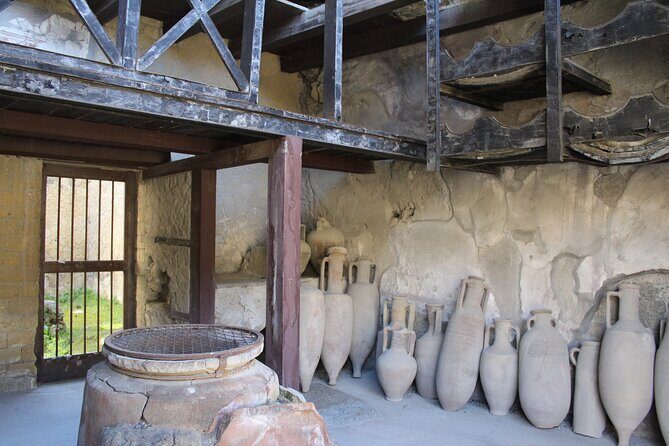
You’ll also see the powerful evidence of preservation in the villas. The tour highlights things like carbonized furniture—objects that survived because the eruption sealed them away. Seeing those kinds of details firsthand (with explanation) tends to make the catastrophe feel human, not just historical.
One practical consideration: these are interiors and close quarters compared to open-air ruins. Comfortable shoes help, but you’ll also want a calm pace and patience—especially if you’re a slower walker who likes to read every surface. The private format helps here, since the guide can adjust your pace.
How the AD 79 burial shapes what you see (and what you feel)
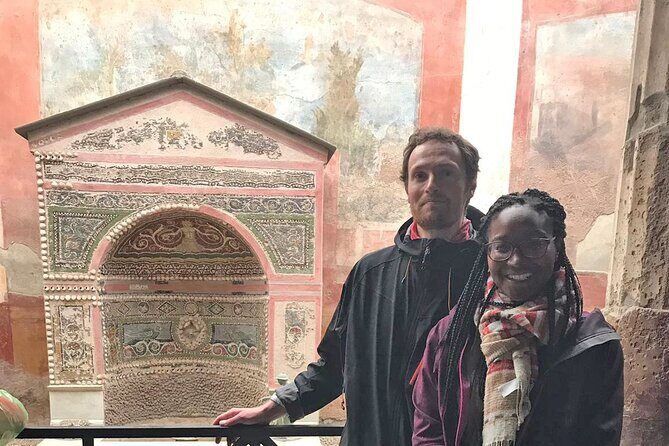
The AD 79 eruption is the reason Herculaneum is so readable today, and the tour is built around that. You’ll learn how the city was buried and how that burial preserved streets, public buildings, and household spaces in remarkably intact forms. That matters because Herculaneum isn’t just “old.” It’s a snapshot with physical clues still visible.
The best part of a guided visit is that you’re not only told that preservation happened. You’re shown what it looks like in the architecture and everyday items. You’ll encounter:
- the street framework (through major lines like Decumanus),
- public-use spaces (Forum, Basilica, amphitheater),
- training and leisure areas (Palestra),
- and domestic beauty (the mosaic houses and villa interiors).
It’s also where the tour can become unexpectedly emotional. Carbonized furniture is the kind of object that makes you stop thinking of the site as a set of attractions. Even with a light tone, a good guide helps you hold both ideas at once: Roman sophistication and sudden destruction.
Guides bring this to life in different styles, and the good ones do it without turning it into doom. People remember the details because they feel explained in context. One guide is described as an archaeologist who had actually worked on site, and that kind of on-the-ground perspective can sharpen everything from how excavations are done to why certain rooms matter.
You can also read our reviews of more private tours in Naples






Timing, meeting point, and practical tips for a smooth 2-hour outing
This is a private walking tour that runs about two and a half hours, with an approximate duration listed at two hours. You’ll meet at the ticket-office area at Ercolano Scavi for the scheduled departure times, either 8:30am or 12:30pm.
What you should plan for:
- Bring a current valid passport (required on the day of travel).
- Wear comfortable shoes—you’ll be walking and spending time on uneven ground.
- Use your mobile ticket and have your mobile number with country code on your booking in case of emergency.
- Children must be accompanied by an adult.
Also note what’s not included: there’s no hotel pickup and drop-off. That means you should plan extra buffer time to reach the meeting point at Ercolano Scavi so you’re not stressed when you meet your guide.
Finally, English is the language offered. If you’re traveling with people who want history facts in plain language without guessing, this format usually works well.
Price and value: is $207.11 a fair deal?
At $207.11 per person, this tour isn’t the cheapest way to do Herculaneum. But it’s also not priced like a generic ticket. You’re paying for several things that add up in a short visit:
- a private guide experience (so you can ask questions and go at your pace),
- guaranteed skip-the-line access (time you can’t always get back),
- admission included,
- and a guide setup that includes professional art historian input.
If you compare the cost of admission plus the value of real interpretive guidance, the math starts making more sense. The biggest reason to spend money here is simple: Herculaneum rewards attention. Without help, it’s easy to wander past the most meaningful details. With help, you quickly learn what matters—mosaics, street layout, civic buildings, and household spaces—and you walk away with a clearer picture.
That said, if your group is content with fast sightseeing and lots of free time on their own schedule, you might question whether you need a private guide. The tour is short and structured. It’s designed for people who want a guided narrative, not just a walk among stones.
Choosing your guide: when the details start to click
This is a private tour, so guide quality isn’t an abstract factor—it directly shapes what you notice. Several guide names come up as standouts: Italo, Anna, Lelo, Loretta, and Roberta. Across those examples, the praise clusters around a few consistent strengths:
- they explain in detail and answer questions directly,
- they connect small art and symbolic elements to the bigger story,
- they make the site easier to visualize,
- and they keep the tone friendly and engaging.
One family story also highlights a useful point for your planning: even teens studying classics can find it interesting when the guide makes the connections. Another highlight is that some guides bring real excavation experience—like the archaeologist who worked on site—so you’re not just hearing textbook facts. You’re hearing practical context that helps the ruins feel less like a photo album and more like a living research site.
If you care about mosaics, ask your guide to point out how the decoration relates to the room function and the household’s status. If you care about the AD 79 story, ask what evidence you’re seeing that proves how the burial preserved the city. The private format makes those questions worth it.
Should you book this Herculaneum private guided tour?
I’d book it if you want a focused, high-impact visit to Herculaneum and you like the idea of having a guide translate the site for you. The private format plus skip-the-line access makes it efficient, and the emphasis on mosaics, public buildings, baths, and preserved domestic spaces gives you a full picture in a limited time.
I’d think twice if you’re the kind of traveler who hates structured walking and wants to set your own pace with no guidance. This isn’t that type of tour.
For most people, though, the best takeaway is value through clarity: you come in seeing ruins, and you leave seeing rooms, routines, and civic life—plus the art details that can slip by when you’re on your own.
FAQ
How long is the Herculaneum private guided tour?
The tour is about 2 hours, and the experience is described as lasting around two and a half hours.
What departure times are available?
You can choose a morning or afternoon departure, meeting for an 8:30am or 12:30pm start time depending on the option selected.
Where do I meet the guide?
You meet at Ercolano Scavi, 80056 Ercolano, Metropolitan City of Naples, Italy.
Is admission included and do I skip lines?
Yes. Admission Ticket is included, and you’re guaranteed to skip the long lines.
Is this tour truly private?
Yes. It is a private tour/activity, and only your group will participate.
What is included and what is not?
Included: a professional guide, private tour, local guide, professional art historian guide, admission ticket, and guaranteed skip-the-line entry. Not included: hotel pickup and drop-off.
Is the tour offered in English?
Yes, the tour is offered in English.
What level of physical fitness do I need, and is it suitable for children?
The tour calls for a moderate physical fitness level, and children must be accompanied by an adult.
Do I need any documents or contact info?
A current valid passport is required on the day of travel, and you should specify your mobile number including your country code in case of emergency.