REVIEW · COLOSSEUM TOURS
Guided tour of the Colosseum, Roman Forum and Palatine in Spanish
Book on Viator →Operated by EnRoma.com · Bookable on Viator
Rome’s ancient core, streamlined in 3 hours.
What makes this tour feel worth it is the priority admission built into the plan, so you spend your time looking at history instead of watching lines. I also like that you get Spanish explanations with headsets, which matters at the Colosseum where crowds can swallow voices. One thing to consider: it’s a brisk route—about three hours on your feet—so you’ll want a moderate fitness level and some patience in the heat.
You’ll walk the Forum along the Via Sacra, then continue up to the Palatine Hill—the legendary center of Roman power—before ending inside the Colosseum itself so you can linger if you want. The guide angle is practical too: the commentary is designed to help you connect what you’re seeing across the centuries, from the Forum’s civic life to the amphitheater’s imperial storytelling. A possible drawback is that the tour is not routed for mobility difficulties or strollers, so it may not work for everyone.
This is a good “big sights” day in Rome—especially if you’re short on time.
In This Review
- Key things to know before you go
- Price and what you’re actually paying for ($75.31)
- Where you start (and how to avoid the day getting weird)
- The route: three stops that actually connect
- Stop 1: Roman Forum on the Via Sacra (1 hour)
- Stop 2: Palatine Hill and the stories behind Roman power (40 minutes)
- Stop 3: Inside the Colosseum (45 minutes) plus a chance to stay
- The guide and headsets: why they matter in real crowds
- Group size and pacing: budget-friendly, but not private
- Getting your entry right: names, ID, and tickets
- Who this tour suits best
- Should you book it? My practical take
- FAQ
- Is the tour guided in Spanish?
- How long is the tour and how many stops are included?
- Does the tour include admission tickets?
- What ticket format do I need?
- Do I need to bring ID, and do names have to match?
- Are headsets provided?
- Is the tour suitable if I have mobility difficulties or a stroller?
- Can I cancel for a refund?
Key things to know before you go
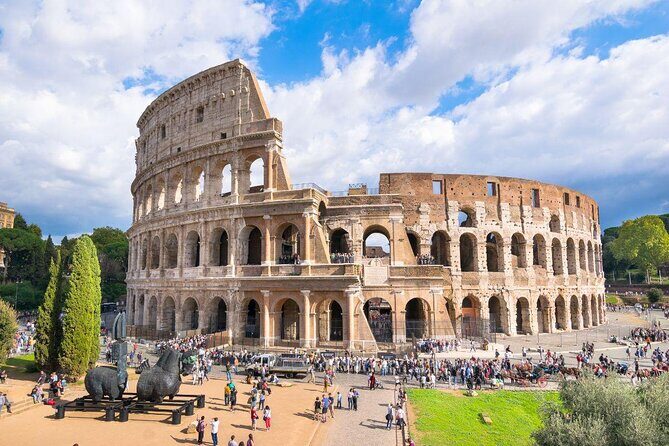
- Priority admission helps you avoid the slowest parts of the day at the Colosseum and Forum.
- Spanish guide + headsets means you can keep following the story even in busy spots.
- Small group cap (max 25) keeps the pace more manageable than the mega-bus tours.
- Mobile ticket / tailless entry reduces hassle at the gate.
- Tour ends inside the Colosseum, so you can stay a bit longer without rushing back out.
- Name-matching matters: you must use the full names you provide and show matching ID/passport.
Price and what you’re actually paying for ($75.31)
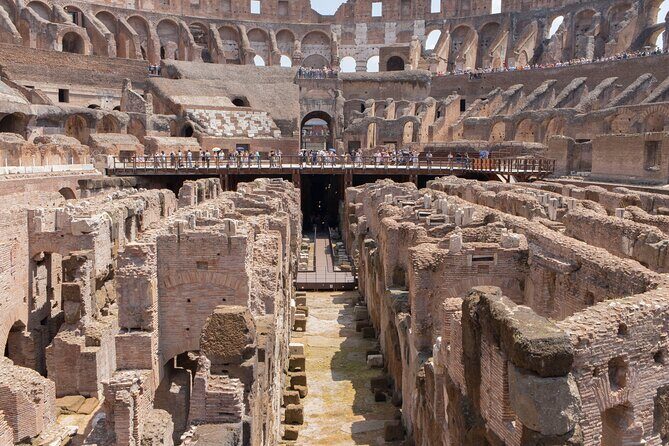
At $75.31 per person (with Colosseum ticket components listed as valued separately), this isn’t the cheapest way to visit. But this price makes sense when you look at where the money goes: the experience includes a Colosseum entrance ticket plus a reservation fee, and the rest covers the guide, planning, and the fast-track setup.
The real value is the time savings. The Colosseum and Roman Forum can eat your day if you’re trying to do them on your own. Here, the tour is structured so you can get inside and keep moving along a route that ties the sights together. If you’ve ever waited in line while your group quietly melts from frustration, you already know why priority admission is worth paying for.
Also, the Spanish language is a real plus. If Spanish is your comfort zone, you’re not translating ruins in your head while other people crowd your view. You get a professional Spanish-speaking guide and headphones to keep up.
You can also read our reviews of more guided tours in Rome



Where you start (and how to avoid the day getting weird)
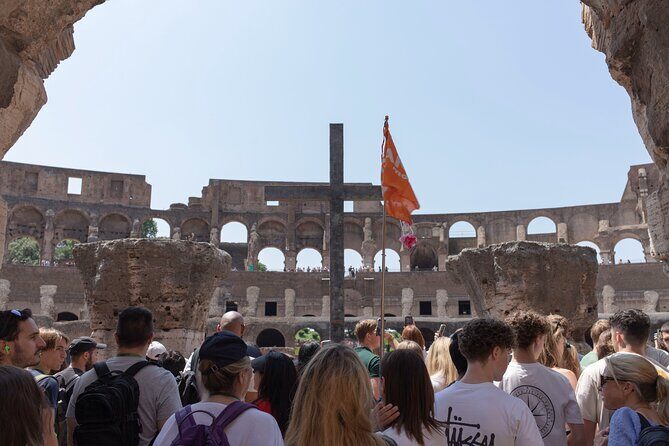
The meeting point is Largo Corrado Ricci, 00184 Roma RM. Your tour finishes inside the Colosseum, Piazza del Colosseo 1, 00184 Roma RM, with the option to remain within after the guided portion.
Arrive on time—this isn’t me being fussy. This kind of timed entry works best when everyone is gathered before the group heads to the entrance. The tour instructions even recommend arriving a few minutes early so you get a full-quality visit and don’t lose time regrouping.
One more practical note: the tour rules say you can’t carry large umbrellas, large backpacks, or sharp objects. If you travel with bulky items, plan to keep things light so you don’t run into entry hassles.
The route: three stops that actually connect
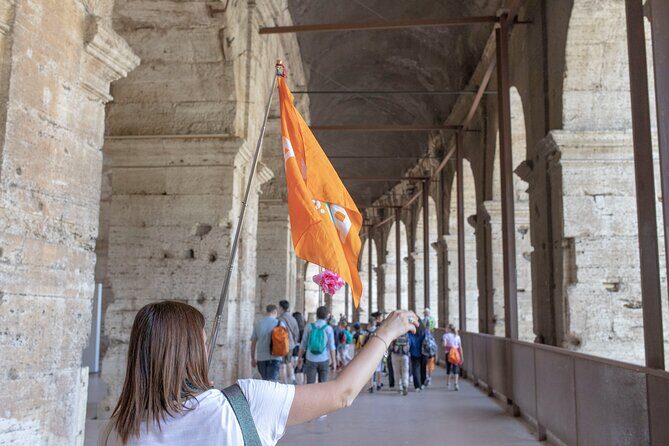
This is a classic “Roman core” combo: Foro Romano (1 hour), Palatine Hill (40 minutes), then Colosseum (45 minutes)—with the full experience clocking in at about 3 hours.
That timing is both the strength and the trade-off:
- Strength: you get the main hits with a guide in a half-day window.
- Trade-off: you won’t have the hours-alone-to-stare pace you might want for photos or museum-style wandering.
Still, the route is designed to help your brain connect places. The Forum isn’t just ruins; it’s the political engine room of early Rome. The Palatine isn’t just a hill; it’s tied to power, patrician life, and the legendary founding story. Then the Colosseum becomes the imperial stage—different era, same city identity.
Stop 1: Roman Forum on the Via Sacra (1 hour)
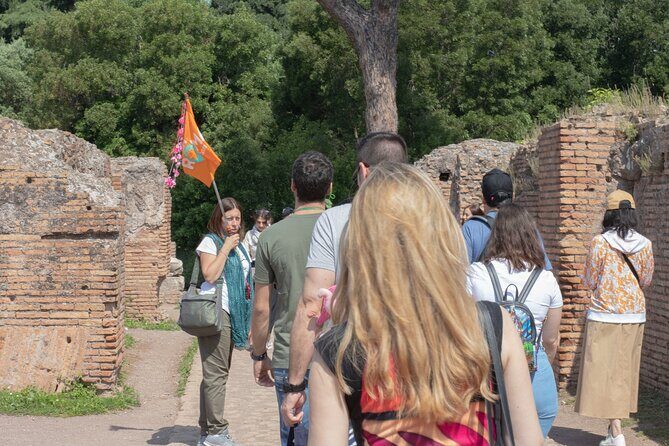
The Roman Forum is where you start to feel Rome as a living machine. The tour route is described as walking along the Via Sacra, entering key areas like the basilicas, passing through the Comicio, and taking in the beauty of the temples and what they represented.
Why this stop works in a guided format is simple: ruins can look like random stone without context. Here, the guide’s Spanish commentary is built to connect:
- what civic life looked like,
- how power expressed itself through architecture,
- and how the space changed as the city grew, suffered, and shifted.
You’ll also get the benefit of the tour’s fast-track structure. The Forum is often one of the places where the “I’ll just go quick” plan becomes a longer detour. With this tour, you’re meant to spend your time inside, following a route rather than negotiating crowds and wandering.
A drawback to keep in mind: because you’re walking a set path and following the guide, you’ll want to be comfortable pausing for explanations. If you’re the type who hates stopping, you may feel the 60 minutes as more structured than flexible.
Stop 2: Palatine Hill and the stories behind Roman power (40 minutes)
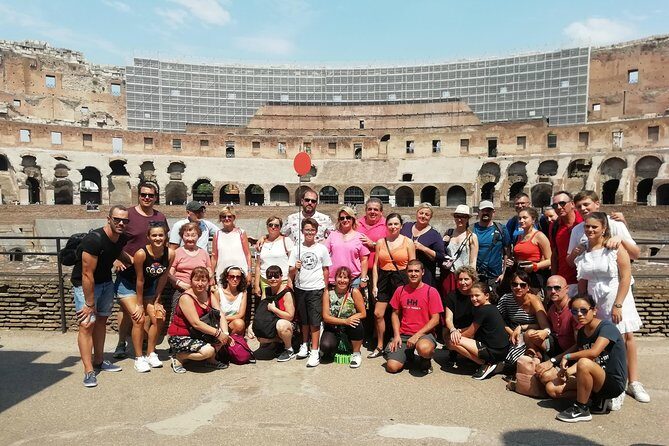
Next up is Palatine Hill, with about 40 minutes on the hill.
The Palatine matters because it’s tied to the idea of patrician rule—the “palaces” where people with power lived and operated. It’s also connected to the legend of Rome’s origin, with Romulus chosen as the point of origin for the city.
In practical terms, Palatine is a great “bridge” stop. You move from the Forum’s civic spaces to a hill that represents who controlled the city and where that control lived. Even if you’re not a Roman-king trivia person, the tour framing helps you see why people cared about this hill.
One consideration: Palatine can feel more exposed than you expect, depending on how the day’s light and crowd flow land. If you’re visiting in hot season, plan for sun and pacing. This tour is short enough that you won’t be stuck forever, but it’s still outdoors.



Stop 3: Inside the Colosseum (45 minutes) plus a chance to stay
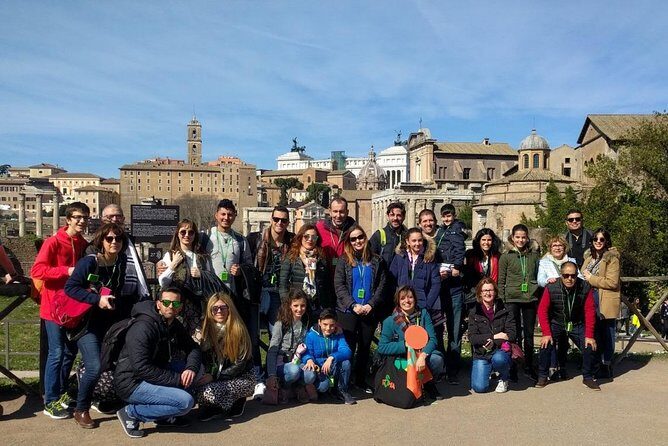
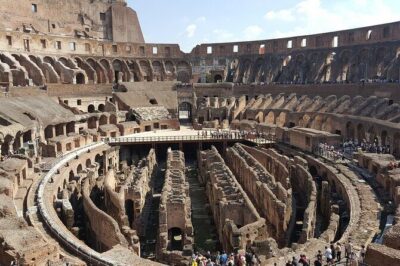
Then you hit the moment everyone came for: the Colosseum. The tour includes 45 minutes inside, and it finishes there so you can remain after the guided part.
This is described as the most emblematic monument of Rome—built to celebrate the greatness of an empire and a city tied to world history. That’s a big claim, but the Colosseum is a place where big claims are visible in structure: scale, design, and the way space was built to stage spectacle.
What I like about having a guide here is that the Colosseum isn’t just an arena you walk through. With Spanish commentary over headsets, you can follow what the structure meant and how it worked, even when it’s busy.
Also, the tour setup is explicitly meant to help you avoid long lines. If you’ve ever watched the entrance area while thinking about your afternoon plans, you’ll appreciate that priority entry is part of the experience design—not an optional extra.
A potential drawback: 45 minutes inside is a focused visit, not a slow, detailed “let’s study every detail” session. If you want to spend extra time photographing a specific spot or walking the space at your own speed, you’ll need to do that after the guide ends—luckily, you can stay inside.
The guide and headsets: why they matter in real crowds
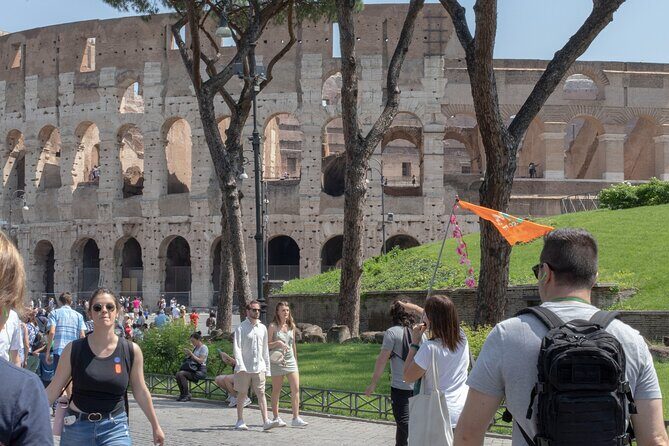
A Spanish-speaking guide is the headline feature, but the most practical part is the headsets. In the Colosseum and Forum, wind, echo, and group noise can make it hard to catch every word from the front of the group. Headsets keep the story on track.
In the experience’s feedback, people have highlighted clear, friendly guide styles—names that show up include Tomas, Miriam, Silvia, and Sara—with praise for explaining what you’re seeing and answering group questions.
That also points to something you should hope for when booking: a guide who can translate stone into meaning quickly. If you care about context more than raw viewing, this setup is a strong match.
Group size and pacing: budget-friendly, but not private
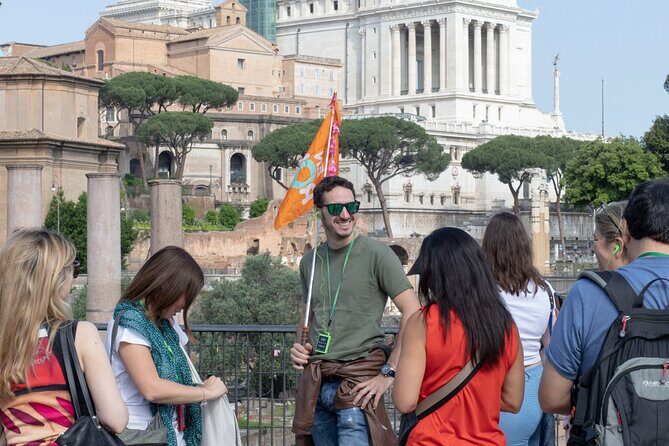
This tour runs as a small group with a maximum of 25 travelers. That’s a meaningful detail because it shapes how much space you’ll have and how smoothly the route can flow.
Still, even at 25, this isn’t private. The pacing is designed for moving between three major sites with short timed stops, so you’ll need to follow along rather than linger at each viewpoint. One piece of feedback also raised concerns about time getting lost when groups take a while to reunite—so do yourself a favor: listen closely for the meeting points within each stop and don’t drift away.
Getting your entry right: names, ID, and tickets
This is one of those “paper cuts” that can ruin your day if you ignore it.
You must provide full names of all travelers when booking. If the voucher doesn’t match the names at the ticket office prior to entry, you can be denied entry to the Colosseum and Roman Forum.
You also need a valid passport or ID document that matches the name provided. Bring the physical ID you plan to use. Don’t assume that the reservation system will forgive name mismatches.
On the ticket side, this experience uses mobile ticket / tailless tickets. That’s helpful because it reduces the time you spend hunting for paper tickets or lining up for exchanges.
Who this tour suits best
This guided tour is a strong fit if:
- you want the big Roman ancient sights in a short time window,
- you prefer a Spanish-speaking guide,
- you hate long lines and want priority admission,
- you’d rather spend your energy learning what you’re seeing than guessing.
It’s also a good choice for first-time Rome visitors. The Forum and Palatine give you the “Rome began here” feeling, and the Colosseum delivers the global-famous payoff.
It may be less suitable if:
- you need step-free or stroller-friendly routing (the tour does not follow the adapted route for mobility difficulties or young children in a stroller),
- you want a long, quiet, slow museum-style experience,
- you’re traveling with bulky items that won’t pass the entry rules.
Should you book it? My practical take
If you’re deciding between this guided fast-track plan and a DIY approach, I’d book this when your priority is time + guidance. The Colosseum and Forum are exactly where priority entry pays off, and the Spanish guide with headsets is the difference between watching crowds and actually understanding the sites while you’re there.
I would double-check your fit if you’re very sensitive to heat or dislike structured group pacing. Also, take the name/ID requirement seriously—this kind of attraction is strict, and the tour clearly warns that mismatches can lead to denied entry.
Overall: for most visitors who want an efficient, meaningful introduction to the Colosseum–Forum–Palatine triangle, this tour is a smart way to spend a few hours in Rome.
FAQ
Is the tour guided in Spanish?
Yes. The experience is a guided tour of the Colosseum, Roman Forum, and Palatine in Spanish, with a Spanish-speaking guide.
How long is the tour and how many stops are included?
The tour is about 3 hours and includes three main stops: Roman Forum (about 1 hour), Palatine Hill (about 40 minutes), and the Colosseum (about 45 minutes).
Does the tour include admission tickets?
Yes. Admission tickets are included for the stops, and the Colosseum entrance ticket and reservation fee are specifically included as part of the experience.
What ticket format do I need?
You’ll use a mobile ticket and tailless tickets, so you do not need a paper ticket exchange.
Do I need to bring ID, and do names have to match?
Yes. You must present a valid passport or ID document that matches the name provided at booking. You also need to provide the full names of all travelers when booking, or entry may be denied.
Are headsets provided?
Yes. The tour includes headsets so you can follow the guide’s commentary even during busy times.
Is the tour suitable if I have mobility difficulties or a stroller?
The route does not follow the route adapted for people with mobility difficulties or for young children in a stroller. The activity is listed for travelers with a moderate physical fitness level.
Can I cancel for a refund?
Yes. You can cancel up to 7 days in advance for a full refund. If you cancel less than 7 days before the start time, the amount paid is not refunded.