REVIEW · NAPLES
Full Day Tour Ravello-Amalfi-Positano
Book on Viator →Operated by The Naples Tours · Bookable on Viator
Three cliff towns in one tight day.
What makes this experience fun is how it stacks the best views and key sights of the Amalfi Coast into one smooth plan, without you spending your whole day fighting trains, parking, or traffic. I love the English-speaking driver who keeps the day moving and makes the stops make sense (history plus practical context). I also like the comfort factor: air-conditioning in the vehicle matters when the day gets hot. One possible drawback is the pace: each town gets about an hour, so you’ll want to pick your must-sees before you arrive.
This is built around pickup around Naples, then a full 8 hours (approx.) of driving and walking between towns. It’s also private—your group only—so you’re not squeezed into a big bus rhythm. That helps, especially on narrow roads and in places where you’ll naturally slow down for photos.
The best part is that the plan can flex when weather turns. In rain, the driver can adapt so you still get value out of the day instead of staring at a wet postcard. If you’re the type who wants iconic views plus clear, no-stress logistics, this is a solid fit.
In This Review
- Key highlights worth the time
- Ravello and Amalfi Coast views, minus the Naples-to-traffic headache
- Stop 1: Ravello above the clouds (Palazzo Rufolo to Villa Cimbrione)
- Palazzo (Villa) Rufolo and its famous gardens
- Palazzo Tolla and the local civic feel
- Villa Episcopio and the WWII-era layer
- Villa Cimbrione and the kind of view that sells postcards
- The Auditorium
- Stop 2: Positano’s steep streets, Santa Maria Assunta, and the Roman layers
- Your easy walk starting point: Piazza dei Mulini to the beach
- Santa Maria Assunta: the church by the sea
- The Roman archaeological museum: two crypts and frescoes
- Watch towers: Bank Tower and Trasìta Tower
- The Path of the Gods: amazing, but plan for limited time
- Stop 3: Amalfi’s cathedral, paper museum, and the maritime republic vibe
- Cathedral of Sant’Andrea: Arabian and Sicilian styling
- The Paper Museum: how Amalfi became famous for paper
- Amalfi rowers and the old maritime games
- What the driver actually adds to your day (Andrea and Paolo as examples)
- Price and value: is $360.23 per person a good deal?
- Who this tour suits best
- Quick practical tips for your best day
- Should you book this full day Ravello–Amalfi–Positano tour?
- FAQ
- How long is the Full Day Tour Ravello-Amalfi-Positano?
- What towns are included?
- Is pickup included?
- What language is the tour in?
- What is included in the price?
- Are entrance tickets included?
- Are meals included?
- Is the tour private?
- What if the weather is bad?
- Are service animals allowed?
Key highlights worth the time
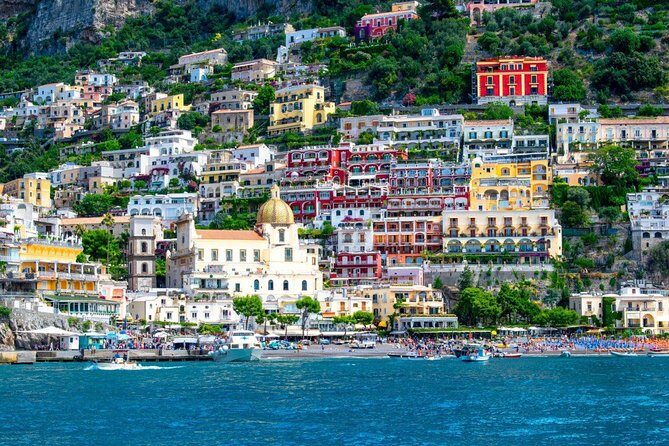
- One day, three icons: Ravello, Positano, and Amalfi with timed stops
- Ravello’s villa loop: Rufolo gardens, Cimbrione views, and more in about an hour
- Positano’s photo route: Piazza dei Mulini down to Santa Maria Assunta by the sea
- Amalfi’s two big anchors: Sant’Andrea Cathedral and the paper-making tradition at the museum
- Comfort included: air-conditioning plus tolls, parking, and fuel handled
- Real-world flexibility: the driver can adjust when rain hits
Ravello and Amalfi Coast views, minus the Naples-to-traffic headache
If you’re basing yourself in Naples, your biggest friction point is never the views. It’s the getting-there part: parking stress, road navigation, and the simple fact that Amalfi Coast towns are on steep hills with tight streets.
This tour removes that friction with pickup and an English-speaking driver who handles the driving costs (tolls, parking, gasoline, taxes). You also get air-conditioning on board, which turns those winding cliff roads into something you can actually enjoy instead of endure.
Ravello, Positano, and Amalfi are close enough to fit in one day, but far enough that doing it yourself usually turns into a long, exhausting puzzle. Here, the day is organized so you can spend your energy on walking, looking, and taking photos—without worrying about timetables.
One more practical point: entrance tickets, meals, and an authorized guide are not included. That’s normal for tours like this, but it means you should plan to pay for entry if you want it, and you’ll likely want to eat on your own during a stop or a quick break.
You can also read our reviews of more tours and experiences in Naples
Stop 1: Ravello above the clouds (Palazzo Rufolo to Villa Cimbrione)
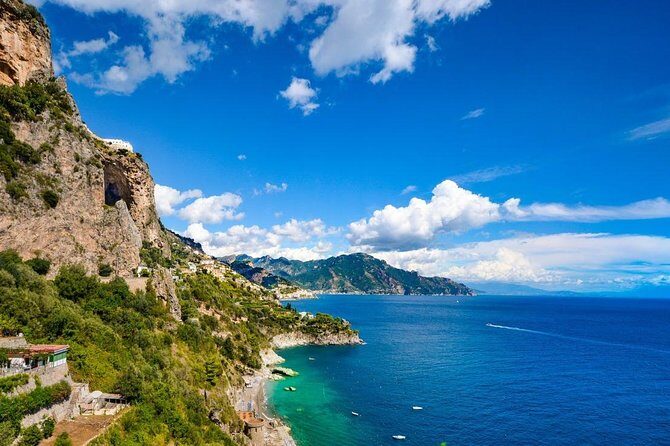
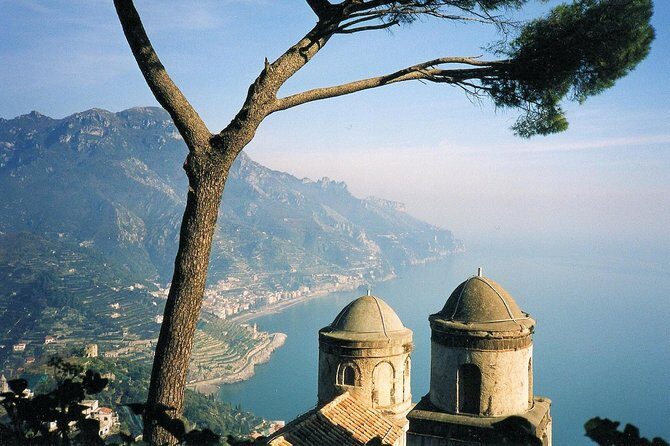
Ravello feels made for people who like views, gardens, and quiet streets. It’s famous for being perched above Amalfi, with a colorful road lined with lemon trees that helps you understand the whole coast’s vibe—bright, steep, and very much tied to agriculture and trade.
Ravello’s story is rooted deep: it began in the 5th century as a refuge during repeated raids, then grew through wool art and Mediterranean commerce with Byzantium. Later, it prospered under the Maritime Republic of Amalfi and the principality of Salerno. In other words, this wasn’t just a pretty hillside town—it became important.
In about an hour, you won’t do everything, but you can hit the essentials quickly if you know what matters. Here are the Ravello highlights you can expect to focus on:
Palazzo (Villa) Rufolo and its famous gardens
Palazzo Rufolo is one of Ravello’s headline stops, especially for its gardens. If you only have a short window, plan your walk around the garden areas first. This is the kind of place where a small route can still feel like a full experience because the views and plantings do the heavy lifting.
Palazzo Tolla and the local civic feel
Palazzo Tolla is the town hall. It’s not a glamorous palace moment in the same way, but seeing it helps you remember Ravello is still a functioning community, not just a sightseeing stage.
Villa Episcopio and the WWII-era layer
Villa Episcopio is noted for being built in 1944 and used as the residence of King Vittorio Emanuele III. That detail adds a different kind of context, reminding you the town’s story didn’t stop with ancient prosperity.



Villa Cimbrione and the kind of view that sells postcards
Villa Cimbrione is all about the view. If your group likes photographs, this is where you’ll want to pause, slow down, and let the camera do its job.
The Auditorium
Ravello’s Auditorium also comes up as a key landmark in the town’s main points of interest list. Even if you don’t attend anything, the area gives you a sense of Ravello’s cultural role over time.
Outside the major villas, Ravello’s alleys are where the town turns charming-fast. You’ll find typical local shops selling ceramics and limoncello. With an hour, the trick is simple: don’t try to shop like you’re at a market for an afternoon. Instead, make one quick pass and grab one or two items you genuinely want.
How to get the most from an hour: wear shoes that can handle uneven stone and steep bits, and decide in advance whether your priority is gardens (Rufolo), sweeping outlook (Cimbrione), or cultural landmarks (Episcopio and Tolla).
Stop 2: Positano’s steep streets, Santa Maria Assunta, and the Roman layers
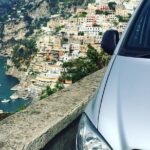
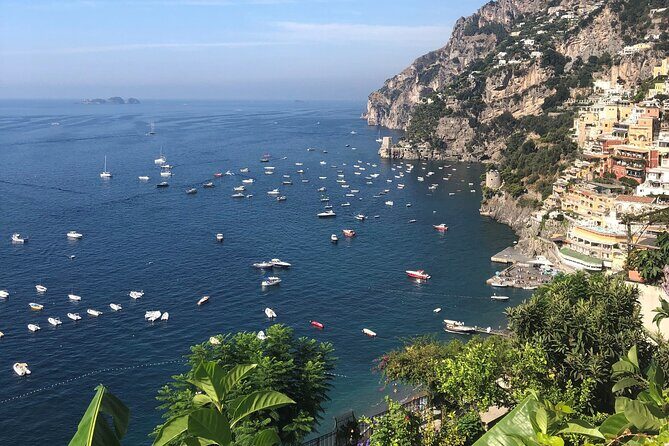
Positano is the “vertical city” idea made real. The coast view makes it look like the sea is the only horizontal line—everything else climbs and curves. Even if you’ve seen photos before, being there is different because the town is small, tight, and built around the sea.
Positano also makes an excellent photography walk because of how the alleys connect to viewpoints. If you love picture-taking, this town gives you a lot of opportunities without needing a car once you’re in the right area.
Your easy walk starting point: Piazza dei Mulini to the beach
A common route is to start around Piazza dei Mulini, then descend toward the beach. On the way, you’ll get those classic angles over the water and rooftops.
Santa Maria Assunta: the church by the sea
Santa Maria Assunta sits close to the beach, and it’s one of Positano’s most recognizable landmarks because of how it anchors the town visually. It’s also a natural moment to stop, look, and let the scene settle.
The Roman archaeological museum: two crypts and frescoes
Positano has a recently inaugurated Roman archaeological museum featuring an archaeological site with two crypts. The frescoes are described as imperial-era style, and the site is noted as the only example of wall paintings of Roman villas on the Amalfi Coast. If you like archaeology but don’t want a long museum day, this is the kind of stop that can work even in a short visit—if the timing lines up.
Watch towers: Bank Tower and Trasìta Tower
Positano’s coast history includes coastal fortifications with watch towers. Two that stand out in the tour highlights are:
- The Tower of the Bank, cylindrical in shape, linked to the Angevin era and dated to the 13th century
- The Trasìta Tower, described as viceregal age and located between Fornillo beach and Marina Grande, which became private property after being sold in 1817
Even if you only get glimpses, knowing these details changes what you see. You start spotting the coast’s defense logic in the same angles that people photograph for fun.
The Path of the Gods: amazing, but plan for limited time
The Path of the Gods is one of the coast’s most popular walking routes, starting from Bomerano and ending up in the upper part of Positano. With Positano’s stop time being about an hour, you likely won’t do the full walk on this schedule. Still, it can be worth asking the driver for viewpoints along the way so you get the idea of why people chase that trail.
How to make Positano work in one hour: move with a purpose—choose Piazza dei Mulini as your anchor, aim for Santa Maria Assunta, and fit in the museum only if you can do it without rushing through everything else.
Stop 3: Amalfi’s cathedral, paper museum, and the maritime republic vibe
Amalfi is where the coast story gets heavier—in a good way. Founded by the Romans, it became the first maritime republic in the ninth century, competing for control of Mediterranean trade with major powers like Genoa, Pisa, and Venice.
Amalfi hit its maximum splendor in the eleventh century, then later saw decline and setbacks: Norman conquests before and looting by the Pisans after. Then came a dramatic interruption: in 1343, a tidal wave triggered by a storm destroyed much of the city. Those big swings help explain why the town feels layered—architecturally and culturally.
Cathedral of Sant’Andrea: Arabian and Sicilian styling
One of the most important stops is the Cathedral of Sant’Andrea di Amalfi. It’s dedicated to the city’s patron saint and described as having full Arabian and Sicilian style. It’s also flanked by other churches, and there’s overlap of churches from different eras, so you can think of it as a complex rather than a single building.
This matters for your visit because it’s not just “look at a cathedral.” It’s more like looking at a timeline in stone—different eras stacked in one spot.
The Paper Museum: how Amalfi became famous for paper
Amalfi is world renowned for high-quality paper produced using medieval techniques. That tradition is the focus of the paper museum, where you can discover the craft behind that reputation.
If you’re the type who likes culture you can touch (or at least visualize), a paper-making museum is a great contrast to the outdoors-and-views emphasis of Ravello and Positano.
Amalfi rowers and the old maritime games
Amalfi also connects to tradition through rowers. The highlights note an annual regatta of ancient maritime republics, with Amalfi rowers competing against Venice, Pisa, and Genoa. Even if you’re not there during the event, it adds context for why coastal towns on the Amalfi Coast feel tied to the sea beyond tourism.
With only about an hour, Amalfi is best if you pick two priorities: the cathedral complex and the paper museum. That combination hits both the architecture and the trade story that made Amalfi important.
What the driver actually adds to your day (Andrea and Paolo as examples)
The biggest value isn’t the roads themselves—it’s the way someone helps you see what you’re looking at.
In the feedback you provided, two names come up often: Andrea and Paolo. They’re praised not just for getting people from town to town, but for adding context—history tied to what you’re standing next to, and practical advice about where to go for the best moments.
You’ll also want a driver who can handle real-life problems. One example described a rain situation where the driver adjusted and timed lunch while waiting for sun to return. That kind of flexibility is exactly what makes a long day on the coast feel less chaotic.
A final practical plus: driving along cliffside roads can feel intimidating if you’ve never done it. The emphasis on stress-free driving and safe, comfortable transport matters. It keeps you fresh for the walking parts once you arrive.
Price and value: is $360.23 per person a good deal?
At $360.23 per person, this isn’t a budget day. But it also isn’t “just a ride.” The price includes air-conditioning, an English-speaking driver, and the driving costs like toll and parking, plus gasoline and taxes.
Here’s how I’d think about value:
- If you were doing this on your own, you’d still pay for transport and likely get stuck dealing with parking and navigating steep town centers.
- If you book a private approach, you’re paying for time saved and stress removed, especially because each stop is short (about 1 hour each) and you need someone to manage the flow.
This also lists group discounts, which can improve the per-person value if you travel as a small group. If you’re a couple or a family who doesn’t want to rush like a bus tour does, the day can feel like a good trade: you pay more upfront, but you buy back your energy.
One note: entrance tickets and meals aren’t included. So you’ll need a little extra cash for museums or cathedral-related entries, plus lunch.
Who this tour suits best
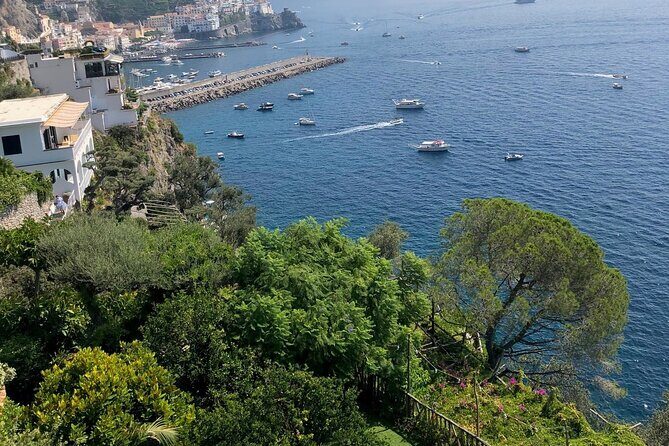
This is a good match if you want:
- Iconic coastal towns without logistics headaches
- A day focused on key sights rather than slow wandering
- An English-speaking driver who ties history to the places you visit
- Comfort for long drives, thanks to air-conditioning
It’s also a smart pick for first-timers to the Amalfi Coast who want to get the “big three” towns done in one day.
If your style is slow travel—multiple hours per town, deep museum time, and long lunches—this might feel fast. But if you want maximum variety in a single day, the structure fits.
Quick practical tips for your best day
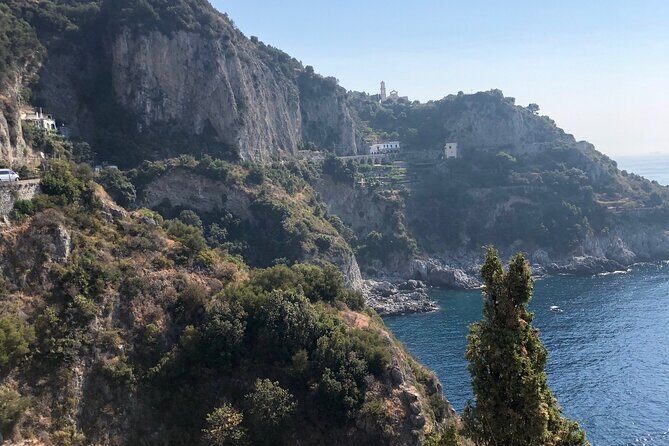
You’ll move between hill streets and viewpoints fast. Do yourself favors:
- Wear shoes with grip for stone and slopes.
- Plan for sun and sudden cloud cover; the coast weather can change.
- Bring a light layer for wind near viewpoints.
- If there’s a museum you care about, prioritize it before lunch plans so it doesn’t get squeezed out.
Also, since admission tickets aren’t included, check which stops you want to enter rather than assuming every key spot is free.
Should you book this full day Ravello–Amalfi–Positano tour?
Book it if you want an efficient, comfortable, English-led day that hits the coast’s most famous towns in one run, with the driving stress handled for you. The big selling points are air-conditioned comfort, short stops that still cover the essentials, and a driver who can explain what you’re seeing while also adapting if the weather turns.
Skip it (or at least consider a slower plan) if you need long time in each town, or if you want major museum time plus relaxed lunches. Since the stop windows are about an hour each, you’ll be making choices.
If your goal is a classic Amalfi Coast highlight day from Naples—Ravello views, Positano sea-town energy, and Amalfi’s cathedral-and-paper story—this one is built for that.
FAQ
How long is the Full Day Tour Ravello-Amalfi-Positano?
The tour runs about 8 hours (approx.).
What towns are included?
You visit Ravello, Positano, and Amalfi.
Is pickup included?
Yes. Pickup is offered from the port, airport, train station, B&B, private residents, and hotels. You’ll provide the complete address where applicable.
What language is the tour in?
The driver speaks English, and the tour is offered in English.
What is included in the price?
Included items are air conditioning on board, an English-speaking driver, toll and parking, gasoline and taxes.
Are entrance tickets included?
No. Entrance tickets are not included.
Are meals included?
No. Meals and drinks are not included.
Is the tour private?
Yes. It’s described as a private tour/activity, meaning only your group participates.
What if the weather is bad?
The experience requires good weather. If it’s canceled due to poor weather, you’ll be offered a different date or a full refund.
Are service animals allowed?
Yes, service animals are allowed.