REVIEW · NAPLES
From Naples: Pompeii and Herculaneum Tour
Book on GetYourGuide →Operated by MOTORENT S.R.L. · Bookable on GetYourGuide
Pompeii and Herculaneum in one run is a smart move. You get a full day built around two UNESCO World Heritage Sites, with bus transfers that take the stress out of getting there, plus skip-the-line entry. The format is mostly self-paced once you arrive, so you can set your own pace while still benefiting from guided-style support at the start.
What I really like is the split schedule: you get 2.5 hours in Ercolano (Herculaneum) and 4 hours in Pompeii, which is enough time to see major highlights without feeling like you’re speed-walking through everything. I also like that Pompeii includes an audio guide plus a detailed map, so you’re not just wandering the big site with no plan.
The main consideration: Pompeii is huge, and even with the allotted time, it’s easy to end up moving faster than you want. If your day gets a bit tight at the gates, your time inside Pompeii can feel short.
In This Review
- Key points to know before you go
- The big-picture idea: why this one-day combo works
- Meeting in Naples at Via Galileo Ferraris: easy start, clear location
- The coach transfers: the time you save (and the pace you get)
- Ercolano (Herculaneum) free time: where you can slow down
- Pompeii with audio guide and map: seeing the icons, not just ruins
- The itinerary in motion: what each stop feels like
- Skip-the-line tickets: what you should expect
- What’s included (and what you’ll pay for anyway)
- How to get the best day out of two different ruins
- Who should book this tour
- Should you book this one-day Pompeii and Ercolano tour?
- FAQ
- How long is the Pompeii and Herculaneum tour from Naples?
- Where do I meet the group in Naples?
- How much free time is there in Herculaneum and Pompeii?
- Is an audio guide included, and is it for both sites?
- Do I need an ID for anything?
- Are entrance tickets included in the price?
- What language options do I get for the driver and audio guide?
- What about food and drinks?
Key points to know before you go
- Two sites, one day: Pompeii and Ercolano back-to-back from Naples.
- Self-paced Pompeii: audio guide and a detailed map are included for Pompeii only.
- Less pressure in Ercolano: more relaxed pacing and the kind of experience where you can actually look at details.
- Skip-the-line entry: separate tickets for both sites to reduce waiting.
- Plan for navigation: the audio support is tied to Pompeii, so bring your own strategy for Herculaneum.
- Pompeii takes time: 4 hours can pass quickly if you want to see homes, streets, and frescoes.
The big-picture idea: why this one-day combo works
This tour is built for people who want maximum payoff without renting a car. You start in Naples, ride a coach to Ercolano, then head on to Pompeii, and you’re back at the same meeting point in the late afternoon. That setup matters more than it sounds. The drive between Naples and the ruins can eat time and energy, especially if you’re trying to coordinate buses or trains on your own.
The day also has a practical rhythm: coach time is planned (about 30 minutes each leg), and the sightseeing time is yours to manage with free time blocks. You’re not stuck listening to a lecture for hours, but you’re also not totally on your own. There’s staff assistance before entering Pompeii, and the Pompeii portion is supported by an audio guide and map.
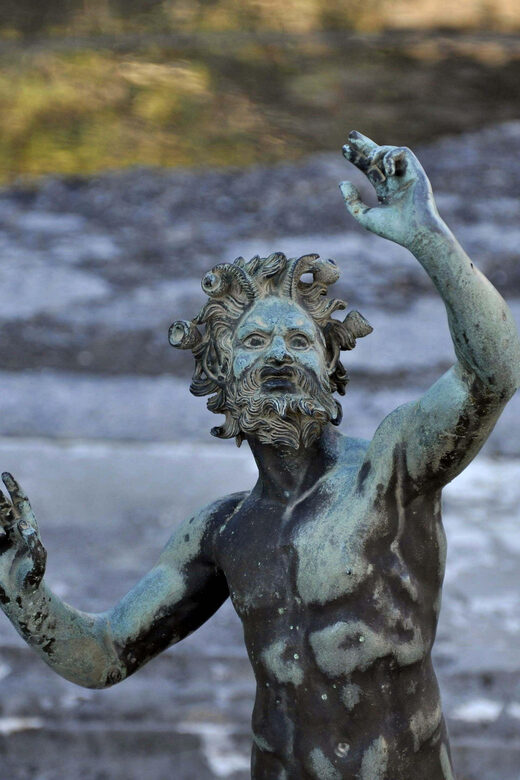
If your goal is a classic snapshot of Roman life frozen by Vesuvius in 79 AD, this schedule fits that goal well. If your goal is to read every inscription and stand in every doorway for 20 minutes, you’ll likely want a slower plan that dedicates more time to Pompeii alone.
You can also read our reviews of more tours and experiences in Naples.



Meeting in Naples at Via Galileo Ferraris: easy start, clear location
Your start point is near Via Galileo Ferraris n.40, Naples. There’s a suggested Google Maps coordinate (40.8505189N, 14.2747942E), and your bus has the logo Around Vesuvio. Using that exact pin helps on a busy day, especially if you’re arriving by foot from another part of the city.
Why this matters: arriving early and calmly at the meeting point reduces the chance of feeling rushed later. Once the bus leaves, you’re on the ruins schedule. So give yourself a little buffer before you head to Via Galileo Ferraris.
The driver is listed as English/Italian, so even if your Italian is basic, you’ll still have someone who can help if something feels unclear.
The coach transfers: the time you save (and the pace you get)
Between Naples, Ercolano, and Pompeii, the itinerary uses short coach rides (about 30 minutes between major segments). That’s a sweet spot. It keeps the day from turning into a full-on transit marathon, but it also gives you time to reset between the two sites.
Transfers are included, and parking plus tolls/fuel are handled by the operator. You won’t have to think about logistics like ZTL zones, which is a big deal in Naples and the wider area. For most visitors, that alone is worth paying for a packaged tour rather than improvising.
One thing to keep in mind: once you reach the ruins, you’re dealing with crowds, lines at entrances, and the reality that Pompeii and Ercolano aren’t small. The bus saves you planning stress, but it doesn’t change the fact that Pompeii is a large walking site.
Ercolano (Herculaneum) free time: where you can slow down
Ercolano gets 2.5 hours free time. That’s a strong allocation because Herculaneum tends to feel more manageable in size and overall vibe. It’s also a great match for people who want to focus on atmosphere: intact urban layout, doorways, and rooms that feel more enclosed than Pompeii.
What makes Ercolano special is how easy it is to picture daily life. Pompeii often feels like a vast open-air museum spread across a giant area. Ercolano can feel more like a town you’re walking through, with preserved structures that help you understand how spaces functioned.
In real-world terms, this is also where you’ll likely feel the difference in crowd levels. When Pompeii gets busy, Ercolano can feel like the breather stop of the day. Take advantage of that by doing more than just hitting the biggest names. Pause to look at walls and thresholds, and spend a little time just understanding the street plan.
Practical tip: don’t assume you’ll have the same navigation support as at Pompeii. The Pompeii audio guide is explicitly tied to that site, and you should be ready to navigate Ercolano with your own common sense and any on-site signage.
Pompeii with audio guide and map: seeing the icons, not just ruins
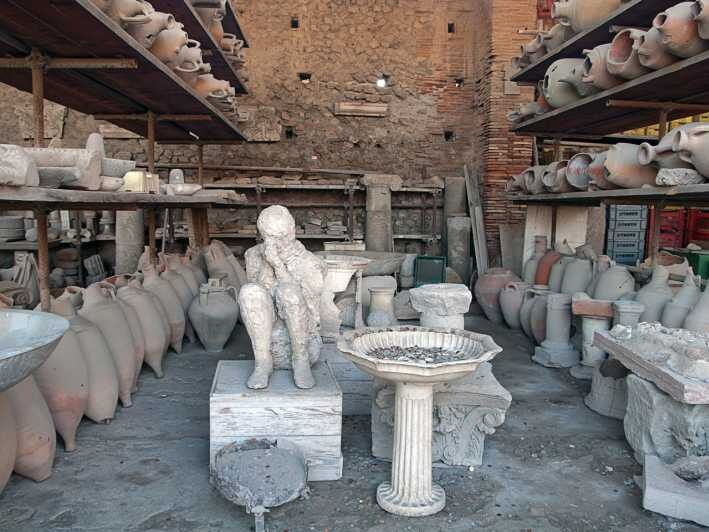
Pompeii is where the classics live: the street grid, the houses, the doorway moments, and the walls covered in frescoes. This tour gives you 4 hours of free time in Pompeii, plus an audio guide and detailed map for the independent visit of Pompeii.
Also pay attention to one more detail: staff assistance before entering the Pompeii excavations is included, which helps you get your bearings fast. And there are highlights built into the experience, including ancient frescoes and the lupanar, the city’s brothel.
The audio guide is the key here. It’s listed with support in many languages (including English and Italian, plus options like French, German, Spanish, Portuguese, Russian, Hebrew, and Chinese). You’ll need to choose carefully and then stick with it. With Pompeii, time disappears quickly once you start wandering.
Important document note: you’re told it’s important to bring a valid ID document to rent the audio guide for Pompeii. That means you shouldn’t plan to arrive with just a photo on your phone. Carry your ID so you can get the audio device smoothly.
One scheduling reality to consider: even though the tour states 4 hours free time in Pompeii, Pompeii is so big that 4 hours can feel tight if you want to see homes, frescos, and the lupanar with any depth. If you tend to linger, consider prioritizing what matters most before you go in. You’ll enjoy the visit more if you treat it like a curated sprint rather than a free-for-all.


The itinerary in motion: what each stop feels like
Here’s the flow and why it matters.
- Start at Via Galileo Ferraris, 40: you gather near the meeting point, then board the coach. Getting this right prevents delays later.
- Coach transfer to Ercolano (about 30 minutes): enough transit time to settle in without losing the day.
- Ercolano free time (2.5 hours): use it for slower looking. Focus on preserved spaces and the street feel.
- Coach transfer to Pompeii (about 30 minutes): you move from a calmer zone to the busiest famous site.
- Pompeii free time (4 hours): use the audio guide and map. Choose a route instead of reacting to everything.
- Return coach (about 30 minutes): you close the loop back at the original meeting point.
The upside of this structure is clarity. You know when you’re walking and when you’re riding. The downside is that Pompeii crowds can pressure your pace, so being strategic helps.
Skip-the-line tickets: what you should expect
The tour includes skip-the-line entrance tickets for both Pompeii and Herculaneum. That’s good value because ticket lines can be unpredictable on busy days. With two sites, even small time savings can make your total experience feel less rushed.
What it doesn’t change: there will still be movement and entry logistics. You’ll still need to get through entry points and orient yourself. But you avoid the worst-case scenario of standing in long queues before you even start.
What’s included (and what you’ll pay for anyway)
At $123.48 per person for an 8-hour day, the value comes from the package nature. You’re not just paying for two admissions. You’re paying for:
- Pick up in Naples and direct coach transfers to both ruins entrances
- Skip-the-line ticket handling for Pompeii and Herculaneum
- Audio guide and a detailed map for Pompeii
- Illustration of itineraries and staff assistance before entering Pompeii
- Parking, ZTL, tolls, and fuel
Entrance ticket value is partially itemized: Pompeii’s ruins ticket is stated as €20.00 in the included list, and Herculaneum’s ticket is included (but the specific price isn’t stated).
What’s not included is also important: food and beverages. Plan to bring water and snacks if you think you’ll need them. With self-paced time at each site, having your own supply helps you avoid spending precious minutes buying something nearby.
How to get the best day out of two different ruins
This is the part that actually determines whether you feel relaxed or stressed.
First, decide what you want more: breadth or depth. Pompeii rewards breadth because it’s packed with famous scenes. Ercolano rewards depth because the size and feel make it easier to focus.
Second, use your tools. In Pompeii, rely on the audio guide plus the map to pick a route. Don’t let the site decide everything for you. In Ercolano, use your eyes and signage, and don’t count on audio-style guidance to carry the whole experience.
Third, pace your expectations. Pompeii is famous for a reason, but that fame means crowds and constant movement. If you go in expecting calm, you’ll be disappointed. If you go in expecting energy and choose a few key stops, you’ll have a great time.
A small strategy that helps: before you start walking in Pompeii, take 5 minutes to map your route mentally. Pick the lupanar or another theme you care about, then work outward. It’s a simple trick, but it prevents the classic mistake of spending your best hours drifting.
Who should book this tour
This tour is a great fit if you:
- Want Naples to Pompeii and Herculaneum in one day without driving
- Like self-paced sightseeing with support at the start
- Care about Roman daily life details, including frescoes and special sites like the lupanar
- Prefer a structured day with clear time blocks rather than an all-day free plan
You might reconsider if you:
- Want a deep, slow Pompeii experience with lots of long house visits and time to read everything
- Have trouble with timed, back-to-back sightseeing days
- Forget your ID, since the Pompeii audio guide rental requires a valid document
Should you book this one-day Pompeii and Ercolano tour?
I’d book it if you want a strong value day that handles the hard parts for you: coach logistics, skip-the-line entry, and Pompeii self-guided support with an audio guide and map. The combination of Pompeii’s big-name highlights and Ercolano’s calmer walking experience makes the schedule feel balanced, especially if you’re okay with moving at a human pace rather than soaking in every corner for hours.
If Pompeii is your absolute number-one priority, consider whether four hours is enough for how you travel. If you’re the type who likes to linger, you may feel rushed even with the audio guide. But if you plan smart—choose key areas, keep the audio on, and save time for the parts that matter—you’ll come away with a memorable snapshot of two towns destroyed in the same volcanic event.
FAQ
How long is the Pompeii and Herculaneum tour from Naples?
The total duration is listed as 8 hours (starting times vary based on availability).
Where do I meet the group in Naples?
The meeting point is near Via Galileo Ferraris n.40, Naples (you can use the coordinates 40.8505189N, 14.2747942E). Your bus has the logo Around Vesuvio.
How much free time is there in Herculaneum and Pompeii?
You get 2.5 hours free time in Ercolano (Herculaneum) and 4 hours free time in Pompeii.
Is an audio guide included, and is it for both sites?
An audio guide is included for Pompeii only. It is not listed as included for Herculaneum.
Do I need an ID for anything?
Yes. You’re advised to bring a valid ID document to rent the Pompeii audio guide.
Are entrance tickets included in the price?
Yes. Entrance ticket for Pompeii ruins is included (listed as €20.00), and an entrance ticket for Herculaneum ruins is also included. Skip-the-line entrance tickets are included for both.
What language options do I get for the driver and audio guide?
The driver is listed as English and Italian. The Pompeii audio guide is available in multiple languages, including Chinese, English, French, German, Hebrew, Italian, Portuguese, Russian, and Spanish.
What about food and drinks?
Food and beverages are not included.