REVIEW · CIVITAVECCHIA
From Civitavecchia: the Dying City and Monster Park Tour
Book on GetYourGuide →Operated by MyloveItaly Travel&Experience · Bookable on GetYourGuide
Some days feel like a secret movie set.
This one pairs Civita di Bagnoregio (the so-called dying city) with Bomarzo’s strange Monster Park. I like that the tour is built for cruise-port convenience, with round-trip transfer plus entry tickets handled for you. I also like the contrast: one stop is quiet and fragile, the other is theatrical and weird in the best way.
There’s one thing to keep in mind: it’s a lot of walking on uneven ground in both places, and it’s not for wheelchair users. If you’re expecting a slow, fully guided museum-style day, you may want to manage your expectations about how much on-foot guiding you’ll get at each site.
Key things worth knowing fast
- 300-meter bridge moment: the connection to Bagnoregio is part of the story
- Tickets are included: entry fees for both Civita and Monster Park are covered
- Monster Park is designed (1552): Prince Vicino Orsini and architect Pirro Ligorio planned the sacred wood
- Driver-guided day: you’ll have a driver and a live tour guide on the English/German side
- Smaller group feel: some departures are tiny, so the park doesn’t feel like a crush
- Sun and shoes matter: comfy footwear and sun protection are a must for the day
In This Review
- Civita di Bagnoregio: the dying city effect you can feel
- First win: the bridge and the cliff-town approach
- What you’ll see in Civita (and where time can slip)
- The drive through the countryside: why the road part is useful
- Bomarzo’s Monster Park: Sacred Wood, done the Italian way
- Touring strategy inside Monster Park (so you don’t feel rushed)
- The time window: 7.5 to 8.5 hours with two very different stops
- Price and value: why $243.56 may feel fair
- Who this tour is best for (and who should rethink it)
- Practical tips so the day goes smoothly
- Should you book the Dying City and Monster Park Tour?
- FAQ
- How long is the tour from Civitavecchia?
- What’s included in the price?
- Is there a professional guide on-site?
- Is lunch included?
- What languages are offered?
- Where do I meet in Civitavecchia port?
- What should I bring?
- Is it wheelchair accessible?
- Can I cancel for free?
Civita di Bagnoregio: the dying city effect you can feel
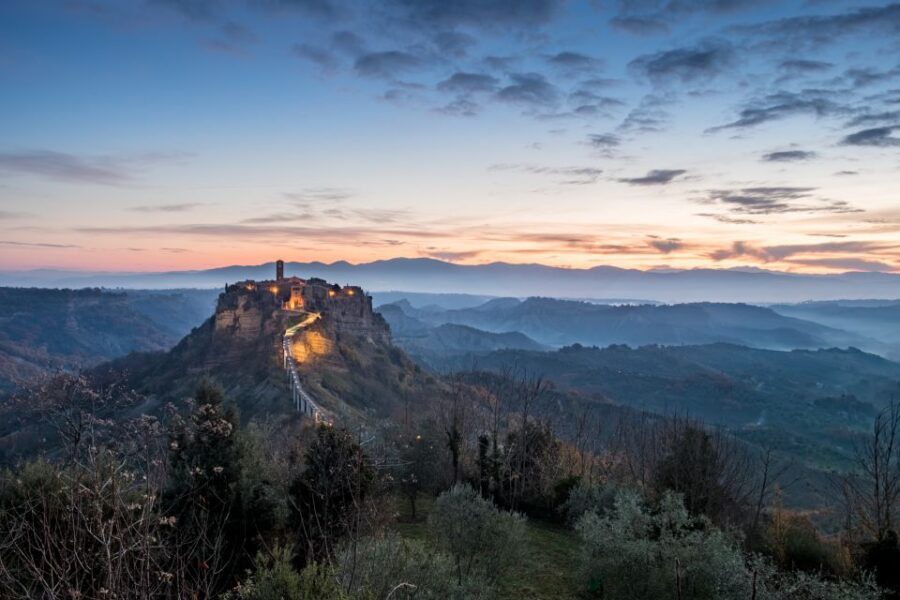
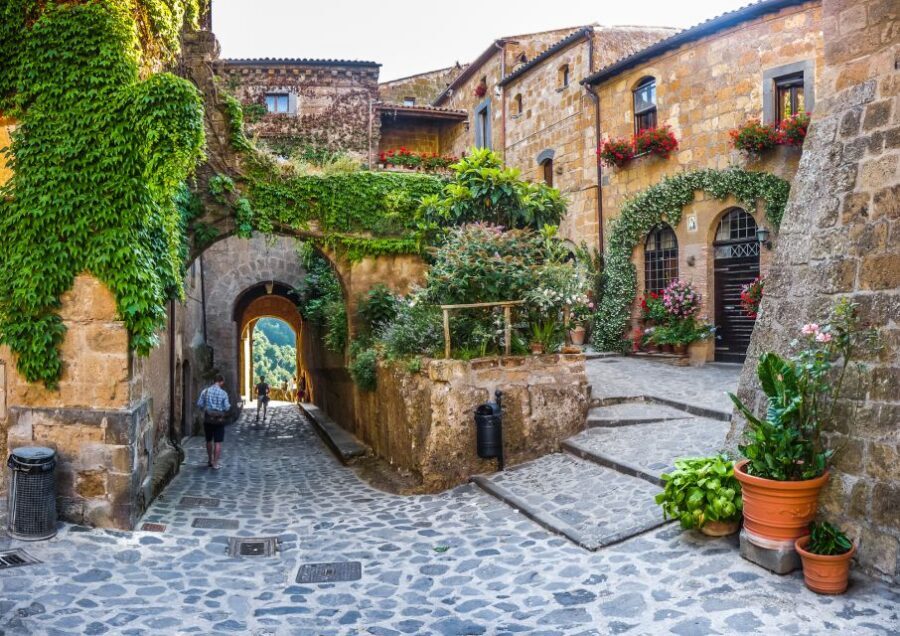
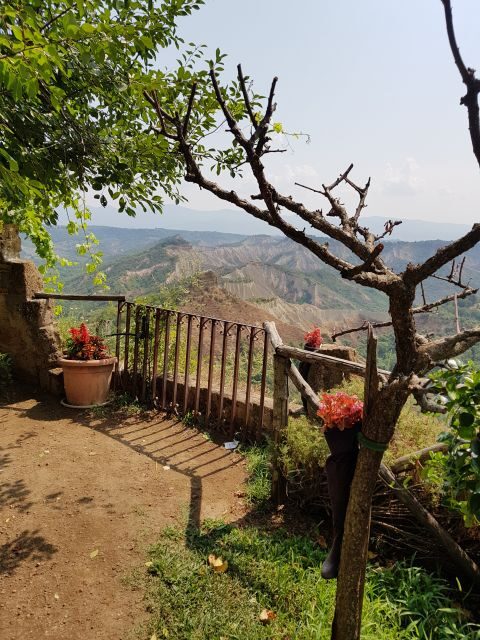
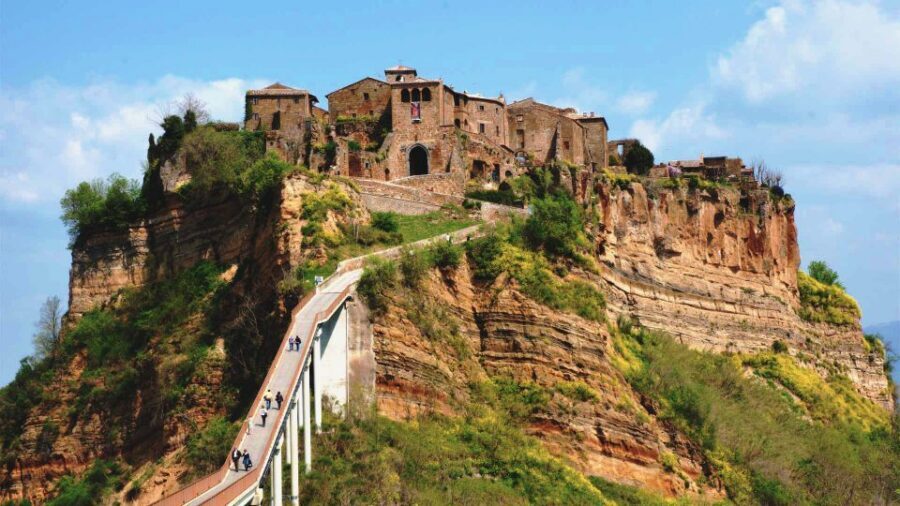
Civita di Bagnoregio sits in Tuscia, on the border of Tuscany and Lazio. The nickname “dying city” isn’t marketing fluff. The town is literally perched on land that’s slowly breaking apart, piece by piece, and eventually the last bits will crumble into the Valle dei Calanchi below.
That idea changes how you walk. You notice details you might skip elsewhere—stonework, the angle of doorways, the way narrow streets funnel your view toward the valley. Even if you’re not a geology person, the setting makes the visit feel timeless in a bittersweet way. There’s also a kind of mental calm that comes from being in a place that can’t be “fixed.” You’re not touring an endless city block. You’re visiting a place with an ending already written into the terrain.
First win: the bridge and the cliff-town approach
A big part of the experience is arriving the “old world” way. Civita connects to the rest of the world via a three hundred meter bridge. Walk it and the atmosphere flips right away—from busy port-day brain to cliff-town focus.
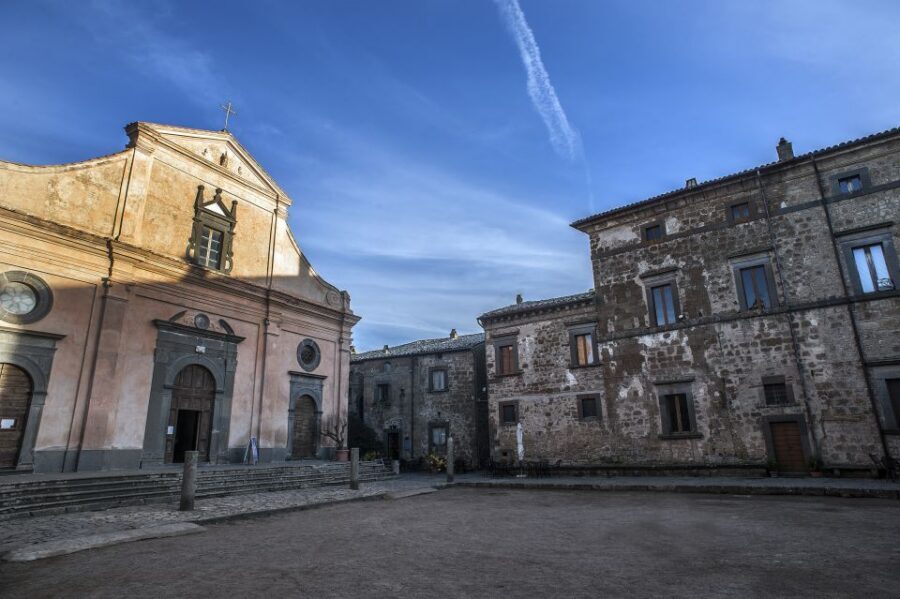
Once you’re in Civita, you’re moving through an ensemble of old houses, narrow streets, and scenic views that are shaped by the land dropping away around it. At the entrance, you can see the Romanesque Arch, and as you wander you’ll find major landmarks such as a Renaissance palace and the large central Piazza.
Practical tip: start slow. Civita rewards the unhurried pace. If you rush, you’ll miss the micro-moments—turning a corner and suddenly getting a big view, or realizing the street layout feels almost like it was designed to control where your eyes land.
You can also read our reviews of more city tours in Civitavecchia
What you’ll see in Civita (and where time can slip)
The tour includes entry to Civita di Bagnoregio, so you can focus on exploring instead of sorting tickets. Inside, your highlights are basically the story beats of the town:
- The Romanesque Arch at the entrance gives you an instant time capsule feel.
- The Renaissance palace adds a layer of “people built here on purpose,” not just “nature happened.”
- The Piazza is the social heart. On certain dates, it’s even known for donkey races (first Sunday in June and second Sunday in September), when locals gather in the evening.
The “consideration” here is simple: it’s a hilltop village, and your legs will do the work. Bring comfortable shoes and expect uneven surfaces. If your travel style is browse-for-an-hour-and-go, you may want extra time in Civita rather than sprinting through everything.
The drive through the countryside: why the road part is useful
This is not a “bus to Rome and back” kind of day. You’re picked up from the Civitavecchia area and shuttled out to both hill towns: Bagnoregio and Bomarzo.
In several comments from past visitors, the driving portion is treated like a feature, not dead time. People liked the way the driver stitched together context while traveling through towns and countryside. One guide name that pops up is Andrea, praised for being on time and sharing lots of practical and historical detail about the surrounding area.
Even if your departure group is small, the ride matters because it keeps you out of the stress zone. Instead of managing transit on your own, you show up, get transferred, and spend your energy on seeing.
Bomarzo’s Monster Park: Sacred Wood, done the Italian way
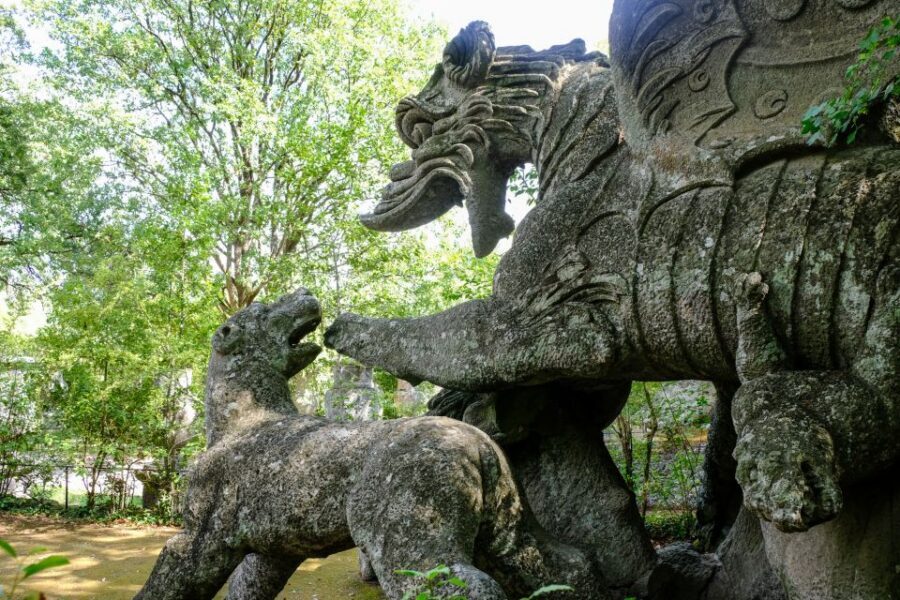
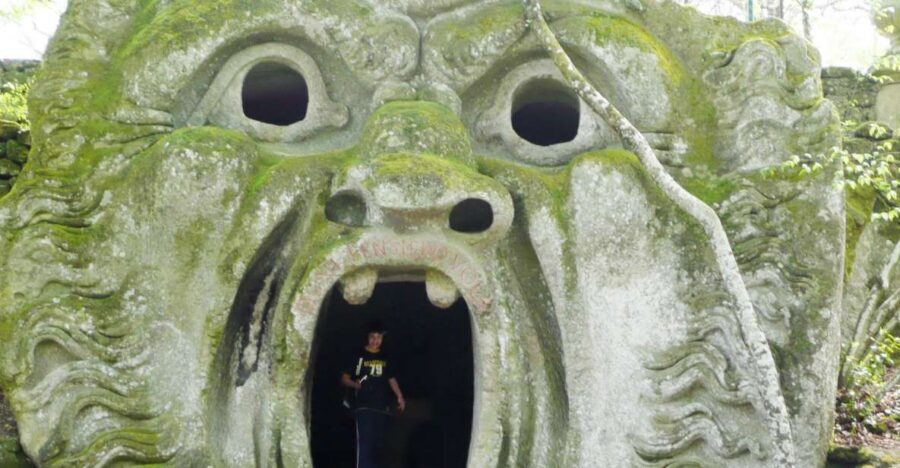
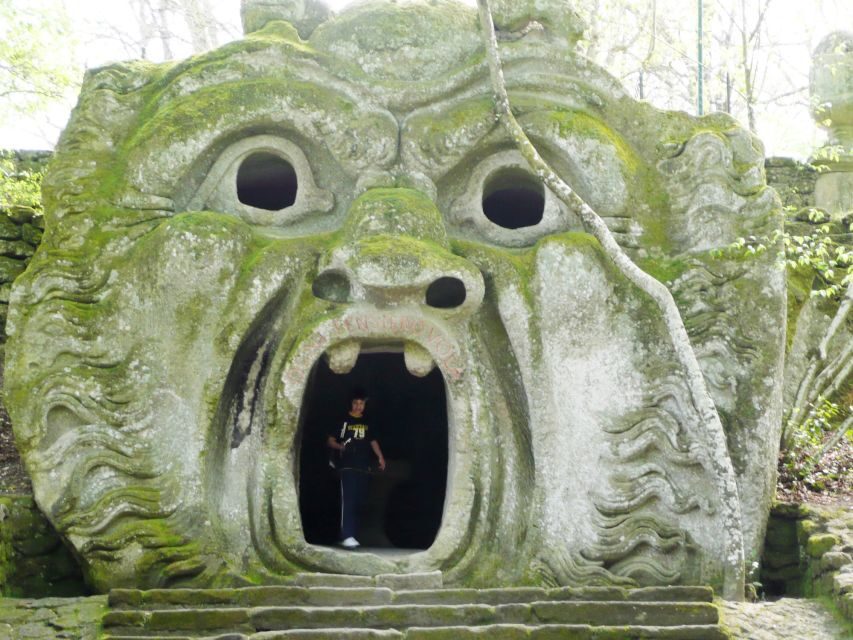
After Civita, you head to Bomarzo and the Park of the Monsters, also known as Sacred Wood. This place is pure Renaissance-era theatrical garden design—crafted with geometry and perspective in mind, then decorated with the kind of sculptural imagination that makes you smile even while you’re trying to understand it.
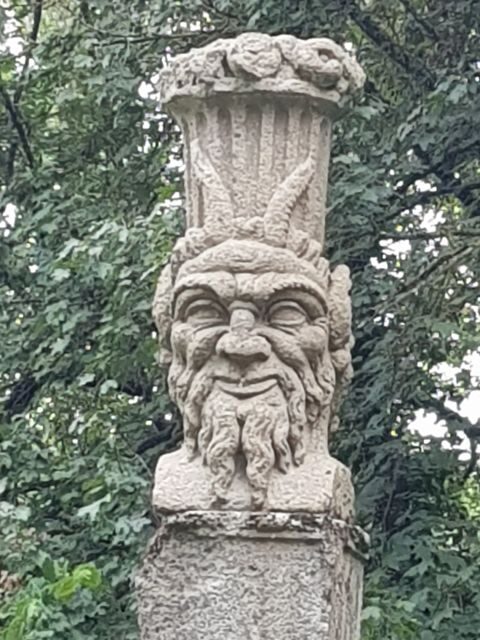
The park was designed in 1552 by Prince Vicino Orsini with the architect Pirro Ligorio. That matters because it’s not random chaos. The layout has intention: wide terraces, fountains with water games, and mannerist sculptures.
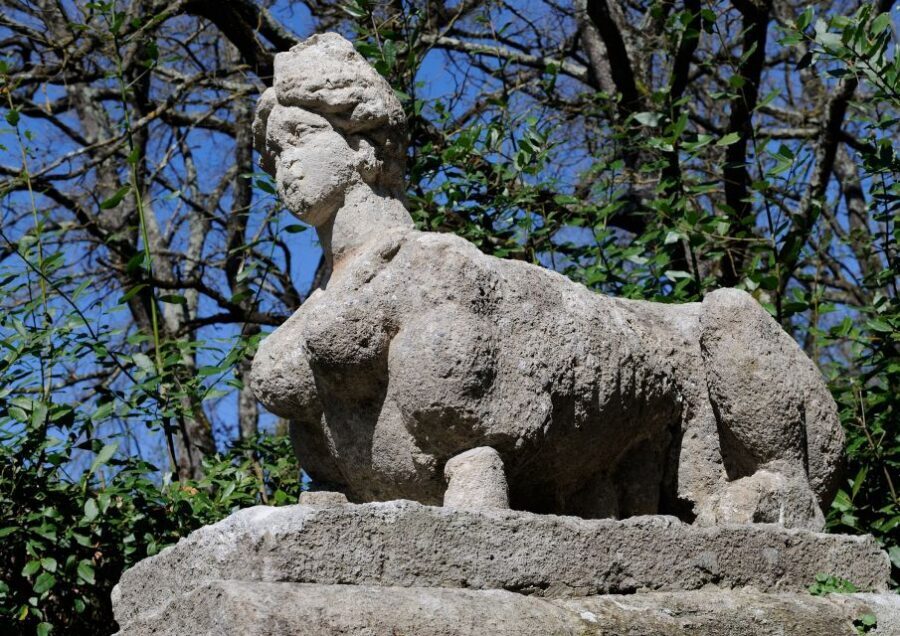
Then comes the best part: the figures. The park features eccentric peperino stone blocks emerging from the ground and shaped into monsters, dragons, mythological characters, and exotic animals. It’s the kind of art where you can look for one theme—fear, mythology, allegory—and still end up laughing at the sheer strangeness.
Touring strategy inside Monster Park (so you don’t feel rushed)
Your ticket is included, and the tour covers entry, but there isn’t an endless “stay together forever” vibe. The park is built for wandering. If you have a smaller group, the experience can feel calmer—less like moving through people and more like exploring at your pace.
Still, plan your energy. The park is a garden, with terraces and paths, and you’ll keep walking to reach the different scenes. If the sun is strong, water and shade matter. Bring sunglasses and a sun hat if you run hot.
A smart move: pick 3–4 “must-see” monster scenes when you enter. That way, even if you lose track of time (easy to do here), you still get what you came for.





The time window: 7.5 to 8.5 hours with two very different stops
The day runs about 7.5 to 8.5 hours. That’s enough for both sites if you stay flexible and keep moving at a comfortable pace.
Here’s the balance I’d plan for:
- Civita di Bagnoregio rewards slow walking and looking around, plus the bridge approach.
- Monster Park rewards wandering, but you still need to pace yourself because the terrain adds up.
If you’re someone who likes a long sit-down lunch and a long sit-down rest, you should know lunch is not included. You’ll want to either grab food on your own or accept a lighter meal plan.
Price and value: why $243.56 may feel fair
At $243.56 per person, this tour isn’t cheap, but it also isn’t just transportation. You’re paying for a full day with:
- Port pickup and drop-off
- Round-trip transfer to Bagnoregio and Bomarzo
- A driver
- Entry tickets for Civita di Bagnoregio and Monster Park
- The ability to skip the ticket line
- A live tour guide in German and English
The best value angle is the “you don’t have to do logistics” part. From a cruise port, getting two far-apart stops without renting a car is the whole game. If you were to piece it together yourself, you’d spend time coordinating transport and tickets, and you’d risk losing time to delays.
One note: it lists live tour guide languages, but it also says a professional guide is not included. In plain terms, expect a driver/host style explanation during the day, plus you explore the sites with your own eyes and the built-in time for the highlights.
Who this tour is best for (and who should rethink it)
This day trip is a strong match if you want:
- A cruise-port-friendly way to see off-the-main-route places outside Rome
- A mix of atmosphere: fragile cliff town in the morning, surreal garden art in the afternoon
- A small-group vibe, where the park doesn’t feel like a marching band
It’s less ideal if you:
- Need step-free access (it’s not suitable for wheelchair users)
- Travel with a lot of luggage (large bags aren’t allowed)
- Want a strict, detailed guide-led walkthrough inside every site for every minute
Practical tips so the day goes smoothly
A few details help you have a stress-free day:
- Bring passport or ID card.
- Wear comfortable shoes. Both Civita and Bomarzo involve walking on uneven terrain.
- Pack sunglasses and a sun hat if it’s warm.
- Don’t bring pets or large bags.
- Expect pickup timing to be approximate: the tour notes pickup around 08:50 AM, and traffic can add a short wait.
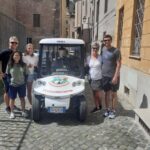
Meeting point in Civitavecchia port: the TERMINAL CRUISE SHUTTLE BUS at Largo della Pace / via Prato del turco 3. It’s the last stop of the free shuttle bus that connects you from the boat area. After you exit the shuttle drop-off, look for staff with the MyloveItaly – My Italy logo.
Should you book the Dying City and Monster Park Tour?
Book it if you want a single day that feels different from the typical big-city rush—Civita for the emotional “this place is disappearing” feeling, then Bomarzo for a garden full of myths and monsters. The included entry tickets, plus port pickup and transfers, make it practical for cruise days.
Skip it (or think twice) if walking uneven ground is hard for you, or if you’re expecting a deep, step-by-step professional guided tour at every nook and cranny. In that case, you might prefer a slower plan with more time per stop.
FAQ
How long is the tour from Civitavecchia?
The experience runs about 7.5 to 8.5 hours, depending on the starting time available.
What’s included in the price?
Pickup and drop-off from the port area, round-trip transfers to Bagnoregio and Bomarzo, a driver, entry tickets for Civita di Bagnoregio and the Monster Park, and skip-the-ticket-line access.
Is there a professional guide on-site?
A professional guide is listed as not included. The tour does include a live tour guide in German and English, but you should plan to explore the sites yourself with the time and guidance provided.
Is lunch included?
No. Lunch is not included.
What languages are offered?
The live tour guide is available in German and English.
Where do I meet in Civitavecchia port?
Meet at the TERMINAL CRUISE SHUTTLE BUS at Largo della Pace / via Prato del turco 3, the last stop of the port free shuttle bus. From there, look for staff with the MyloveItaly – My Italy logo.
What should I bring?
Bring a passport or ID card, comfortable shoes, sunglasses, and a sun hat.
Is it wheelchair accessible?
No. It is not suitable for wheelchair users.
Can I cancel for free?
Yes. You can cancel up to 24 hours in advance for a full refund.