REVIEW · CIVITAVECCHIA
From Civitavecchia Port: Rome in a Day Guided Day Tour
Book on GetYourGuide →Operated by Civitatours · Bookable on GetYourGuide
That first bus ride sets the tone.
This Rome day tour from Civitavecchia strings together the big hits—Vatican area, Colosseum zone, Trevi Fountain, Pantheon, and Piazza Navona—so you get a practical overview without spending your whole day hunting buses or studying maps. I especially liked the live guide narration (I had a standout guide named Elaina/Alaina in one of the reports I saw, and the guides you get are consistently praised for humor and clarity) plus the radios and earphones that keep you connected even while you’re moving through crowds. One drawback to plan for: this is a lot of walking, and some reviews note occasional seat comfort issues on the bus and a language mix depending on the day.
What makes the route feel smart is that it focuses on the places you’ll recognize instantly. You’ll see major monuments mostly externally, then use the guide’s explanations to turn the postcard views into something you actually understand. The other consideration: you will not have entrance time at the major sites listed, so if you want to go inside St. Peter’s or the Colosseum, this isn’t that day.
Still, if you’re on a cruise with limited time, it’s a strong way to “get your bearings fast” and leave Rome with a clear sense of where everything is. The best moments aren’t just the big names. They’re the quick context—like why Bernini designed St. Peter’s Square, or what the Vittoriano is signaling next to Piazza Venezia—that makes the whole day click.
In This Review
- Key highlights worth your attention
- Port-to-Rome logistics: the shuttle + the ride that matters
- St. Peter’s Basilica area tour: an exterior intro you can actually finish
- Panoramic Rome by bus: Tiber River views and quick history cues
- The Colosseum zone: famous exterior views with real context
- Roman Forums outside: the political heart, explained in plain steps
- Piazza Venezia and the Vittoriano: a quick detour with meaning
- Trevi Fountain: the coin toss moment, plus the who-and-why
- Pantheon exterior and Piazza Navona: two landmarks that bookend the endgame
- How much walking to expect (and how to survive it)
- Price and value: does $82 make sense from Civitavecchia?
- Who this tour fits best (and who should skip it)
- Should you book this Civitavecchia to Rome day tour?
- FAQ
- How long is the tour?
- Where do I meet the tour in Civitavecchia?
- Does the tour include entrances to the main sites?
- Is food included?
- What language is the guide available in?
- Is there a lot of walking?
- What should I bring?
- What time will I return to the cruise port area?
- Is it wheelchair accessible?
Key highlights worth your attention
- Guides with strong storytelling: Many reviews single out guides like Daniel, Andrea/Andre, and Elaina/Alaina for clear explanations and good humor.
- Radios and earphones: You can follow directions and commentary even during bus transitions and stop-and-go crowds.
- Big landmarks, external view style: Vatican area, Colosseum exterior, Roman Forums outside—great for time-crunched cruise days.
- Practical help during the walk: Reviews note toilet stops and shade-hunting, which matters on hot days.
- Panoramic drive adds context: Stops along the Tiber, Trastevere, Circus Maximus, and the Arch of Constantine help you connect the dots fast.
Port-to-Rome logistics: the shuttle + the ride that matters
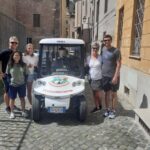
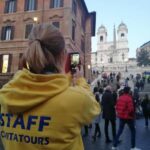
Your day starts at the cruise pier with a free shuttle bus that takes you to the tour meeting point terminal at Largo Della Pace (about a 10-minute ride). Once there, the CIVITATOURS staff are waiting and you’ll spot them in yellow t-shirts.
From Largo Della Pace, you board a comfortable, modern bus. In the reviews, that part gets praise—newer coaches and air-conditioning show up more than once—though a couple people noted bus seat comfort wasn’t great on the day they rode. Either way, you’re unlikely to feel like you’re guessing your way through Rome logistics, which is half the battle on a cruise day.
One small but real tip: be ready for a busy boarding moment. At least one review complained that boarding got chaotic when people tried entering from different doors, and that can affect who sits together. If you want seats grouped, board carefully from the front side first and keep an eye on where your group forms.
The tour runs about 8 hours and aims to get you back to the port area around 17:20. That time buffer is important because cruise departures don’t care how much you liked Piazza Navona.
You can also read our reviews of more guided tours in Civitavecchia


St. Peter’s Basilica area tour: an exterior intro you can actually finish
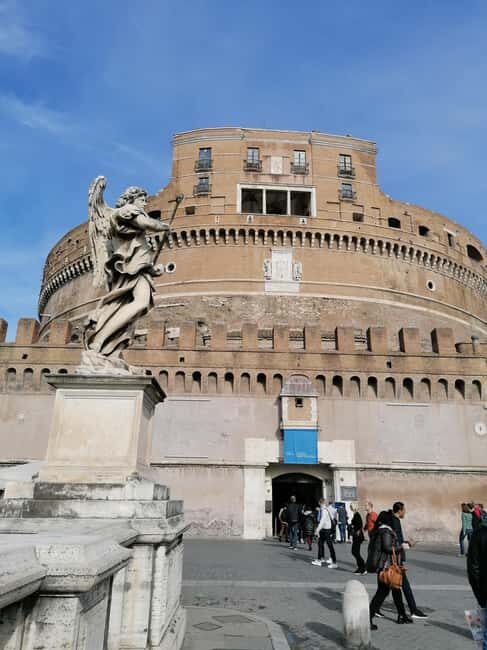
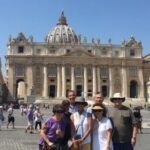
Your Vatican chapter is built around an external tour of St. Peter’s Basilica plus time around St. Peter’s Square. The guide points out the scale and the look—Renaissance architecture and the dome are the obvious eye-catchers—and explains the square’s design, including work associated with Bernini.
This is a smart approach for a single-day tour. You get the big visual impact and the key naming cues that help you make sense of what you’re seeing from a distance. And you’re not stuck in long entry lines. You’ll still come away with that wow factor, just without the deep “hours inside” commitment.
Do note what you’re signing up for: this is not described as an entrance tour. So if you’re the type who wants to spend time inside chapels and museums, you’ll want a different kind of ticketed Vatican visit. Here, the win is the orientation.
Also, if you’re photo-minded, plan your expectations for public areas. St. Peter’s Square is famous for a reason, and you’ll be sharing the space. Wear shoes that don’t punish you for standing still.
Panoramic Rome by bus: Tiber River views and quick history cues
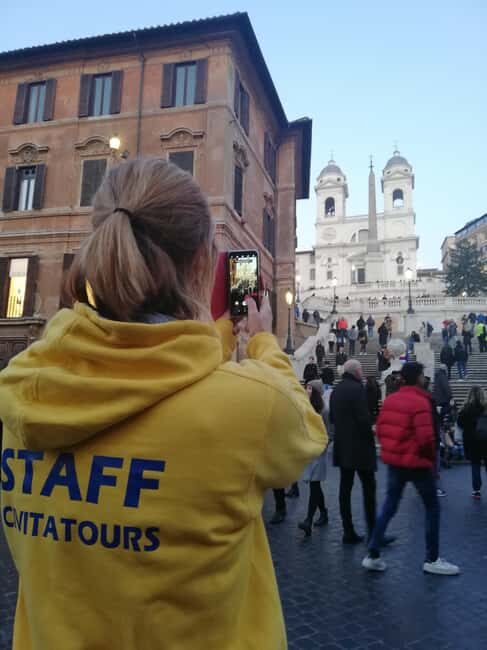
After the Vatican stop, you reboard and get narration while the bus passes major Rome landmarks. This segment is valuable because it fills in the map gaps between the sites.
The route includes views and commentary for places like the Tiber River, Tiber Island, Trastevere, the Circus Maximus, and the Arch of Constantine. You don’t just drive past them—you get the “why it matters” that turns a scenic road into a mental timeline.
One practical advantage: while you’re on the bus, you can grab water, stretch your legs, and recover from the first walking stretch. Several reviews mention the guide doing well at keeping the group moving and finding shade later, and the bus narration is part of that pacing strategy.
If you’re sensitive to language mix, keep this in mind. The tour is listed as Spanish, German, and English, and one review noted that even on an English tour, a lot of narration landed in Spanish. Radios help, but you may still catch more than one language on a multi-language group day.
The Colosseum zone: famous exterior views with real context
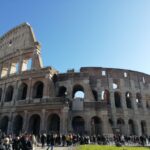
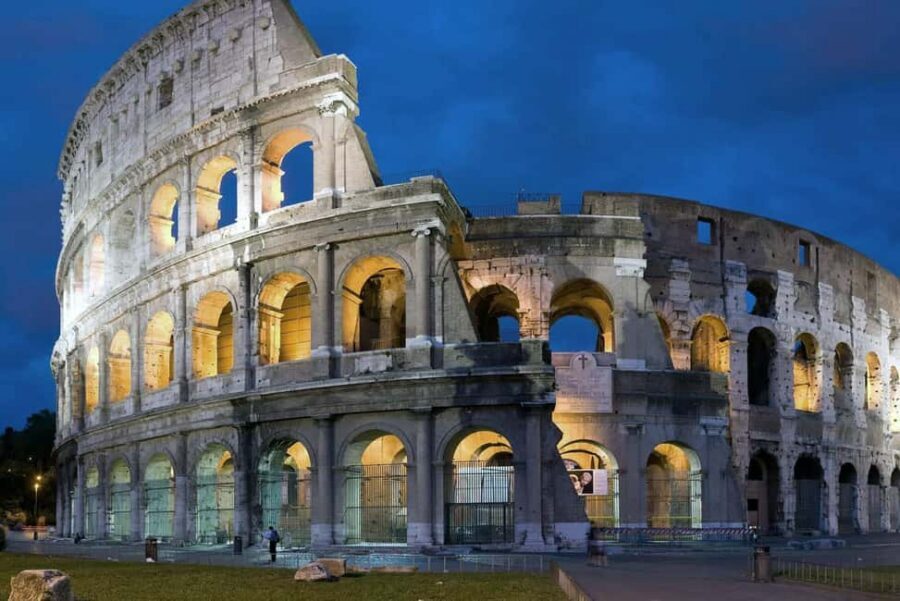
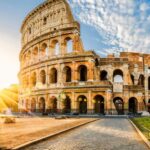
Your next major stop is near the Colosseum, where the guide gives the history of Rome’s most famous amphitheater. You’ll learn about what went on inside—gladiatorial contests and public spectacles—and how the structure was built and used.
Because the tour focuses on external viewing, the time investment is controlled. You get the landmark moment without committing to a long queue-and-entry plan. For many cruise passengers, that’s exactly what you need: see it, understand it, move on before the day runs away.
The drawback is also clear: you won’t get the “inside experience.” So if your dream includes walking floors that athletes and fighters once used, you’ll want a different Colosseum-focused tour later.
Still, the exterior stop works well for a first-time day. The guide’s explanations turn the visible architecture into something you can recognize later—especially if you’ve ever seen pictures of the Colosseum and wondered what you’re looking at.
Roman Forums outside: the political heart, explained in plain steps
After the Colosseum area, you continue on foot with stops around the Roman Forums area. The guide frames this as the “heart” of ancient Rome’s political, social, and economic life.
The value here isn’t that the Forums are small and easy to cover. It’s that you’re getting a structured storyline instead of wandering and guessing. If you’ve ever stood in a ruin field and felt lost, this is the antidote: you get the connections between buildings, public life, and the way power worked.
And yes, it’s still a walking portion. Reviews repeatedly warn—sometimes with affection—that this is a walking day. The good news is that the guide often manages group pace well. One review even noted shade-finding tactics when the heat was intense.


Piazza Venezia and the Vittoriano: a quick detour with meaning
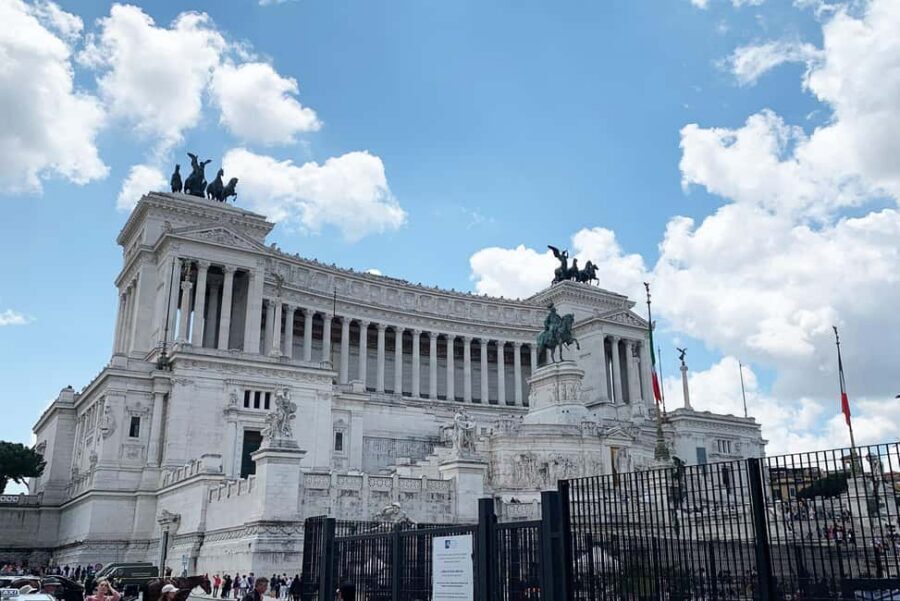
From the Forums area, you’ll reach Piazza Venezia and see the imposing Vittoriano, the monument dedicated to Italy’s first king. This is one of those stops that can feel quick if you don’t know what you’re looking at.
With the guide’s context, it becomes more than a statue: it’s a reminder that Rome’s story isn’t just ancient. It also includes Italy’s unification era and how the country chose to represent itself in stone.
For practical sightseeing, this stop also helps you shift your brain from ancient ruins into city-center monuments. It keeps the day varied instead of one long archaeological lecture.
Trevi Fountain: the coin toss moment, plus the who-and-why
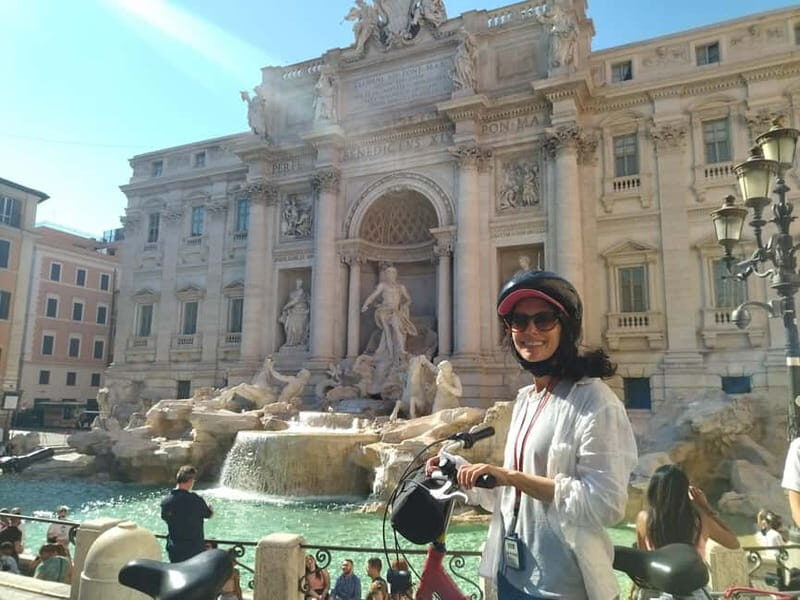
Then comes Trevi Fountain, the iconic Baroque masterpiece designed by Nicola Salvi. The classic moment is there: you toss a coin.
What you’ll get from the guide is the meaning behind what you’re seeing—why the fountain looks the way it does and how it fits into Rome’s Baroque story. And even if you don’t care about the symbolism, it’s still one of those sights where the guide’s timing matters. You want to be there when you can actually take photos, not only when it’s shoulder-to-shoulder chaos.
Because this tour lists the main sites as external, you’re not treated like you’re entering a ticketed attraction. Instead, the fountain works like a timed “anchor stop” for the middle of the day—perfect for re-centering after the Forums and Piazza Venezia walk.
Pantheon exterior and Piazza Navona: two landmarks that bookend the endgame
You’ll continue to the Pantheon, described as one of ancient Rome’s best-preserved buildings and now a church. The Pantheon is a different kind of icon: it’s Roman engineering that still feels usable today.
Again, this is primarily an exterior-focused stop, so the payoff is recognition plus understanding. You’ll see why it’s so famous, and you’ll connect it to the ancient temple-to-church transformation without needing to plan a full separate visit.
Finally, the day ends with Piazza Navona, known for its Baroque fountains, including Bernini’s Fountain of the Four Rivers, plus the surrounding cafes and artists. This stop is often where people relax a little because it feels like a real square, not a monument queue.
The lunch break happens here, too. The tour includes free time for lunch of 30–45 minutes. You’re not locked into a specific restaurant, and some guides point out snack options and even restroom locations. One review specifically praised the guide for suggesting places for a snack and sharing a very clean bathroom option.
How much walking to expect (and how to survive it)
This tour is not a sit-and-watch Rome day. It involves walking with the guide, and the route covers multiple major areas. Multiple reviews call out that there’s a lot of walking and it may feel like a marathon, especially in heat.
That’s also why comfortable shoes are not a suggestion. They’re the difference between enjoying the last two stops and counting the minutes until you can sit down again.
The good news: the guide often manages conditions well. Reviews mention shade-finding during hot days and regular pacing that keeps the group together without turning into a sprint. If you’re the type who likes a structured pace with regular “reset” moments, this works.
One more tip: bring a small plan for water. The tour encourages hydration in hot conditions (noted in reviews), and having your own water keeps you flexible during the walking segments.
Price and value: does $82 make sense from Civitavecchia?
At $82 per person for an 8-hour day, the value depends on what you want from Rome. If your goal is first-time orientation—see the biggest monuments, learn what they mean, and get back on schedule—this price can feel fair.
Here’s what you’re paying for:
- Comfortable modern bus transportation
- Professional live guide
- Radios and earphones
- Meeting point assistance and an assistance number during the day
What you aren’t getting:
- Food or beverages
- Entrances
So, you should think of this as a guided “greatest hits” day. You save time and reduce stress by skipping the need to line up for multiple separate tickets. And you also get narration through the city, which is often where the real value is—turning famous exteriors into clear, memorable context.
If you need ticketed access to major interiors, you’ll probably spend extra elsewhere anyway. In that case, build this tour as the overview and plan a separate targeted visit for the places you want to enter.
Who this tour fits best (and who should skip it)
This tour is ideal if you:
- Are on a cruise and need a plan that returns you around 17:20
- Want an organized route through Vatican area, Colosseum zone, Trevi, Pantheon, and Navona
- Like guided explanation more than self-directed sightseeing
- Prefer external viewing with strong narration instead of long ticket lines
It may be a poor match if you:
- Have mobility limitations, because the day involves significant walking and the tour notes it isn’t suitable for mobility impairments
- Want to enter major sites (the stops are described as external)
- Get stressed by crowded boarding or large group energy (a review noted chaotic boarding and another suggested smaller groups)
Language can also be a factor. The tour is listed as English, Spanish, and German, but one review warned that on their day the narration was mostly Spanish even when the tour was supposed to be in English. Radios help, but if language control matters a lot to you, check how your specific booking is labeled.
Should you book this Civitavecchia to Rome day tour?
Book it if you want a focused Rome day that feels guided from start to finish. It’s built for cruise timing, and the route hits the landmarks you’d want on your first pass—Vatican area, Colosseum zone, Roman Forums outside, Trevi, Pantheon, and Piazza Navona—while a live guide ties it all together.
Skip it if your dream day is about entering sites and spending hours inside. This one is about seeing and understanding from the outside, then moving on.
My practical advice: treat it like a fast, guided Rome crash course. Wear good shoes, accept that it’s active, and use the lunch free time to refuel. If you do that, you’ll come away with Rome’s main map pieces in your head—and you’ll know where to go next when you have more time.
FAQ
How long is the tour?
The tour lasts about 8 hours.
Where do I meet the tour in Civitavecchia?
Take the free shuttle bus from your cruise pier to Largo Della Pace. CIVITATOURS staff in yellow t-shirts are there to help you find the right group.
Does the tour include entrances to the main sites?
No. Entrances are not included, and the tour focuses on external viewing of the main sites.
Is food included?
No. Food and beverages are not included, though you get free time for lunch (30–45 minutes).
What language is the guide available in?
The guide availability is listed as Spanish, German, and English.
Is there a lot of walking?
Yes. The tour involves walking with the guide, and the day covers several major areas on foot.
What should I bring?
Bring comfortable shoes, since you will be walking for much of the day.
What time will I return to the cruise port area?
The tour returns at approximately 17:20.
Is it wheelchair accessible?
The tour notes wheelchair accessibility, but it also states it is not suitable for people with mobility impairments, since the day involves walking.