REVIEW · ROME
Fountains and Squares of Rome 2-Hour Walking Tour
Book on GetYourGuide →Operated by Romaetravel · Bookable on GetYourGuide
Rome’s fountains hit different at street level. In this 2-hour small-group walk, you move through some of Rome’s most famous Baroque and Renaissance squares, with legends, architecture details, and classic photo moments that you can understand fast.
I love how the best guides, like Felice, Federica, and Luisa, adjust the pace for real groups—families with kids and older legs included. The one consideration is value: at $74 per person, it can feel on the expensive side if you’re comparing against tours that bundle entry costs.
In This Review
- Key points to know before you go
- Starting in Piazza Barberini: a smart launch point
- Piazza di Spagna and the 135 steps: baroque drama in plain sight
- Trevi Fountain with the coin ritual: more than a photo stop
- Pantheon interior time: the dome trick that still blows minds
- Piazza Navona: Bernini’s Four Rivers in a former stadium footprint
- Campo de’ Fiori and Giordano Bruno: the tour’s sharp, human ending
- What you actually get for $74: worth it if you want help seeing
- Who this tour fits best (and who should choose something else)
- Guide quality really matters here
- Should you book this Fountains and Squares walking tour?
- FAQ
- How long is the Fountains and Squares of Rome walking tour?
- Where does the tour start and where do you meet the guide?
- What’s included in the price?
- Are hotel pickup and drop-off included?
- What are the main stops on the tour?
- Does the tour include anything at Trevi Fountain?
- Is Pantheon included, and what will I be able to see?
- What language will the guide speak?
- What should I bring?
- What’s the cancellation policy?
Key points to know before you go
- Piazza Barberini start keeps you right in the action near the fountain-filled center of Rome
- Spanish Steps meets Fontana della Barcaccia, a half-sunken ship in the Piazza di Spagna
- Trevi Fountain tradition includes the coin-throw ritual to encourage you to slow down and look closely
- Pantheon interior time to appreciate the world’s largest non-reinforced concrete dome
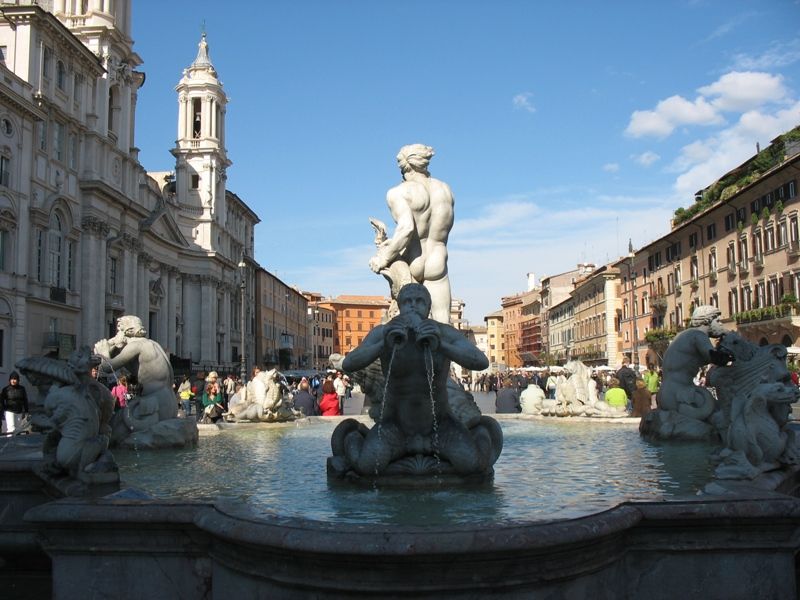
- Piazza Navona on top of the old Stadium of Domitian, plus Bernini’s Fountain of the Four Rivers
- End at Campo de’ Fiori with the bronze statue of Giordano Bruno
Starting in Piazza Barberini: a smart launch point
Most fountain-and-piazza tours start with you getting your bearings, and this one does that well. The meeting point is in Piazza Barberini, right by the fountain, so you’re not guessing where to line up or wandering first. It also sets the rhythm: you’re about to walk through Rome at a pace that makes sense for a tight two hours.
If you like going from sight to sight without feeling rushed, you’ll appreciate the structure. This is a walking tour, but it’s paced for stops where you can actually notice details: where the light hits the stone, how the buildings frame the square, and why fountains became meeting points long before phones existed.
One practical note: wear comfortable shoes. The itinerary is mostly central Rome, but you’ll still be on your feet for long stretches. Rome’s classic “I’m fine” shoe choice is often what decides whether you love the tour or just survive it.
You can also read our reviews of more tours and experiences in Rome.



Piazza di Spagna and the 135 steps: baroque drama in plain sight
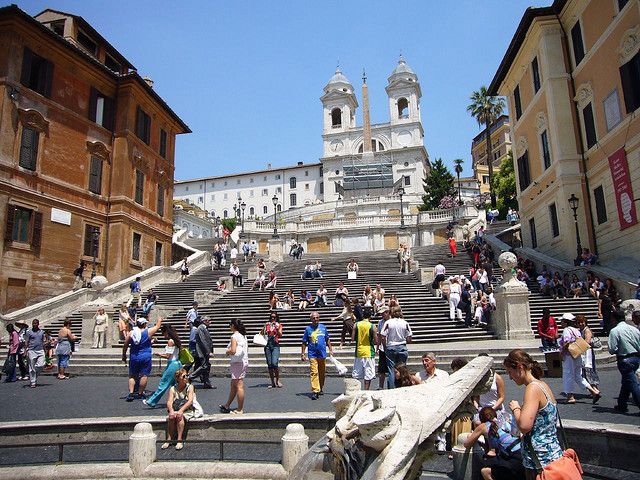
After Piazza Barberini, the next anchor is the Piazza di Spagna at the base of the Spanish Steps. This is one of those places where Rome’s architecture does double duty: it’s gorgeous, and it’s functional. The steps connect the historic Bourbon Spanish Embassy with the church Trinità dei Monti at the top—so even if you don’t climb all the way, you’re still watching the city’s design tell a story.
Then you’ll get to Fontana della Barcaccia, a Baroque fountain shaped like a half-sunken ship. This is the kind of fountain that makes you pause because it doesn’t look like the usual “pretty water bowl.” The design is theatrical. The water, the sculpture, the way it sits in its setting—everything is meant to feel like a moment, not just an object.
If you’re traveling with kids or you want a tour that doesn’t assume you’re all-in on long walks, this is a great section. Even just standing near the fountain and taking in the Spanish Steps view gives you plenty to talk about without demanding energy.
Trevi Fountain with the coin ritual: more than a photo stop
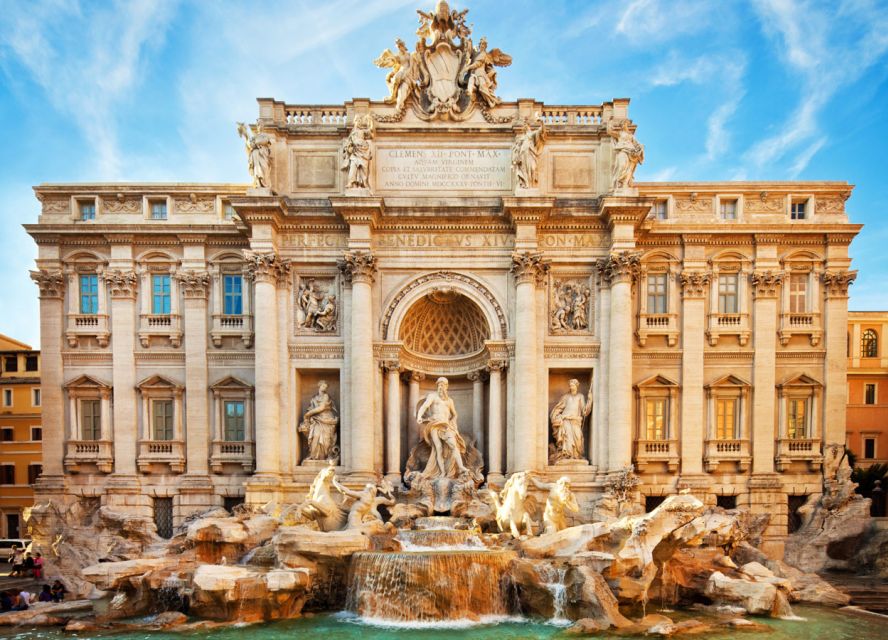
Next comes the Trevi district and Rome’s most famous fountain, the Trevi Fountain, with the Palazzo Poli setting the backdrop. It’s crowded, yes—but here’s the trick: crowds don’t automatically ruin it. They just mean you need a guide who helps you look past the swirl of people.
You’ll get the tradition built into the stop: throwing a coin into the water so you return one day. It’s simple, but it works. The ritual gives you a reason to pause, take a breath, and actually look at what you came for.
More importantly, a good guide helps you notice the fountain as art and architecture, not just a bucket of water. You’ll want to watch how the fountain’s design reads from different angles—because in a place like Trevi, the crowd blocks your view in one direction but opens it up in another. If your group moves as a unit (small-group tours help here), you’ll keep gaining better sightlines instead of getting stuck.
Drawback to consider: Trevi can be a bottleneck. If you’re sensitive to crowds, arrive mentally ready to stand for a few minutes and focus on details rather than expecting breathing-room.
Pantheon interior time: the dome trick that still blows minds
After Trevi, the tour heads to the Pantheon, dedicated to the Olympian gods. The building is one of the best preserved monuments of Ancient Rome, and that matters because it’s not just another pretty facade—this one still does its job as a working architectural statement.
Once inside, you can marvel at one feature that tours almost always highlight for a reason: the world’s largest non-reinforced concrete dome. That phrase can sound technical, but standing under it is different. The dome’s scale and engineering feel almost unreal, and you quickly understand why the Pantheon has been a reference point for centuries.
This stop is valuable for two reasons. First, it gives you the chance to see Roman architecture from the inside, where the space teaches you how it’s meant to feel. Second, it breaks up the “fountain sightseeing loop.” You’ve been outside most of the day; now you get interior architecture that anchors the whole trip in Rome’s older past.
One practical caution: the tour is only two hours total. That means you should think of the Pantheon stop as guided time plus a quick look, not a long sit-and-stare museum visit. If you want extra time at the Pantheon beyond what fits into a walking route, plan to return later on your own.
Piazza Navona: Bernini’s Four Rivers in a former stadium footprint
From the Pantheon, the walk continues to Piazza Navona. This square is built on the site of the Stadium of Domitian—so even though it looks Baroque, you’re standing on layers. That kind of “history under your feet” is one reason Rome tours feel like cheat codes: you don’t just see art, you see the city’s evolution.
Piazza Navona is one of Rome’s most elaborate Baroque squares, and one highlight is Bernini’s Fontana dei Quattro Fiumi (Fountain of the Four Rivers). This is where you can slow down and actually study the fountain’s symbolism. The sculptures and the composition aren’t just decorative; they’re part of how Baroque Rome communicated power and wonder using stone, water, and dramatic staging.
If you like photos, this is a good place to take a few from different corners. Like Trevi, one view won’t capture everything. But unlike Trevi, Piazza Navona often feels more controllable—especially if your group has a clear meeting rhythm for everyone to gather and move on.



Campo de’ Fiori and Giordano Bruno: the tour’s sharp, human ending
The tour ends at Campo de’ Fiori, the Field of Flowers. The name is a reminder that city spaces change. This square was a medieval market, and it later became a public execution site.
At the center of the square, you’ll see a bronze statue of Giordano Bruno. He was burnt at the stake for heresy in 1600. This is a heavier note than fountains and family-friendly legends, and that’s exactly why it works as an ending. Your brain has been soaking up art and spectacle, then the tour closes with a reminder that history is not just pretty buildings—it’s decisions, beliefs, consequences.
If you’re traveling with kids, you can still handle this part well. The best guides keep it age-appropriate and focused on context rather than shock value. It’s also a natural moment to ask questions, since the statue is right there and the story is immediate.
What you actually get for $74: worth it if you want help seeing
At $74 per person for a 2-hour walking tour, you’re paying for more than movement between landmarks. You’re paying for someone to connect the dots: Baroque versus Renaissance, symbolism versus decoration, and Roman engineering versus “look at the cool dome.”
Small-group format is usually where the value shows up. You’ll get a better chance to ask questions and keep moving at a pace that fits your group. And the guide support matters because these sites can blur together when you walk them solo. A fountain’s story, a square’s layout, a dome’s engineering detail—once someone points those things out, the experience sticks.
Here’s the fair trade-off: a short tour can’t cover everything. It’s built for efficient highlights, not deep museum time. If you expect a long, stop-and-explain every alley and every side chapel, you may feel rushed.
And one more real-world note from the pricing perspective: some similar tours bundle entrance costs, while others may not. Since the Pantheon is part of the route, it’s worth checking what’s included in your specific booking so you don’t get surprised later.
Who this tour fits best (and who should choose something else)
This is a strong fit if you want:
- a tight itinerary with fountains and major piazzas
- a guided route that helps you understand what you’re looking at
- a tour that can handle mixed energy levels (families with kids, people who can’t do long sightseeing sprints)
It may be less ideal if you:
- want a slow, unhurried day where you can linger for an hour at each major site
- hate crowds and aren’t willing to stand in lines at the biggest attractions (Trevi is the main one)
- prefer a more flexible route where you can skip stops without recalculating your day
Guide quality really matters here
This is where the reviews’ strongest theme shows up: guides can make or break a short tour, and the guides you might get—Felice, Federica, and Luisa are examples—tend to be the kind who watch the group and adapt.
You can also benefit from practical kindness. One guide helped a group catch a cab after rain hit right as the tour ended, which tells you something useful: you’re not just buying commentary; you’re getting a person managing real-life travel moments.
That kind of attention is especially helpful on fountain tours because weather and crowds can change how the sites feel. When you have a guide, you get a plan and backup.
Should you book this Fountains and Squares walking tour?
Book it if you want a smart, two-hour way to hit Rome’s fountain highlights in a route that makes sense: Spanish Steps and Fontana della Barcaccia, Trevi and the coin ritual, Pantheon interior with the dome, Piazza Navona with Bernini, and a thoughtful end at Campo de’ Fiori with Giordano Bruno.
Skip it (or compare carefully) if $74 per person feels too steep for you, especially if you’re hoping to bundle entrance costs that may require extra planning. Also consider whether you can handle crowds around Trevi.
If your goal is to leave Rome’s “greatest hits” with real understanding instead of just memory-card images, this is a good bet.
FAQ
How long is the Fountains and Squares of Rome walking tour?
It lasts 2 hours.
Where does the tour start and where do you meet the guide?
The guide waits in front of the fountain in Piazza Barberini.
What’s included in the price?
You get a live guide and a small group tour.
Are hotel pickup and drop-off included?
No, hotel pickup and drop-off are not included.
What are the main stops on the tour?
You’ll see Piazza di Spagna and the Fontana della Barcaccia, the Trevi Fountain, the Pantheon, Piazza Navona with Bernini’s Fountain of the Four Rivers, and Campo de’ Fiori.
Does the tour include anything at Trevi Fountain?
Yes. You’ll throw a coin in the Trevi Fountain.
Is Pantheon included, and what will I be able to see?
The tour includes a stop at the Pantheon, where you can marvel at the world’s largest non-reinforced concrete dome.
What language will the guide speak?
The live tour guide offers English and Italian.
What should I bring?
Bring comfortable shoes.
What’s the cancellation policy?
Free cancellation is available up to 24 hours in advance for a full refund.