REVIEW · GUIDED
Divine Masterpieces: Guided Tour of Rome’s Churches and Art
Book on Viator →Operated by Rome Tours · Bookable on Viator
Rome’s churches tell stories fast.
This small-group walking tour strings together four major sites, so you see how Christian art and architecture shaped everyday Rome. You’ll also get insider context for what you’re looking at, from early relic legend to later papal power, while the guide keeps the pace friendly and question-friendly.
I love the included church entries—it saves time and hassle—and I love how the stops feel connected instead of random. One especially popular guide in the feedback, Donatella, gets praised for clear explanations and for taking questions seriously, so you’re not just watching from the sidelines.
One possible drawback: it’s still a walk, and the time can stretch. The tour is listed at about 2 hours, but feedback notes it can run closer to 3, so wear comfortable shoes and don’t plan on sprinting afterward.
In This Review
- Key things to know before you go
- Churches Before the Crowds: What This 2-Hour Plan Really Gives You
- Small Group, Four Big Interiors, and Time to Ask Questions
- Stop 1: San Pietro in Vincoli and Michelangelo’s Moses
- Stop 2: Santa Maria Maggiore, the Snowfall Legend, and Papal Status
- Stop 3: Santa Pudenziana—4th-Century Origins and Mosaic Focus
- Stop 4: Arcibasilica di San Giovanni in Laterano and the Power of the Papacy
- Price and Value: Is $202.58 Worth It?
- Logistics You’ll Feel on the Ground (and How to Prepare)
- Who Should Book This Church Art Tour?
- Should You Book Divine Masterpieces: Guided Tour of Rome’s Churches and Art?
- FAQ
- FAQ
- How many churches are visited on this tour?
- How long is the guided tour?
- Is entry to the churches included in the price?
- What is included in the $202.58 per person price?
- What group size should I expect?
- Do I get a mobile ticket?
- Where do I meet and where does the tour end?
- Is free cancellation available?
Key things to know before you go
- Four stops, one focused theme: churches and sacred art tied together in a single route
- Small group (max 10): easier questions and quieter moments inside
- Entry inside each monument is included: less logistics, more time looking
- Relics, mosaics, and papal history: you’ll connect art to belief and politics
- A guide who explains, not just recites: Donatella is singled out for especially clear storytelling
Churches Before the Crowds: What This 2-Hour Plan Really Gives You
Rome has world-famous sights, but the church interiors are where the city quietly shows off. This tour is built for that. Instead of rushing through landmarks, you slow down in four places that matter for early Christianity and for how the papacy later shaped art and power.
You’ll be moving on foot, stop by stop, with time set aside to ask questions. That matters because church art can look like decoration until someone explains what it’s pointing to—relics, legends, devotion, and changing leadership over time.
You can also read our reviews of more guided tours in Rome



Small Group, Four Big Interiors, and Time to Ask Questions
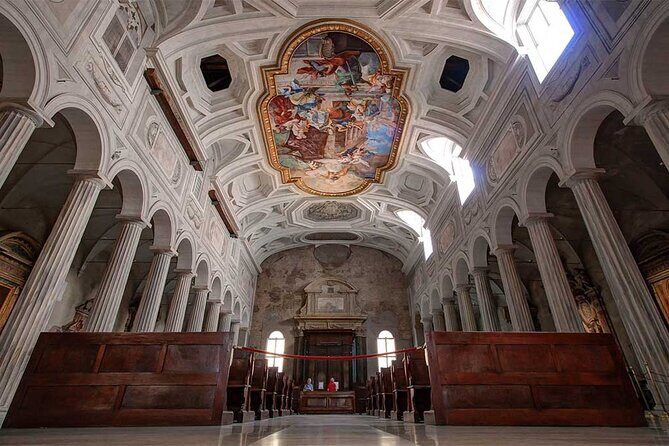
The tour runs on a small-group format with a maximum of 10 people. That’s a real advantage in Rome’s church spaces, where sound carries and crowd energy can turn a calm visit into a shuffle. With fewer people, you’re more likely to actually see details—inscriptions, sculpture, and mosaic surfaces—rather than just passing through.
Another practical win: entrance inside the monuments is included. That means you spend more time inside the churches and less time sorting tickets while everyone else funnels toward the same doors.
Stop 1: San Pietro in Vincoli and Michelangelo’s Moses
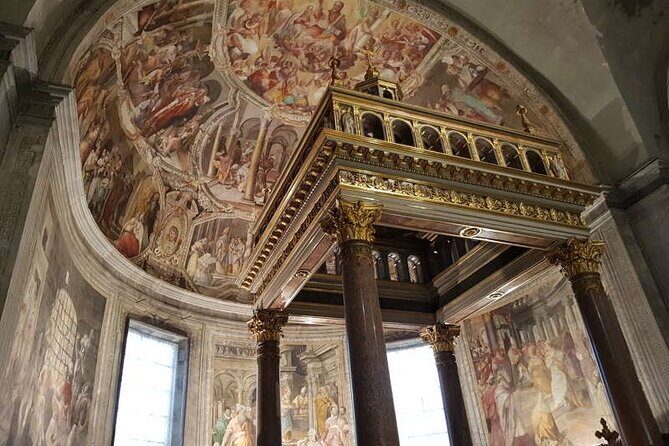
San Pietro in Vincoli (Basilica di San Pietro in Vincoli) is a great opener because it mixes relic devotion with high art. The basilica was built in the 5th century specifically to enshrine the chains believed to have held Saint Peter during imprisonment in Jerusalem. That relic connection gives you an immediate “why this place exists” story before you even get to the art.
Here’s the headline art detail: the basilica houses Michelangelo’s masterpiece, the statue of Moses. Even if you’re not an art expert, you’ll likely appreciate the way this church links early Christian meaning to later Renaissance genius. The result is a strong first contrast: early faith tradition on one side, monumental sculptural storytelling on the other.
Time check: you’re scheduled for about 30 minutes. In practice, that’s enough to listen, look up and around, and still feel like you didn’t just step through.
Stop 2: Santa Maria Maggiore, the Snowfall Legend, and Papal Status
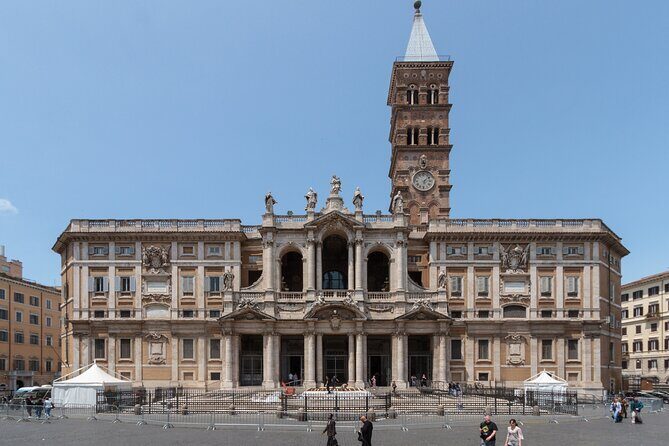
Next comes Basilica di Santa Maria Maggiore. If you’re thinking, “Okay, but what makes it different from other big churches?” this stop answers that fast.
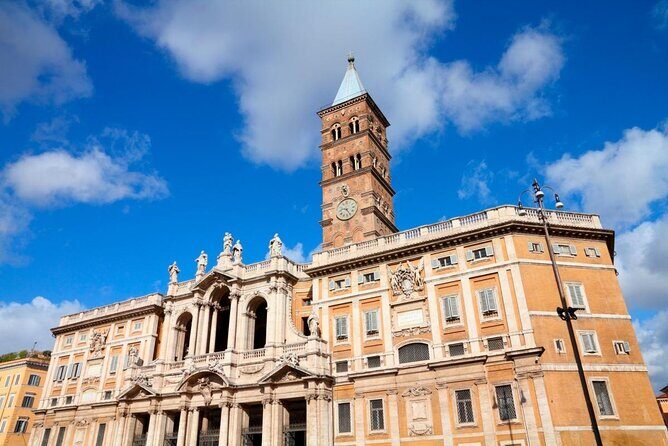
This is the largest church dedicated to the Virgin Mary in Rome, and it’s one of the four papal basilicas. So it’s not only devotional—it’s institutional. You’ll also hear the tradition about Pope Liberius dreaming of the Virgin Mary and being instructed to build a church in her honor.
Then comes the famous legend tied to weather and faith: a miraculous snowfall on August 5th marked the location for the basilica. The annual celebration commemorates it with white flower petals dropped from the ceiling.
That detail is more than a cute story. It helps you understand how Rome uses ritual to keep a legend alive year after year. When you see the architecture after hearing the legend, the building feels less like a static monument and more like a working memory of belief.
You’ll also get about 30 minutes here, which is enough to absorb the story and still spend time looking around the interior rather than skimming.
Stop 3: Santa Pudenziana—4th-Century Origins and Mosaic Focus
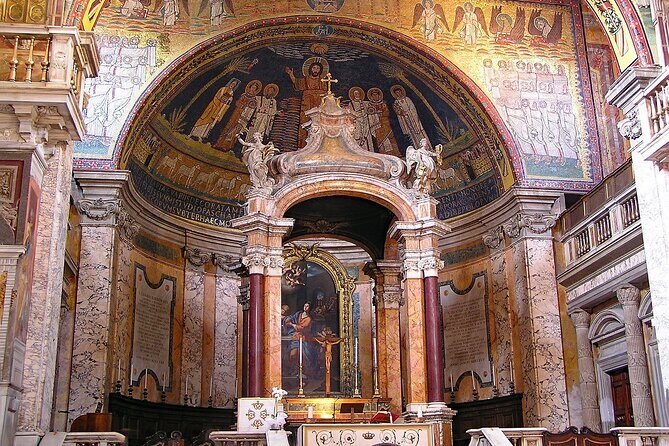
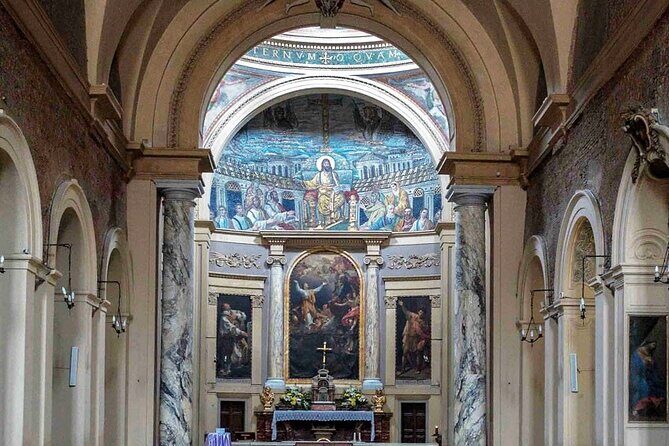
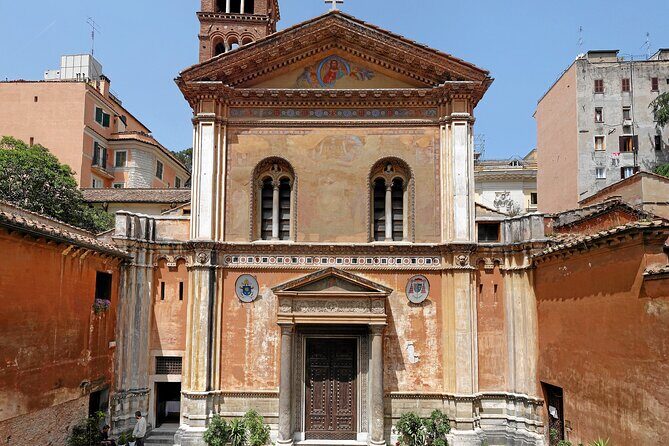
Basilica of Santa Pudenziana is a quieter, more mystery-filled stop than the first two. It’s a 4th-century church dedicated to Saint Pudentiana, described traditionally as the sister of Saint Praxedis and the daughter of Saint Pudens.
One interesting wrinkle you’ll likely hear: some scholars suggest Pudentiana may not have been a historical person, but instead may have been an epithet linked to Domus Pudentiana, the house of Pudens. That kind of nuance matters because it shows you that early church identity isn’t always cut-and-dried—you’re seeing faith, memory, and family names overlapping.
The big visual reason to come here: the mosaics. The tour frames Santa Pudenziana as an example of early Christian art integrating faith with Roman culture. Even without a deep art background, you can usually tell when a mosaic program is meant to teach—your guide’s explanations help you read the “message” behind the imagery.
Again, expect about 30 minutes inside. If you’re the type who loves slow looking, this is likely the stop where you’ll want a bit more time.



Stop 4: Arcibasilica di San Giovanni in Laterano and the Power of the Papacy
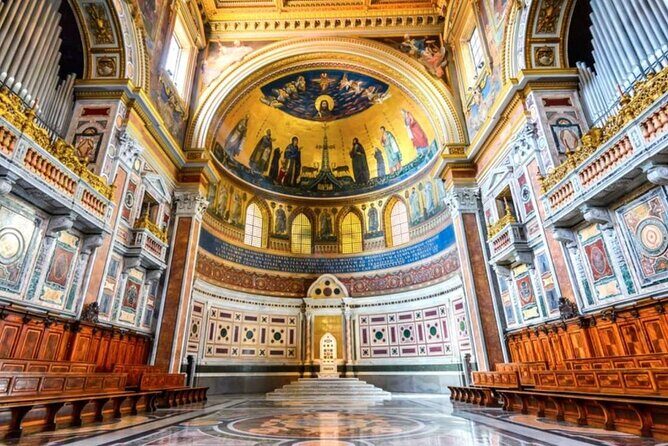
Your final stop is Arcibasilica di San Giovanni in Laterano, also known as St. John Lateran. This is a big deal in church geography, because it’s described as the first Christian basilica in Rome.
The tour connects it to Emperor Constantine: the basilica was commissioned by him and consecrated in AD 324. It then held the title of the most important church in Christendom for a millennium. Even more important for modern context, it served as the pope’s principal place of worship until the late 14th century.
Today, it continues to function as Rome’s official cathedral and the papal seat. In other words, the meaning didn’t vanish after the Middle Ages. The role changed, but the central authority remained.
This is where the tour’s theme snaps into focus: you’re not just looking at beautiful churches. You’re walking through how Rome’s sacred spaces helped shape power, tradition, and artistic priorities over centuries.
Your schedule gives you about 30 minutes, and the tour ends here, at the basilica itself.
Price and Value: Is $202.58 Worth It?
At $202.58 per person, you might wonder if this is priced like a premium guided experience. Here’s how to judge the value using what’s actually included.
The tour includes:
- a professional licensed guide
- all fees and taxes
- entrance inside four historic churches
- a mobile ticket
It does not include personal expenses or tips.
For many church-focused tours, the cost rises when you add entrance fees and the time spent managing tickets. This one removes that friction. You’re paying for a guide plus guaranteed access to interiors across four stops. With a small group size, you’re also paying for a more personal pace—more time to ask questions and actually hear what the art and architecture mean.
Two more value signals show up in the feedback:
- the guide style is praised for explanation and friendliness
- the experience can run longer than the posted 2 hours, which usually means you’re getting more time in the churches (especially if questions come up)
So if your goal is to understand rather than just check boxes, this price can feel fair.
Logistics You’ll Feel on the Ground (and How to Prepare)
This is a walking tour with moderate physical fitness suggested. That’s not a deal-breaker, but it does affect how you plan your day.
Plan for:
- comfortable shoes, since you’ll be moving between multiple church interiors
- a calm mindset—church spaces are quieter and slower when you’re actually looking
- extra time buffer, because the tour can run longer than the listed duration
The meeting point is Via del Cardello, 31, 00184 Roma RM, Italy. The tour ends at Basilica di San Giovanni in Laterano, P.za. San Giovanni In Laterano, 00184 Roma RM, Italy. Ending near a major cathedral area can be convenient for continuing your day on foot, as long as you’re ready for another walk.
Who Should Book This Church Art Tour?
This is a strong fit if you want:
- a small-group pace
- four church interiors in one outing
- explanations that connect relic stories, traditions, and art details
- a route that feels like it shows you a side of Rome beyond the most crowded icons
It may be less ideal if you:
- hate walking between sites
- want a strictly timed schedule with no chance of extension
- are only interested in one or two churches and would rather tailor your own route
If you’re on the fence, this is the type of experience that tends to work best when you’re willing to slow down and pay attention.
Should You Book Divine Masterpieces: Guided Tour of Rome’s Churches and Art?
I’d book it if you care about meaning, not just photos. Four churches across early Christian roots, Marian devotion, mosaic artistry, and papal power gives you a satisfying arc in a short time. And because entry inside is included, you avoid a common Rome problem: paying for guidance but still spending half the outing on logistics.
Skip it if you want a super-fast hit-and-run tour. You’ll be walking, you’ll be spending real time inside, and the experience can stretch beyond the posted duration.
FAQ
FAQ
How many churches are visited on this tour?
You visit four historic churches during the tour: San Pietro in Vincoli, Santa Maria Maggiore, Santa Pudenziana, and Arcibasilica di San Giovanni in Laterano.
How long is the guided tour?
The tour duration is listed as about 2 hours. Some visits have run longer, depending on the flow of questions and the pace inside the churches.
Is entry to the churches included in the price?
Yes. Entrance inside the monuments is included.
What is included in the $202.58 per person price?
The price includes a professional licensed guide, all fees and taxes, and entrance inside the monuments. Tips and personal expenses are not included.
What group size should I expect?
The tour has a maximum of 10 travelers.
Do I get a mobile ticket?
Yes, the tour uses a mobile ticket.
Where do I meet and where does the tour end?
You start at Via del Cardello, 31, 00184 Roma RM, Italy, and the tour ends at Basilica di San Giovanni in Laterano, P.za. San Giovanni In Laterano, 00184 Roma RM, Italy.
Is free cancellation available?
Yes. Free cancellation is available up to 24 hours in advance of the experience start time for a full refund.