Few places feel this close to gladiators. This guided circuit takes you into the Colosseum underground and out onto the arena floor, then continues to the Roman Forum and Palatine Hill. It’s the combo most people miss when they only do the main level, because you get the behind-the-scenes spaces where the spectacle was staged.
Two things I really like: first, you get headset audio and a small maximum group size (7), so you actually hear the story while you’re walking through narrow areas. Second, the tour builds in photo moments, including views from the panoramic terrace and the chance to reach the arena area through the Gate of Death for classic angles.
One consideration: this is a timed, guided experience with a moderate walking requirement, and the underground portions include tight corridors and stairs. If you don’t like confined spaces, plan for that.
In This Review
- Key things to know before you go
- Colosseum Underground and Arena Floor: What This Tour Really Gives You
- Small-group setup: max 7, headsets, and a smoother pace
- Stop 1: The Hypogeum underground tunnels under the Colosseum
- Stop 2: Arena floor access, the Gate of Death, and panoramic terrace photos
- Stop 3: Roman Forum streets, temples, basilicas, and the Sacred Way
- Stop 4: Palatine Hill and the stories tied to rulers’ lives
- How long you’ll be moving and how “moderate fitness” feels
- Price and value: is $98.90 worth it?
- Guides and storytelling: what makes it feel alive
- Who should book this Colosseum Underground + Forum + Palatine Hill combo?
- Should you book it?
- FAQ
- What does the tour cost?
- How long is the tour?
- How many people are in the group?
- What areas of the Colosseum are included?
- Do I get a guide and headset?
- Are entrance tickets included?
- Where does the tour start?
- Where does the tour end?
- What fitness level is required?
- Is the booking refundable or changeable?
- Is confirmation sent after booking?
Key things to know before you go
- Hypogeum (underground) access: You’ll see the narrow passages and rooms tied to the day-of-fight machinery.
- Arena floor time: You step onto the sand-covered wooden central platform where the fights took place.
- Gate of Death photo moment: A direct route to dramatic, iconic pictures.
- Roman Forum + Palatine Hill included: You don’t stop at the Colosseum; you continue into the power center of ancient Rome.
- Small group size (max 7) with headsets: Better comfort and clearer narration.
Colosseum Underground and Arena Floor: What This Tour Really Gives You
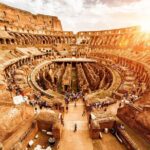
This tour is built around one idea: don’t just look at the Colosseum—get inside what made it work. The standard loop shows you the big shell and the main seating area. Here, you also visit the Hypogeum, the maze-like underground level where gladiators and animals were staged, and you walk out onto the arena floor where the action hit first.
What makes that matter for your trip is simple. When you see the arena level only, it’s easy to treat the Colosseum like a photo spot. Once you understand the underground pathways and drainage systems, the building turns into a working stage. The space suddenly feels more personal, more human, and more like a production than a ruin.
Then the tour keeps going. The Roman Forum and Palatine Hill are the political and residential backbone of ancient Rome. If you pair the gladiator spaces with the places where emperors governed and elites lived, the day adds up to a stronger story.
You can also read our reviews of more guided tours in Rome



Small-group setup: max 7, headsets, and a smoother pace
The experience caps at 7 people, which changes the feel a lot. You’re not getting swept up in a huge group shuffle, and you’re more likely to hear instructions and explanations as you move between sites.
Headsets are included too. In the Colosseum area—especially underground—voices can get lost in echo and crowd noise. With audio in your ear, you can focus on what’s around you instead of trying to read lips or crank your attention up to compensate.
Timing is another part of the value. The tour runs about 2 hours 30 minutes, which is long enough to cover real highlights without turning into an all-day slog.
Stop 1: The Hypogeum underground tunnels under the Colosseum
Your first Colosseum stop centers on the Hypogeum, the underground level often called the gladiators’ waiting area. Expect narrow corridors, sizable travertine blocks, and the kind of architectural layout that makes you understand how people and animals were routed into position.
This is where the Colosseum feels less like an outdoor museum and more like a backstage operation. You’ll see parts of the original floor fragments and the ancient drainage system. That drainage detail matters more than it sounds: it hints at the practical challenge of keeping an arena usable despite spills, water, and heavy daily use during events.
You’ll also be walking through spaces where you can picture “before the moment.” The narration connects these corridors and rooms to the staging of the Flavian Amphitheatre spectacles. Even if you’re not a gladiator-history nerd, the layout does the teaching.
Possible drawback? Tight spaces and uneven footing can feel noticeable in underground passages. If you’re claustrophobic or have balance issues, this is the section most likely to test your comfort.
Stop 2: Arena floor access, the Gate of Death, and panoramic terrace photos
After the underground, you move up to one of the most memorable parts of the whole day: the arena floor. This is the central sand-covered wooden platform where the fights took place. Walking onto it changes your perspective instantly. You’re now on the ground level where combat would have unfolded, not just looking down from the stands.
You also get a special camera moment tied to the route through the Gate of Death. That’s not just a photo gimmick—it helps you frame how entrances worked and how the arena show was staged. Keep your camera ready here, because angles are part of the appeal.
Then the tour continues to the first and second tiers. That matters because you earn better sightlines in stages. From higher levels and terraces, you’ll get classic Colosseum views with room to capture the building in context, not just tight close-ups.
Photo tip that’s actually useful: wear comfortable shoes and go in with the idea that your best shots likely happen at transitions—when the group stops and the guide points out where to stand. With a small group, you can usually adjust your position faster than you could in a crowd.
Stop 3: Roman Forum streets, temples, basilicas, and the Sacred Way
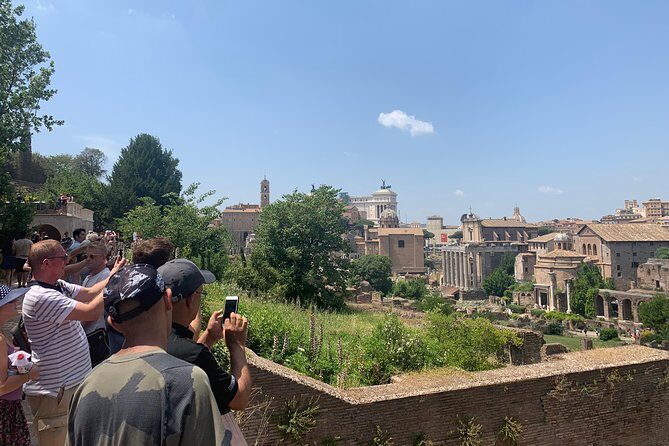
The tour doesn’t treat the Roman Forum as a quick scenic stop. It’s a structured visit to the political and social heart of Rome—where daily life, religion, and public power all intersected.
In practical terms, you’ll be looking at the Roman Forum’s public spaces and sacred areas, plus market zones that reflect how Romans moved through their city’s core. You’ll also see the basilicas where major administrative actions took place and where orators delivered speeches—so the Forum isn’t presented only as ancient stones. It’s tied to how decisions got made and how people persuaded others.
The Sacred Way is another highlight. It’s described as the route used for religious processions, which gives you a clearer sense of the Forum’s role in ritual and ceremony, not only government.
A balanced caution: the Forum area is spread out and can be crowded depending on the time of day. Your best advantage is that you’re with a guide and a headset, so you’re less likely to wander and waste your energy guessing where to look next.



Stop 4: Palatine Hill and the stories tied to rulers’ lives
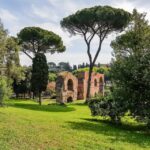
From the Forum, you head to Palatine Hill, where tradition places the founding of Rome around 753 B.C. The visit connects the hill to names and eras that shaped the city’s image—Mark Antony, Cleopatra, Julius Caesar, and later imperial life.
This stop is about scale and imagination. You’re surrounded by ruins that suggest grandeur: the luxurious residences of Roman emperors and the day-to-day realities of the people who lived in the highest-status zone of the city.
If you like your sightseeing tied to real people, Palatine Hill is where the tour’s narrative pays off. You’re seeing a location, but the guide links it to how elite Roman life looked and how power was displayed through architecture and space.
Possible drawback? This is still walking through uneven, ancient terrain. Even with moderate fitness requirements, you should expect to move steadily and take short pauses when the guide checks the group.
How long you’ll be moving and how “moderate fitness” feels
The tour runs about 2 hours 30 minutes total, with time split across underground Colosseum access, arena floor viewing, and the Forum/Palatine Hill portions. In other words, it’s not a sit-and-stare museum tour.
The tour is listed for a moderate fitness level. That fits what you’ll actually do: stairs and confined corridors underground, plus outdoor walking among archaeological areas that aren’t flat and polished like modern sites.
If you plan your day around this, do this part early if possible. You’ll likely want some recovery time afterward, especially if you’re also planning additional Rome sights.
Price and value: is $98.90 worth it?
At $98.90 per person, this isn’t the cheapest way to see Rome’s big classics. But it also bundles the pieces that usually cost extra or take time to arrange on your own.
Here’s what’s included:
- headsets
- guided tour with a local official guide
- Colosseum underground entrance fee and arena floor entrance fee
- Roman Forum and Palatine Hill entrance fees
- mobile ticket
Value isn’t only about saving money. It’s also about saving effort. Paying for guided entry helps you make the day efficient—especially for the underground and arena floor, which are the parts that typically involve the most planning.
And because the group is capped at 7, your time tends to feel less rushed. In a building this complex, that matters. You’re not just paying for access; you’re paying for order—someone helping you see what to look at, in the right sequence.
Guides and storytelling: what makes it feel alive
One of the strongest signals from recent experiences is the quality of the guide experience. I’ve seen guides like Claudia, Ginny, and Silvia praised for making the gladiator world and ancient Roman places feel real, not like a memorized script.
That kind of storytelling helps you connect the dots:
- underground corridors become more than a feature
- the arena floor becomes more than a platform
- Forum ruins stop looking random and start mapping to daily life and public decisions
Headsets support this even more, because you can hear the story clearly even while moving.
If you want a tour where the guide does more than recite facts, this is the right style. The pacing also helps: you get a flow from backstage staging (underground), to the performance platform (arena), then to the city’s political engine (Forum) and elite residence zone (Palatine).
Who should book this Colosseum Underground + Forum + Palatine Hill combo?
This tour fits you best if:
- you’ve already seen the Colosseum from the outside or even once before, and you want the next level
- you care about understanding how the Colosseum show actually ran
- you want standout photo angles without spending your whole day searching for good spots
- you prefer small-group movement and clear audio with headsets
- you like getting both the arena and the political center of Rome in one efficient outing
It may not fit as well if you:
- don’t handle tight underground spaces comfortably
- want a super slow, flexible pace with lots of free roaming
- hate walking on old surfaces and stairs
Should you book it?
If your goal is to see the Colosseum in a way most people miss—the underground and the arena floor—then yes, I think this is a smart booking. The price is reasonable when you factor in entrance fees for multiple high-demand areas and the included headsets.
I’d especially recommend it if you want both a dramatic viewpoint (arena floor plus terrace photos) and the context that makes those spaces meaningful (Roman Forum and Palatine Hill). It’s one of the better ways to turn a half-day in Rome into a story you can remember.
If you book, do it early. Limited availability and a small group size mean you’ll want a plan rather than hoping for last-minute luck.
FAQ
What does the tour cost?
The tour price is $98.90 per person.
How long is the tour?
It lasts about 2 hours 30 minutes.
How many people are in the group?
The tour has a maximum group size of 7 travelers.
What areas of the Colosseum are included?
You’ll visit the Hypogeum (Underground) and the arena floor, plus access to parts of the first and second tiers for panoramic views.
Do I get a guide and headset?
Yes. The tour includes a guided experience with a local official guide and headsets.
Are entrance tickets included?
Yes. Entrance fees for the Colosseum underground, Colosseum arena floor, and the Roman Forum and Palatine Hill are included.
Where does the tour start?
The meeting point is Largo della Salara Vecchia (L.go della Salara Vecchia, 00186 Roma RM, Italy).
Where does the tour end?
The tour ends at Colosseum (Piazza del Colosseo, 1, 00184 Roma RM, Italy).
What fitness level is required?
A moderate physical fitness level is recommended due to walking and the underground portions.
Is the booking refundable or changeable?
No. This experience is non-refundable and cannot be changed for any reason.
Is confirmation sent after booking?
You receive confirmation within 48 hours, subject to availability.