REVIEW · COLOSSEUM TOURS
Colosseum, Roman Forum & Palatine Experience
Book on GetYourGuide →Operated by Estaalia · Bookable on GetYourGuide
Three big Roman icons, tied together.
This tour strings together the Colosseum, Palatine Hill, and the Roman Forum into one efficient visit, built for people who want maximum impact without turning the day into a scavenger hunt. You get access to the key areas where gladiators, early power players, and everyday political life all left their mark.
I like that the experience includes entry tickets for all three sites, so you’re not trying to juggle purchases while you’re standing in line. I also like the structure of the walk: you start at the Colosseum, then head up for Palatine’s panoramic views, and finish with the Forum’s street-level context for how Rome actually ran.
One drawback to consider: if you choose the audio or auto-guided option, tech problems can happen. A couple of reports mention audio/app issues that wasted time and even led to late entry, so if you want the smoothest experience, the live guide option is the safer bet.
In This Review
- Key highlights at a glance
- What This Colosseum + Forum + Palatine Tour Actually Gives You
- Booking Price and Ticket Value at a Glance
- Timing: 2.5 to 3 Hours and How to Pace It
- Security Checks First: What to Plan for at the Colosseum
- Entering the Colosseum: Architecture, Atmosphere, and Strategy
- Palatine Hill Views: Where Rome’s Story Starts
- Roman Forum Walk: Politics, Commerce, and Daily Power
- Live Guide vs Audio Guide: Choose Based on How You Travel
- Group Size, Comfort, and What to Bring (So You Don’t Lose Time)
- Not Suitable for Everyone: Mobility Limits Are Real Here
- Provider Reality Check: Estaalia and How to Set Expectations
- Should You Book This Colosseum + Forum + Palatine Tour?
- FAQ
- What’s included in the ticket?
- How long is the experience?
- Are security checks included or skipped?
- Do I get a live tour guide?
- What languages are offered?
- What ID do I need to bring?
- Is this tour suitable for wheelchair users?
- Can I cancel for a full refund?
Key highlights at a glance
- Colosseum + Roman Forum + Palatine Hill tickets included in one purchase
- Palatine Hill viewpoints to help you understand where Rome’s story happened
- Roman Forum walking routes that explain politics and commerce in plain language
- English live guide available, plus optional English audio
- Small group option, which helps you move at a human pace
What This Colosseum + Forum + Palatine Tour Actually Gives You
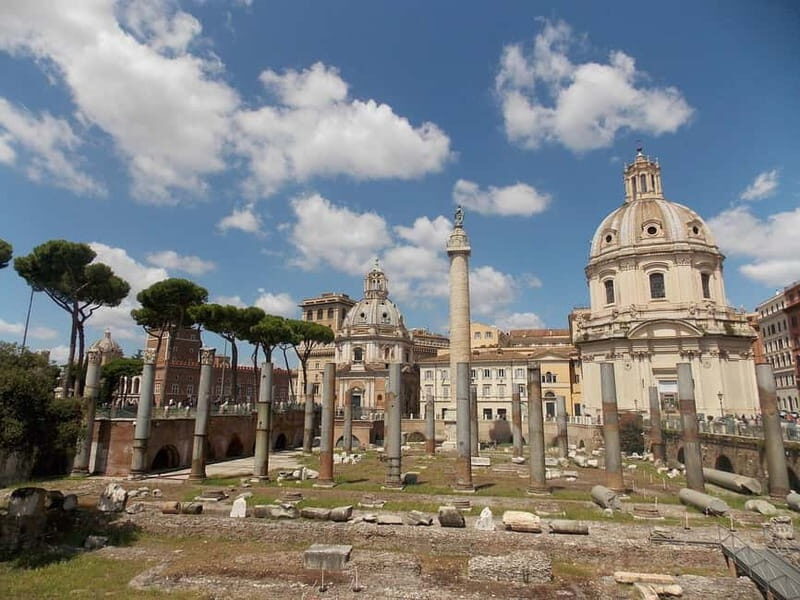
This is a classic Rome combo for a reason. The Colosseum shows you the spectacle side of ancient life—big, loud, built for crowds. The Roman Forum shows you the decision-making side—where power was performed, argued, and managed. Palatine Hill ties it together by placing you above the city, so the map in your head finally clicks.
I like how this format works for real visitors. Two and a half to three hours is enough time to see the essentials and still absorb what you’re looking at, but it’s not so long that you feel dragged through every corner. You get a guided route (or audio, if you pick that option) that helps you avoid the classic problem: standing in front of major ruins and wondering what you’re even supposed to notice.
This also matters for value. You’re paying for guided interpretation plus entrance to three major sites. With Rome ticketing, that combination can be the difference between a smooth day and a day where you lose time re-planning.
You can also read our reviews of more tours and experiences in Rome.



Booking Price and Ticket Value at a Glance
The listed price is about $39.74 per person (price can depend on availability and start time). For a day that includes the Colosseum, Roman Forum, and Palatine Hill, that’s the key value point: your entry to all three is wrapped in, not tacked on separately.
Here’s how I think about value for this tour:
- If you buy separate tickets and try to line everything up yourself, you spend time—time that’s expensive in Rome.
- If you show up with a plan and guidance, you get quicker context. That’s how you leave feeling like you understood what you saw, not just what you photographed.
- If you choose audio, your value depends on whether the tech works for you on the day.
The rating is 3.9 out of 5 from 8 reviews. The overall picture isn’t about the ruins being disappointing—it’s more about how well the self-guided option behaves in practice.
Timing: 2.5 to 3 Hours and How to Pace It
Expect the tour to run 2.5 to 3 hours. That window is long enough to cover all three sites in sequence, but you should still plan your own energy. Comfortable shoes are a must here, because you’ll be walking through uneven surfaces and absorbing details while you move.
Also note that start times vary, so if you’re sensitive to crowds or heat, you’ll want to pick your slot carefully. A morning start can feel easier on your legs and your patience. Either way, it’s smart to arrive early so you’re not stressed about the required security check.
Security Checks First: What to Plan for at the Colosseum
This is not a skip-the-security experience. All visitors must go through mandatory airport-style security checks before entering the Colosseum.
So build in buffer time. Even if you’re on a timed entry plan, security is its own bottleneck. If you’re carrying extra items, it can add friction. This tour also lists clear limits on what’s allowed: no large bags or luggage, no drones, no mobility scooters, and no baby strollers. In other words, pack light and move fast.
Bring an internationally accepted photo ID. The info also says a copy is accepted in some cases. If you’re traveling with kids, have what you need ready (passport or ID documentation for children is specifically mentioned).
Entering the Colosseum: Architecture, Atmosphere, and Strategy
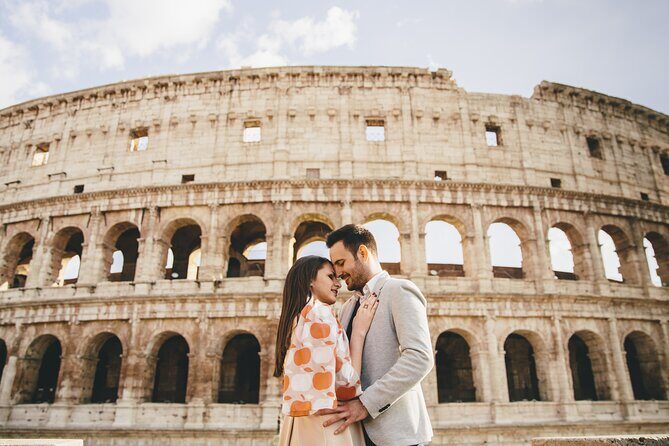
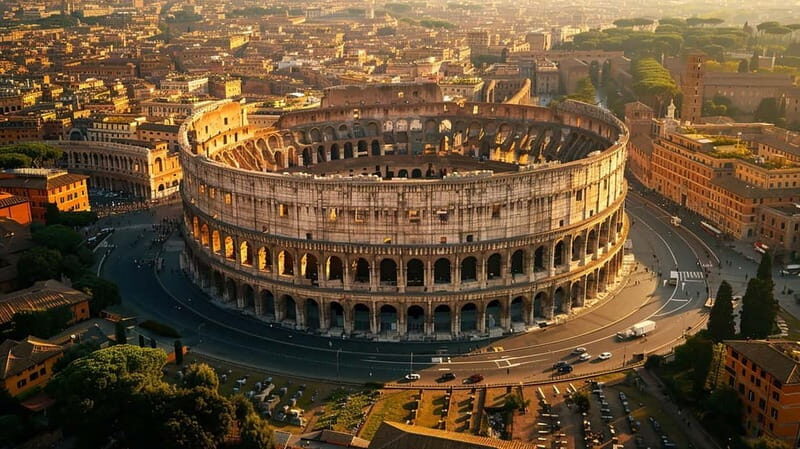
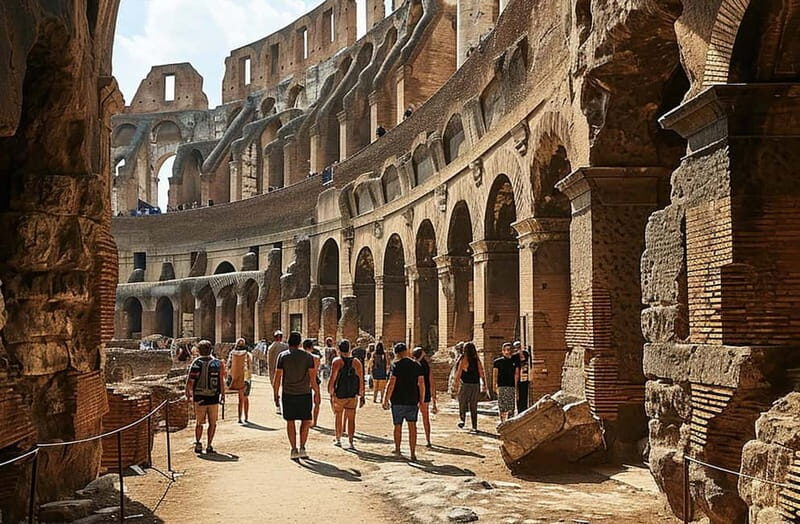
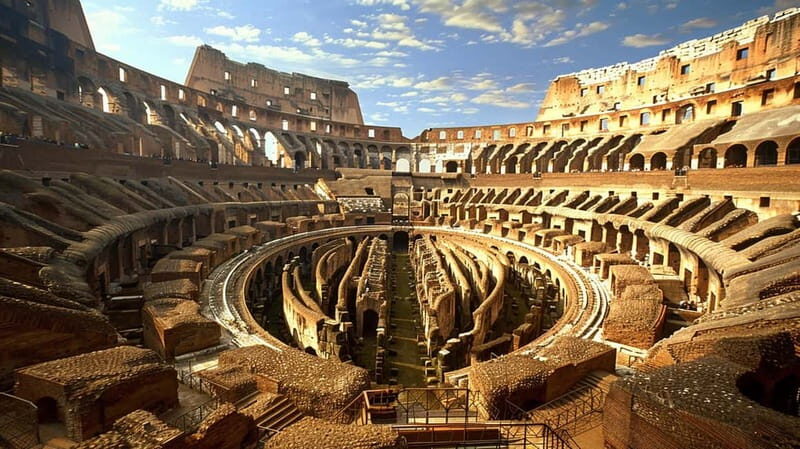
The Colosseum is one of those places where the scale hits you before your brain can catch up. You’ll see the ancient architecture up close and understand why it became the symbol of Rome’s appetite for spectacle.
What makes this stop worth paying for is not just the building itself—it’s the way a guide (or audio) gives you orientation. The Colosseum is huge, and without context it’s easy to miss the key story beats: where the crowd flowed, how the arena functioned, and why the site mattered beyond entertainment.
I also recommend using this first stop to get your bearings for the day. Once you’ve seen the Colosseum, Palatine’s views make more sense, and the Forum becomes easier to picture as a connected city core rather than separate ruins.



Palatine Hill Views: Where Rome’s Story Starts
Palatine Hill is where you get perspective. This is the place often described as Rome’s birthplace, and on your visit you’ll move through viewpoints that help you understand why this hill mattered: elevation, visibility, and control.
I love this part because it flips your angle. At ground level (Forum), things feel busy and political. Up on Palatine, you see how the city sits in the landscape. Even if you’re not a “ruins photographer,” you’ll appreciate the change in viewpoint—it makes the day feel like more than a checklist.
Expect panoramic views as a highlight. Use the view to do a quick mental map: the Colosseum below/near your earlier route, the Forum area you’ll walk next, and the overall sense of how power centered in this region.
Roman Forum Walk: Politics, Commerce, and Daily Power
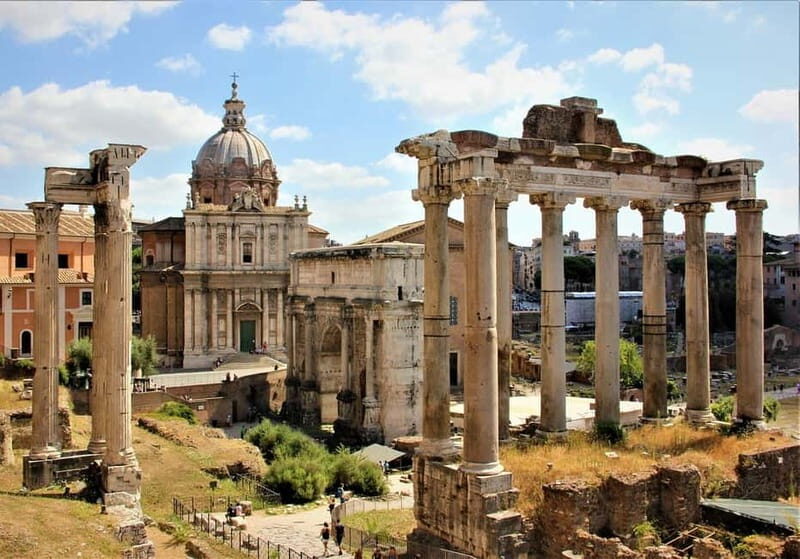
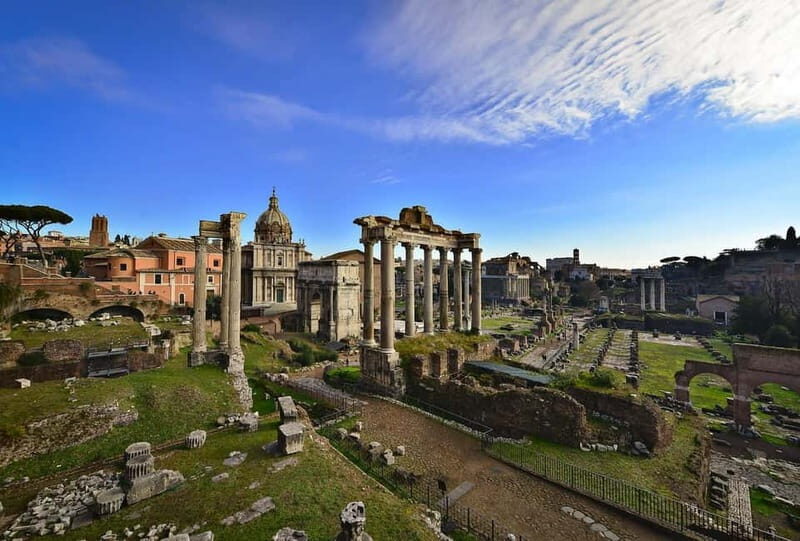
Then you shift from crowds and spectacle to the machinery of governance. The Roman Forum was the heart of ancient politics and commerce, and this part of the tour is where the ruins start to feel like places people actually used—not just monuments.
If you’re trying to understand Rome, the Forum is the stop that helps you connect the dots. You’ll be wandering through the historic core, and the guided storytelling (or audio) is what gives you the “why” behind the “what.” It’s one thing to see stones. It’s another to understand that this was the space where influence was shaped in public.
One practical tip: take a slower moment at the most important clusters of ruins. The Forum covers a lot of ground. If you let the pace carry you, you can end up walking through without absorbing the structure of the stories. Think of it like reading chapters—don’t sprint through the pages that explain everything.
Live Guide vs Audio Guide: Choose Based on How You Travel
This is the section that can make or break your day.
You can book with a live English tour guide or choose an optional English audio guide (or auto-guided approach, depending on your option). Both can work, but your comfort level with tech matters.
Here’s what I’d take seriously from the review feedback you have:
- There are reports where the audio/autoguide didn’t work due to app issues, even when internet connection wasn’t the problem.
- In at least one case, the audio/ticket flow caused enough trouble that people ended up returning later, effectively losing a big chunk of their planned time.
So my advice is simple:
- If you want a stress-free visit, pick the live guide option.
- If you choose audio, make sure your phone is charged and ready, and plan for the possibility that it may not behave perfectly on the day.
If you’re the type who loves going at your own speed, audio can still be fine—but for Rome’s top sites, I’d rather have clear guidance than risk wasted time.
Group Size, Comfort, and What to Bring (So You Don’t Lose Time)
This tour offers a small group available option, which usually means you’ll get more human pacing than a giant bus group. That matters in the Colosseum/Forum area where bottlenecks happen and the walking can feel endless if the group moves too fast.
What to bring:
- Comfortable shoes (non-negotiable)
- A photo ID (passport is mentioned; copies are accepted according to the info)
- For children: passport or ID card for children (the tour guidance specifically calls this out)
What not to bring:
- Pets
- Weapons or sharp objects
- Baby strollers
- Luggage or large bags
- Drones
- Mobility scooters
- Non-folding wheelchairs and non-folding strollers
- Alcohol and drugs
- Sprays or aerosols
- Glass objects
- Unaccompanied minors
- Electric wheelchairs
This list is worth reading because it helps you pack smart. When you travel with a daypack only, you’re less likely to get stuck at security with the wrong item.
Not Suitable for Everyone: Mobility Limits Are Real Here
The activity notes it is not suitable for people with mobility impairments and also says it isn’t suitable for wheelchair users.
That doesn’t mean you can’t enjoy Rome—it means this particular route and site access won’t work well for everyone. If you need mobility support, you should look for an alternative experience designed for your needs. Don’t assume you can “just manage” this one.
Also keep in mind the walk includes several major areas with uneven ground. Even with good intentions, the physical reality of these sites can be tough.
Provider Reality Check: Estaalia and How to Set Expectations
The experience provider is Estaalia. What you’re really buying here is not only entry to major sites—it’s the interpretation (guide or audio) plus a timed plan for moving between them.
Given the review signals around audio reliability, I’d set your expectation like this: the ruins and views are the headline. The tech experience is a secondary factor, and it’s worth choosing the live guide if you want maximum predictability.
If you do go the audio route, plan for a little patience. Tech glitches can happen anywhere, and these sites are not the place where you want to troubleshoot for 30 minutes.
Should You Book This Colosseum + Forum + Palatine Tour?
Yes, you should book if you want:
- One organized visit covering Colosseum, Roman Forum, and Palatine Hill
- Included entry tickets so you don’t spend your day managing transactions
- An English live guide for clearer context (especially helpful at the Forum)
Maybe not, or book with extra caution, if:
- You strongly prefer audio only and you’re dependent on it working perfectly on your phone
- You have mobility limitations and need a more accessible route (this one isn’t marked suitable for wheelchair users)
My practical verdict: if you choose the live guide option, this is a solid way to compress the highlights of ancient Rome into a manageable 2.5–3 hour outing. If you choose audio, you’re taking on extra risk that could cost you time.
FAQ
What’s included in the ticket?
You get Colosseum entry, plus Roman Forum and Palatine Hill entry. The listing also includes either a guide or an audio guide depending on the option you choose.
How long is the experience?
It runs about 2.5 to 3 hours, depending on the start time.
Are security checks included or skipped?
Security checks are mandatory, and the listing notes that skip security checks is not included.
Do I get a live tour guide?
Yes—English live tour guide is available. There’s also an optional English audio guide if you choose that option.
What languages are offered?
The language offered is English.
What ID do I need to bring?
You should bring an internationally accepted photo ID. The info says a passport is accepted and that a copy may be accepted. Children need the required passport or ID card documentation.
Is this tour suitable for wheelchair users?
No. The tour is not suitable for wheelchair users and is also marked as not suitable for people with mobility impairments.
Can I cancel for a full refund?
Yes. It offers free cancellation up to 3 days in advance for a full refund.
If you tell me which option you’re considering (live guide or audio), I can help you pick the best start-time strategy and the smartest way to pack for the security line.