REVIEW · COLOSSEUM TOURS
Colosseum, Palatine and Forum tour with virtual guide
Book on Viator →Operated by Touring Fixer · Bookable on Viator
A time-travel walk, minus the crowd stress.
This virtual guide route is designed to connect the Colosseum, Palatine Hill, and Roman Forum into one easy story, with you moving through Rome’s big “wow” moments at your own rhythm. It’s offered in English, and it’s timed so you can actually process what you’re seeing, not just rush past it.
I like two things a lot. First, you get admission tickets included, so the ticket piece isn’t an extra puzzle during your day. Second, the stop lengths (about 2 hours for the Colosseum, then 1 hour each for Palatine and the Forum) give you enough time to focus on what matters rather than doing a quick hit.
One drawback to keep in mind: this is a virtual-first experience, so if you want lots of back-and-forth conversation or dense commentary for every single corner, you might feel you want more. One review even flagged that the commentary could be more detailed building-by-building.
In This Review
- Key highlights you’ll actually feel during the visit
- How a virtual guide changes the classic Colosseum plan
- Entering the Colosseum: 2 hours with ticketed access
- Palatine Hill: Rome’s origin story under your feet (1 hour)
- Roman Forum: politics, law, religion, and the economy (1 hour)
- Timing, meeting point, and building a smooth Rome day
- Price and value: what you get for the $59 rate
- Who should book this virtual Colosseum–Palatine–Forum tour
- Practical tips to make the virtual guidance actually work
- Should you book this tour?
- FAQ
- How long is the Colosseum, Palatine and Forum tour?
- Is the virtual guide available in English?
- Where do I meet for the tour?
- Are admission tickets included?
- What group size should I expect?
- Is the tour suitable for people who need service animals or accessibility support?
- What’s the cancellation policy?
Key highlights you’ll actually feel during the visit
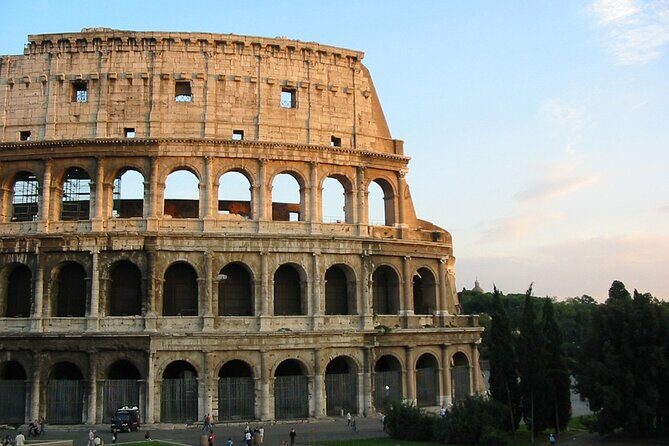
- 2 hours in the Colosseum with ticket included, enough time to orient yourself.
- Palatine Hill in 1 hour on the ground where Rome’s origin story begins.
- Roman Forum in 1 hour focused on politics, law, religion, and the economy.
- English virtual guide so you can understand what you’re looking at without a live escort.
- Maximum 30 people, which helps keep the overall vibe from getting chaotic.
- Starts at Piazza del Colosseo and ends back at the same spot.
How a virtual guide changes the classic Colosseum plan
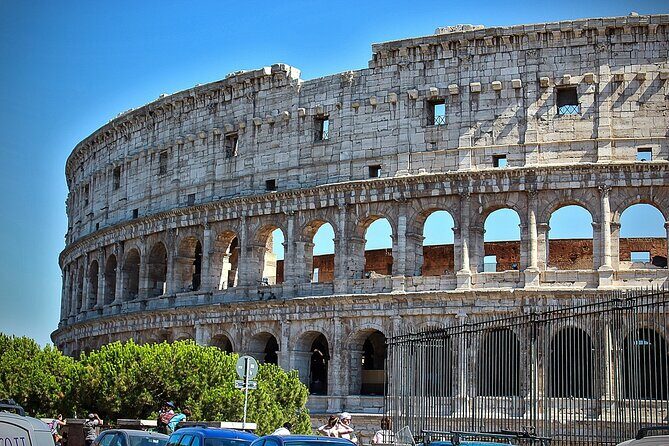
The Colosseum, Palatine Hill, and Roman Forum are the kind of places where a live guide can be amazing—if you like that marching pace. This tour takes a different approach. The virtual guide format means you’re not trapped waiting for someone to catch up, and you can slow down when something clicks.
You also get a clear sequence: Colosseum first, then Palatine Hill, then the Forum. That order matters because it helps your brain build cause-and-effect. You see the spectacle (Colosseum), then the power base (Palatine), then the government and religious life (Forum). Even if you already know the big names, the way those ideas connect tends to land better when you’re not switching guides every 20 minutes.
The English language option is another practical win. You’re there for visual impact, sure—but the payoff is understanding what you’re seeing, not just standing next to it.
You can also read our reviews of more guided tours in Rome



Entering the Colosseum: 2 hours with ticketed access
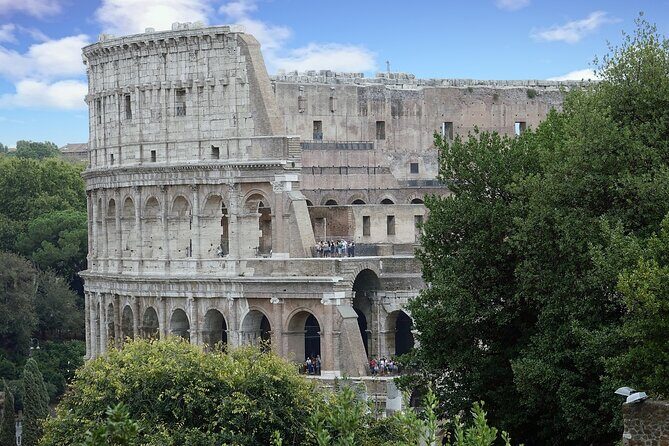
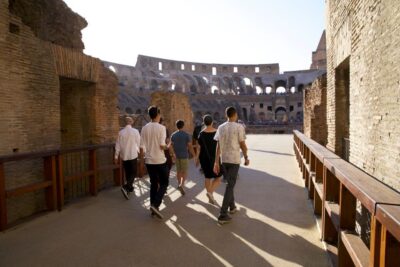
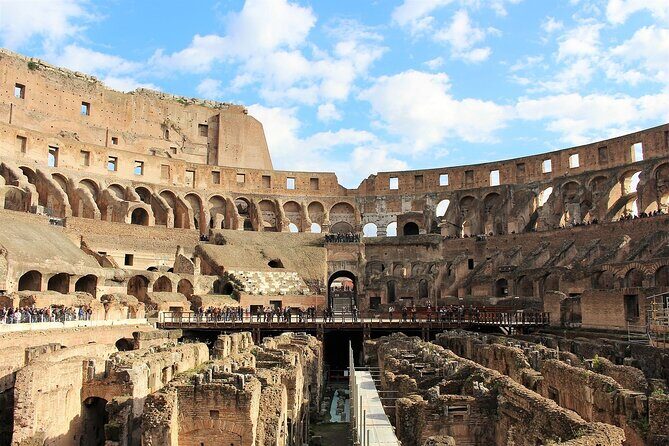
The tour begins at Piazza del Colosseo, which is exactly where you want to start if your goal is a clean, simple day. From there, you head into the Colosseum for an estimated 2 hours, and the admission ticket is included.
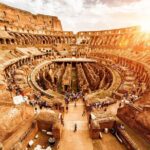
What makes this stop work well is the time. Two hours is long enough to do more than a photo sprint. You can take moments to look at structure and layout, then let the stories in the guide make sense of what you’re seeing. The Colosseum is often described as one of the world’s “seven wonders,” and once you’re inside, that label feels less like marketing and more like a reality check.
A big part of enjoying the Colosseum is orientation. You’ll want to give yourself at least some of that first hour to figure out where you are relative to entrances, main viewing areas, and how sightlines work inside the amphitheater. With virtual guidance, the advantage is that you can pause and reposition without needing a group countdown behind you.
Small caution: if you’re the type who gets bored unless every segment is constantly interactive, a virtual-only approach may feel a bit one-way. You’ll still get explanations, but it won’t have the same back-and-forth energy as a live guide.
Palatine Hill: Rome’s origin story under your feet (1 hour)
Next comes Palatine Hill, scheduled for about 1 hour, again with ticket included. The Palatine is special because it isn’t just another scenic viewpoint. This is the hill on which Rome’s origin story is rooted—so the ground you’re standing on is part of the myth and the early settlement narrative.
And yes, the Palatine is also where you’ll feel the scale of imperial ambition. The guide’s job here is to connect “this is where Rome began” with “this is where Rome’s rulers later defined power.” When that connection lands, the hill becomes more than ruins on a slope. It starts to feel like the physical map of how Rome’s leadership thought about itself.
The one-hour timing is a good match for Palatine. You’re not trying to do everything in one exhausting go, but you can still catch the most meaningful sections and viewpoints that make the hill worth the detour. If your main goal is to understand how the emperors’ world sat above the city, you’ll likely appreciate the focused pacing.
Practical takeaway: Palatine can involve uneven footing and lots of stairs. Wearing shoes that handle Rome’s stone surfaces is non-negotiable, and taking breaks when you need them is smarter than trying to power through.
Roman Forum: politics, law, religion, and the economy (1 hour)
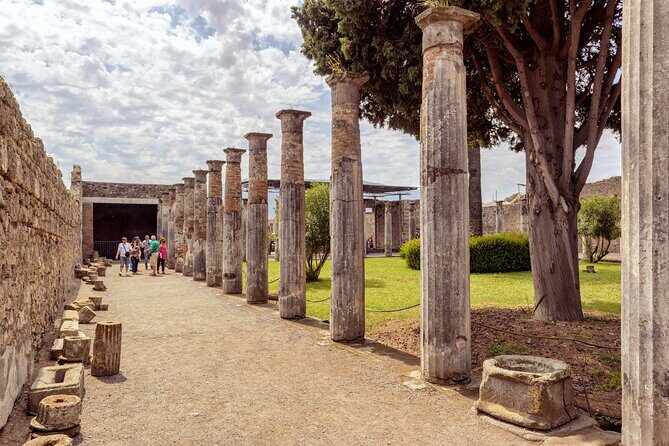
The final stop is the Roman Forum, scheduled for about 1 hour with ticket included. This is the area where ancient Rome functioned as a full operating system—political, legal, religious, and economic in one place.
The Forum works best when you understand the roles of different spaces. It’s easy to look at columns and think only “wow, ruins.” But once you connect the guide’s themes to the layout—who acted here, what decisions happened here, and how religion and politics mixed—the site starts to feel surprisingly organized, even though it’s fragmented today.
I like that this stop is given enough time to do that mental sorting. If the Forum felt rushed, you’d miss the main point: it wasn’t just a monument area. It was the center of everyday public life in ancient Rome, at least for the people with access.
One consideration: the Forum is also a place where your experience depends on how quickly you want to move. Virtual guidance lets you slow down at the spots that interest you, but it still won’t replace the energy of a live person steering the group. If you’re someone who enjoys quiet study with a structured storyline, that’s a strong fit.
Timing, meeting point, and building a smooth Rome day
This tour runs for about 2 to 4 hours total. On paper, that lines up with the three stops (2 hours + 1 hour + 1 hour). In real life, your actual duration will depend on how much time you spend pausing, turning back for photos, and processing the explanations.
You’ll meet at Piazza del Colosseo. The experience also ends back at the same meeting point, which is handy if you’re planning a tight schedule—dinner reservations, a nearby museum, or simply heading out on foot to explore other parts of the Centro Storico.
Because it’s near public transportation, you can usually treat this as a flexible anchor in your itinerary rather than a one-shot mission. That matters in Rome, where the day can change fast based on crowds, weather, and energy levels.
Group size is capped at 30, which helps keep things from turning into a slow-moving line. And since it’s a virtual-guided format, you’re not stuck waiting for one loud central guide to lead everyone through each doorway.



Price and value: what you get for the $59 rate
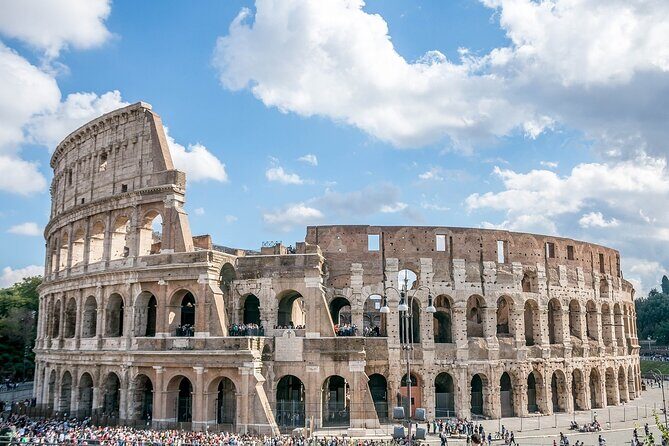
At $59 per person, the value here comes from a simple math question: are you getting enough “guided meaning” plus the cost coverage for entry?
You do get admission ticket(s) included for each stop—Colosseum, Palatine Hill, and the Roman Forum. That’s the most important part of the pricing story, because Rome’s major ancient-site entries can add up quickly once you start stacking them.
Then you add the guidance. This is where you’re paying for clarity. Instead of figuring out what you’re looking at by yourself (which is fun, but slower), the virtual guide gives you a structured walk through three interlocked sites. If you like the idea of a clear narrative plus freedom of pacing, the price starts to make sense.
If you’re comparing this to a live guide, the tradeoff is human interaction versus self-paced movement. One review also suggested the virtual guide access can feel pricey (they mentioned about 30 euros per person). So if you’re sensitive to add-on-style pricing, you’ll want to think about what portion of the experience you actually value: the entry, the explanations, or both equally.
Who should book this virtual Colosseum–Palatine–Forum tour
This is a strong match if you want:
- Freedom to linger at the monument parts that catch your attention.
- An English narrative that helps you connect Colosseum spectacle to Palatine power to Forum public life.
- A format that works well for family and friends, especially when different people want different paces.
It may be less ideal if you need:
- A highly interactive format with lots of real-time Q&A.
- Extremely detailed commentary for every building detail without gaps.
On the other hand, even if you’re a first-timer, this kind of structure is useful. You get a guided path through the “headline sites,” and you can decide afterward whether you want to go deeper on your own.
Practical tips to make the virtual guidance actually work
Virtual guides work best when you’re ready for them. Here’s how to get the most from the experience without overcomplicating it:
- Plan for short attention resets. The Colosseum, Palatine, and Forum each hit differently. Give yourself 1–2 minute pauses so the next explanation doesn’t compete with photos and movement.
- Bring sturdy footwear. Ruins mean uneven ground, steps, and long walking stretches between key viewpoints.
- Use the time windows as a framework. Two hours for the Colosseum then 1-hour blocks for the other two sites is a rhythm. If you blow through one stop, you’ll feel it later.
- Stay aware of your pacing. Virtual guidance is liberating, but wandering aimlessly defeats the point. Keep one eye on where you are relative to the route.
One more small point: service animals are allowed, and the tour states that most people can participate. Still, if you know you need extra flexibility for mobility or stamina, build in buffer time—Rome doesn’t do “straight lines” very well.
Should you book this tour?
I’d book it if you want a structured, English explanation for three of Rome’s biggest ancient sites, while keeping control over pacing. The included admissions and the clear stop order (Colosseum → Palatine Hill → Roman Forum) make it a practical way to turn a must-see checklist into a more connected story.
I’d skip it if you strongly prefer a live, high-interaction guide and need dense commentary for every single section without any quiet gaps. Also, if you’re unsure about paying specifically for the virtual-guide component, think about whether the explanations are a core part of why you’re going.
If you want the classic monuments with a modern, self-paced guide approach, this one makes a lot of sense.
FAQ
How long is the Colosseum, Palatine and Forum tour?
The tour lasts about 2 to 4 hours.
Is the virtual guide available in English?
Yes, it’s offered in English.
Where do I meet for the tour?
You meet at Piazza del Colosseo, P.za del Colosseo, 00184 Roma RM, Italy.
Are admission tickets included?
Yes. Admission tickets are included for the Colosseum, Palatine Hill, and the Roman Forum.
What group size should I expect?
The tour has a maximum of 30 travelers.
Is the tour suitable for people who need service animals or accessibility support?
Service animals are allowed, and most people can participate.
What’s the cancellation policy?
This experience is non-refundable and cannot be changed for any reason.