REVIEW · COLOSSEUM TOURS
Colosseum guided tour with Virtual Reality
Book on Viator →Operated by Dario Andreucci · Bookable on Viator
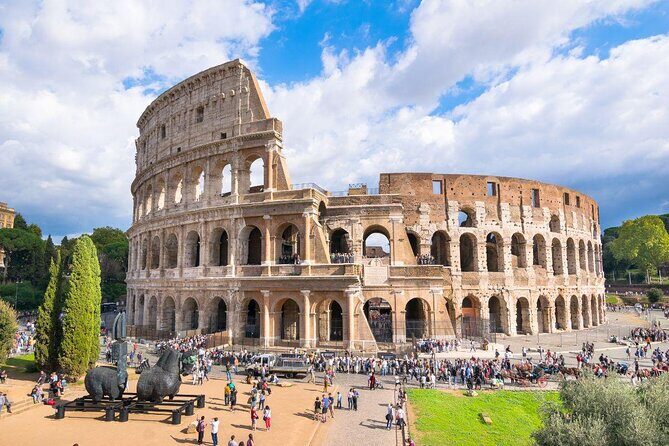
The Colosseum feels different with VR. This tour mixes a real, guided walk with Oculus Go headsets and a 3D app, so you’re not just looking at stone—you’re seeing how it may have looked in action. I like that it stays small-group (max 10), which keeps the pace human and questions easy.
Two things I really liked: you get an official in-person guide for context, not a narrated loop. And the VR element uses an app with 100 3D reconstructions of Ancient Rome, so the visuals connect to what you’re standing in front of.
One drawback to plan for: the Colosseum entrance fee (€18 per person) is not included, so you’ll want to budget that extra cost before you go.
In This Review
- Key highlights I’d plan around
- Why this Colosseum + VR combo works (and not just for selfies)
- Meeting at Piazza del Colosseo, then starting with the Colosseum
- Oculus Go VR: what you get, and how to use it well
- Entering the Colosseum: 1st and 2nd floor with your own guide
- Practical consideration at this stop
- The Arch of Constantine: a quick 20-minute reality check
- The Arch of Titus: learning the story behind the stone
- Basilica of Maxentius: where the tour slows down just enough
- Roman Forum with a guide: turning ruins into a map
- The best approach during the Forum
- What this tour feels like in real life (small-group energy)
- Price and value: what you’re really paying for
- Important entry rules: names, ID, and ticket offices
- Who should book this tour
- Should you book the Colosseum with Virtual Reality tour?
- FAQ
- How long is the Colosseum with Virtual Reality tour?
- What’s the group size limit?
- Is the tour offered in English?
- What VR equipment is included?
- Which parts of the Colosseum are included?
- Where do we meet, and where does the tour end?
- Is the Colosseum entrance fee included?
- What name and ID do I need for entry?
Key highlights I’d plan around
- Small group (max 10): you’ll get more back-and-forth than the big-bus style tours.
- Oculus Go VR + 100 3D reconstructions: the tech gives you a fast way to picture scenes across the ancient city.
- Colosseum floors 1 and 2 with your own guide: you’re guided through the best “start here” areas.
- A tight historical loop: arches, basilica, and the Roman Forum in one ~3-hour session.
- Live explanations on real stone: the guide ties visuals to details like timelines, Roman history, and architecture.
Why this Colosseum + VR combo works (and not just for selfies)
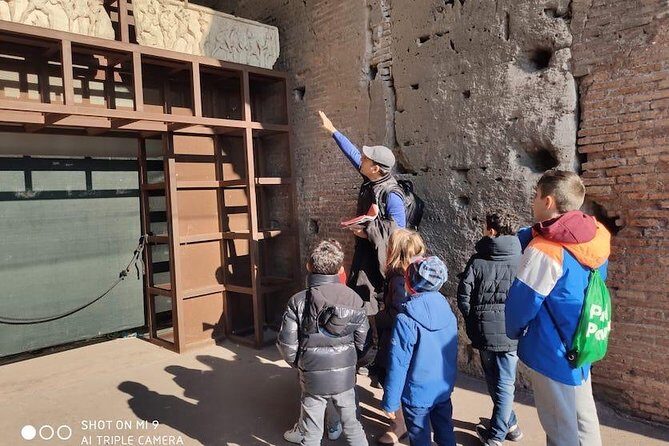
If you’ve visited famous ruins before, you know the usual problem: you see the rock, but your brain struggles to rebuild the original scene. This tour solves that with VR on a live site. You’re not watching a movie somewhere else. You’re standing where the story happened, then using the headset to connect the dots.
The other smart choice is the format. You don’t just get the VR and move on. You get an official guide in person, with enough time at each stop to ask questions and understand what you’re looking at. That’s especially helpful at the Colosseum and the Roman Forum, where it’s easy to feel overwhelmed fast.
Finally, the “small and focused” setup (max 10) matters more than you’d think. Big groups can turn ruins into a race. Here, you can actually listen.
You can also read our reviews of more guided tours in Rome



Meeting at Piazza del Colosseo, then starting with the Colosseum
The tour starts at Piazza del Colosseo, 1, 00184 Rome. From there, you head straight into the main event: the Colosseum.
This is a good meeting spot if you’re using public transport, and the start is practical. In my experience, the guide was easy to find on arrival. The name that matters on the day is the provider’s guide, Dario Andreucci.
The tour runs rain or shine. So if you’re the type who checks forecasts and hopes for a miracle, don’t. Bring whatever helps you stay comfortable—light rain gear and grippy shoes are the usual lifesavers for Rome walking days.
Oculus Go VR: what you get, and how to use it well
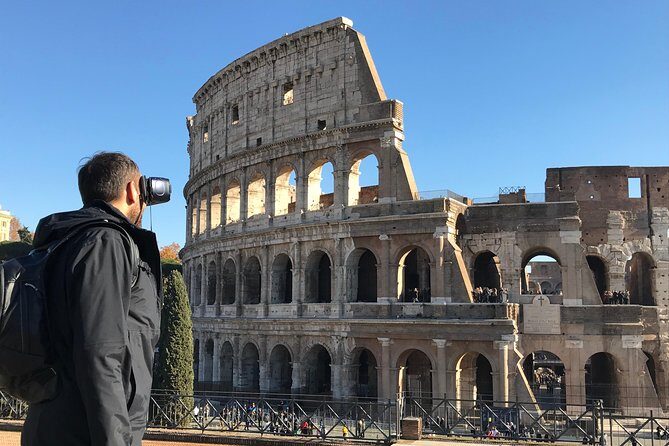
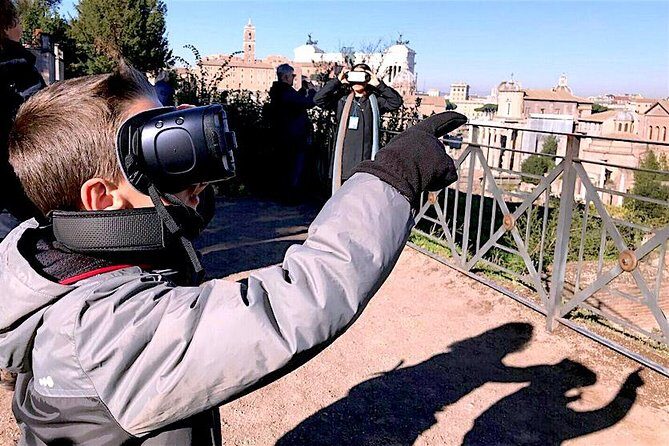
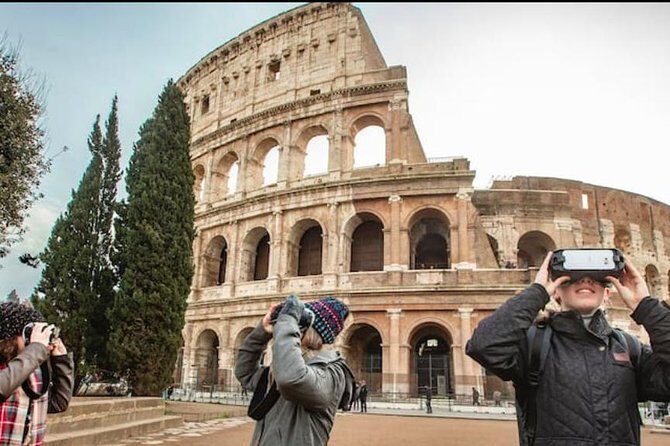
The VR part isn’t vague. You get Oculus Go equipment, plus an app that includes 100 3D reconstructions of Ancient Rome.
What you should expect from this kind of setup:
- You’ll use the headset while your guide gives context for what you’re seeing.
- The 3D reconstructions help you translate flat ruins into real structures and spaces.
- You’re still on the ground with your guide, so you’re not left guessing.
A quick tip: keep your expectations realistic. VR can’t replicate scale the way standing in the real Colosseum does. But it can help you understand relationships—what was close to what, what changed, and how the layout makes sense.
This is why I like this experience more than “VR somewhere else, then ruins later.” Here, the explanations and visuals land together.
Entering the Colosseum: 1st and 2nd floor with your own guide
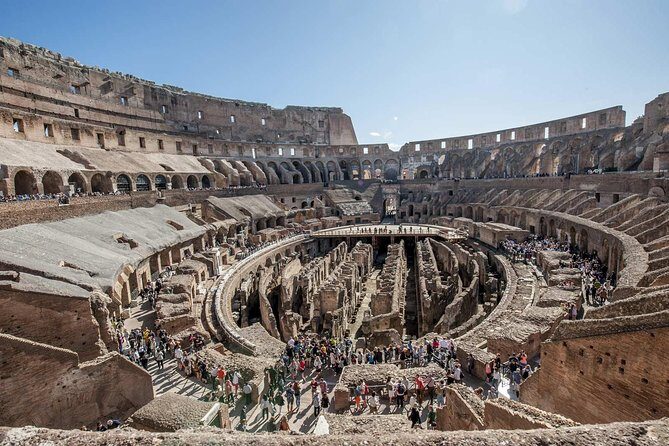
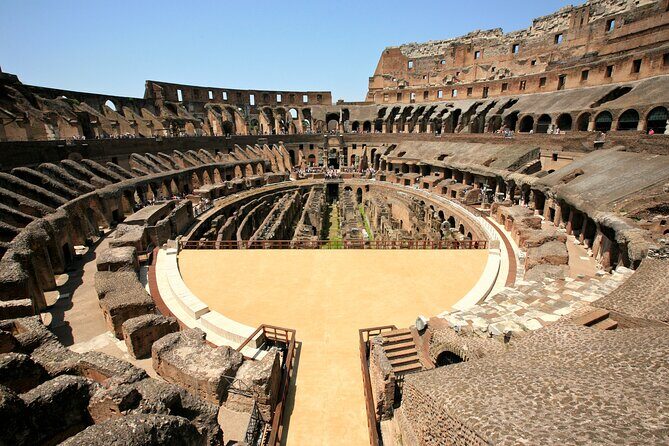
Your first stop is the Colosseum, for about 1 hour 30 minutes. You visit the 1st and 2nd floor. That’s a strong choice because those levels give you a sense of the structure without turning the visit into a marathon.
The value of having a guide here is simple: the Colosseum is huge and famous, but it’s also layered. The guide’s job is to turn the “wow” factor into understanding—timelines of what happened there, Roman history in plain language, and the logic behind architectural elements you can see while you’re standing there.
In a small group, you can ask follow-ups instead of just nodding politely. That makes a difference at a site where everyone wants the same photo from the same angle—but not everyone understands what they’re photographing.
Practical consideration at this stop
The tour requires moderate physical fitness. You’ll be on your feet for a good stretch, and the Colosseum isn’t the kind of place where you can glide through. Plan for time standing, looking up, and moving between viewpoints.
Also, a key logistics note: the Colosseum entrance fee (€18 per person) is not included. You’ll still want to handle that separately so you’re not scrambling at the gate.



The Arch of Constantine: a quick 20-minute reality check
Next is the Arch of Constantine, for about 20 minutes.
This stop is short, so don’t expect a long lecture. The goal here is to sharpen your eye: your guide uses it as a way to explain history and connect it back to the bigger story of Rome. Arches are often treated like quick photo ops, but with a guide, you learn to read them—what they’re saying, and why this spot mattered.
If you’re trying to cover major highlights without burning an entire day, this pacing works. You get the monument without dragging the schedule.
The Arch of Titus: learning the story behind the stone
After that, you visit the Arch of Titus for about 20 minutes.
The focus is on history. Your guide walks you through what the arch represents and helps you place it into the larger Roman timeline. The best part of a stop like this is how it changes your view of the street-level experience. When you know the meaning, an arch stops being “a pretty doorway” and becomes part of the argument Rome made through architecture.
If you’re the type who likes structure and context, this is a satisfying mini-break between the big scale of the Colosseum and the wider sprawl of the Forum.
Basilica of Maxentius: where the tour slows down just enough
Then you move to the Ancient Basilica of Maxentius, for about 10 minutes.
This is one of those stops that’s easy to skip on your own because it feels less iconic at first glance than the Colosseum. But it’s also a useful pause. It helps you see that Roman architecture wasn’t only about arenas and monuments. It was also about civic spaces and long-term structures built for how people lived, met, and moved.
Ten minutes can sound brief, but in a timed tour, it’s the right amount: enough time to understand why it exists and what makes it matter.
Roman Forum with a guide: turning ruins into a map
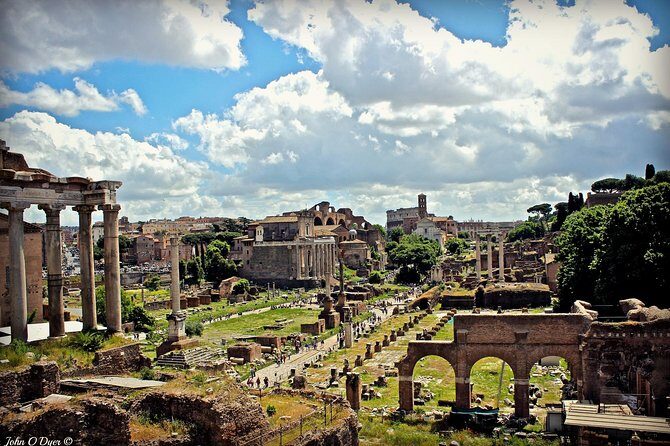
The final big block is the Roman Forum, for about 30 minutes.
This is where guided time pays off most. The Forum is a layout puzzle. Without help, you can wander and still miss what’s important. With a guide, you learn the history and explore it as part of a story line rather than a list of monuments.
Your tour ends outside the Roman Forum, nearby Via Cavour. That ending matters if you’re planning your next meal or stop. You’re not forced to retrace steps back to the exact center of the ruins zone.
The best approach during the Forum
Don’t try to see everything. Try to understand the “shape” of what you’re looking at. When your guide is explaining history, follow the cues—stand where they point, look where they direct your attention, and let the place become a sequence instead of a random collection.
What this tour feels like in real life (small-group energy)
The small-group cap (max 10) changes the mood. You get a more intimate pace and the guide can explain with less rushing.
One concrete example from the experience: Dario Andreucci was easy to spot when meeting, and he didn’t just rattle off facts. He helped people understand timelines and architecture in a way that makes the ruins feel less mysterious. At the end, he even used the wrap-up time to recommend where to go next—coffee and areas like Trastevere came up, along with restaurant ideas.
That kind of practical local guidance isn’t guaranteed on every tour day, but it’s a good sign of how the tour is run: you get context and then you’re set up to continue your Rome day with better choices.
Price and value: what you’re really paying for
The only hard cost given is the Colosseum entrance fee: €18 per person, and it’s not included in the tour. Everything else you get is part of the experience: the official in-person guide, the VR setup (Oculus Go), and the app with 100 3D reconstructions.
So how do you judge value without seeing the exact tour price?
- You’re paying for more than access. You’re paying for interpretation—guide-led history and architecture explanations at key moments.
- You’re paying for time efficiency. This is a focused loop: Colosseum → Arch of Constantine → Arch of Titus → Basilica of Maxentius → Roman Forum, all in about 3 hours.
- You’re paying for the VR “visual bridge,” which can shorten the time it takes to understand what you’re looking at.
If you’re coming to Rome for the first time and you want the top sites without spending an entire day on logistics, this is a strong value play. If you already know Roman history well and prefer to wander with a book, you might find the VR less essential. But for most people, the guide + VR combo is a real time-saver.
Important entry rules: names, ID, and ticket offices
This is one area you should treat seriously.
- You need to provide the full names of all participants when booking.
- For entry, each person must present a valid passport or ID document that matches the name provided at booking.
- If you present a voucher without all travelers’ full names at the ticket office before entry, it may result in denied entry to the Colosseum and Roman Forum.
That’s not a minor detail. It can ruin your day. Double-check spellings and make sure every person’s ID matches the booking exactly.
Who should book this tour
I’d book it if:
- You want one guided plan to hit the Colosseum and Roman Forum area in a short window.
- You like history explained in clear, human language, not just signs.
- You’re curious about VR that’s used to support real-world locations, not separate entertainment.
You might skip it if:
- You’re only interested in fast photo stops and don’t want guided explanations.
- You dislike wearing headsets or you think VR won’t help you personally understand the sites.
Should you book the Colosseum with Virtual Reality tour?
Yes, with a smart checklist.
Book it if you want a guided highlight circuit that doesn’t eat your whole day. The small group, the official guide, and the Oculus Go VR tools make it easier to understand what you’re seeing at the Colosseum and the Forum. And ending near Via Cavour is a practical bonus if you’re planning dinner afterward.
Just don’t show up without planning for the €18 Colosseum entrance fee and don’t wing the name/ID matching. If you handle that, this is the kind of tour that can turn a famous ruin into a place you actually understand.
FAQ
How long is the Colosseum with Virtual Reality tour?
It lasts approximately 3 hours.
What’s the group size limit?
The tour has a maximum of 10 people.
Is the tour offered in English?
Yes, it is offered in English.
What VR equipment is included?
You get Oculus Go VR equipment and an app with 100 3D reconstructions of Ancient Rome.
Which parts of the Colosseum are included?
The tour includes the 1st and 2nd floor of the Colosseum.
Where do we meet, and where does the tour end?
The tour starts at Piazza del Colosseo, 1, 00184 Rome and ends outside the Roman Forum nearby Via Cavour, at Fori Imperiali, 00186 Rome.
Is the Colosseum entrance fee included?
No. The Colosseum entrance fee (€18 per person) is not included.
What name and ID do I need for entry?
You must provide the full names of all participants when booking, and each person must bring a valid passport or ID that matches the booked name for entry to the Colosseum and Roman Forum.