REVIEW · COLOSSEUM TOURS
Colosseum and Palatine Hill: Unveil Rome’s Ancient Spectacles
Book on Viator →Operated by ROMA IN TOURS · Bookable on Viator
Three stops, one ancient power trip.
This tour makes the Colosseum feel less like a postcard and more like a working arena, with the build dates and the big-name emperors behind it. I also like that Palatine Hill ties Rome’s origin myth to the actual hill you’re standing on. One possible drawback: it’s shared (up to 24 people), so the guide may not have time for lots of back-and-forth questions.
In about 2 hours, you hit the Colosseum, walk through key Forum ruins on the Via Sacra, and finish up on Palatine Hill with views over the neighborhood of ancient Rome. If you want the highlights without spending a full day planning routes on your own, this is a solid way to do it.
The value is helped by included entry and pre-booking details like a Colosseum reservation, plus a mobile ticket. Just keep in mind schedule changes can happen, and you’ll want to keep your day flexible.
In This Review
- Quick hit points before you go
- What You Actually Get in 2 Hours: Arena, Power Square, Origin Hill
- Entering the Colosseum: Built by Emperors, Renamed by Time
- What’s great here
- What to watch out for
- Roman Forum Walk: Where the Via Sacra Still Sets the Tone
- Key sights you’ll focus on
- A small practical reality check
- Palatine Hill: The Origin Myth and the Emperor Neighborhood
- Why this stop is worth your time
- Guide Quality and Group Size: The Real Make-or-Break
- My practical take
- Tickets, Reservations, and Price Value: What $162.19 Is Really Buying
- The value equation
- The less-great match
- Where You Meet and How to Prep Fast (So You Don’t Lose Time)
- One lesson from real-world headaches
- When to Book and How to Avoid Schedule Surprises
- Who This Tour Fits Best
- Should You Book This Colosseum and Palatine Hill Tour?
- FAQ
- How long is the Colosseum and Palatine Hill tour?
- Is the tour offered in English?
- What’s included with the ticket price?
- Is this tour private?
- Where do we meet for the tour?
- Do I need to bring ID?
- What happens if the time I choose isn’t available?
- Can the tour be transferred to a different day?
- Is there a youth rate?
- What is the cancellation refund window?
Quick hit points before you go
- English certified guide for the big “what am I looking at?” questions
- Colosseum reservation fee included, plus admission tickets included in the price
- Roman Forum time on the Via Sacra with major sites clustered close together
- Palatine Hill attention you might otherwise skip when Colosseum crowds steal the show
- Shared group up to 24, so expect some crowding and limited Q&A
- Meeting point is fixed at Via di S. Giovanni in Laterano, 14
What You Actually Get in 2 Hours: Arena, Power Square, Origin Hill
Rome’s ancient sites can feel like three separate visits—until you see them in one connected walk. This tour is built around that idea: arena, government and religion center, then the hill tied to Rome’s earliest stories.
You’re there for roughly 2 hours total, and each stop is short on purpose. That can be a good thing. You get the “wow” factor fast, then you can decide later if you want to linger on one site on your own.
For me, the best part is the pairing of places. The Colosseum wasn’t just a building; it was part of the Roman political show. The Forum wasn’t just rubble; it was the stage for ceremonies, laws, and triumphs. Palatine wasn’t just scenery; it was where power pretended to start with myth.
You can also read our reviews of more tours and experiences in Rome.



Entering the Colosseum: Built by Emperors, Renamed by Time
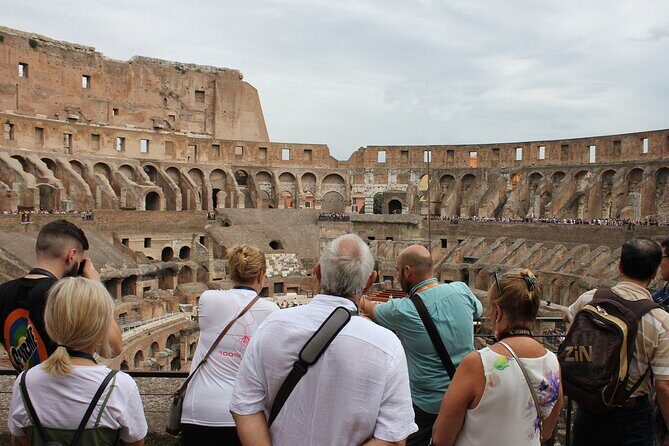
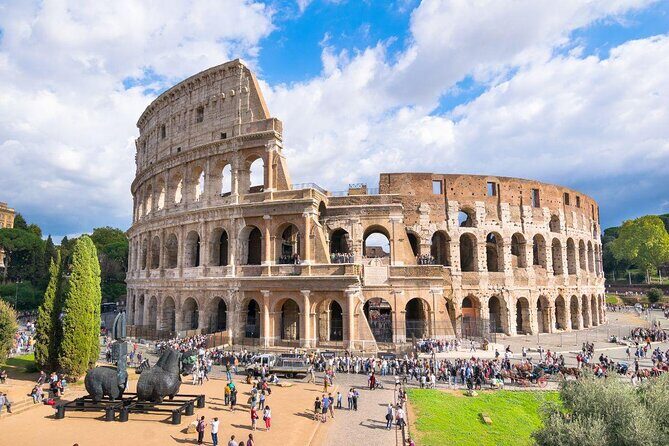
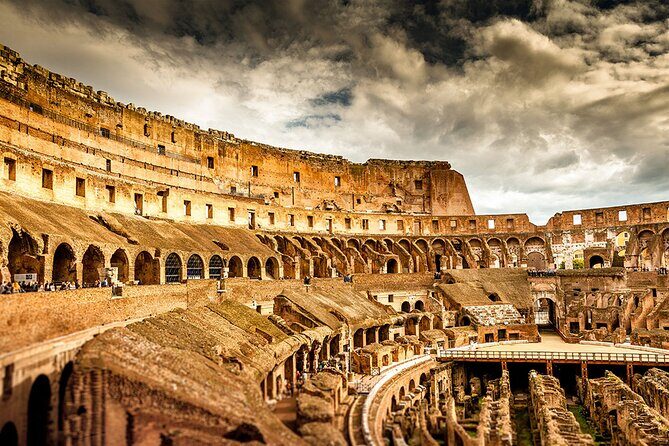
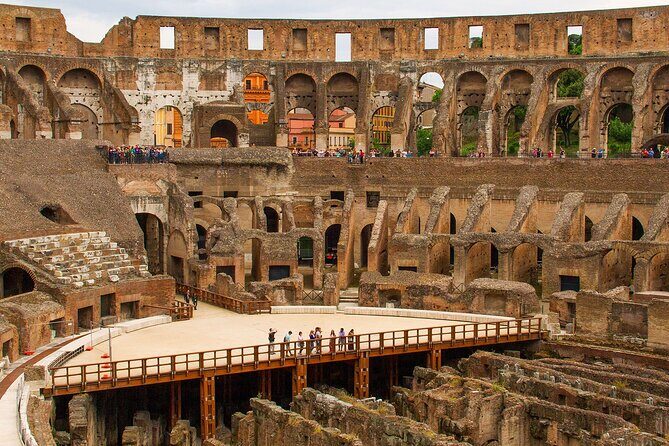
The Colosseum is the centerpiece—and it’s designed to stop you in your tracks. You’re dealing with the Flavian Amphitheater, later known as the Colosseum, built on the eastern edge of the Roman Forum. It’s described as the largest Roman amphitheater, with capacity estimates ranging from about 50,000 to 87,000 spectators.
Here’s the timeline your guide will connect to what you see. Construction started under Vespasian in 70 AD and was completed by Titus, who inaugurated it on 21 April 80 AD. Later updates came during Domitian’s reign around 90 AD. Knowing those dates helps you read the structure like a historical document, not just stone.
A fun detail that makes the building feel human: the name “Colosseum” spread only later in the Middle Ages. It comes from a common deformation of a Latin word that means “colossal,” describing those early medieval houses that looked small next to the huge arena.
What’s great here
- You get the big architectural story without trying to decode it alone.
- The arena setting makes the political purpose easier to understand—Rome liked spectacle with a message.
What to watch out for
The Colosseum area is always busy. Since this is a shared tour, you may feel the group flow more than a private, slow experience. If you want lots of questions answered at length, you might need to plan for that with a more flexible pacing elsewhere in your day.
Roman Forum Walk: Where the Via Sacra Still Sets the Tone
After the arena, the Roman Forum changes your perspective. This space—Forum Romanum—was the center of commercial and religious life. It’s surrounded by ruins of government buildings and feels like a timeline you can walk through.
Your route includes a stroll along the Via Sacra, the main street of ancient Rome. This is where emperors and generals paraded in triumph. The tour also points to figures like Augustus and Hadrian, so you’re not just looking at ruins—you’re seeing the stage where their kind of power was performed.
The Forum was once connected to markets too. In ancient times, citizens called it the Forum Magnum. That detail matters because it explains why this place wasn’t only ceremonial. It was where public life happened.



Key sights you’ll focus on
The tour includes entry time covering a cluster of high-impact ruins and buildings, including:
- The interior of the old Senate
- The dwellings of the Vestal Virgins
- The Temple of Vesta
- The Temple of Septimius Severus
- The Triumphal Arch of Titus
That’s a lot for one stop, so it helps to know you’re not expected to memorize everything. Instead, treat it like a guided map. By the end, you should be able to identify the main story threads: government, religion, and triumph.
A small practical reality check
Forum time is shorter than it looks on photos. The ruins are spread out, and the crowd flow matters. Keep your expectations aligned: this is a guided hit of the major zones, not a lingering “research session.”
Palatine Hill: The Origin Myth and the Emperor Neighborhood
Then you climb into the Rome you can almost feel in your bones: Palatine Hill. It’s right there, towering over the Forum and the Circus Maximus area. The tour frames it as essential, and honestly, that makes sense. It’s one of the best places to understand why Rome’s leaders claimed both power and destiny.
You’ll see the ruins of ancient palaces that were once home to emperors. You’ll also hear about temples located on the hill. That combination—palace and sacred space—helps you grasp how Romans blended rule with belief.
The most memorable connection is myth. Palatine Hill sits at the center of Rome’s big origin story: Romulus and Remus. Standing on the hill where those legends are anchored gives the city a different kind of meaning than “ancient athletics” and “government rubble.”
Why this stop is worth your time
It’s easy for people to treat Palatine Hill like an optional side quest. This tour pushes it into the main storyline. Even if you’re starting to feel the “same stones, different angles” fatigue, Palatine Hill resets the mental picture. It’s the difference between seeing monuments and understanding who lived where and why they claimed it mattered.
Guide Quality and Group Size: The Real Make-or-Break
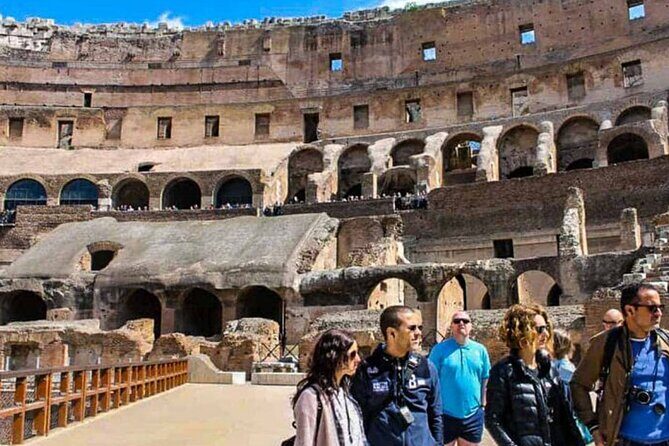
This is where the reviews line up with what you should plan for. The tour includes a certified guide, and language is offered in English. In one strongly positive review, Francesca is named as the guide, described as fabulous, with strong English and a pleasant, helpful approach. That kind of guide can turn a 2-hour tour into something you remember for years.
On the flip side, group dynamics can affect how much you get from the experience. There’s feedback about big groups at the start and confusion early on, plus comments about not having enough room to ask questions. That’s not your imagination. Shared tours are always a trade-off: you save money or time, but you lose some of the slower, more conversational pacing.
You should also know the tour is described as not private in the fine print: the group can be from 1 to 24 people. At the higher end, it’s harder for the guide to personalize. Still, a good guide can keep the group moving with clarity, and that helps a lot in the Colosseum and Forum chaos.
My practical take
If you’re the type who loves quick facts and a smooth route, you’ll probably be happy. If you need deep Q&A, you may feel limited. Build your questions into the places where the guide is easiest to track—usually right after a major stop.
Tickets, Reservations, and Price Value: What $162.19 Is Really Buying
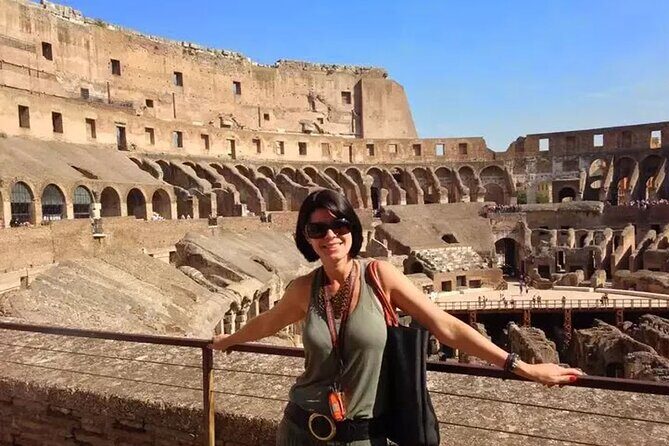
The listed price is $162.19 per person, for an experience that runs about 2 hours. That sounds steep until you look at what you’re getting in practical terms.
Included in the package:
- Certified guide
- Online consultant sending boarding information (and online support around boarding)
- A mobile ticket
- Palatine Hill entrance ticket
- Roman Forum entrance ticket
- Colosseum entrance ticket (valued at €18 per person)
- Colosseum reservation fee (valued at €2 per person)
So you’re not just paying for a guided walk. You’re paying for the friction to be reduced—especially for the Colosseum area where reservations and entry timing matter.
The value equation
This tour makes the most sense if:
- You want major sites in a short window.
- You care about getting the right story attached to the right stones.
- You prefer a guided plan over building your own route under time pressure.
The less-great match
If you’re a slow traveler who wants to wander and ask 20 questions per stop, you might feel boxed in. Also, since the experience is shared and group sizes can run up to 24, you may not feel like you’re getting a premium, private-style experience for that price.
Where You Meet and How to Prep Fast (So You Don’t Lose Time)
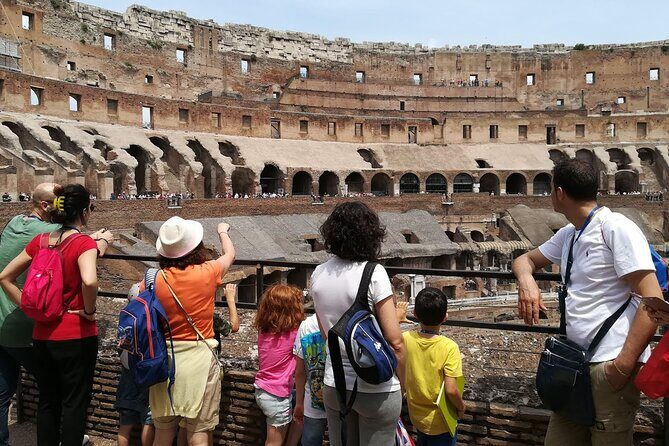
Meeting point is Via di S. Giovanni in Laterano, 14, 00184 Roma RM. The tour ends back at the same meeting point. That matters because it keeps your logistics simple: you’re not crossing the city at the end.
They request that you leave a WhatsApp number where support can contact you after booking. That’s useful because schedule changes can happen. You also want your ID ready. Each traveler must present a valid passport or identification document matching the name used at booking to enter the Colosseum and Roman Forum.
Mobile tickets are included, so you’re not relying on printed paper. Still, keep your phone charged and your booking details handy.
One lesson from real-world headaches
There’s mention of confusion at the start and even an incident where tickets didn’t match, leading to delays and an incomplete experience when a leader left early. Those are extreme cases, but they’re a reminder to arrive on time, double-check names, and keep your documents prepared. If anything looks off, address it quickly with support on the spot.
When to Book and How to Avoid Schedule Surprises
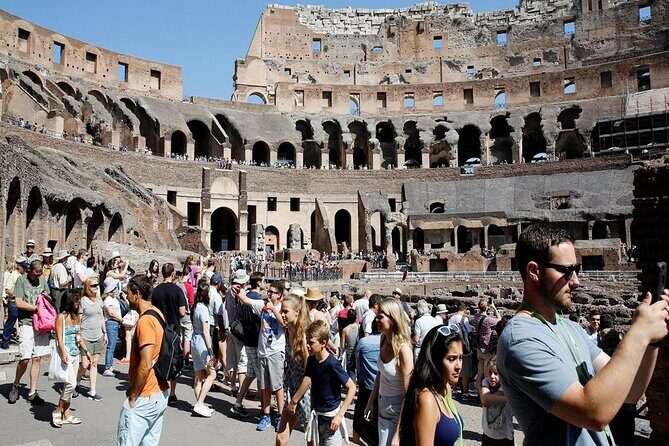
Booking is on average 245 days in advance, which tells you one thing: this is a popular route and slots move. Earlier booking is usually your friend for smoother timing.
There’s also a reality check built into the terms: if your chosen time isn’t available, you’ll be transferred to another time on the same day. Changes can happen and may not be within your control. For last-minute bookings (same day or overnight), if seats are unavailable, you may be placed on the following day.
So the best strategy is simple:
- Pick a time slot that fits your whole day.
- Don’t stack another high-stakes activity right next to it.
- Keep some wiggle room in case the start time shifts.
Who This Tour Fits Best
This tour is a great match if you want:
- The big three: Colosseum, Roman Forum, Palatine Hill in one guided sweep
- A clear narrative that links buildings to stories (not just sightseeing)
- English-language help with the key sites and what they meant
It’s less ideal if:
- You need a quiet, low-crowd pace with lots of room for your questions.
- You want a truly private experience. The group can be shared up to 24, despite how some promotional language might read.
Should You Book This Colosseum and Palatine Hill Tour?
I’d book it if you want a smart, fast route through three core ancient Rome sites with entry and reservation pieces handled for you. The included Colosseum reservation fee and the combination of Forum + Palatine Hill make the price feel more reasonable than a basic “stand here, take photos” visit.
I’d pause before booking if you’re extremely sensitive to crowds or you planned a schedule that can’t handle a possible time change. If you like structured tours and you want the main story delivered in English, this one can be a good use of your time in Rome.
FAQ
How long is the Colosseum and Palatine Hill tour?
The tour runs for about 2 hours.
Is the tour offered in English?
Yes, the tour is offered in English.
What’s included with the ticket price?
You get a certified guide, online support and boarding information, a mobile ticket, plus entrance tickets for Palatine Hill and the Roman Forum. Colosseum entrance and the Colosseum reservation fee are also included.
Is this tour private?
No. It is a shared tour with a group that can be made up of 1 to 24 people.
Where do we meet for the tour?
You meet at Via di S. Giovanni in Laterano, 14, 00184 Roma RM, Italy, and the tour ends back at the same meeting point.
Do I need to bring ID?
Yes. Each traveler must present a valid passport or identification document matching the name used at booking for entry to the Colosseum and Roman Forum.
What happens if the time I choose isn’t available?
If your chosen time isn’t available, you’ll be transferred to another time on the same day.
Can the tour be transferred to a different day?
For last-minute reservations (same day or overnight), if there are no seats, you may be placed on the day following the reserved date.
Is there a youth rate?
Yes. A youth rate is for students and children, but you’ll need photo ID and proof of age.
What is the cancellation refund window?
You can cancel up to 3 days in advance for a full refund. Canceling less than 3 days before the start time does not receive a refund.